

News
 By Hermione
Pvdf Coated Aluminum Coil For Roofing Sheets
PVDF coated aluminum coil for roofing sheets is positioned as a high-durability, pre-finished metal material for exterior roof systems that require long-term weather resistance, stable color retention, and reliable forming performance. It is widely used in industrial roofs, warehouse roofing, commercial buildings, transport hubs, agricultural structures, and residential roofing profiles where corrosion resistance and coating durability are critical.
Why PVDF Coating Is Used for Roofing Sheets
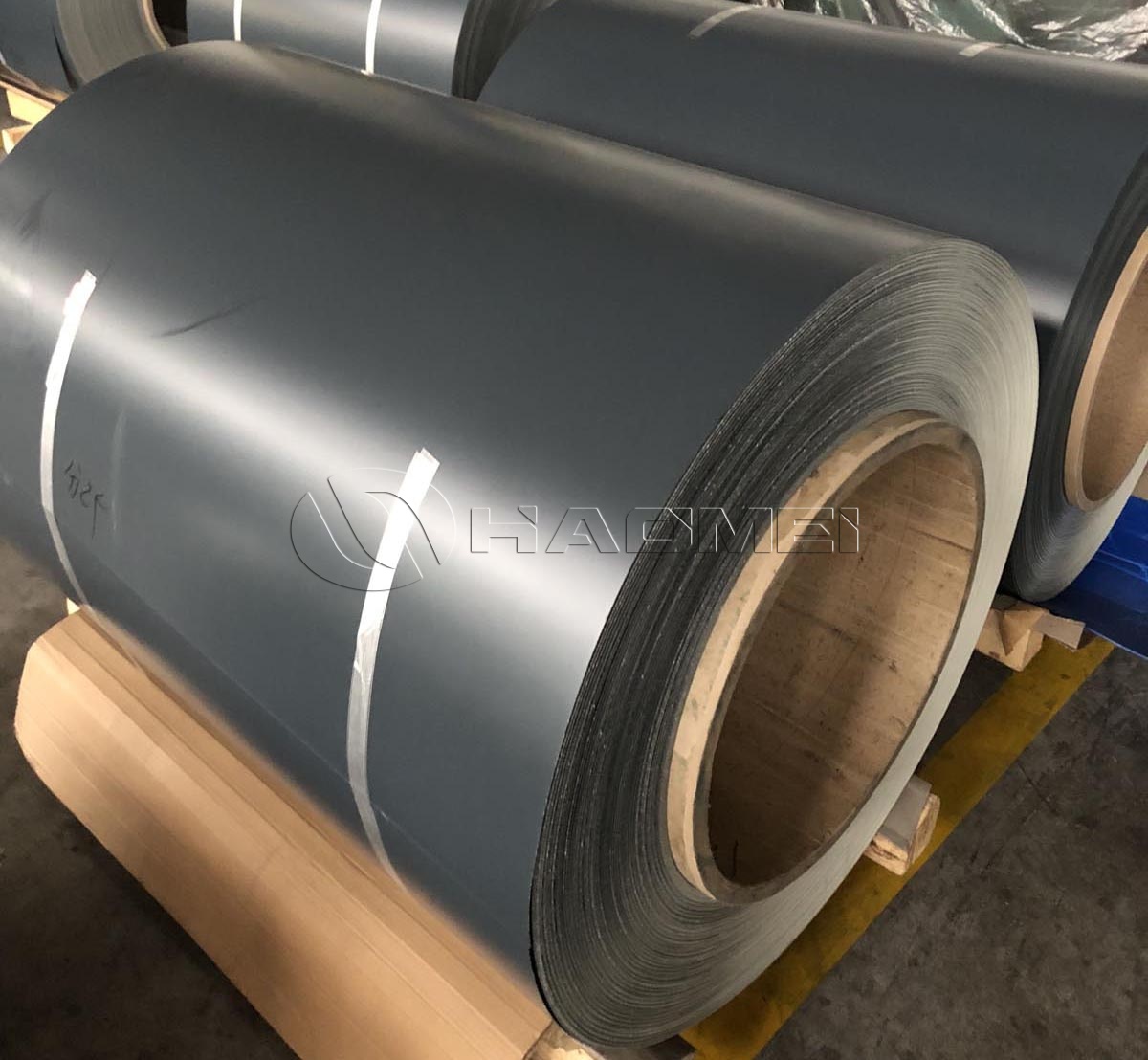
Roofing sheets are continuously exposed to ultraviolet radiation, rainwater, thermal cycling, atmospheric pollutants, and, in some regions, salt-laden air. Compared with conventional coating systems, PVDF coating offers a more durable surface due to the chemical stability of the fluoropolymer resin. For roofing applications, this means the coated aluminum coil can maintain appearance and performance over a longer service period.
Key performance advantages include:
Excellent UV resistance and chalking resistance
Strong color retention in outdoor exposure
Good resistance to moisture, corrosion, and airborne contaminants
Stable adhesion during roll forming and bending
Lower structural dead load compared with many other roofing metals
Smooth, uniform decorative finish suitable for visible roof surfaces
In practical roof manufacturing, PVDF Coated Aluminum Coil is often selected when the project requires a higher-performance finish than standard interior-grade or short-life exterior coating systems.
Basic Product Structure
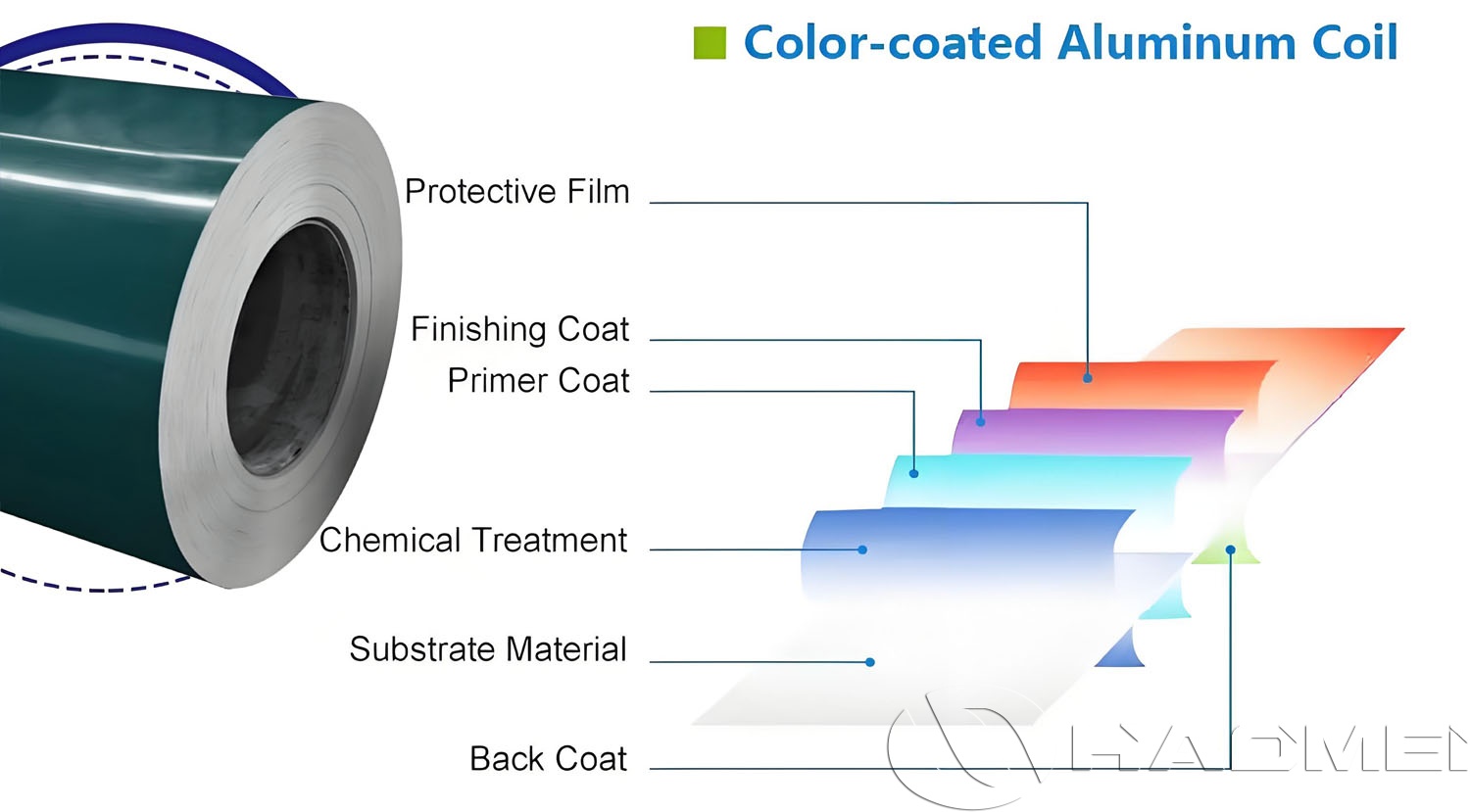
PVDF coated aluminum coil is a coil-coated product manufactured through continuous surface treatment and paint baking. A typical roofing-grade structure includes:
Aluminum substrate
Chemical pretreatment layer
Primer coating
PVDF topcoat
Optional back coat on the reverse side
This coil-coating process helps ensure consistency in film thickness, gloss, adhesion, and color uniformity. For roofing sheet fabrication, controlled coating flexibility is important because the material usually undergoes profiling, corrugation, or roll forming after coating.
Common Alloys for Roofing Sheet Applications
The alloy selection affects strength, formability, corrosion behavior, and end-use suitability. In roofing sheet production, the most commonly used alloys are from the 1xxx and 3xxx series, with some projects also using magnesium-containing 5xxx alloys for more demanding environments.
3003 Aluminum Coil
3003 aluminum coil is one of the most common substrates for roofing sheets. It contains manganese as the main alloying element and provides a balanced combination of:
Good corrosion resistance
Good formability
Moderate strength
Stable performance in roll forming
It is suitable for general industrial and commercial roofing where the design requires reliable processing and outdoor durability.
3004 Aluminum Coil
3004 aluminum coil offers higher strength than 3003 due to its alloy composition. It is often used when roofing sheets require improved rigidity or when the profile design involves longer spans and greater structural demands. It still maintains good forming properties and is frequently used in engineered roof panel systems.
3105 Aluminum Coil
3105 aluminum coil is also widely used in color-coated architectural products. It provides good corrosion resistance and slightly higher strength than some lower-alloyed options. For roofing sheets, 3105 is often selected for applications that need a combination of decorative finish, forming capability, and outdoor performance. Many manufacturers also use 3105 Color Coated Aluminum Coil for roofing and wall cladding systems.
1050 and 1060 Aluminum Coil
The 1050 and 1060 grades belong to the commercially pure aluminum series. They offer:
Very good corrosion resistance
Excellent ductility
High formability
Lower mechanical strength compared with 3xxx series alloys
These alloys can be used in lighter-duty roofing or decorative sheet applications, especially where deep forming is not required and the emphasis is on corrosion resistance and surface appearance.
5052 Aluminum Coil
For coastal, high-humidity, or more corrosive environments, 5052 aluminum coil may be considered. Its magnesium content improves corrosion resistance and mechanical strength. However, alloy cost and forming requirements should be evaluated according to the roofing profile and project specification.
Core Specifications of PVDF Coated Aluminum Coil for Roofing Sheets
Core Specifications Table
| Item | Typical Range / Option |
|---|---|
| Product Name | PVDF coated aluminum coil for roofing sheets |
| Substrate Alloys | 1050, 1060, 1100, 3003, 3004, 3105, 5052 |
| Temper | H14, H16, H24, H26, H44, or as specified |
| Coil Thickness | 0.20 mm - 1.50 mm |
| Coil Width | 30 mm - 1600 mm |
| Coating System | PVDF topcoat with primer |
| Top Coating Thickness | Typically 25 microns or customized |
| Back Coating Thickness | Typically 5-10 microns |
| Gloss | Matte, low gloss, medium gloss, high gloss |
| Color | RAL colors, custom architectural colors |
| Surface Finish | Smooth, embossed, or special decorative finish |
| Adhesion | Meets coil coating technical standards |
| Pencil Hardness | Typically HB - 2H depending on system |
| Impact / Flexibility | Suitable for roofing sheet roll forming |
| Application | Corrugated roofing sheets, standing seam panels, roof cladding |
Actual specifications vary according to alloy, temper, roof profile geometry, coating supplier system, and project exposure conditions.
Coating Performance Considerations for Roofing Use
For roofing sheets, coating performance is not only about initial appearance. The coating must also tolerate fabrication and long-term outdoor service.
Weather Resistance
The core value of PVDF coated aluminum coil lies in outdoor durability. The coating system is designed to resist solar degradation, which helps reduce fading, gloss loss, and surface chalking during long-term exposure.
Corrosion Resistance
Aluminum itself forms a protective oxide layer, and the PVDF paint system adds an additional barrier against moisture and contaminants. This combination is particularly valuable in humid, industrial, and marine-adjacent environments.
Formability
Roofing sheets are usually produced by cold roll forming. The coating must remain intact during bending, profiling, and rib formation. Proper pretreatment, primer compatibility, and coating flexibility are essential to avoid edge cracking or paint delamination.
Color and Gloss Stability
Architectural roofing often requires visual consistency across large roof areas. PVDF systems are chosen because they provide more stable long-term color performance than many conventional exterior coatings.
Thickness and Temper Selection Logic
Roofing sheet performance depends heavily on the matching of alloy, thickness, temper, and profile design.
0.20-0.40 mm: often used for light roofing, insulation jacketing, or decorative roof coverings
0.40-0.70 mm: common for industrial and civil corrugated roofing sheets
0.70-1.20 mm: suitable for higher-strength roof panels, standing seam systems, and wider-span applications
Temper also affects forming behavior. Softer tempers can improve profile forming, while harder tempers provide higher rigidity. The correct balance depends on panel geometry, wind load requirements, and fabrication method.
Manufacturing Features That Influence Final Roofing Performance
Not all pre-painted coils perform equally in roof applications. Several production factors directly affect service life and processing quality.
Substrate Quality
A stable base material with controlled flatness, clean surface condition, and accurate thickness tolerance is necessary for uniform coating and trouble-free roll forming.
Pretreatment Quality
The pretreatment layer is fundamental to coating adhesion and corrosion resistance. Inadequate pretreatment can reduce long-term coating performance, especially at cut edges and formed areas.
Coating Thickness Control
For roofing, insufficient paint film thickness may reduce weather resistance, while excessive thickness may affect flexibility. Roofing-grade PVDF systems are generally designed to balance outdoor durability with post-paint forming requirements.
Baking and Curing
The curing process determines whether the coating achieves its intended hardness, adhesion, and chemical resistance. Proper line speed, oven temperature, and dwell time are all important.
Typical Application Scenarios
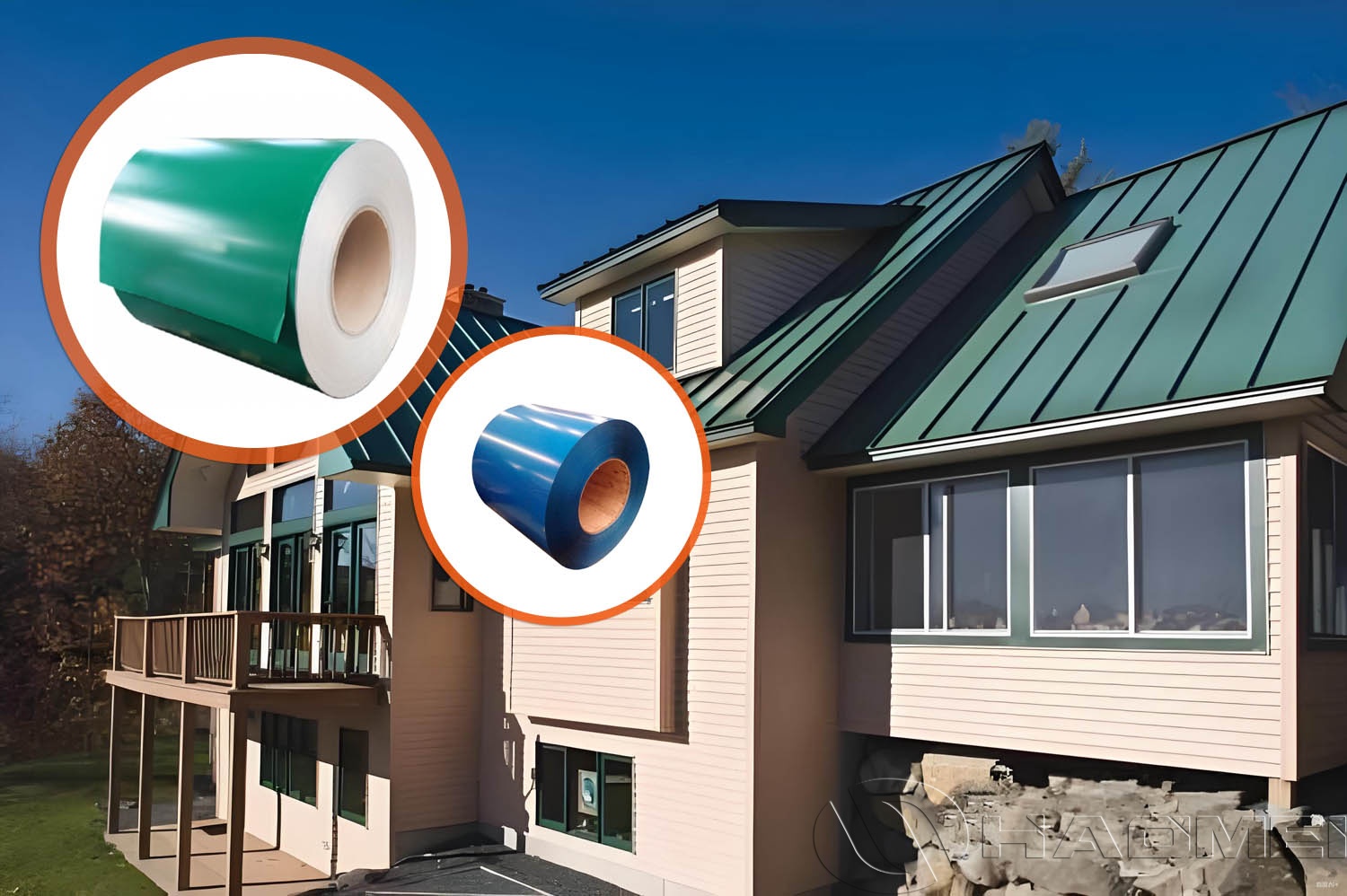
PVDF coated aluminum coil is used to manufacture a wide range of roof products, including:
Corrugated aluminum roofing sheets
Trapezoidal roofing panels
Standing seam roof panels
Roofing for factories and logistics buildings
Agricultural roofing and siding
Station, airport, and public building roof systems
Residential metal roof panels in corrosive or high-UV regions
Compared with some conventional PE Coated Aluminum Coil products, PVDF systems are generally preferred for long-term exterior roof exposure where weathering performance is more demanding.
Color, Finish, and Architectural Compatibility
Roofing sheets increasingly serve both structural and aesthetic purposes. PVDF coated aluminum coil can be supplied in:
Standard solid colors
High-reflective light colors for heat management
Matte finishes for modern architectural style
Low-gloss finishes for reduced visual glare
Custom shades matched to project requirements
The smooth and uniform finish of coil-coated aluminum is especially suitable for large-area roofs where color consistency between batches is important.
Technical Comparison: Why Aluminum Coil for Roofing Sheets
When used as a roofing material, color-coated aluminum coil offers several engineering advantages:
Lower density, reducing roof dead load
Good corrosion resistance without red rust behavior typical of carbon steel
Good processability for continuous profiling
Attractive pre-finished appearance without additional painting on site
Suitable for complex roof geometries and long-length panels
For this reason, pre-painted aluminum coil is commonly specified in projects where durability, weight control, and architectural finish must be considered together.
Inspection Items Commonly Evaluated
For roofing-grade PVDF coated aluminum coil, common inspection items include:
Alloy and temper verification
Thickness and width tolerance
Coating thickness measurement
Color consistency
Gloss measurement
Adhesion test
Impact resistance
T-bend or flexibility test
Solvent resistance
Salt spray or corrosion-related evaluation where required
These indicators help determine whether the material can withstand fabrication and expected outdoor service conditions in roofing sheet applications.
-
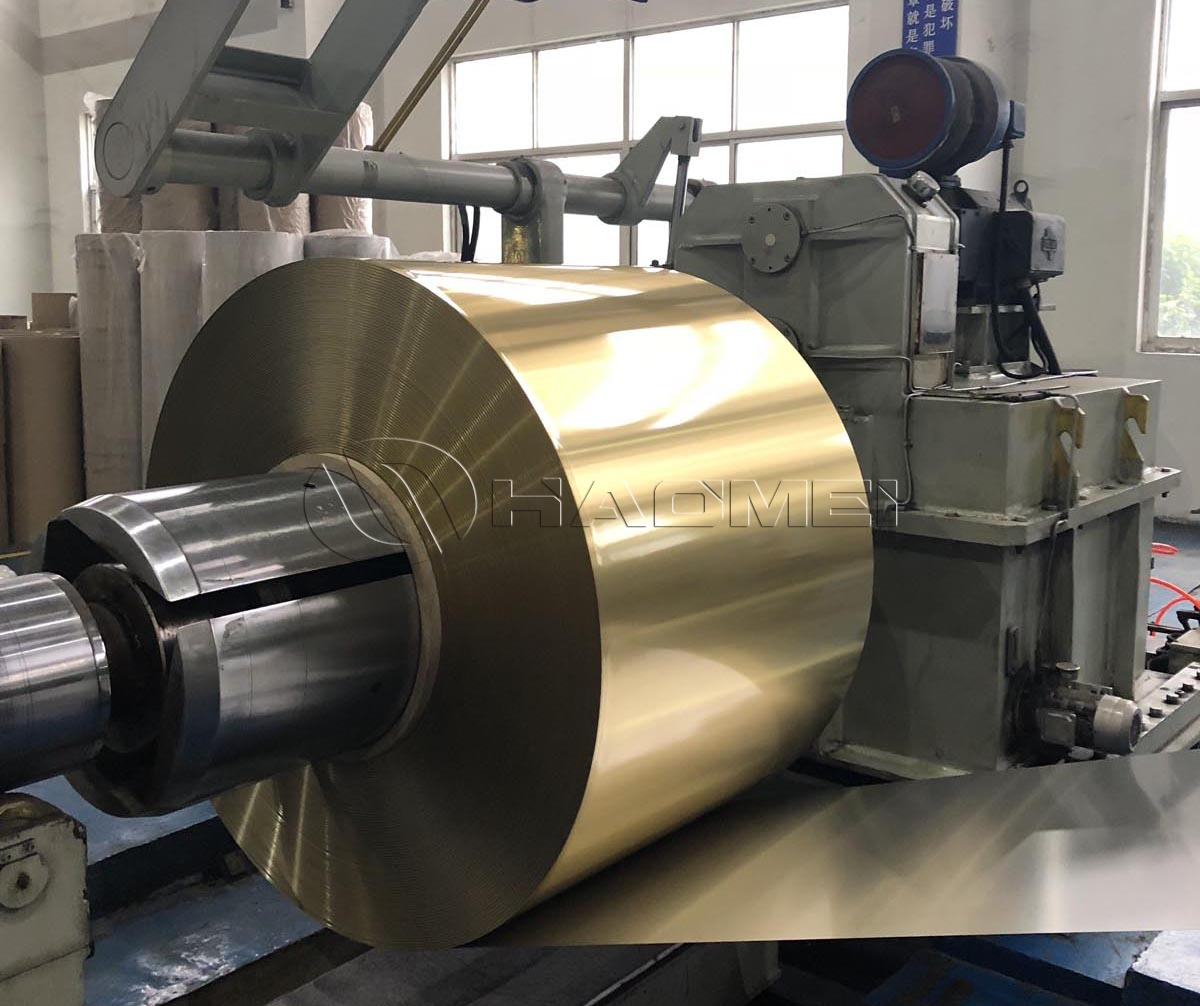
Color Coated Aluminum Coil For Roofing Sheets
This article introduces color coated aluminum coil engineered for roofing sheets, positioning it as a lightweight, corrosion-resistant, and formable substrate for roll-formed roof panels in industrial, commercial, and residential buildings.
2026-01-07
-
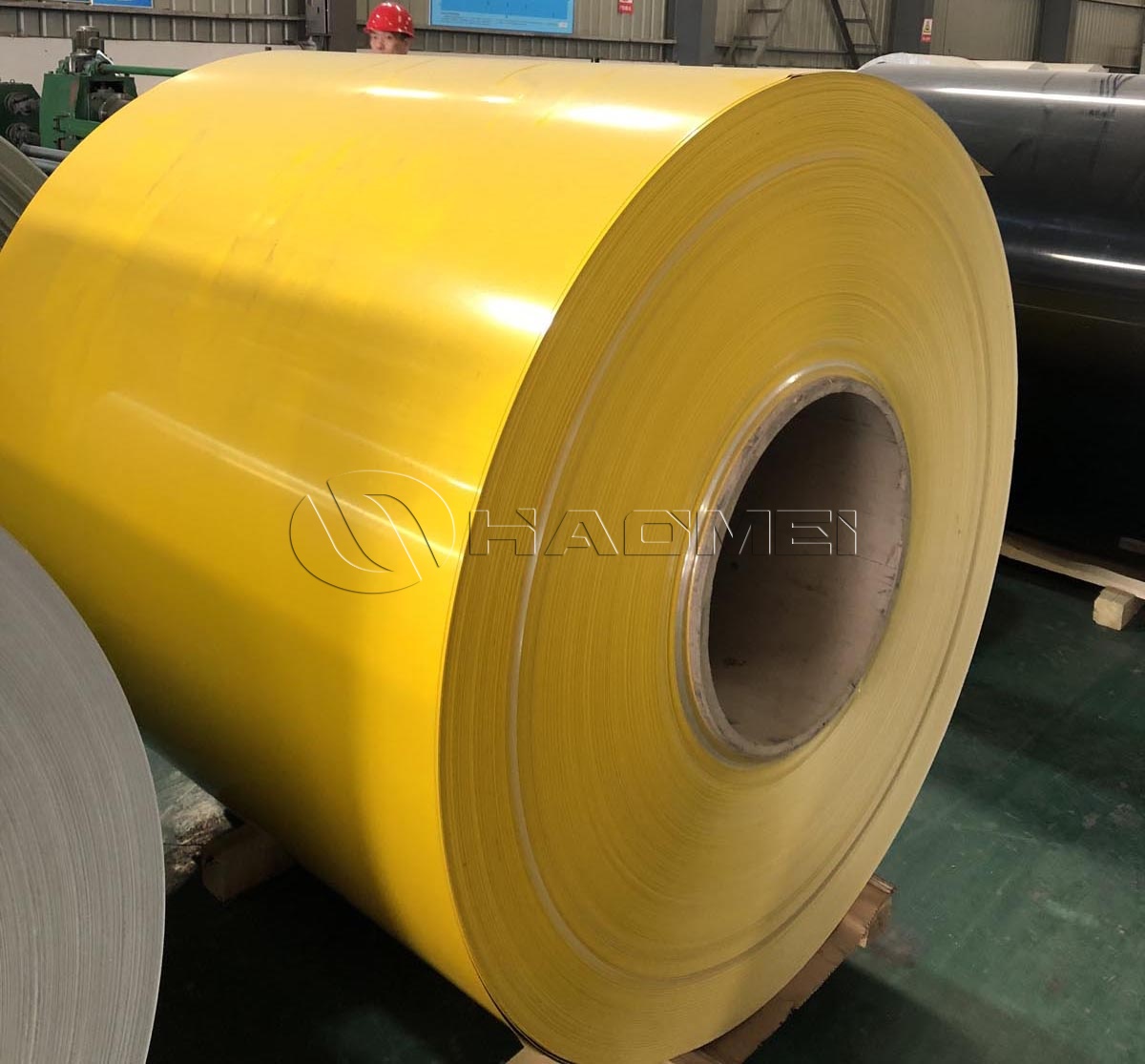
3105 Color Coated Aluminum Coil for Shutter Doors
3105 color coated aluminum coil delivers balanced strength, formability, and durable finishes for residential, commercial, and industrial shutter doors.
2026-09-20
-
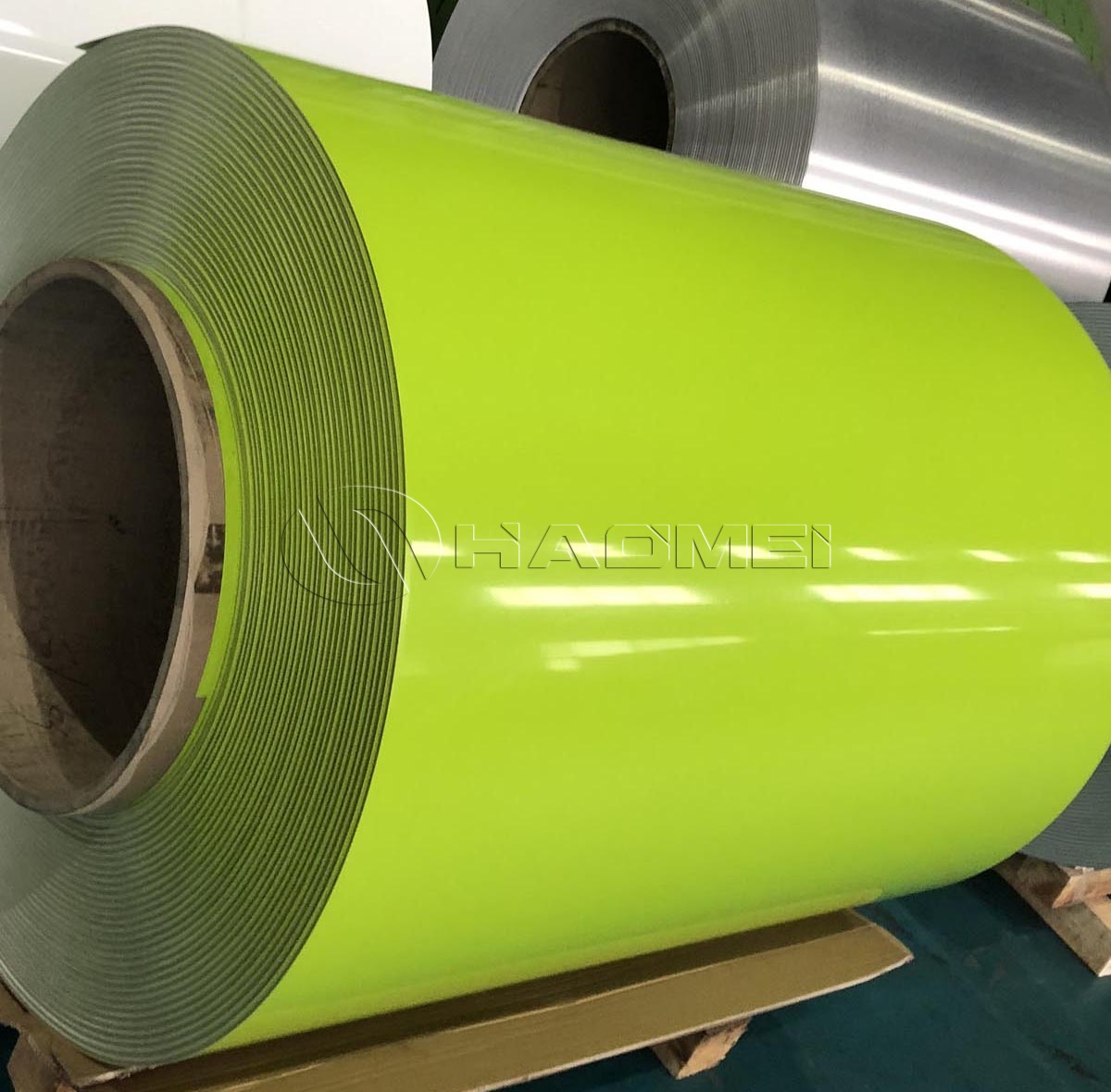
PVDF Coated Aluminum Coil for Facade Panels
PVDF coated aluminum coil for facade panels, covering alloys, coating structure, specifications, durability, and processing for curtain wall systems use.
2026-05-25
Contact Directly
-

ADD: No.14 Waihuan Road, CBD, Zhengzhou, China
-

WhatsApp: +86-18703635966
-

E-MAIL: sales@alummc.com