

News
 By Hermione
Color Coated Aluminum Coils For Roofing
Color coated aluminum coils for roofing are engineered sheet materials designed for lightweight, corrosion-resistant, and visually stable roof systems. They are widely used in industrial roofing, residential metal roofs, commercial buildings, agricultural structures, canopies, and architectural roof cladding where long service life, weather resistance, and formability are required.
What defines roofing-grade color coated aluminum coil
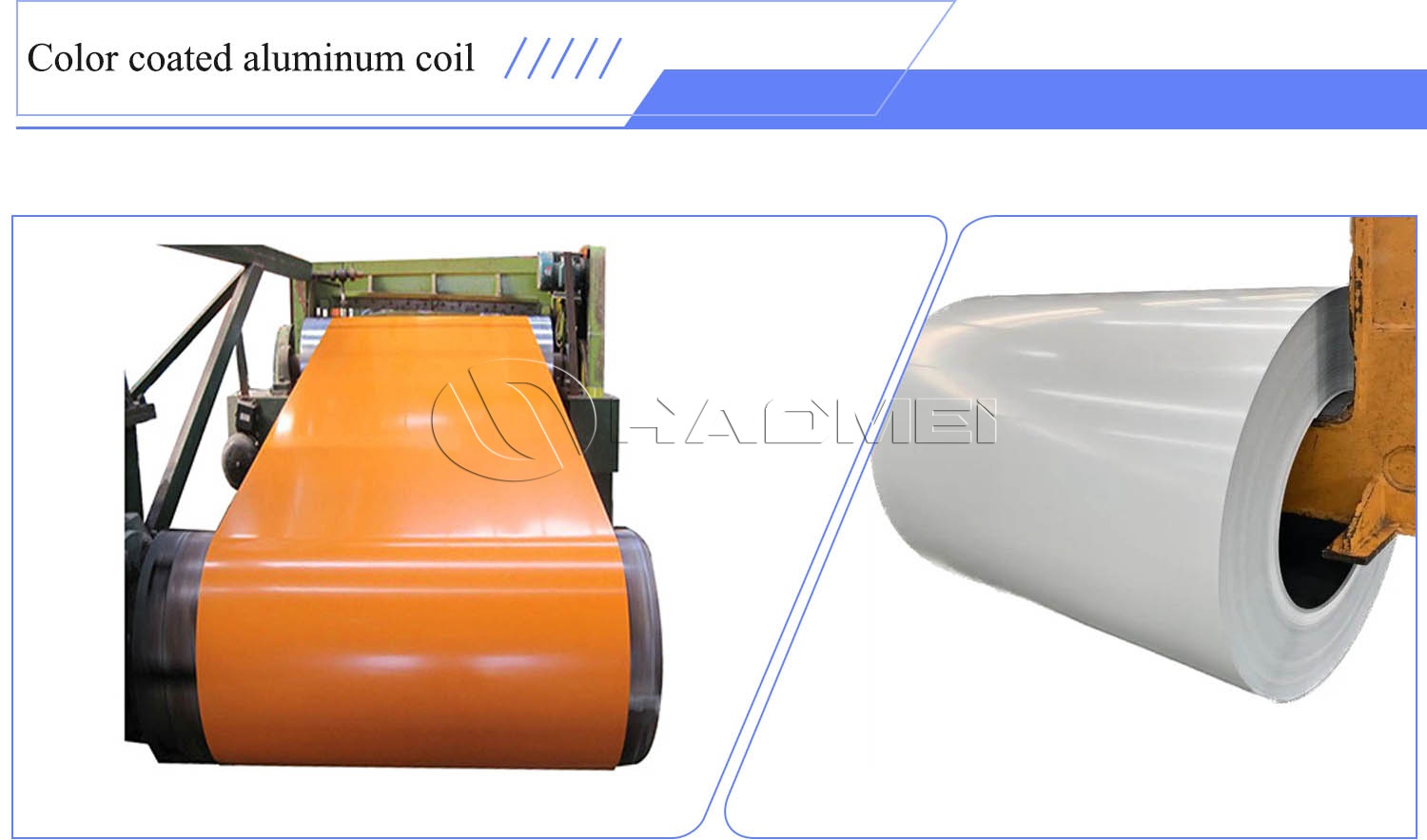
A roofing aluminum coil is not simply painted metal. It is a pre-finished product built from an aluminum substrate, chemical pretreatment, primer, and topcoat, with the full system designed to balance corrosion protection, adhesion, flexibility, and color durability. For roofing use, the material must also perform reliably during roll forming, bending, seaming, profiling, and installation under outdoor exposure.
In practical roof applications, color coated aluminum coil is commonly processed into:
corrugated roofing sheets
standing seam roofing panels
trapezoidal roof panels
roof flashings and ridge caps
gutter and drainage accessories
sandwich panel facings
Compared with heavier roofing metals, pre-painted aluminum offers a favorable strength-to-weight ratio, making it easier to handle over large roof spans while reducing structural dead load. At the same time, aluminum naturally forms a protective oxide layer, which helps improve long-term corrosion resistance in humid, industrial, and coastal environments.
Material structure and coating build-up
The performance of pre-painted aluminum roofing depends on the complete layered structure rather than on the substrate alone. A typical coil construction includes:
aluminum alloy substrate
surface cleaning and degreasing
chemical conversion pretreatment
primer coating
finish coating such as PE or PVDF
optional back coating
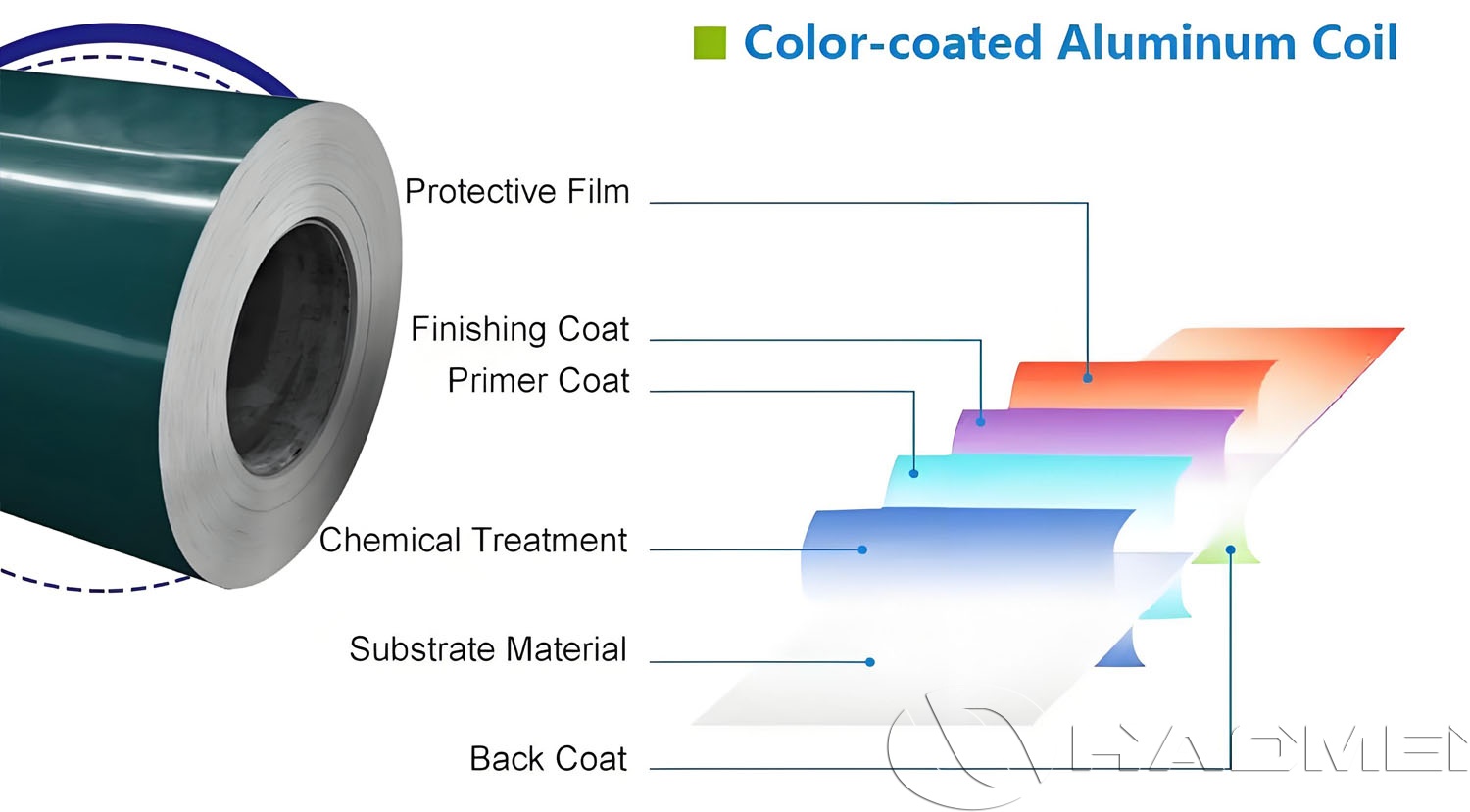
This multilayer design gives roofing sheets several important characteristics:
stable adhesion between coating and metal
resistance to blistering and delamination
controlled flexibility during forming
improved resistance to ultraviolet exposure
better retention of gloss and color over time
For demanding roof environments, PVDF Coated Aluminum Coil is commonly selected because fluoropolymer coatings provide stronger long-term weatherability than conventional polyester systems. For more cost-sensitive roofing or interior-adjacent uses, PE Coated Aluminum Coil is also widely used.
Common alloys used for roofing
Aluminum alloy selection directly affects formability, strength, flatness, and corrosion performance. In roofing, the most commonly used grades are from the 1xxx, 3xxx, and 5xxx series.
1xxx series
Grades such as 1050, 1060, and 1100 have high aluminum purity, good corrosion resistance, and excellent formability. They are suitable for applications where deep strength is not the primary requirement and where easy processing is valued. In roofing, these alloys are more often used for lightweight decorative panels, flashings, or general-purpose coated sheets rather than for heavily stressed roof profiles.
3003 alloy
3003 aluminum coil is one of the most common choices for roofing. With manganese as the main alloying element, it offers a good combination of corrosion resistance, moderate strength, and forming performance. It is widely applied in corrugated sheets, general industrial roofing, and standard architectural roof panels.
3004 alloy
3004 provides higher strength than 3003 due to its alloy design and is suitable when better panel rigidity or improved load-bearing performance is needed. It is often considered for roofing panels exposed to larger spans, higher wind load expectations, or more demanding forming profiles.
3105 alloy
3105 aluminum coil is another widely used roofing alloy. It combines good workability with slightly higher strength than 3003 in many practical applications, and it is commonly specified for painted building sheets, roof panels, wall cladding, and rainwater systems. For color coated roofing, 3105 is frequently selected when a balance of appearance, mechanical reliability, and outdoor durability is required.
5005 and 5052 alloys
The 5xxx series contains magnesium, giving these alloys stronger corrosion resistance and higher mechanical strength than many 1xxx and 3xxx grades. 5052 aluminum coil is especially useful in more aggressive environments, including coastal and industrial areas, where additional resistance to moisture and chemical exposure is important. However, alloy choice must still be matched with proper temper and forming requirements to avoid cracking during severe profiling.
PE and PVDF coating systems for roofing
The coating system plays a decisive role in outdoor roof performance.
PE coating
PE coated aluminum coil uses polyester paint systems. It is valued for:
good decorative performance
broad color range
economical cost structure
adequate flexibility for common forming operations
PE systems are typically used in standard environments, short-to-medium durability projects, auxiliary structures, and roofing applications where cost control is a major factor.
PVDF coating
PVDF coated aluminum coil is preferred for long-term outdoor exposure. It offers:
excellent UV resistance
superior color retention
better chalking resistance
strong weather durability
reliable performance in harsh climates
For exposed roofing in high-sunlight, coastal, or industrial regions, PVDF systems are generally the more technically robust option.
Core specifications of color coated aluminum coils for roofing
The actual specification should be selected according to roof design, panel profile, wind load, forming method, and service environment. Common commercial ranges are shown below.
Core Specifications for Roofing Color Coated Aluminum Coil
| Item | Typical Range / Option |
|---|---|
| Substrate alloys | 1050, 1060, 1100, 3003, 3004, 3105, 5005, 5052 |
| Thickness | 0.20 mm - 1.20 mm |
| Common roofing thickness | 0.30 mm - 0.80 mm |
| Width | 30 mm - 1600 mm |
| Common roofing coil width | 600 mm - 1250 mm |
| Temper | H14, H16, H18, H24, H26 |
| Coating type | PE, SMP, HDP, PVDF |
| Top coating thickness | 15-35 μm |
| Back coating thickness | 5-15 μm |
| Color system | RAL, custom architectural colors |
| Surface finish | Glossy, matte, embossed, patterned |
| Coil ID | 405 mm, 505 mm, 508 mm |
| Coil OD | According to coil weight and line capability |
| Typical coil weight | 1.5-3.0 tons, or customized |
| Protective film | Optional |
| Application forms | Corrugated sheets, standing seam panels, flashings |
| MOQ | 1-3 tons |
Key performance factors in roofing applications
Corrosion resistance
Roofing materials are exposed continuously to rainwater, condensation, airborne salts, industrial emissions, and cyclic temperature changes. Aluminum itself provides inherent corrosion resistance, and the coating system adds another barrier. For roofs in coastal or chemically aggressive zones, alloy and coating should be evaluated together rather than separately.
Formability
Roof panels are often roll formed into deep ribs, trapezoidal sections, or standing seam shapes. Good formability is essential to prevent coating fracture, edge cracking, and loss of appearance. Alloy temper, paint flexibility, and coating thickness all influence forming performance.
Color stability and weathering
Since roofs are highly visible and continuously exposed to sunlight, gloss retention and resistance to fading are critical. This is especially important for architectural roofing, commercial buildings, public facilities, and residential projects where color consistency over time affects the appearance of the entire envelope.
Lightweight performance
One of the major technical advantages of aluminum roofing is low density. This helps reduce transport load, handling difficulty, and roof dead load, while supporting efficient installation across long panel lengths.
Thermal movement compatibility
Aluminum has a relatively high coefficient of thermal expansion, so roofing system design should account for thermal movement through proper fastening, profile design, and joint detailing. This is particularly relevant in long-span roofing and standing seam systems.
Typical application scenarios
Color coated aluminum roofing coils are used across a broad range of building types:
factory and warehouse roofs
logistics centers
airport and station roofing
schools and public facilities
villas and residential metal roofing
farm buildings and storage sheds
modular and prefabricated construction
canopy, awning, and shelter roofing
In these applications, the material is valued not only for weather resistance, but also for its clean surface appearance, broad color options, and compatibility with modern architectural design.
Quality control points in production
For roofing-grade products, stable manufacturing control is essential. Important quality factors include:
substrate cleanliness before coating
uniform chemical pretreatment
accurate coating thickness control
curing temperature consistency
color difference control between batches
adhesion and impact resistance verification
bend performance after coating
gloss and surface defect inspection
A roofing coil with good appearance but poor pretreatment or curing may fail prematurely through blistering, edge corrosion, cracking, or chalking. For this reason, roofing performance depends on both raw material selection and coating line process control.
Selection logic by environment and project type
In general technical practice:
3003 and 3105 are common for standard roofing and architectural panels
3004 is suitable where increased strength is needed
5052 is often chosen for more demanding corrosive environments
PE coatings fit cost-sensitive or moderate-exposure roofing
PVDF coatings fit long-life exposed roofing in harsh climates
When evaluating color coated aluminum coils for roofing, the most important variables are substrate alloy, temper, coating system, total paint build, and the actual service environment. A suitable match among these factors determines whether the finished roof maintains structural reliability, appearance retention, and corrosion resistance throughout its design life.
-
Pe Coated 3004 Aluminum Coil For Cladding
PE coated 3004 aluminum coil for cladding offers formability, surface flatness, and stable coating performance for architectural panels.
2026-04-14
-
Pvdf Coated Aluminum Coil For Exterior Cladding
PVDF coated aluminum coil for exterior cladding delivers long-lasting color, UV resistance, and corrosion protection via a controlled coil coating process for facades.
2026-01-29
-
PVDF-Coated Aluminum Coil for Building Facades: Will It Fade Under Long-Term Sun Exposure?
Learn how PVDF-coated aluminum coil protects building facades from UV exposure, supporting color retention, gloss stability, and durable exterior performance.
2026-08-03
Contact Directly
-

ADD: No.14 Waihuan Road, CBD, Zhengzhou, China
-

WhatsApp: +86-18703635966
-

E-MAIL: sales@alummc.com