

News
 By Hermione
Wood Grain Aluminum Coil for Roller Shutters
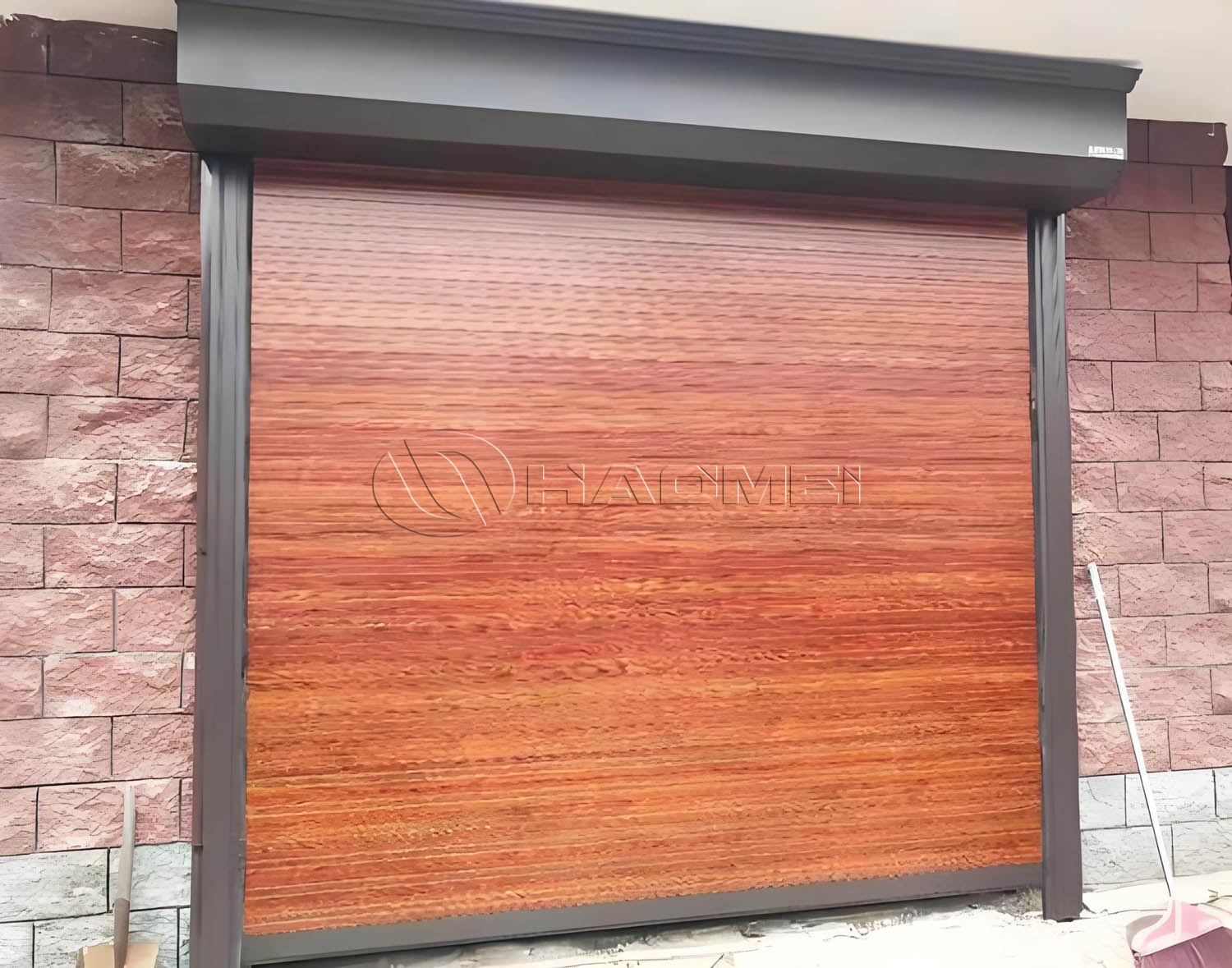
Wood grain aluminum coil for roller shutters is positioned as a prepainted aluminum coil engineered for forming roller shutter slats that need the warmth of timber aesthetics without the maintenance burden of real wood. It is commonly used in residential windows and balconies, commercial storefront shutters, garage doors, and light-industrial openings where consistent appearance, weatherability, and reliable roll-forming are essential.
Why aluminum coil is a practical substrate for wood-grain roller shutters
Roller shutters operate through repeated rolling, unrolling, and interlock movement between slats. This puts a premium on a coil substrate that is light enough for smooth actuation, yet stable enough to hold a defined profile after roll forming. Aluminum alloys used for shutter slats (commonly 1xxx and 3xxx series) balance low density with good ductility, enabling clean forming of hooks, ribs, and end-lock features while maintaining a crisp surface for printed wood patterns.
From a durability standpoint, aluminum provides inherent corrosion resistance, and the coating system becomes the main determinant of long-term color and gloss stability. For exterior shutters, the key is to manage three stressors simultaneously: UV exposure, moisture and pollutants, and mechanical abrasion between slats.
Coating systems: building a wood-grain finish that survives rolling and weather
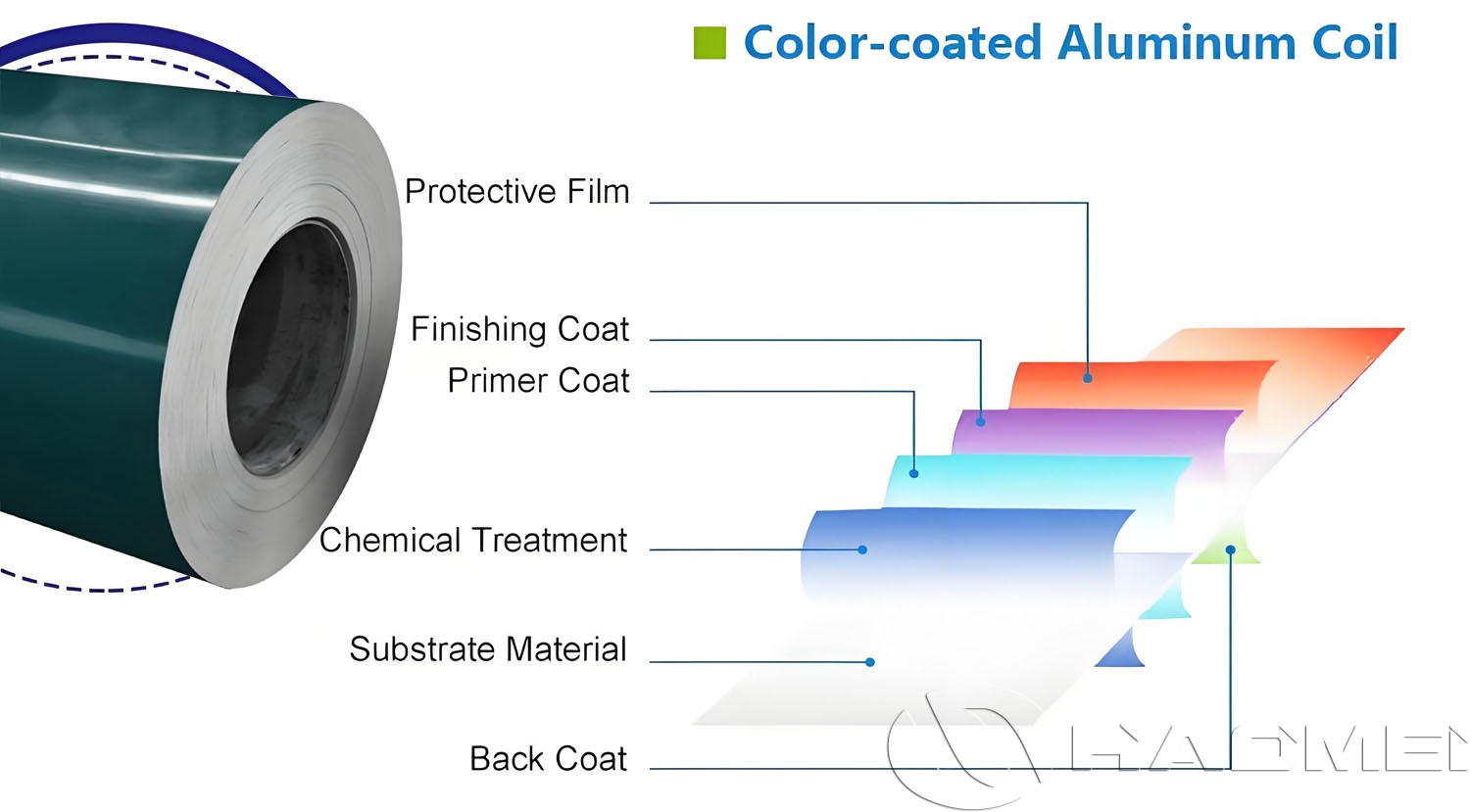
A roller shutter wood-grain appearance is not only about visual pattern fidelity; it must also keep adhesion and flexibility under bending and friction. In practice, the coating stack is designed as a functional composite:
A pretreatment layer improves corrosion resistance and creates a stable interface for primer bonding.
A primer is selected for adhesion and flexibility, helping the system tolerate roll forming without micro-cracking.
The topcoat provides the wood-grain aesthetics and the main weather barrier.
For cost-sensitive applications or moderate climates, PE coating is often specified because it offers good appearance and formability with efficient processing. For long service life, stronger UV resistance, and better color retention in high-sun or coastal environments, PVDF coating is preferred due to its superior weathering performance.
In product terms, this typically corresponds to selecting either PE Coated Aluminum Coil or PVDF Coated Aluminum Coil as the base system, then applying a controlled wood-grain printing and protective finish suited to shutter forming.
A realistic wood effect is commonly achieved via decorative printing (such as transfer or continuous printing) on top of a stable base color, followed by a clear protective coat where required. For roller shutters, controlling the clear coat hardness vs. flexibility is important: too hard and it may show forming stress; too soft and it may scuff between slats.
Wood Grain Surface Treatment Processes
This is crucial in determining the realism and durability of the "wood grain" effect:
(1) Roll Coating:
Principle: Applying a wood grain patterned paint (usually PE polyester or PVDF fluorocarbon coating) directly to the surface of the aluminum coil.
Features: Extremely fast production speed and excellent color control. PVDF-coated wood grain aluminum coils are highly weather-resistant and do not easily fade even after 15-20 years of outdoor exposure.
(2) Heat Transfer:
Principle: Applying a primer first, then attaching a thin film printed with the wood grain pattern to the aluminum coil. High temperature and pressure are used to sublimate the ink into the coating.
Features: Extremely realistic texture, even achieving the tactile feel of wood (embossed effect), but the cost is relatively high, often used for roller shutters in high-end villas.
Manufacturing process: controlling coil quality for consistent slat production
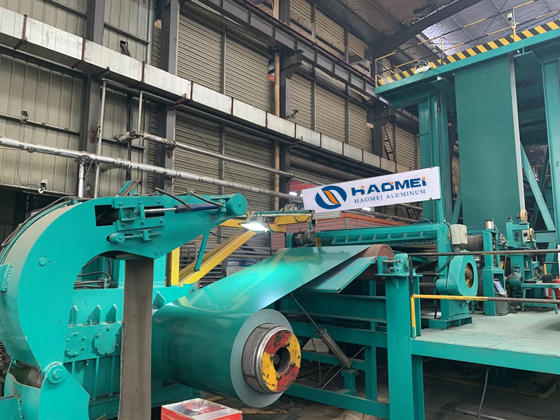
Producing wood grain aluminum coil for roller shutters is essentially a consistency challenge. Slats are sensitive to small variations in thickness, coating build, and curing because these directly influence roll-forming stability, interlock fit, and surface appearance.
A typical manufacturing flow includes:
Substrate preparation and cleaning to remove rolling oils and ensure uniform wetting.
Chemical pretreatment to promote adhesion and enhance corrosion resistance.
Primer coating and baking, tuned to achieve flexibility for forming.
Basecoat/topcoat application (PE or PVDF) with controlled film thickness and oven cure to reach the target crosslink density.
Wood-grain pattern printing with tight registration control so the pattern remains visually consistent across slats.
Optional clear coat for abrasion resistance and pattern depth.
Rewinding and inspection, including checks for color difference, gloss, film thickness, and surface defects.
For shutter makers, two practical details matter most:
Coil-to-coil color consistency (ΔE control) so mixed production batches do not create visible shade differences on installed shutters.
Coating flexibility and adhesion after forming, so the wood-grain layer does not fracture at bends or at interlock hooks.
Core specifications for roller shutter wood-grain coil
The following specification window covers typical roller shutter slat manufacturing needs. Final selection should be matched to slat geometry, foam-filled vs. hollow slats, and the local exposure environment.
Table: Core Specifications of Wood Grain Aluminum Coil for Roller Shutters
| Item | Typical Range / Option | Notes for Roller Shutter Slats |
|---|---|---|
| Alloy | 1050, 1060, 1100, 3003, 3105 | 1xxx for excellent formability; 3xxx for higher strength needs |
| Temper | O, H14, H16, H18 (as applicable) | Chosen based on slat profile depth and dent resistance targets |
| Thickness | 0.18-0.50 mm | Common for shutter slats; optimized for rolling weight and stiffness |
| Coil width | 20-1250 mm | Narrow widths for slat lines; wider for blanking/processing flexibility |
| Coating type | PE or PVDF | PVDF favored for high UV/coastal exposure |
| Coating structure | 2-coat or 3-coat | Primer + topcoat; optional clear coat for wear resistance |
| Total coating thickness | 18-30 μm (typical) | Balanced to avoid cracking while maintaining coverage |
| Finish | Wood-grain printed, matte/satin/gloss options | Matte/satin often hides minor scuffs between slats |
| Surface side | Single-side or double-side coated | Double-side used where back-side appearance or protection matters |
| Common performance focus | Adhesion, flexibility, abrasion resistance, color retention | Directly impacts roll forming yield and field appearance |
Advantages of Wooden Grain Coated Aluminum Coils
1. Weather Resistance: The baking paint process makes wood grain aluminum coils corrosion-resistant, rain-resistant, and anti-aging, resulting in a long service life. The surface coating typically lasts for 10 years or even 20 years.
2. Class A Fire Resistance: Aluminum itself is pollution-free, and combined with fire-retardant coatings, it has an extremely high flame retardant rating (usually no lower than B1), making it safer than solid wood.
3. Lightweight and High Strength: Aluminum alloy materials are lightweight, reducing the load on the roller shutter door motor, while maintaining high strength, bending resistance, and impact resistance.
4. Low Maintenance and Easy Cleaning: Compared to solid wood, wood grain aluminum coils will not rot, crack, deform, or fade, and their smooth surface makes them easy to clean and maintain.
5. Sun and Radiation Protection: Effectively blocks sunlight and ultraviolet rays, providing excellent temperature shielding.
6. Environmentally Friendly and Recyclable: Aluminum coils are 100% recyclable. Furthermore, using wood grain aluminum instead of real wood significantly reduces deforestation, making it a typical environmentally friendly building material. 7. Strong self-cleaning properties: The coating surface is smooth and has a certain degree of hydrophobicity, making it difficult for dust to adhere. Rain acts as an "automatic cleaning," and it only needs to be rinsed with water to look brand new.
Practical application considerations in roller shutter systems
In real shutter assemblies, coil performance is expressed through how the slats behave during forming, assembly, and long-term cycling:
Roll forming and interlock integrity: A stable temper and flexible coating reduce edge cracking and help maintain clean hook geometry, improving slat engagement consistency.
Abrasion and scuff control: Wood-grain finishes should be tuned for repeated contact. A properly selected clear coat and controlled gloss level reduce visible wear marks.
Weatherability and appearance retention: Exterior shutters see strong UV and water exposure. PVDF-based systems retain wood tone and resist chalking longer, while PE systems are often sufficient for shaded facades or shorter design life requirements.
Thermal movement: Aluminum expands with temperature changes; coatings must accommodate thermal cycling without loss of adhesion, especially on dark wood tones that run hotter in sunlight.
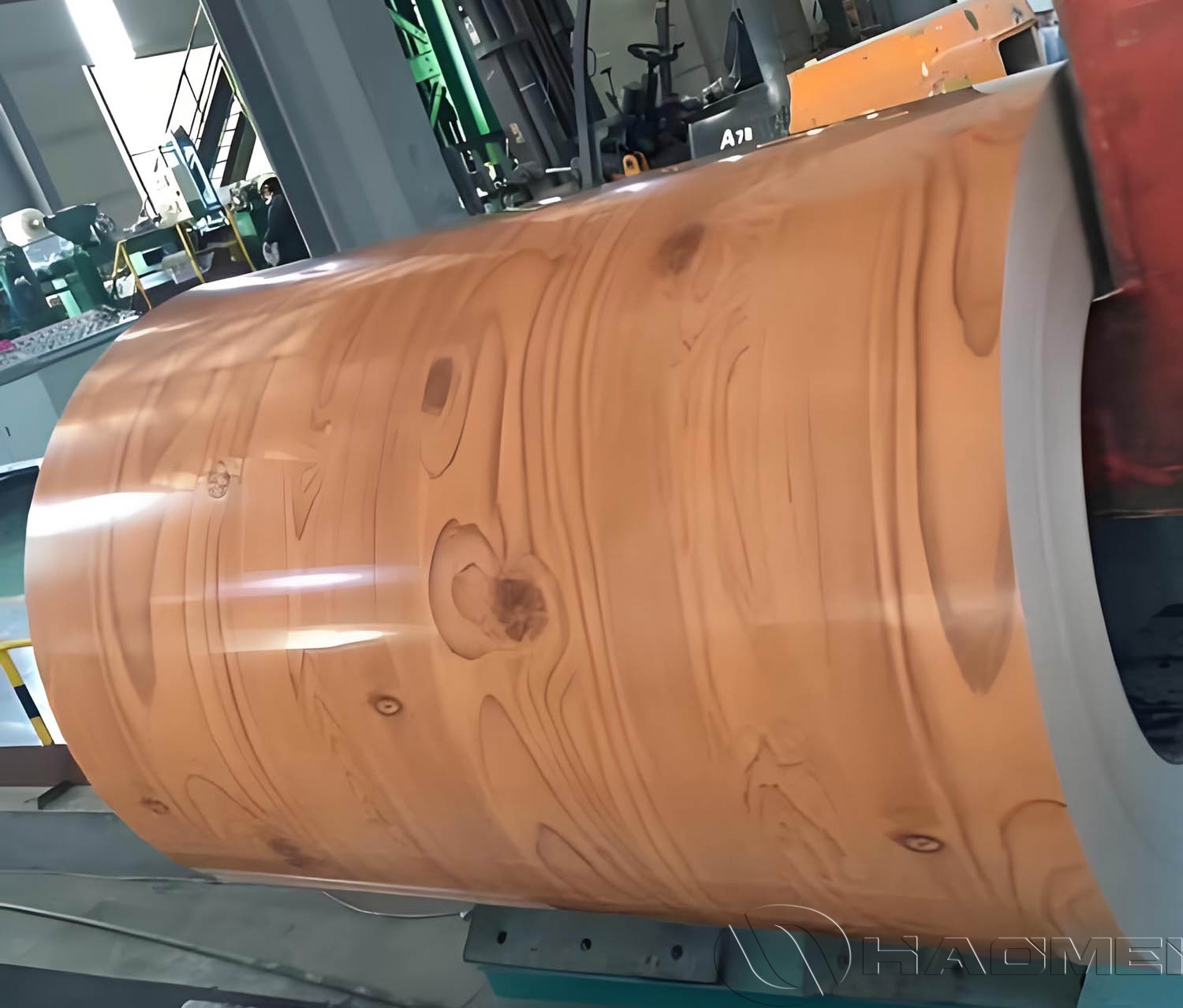
When specified correctly, wooden grain color coated aluminum coil allows roller shutter manufacturers to deliver a timber-like facade appearance while keeping the advantages of aluminum: light weight for smooth operation, consistent forming for high-throughput slat lines, and coating-driven durability for outdoor use.
-
Customizable Stone-Grain Color-Coated Aluminum Coil for Architectural Decoration
Customizable stone-grain color-coated aluminum coil combines durable PE or PVDF finishes, alloy options, and architectural design flexibility in facade systems.
2026-08-24
-
0.35mm-2.2mm 1060 H24 Color Coated Aluminum Coil for Warehouse Roofing
1060 H24 color coated aluminum coil delivers lightweight, durable PE or PVDF protection for warehouse roofing across 0.35mm to 2.2mm thicknesses reliably.
2026-08-25
-
Thickness Of Pvdf Coating On Aluminum Coil
Learn how PVDF coating thickness and DFT on aluminum coil affect UV resistance, corrosion protection, formability, and service life in architectural applications.
2026-02-10
Contact Directly
-

ADD: No.14 Waihuan Road, CBD, Zhengzhou, China
-

WhatsApp: +86-18703635966
-

E-MAIL: sales@alummc.com