

News
 By Hermione
How to Choose 1100 Color Coated Aluminum Coil Supplier
1100 color coated aluminum coil is a widely used prepainted aluminum material known for its high aluminum purity, excellent formability, clean surface quality, and stable decorative performance. It is commonly applied in roofing and wall cladding, ceilings, rainwater systems, insulation jacketing, rolling shutters, appliance panels, signage, and interior architectural decoration where corrosion resistance, appearance consistency, and processing performance are important.
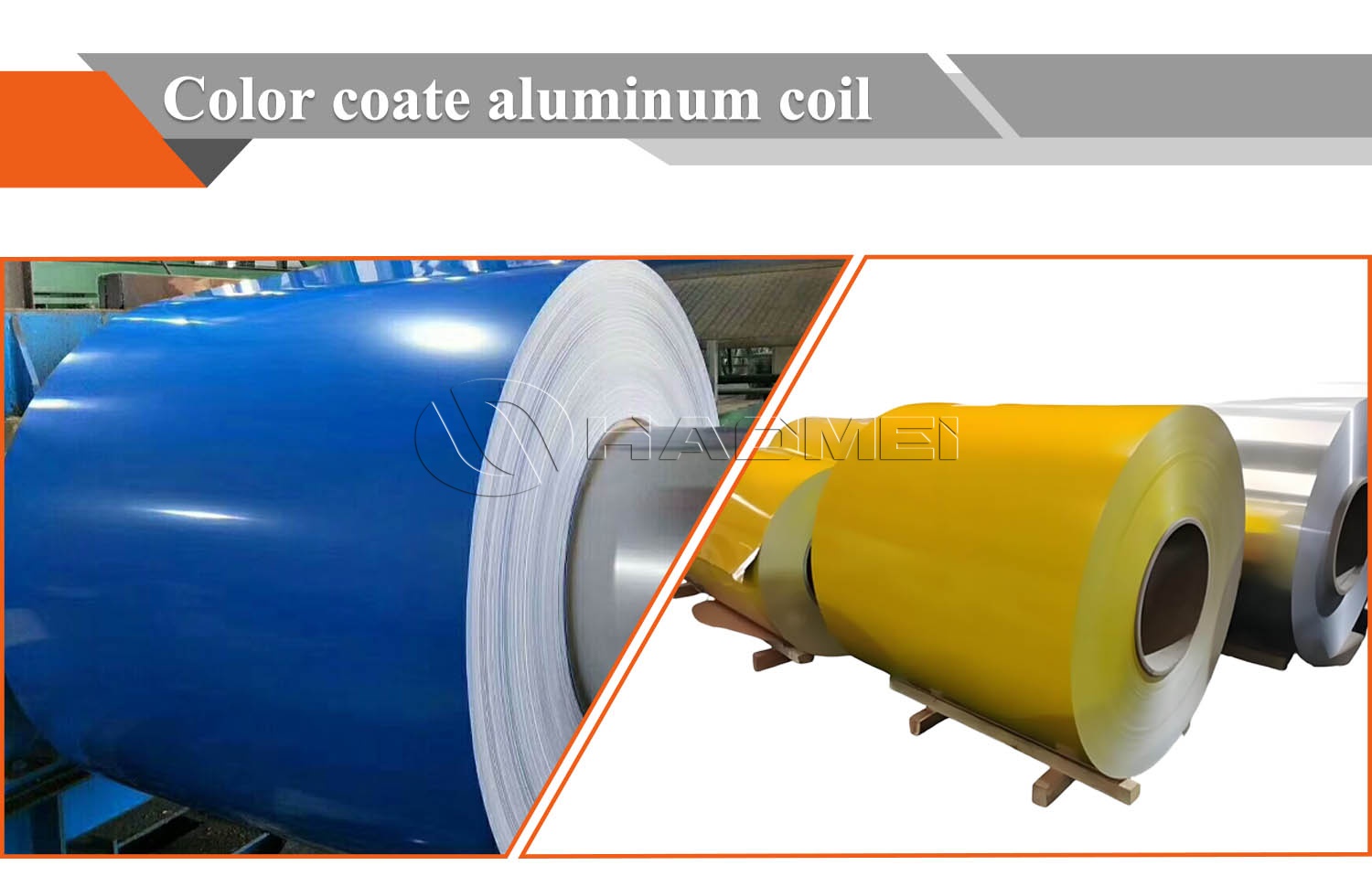
When evaluating a supplier, the key issue is not only whether the material is called 1100 color coated aluminum coil, but whether the supplier can deliver stable substrate quality, a suitable coating system, tight dimensional tolerances, and repeatable color performance for the intended application. A qualified supplier should match the alloy, temper, coating type, and production control to the actual service environment.
Understanding 1100 Color Coated Aluminum Coil
1100 belongs to the 1xxx series of industrial pure aluminum alloys. It usually contains at least 99.0% aluminum, which gives it very good corrosion resistance, excellent ductility, and easy processing. After color coating, the coil gains both decorative value and additional surface protection.
In practical use, 1100 Color Coated Aluminum Coil is often selected for applications that require:
good bending and roll forming performance
smooth and uniform painted surface
light weight and easy fabrication
moderate mechanical strength with strong corrosion resistance
stable use in indoor and general outdoor environments
Because 1100 is relatively soft compared with manganese- or magnesium-containing alloys, supplier selection should focus on whether the material properties actually fit the project. For highly demanding structural or high-load applications, another alloy may be more suitable.
Commonly Used Alloys in Color Coated Aluminum Coil
Although 1100 is common, supplier capability is often reflected in how well they understand alloy differences and recommend the right base material for each use.
1xxx series: 1050, 1060, 1100, 1200
These alloys are characterized by high aluminum purity, good corrosion resistance, and excellent formability. They are often used in ceiling systems, insulation cladding, interior decoration, signage, and low-load architectural panels. Among them, 1100 offers a good balance of surface quality and processability.
3xxx series: 3003, 3004, 3105
These alloys contain manganese and provide higher strength than 1xxx series materials. They are widely used in roofing, wall panels, shutters, ceilings, and exterior building decoration. For applications requiring better dent resistance or stronger panel stiffness, 3003 or 3105 may be preferred over 1100.
5xxx series: 5005, 5052, 5754
These magnesium-containing alloys offer higher strength and good corrosion resistance, especially in harsher environments. They are more suitable for applications involving higher forming stress, stronger weather exposure, or higher mechanical performance requirements.
A capable supplier should be able to explain when 1100 color coated aluminum coil is the best choice and when alternatives such as 3003 Color Coated Aluminum Coil may provide better long-term performance.
Core Specifications of 1100 Color Coated Aluminum Coil
Core Specifications Table
| Item | Typical Range / Option | Notes |
|---|---|---|
| Alloy | 1100 | Industrial pure aluminum series |
| Temper | H14, H16, H18, H24 | Chosen according to forming and stiffness needs |
| Thickness | 0.20-1.50 mm | Thicker gauges available for special uses |
| Width | 30-1600 mm | Depends on coating line and slitting capacity |
| Coating Type | PE, PVDF, SMP, HDP | Selected by environment and durability target |
| Top Coating Thickness | 5-25 μm | Commonly 14-18 μm for PE, 25 μm for PVDF systems |
| Back Coating Thickness | 5-10 μm | Improves corrosion protection and adhesion |
| Color Standard | RAL, Pantone, custom sample | Batch consistency control is important |
| Gloss | Matt, semi-gloss, high gloss | Determined by design requirement |
| Coil ID | 405 mm, 508 mm | Standard production sizes |
| Surface Finish | Solid color, metallic, embossed, patterned | Depends on coating and processing capability |
| Protective Film | Optional | Used to reduce transport and fabrication scratches |
Actual specification suitability depends on end use. A supplier that only offers a broad range on paper, but cannot control the real tolerances and coating consistency in production, may create problems during forming and installation.
Key Factors for Choosing a 1100 Color Coated Aluminum Coil Supplier
1. Substrate quality and raw material control
The performance of the final coil starts with the aluminum substrate. A reliable supplier should control:
aluminum ingot or coil source consistency
alloy composition within standard limits
flatness and shape control
surface cleanliness before coating
pinhole, oil stain, edge crack, and roll mark reduction
For 1100 alloy in particular, surface condition matters greatly because decorative coating can reveal substrate defects. Poor incoming substrate control often leads to visible waviness, orange peel amplification, or inconsistent paint appearance.
2. Coating system selection: PE or PVDF
The coating system has a direct impact on weatherability, flexibility, chalk resistance, and color retention. Common options include PE Coated Aluminum Coil for indoor or general decorative use and PVDF Coated Aluminum Coil for demanding exterior architectural applications.
A supplier should clearly define:
resin type and grade
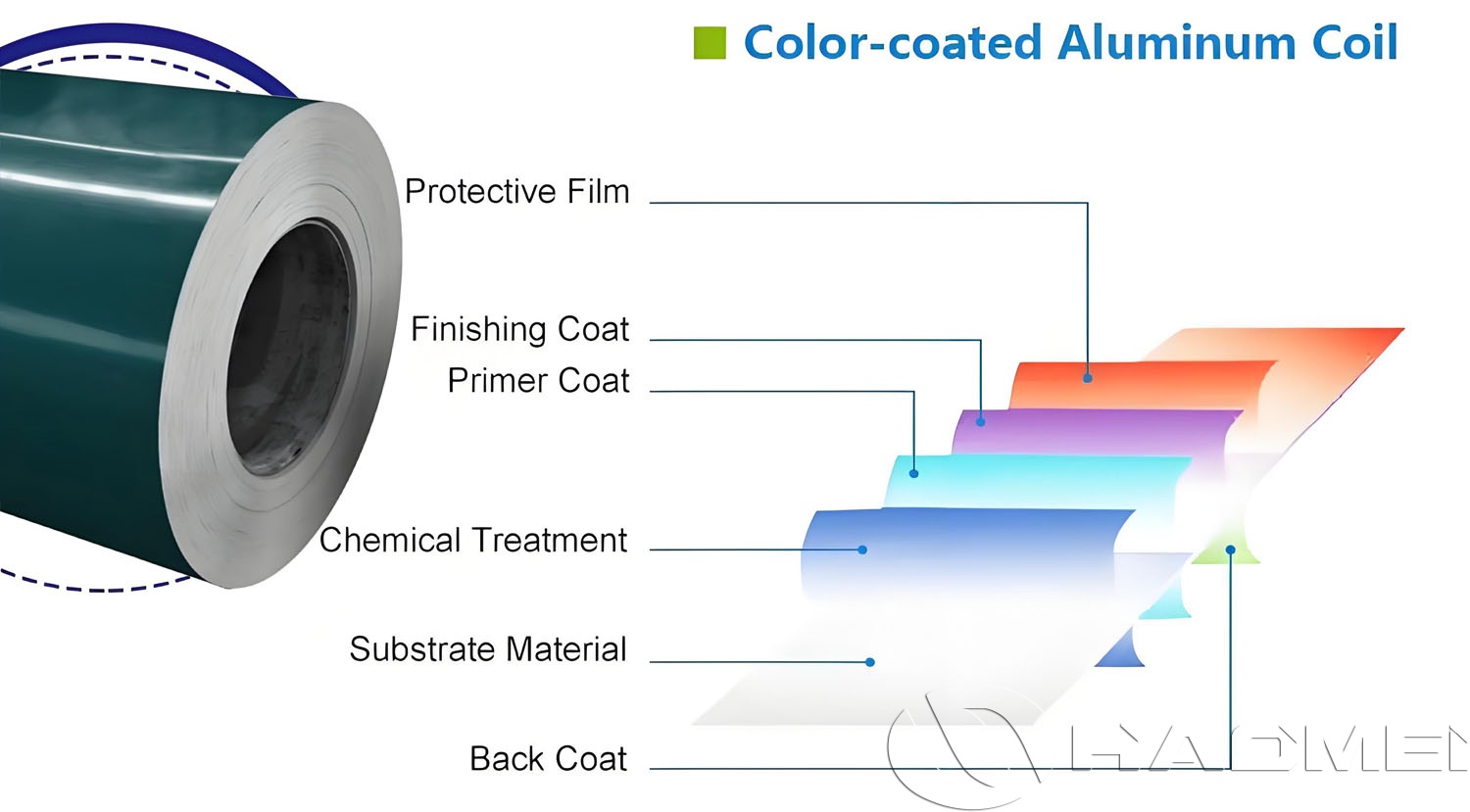
coating structure, such as primer plus topcoat plus back coat
dry film thickness range
curing window and peak metal temperature control
expected outdoor durability
In general terms:
PE coating is suitable for interior panels, ceiling systems, signage, and applications with lower UV exposure.
PVDF coating is more appropriate for facades, roofing, and long-term outdoor use where color retention and weather resistance are critical.
If a supplier cannot provide a clear explanation of why a given coating system is used, the product selection may be based more on price than on technical suitability.
3. Pretreatment process stability
Pretreatment is one of the most important but most frequently overlooked parts of color coated aluminum production. The adhesion and corrosion resistance of the coating depend heavily on degreasing, chemical conversion, rinsing, and drying quality.
A dependable supplier should have stable control of:
cleaning effectiveness
conversion coating uniformity
bath chemistry management
washing water quality
drying completeness before painting
Poor pretreatment can cause early peeling, blistering, edge corrosion, and coating delamination, even when the paint itself is high grade.
4. Mechanical properties matched to processing needs
1100 alloy offers excellent formability, but temper selection still affects fabrication. Different end uses may require different hardness levels:
H14 or H24 for balanced formability and stiffness
H16 for more rigidity in roll-formed products
H18 where higher hardness is preferred but deep forming is limited
A supplier should understand whether the coil will be used for bending, stamping, profiling, hemming, or drawing. If temper selection is incorrect, cracking, springback variation, or shape distortion can occur during processing.
5. Dimensional tolerance and coil consistency
For continuous production lines, dimensional stability is as important as alloy selection. Key checks include:
thickness tolerance
width tolerance
camber control
edge quality
coil tightness and rewinding quality
weight consistency by coil
Unstable dimensions can lead to feeding problems, mismatch in roll forming equipment, and visible installation defects. This is especially important for ceiling strips, shutter slats, ACP feedstock, and decorative panel fabrication.
6. Color consistency and visual appearance control
For building decoration and branded products, appearance is often the most visible quality criterion. A suitable supplier should control:
color difference between batches
gloss variation
coating smoothness
orange peel level
striping or roller mark defects
metallic or pearl pigment orientation, if applicable
Batch-to-batch color consistency should be assessed with both instrument data and visual evaluation under standard lighting conditions. For large facade or ceiling projects, even small color shifts may become obvious after installation.
7. Application-based technical understanding
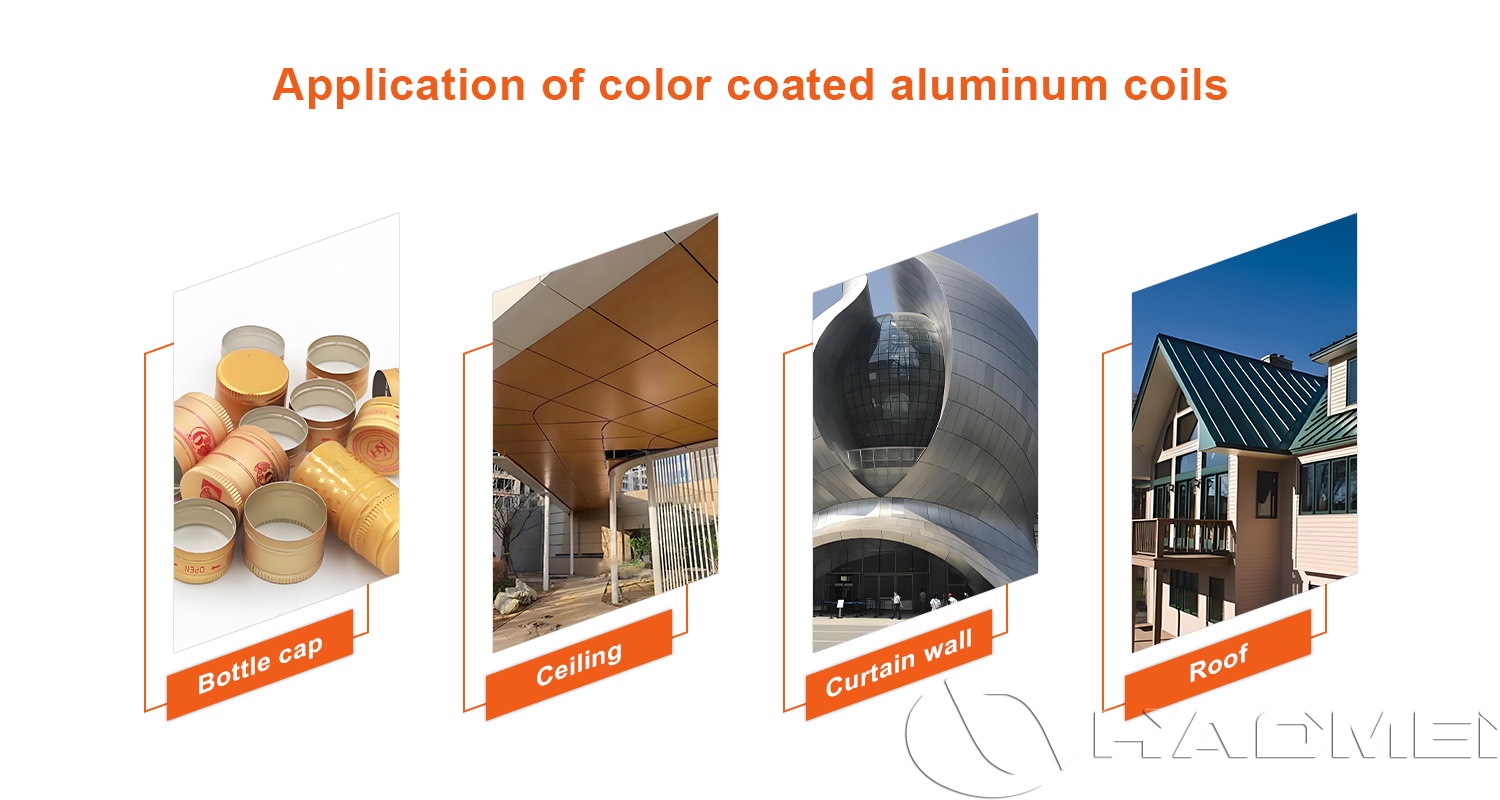
A strong supplier does not treat every order the same. They should understand the difference between application scenarios such as:
interior suspended ceilings
roof and wall systems
bottle cap stock
insulation jacketing
roller shutters
appliance housings
signboards and display panels
For example, 1100 is often well suited to decorative indoor products and general-purpose formed panels, but for roofing in aggressive environments or for products needing higher strength, another alloy and coating combination may be technically preferable.
8. Testing and quality verification capability
A professional supplier should be able to provide routine test control on both substrate and coating. Typical verification items include:
alloy composition analysis
tensile strength and elongation
coating thickness measurement
adhesion test
impact resistance
T-bend performance
pencil hardness
solvent resistance
gloss measurement
color difference evaluation
salt spray resistance
humidity resistance
accelerated weathering test
These test items indicate whether the supplier has a true process control system or is only trading standard material without deep manufacturing oversight.
Signs of a Technically Reliable Supplier
A technically sound 1100 aluminum coil supplier usually shows several characteristics:
Clear understanding of alloy and temper suitability.
Transparent coating specification and paint brand control.
Stable pretreatment and curing process management.
Real production tolerance control, not only nominal values.
Traceable batch management from raw material to finished coil.
Ability to support custom colors, gloss, and protective film requirements.
Familiarity with downstream fabrication issues such as bending, profiling, and stamping.
Consistent packaging suitable for sea transport and long-distance storage.
Common Issues to Watch in Supplier Evaluation
When comparing suppliers, several recurring risks deserve attention:
using recycled or mixed substrate with unstable chemistry
insufficient coating thickness to reduce cost
replacing PVDF with lower-grade fluorocarbon-like systems
poor edge protection and packaging damage during transport
weak color matching discipline between trial and mass production
coating adhesion problems caused by inadequate pretreatment
wide performance variation from one batch to another
These issues may not be obvious from a quotation sheet alone, but they strongly affect the long-term usability of the product.
Why 1100 Alloy Remains Widely Used
Despite its relatively low strength compared with 3xxx and 5xxx series alloys, 1100 color coated aluminum coil remains highly relevant because it offers:
excellent decorative surface potential
very good processing flexibility
low density and easy handling
good corrosion resistance in many common environments
broad suitability for indoor and light outdoor use
This makes it especially practical where appearance, formability, and stable coating performance matter more than high structural strength.
Final Technical Perspective on Supplier Selection
Choosing a 1100 color coated aluminum coil supplier is fundamentally a matter of matching material system capability to the application. The most important evaluation points are the true quality of the 1100 substrate, the suitability of the coating system, the stability of pretreatment and curing, the control of dimensions and color, and the supplier's understanding of downstream fabrication and service conditions. When these factors are controlled together, the resulting prepainted aluminum coil can maintain consistent appearance, reliable adhesion, and predictable processing performance across different production batches.
-
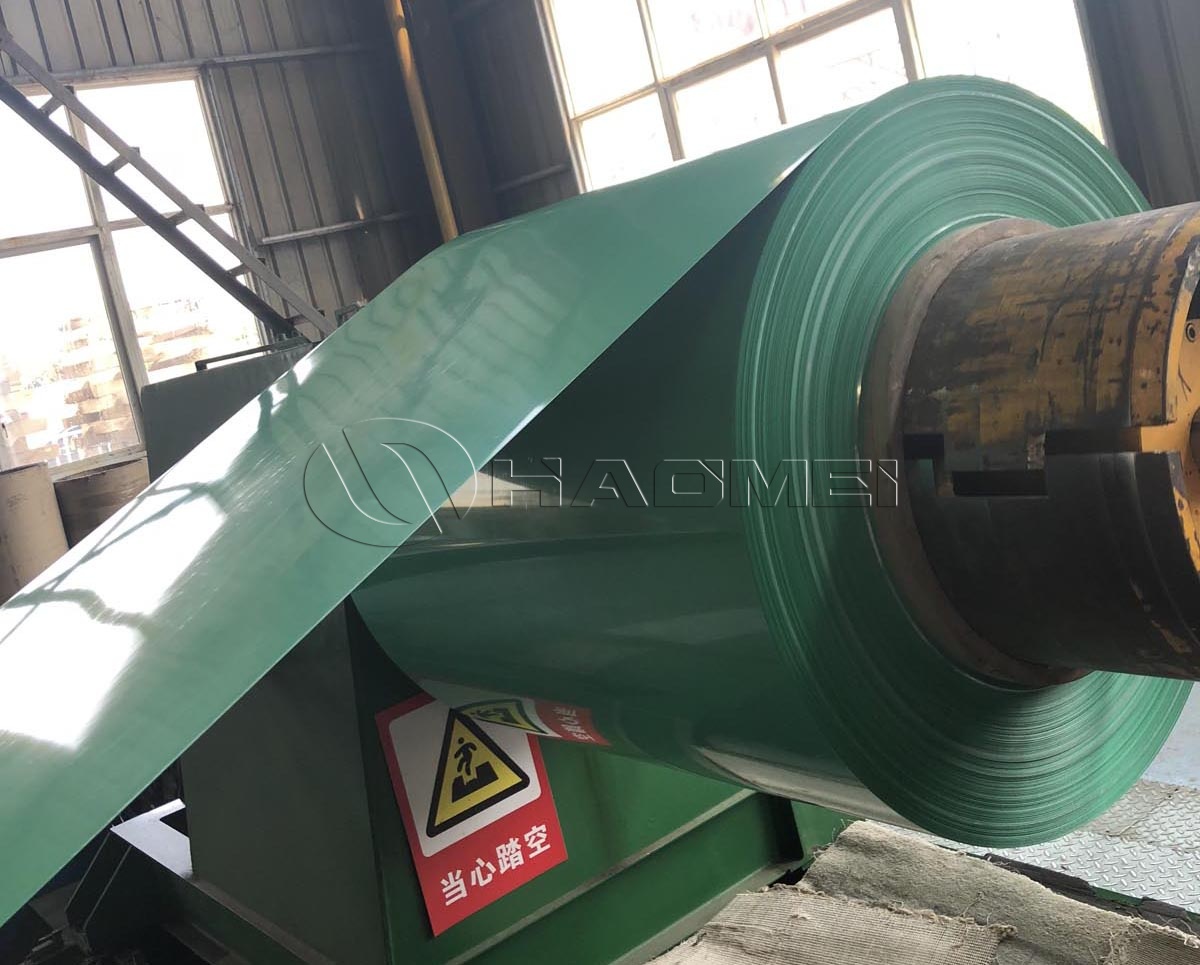
0.5mm Color-Coated Aluminum Coil for Pipe Insulation
Explore 0.5mm color-coated aluminum coil for pipe insulation, covering alloys, coatings, dimensions, corrosion resistance, and jacketing performance.
2026-08-20
-
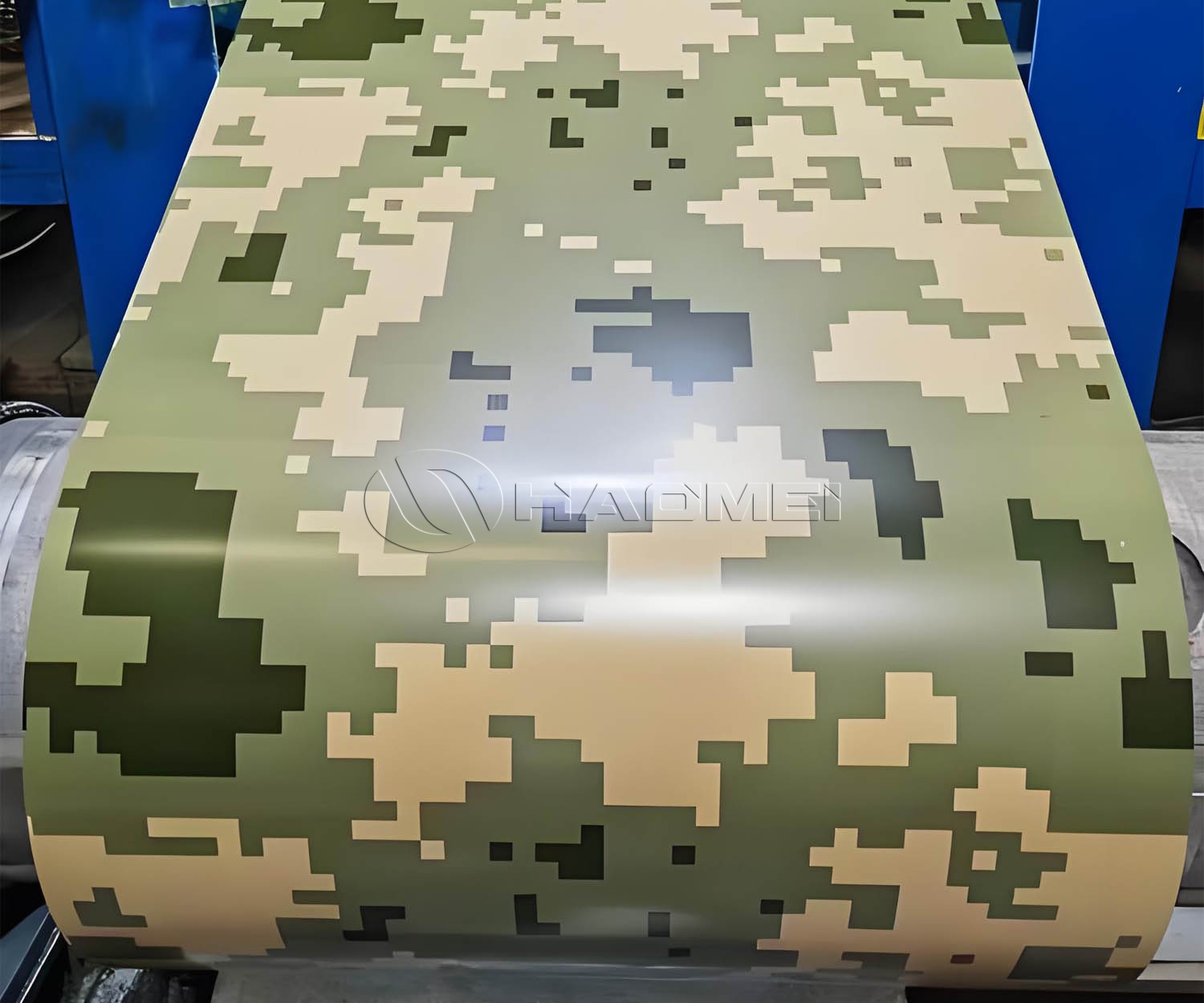
Camouflage-Coated Aluminum Coils for Marine Exteriors
Technical overview of marine camouflage-coated aluminum coils, covering alloys, PVDF coating systems, specifications, and exterior durability for ships.
2026-06-30
-
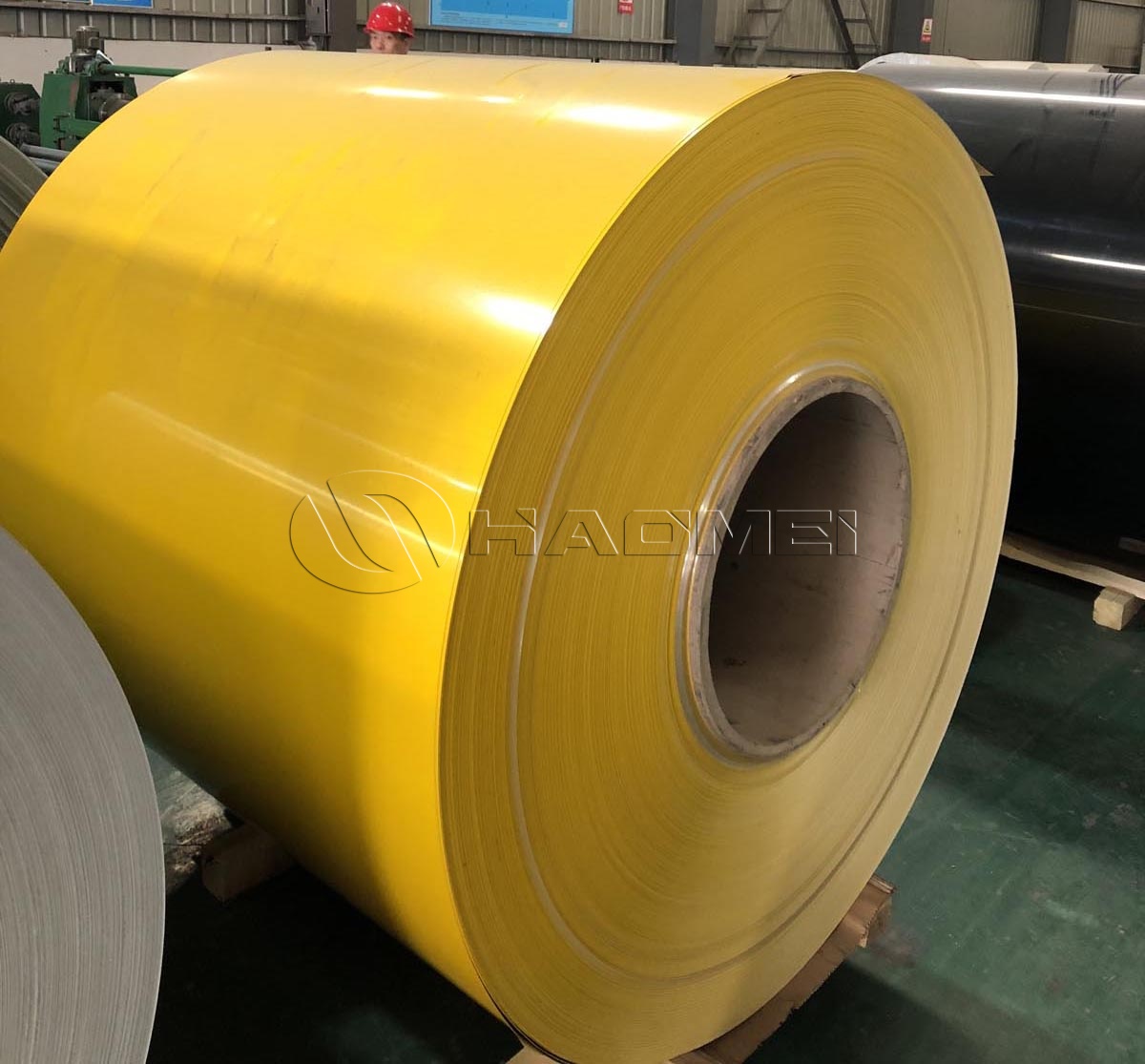
3003 Prepainted Aluminum Coil Vs 5052
Compare 3003 prepainted aluminum coil vs 5052 in strength, formability, corrosion resistance, coating systems, and common uses.
2026-04-10
Contact Directly
-

ADD: No.14 Waihuan Road, CBD, Zhengzhou, China
-

WhatsApp: +86-18703635966
-

E-MAIL: sales@alummc.com