

News
 By Hermione
Customized 1100 Double-Layer Color-Coated Aluminum Coil
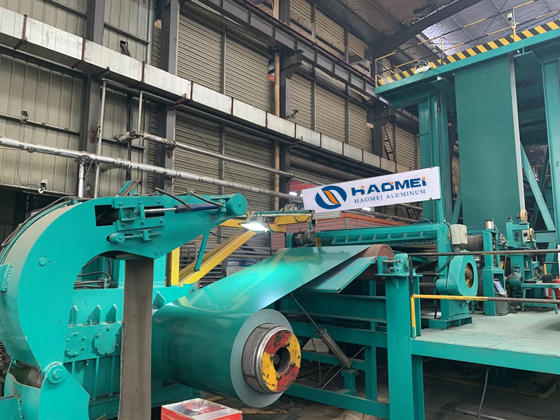
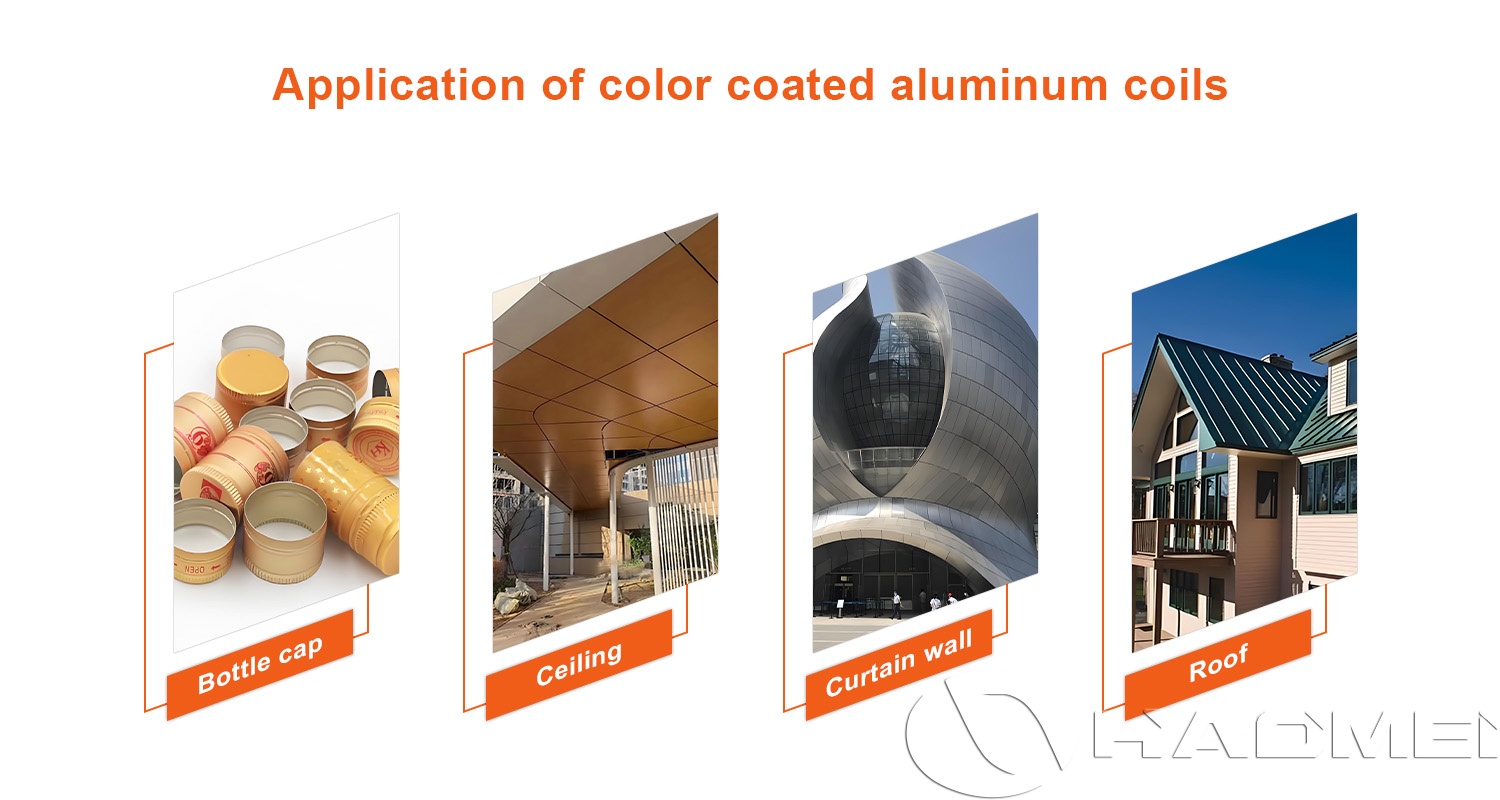
Customized 1100 double-layer color-coated aluminum coil is positioned as a high-formability, appearance-driven prepainted material for projects that need consistent color, clean forming, and reliable corrosion protection. Typical application scenarios include architectural roofing and cladding, ceiling and soffit systems, rainwater goods, appliance skins, and general sheet-metal fabrication where bending and roll forming are frequent.
What "1100 + double-layer coating" means in practice
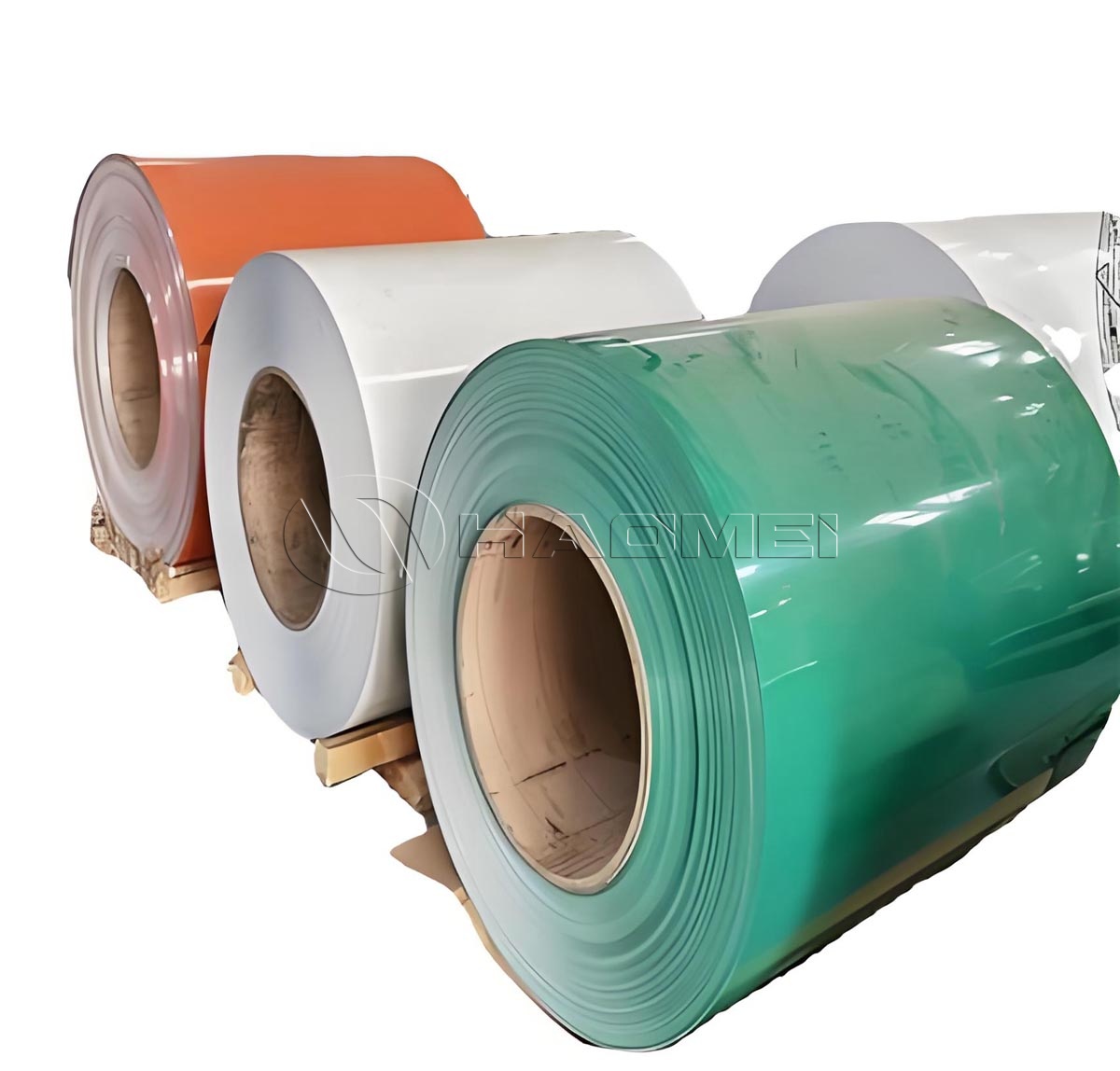
AA1100 is a commercially pure aluminum alloy (nominally 99.0% Al) known for its excellent ductility and surface quality. When paired with a double-layer coating system, the coil is engineered to balance three core targets:
Surface aesthetics: stable gloss, uniform color, and pattern capability.
Process robustness: resistance to micro-cracking in tight bends via controlled film build and resin selection.
Durability: barrier performance against moisture, mild industrial atmosphere, and UV (depending on topcoat).
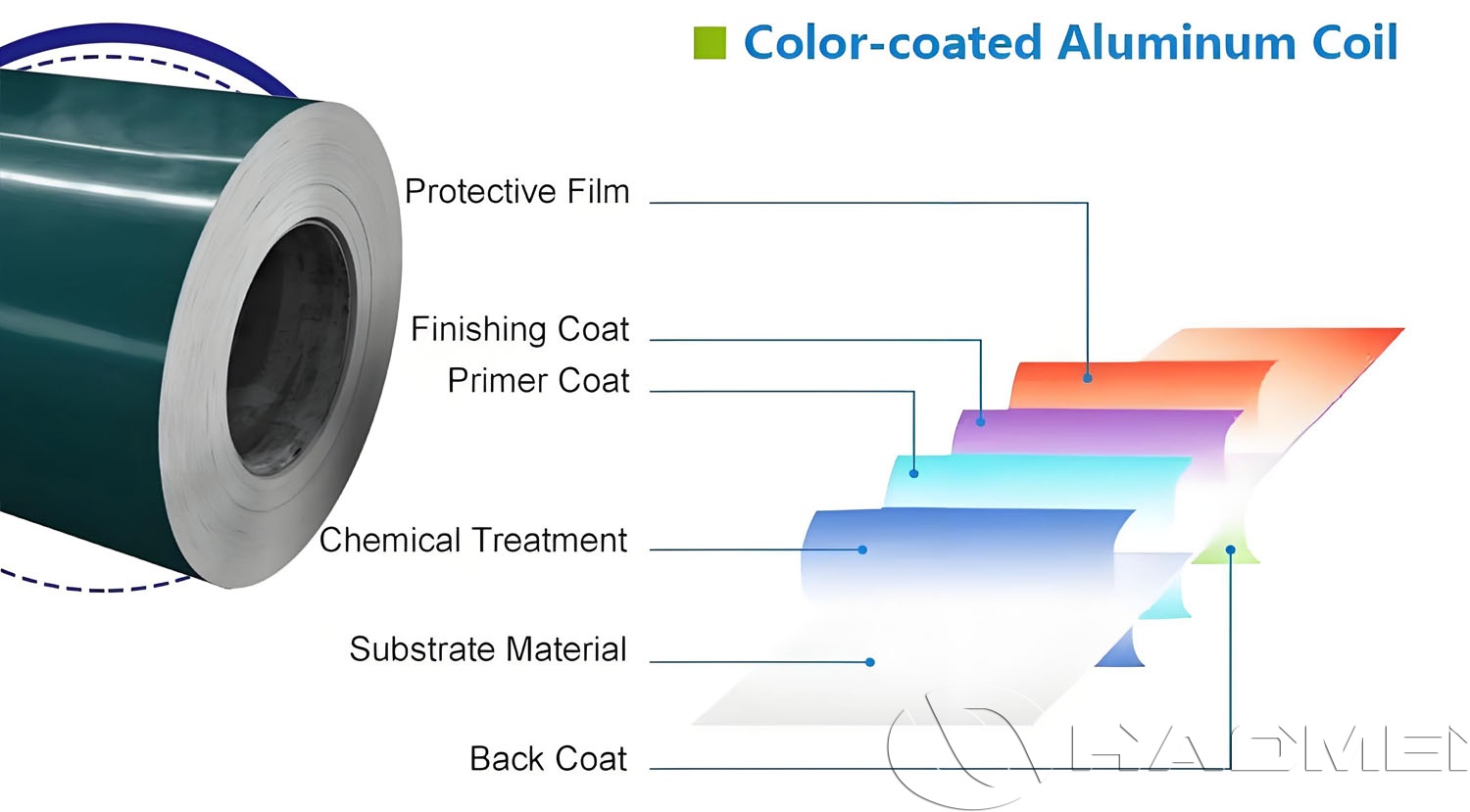
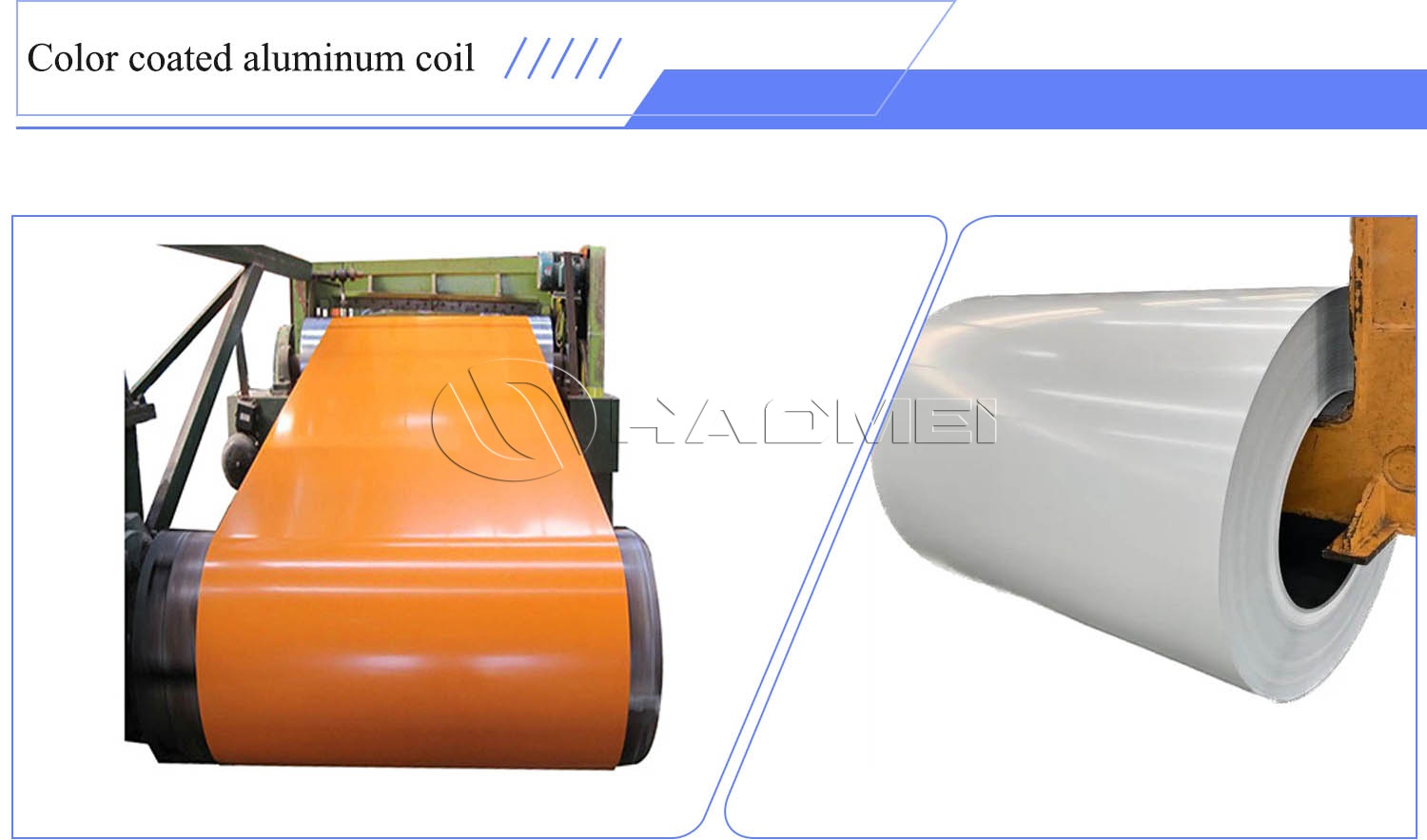
Double-layer color coating generally refers to a primer + topcoat architecture applied on one or both sides. The primer improves adhesion and corrosion resistance, while the topcoat provides color, weatherability, and stain resistance.
Key Advantages of 1100 Color-Coated Aluminum Coils
1. Superior Corrosion and Weather Resistance
1100 aluminum alloy itself possesses excellent resistance to atmospheric corrosion. Combined with a double-coating process, the primer enhances the adhesion between the substrate and the topcoat, while the topcoat acts as a barrier against UV rays, acid rain, and industrial exhaust gases, ensuring the surface remains unfaded and unpeeled for 15-20 years.
2. Excellent Processability and Formability
1100 is pure aluminum (aluminum content ≥ 99.0%), possessing extremely high ductility and flexibility. The double-coating process ensures strong paint adhesion while allowing for complex bending, stamping, and roll forming of the aluminum coil without paint cracking or peeling, making it ideal for irregularly shaped building materials.
3. Lightweight and High Flatness
Aluminum's density is only 1/3 that of steel, resulting in a lighter weight for the same thickness. 1100 color-coated aluminum coils undergo precision bending and straightening, resulting in low internal stress and extremely high surface flatness. When used as curtain walls or honeycomb panel panels, this effectively avoids the "wavy" appearance.
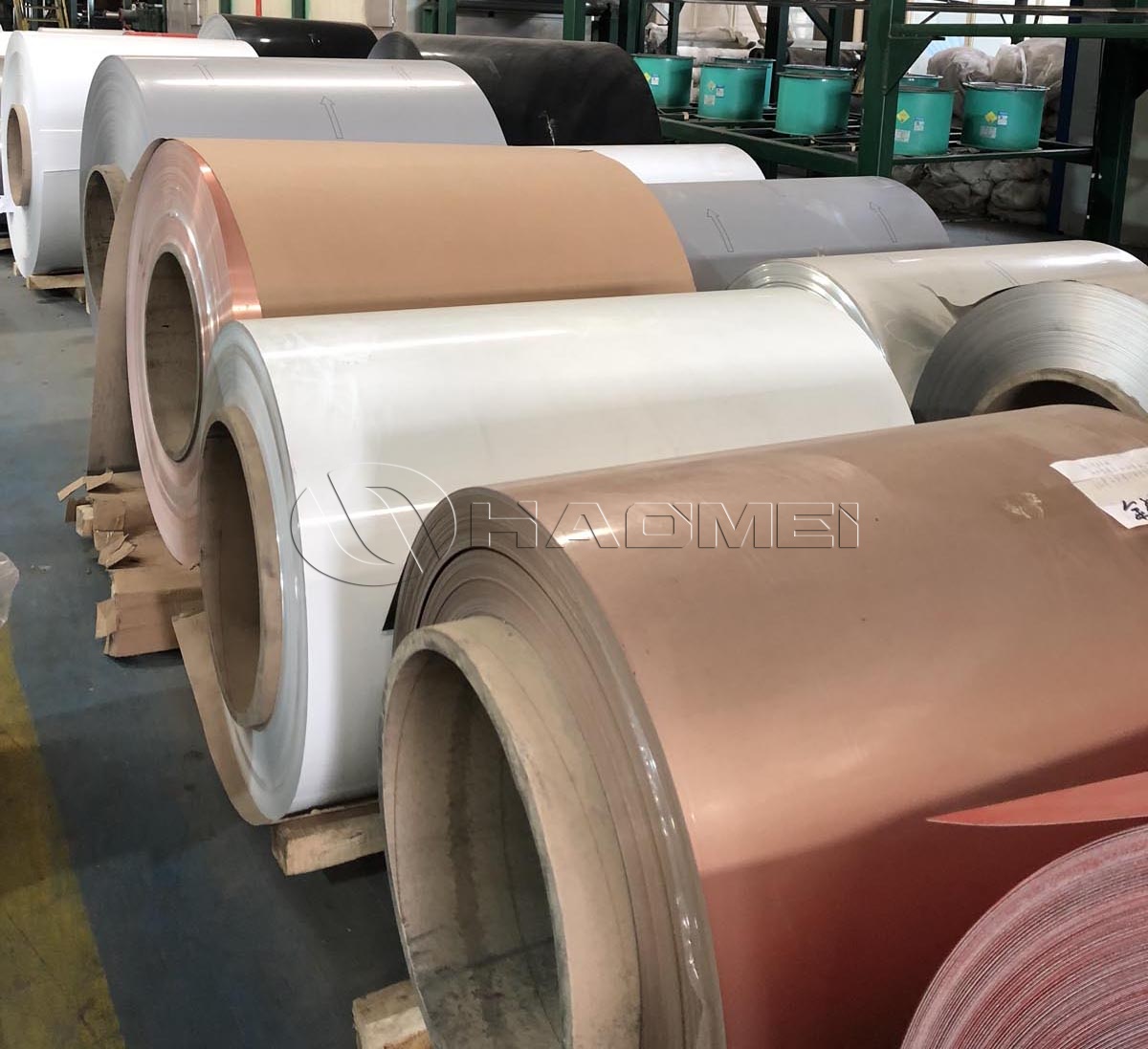
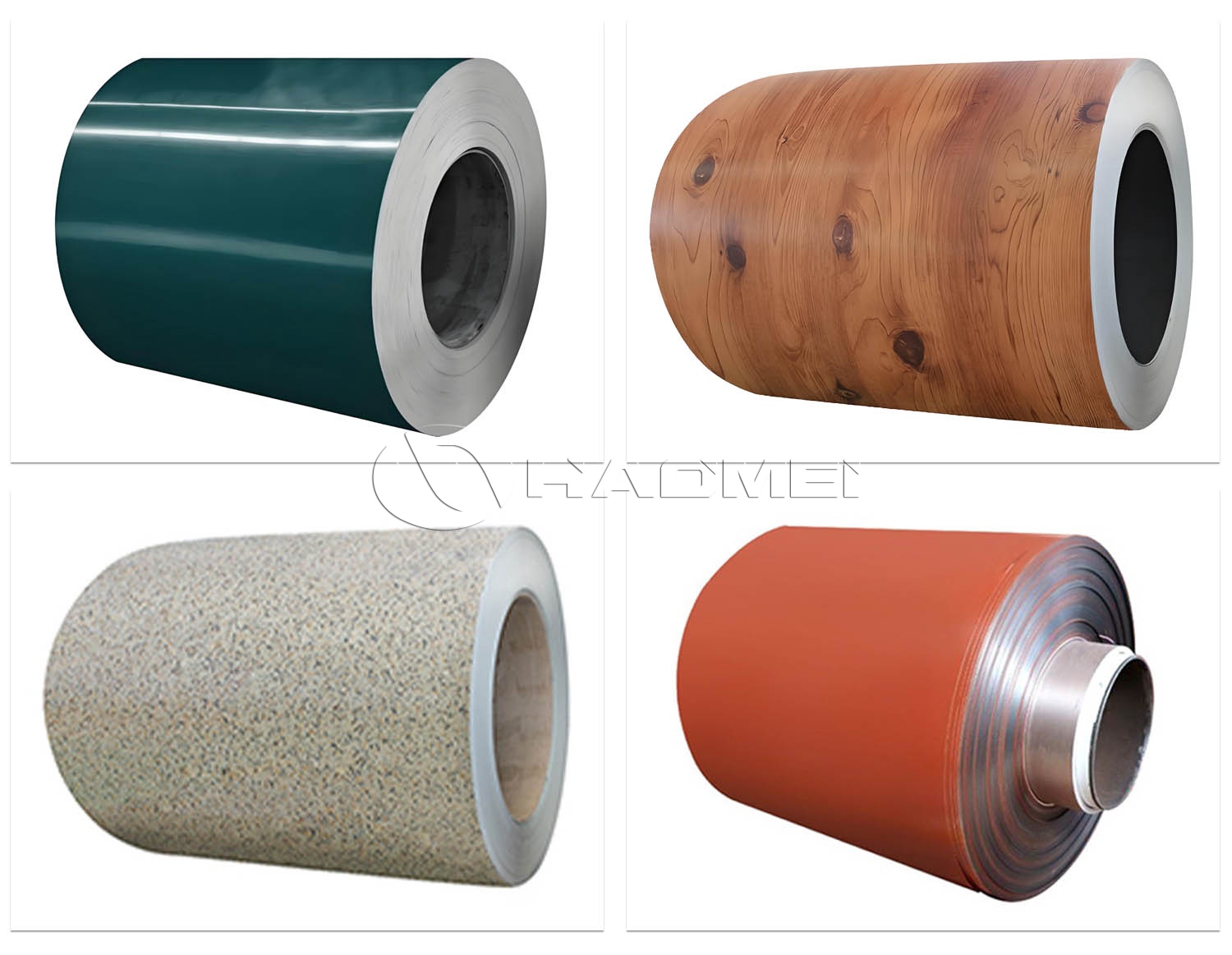
4. Surface Finish and Consistency: Utilizing a continuous roller coating process, the coating thickness is more uniform than spray coating. Double-layer coating offers a wider range of color choices (RAL colors, metallic colors, wood grain, etc.), with minimal batch-to-batch color variation, meeting the high uniformity requirements of large-scale building projects.
5. Environmental Protection and Sustainability: Both 1100 aluminum coils and coating materials meet environmental standards, and the aluminum itself is 100% recyclable. The surface coating also provides some thermal insulation, helping to reduce building energy consumption.
Coating system options: PVDF vs PE
Selecting the coating is the main lever for service-life design.
PVDF coating (commonly 70% PVDF resin system): preferred for exterior building envelopes requiring long-term color retention and UV resistance. It is often specified for façade cladding, profiled roofing, and high-exposure architectural components.
PE coating (polyester): widely used for interior panels, ceilings, signage, and cost-sensitive exterior applications with moderate exposure. It offers good appearance and processability with economical lifecycle cost.
Why choose 1100 for customized color-coated coil
1) High formability for tight radii
1100 is commonly selected when parts require deep drawing, hemming, flanging, or roll forming with a lower risk of edge cracking. In double-layer systems, coating flexibility is tuned by resin type, curing window, and film thickness distribution.
2) Smooth substrate appearance
Commercially pure aluminum typically provides a cleaner base for solid colors and high-gloss finishes, helping reduce visual defects after coating, especially for light colors.
3) Stable processing in coil coating lines
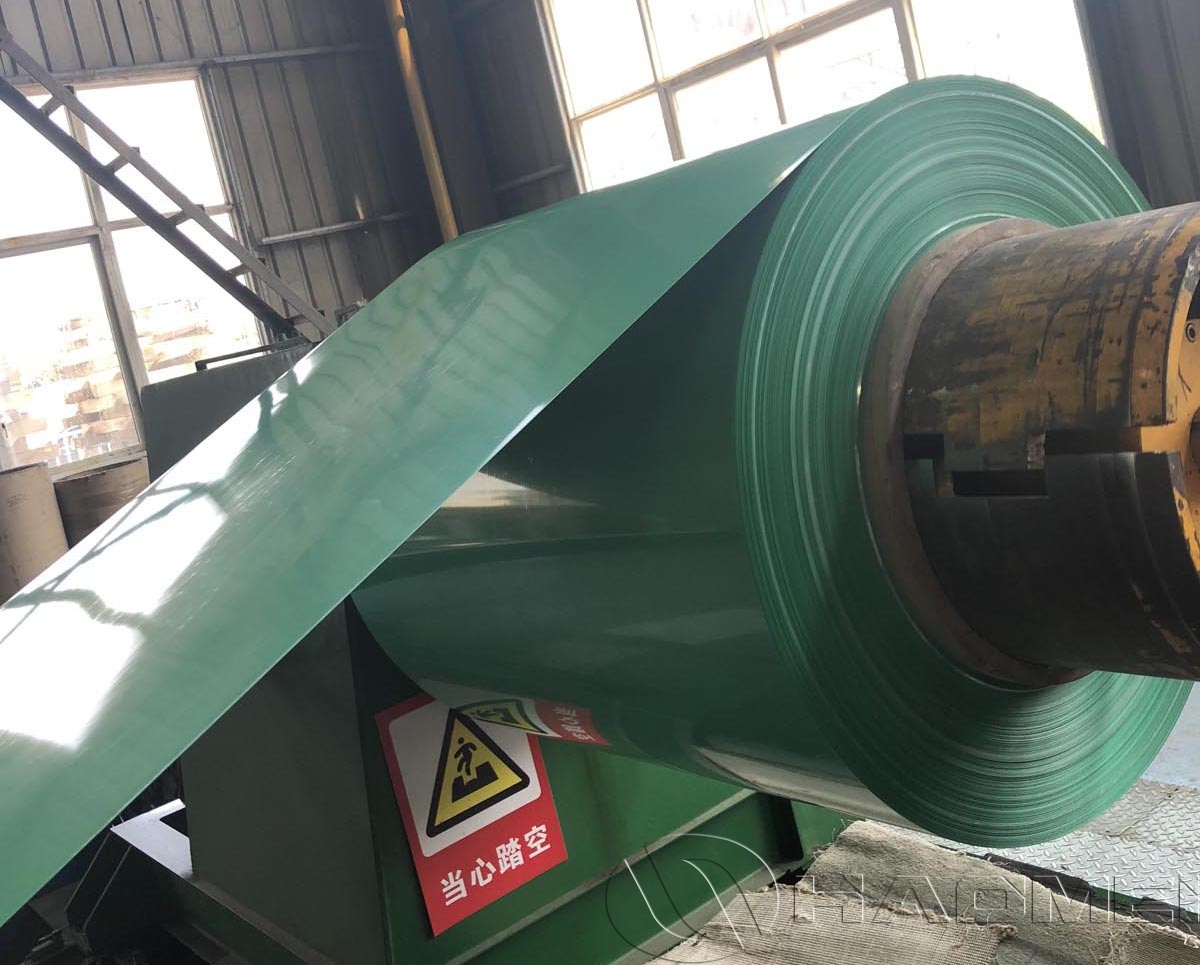
For mass production, 1100 coil offers consistent elongation and predictable tension behavior, supporting uniform coating weight and cure.
Commonly used alloys and how to select them
While 1100 is a strong choice for forming and appearance, other alloys are frequently specified to match strength, corrosion environment, and fabrication method:
1050 / 1060: also high-purity series with excellent formability and conductivity; often used for general cladding, insulation jacketing, and decorative panels when slightly different mechanical targets are needed.
3003 / 3004 / 3105 (Al-Mn series): higher strength than 1xxx series; common for roofing, siding, and shutter slats where improved rigidity helps reduce oil-canning and deflection.
5005 / 5052 / 5754 (Al-Mg series): better corrosion resistance in marine or high-humidity environments, and higher strength; used for coastal architecture, transportation, and demanding enclosures.
8011 / 8079: often used for packaging-related applications; selection depends on temper and end-use forming.
In alloy selection, the practical rule is: prioritize 1100 when bending and surface appearance dominate; move to 3xxx/5xxx when stiffness, dent resistance, or harsher corrosion conditions govern.
Core specifications (typical customization window)
Table 1. Core Specifications for Customized 1100 Double-Layer Color-Coated Aluminum Coil
| Item | Specification (Typical) | Notes |
|---|---|---|
| Alloy | AA1100 | Other alloys available on request for strength upgrades |
| Temper | O, H12, H14, H16, H18 | Final choice depends on forming radius and flatness requirement |
| Thickness | 0.20–2.50 mm | Common architectural range: 0.30–1.20 mm |
| Width | 20–1600 mm | Slitting tolerance depends on width and edge requirement |
| Coil ID | 150 / 300 / 505 mm | Match to decoiler and line capability |
| Coil OD | Up to ~1600 mm | Subject to weight and logistics limits |
| Coating structure | Primer + topcoat (double-layer) | One-side or two-side coating available |
| Topcoat | PVDF or PE | PVDF for high weathering; PE for general purpose |
| Coating thickness (typical) | Top 18–28 μm; back 5–12 μm | Can be tuned for forming and durability targets |
| Surface finish | Gloss / matte / textured | Texture helps hide substrate waviness |
| Color | RAL, Pantone, custom | Solid, metallic, or patterned options |
| Protective film | Optional | Recommended for profiling and transport |
Performance design considerations for double-layer systems
Adhesion and forming compatibility
For fabricated parts, adhesion is verified by cross-hatch and bend tests, with attention to:
minimum bend radius at target temper
edge quality after slitting (edge burr can initiate coating cracks)
primer selection to improve wet adhesion and corrosion undercutting resistance
Corrosion resistance and edge protection
Even with an optimized coating stack, edges and cut-outs are the most vulnerable zones. Durability depends on primer chemistry, film build, and post-fabrication sealing strategy when required by the application environment.
Color and gloss consistency
Color uniformity is influenced by substrate roughness, coating thickness uniformity, and curing control. For large façade lots, batch-to-batch control typically includes ΔE monitoring and gloss targets aligned to the visual plane of installation.
Manufacturing controls that matter for consistent quality
Substrate pretreatment: conversion coating quality strongly affects adhesion and corrosion resistance.
Curing window: peak metal temperature control prevents under-cure (soft film) and over-bake (brittleness, color shift).
Film build balance: double-layer systems should avoid excessive thickness that reduces flexibility while ensuring barrier performance.
Flatness and residual stress: critical for wide panels and cassette systems to reduce waviness after forming.
Typical application fit
Building envelope: profiled roofing, cladding, soffits, fascia, rainwater systems
Interior systems: ceilings, partitions, decorative sheets
Industrial/light appliance skins: covers, trims, general forming parts
When the project requires a documented alloy basis and stable coating architecture, product references aligned with this theme include 1100 Color Coated Aluminum Coil for substrate-focused selection.
-
Ral Color 1100 Series Prepainted Aluminum Coil
Overview of RAL color prepainted aluminum coil in 1100 series, covering alloy options, PE/PVDF coating systems, key specs, and typical trim and cladding uses.
2026-03-12
-
Color Coated Aluminum Coils For Roofing
Explore color coated aluminum coils for roofing, including common alloys, PVDF and PE coating systems, core specifications, and roofing performance factors.
2026-03-30
-
PE Coated Aluminum Coil for ACP Production
PE coated aluminum coil for ACP production delivers uniform color, forming performance, adhesion, and durable polyester protection for aluminum composite panels.
2026-09-15
Contact Directly
-

ADD: No.14 Waihuan Road, CBD, Zhengzhou, China
-

WhatsApp: +86-18703635966
-

E-MAIL: sales@alummc.com