

News
 By Hermione
5000 Series Color Coated Aluminum Coil for Roofing
5000 series color coated aluminum coil for roofing is positioned as a high-performance pre-painted metal material for roof panels, standing seam systems, corrugated sheets, rainwater goods, canopy covers, and industrial or architectural roofing exposed to long-term outdoor conditions. Based on Al-Mg alloys, this product range combines good corrosion resistance, practical formability, stable coating adhesion, and lower structural dead load, making it suitable for residential, commercial, coastal, and light industrial roofing applications.
Why 5000 series aluminum is used for roofing
Compared with some general-purpose coated aluminum grades, the 5000 series offers a balanced combination of substrate strength and corrosion resistance. Magnesium is the main alloying element, which helps improve mechanical performance while maintaining the inherent weather resistance of aluminum. For roofing systems, this matters because the material must perform not only as a decorative surface, but also as a shaped structural skin that undergoes roll forming, bending, seaming, and long-term thermal cycling.
For roof applications, the material is typically expected to provide:
reliable outdoor corrosion resistance
good flexibility during profiling and forming
stable paint adhesion after fabrication
low weight for easier installation and reduced supporting load
good flatness and surface consistency for exposed architectural use
compatibility with PE and PVDF coating systems
In many projects, the final performance depends on the combination of alloy, temper, coating type, coating thickness, pretreatment quality, and fabrication method rather than alloy selection alone.
Commonly used 5000 series aluminum alloys for roofing
Several alloys within the 5000 series are commonly selected according to roof shape, environment, and processing requirements.
5005
5005 is often used when a good balance of appearance, corrosion resistance, and moderate strength is required. It is suitable for decorative roofing panels, façade-roof integrated systems, soffits, and trim components. Its surface quality is favorable for color coating, and it is frequently used in architectural projects where visual consistency is important. More detailed product information can also be found for 5005 Color Coated Aluminum Coil.
5052
5052 is one of the most widely used roofing alloys in the 5000 series. It provides higher strength than 5005 and good formability, making it suitable for corrugated roofing sheets, standing seam panels, gutters, flashing, and roofing accessories. It also performs well in humid and mildly corrosive environments, which is why 5052 Color Coated Aluminum Coil is frequently specified for building envelope systems.
5754
5754 is often selected when stronger mechanical properties and better corrosion resistance are needed, especially for large-span roof sheets, industrial roofs, transportation-related structures, or projects in coastal and high-humidity regions. It offers a practical balance between strength and workability, particularly in applications requiring repeated forming or stronger panel rigidity.
5454 and 5083
For more demanding environments, such as marine-adjacent roofing, chemical plants, or highly corrosive industrial zones, 5454 and 5083 may also be considered. These alloys are not the most common choice for standard architectural roofing because of cost and processing considerations, but they can be appropriate where corrosion resistance requirements are elevated.
Coating systems for roofing service life
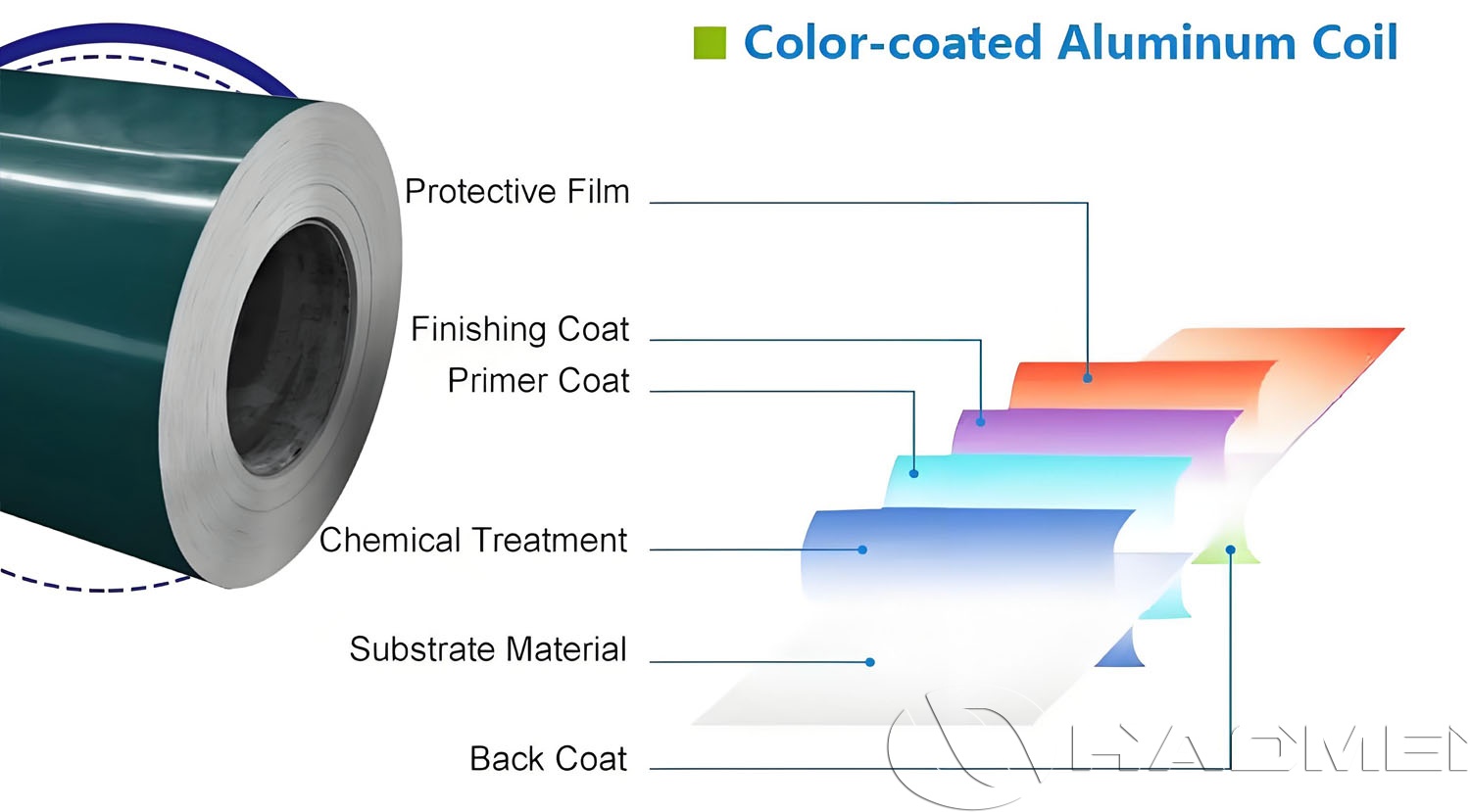
The coating system is just as important as the alloy substrate. In roofing use, the pre-painted aluminum coil generally includes chemical pretreatment, primer, and topcoat, with a service-oriented backside coating selected according to end use.
PE coating
PE coating is suitable for roofing projects with moderate environmental exposure and standard decorative requirements. It offers good flexibility, a broad color range, and cost efficiency. It is commonly used for interior ceiling panels, light-duty exterior covers, and roofs in less aggressive climates. For related coating information, the material category of PE Coated Aluminum Coil is often referenced in conventional building applications.
PVDF coating
PVDF coating is preferred for long-term exterior roofing because of its superior weather resistance, color retention, chalking resistance, and UV durability. In architectural and industrial roofing, especially under strong sunlight, high humidity, or polluted atmospheres, PVDF coated aluminum coil is generally the more durable option.
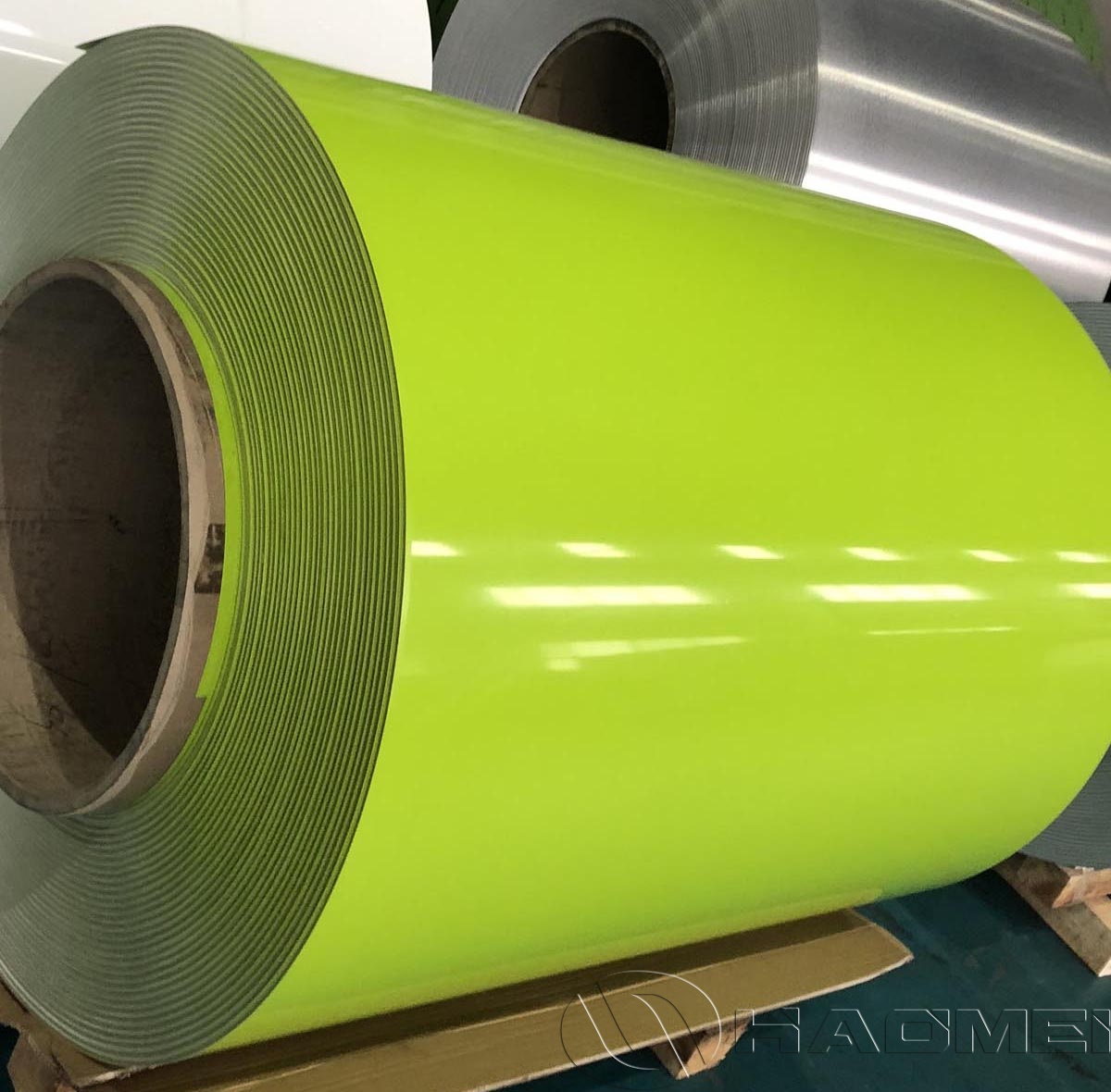
For roofing exposed to severe outdoor environments, the use of PVDF Coated Aluminum Coil is common because the fluorocarbon resin system better maintains coating integrity over time.
Core specifications of 5000 series color coated aluminum coil for roofing
Core Specifications Table
| Item | Typical Range / Option |
|---|---|
| Product name | 5000 series color coated aluminum coil for roofing |
| Common alloys | 5005, 5052, 5754, 5454, 5083 |
| Temper | H14, H16, H24, H26, H32, H34 |
| Thickness | 0.20 mm - 1.50 mm |
| Common roofing thickness | 0.30 mm - 0.90 mm |
| Width | 30 mm - 1600 mm |
| Common roofing width | 600 mm - 1250 mm |
| Coating type | PE, SMP, HDP, PVDF |
| Top coating thickness | 14-18 microns for PE, 25 microns or above for PVDF |
| Back coating thickness | 5-10 microns, or double-sided coating on request |
| Surface finish | Solid color, matte, high gloss, embossed, custom finish |
| Color reference | RAL color card or customized sample matching |
| Coil ID | 405 mm, 505 mm, 508 mm, 610 mm |
| Coil weight | Customized according to production and transport requirements |
| Pretreatment | Chromated or chrome-free chemical pretreatment |
| Typical applications | Standing seam roofing, corrugated sheets, roof tiles, gutters, flashing, canopy panels |
Actual specification selection depends on panel design, roll forming radius, span requirements, coating durability target, and local environmental exposure.
Key performance characteristics in roofing applications
Corrosion resistance
The 5000 series is valued for its corrosion resistance, especially in humid outdoor conditions. The magnesium-containing substrate performs better than many lower-strength decorative grades when used in exposed roof environments. In practical terms, this supports longer service life for roofing sheets, eaves systems, and drainage accessories.
Formability and fabrication compatibility
Roofing products are rarely flat in final form. They are profiled into trapezoidal sheets, corrugated panels, snap-lock systems, standing seam components, and flashing parts. A suitable 5000 series alloy with the correct temper helps reduce risks such as coating cracking, edge fracture, springback instability, or excessive waviness after forming.
When roofing profiles involve tight bends or lock-form seams, temper selection becomes especially important. Material that is too hard may crack during fabrication, while material that is too soft may affect profile stability.
Lightweight performance
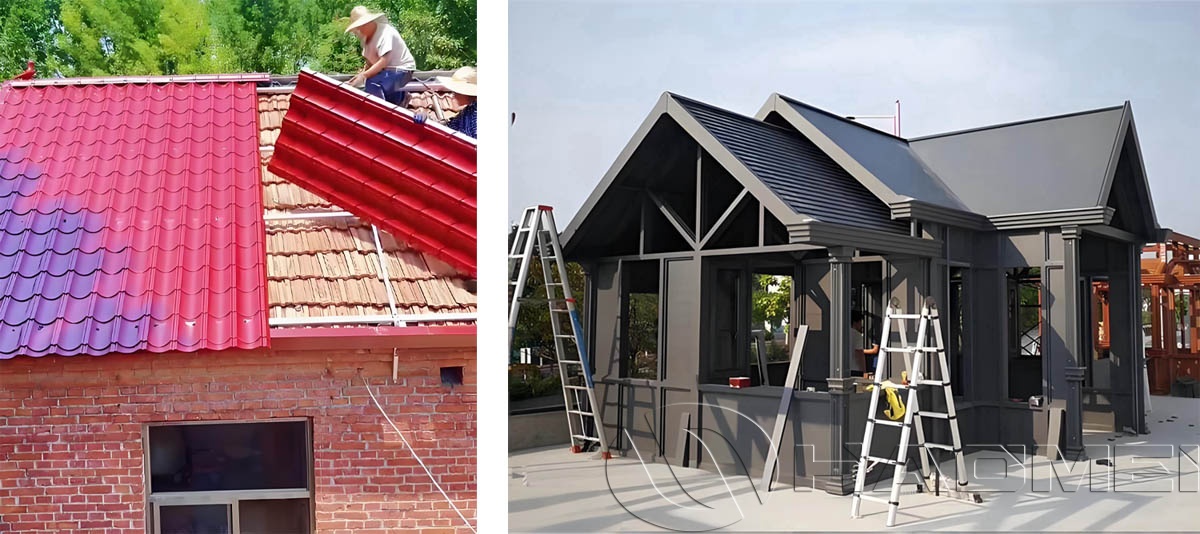
Aluminum roofing remains significantly lighter than many traditional roofing metals and rigid roof coverings. This helps lower structural load on purlins, trusses, and supporting frameworks, which is particularly beneficial in renovation projects, prefabricated buildings, and large-roof-span structures.
Coating durability and appearance retention
Because the roof is continuously exposed to sun, rain, airborne pollutants, and thermal cycling, coating durability is central to product performance. A high-quality pretreatment layer and well-controlled curing process improve adhesion and resistance to blistering, peeling, and premature chalking.
Thermal and environmental adaptability
Aluminum has excellent thermal conductivity and reflects solar radiation effectively when designed with suitable color and gloss. For roofing systems, lighter colors and appropriate coating formulations can contribute to lower heat absorption and improved surface stability under outdoor service conditions.
Selection logic for different roofing scenarios
Residential and light commercial roofing
For general roofing sheets, decorative canopies, fascia, and rainwater systems, 5005 and 5052 are common options. PE coating may be adequate in milder climates, while PVDF is more suitable when longer exterior durability is required.
Industrial roofing
Factories, warehouses, workshops, and logistics centers often require stronger panels with improved environmental resistance. In these cases, 5052 and 5754 are often preferred because they provide better mechanical reliability for larger profiles and harsher service conditions.
Coastal and high-humidity regions
In marine or salt-laden atmospheres, the combination of a corrosion-resistant substrate and a durable fluorocarbon coating becomes more important. 5754, 5454, or higher-performance variants may be considered, usually with PVDF coating and stricter control of cut-edge protection and installation details.
Complex-profile roofing systems
For standing seam, curved roofing, or tightly formed flashing components, the alloy-temper combination should be selected based on bend radius and forming method. Good flexibility and coating adhesion after forming are essential to avoid micro-cracking at seams and corners.
Manufacturing and quality control points
For official website audiences, it is useful to note that roofing-grade color coated aluminum coil is not defined by alloy alone. Stable product quality depends on process control throughout production.
Substrate quality
The base coil should have controlled chemistry, uniform mechanical properties, clean surface condition, and good flatness. Variations in substrate hardness or surface contamination can directly affect coating adhesion and forming quality.
Pretreatment performance
Chemical pretreatment improves the bond between the aluminum substrate and the coating system. Insufficient pretreatment may lead to reduced adhesion, underfilm corrosion, or coating failure during long-term exposure.
Coating application and curing
The paint film must be applied with stable thickness and cured within the appropriate temperature window. Under-curing can reduce chemical resistance and hardness, while over-curing may impair flexibility and gloss retention.
Finished coil consistency
Roofing manufacturers usually require consistent color, gloss, pencil hardness, T-bend performance, impact resistance, and solvent resistance from batch to batch. This is important for continuous roll forming and for visual consistency on completed roofs.
Typical roofing product forms made from 5000 series coated coil
The material is widely processed into:
standing seam roof panels
corrugated aluminum roofing sheets
trapezoidal roofing profiles
roof tiles and shingle-style panels
flashing, ridge caps, and edge trims
gutters and downspout accessories
canopy and awning panels
insulated sandwich panel facings
In these applications, roofing performance is influenced by both the pre-painted coil quality and the downstream forming process.
Technical considerations when specifying the material
When selecting 5000 series color coated aluminum coil for roofing, several technical factors are usually reviewed together:
alloy and temper matched to forming complexity
thickness matched to wind load and panel span
coating system matched to climate and expected service life
color and gloss matched to architectural requirements
backside coating matched to moisture exposure or condensation conditions
edge protection and installation method matched to corrosion risk
Where appearance and long outdoor durability are both critical, PVDF-coated 5005, 5052, or 5754 coils are often the mainstream specification. Where budget sensitivity is higher and environmental exposure is moderate, PE-coated options may still be used for selected roofing and canopy applications.
Summary of material value for roofing
From a materials engineering perspective, 5000 series color coated aluminum coil is well suited to roofing because it combines corrosion resistance, practical strength, fabrication adaptability, and coating compatibility in a lightweight substrate. Among the common alloys, 5005 is often favored for architectural appearance, 5052 for broad roofing versatility, and 5754 for stronger service demands and more corrosive environments. With the appropriate coating system and process control, it serves as a reliable solution for modern pre-painted aluminum roofing systems.
-
PVDF Coated Aluminum Coil Fire Rating Standards
Learn how PVDF coated aluminum coil supports fire rating standards such as EN 13501-1 and ASTM E84, covering coating systems, processes and test-critical details.
2026-01-30
-
Pe Coated 3004 Aluminum Coil For Cladding
PE coated 3004 aluminum coil for cladding offers formability, surface flatness, and stable coating performance for architectural panels.
2026-04-14
-
1100 H14 Prepainted Aluminum Coil Price
Learn what shapes 1100 H14 prepainted aluminum coil price: alloy and temper basics, PE/PVDF coating processes, key specifications, and typical applications.
2026-01-13
Contact Directly
-

ADD: No.14 Waihuan Road, CBD, Zhengzhou, China
-

WhatsApp: +86-18703635966
-

E-MAIL: sales@alummc.com