

News
 By Hermione
Camouflage-Patterned Aluminum Coils for Metal Roofing
Camouflage-patterned aluminum coils are pre-painted aluminum materials designed for metal roofing systems that require both weather resistance and a distinctive visual effect. They are mainly used in outdoor buildings, park facilities, military-style architecture, rural structures, resorts, equipment shelters, agricultural roofs, and architectural projects where the roof surface needs to blend with natural surroundings or present a functional camouflage appearance.
Product Positioning in Metal Roofing
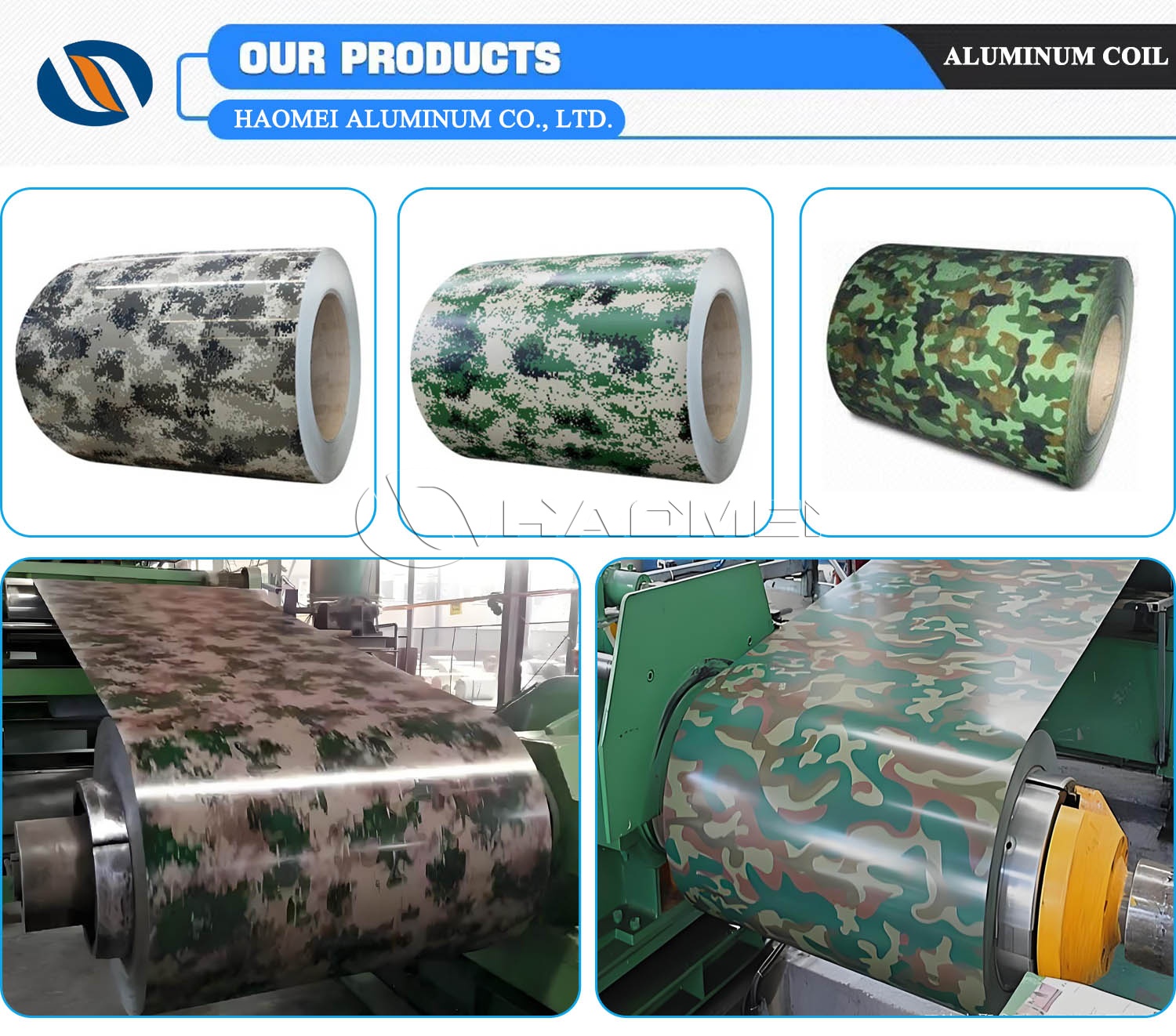
Compared with single-color roofing coil, camouflage color-coated aluminum coil combines the lightweight advantages of aluminum with multi-color decorative printing. The pattern is usually formed through controlled coating and printing processes, creating irregular green, brown, gray, sand, or forest-tone color blocks on the coil surface.
For roofing applications, the product is positioned between conventional color coated roofing coil and decorative architectural aluminum coil. It must provide reliable forming performance for roofing profiles while maintaining color stability, coating adhesion, corrosion resistance, and surface consistency after roll forming or bending.
Typical roofing scenarios include:
Low-slope or pitched metal roofing panels
Standing seam roofing systems
Corrugated aluminum roofing sheets
Outdoor storage buildings and equipment rooms
Camps, cabins, scenic-area buildings, and rural facilities
Camouflage-style architectural envelopes and canopy structures
Surface Design and Coating System
A camouflage finish is not only a printed pattern. For roofing use, it is a complete coating system built on cleaned, pretreated aluminum substrate. The coating structure commonly includes pretreatment, primer, base coat, printed camouflage layer, and protective topcoat. The final performance depends on coating thickness, curing temperature, resin selection, pigment stability, and line-speed control.
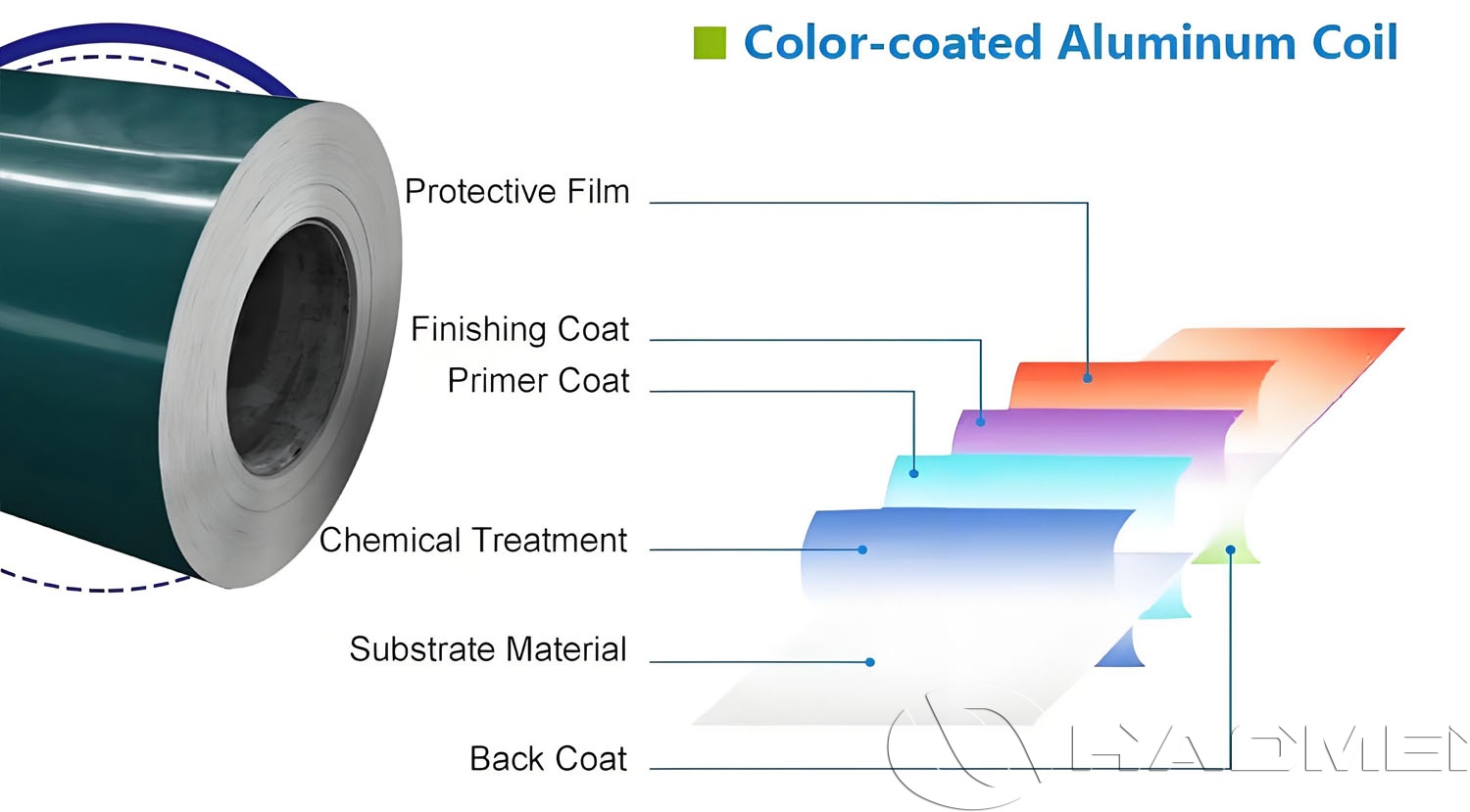
For exterior roofs, PVDF and high-durability polyester systems are commonly used. PVDF coatings offer stronger UV resistance, chalking resistance, and long-term color retention, making them suitable for roofs exposed to strong sunlight, rain, and temperature cycling. For projects that require extended outdoor weathering performance, the camouflage finish can be produced on PVDF Coated Aluminum Coil with a protective clear topcoat over the printed pattern.
Polyester coating systems can also be used where cost control and moderate weather resistance are required. However, for exposed roofing, coating flexibility, adhesion after forming, and outdoor durability must be evaluated together rather than considering color appearance alone.
Core Specifications for Camouflage-Patterned Aluminum Roofing Coil
| Item | Common Specification Range |
|---|---|
| Product type | Camouflage-patterned color coated aluminum coil |
| Base metal | Aluminum alloy coil for roofing and cladding |
| Common alloys | 1100, 3003, 3004, 3105, 5005, 5052 |
| Temper | H14, H16, H24, H26, H44, H46, or customized roofing temper |
| Thickness | 0.30 mm to 1.20 mm, depending on roofing profile design |
| Width | 600 mm to 1600 mm, subject to coating line and slitting capability |
| Coating system | PE, HDP, SMP, PVDF, or customized exterior coating system |
| Surface pattern | Forest, desert, grassland, digital, brown-green, gray-green camouflage |
| Gloss level | Low gloss, matte, semi-matte, or customized finish |
| Topcoat thickness | Typically 15-35 microns, adjusted by coating system |
| Back coating | Service coating, primer, or protective back paint |
| Inner diameter | 405 mm, 505 mm, or according to coil processing requirements |
| Application | Roofing panels, corrugated sheets, standing seam panels, exterior coverings |
Commonly Used Aluminum Alloys
Alloy selection has a direct influence on roof panel strength, formability, corrosion behavior, and long-term dimensional stability. The following alloys are commonly used for camouflage-patterned aluminum roofing coils.
1100 Aluminum Alloy
1100 aluminum has high aluminum purity, excellent corrosion resistance, and very good formability. It is suitable for decorative roofing panels, light-duty corrugated sheets, and roof elements where deep forming or simple bending is required. Its strength is relatively low, so panel design and support spacing should be considered carefully for large roof spans.
3003 Aluminum Alloy
3003 is one of the most widely used aluminum alloys for roofing coil. It contains manganese, giving it higher strength than 1100 while retaining good formability and corrosion resistance. Camouflage-patterned roofing panels made from 3003 Color Coated Aluminum Coil are commonly used for corrugated roofing, standing seam panels, and general architectural roof surfaces.
3004 and 3105 Aluminum Alloys
3004 and 3105 provide higher strength than 3003 and are often selected for roofing and siding applications requiring better rigidity. They perform well in roll forming and can support more demanding profile geometries. These alloys are suitable for roof panels where wind uplift resistance, panel flatness, and installation stability are important.
5005 and 5052 Aluminum Alloys
5005 offers good anodizing and coating compatibility, stable appearance, and moderate strength. 5052 contains magnesium and has higher strength and better corrosion resistance, especially in more demanding outdoor environments. For coastal, humid, or industrial atmospheres, 5052-based coated coil may be used when higher durability is required, although forming parameters should be controlled to avoid coating strain damage.
Pattern Control and Visual Consistency
Camouflage roofing coil requires stable color registration and repeat control during continuous production. Since the surface pattern contains multiple color zones, the process must manage coating viscosity, printing pressure, curing balance, and surface tension. Poor control may lead to color drift, pattern distortion, pinholes, roller marks, or uneven gloss.
For roof panels, pattern scale is also important. A very small pattern may appear visually dense after profiling, while an oversized pattern may lose continuity across panel joints. In practical production, the pattern repeat is usually coordinated with coil width, slitting plan, and intended roofing profile to maintain a balanced appearance after installation.
Roofing Fabrication Performance
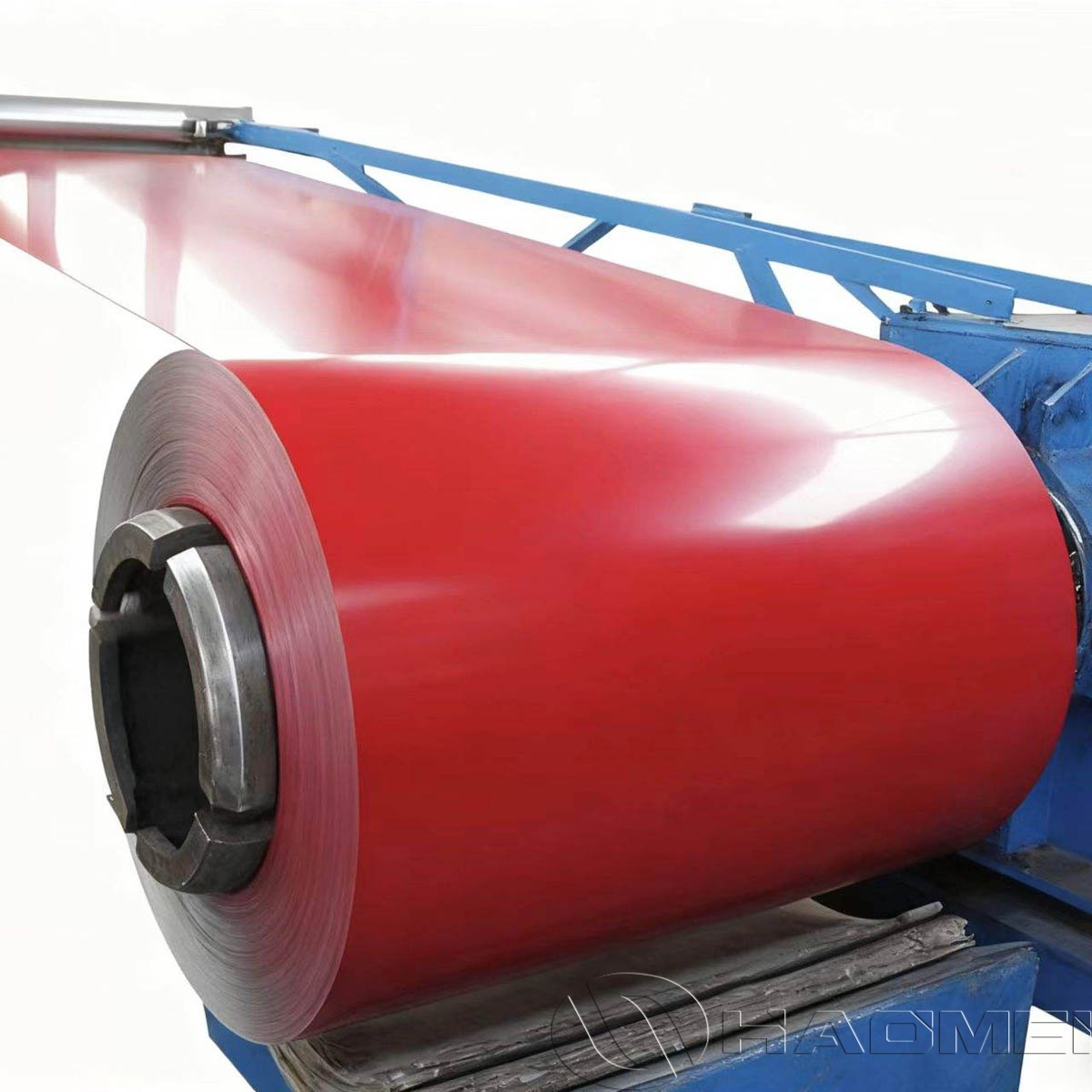
During roll forming, the coated aluminum coil passes through multiple forming stations. The coating must withstand bending, stretching, and compression without cracking or peeling. Key performance factors include:
T-bend flexibility of the coating system
Adhesion between pretreatment, primer, color layer, and topcoat
Scratch resistance during forming and handling
Coil flatness and edge quality after slitting
Hardness balance between surface durability and forming tolerance
Compatibility with sealants, fasteners, and protective films
For standing seam and corrugated roofing, the substrate temper must be matched with the profile depth and forming radius. Excessive hardness may increase the risk of coating micro-cracks at bends, while insufficient strength may reduce panel rigidity.
Weather Resistance and Roof Service Conditions
Metal roofing is exposed to UV radiation, rainwater, freeze-thaw cycles, dust, pollutants, and mechanical abrasion from installation and maintenance. A camouflage surface must maintain both coating integrity and pattern clarity under these conditions.
Important validation items include:
Salt spray resistance for corrosion evaluation
Artificial weathering or UV aging for color retention
Coating adhesion before and after boiling water or humidity exposure
Pencil hardness and impact resistance
Solvent resistance and surface cleaning stability
Color difference control between production batches
Gloss retention and chalking resistance
PVDF camouflage coatings are especially relevant for roofs with long outdoor exposure because fluorocarbon resin provides strong resistance to photochemical degradation. In matte camouflage finishes, pigment selection and topcoat protection are critical because low-gloss surfaces can show chalking or dust accumulation more visibly if the coating formula is not balanced.
Manufacturing Quality Control
Production quality for camouflage-patterned aluminum roofing coil is controlled from substrate inspection to final coil packaging. Base coil thickness tolerance, surface cleanliness, pretreatment weight, primer curing, pattern definition, coating thickness, and final color difference are monitored throughout the process.
Key control points include:
Incoming aluminum coil inspection for shape, surface defects, and mechanical properties
Degreasing and chemical pretreatment consistency
Primer and topcoat dry film thickness measurement
Pattern alignment and multi-color stability inspection
MEK rubbing, adhesion, hardness, and bending tests
Coil edge condition after slitting
Protective packaging to reduce abrasion, moisture ingress, and transit damage
-
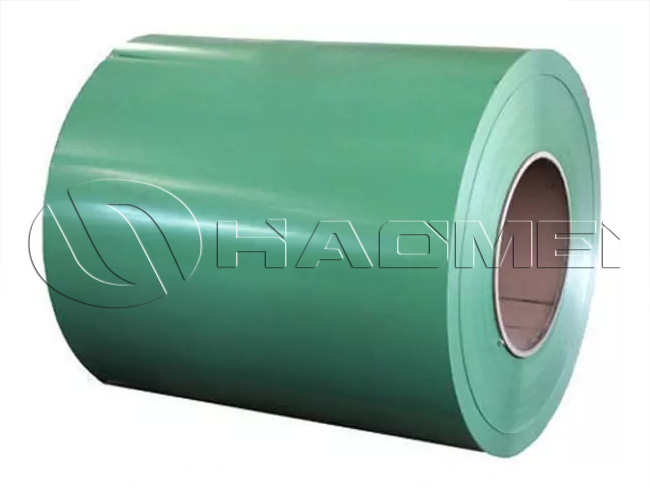
5052 Color Coated Aluminum Coil for Exterior Walls and Roofing
5052 PVDF-coated aluminum coil features an exceptionally stable fluorocarbon chemical structure, giving it outstanding weather resistance, UV resistance, and color-retention performance, making it especially suitable for architectural applications that re
2025-12-09
-
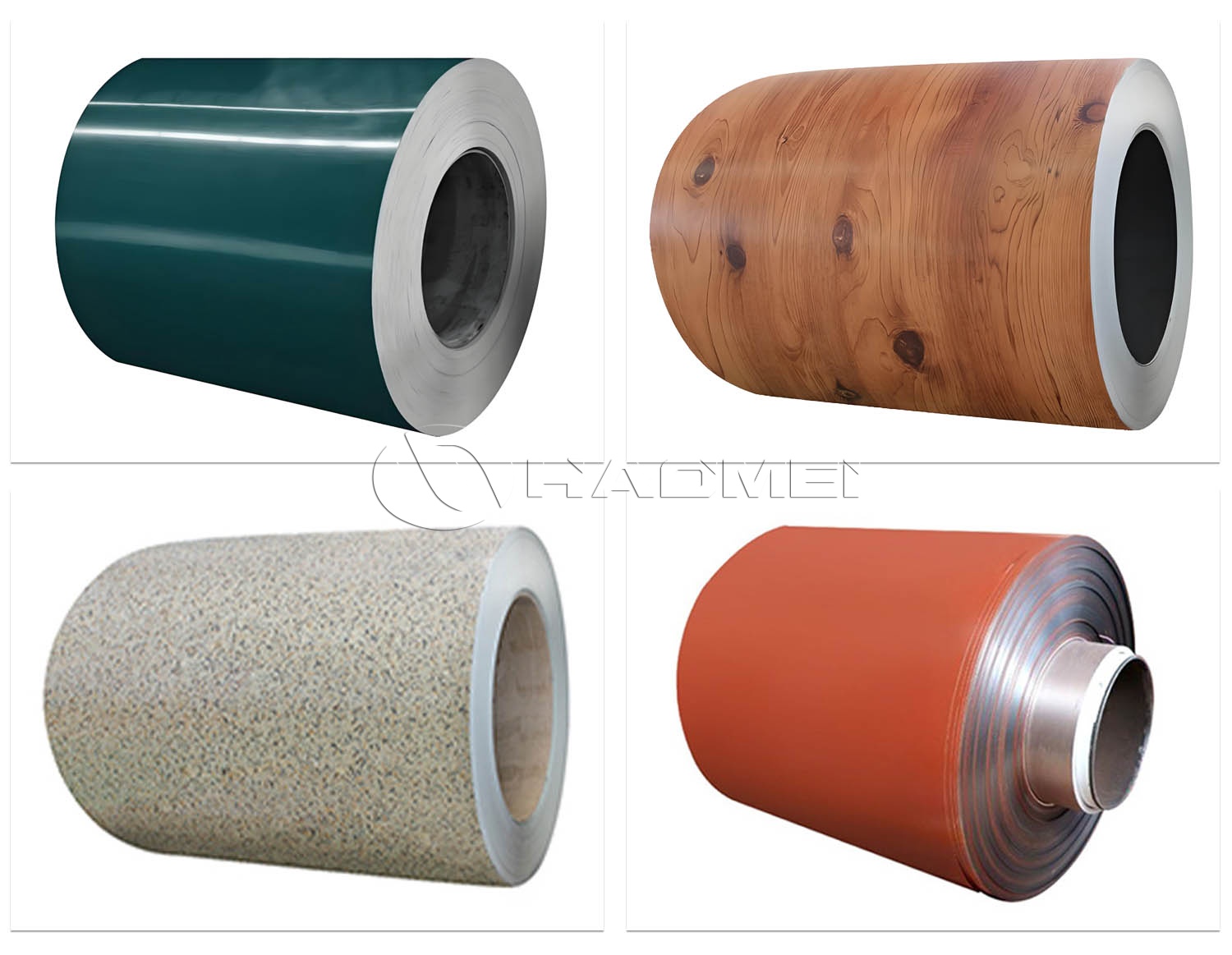
1100 Color Coated Aluminum Coil In Stock
1100 color coated aluminum coil in stock for trim, panels, and signage, with PE and PVDF coating options, stable formability, and clean surface quality.
2026-03-23
-
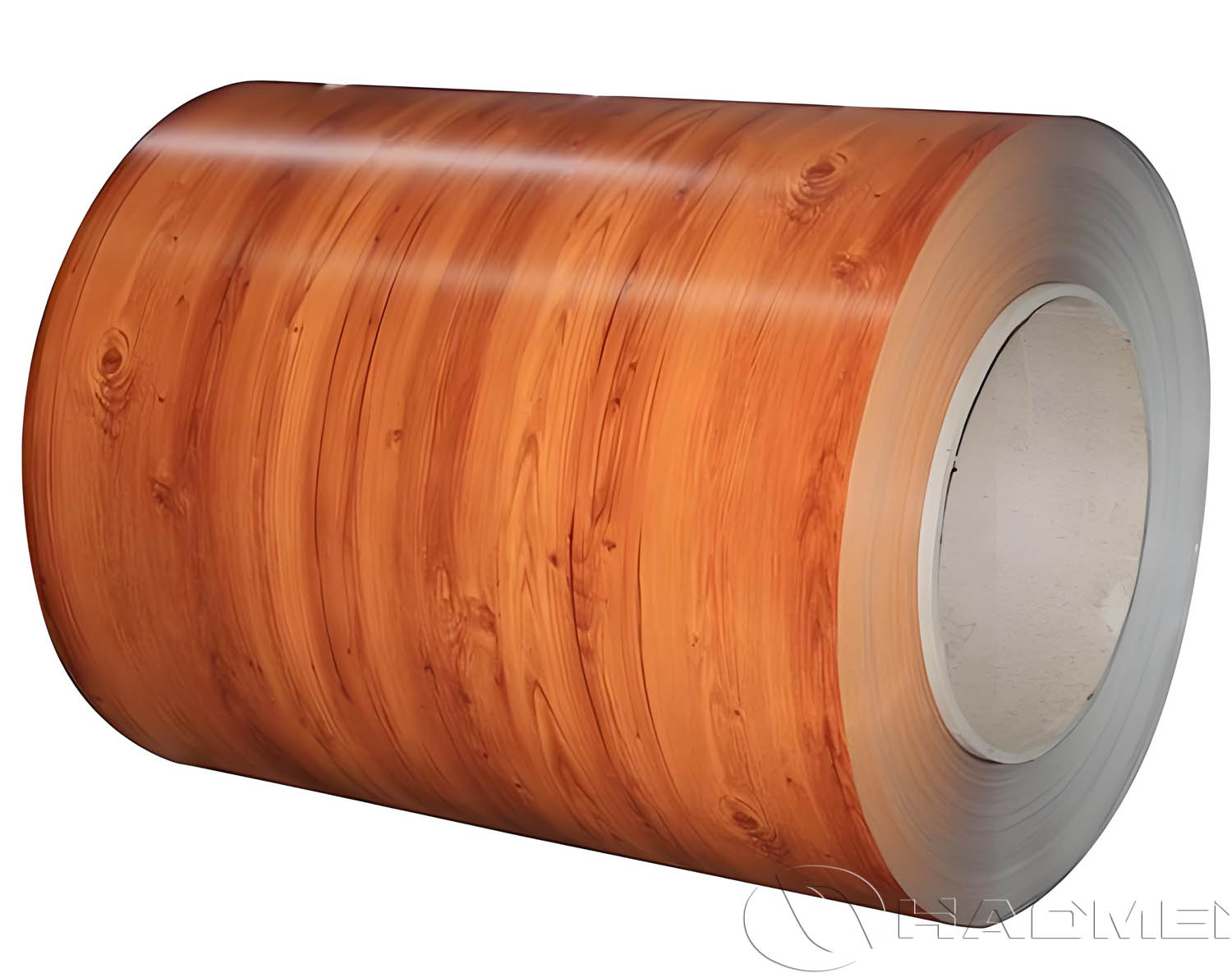
Wood Grain Aluminum Coil For Garage Doors
Wood grain aluminum coil for garage doors combines prepainted aluminum coil strength with PE or PVDF coating for realistic wood look, weatherability, and forming stability.
2026-05-20
Contact Directly
-

ADD: No.14 Waihuan Road, CBD, Zhengzhou, China
-

WhatsApp: +86-18703635966
-

E-MAIL: sales@alummc.com