

News
 By Hermione
Wood Grain Coated Aluminum Coil Manufacturers in China
Wood grain coated aluminum coil is positioned as a decorative and functional pre-painted metal material for projects that require a natural timber appearance with the light weight, corrosion resistance, and formability of aluminum. In China, manufacturers supply this material mainly for building facades, ceilings, curtain wall panels, garage doors, roller shutters, furniture panels, interior partitions, and outdoor architectural trim.
Product Concept and Surface Design
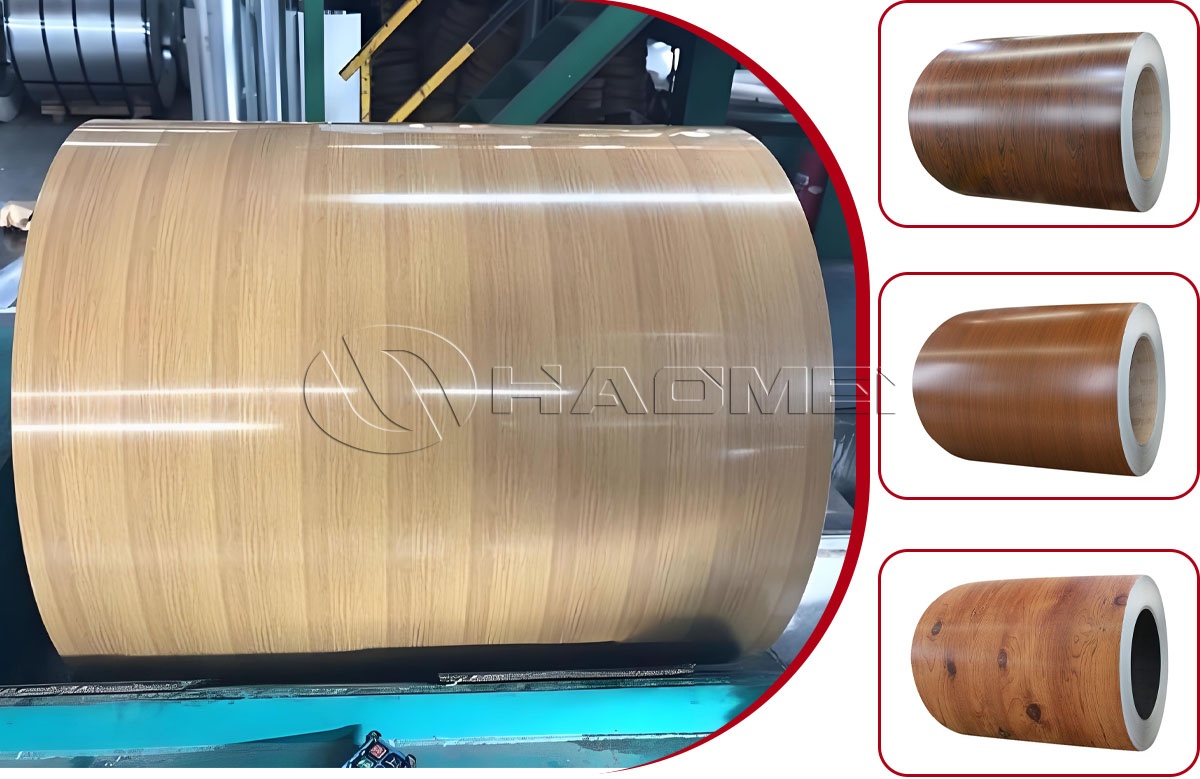
A wood grain coated aluminum coil is produced by applying a controlled coating system onto aluminum coil and forming a wood texture through printing, transfer, or patterned roller coating. The finish can imitate oak, walnut, teak, cherry, ash, pine, and other natural wood effects while maintaining dimensional stability and easier processing than solid wood.
The coating architecture used for Wooden Grain Color Coated Aluminum Coil generally includes substrate pretreatment, primer, base color coat, wood grain pattern layer, transparent protective topcoat, and back coating. For exterior environments, the topcoat must resist UV exposure, rain, temperature cycling, and air pollutants. For interior applications, emphasis is often placed on color consistency, gloss stability, bending performance, and scratch resistance.
Manufacturing Process Control
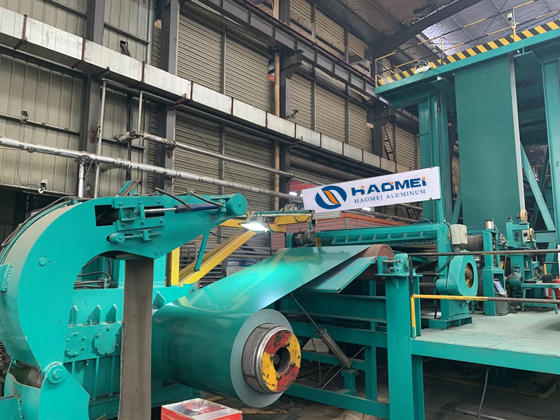
Chinese wood grain coated aluminum coil manufacturers usually operate continuous coil coating lines where surface preparation, coating, curing, cooling, inspection, and recoiling are integrated into one controlled process. Stable pretreatment is essential because adhesion failure normally starts at the interface between the aluminum substrate and coating layer.
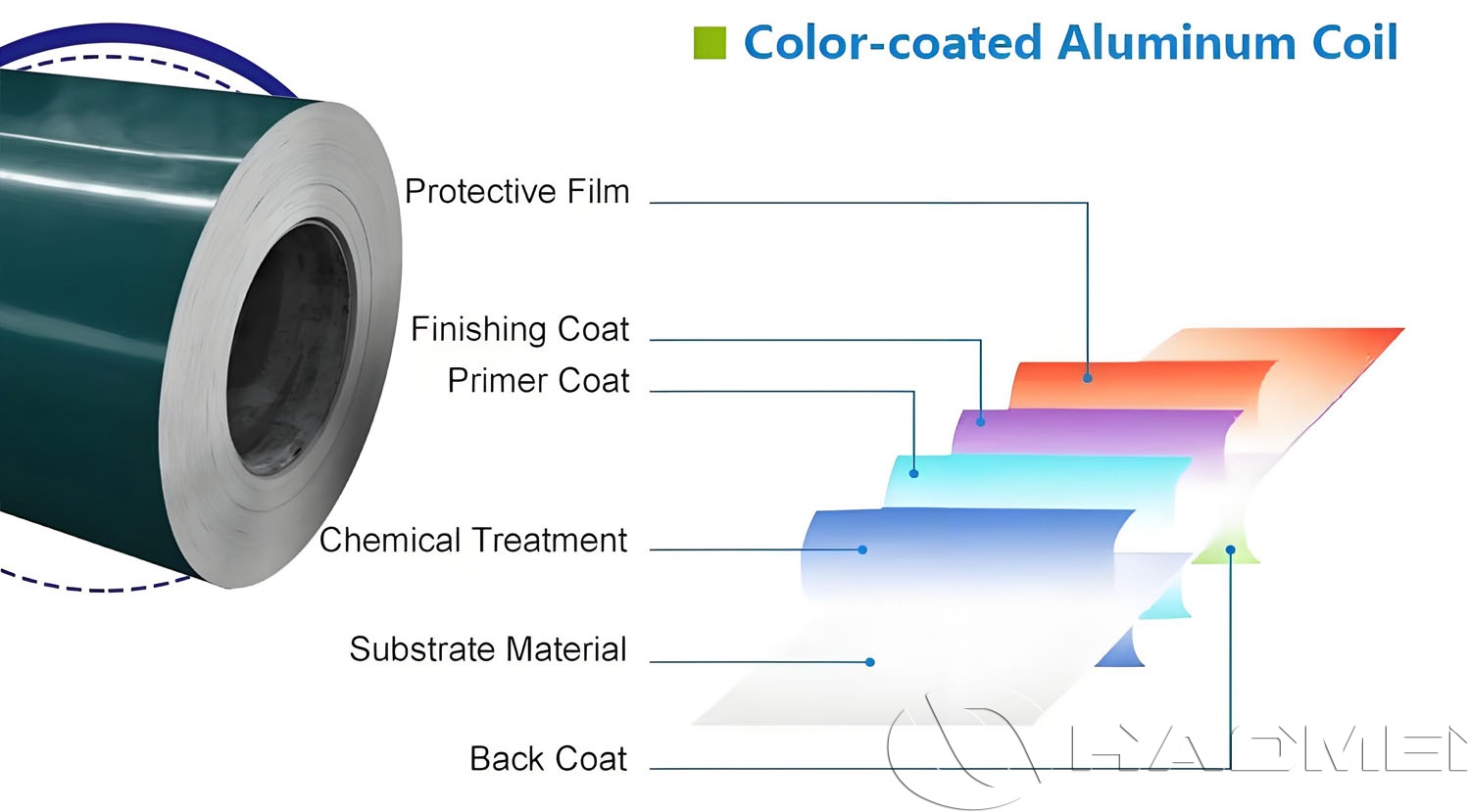
Key production control points include:
Degreasing and cleaning: Removes rolling oil, oxide residue, and surface contamination.
Chemical pretreatment: Improves coating adhesion and corrosion resistance, with chromate-free systems increasingly used for environmental compliance.
Primer coating: Builds a bonding layer between aluminum and decorative coats.
Base color coating: Provides the background tone required for the selected wood pattern.
Wood grain printing or transfer: Forms the visual texture with repeatable color depth and line definition.
Clear protective topcoat: Improves weatherability, stain resistance, and surface durability.
Back coating: Supports balanced coil stress and improves corrosion protection on the reverse side.
For outdoor architectural use, coating uniformity, curing temperature, line speed, and film thickness are closely monitored. Inconsistent curing may reduce flexibility, while insufficient film thickness can weaken weather resistance.
Core Specifications of Wood Grain Coated Aluminum Coil
| Specification Item | Common Range or Option |
|---|---|
| Product type | Wood grain coated aluminum coil, pre-painted aluminum coil |
| Common alloys | 1050, 1060, 1100, 3003, 3004, 3105, 5005, 5052 |
| Temper | O, H14, H16, H18, H24, H26, H32, H44 |
| Thickness | 0.20 mm to 3.00 mm, depending on forming and panel design |
| Width | 20 mm to 1600 mm, subject to slitting and coating line capability |
| Coating system | PE, HDP, PU, FEVE, PVDF, clear protective coating |
| Front coating thickness | Typically 16 μm to 35 μm |
| Back coating thickness | Typically 5 μm to 10 μm |
| Coil inner diameter | 405 mm, 505 mm, 508 mm |
| Surface gloss | Matte, low gloss, semi-gloss, customized gloss level |
| Pattern options | Oak, walnut, teak, cherry, pine, ash, customized wood texture |
| Protective film | Optional, used for cutting, forming, transportation, and installation protection |
| Typical standards | ASTM, EN, GB/T, AAMA-related coating performance references |
Commonly Used Aluminum Alloys
1050 and 1060 Aluminum
1050 and 1060 are high-purity aluminum alloys with excellent formability, good corrosion resistance, and smooth surface quality. They are widely used for ceilings, interior decorative panels, signboards, and lightweight cladding components where high strength is not the primary requirement. The soft substrate condition supports bending, stamping, and shallow forming.
1100 Aluminum
1100 aluminum offers good workability and stable surface performance for general decorative applications. It is suitable for wood grain ceilings, trim strips, furniture parts, and panel systems requiring clean forming behavior. The 1100 Color Coated Aluminum Coil category is commonly associated with indoor and light-duty architectural decoration.
3003 Aluminum
3003 aluminum contains manganese and has higher strength than 1000 series alloys while retaining good corrosion resistance and formability. It is one of the most widely used substrates for wood grain coated aluminum coil in facade panels, aluminum composite panels, soffits, gutters, and interior wall systems.
3004 and 3105 Aluminum
3004 and 3105 alloys provide improved mechanical strength and are suitable for roll forming, roofing accessories, garage doors, roller shutters, and exterior decorative profiles. Their balance of strength, corrosion resistance, and coating compatibility makes them practical for components exposed to wind load and repeated thermal expansion.
5005 and 5052 Aluminum
5005 is often used for architectural panels requiring better surface flatness and stable appearance. 5052 has higher magnesium content and offers stronger mechanical performance and better resistance in demanding environments, including coastal or humid areas. For exterior durability, these alloys are commonly combined with high-weathering coating systems such as PVDF Coated Aluminum Coil technology.
PE, PVDF, and Other Coating Systems
PE coating is commonly used for interior decoration, furniture panels, ceilings, and general indoor components. It provides good color appearance, economical processing, and sufficient flexibility for bending and profiling.
PVDF coating is preferred for exterior wall systems, curtain wall panels, roofing accessories, and long-term outdoor exposure. A fluorocarbon resin system provides stronger UV resistance, chalking resistance, and gloss retention. In wood grain products, PVDF or FEVE clear coats are often used to protect the printed grain layer from fading and surface degradation.
HDP, PU, and FEVE coatings may also be selected according to project requirements. The final choice depends on exposure environment, expected service life, forming method, surface gloss, and color retention target.
Main Application Scenarios
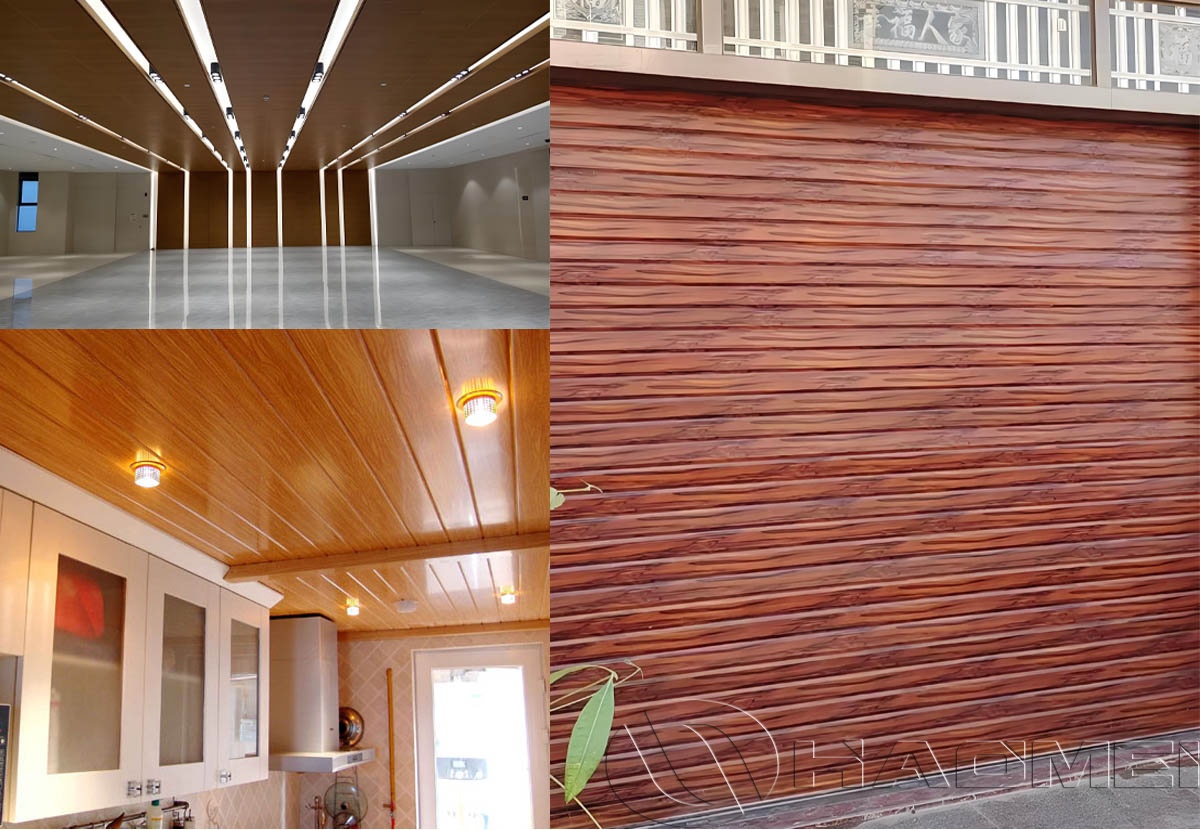
Wood grain coated aluminum coil is valued in architectural and industrial design because it combines a natural visual effect with non-combustible metal substrate characteristics and efficient coil-to-panel processing.
Typical applications include:
Building facade systems: Used for aluminum solid panels, composite panels, column covers, and decorative cladding.
Ceiling and wall decoration: Suitable for strip ceilings, square ceilings, suspended ceiling panels, and interior wall panels.
Roller shutters and garage doors: Supports continuous roll forming while providing a warm wood-like appearance.
Furniture and cabinet panels: Applied in lightweight decorative furniture, partition systems, and storage units.
Doors, windows, and profiles: Used for trim, window surrounds, door skins, and architectural profiles.
Commercial decoration: Used in retail spaces, transportation hubs, hotels, and public buildings where appearance consistency is important.
Quality Inspection and Performance Validation
Reliable wood grain coated aluminum coil production requires both appearance inspection and mechanical performance testing. Manufacturers typically evaluate color difference, gloss, coating thickness, adhesion, pencil hardness, T-bend flexibility, impact resistance, solvent resistance, boiling water resistance, salt spray resistance, and accelerated weathering behavior.
For exterior products, color stability and coating adhesion after UV exposure are especially important. For roll-formed products such as shutters and ceiling strips, bending performance and coating crack resistance must be matched with alloy temper and forming radius. For panel applications, coil flatness, camber, surface cleanliness, and pattern consistency directly affect fabrication yield and installed appearance.
-
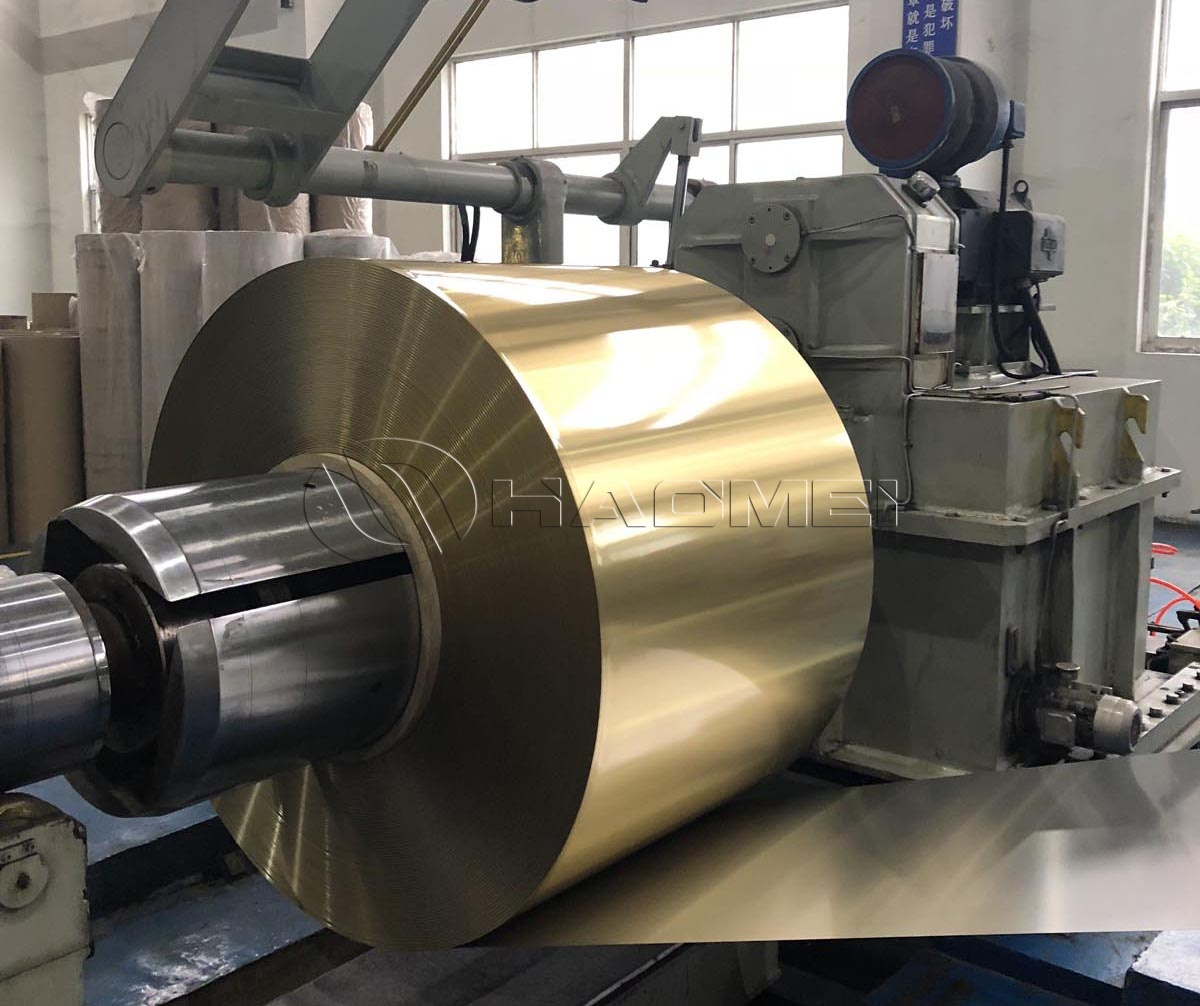
Prepainted PE Aluminum Coil for Rolling Shutters
Technical overview of prepainted PE aluminum coil for rolling shutters, covering alloys, coating structure, specs, colors, and forming performance control.
2026-05-14
-
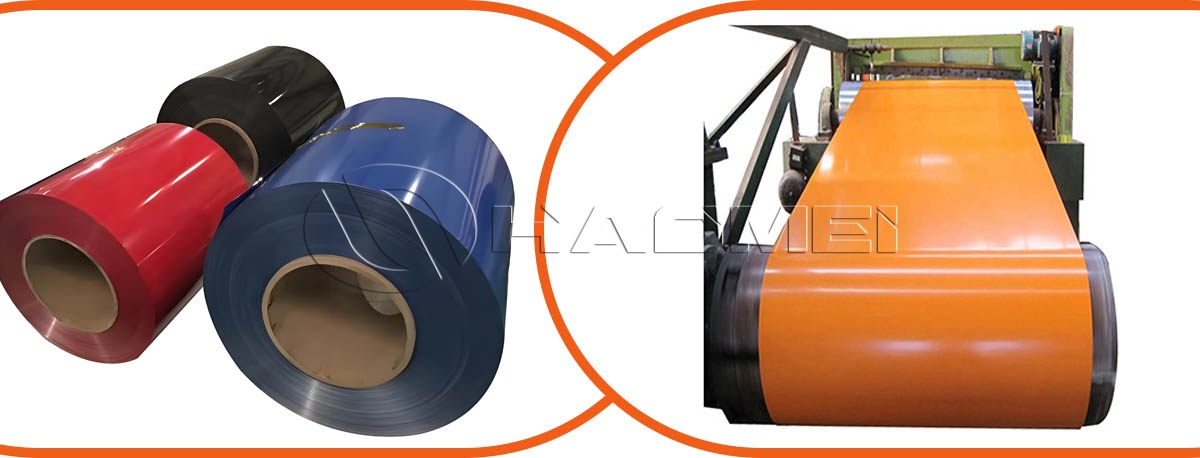
PVDF Coated Aluminum Coil For High-Rise Buildings
PVDF coated aluminum coil for high-rise buildings combines durable fluoropolymer finishes, suitable alloys, and reliable facade performance.
2026-10-13
-
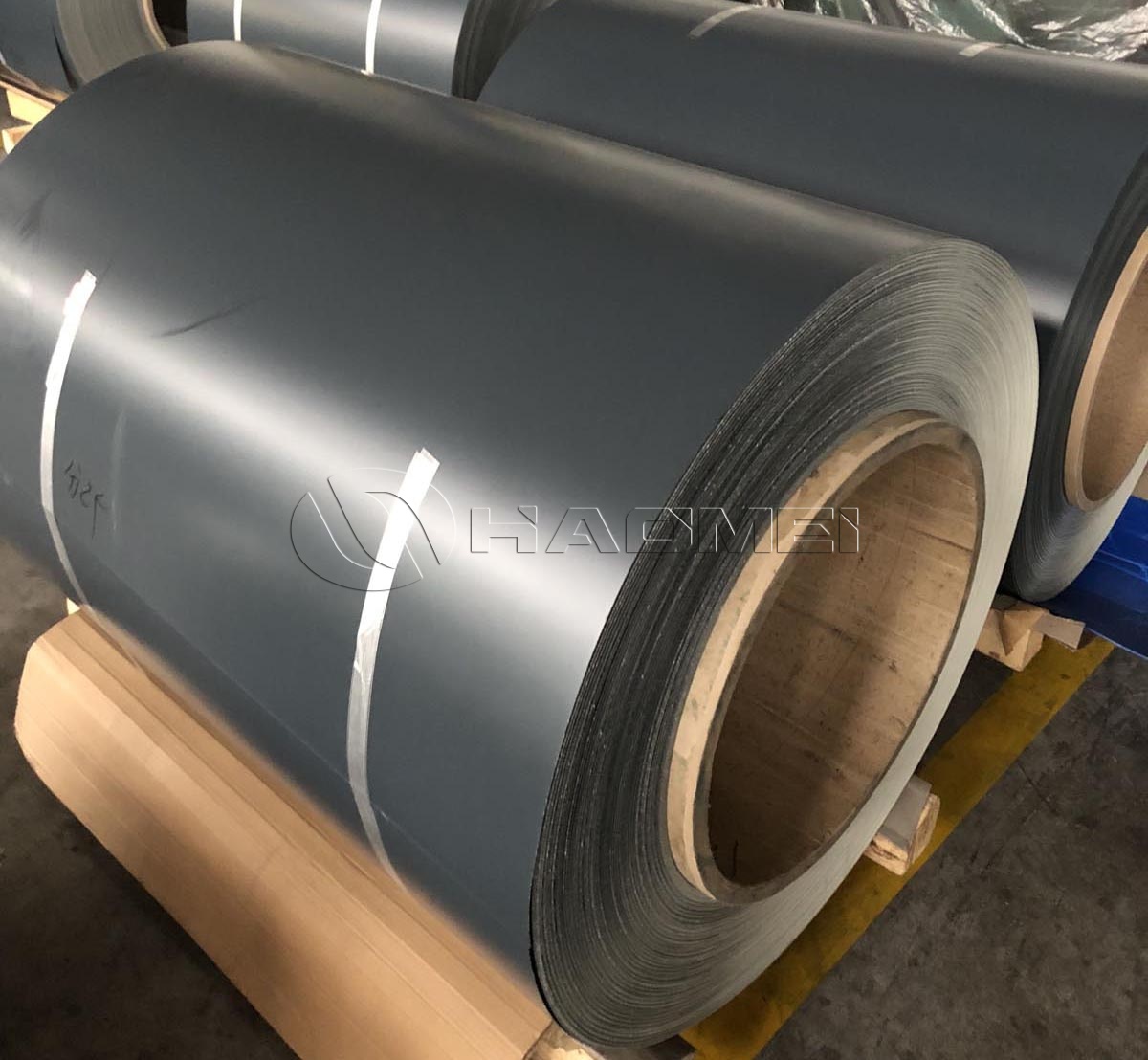
5000 Series Color Coated Aluminum Coil For Coastal Buildings
5000 series color coated aluminum coil combines marine-grade alloy strength and PVDF protection for durable coastal roofs, facades, and cladding.
2026-09-10
Contact Directly
-

ADD: No.14 Waihuan Road, CBD, Zhengzhou, China
-

WhatsApp: +86-18703635966
-

E-MAIL: sales@alummc.com