

News
 By Hermione
Wood Grain Aluminum Coil Price Per Ton
Wood grain aluminum coil is positioned as a premium prepainted aluminum coil that delivers a natural timber appearance while keeping aluminum's advantages: low weight, corrosion resistance, and stable formability. Typical application scenarios include architectural cladding, soffits and ceilings, louvers, roller shutters, interior decorative trims, and furniture panels where consistent color, repeatable grain, and weatherability matter.
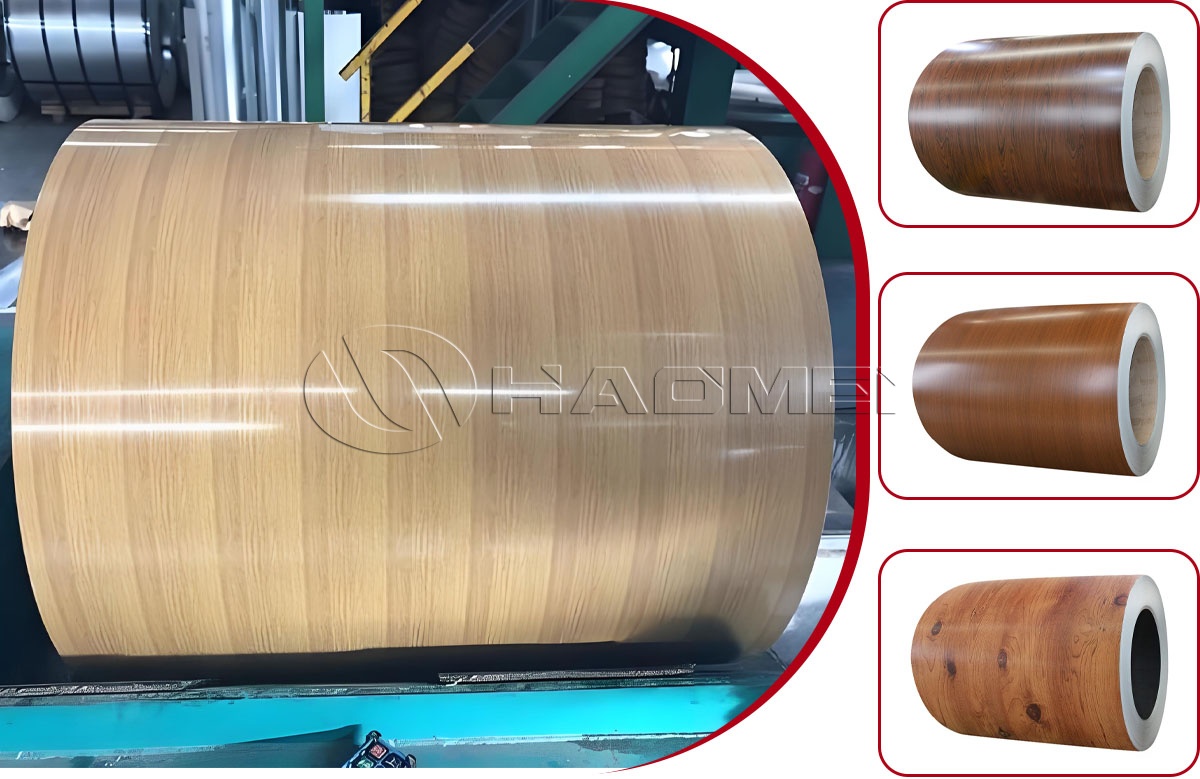
Factors Affecting the Price of Wood-Grain Coated Aluminum Coils
When discussing wood grain aluminum coil price per ton, it helps to separate two cost layers that are often mixed together:
The metal base (alloy, temper, thickness, width, and coil weight), which is largely driven by aluminum ingot pricing and processing yield.
The decorative and protective system (pretreatment, primer/topcoat, and wood-grain pattern method), which drives durability, appearance consistency, and production complexity.
Because wood grain finishes are not a single coating type, price per ton can vary materially even at the same thickness. In practice, the largest technical cost drivers are (1) alloy selection for the forming method, (2) the coating system (PE vs PVDF and film build), and (3) the pattern process (direct roller-print vs heat transfer vs laminated film).
Substrate and mechanical properties: why alloy choice changes both cost and yield
Wood grain coils are commonly produced on 1xxx, 3xxx, and 5xxx series substrates depending on the forming severity and end-use environment. For building envelopes, 3xxx (notably 3003/3105) is widely used due to balanced strength and formability; for more demanding corrosion environments or higher strength requirements, 5xxx (such as 5052/5005) is often selected.
Key material attributes that impact performance and manufacturability:
Formability: tight-radius bending for trims, roll forming for shutter slats, or stamping for ceiling panels depends on elongation and temper selection (O/H14/H24 are common, project-dependent).
Flatness and residual stress: critical for wide cladding panels and cassette systems, affecting oil-canning risk.
Corrosion resistance: the alloy sets the baseline, while pretreatment and coating determine long-term protection.
In procurement terms, higher alloying content and stricter flatness tolerances can increase cost per ton, but can reduce scrap and rework during forming, which often lowers installed cost.
Coating systems: PE vs PVDF for wood grain appearance and weatherability
The wood grain look is only as durable as the coating stack beneath it. A technically complete system includes chemical pretreatment, primer, and topcoat (plus optional clear coat for pattern depth and stain resistance). For wood grain, the two most common systems are:
PE wood grain coating: typically selected for interior ceilings, interior trims, and short-to-medium outdoor exposure where cost sensitivity is high. PE provides good flexibility and appearance but has lower UV and chalking resistance than PVDF.
PVDF wood grain coating: preferred for exterior façades, soffits, and long-life architectural applications. PVDF chemistry provides superior UV stability, chalk resistance, and color retention, which is especially important for wood tones where fading is visually obvious.
Product lines are often categorized accordingly, such as PE Coated Aluminum Coil and PVDF Coated Aluminum Coil, with wood grain achieved via additional pattern steps.
From a pricing perspective, moving from PE to PVDF typically increases wood grain aluminum coil price per ton due to higher resin cost, tighter process windows, and higher quality control requirements (film build uniformity, cure, and pattern consistency).
How the wood grain pattern is made: process route affects both consistency and cost
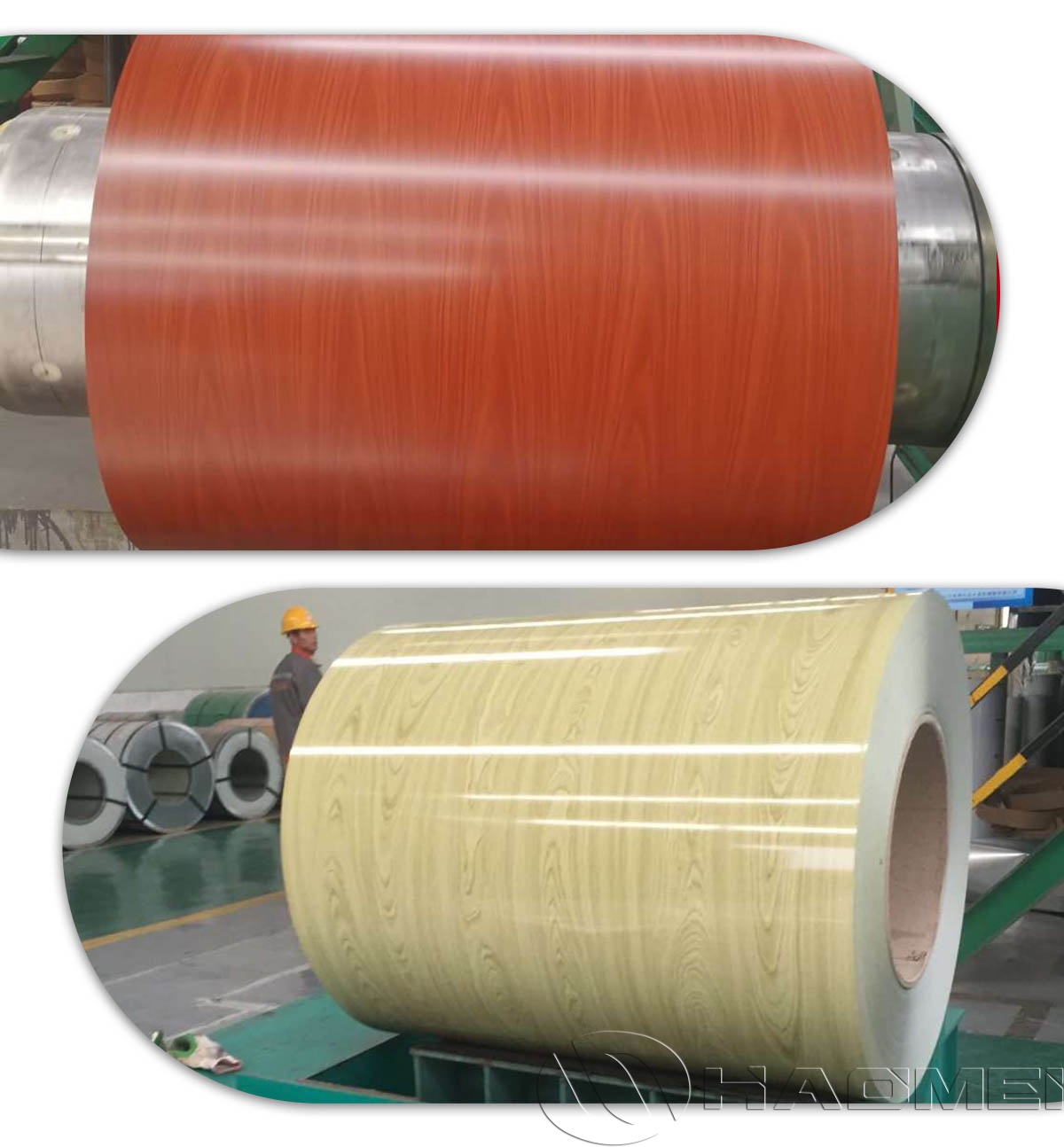
Wood grain finishes are commonly produced through one of three industrial routes, each with different cost and performance implications:
Roller coating + wood grain printing (roller print)The coil is coated and cured, then a printing station applies the grain pattern with controlled registration. This route is efficient at scale and can provide stable repeatability for standard patterns.
Heat transfer wood grain (sublimation/transfer)A basecoat is applied, then a transfer film is wrapped/pressed to the surface under heat to transfer the pattern. This method often achieves more natural grain depth and variation. It is widely used for architectural decorative components and furniture panels, but it introduces extra consumables and processing steps that can raise price per ton.
Film lamination (PVC/PET decorative film)A decorative film is bonded to the aluminum surface with adhesive systems. Lamination can deliver strong visual texture, but it depends heavily on adhesive durability, edge sealing, and application environment (temperature cycling and moisture).
Technically, pattern method selection should align with end-use requirements: exterior UV exposure favors PVDF-based systems; interior decorative panels can use PE with either printing or transfer depending on appearance targets.
Advantages of Wood-Grain Color-Coated Aluminum Coils
Compared to natural wood, wood-grain aluminum coils offer distinct advantages:
1.Excellent Corrosion Resistance: Highly resistant to moisture, corrosion, and deformation.
2.Long Service Life: Offers an outdoor service life of over 20 years.
3.Lightweight: Facilitates easy transportation and installation.
4.Superior Fire Resistance: Aluminum is an incombustible material.
5.Eco-Friendly: The material is fully recyclable.
Core specifications (typical ranges for wood grain coated coil)
| Specification Item | Typical Options / Range | Notes Relevant to Price per Ton |
|---|---|---|
| Alloy | 1050/1060, 3003/3105, 5005/5052 | Higher-strength/corrosion alloys generally cost more |
| Temper | O, H14, H24 (project-dependent) | Forming severity drives temper choice |
| Thickness | 0.20–1.50 mm | Thickness is a primary metal cost driver |
| Coil width | 600–1500 mm | Wider coils may require stricter flatness control |
| Coating system | PE / PVDF | PVDF increases weatherability and cost |
| Coating structure | Primer + topcoat (optional clear coat) | Clear coat can improve stain resistance and depth |
| Topcoat thickness (typical) | PE: ~15–20 μm; PVDF: ~20–25 μm | Film build affects durability and forming |
| Back coat | Service coat or backing coat | Chosen based on installation and corrosion risk |
| Pattern method | Roller print / heat transfer wood grain / lamination | Transfer and lamination often add processing cost |
| Surface finish | Matte, satin, semi-gloss | Gloss control influences formulation and QC |
Practical application fit: matching system to environment
In exterior architectural cladding, the coating system and pretreatment dominate long-term outcomes. PVDF wood grain finishes are commonly specified for façades, soffits, and sunshade systems because they better resist UV-driven fading, chalking, and pollutant staining. For interior ceiling panels, partition trims, and furniture components, PE systems are frequently adequate, offering good flexibility and a favorable cost structure.
Wood grain coils also perform well in roll-formed products (louvers, shutters) when the substrate temper and coating flexibility are aligned with bend radius requirements. Edge performance is especially important: appropriate primer selection, controlled cure, and correct forming practices reduce micro-cracking at bends and help maintain corrosion resistance.
How much does wood-grain color-coated aluminum coil cost per ton?
In the international market, the price of wood-grain aluminum coil typically consists of three components:
Aluminum Ingot Price + Processing Fee + Sea Freight
Specifically, the price of aluminum ingots is generally benchmarked against LME (London Metal Exchange) aluminum prices or domestic aluminum price indices, while the processing fee varies depending on the product specifications and manufacturing processes involved.
Generally speaking, the market price for wood-grain aluminum coil falls within an approximate range of US$2,600 to US$3,800 per ton; the exact price is subject to the specific quotation provided by your account manager on the day of inquiry.
-
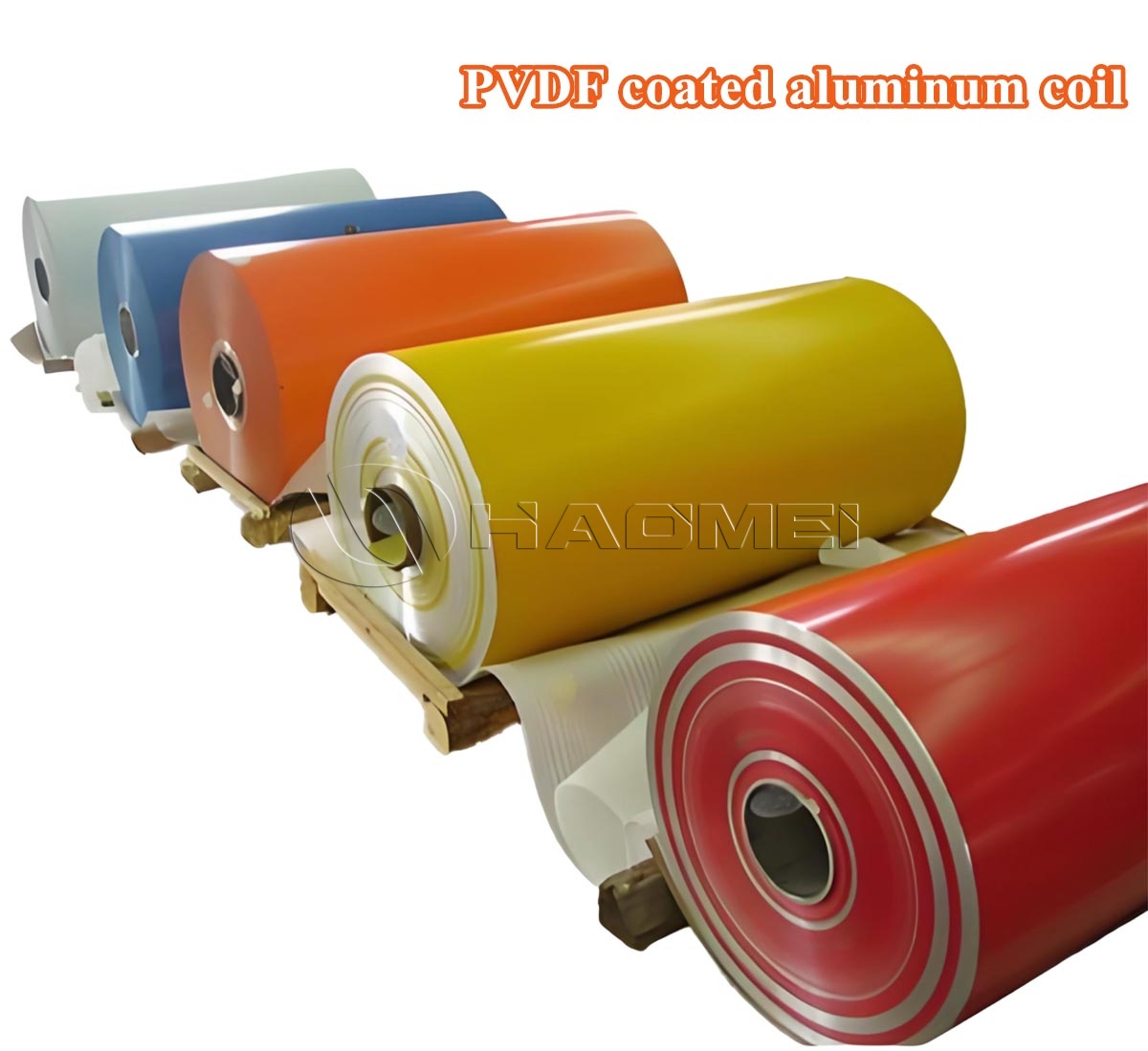
PVDF Coated Aluminum Coil for Aluminum Composite Panels
PVDF coated aluminum coil for aluminum composite panels delivers durable color, weather resistance, adhesion, and forming consistency.
2026-10-09
-
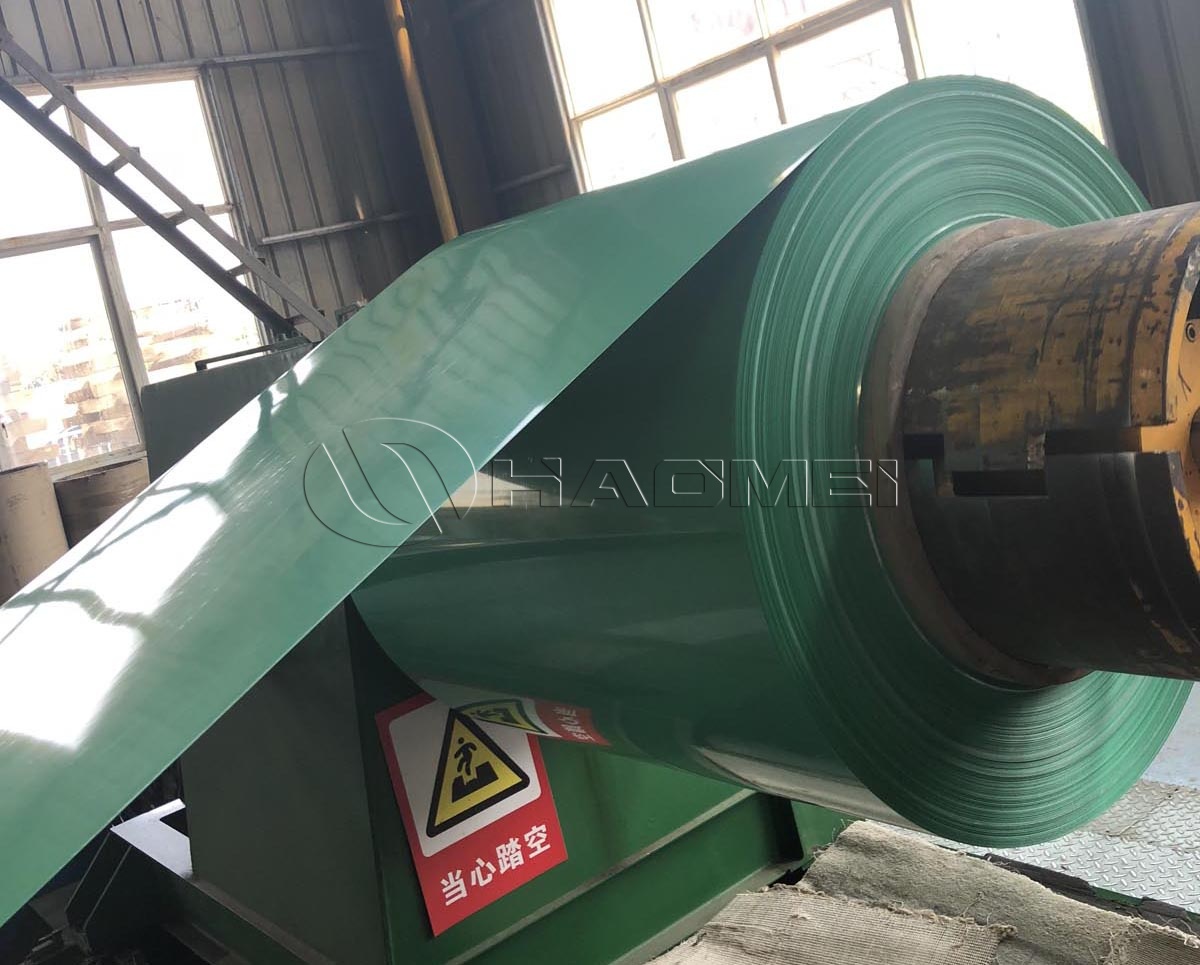
0.5mm Color-Coated Aluminum Coil for Pipe Insulation
Explore 0.5mm color-coated aluminum coil for pipe insulation, covering alloys, coatings, dimensions, corrosion resistance, and jacketing performance.
2026-08-20
-
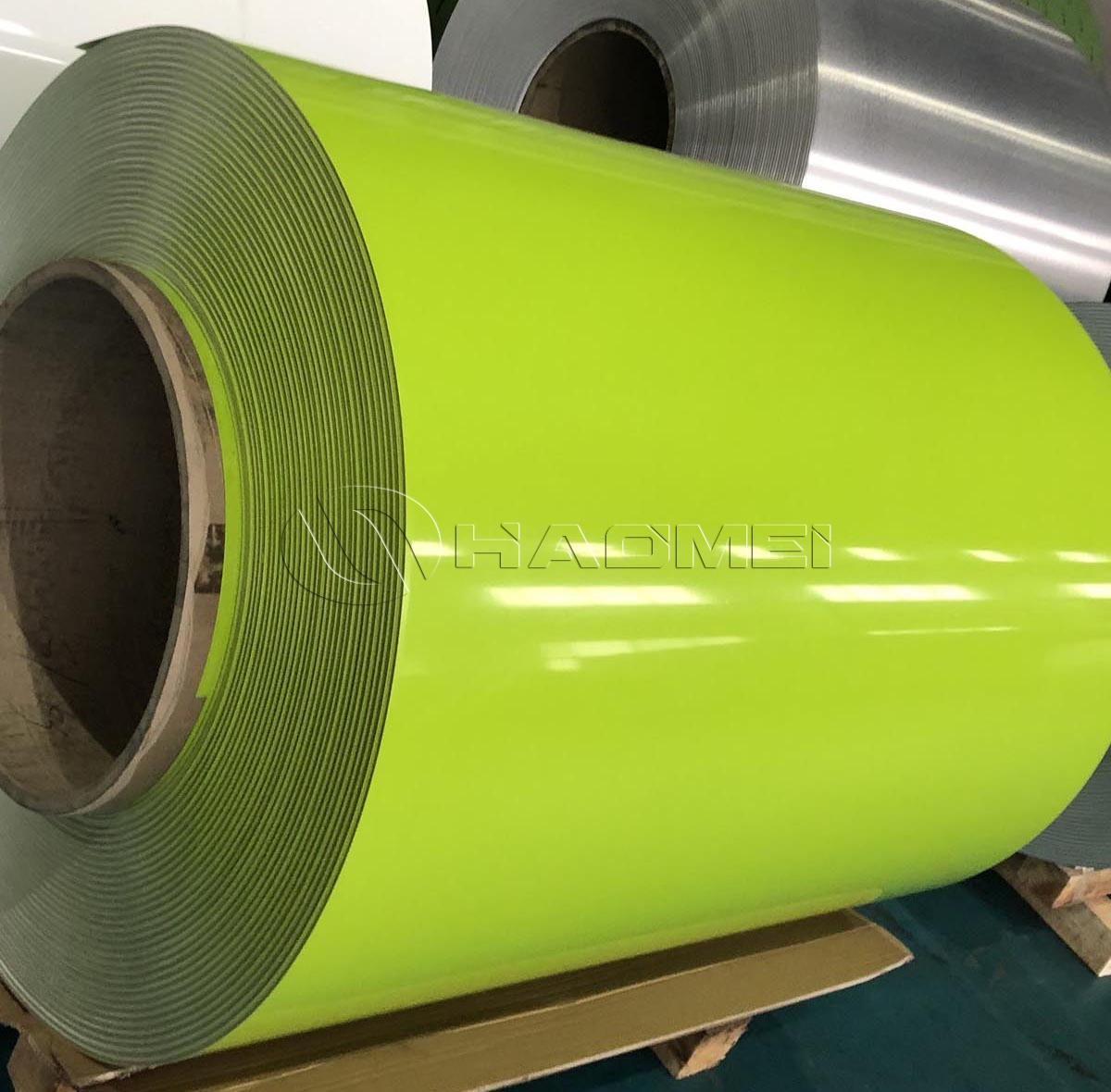
Heavy Duty PVDF Coated Aluminum Coil for Warehouses
Heavy-duty PVDF coated aluminum coil for warehouses combines alloy substrates, UV-stable finishes, and consistent forming performance for roofs and walls.
2026-07-16
Contact Directly
-

ADD: No.14 Waihuan Road, CBD, Zhengzhou, China
-

WhatsApp: +86-18703635966
-

E-MAIL: sales@alummc.com