

News
 By Hermione
Pe Coated 3004 Aluminum Coil For Cladding
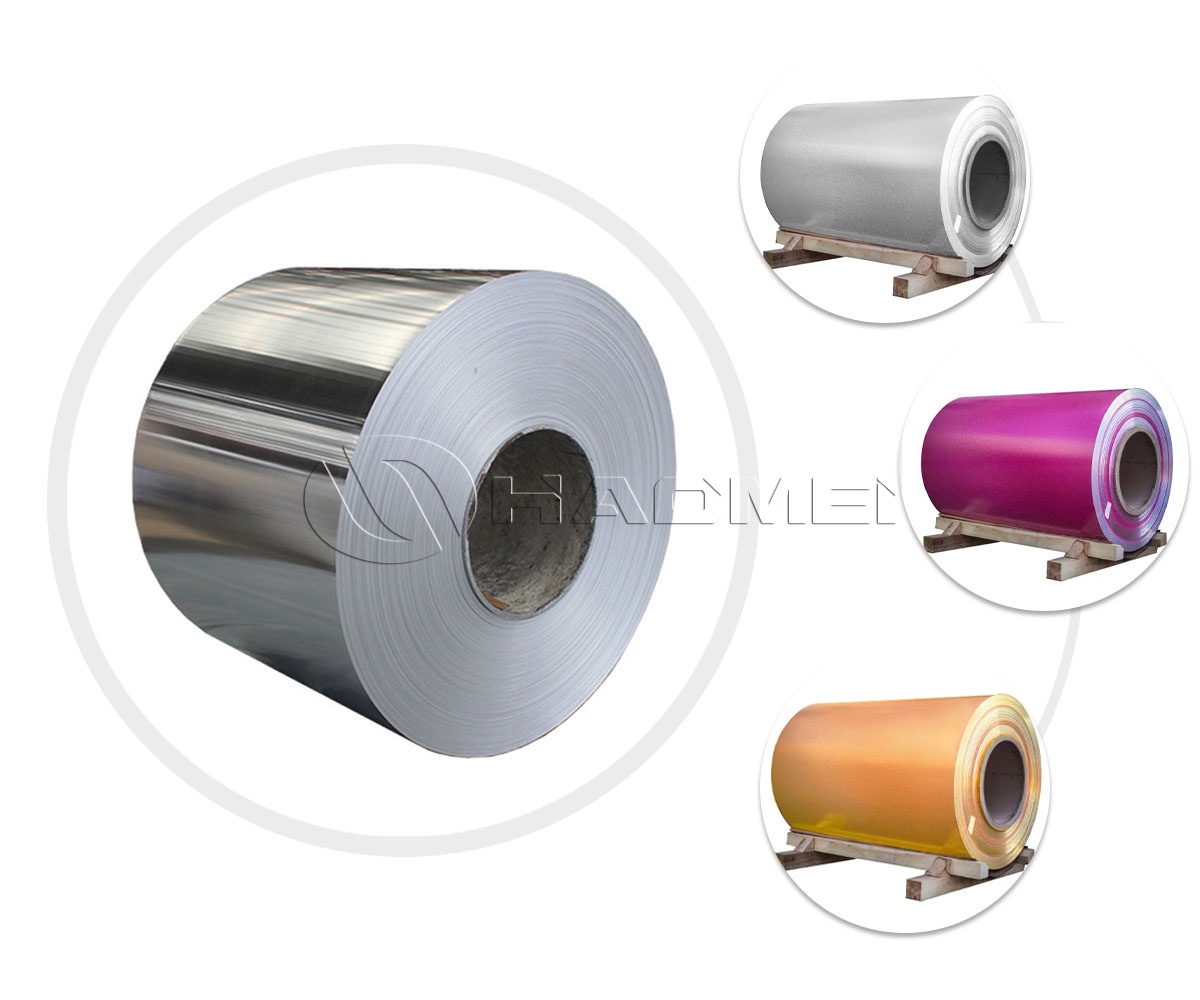
PE coated 3004 aluminum coil for cladding is a widely used pre-painted aluminum material designed for architectural skin systems, interior and exterior wall panels, soffits, ceiling elements, fascia, and decorative composite panel facing. It combines the balanced mechanical properties of 3004 alloy with the flexibility and color consistency of a polyethylene coating system, making it suitable for projects that require good formability, neat appearance, and cost-effective surface protection.
Product positioning in cladding systems
In building envelope and decorative panel manufacturing, 3004 alloy occupies a practical middle position between softer commercially pure aluminum grades and higher-strength magnesium-bearing alloys. For cladding converters and fabricators, this means the material can support roll forming, bending, profiling, cassette fabrication, and panel lamination while maintaining better dent resistance and structural stability than 1xxx series products.
When supplied as a PE Coated Aluminum Coil, the substrate is combined with an organic paint layer that provides color, gloss, and basic atmospheric protection. In many cladding applications, PE coating is selected for indoor use, sheltered outdoor areas, commercial facades with moderate exposure, and decorative systems where processing performance and visual uniformity are key priorities.
Why 3004 alloy is commonly used for cladding
3004 is an Al-Mn-Mg alloy. Compared with 3003, it generally offers slightly higher strength due to the addition of magnesium, while still preserving good workability. This balance is especially important for cladding production, because the material often needs to pass through several manufacturing stages such as decoiling, leveling, slitting, roll forming, punching, folding, and installation.
Key alloy-related advantages include:
Good formability for bends, returns, edge folds, and shaped panels
Better strength than standard 1xxx series coated aluminum
Good surface flatness after proper leveling and tension control
Stable behavior in continuous coil coating and panel fabrication
Suitable compatibility with PE coating systems for decorative finishes
In practical cladding use, 3004 aluminum coil is often chosen when the panel requires a little more rigidity than 3003 or 1100, but does not need the higher alloy cost associated with marine or heavy-duty structural grades.
PE coating system and its role
PE, or polyester coating, is a common paint system for pre-painted aluminum coil. It is valued for its broad color range, gloss flexibility, smooth appearance, and efficient processing performance. On 3004 aluminum coil for cladding, the PE coating serves both decorative and protective functions.
A typical coated structure includes:
Aluminum substrate
Chemical pretreatment layer
Primer coating
PE topcoat
Optional back coat on the reverse side
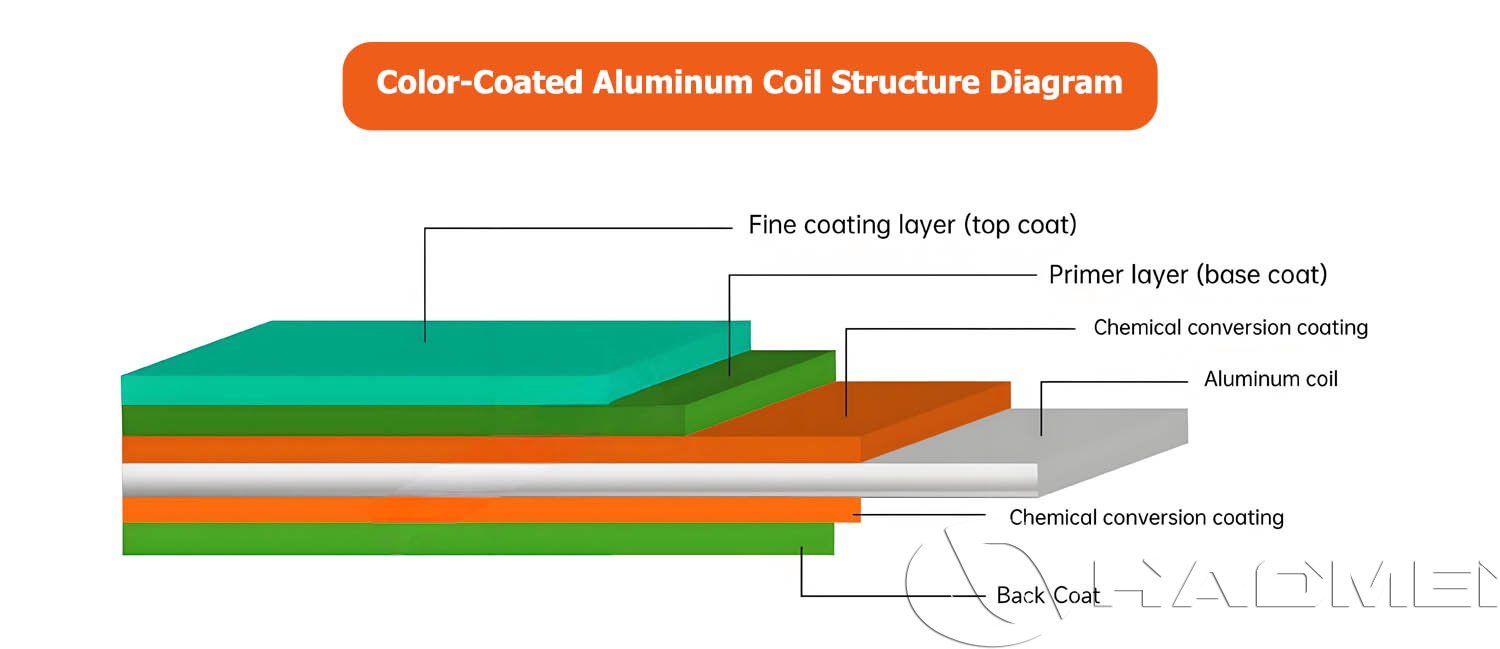
For cladding panels, coating performance depends not only on paint type but also on pretreatment quality, curing control, coating thickness uniformity, adhesion, and flexibility after forming. A properly manufactured color coated aluminum coil should maintain color consistency, coating adhesion, and crack resistance during fabrication.
PE-coated surfaces are often preferred where the project emphasizes:
Decorative color expression
Interior cladding and ceiling systems
Retail and commercial fit-out panels
ACP facing skins
Standard facade applications with moderate environmental demand
For projects requiring longer-term resistance to severe UV exposure and aggressive outdoor weathering, PVDF Coated Aluminum Coil is often specified instead, especially for premium exterior facades and high-rise curtain wall elements.
Core specifications of PE coated 3004 aluminum coil for cladding
Core Specifications Table
| Item | Typical Range / Option |
|---|---|
| Product name | PE Coated 3004 Aluminum Coil |
| Alloy | 3004 |
| Temper | H14, H16, H24, H26 |
| Thickness | 0.20 mm - 1.50 mm |
| Width | 30 mm - 1600 mm |
| Coil inner diameter | 405 mm, 505 mm, 508 mm, 610 mm |
| Coating type | PE polyester coating |
| Top coating thickness | Typically 14-25 microns |
| Back coating thickness | Typically 5-10 microns |
| Surface finish | Solid color, matte, gloss, embossed, custom decorative finish |
| Color standard | RAL color system or custom sample matching |
| Gloss | Usually 10-90 GU, depending on design |
| Adhesion | No peeling after proper cross-cut and bend testing |
| Processing method | Slitting, bending, roll forming, stamping, profiling |
| Main uses | Cladding, facade panels, ceilings, soffits, ACP skin, decorative panels |
Actual specification windows may vary according to panel design, forming radius, coating supplier system, and project environment.
Common alloys used in coated aluminum cladding
Although 3004 aluminum coil for cladding is an important option, it is not the only alloy used in this field. Different alloys are selected according to strength, formability, flatness, corrosion conditions, and finished product structure.
1100 alloy
1100 is a commercially pure aluminum grade with very high ductility and good corrosion resistance. It is easy to form, but its strength is relatively low. It is often used in interior decoration, ceiling products, and lightly loaded panel applications where deep formability is more important than rigidity.
3003 alloy
3003 is one of the most common manganese-bearing aluminum alloys for coated coil. It offers better strength than 1100 and good forming behavior. For general decorative cladding, roofing accessories, and ACP skins, it remains a widely adopted grade.
3004 alloy
3004 improves on 3003 with the addition of magnesium, giving a more favorable strength-formability combination. This makes it well suited for cladding aluminum coil used in cassette panels, folded edge panels, and architectural skins requiring improved dent resistance.
3105 alloy
3105 is another frequently used architectural coil alloy. It offers good corrosion resistance, good paintability, and appropriate strength for building trims, siding, and fascia. It is commonly seen in coated sheet and coil for construction.
5005 alloy
5005 is often used when anodizing quality or a higher-grade architectural appearance is required, but it is also available in coated form. It offers good corrosion resistance and is suitable for certain premium facade or decorative applications.
5052 and other 5xxx alloys
5052 and related magnesium-bearing alloys provide higher strength and stronger corrosion resistance than 3xxx series materials. They are selected for more demanding environments, but in many standard cladding systems they may exceed what is necessary from a cost-performance standpoint.
Among these options, 3004 Color Coated Aluminum Coil is widely considered a balanced choice for architectural panel production where fabrication reliability and finished appearance are both important.
Processing characteristics in cladding fabrication
For cladding manufacturers, performance during processing is as important as nominal chemical composition. PE coated 3004 coil should show stable behavior through:
Decoiling without excessive set or edge wave
Slitting with clean edges and limited burr formation
Bending without coating fracture at suitable radii
Punching and perforation with controlled paint loss
Adhesive lamination in composite panel production
Folding and locking in cassette or tray-type panel systems
The relationship between substrate temper and fabrication route is important. Softer tempers can improve bending and shaping, while harder tempers may provide better panel stiffness. Selection should match the panel geometry, radius design, and installation method.
Surface quality requirements for architectural appearance
Cladding is a visible building element, so surface quality standards are usually stricter than for industrial sheet. A qualified PE coated aluminum coil for cladding should be controlled for:
Color consistency from coil to coil and lot to lot
Gloss uniformity across the strip width
Minimal roller marks, chatter, dents, and inclusions
Stable coating adhesion after bending and impact
Controlled film thickness tolerance
Clean, well-defined slit edges
For facade and decorative projects, the final visual effect depends on both coating quality and substrate flatness. Even when paint quality is good, poor tension leveling or inconsistent strip shape can affect panel appearance after installation.
Typical application scenarios
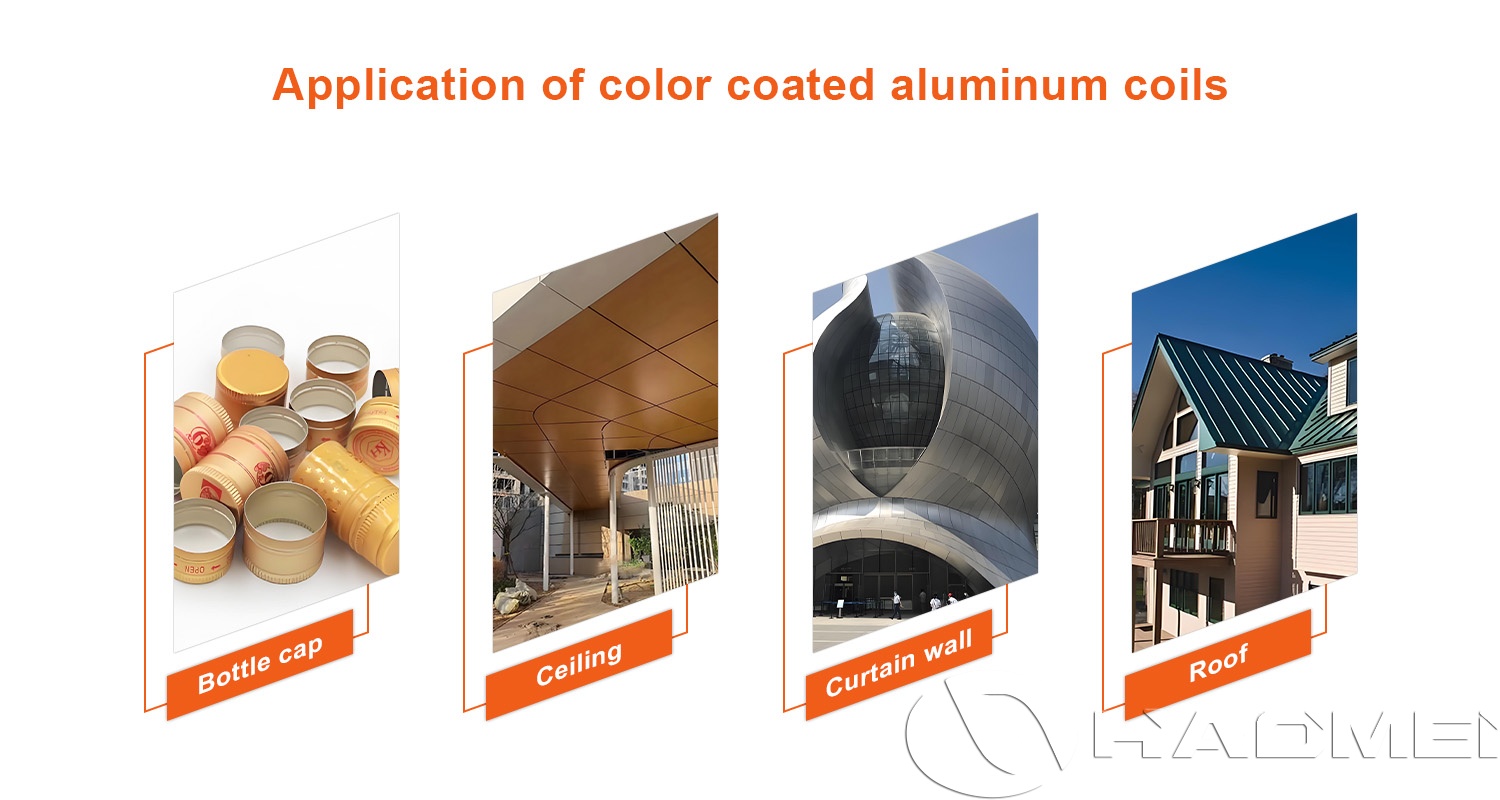
PE coated 3004 aluminum coil is commonly converted into:
Exterior wall cladding panels in moderate environments
Interior wall and ceiling panels
Soffits and canopy linings
Fascia boards and trim systems
Composite panel face sheets
Shopfront decorative panels
Column covers and partition facings
Transportable building decorative skins
In these applications, the material is valued for its combination of low weight, manageable strength, efficient fabrication, and broad decorative flexibility.
Technical considerations for specification
When specifying PE coated 3004 aluminum coil for cladding, several factors influence long-term performance:
Substrate thickness
Thinner gauges improve forming efficiency and reduce weight, but panel oil canning resistance may decrease if the support design is insufficient. Thicker gauges improve rigidity, especially for large-format flat panels.
Temper selection
Temper affects bendability, panel stiffness, and springback. Tight folding details generally benefit from more formable tempers, while flatter panel systems may prefer slightly harder conditions.
Coating thickness
A typical PE topcoat range is sufficient for many decorative cladding uses, but the exact requirement should align with exposure conditions, gloss target, and forming severity.
Environment
PE systems are suitable for many standard decorative and architectural uses, especially indoors or in less aggressive outdoor exposure. Highly corrosive coastal, industrial, or high-UV environments often require upgraded coating systems and more demanding substrate evaluation.
Color and gloss control
Large-area facade projects usually require stable batch management to minimize visible variation after installation. This is especially important for metallic tones, low-gloss finishes, and wide panel layouts.
Manufacturing and quality control focus
Reliable 3004 color coated aluminum coil depends on integrated control across substrate production and coil coating. Important quality control points include:
Alloy chemistry consistency
Mechanical property range control
Surface cleaning and pretreatment effectiveness
Primer and topcoat application uniformity
Oven curing profile control
T-bend, adhesion, impact, and solvent resistance testing
Color difference and gloss measurement
Coil winding quality and transport protection
For cladding applications, these controls directly affect whether the finished panel can maintain appearance and integrity during fabrication and service.
-
3003 Color Coated Aluminum Coil Coating Thickness
Learn 3003 color coated aluminum coil coating thickness, PE and PVDF systems, alloy features, and key specs for roofing, facade, ceiling applications.
2026-04-23
-
Wholesale 0.4-1.5mm PVDF Coated Aluminum Coils
Wholesale 0.4-1.5mm PVDF coated aluminum coils for roofing, facades, cladding, and ceiling systems, with alloy, coating, and size options.
2026-07-24
-
3105 H26 Colot-Coated Aluminum Coil for Commercial Fire-Rated Partition Walls
3105 H26 color-coated aluminum coil delivers durable, formable facing material for commercial fire-rated partition wall systems and architectural interiors.
2026-09-22
Contact Directly
-

ADD: No.14 Waihuan Road, CBD, Zhengzhou, China
-

WhatsApp: +86-18703635966
-

E-MAIL: sales@alummc.com