

News
 By Hermione
0.35mm-2.2mm 1060 H24 Color Coated Aluminum Coil for Warehouse Roofing
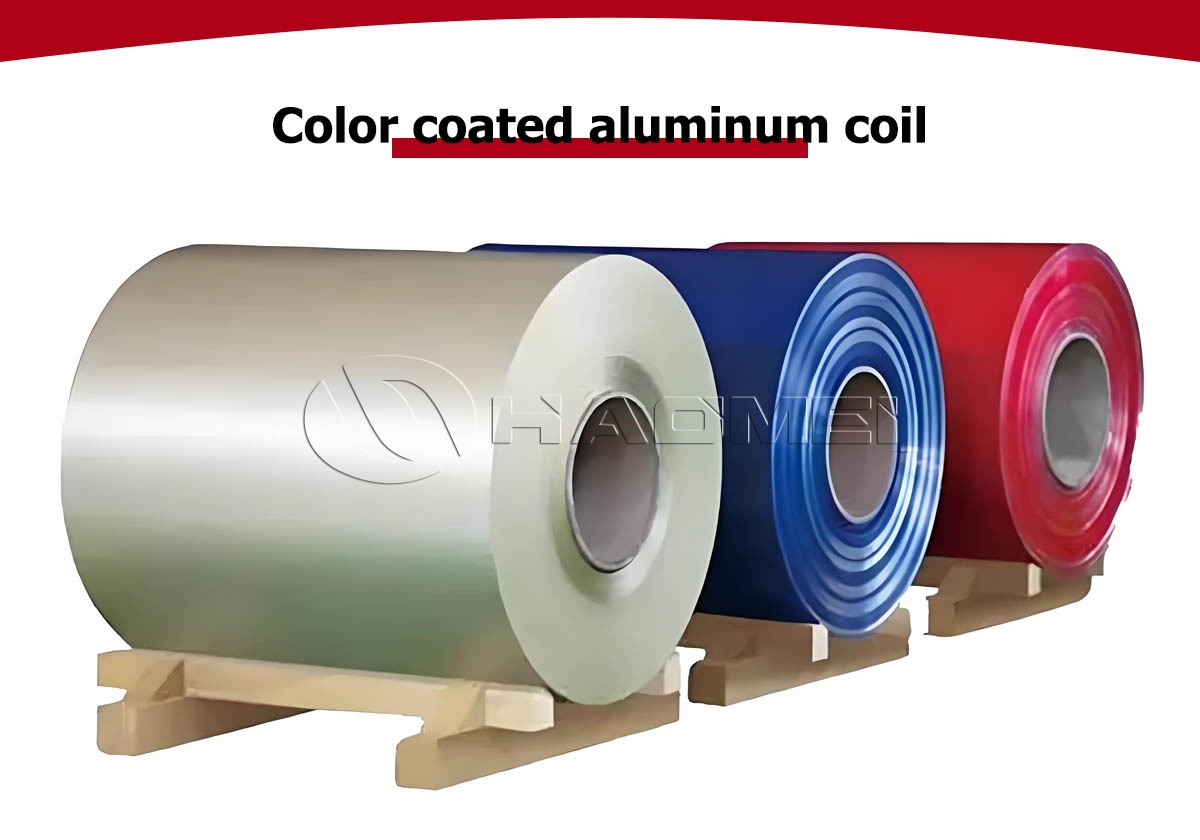
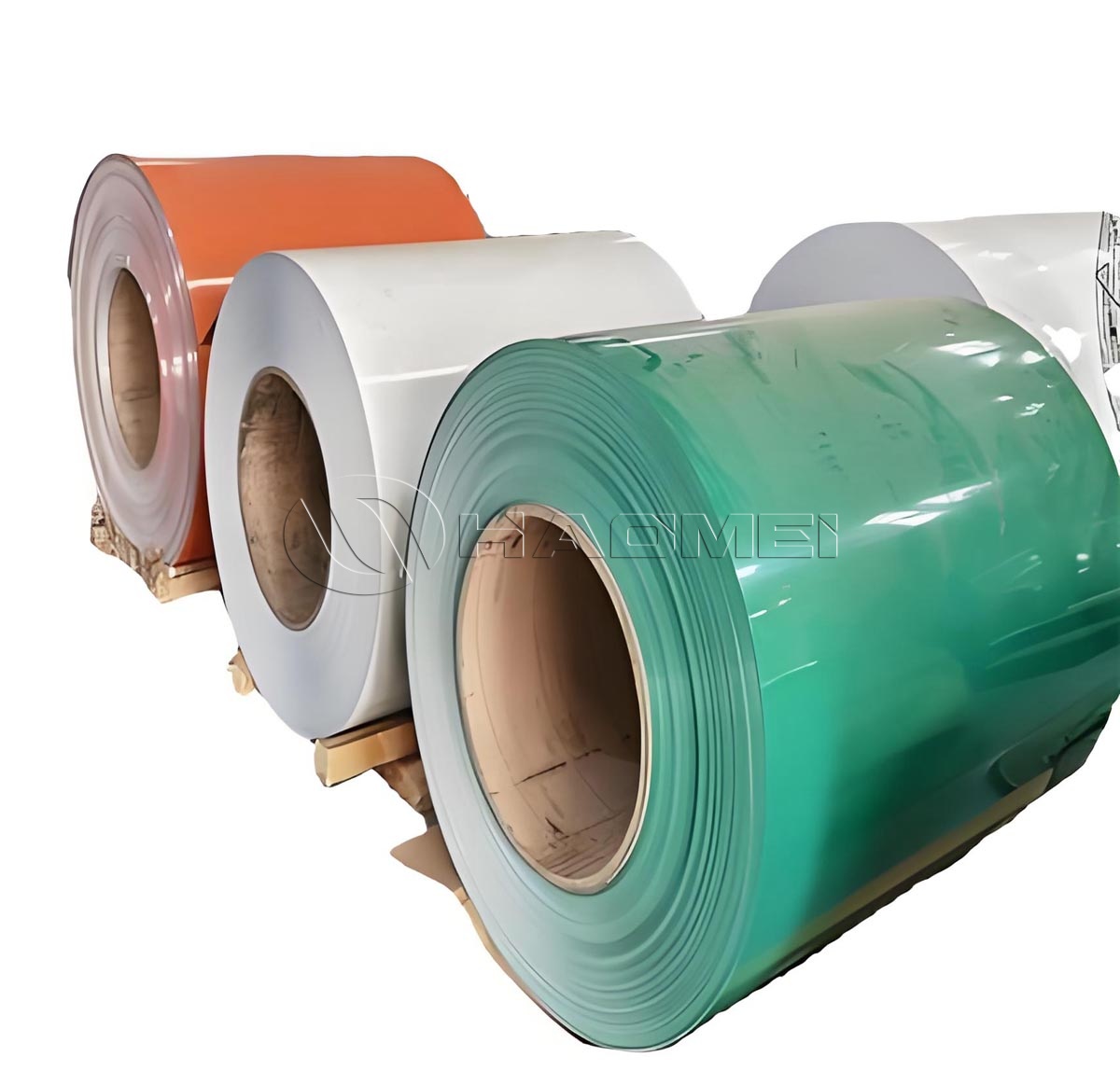
1060 H24 color coated aluminum coil is a lightweight pre-painted material designed for warehouse roofing, roof cladding, canopies, loading-area covers, and industrial wall systems. With a thickness range of 0.35mm to 2.2mm, it combines the corrosion resistance of aluminum with a factory-applied decorative and protective coating. The H24 temper provides a balanced level of strength and formability for roll forming, corrugation, profiling, and bending operations used in warehouse roof panel production.
Product Positioning for Warehouse Roof Systems
Warehouse buildings commonly require roofing materials with low dead weight, stable surface appearance, corrosion resistance, and efficient processing performance. Compared with uncoated sheet, color coated aluminum coil has a continuous coil-coating finish that protects the substrate before roof panels are formed.
1060 aluminum contains a minimum aluminum content of 99.6%. Its high purity gives it excellent resistance to atmospheric corrosion, good thermal conductivity, and reliable workability. In the H24 temper, the coil is strain-hardened and partially annealed, creating a practical balance between panel stiffness and forming performance.
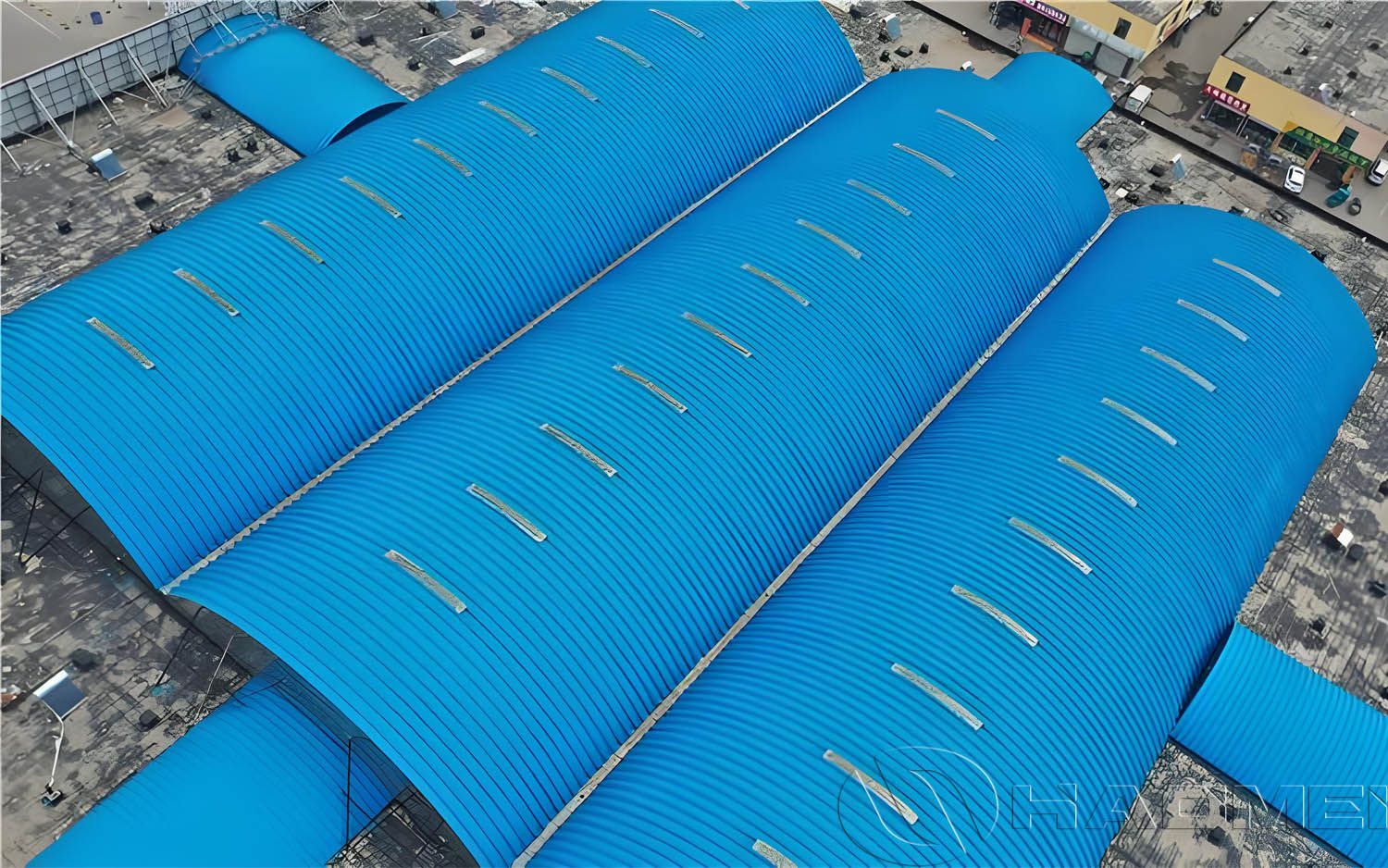
For warehouse roofing, the material is typically processed into trapezoidal sheets, corrugated roofing panels, standing-seam profiles, flashings, ridge caps, gutters, and edge trim. The low density of aluminum helps reduce the weight applied to purlins and supporting structures, which is particularly relevant for large-span industrial buildings.
Core Specifications of 1060 H24 Color Coated Aluminum Coil
Core Specification Table
| Item | Typical Specification |
|---|---|
| Alloy | 1060 aluminum alloy |
| Temper | H24 |
| Thickness | 0.35mm-2.2mm |
| Typical roofing thickness | 0.50mm-1.20mm, subject to profile and structural design |
| Width | 600mm-1,600mm, with common roofing widths including 914mm, 1,000mm, 1,219mm, and 1,250mm |
| Coil inner diameter | 508mm or 610mm |
| Coil weight | Commonly 2-6 metric tons, depending on width and handling requirements |
| Front coating | PE, SMP, HDP, or PVDF coating system |
| Back coating | Polyester back coat or service-specific back coating |
| Surface finish | Glossy, matte, textured, embossed, or customized color finish |
| Color | RAL, Pantone, custom color matching, and selected building color systems |
| Applicable standards | ASTM, EN, JIS, GB/T, or project-specific technical requirements |
Coating Structure and Surface Protection
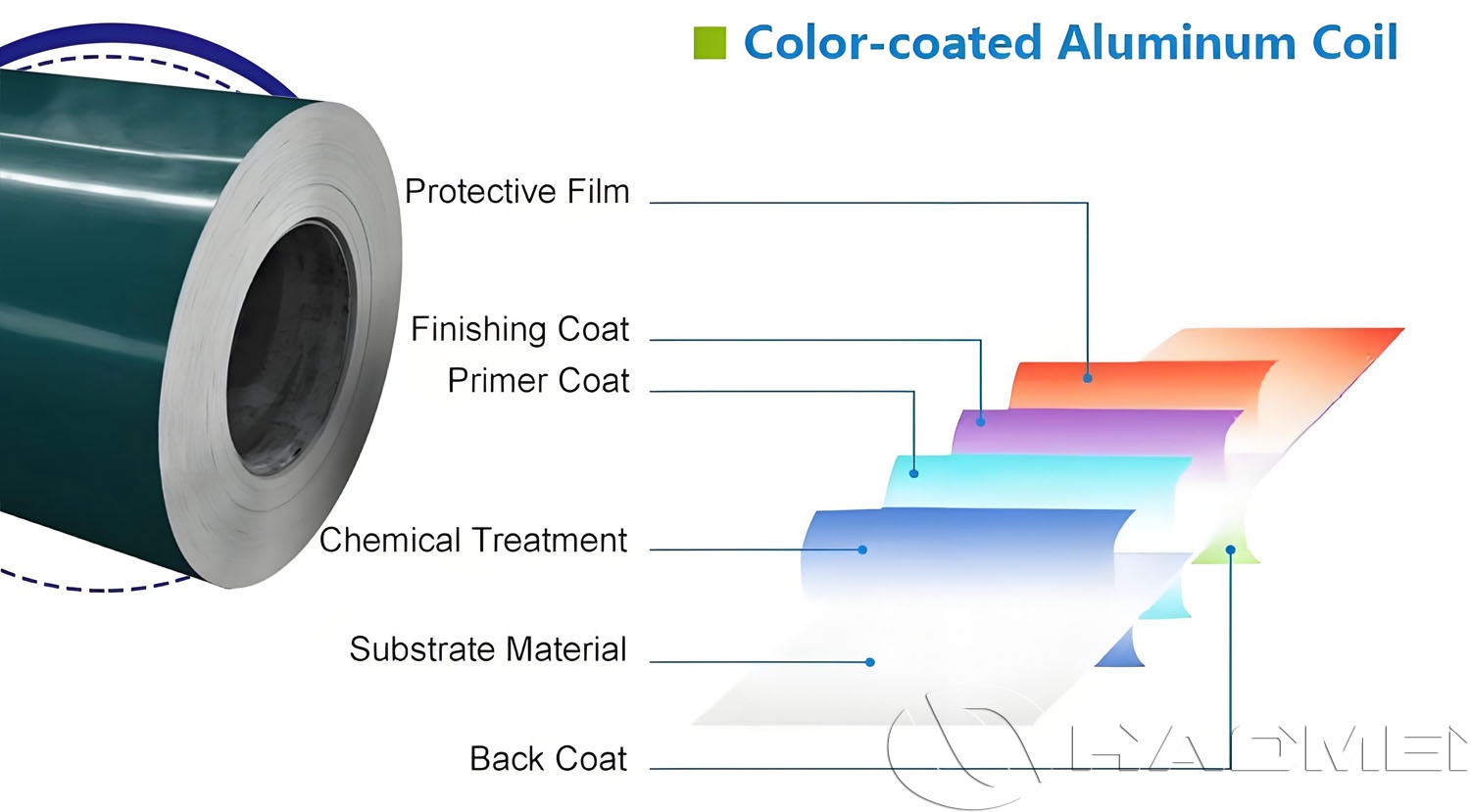
Color coated aluminum coil is produced through a continuous coil-coating process. The aluminum strip is cleaned and chemically pretreated before primer and topcoat layers are applied and oven cured. This controlled process promotes coating adhesion, uniform appearance, and consistent film performance across the coil length.
A typical roofing coating structure includes:
Aluminum substrate
Chemical conversion layer
Primer coating
PE, HDP, SMP, or PVDF topcoat
Back coating on the reverse side
For general warehouse roofs in normal inland environments, PE Coated Aluminum Coil provides an economical finish with good color options and processability. PE systems are widely used for standard industrial roofing and interior or semi-exposed building components.
For warehouses exposed to strong ultraviolet radiation, persistent humidity, industrial emissions, coastal air, or substantial temperature cycling, PVDF Coated Aluminum Coil offers enhanced weatherability, color retention, and chalking resistance. PVDF systems are generally selected where long-term exterior appearance stability is a key coating requirement.
Why 1060 H24 Is Suitable for Roofing Profiles
The 1060 H24 substrate is suitable for roofing applications because its physical and processing characteristics align with coil-fed roof panel manufacturing.
Lightweight Construction
Aluminum has a density of approximately 2.7 g/cm³, substantially lower than steel. This supports lower roof-system dead load while maintaining coverage over large warehouse areas. Reduced material weight can also benefit coil transport, handling, and installation logistics.
Corrosion Resistance
1060 aluminum naturally forms a thin, stable oxide film in air. The pre-painted coating system provides an additional barrier against moisture, airborne contaminants, and ultraviolet exposure. Properly designed roof details, drainage geometry, fasteners, and compatible accessories remain important for full system durability.
Formability in H24 Temper
H24 is a half-hard temper that supports roll forming into common roofing shapes without the excessive softness associated with fully annealed material. It is suitable for trapezoidal, corrugated, ribbed, and flashing profiles when bending radii and forming conditions are matched to the material thickness and coating type.
Thermal Reflectivity and Indoor Comfort
Light-colored roof coatings can reflect part of the incoming solar radiation, helping lower roof-surface heat absorption under direct sunlight. The final thermal performance of a warehouse roof also depends on insulation, ventilation, roof geometry, air gaps, and the complete building envelope design.
Thickness Range for Warehouse Roofing Components
The 0.35mm-2.2mm thickness range accommodates different warehouse roofing and cladding parts rather than a single profile type.
0.35mm-0.50mm: Light-duty corrugated sheets, interior liners, soffits, and low-load architectural roofing components.
0.50mm-0.80mm: Common range for profiled warehouse roof sheets, wall cladding, and general industrial building panels.
0.80mm-1.20mm: Higher-stiffness roof profiles, wide panel spans, flashings, gutters, and areas with increased wind-load considerations.
1.20mm-2.20mm: Heavy-gauge flashings, structural trims, drainage components, equipment enclosures, and formed accessories requiring greater section rigidity.
The required coil thickness is determined by panel profile geometry, purlin spacing, wind and snow loads, roof slope, fastening layout, span conditions, and applicable structural codes. Thickness alone does not define roof load capacity; profile depth and section design have a major influence on panel stiffness.
Common Aluminum Alloys Used in Color Coated Roofing Coil
While 1060 H24 is widely used where light weight, corrosion resistance, and economical processing are important, other aluminum alloys are also used in color coated coil for roofing and building envelope applications.
| Alloy | Main Characteristics | Typical Roofing or Cladding Use |
|---|---|---|
| 1050 | High-purity aluminum with excellent formability and corrosion resistance | General roof sheet, flashing, decorative cladding |
| 1060 | High aluminum content, good conductivity, corrosion resistance, and workability | Warehouse roofing, corrugated panels, gutters, trims |
| 1100 | Good corrosion resistance and forming performance, with slightly higher strength than 1060 in comparable tempers | Roofing panels, wall cladding, architectural sheet |
| 3003 | Aluminum-manganese alloy with improved strength over 1xxx series alloys | More demanding profiled roofing and drainage components |
| 3004 | Higher-strength aluminum-manganese alloy | Industrial panels, formed roof accessories, heavy-duty cladding |
| 3105 | Widely used building-sheet alloy with good strength, formability, and coating compatibility | Pre-painted roof panels, siding, fascia, and trims |
| 5052 | Aluminum-magnesium alloy with higher strength and strong corrosion resistance | Coastal, humid, and higher-load roofing accessories |
For standard warehouse roof panels, 1060 offers a highly workable, corrosion-resistant base metal. For designs requiring increased mechanical strength, 3003, 3105, or 5052 may be used according to the structural and environmental conditions of the project.
Manufacturing and Quality Control Considerations
The performance of color coated aluminum roofing coil depends on both substrate quality and coating-process consistency. Key control points include aluminum thickness tolerance, coil flatness, surface cleanliness, pretreatment quality, coating film thickness, curing condition, gloss level, color consistency, and adhesion.
Coating quality is commonly assessed through tests such as:
Coating thickness measurement
Color difference evaluation
Gloss measurement
Pencil hardness testing
T-bend and reverse-impact testing
Cross-hatch adhesion testing
Solvent resistance testing
Salt spray and humidity exposure testing, where applicable
Accelerated weathering evaluation for exterior coating systems
In addition, the reverse side of the coil requires appropriate back-coat coverage. During roll forming and roof installation, the back coating helps protect the hidden surface from moisture accumulation, contact wear, and service-environment exposure.
Processing Characteristics for Roof Panel Fabrication
1060 H24 color coated aluminum coil can be slit to required widths and processed on roll-forming lines into roofing panels. Clean roller surfaces, controlled forming pressure, compatible lubricants, and suitable bending radii help preserve the decorative coating during fabrication.
When aluminum roofing panels are integrated with steel purlins, fasteners, sealants, insulation layers, or drainage components, material compatibility is important. Direct contact between dissimilar metals in the presence of moisture can create galvanic corrosion conditions. Roof-system designs commonly use suitable separation layers, coated fasteners, and compatible sealing materials to maintain long-term performance.
Surface Options for Warehouse Roofing
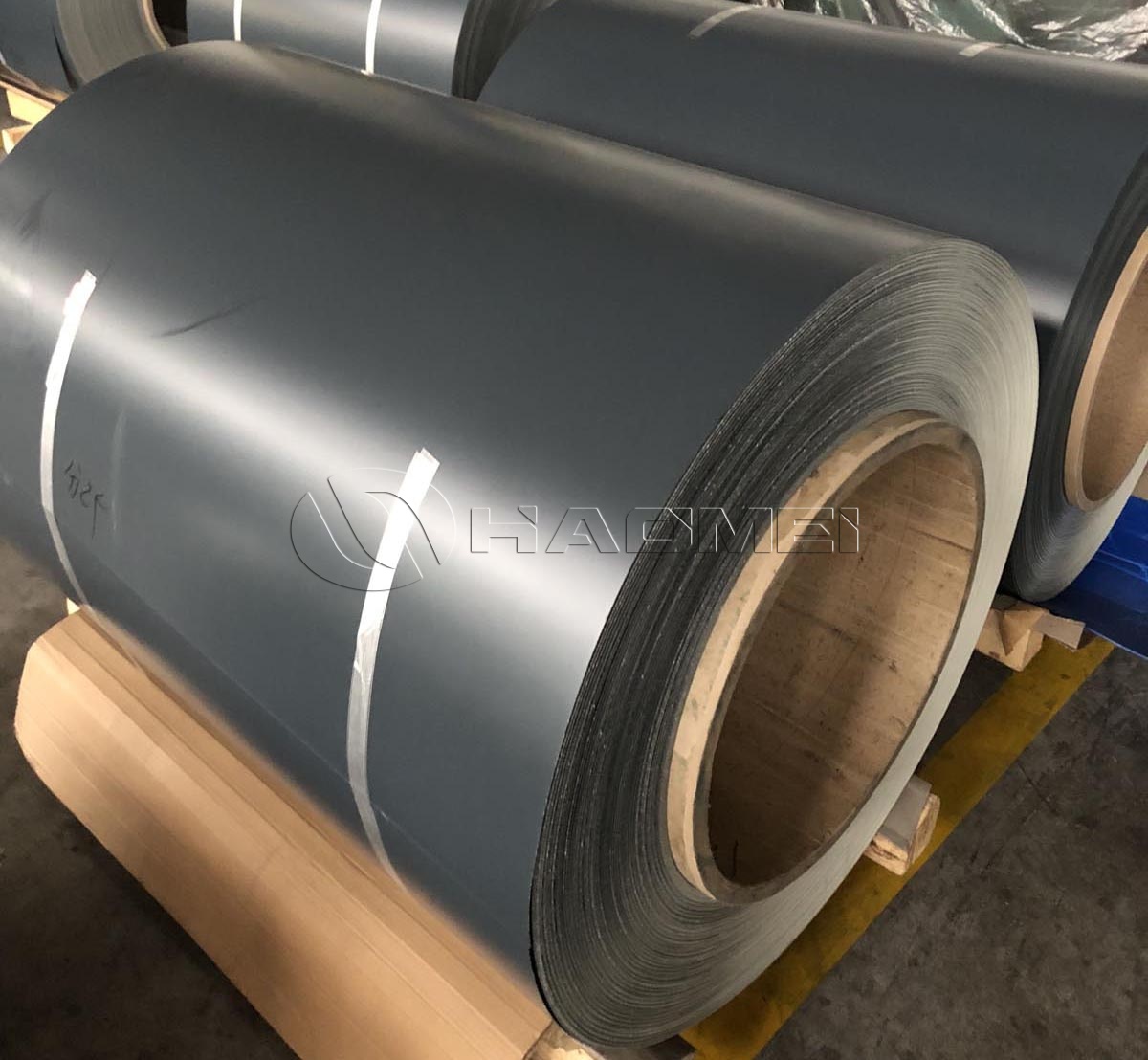
The coil surface can be supplied in solid colors and functional finishes suited to industrial architecture. Common warehouse roofing colors include white, light gray, silver gray, blue, green, red, beige, and dark gray. Light shades are often used where solar reflectance and a clean industrial appearance are preferred, while darker shades may be applied for visual coordination with façades, trims, or corporate building colors.
Available finishes include smooth gloss, low-gloss matte, textured surfaces, embossed patterns, and customized color systems. Coating selection should account for roof exposure conditions, expected service environment, visual requirements, and the forming complexity of the final roofing profile.
-
PVDF Coated Aluminum Coil for Signage
PVDF coated aluminum coil for signage panels, outdoor signs, channel letters, and fascia systems with durable color and corrosion resistance.
2026-05-26
-
Pvdf Coated Aluminum Coil For Roofing Sheets
PVDF coated aluminum coil for roofing sheets offers weather resistance, color stability, and formability with 3003, 3004, and 5052 alloys.
2026-03-31
-
1100 H16 Prepainted Aluminum Coil Factory
1100 H16 color coated aluminum coil is a highly formable, corrosion-resistant color-coated aluminum coil suitable for architectural decorative strips, ceilings, exterior wall panels, etc.
2026-01-15
Contact Directly
-

ADD: No.14 Waihuan Road, CBD, Zhengzhou, China
-

WhatsApp: +86-18703635966
-

E-MAIL: sales@alummc.com