

News
 By Hermione
PVDF Coated Aluminum Coil For Wall Panels
PVDF coated aluminum coil for wall panels is a pre-finished architectural material designed for exterior cladding, curtain-wall systems, insulated sandwich panels, soffits, column covers, and decorative façade components. It combines the low weight and corrosion resistance of aluminum with a fluoropolymer coating system engineered to maintain color, gloss, and surface integrity under long-term outdoor exposure.
Material Structure and Performance Characteristics
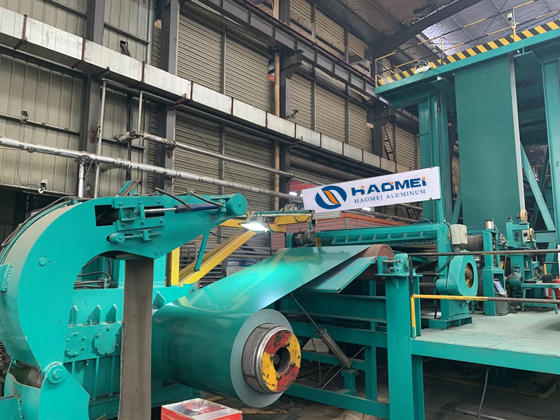
PVDF coated aluminum coil is produced through a continuous coil-coating process. The aluminum strip is cleaned, chemically pretreated, primed, top-coated, and oven cured before being recoiled. This controlled process creates a uniform finish that is suitable for downstream fabrication into wall panels, cassette panels, corrugated sheets, composite panels, and formed architectural profiles.
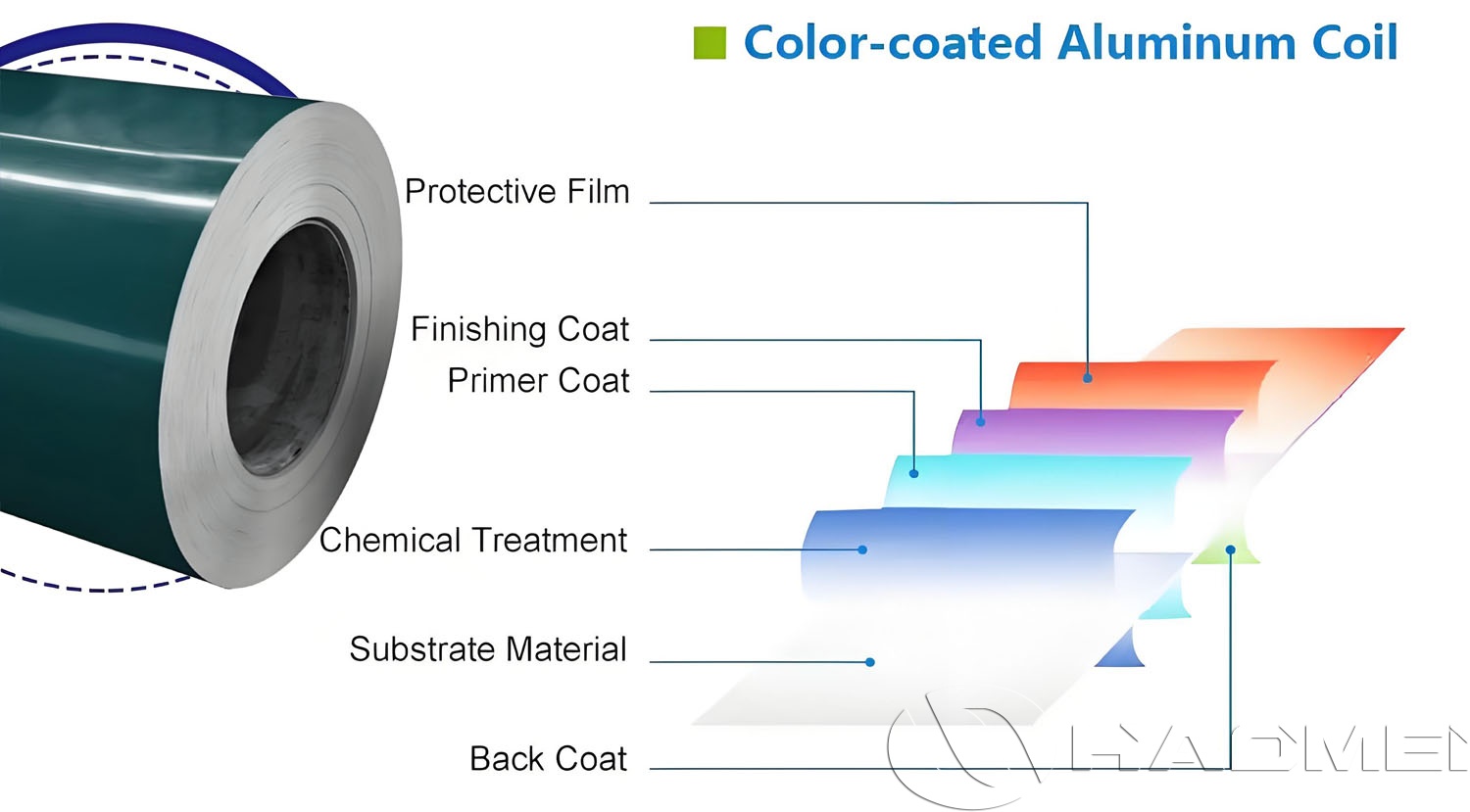
A typical coating structure includes:
Aluminum substrate
Chemical conversion treatment
Corrosion-resistant primer coat
PVDF topcoat
Optional protective film for fabrication and installation handling
Back coating on the reverse side, selected according to panel construction and bonding requirements
PVDF coatings commonly use fluoropolymer resin systems with excellent resistance to ultraviolet radiation, moisture, industrial atmospheres, and temperature cycling. For wall panels exposed to sunlight, rain, airborne pollutants, and coastal conditions, the coating helps preserve the façade appearance while reducing risks of chalking, fading, peeling, and localized corrosion.
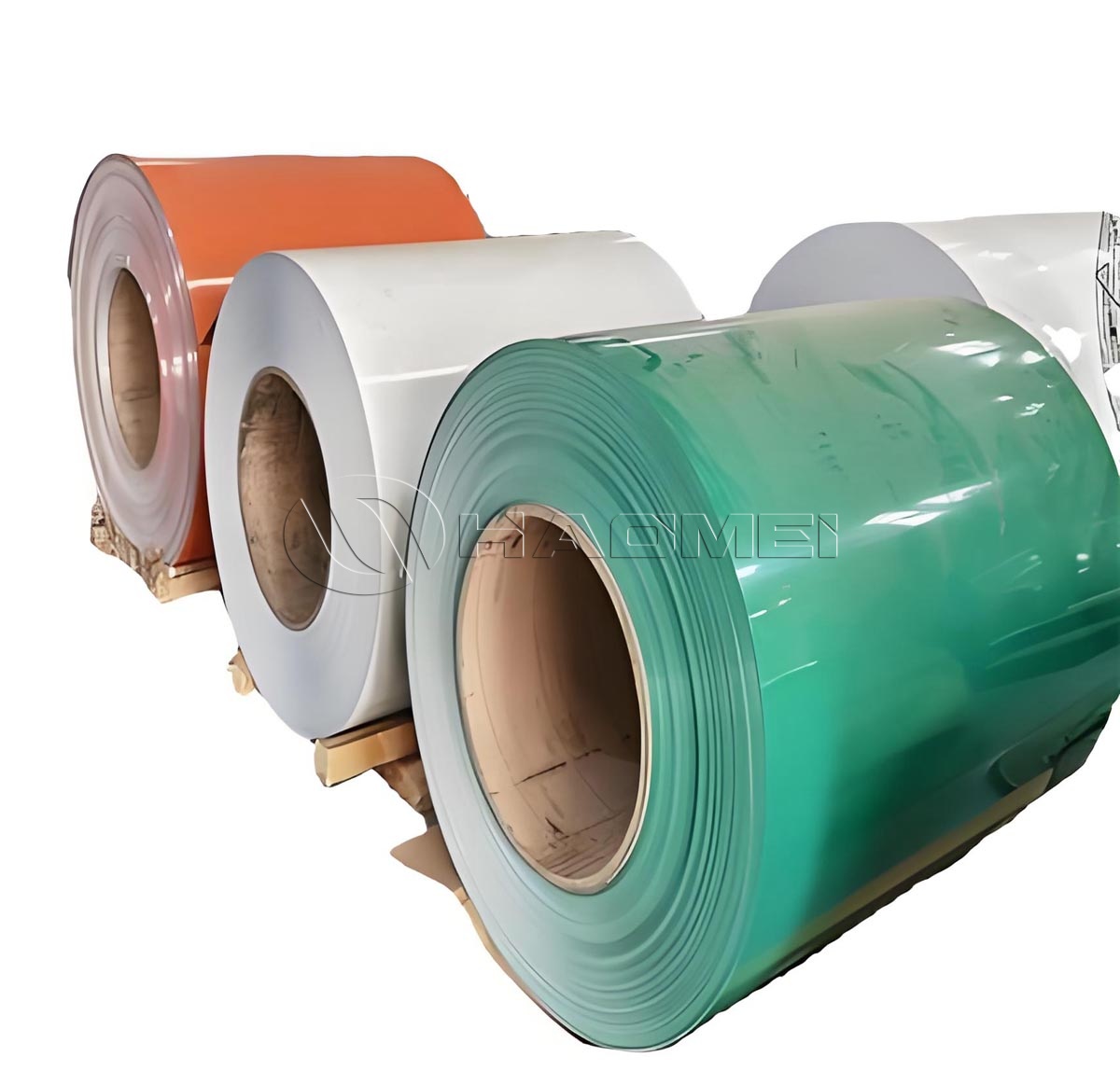
The surface can be supplied in solid colors, metallic finishes, matte finishes, high-gloss finishes, stone-like patterns, wood-grain patterns, and custom color systems. Metallic and pearlescent finishes require close control of pigment orientation, coating thickness, and batch consistency to maintain a uniform visual effect across large wall elevations.
Core Specifications of PVDF Coated Aluminum Coil for Wall Panels
| Specification Item | Typical Range or Option |
|---|---|
| Aluminum alloy | 1100, 3003, 3004, 3105, 5005, 5052 |
| Temper | H14, H16, H18, H24, H26, H32, O, subject to alloy and forming requirement |
| Coil thickness | 0.30-1.50 mm for common wall panel applications |
| Coil width | 300-1,600 mm |
| Coil inner diameter | 405 mm or 508 mm |
| Coil outer diameter | Typically up to 1,800 mm, depending on coil weight and thickness |
| Front coating | PVDF fluoropolymer coating system |
| Front coating thickness | Commonly 25-35 μm; higher-build systems available for specific designs |
| Back coating | Polyester, epoxy, service coating, or bonding-compatible coating |
| Surface finish | Gloss, matte, metallic, textured, stone pattern, wood grain, custom color |
| Protective film | Optional, typically 50-80 μm |
| Main applications | Exterior wall panels, curtain walls, composite panels, soffits, cladding profiles |
Common Aluminum Alloys for Wall Panel Coil
Alloy selection affects panel rigidity, formability, corrosion resistance, flatness, and fabrication behavior. The best alloy depends on panel geometry, thickness, installation environment, and whether the coil will be bent, roll formed, pressed, or bonded to another material.
1100 Aluminum Alloy
1100 is a commercially pure aluminum alloy with high formability and good corrosion resistance. It is suitable for decorative interior panels, lightly formed profiles, and wall panel components where high mechanical strength is not the primary requirement. Its relatively soft condition allows clean bending and shaping, although it is generally less rigid than manganese-containing 3xxx alloys at the same thickness.
3003 Aluminum Alloy
3003 is one of the most widely used alloys for pre-painted architectural coil. The manganese addition provides improved strength compared with 1100 while retaining reliable formability and corrosion resistance. It is commonly used for façade panels, aluminum composite panel skins, ceiling systems, and formed cladding components. 3003 Color Coated Aluminum Coil is particularly suitable where balanced processing performance and panel stiffness are required.
3004 Aluminum Alloy
3004 offers higher strength than 3003 and is used where improved dent resistance or structural stability is needed. It can be used in deeper-profiled wall panels, corrugated cladding sheets, and panel systems subject to greater handling or wind-load-related deformation requirements. Temper selection should be coordinated with the intended forming radius and profile depth.
3105 Aluminum Alloy
3105 is a common alloy for coated architectural sheet because it provides a useful balance of strength, formability, and surface quality. It is frequently used in roll-formed cladding, siding, soffits, roof-edge details, and wall panel skins. Its mechanical properties make it well suited to continuous fabrication processes requiring consistent shape retention after bending.
5005 and 5052 Aluminum Alloys
5005 aluminum is often selected for high-quality architectural panels because of its good anodizing and coating appearance, moderate strength, and reliable corrosion resistance. 5052 provides higher strength and stronger resistance in humid or marine-influenced environments. For demanding exterior wall applications, 5052 Color Coated Aluminum Coil can provide enhanced substrate performance where panel strength and environmental resistance are critical.
Why PVDF Coating Is Used for Exterior Wall Panels
Wall panel systems must retain their appearance through prolonged exposure to solar radiation, rainfall, humidity, dust, thermal movement, and atmospheric contaminants. A PVDF finish is designed for these demanding conditions.
Key coating benefits include:
UV resistance: Helps maintain color and gloss during extended outdoor exposure.
Weather resistance: Supports long-term surface durability under rain, humidity, and temperature cycling.
Chemical resistance: Offers resistance to many urban and industrial atmospheric contaminants.
Corrosion protection: Works with pretreatment and primer layers to protect the aluminum substrate.
Surface cleanliness: The low surface energy of fluoropolymer coatings can reduce dirt adhesion and support easier rain washing.
Forming performance: Properly formulated PVDF coatings can tolerate bending and profiling within defined fabrication limits.
For high-performance façade specifications, PVDF systems are often formulated around 70% fluoropolymer resin content. Actual performance requirements, including color retention, gloss retention, film thickness, adhesion, flexibility, and accelerated weathering criteria, are determined by the project coating specification.
Processing Considerations for Wall Panel Fabrication
The quality of a finished wall panel depends on both the coated coil and the fabrication process. Coil thickness, temper, coating flexibility, protective film adhesion, and panel forming method should remain compatible throughout production.
Bending and Folding
Cassette panels and folded edge panels require controlled bending radii. A coating system with appropriate flexibility helps prevent cracking or edge damage during folding. Tighter bends generally require softer tempers, suitable primer systems, and coating formulations designed for post-coating fabrication.
Roll Forming and Profiling
For corrugated panels, ribbed sheets, and long cladding profiles, coil flatness and mechanical-property consistency are important. Variations in yield strength or thickness may affect profile geometry, springback, and alignment during roll forming.
Bonding for Composite Panels
When PVDF coated aluminum coil is used as the skin of an aluminum composite panel, the back coating must be compatible with the selected core and adhesive system. Bond durability depends on back-coat chemistry, surface condition, lamination temperature, pressure, and core material design.
Protective Film Control
Protective film helps reduce scratches during slitting, bending, pressing, and panel assembly. Film adhesion must be balanced: excessive adhesion can make removal difficult or leave residue, while insufficient adhesion can allow the film to lift during fabrication. Storage temperature and storage duration can also influence film removal performance.
Color, Finish, and Visual Consistency
Architectural wall panels are often installed across large visible areas, making shade consistency especially important. Color control should account for coating batch, aluminum substrate appearance, gloss level, metallic pigment orientation, viewing angle, and panel direction.
For metallic PVDF coatings, panels are typically installed in a consistent rolling direction because reflected light can make directional differences more visible. Gloss level also influences how surface waviness and minor substrate variations appear after installation. Matte and low-gloss finishes can reduce glare, while higher-gloss surfaces create a sharper visual effect but may reveal more surface detail.
Quality Control for PVDF Coated Aluminum Coil
Performance validation for wall-panel coil generally includes inspection of substrate properties, coating application, visual appearance, and fabrication behavior. Common quality-control items include:
Aluminum thickness and width tolerance
Coil flatness and edge condition
Coating thickness measurement
Color difference and gloss measurement
Pencil hardness and impact resistance
Cross-hatch adhesion testing
T-bend or bending flexibility testing
Solvent resistance testing
Salt spray evaluation when required by the coating specification
Accelerated weathering evaluation for exterior-grade coating systems
Protective film appearance and peel performance
PVDF coated aluminum coil provides a durable, lightweight, and visually consistent material platform for architectural wall panels where exterior weatherability, fabrication reliability, and long-term façade appearance are essential.
-
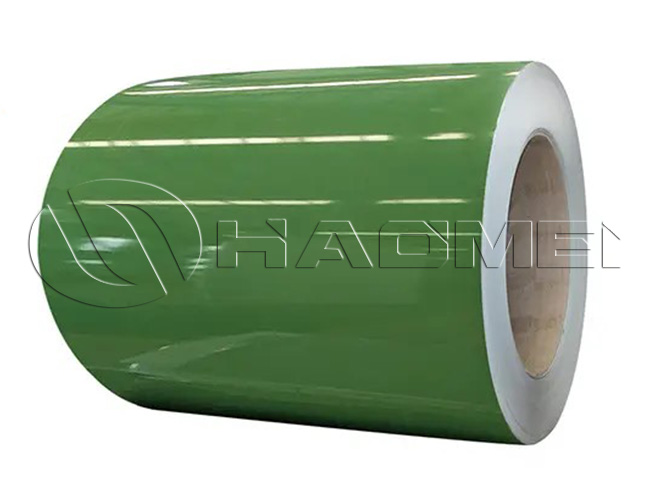
1200 Color Coated Aluminum Coil for Building Facade
1200 color-coated aluminum coils for building exterior walls, featuring PE or PVDF coatings, offer excellent weather resistance, decorative appeal, and processing performance.
2025-12-25
-
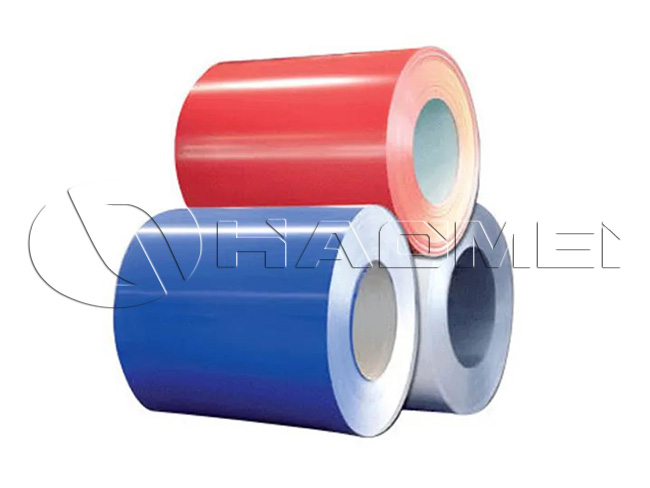
5052 H32 Color Coated Aluminum Coil for Sale
The 5052 H32 aluminum coil uses a color coating process that involves continuously rolling a polyester (PE), fluorocarbon (PVDF), or other coatings onto the aluminum coil substrate and then baking and curing it.
2025-12-05
-
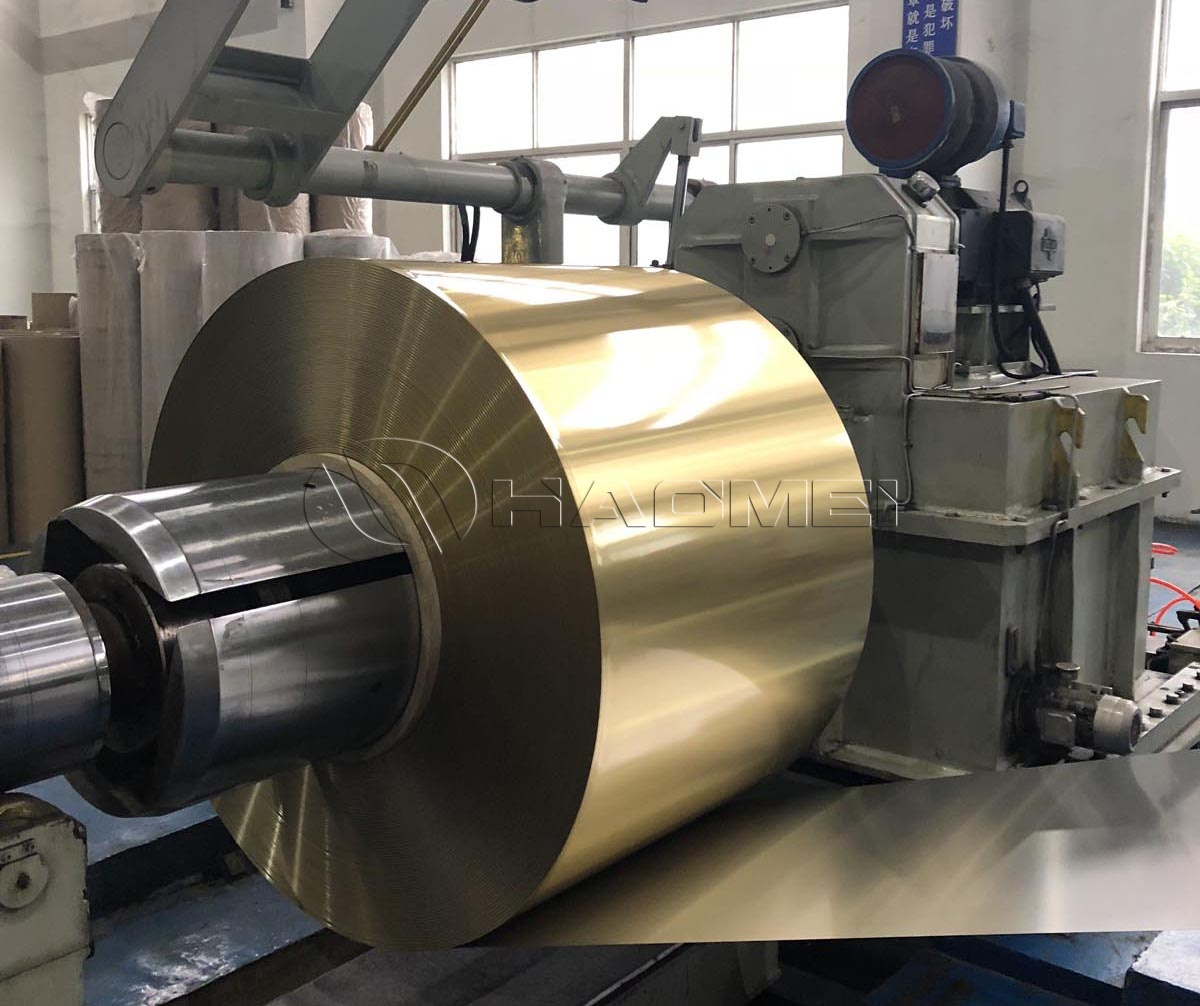
Prepainted PE Aluminum Coil for Rolling Shutters
Technical overview of prepainted PE aluminum coil for rolling shutters, covering alloys, coating structure, specs, colors, and forming performance control.
2026-05-14
Contact Directly
-

ADD: No.14 Waihuan Road, CBD, Zhengzhou, China
-

WhatsApp: +86-18703635966
-

E-MAIL: sales@alummc.com