


News
 By Hermione
PE Coated Aluminum Coil For Decoration Boards
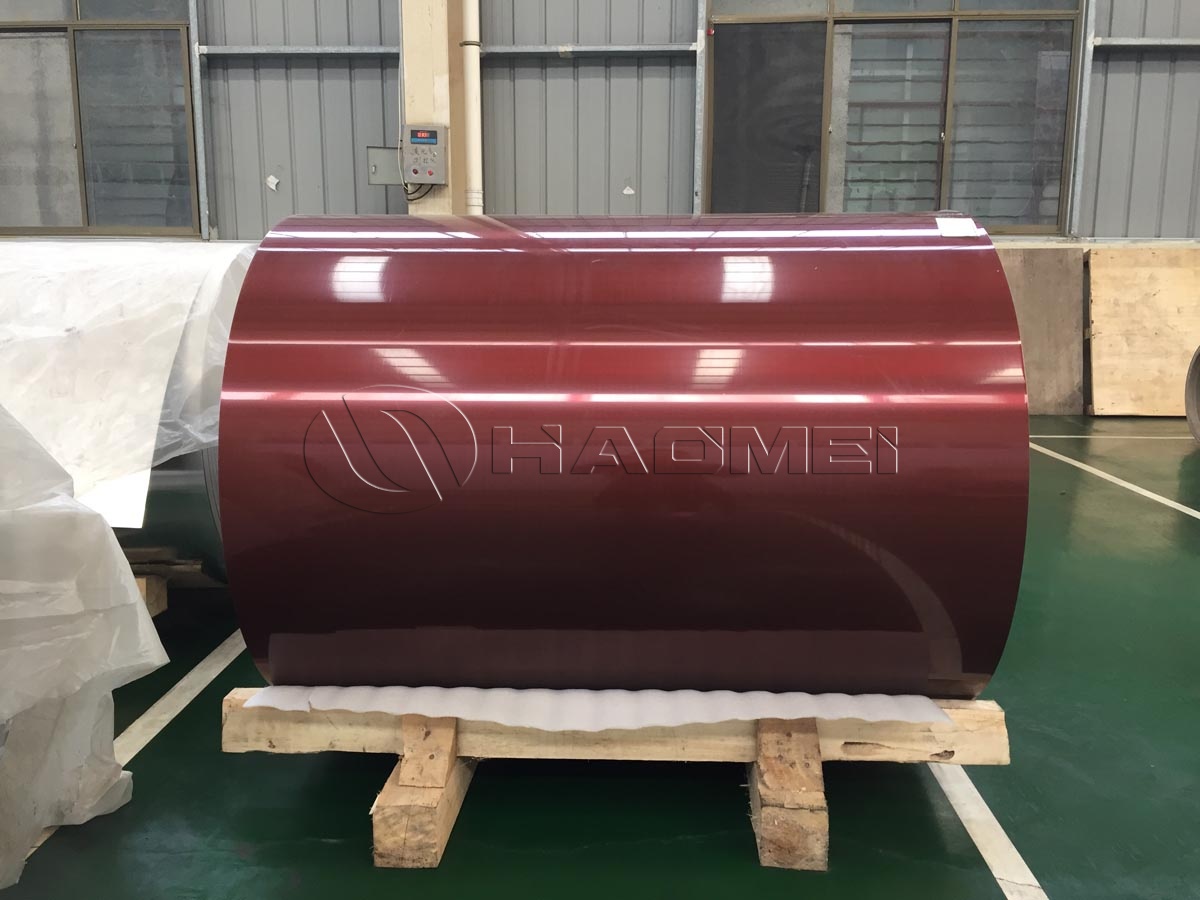
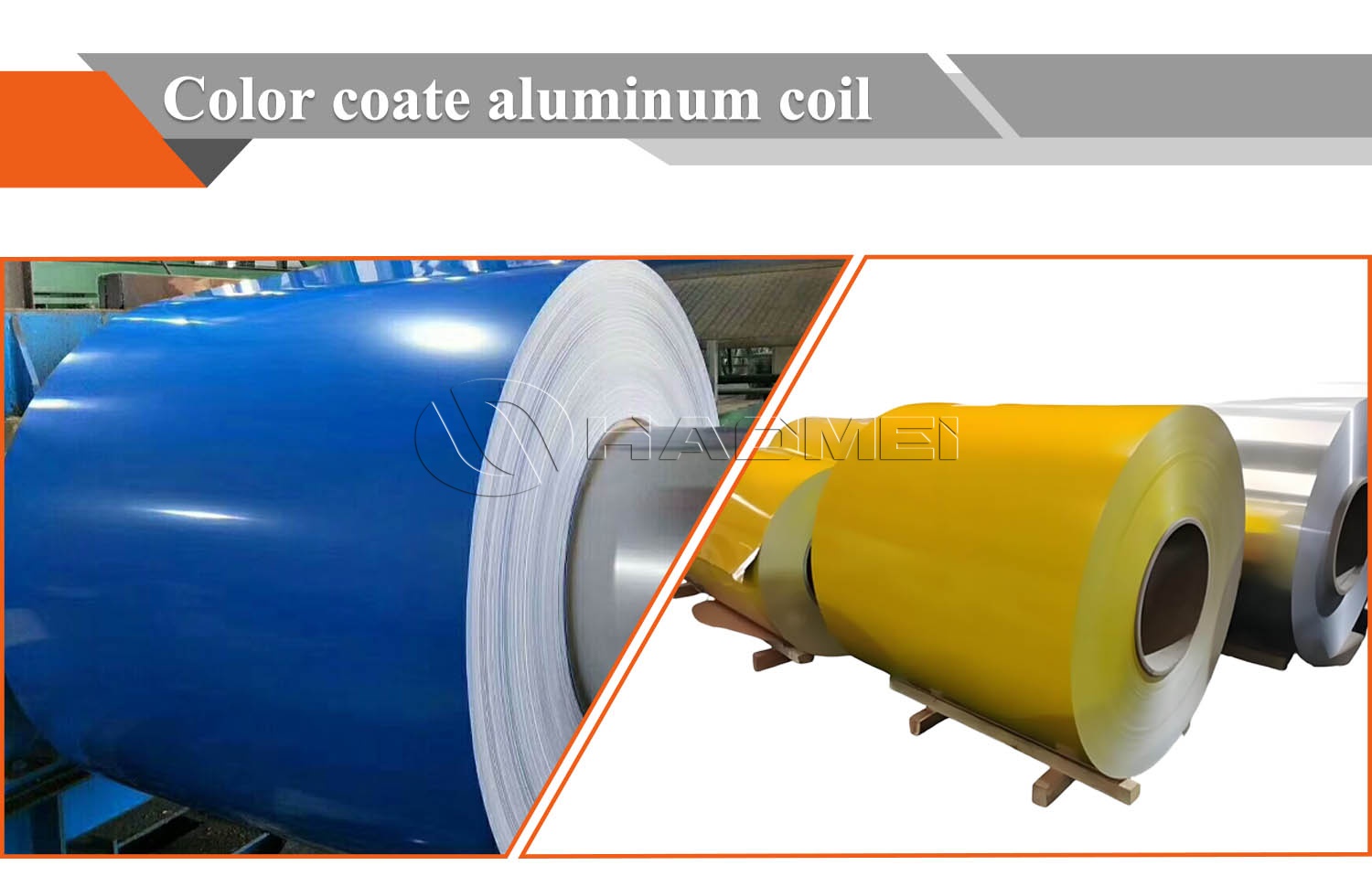
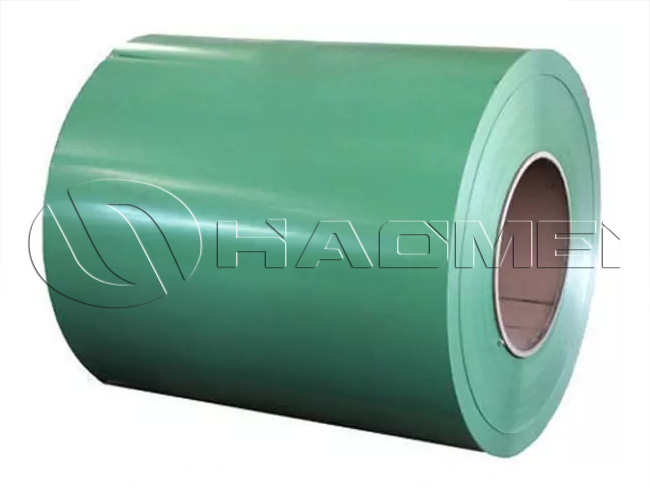
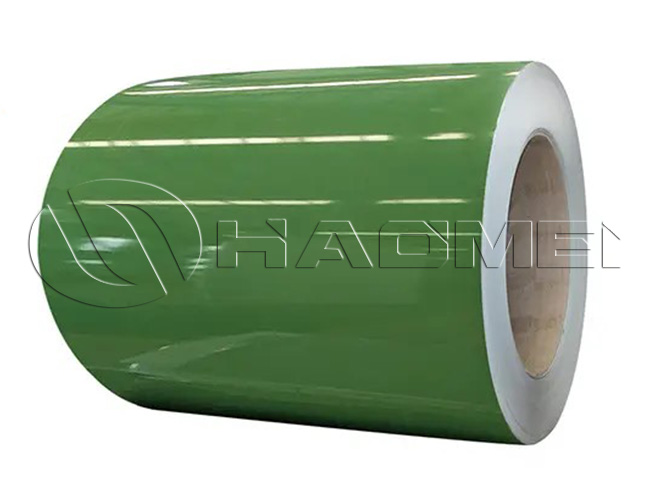
PE coated aluminum coil is a pre-painted aluminum material designed for decorative board production. It combines a lightweight aluminum substrate with a polyester coating system, delivering consistent color, smooth surface quality, and reliable fabrication performance. It is widely used for interior wall panels, suspended ceilings, partition boards, cabinet panels, furniture trim, appliance cladding, and decorative composite panels.
Product Positioning for Decorative Board Production
Decoration boards often require a material that can be roll formed, bent, stamped, laminated, or bonded while maintaining a clean visual finish. PE coated aluminum coil meets these requirements through continuous coil coating, where the aluminum strip is cleaned, chemically pretreated, painted, and oven cured before delivery.
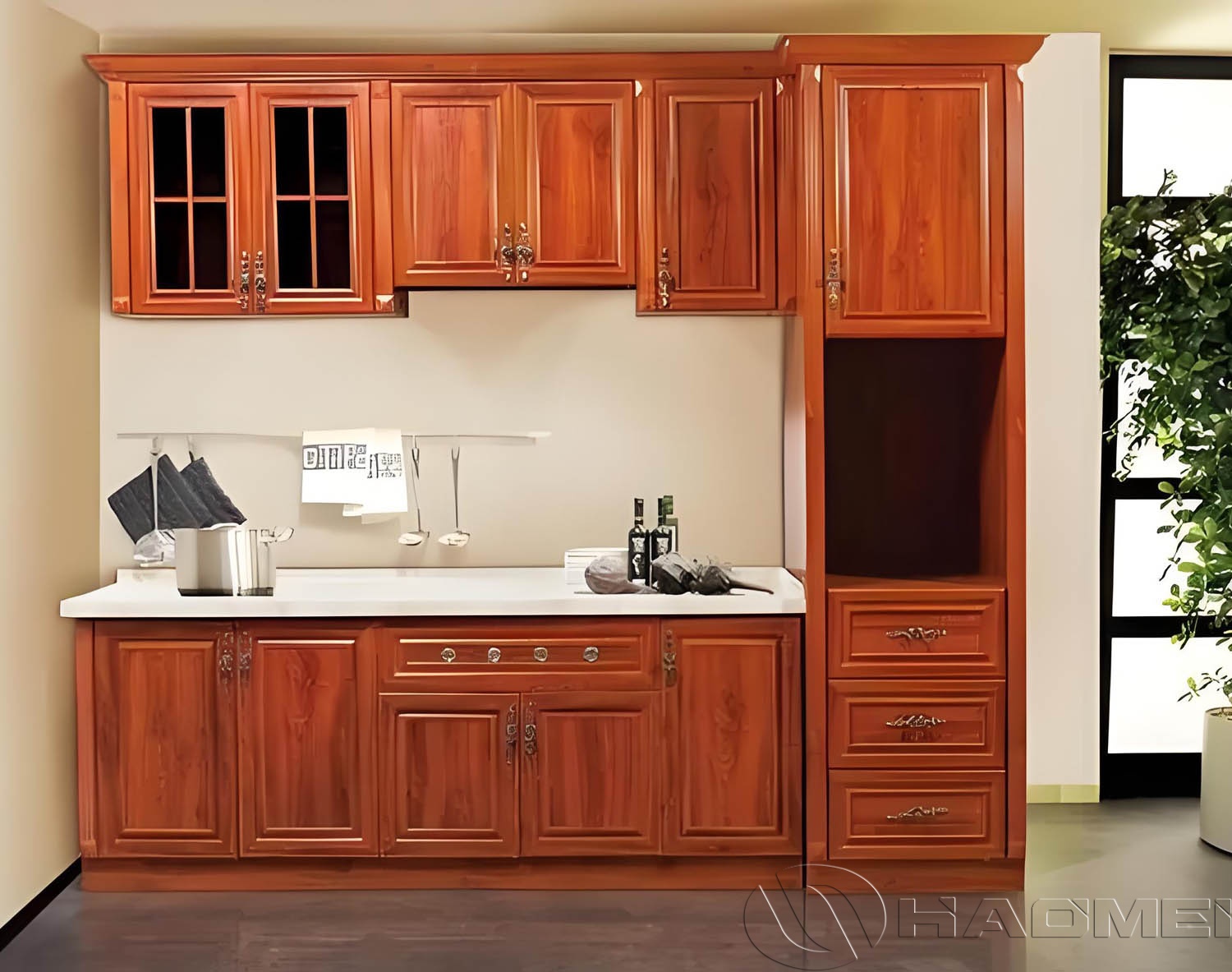
Compared with post-painting fabricated panels, pre-painted coil helps maintain coating uniformity across large production batches. It also supports solid colors, metallic shades, matte finishes, high-gloss surfaces, and printed patterns such as wood grain or marble effects. For applications with wood-look finishes, Wooden Grain Color Coated Aluminum Coil provides a decorative alternative to natural timber surfaces.
Coating Structure and Performance
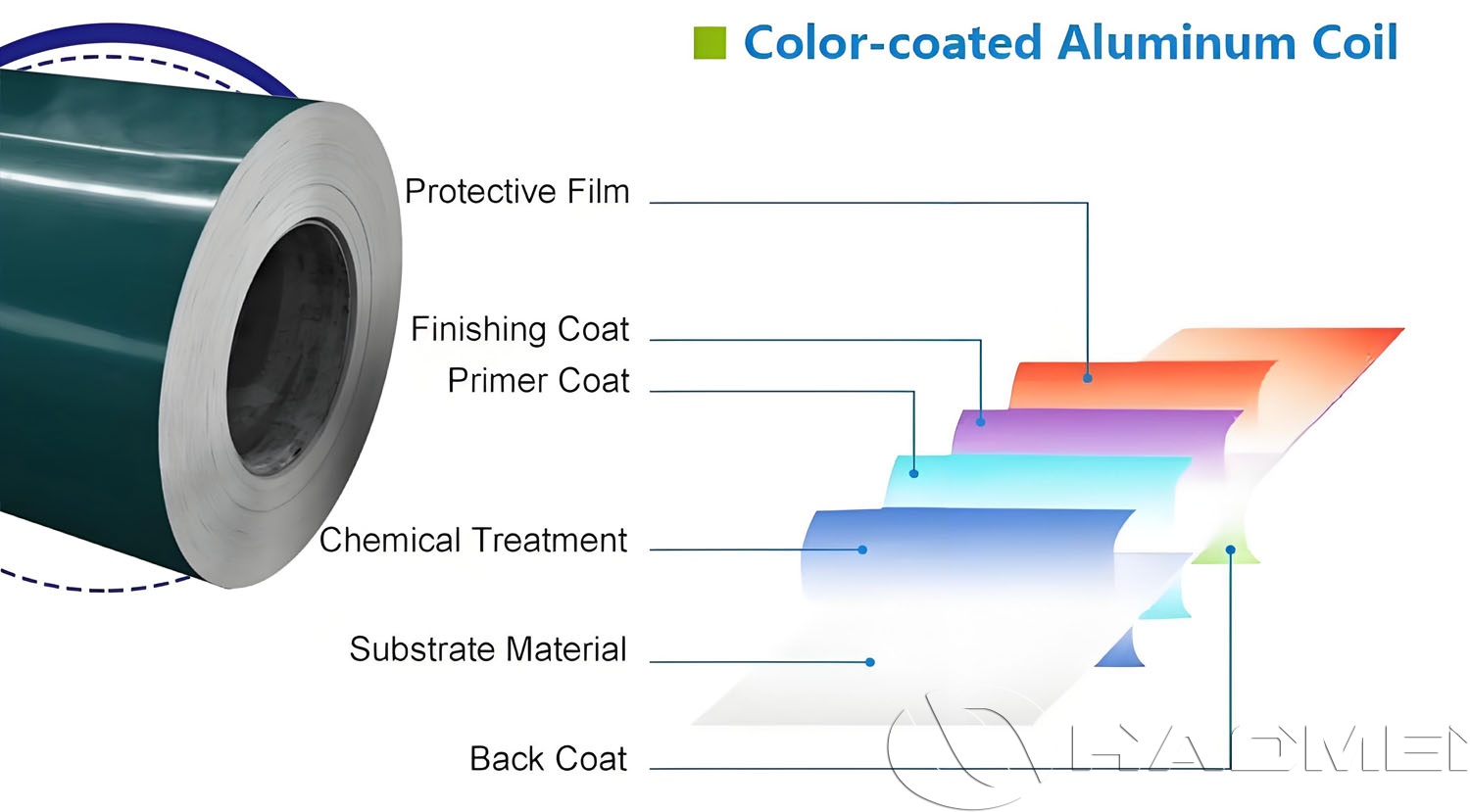
A typical PE color-coated aluminum coil consists of several functional layers:
Aluminum substrate: Provides low density, corrosion resistance, and formability.
Chemical pretreatment: Improves coating adhesion and enhances corrosion resistance at the metal-coating interface.
Primer coating: Supports adhesion, flexibility, and substrate protection.
PE topcoat: Delivers color, gloss, surface appearance, and routine indoor durability.
Back coating: Protects the reverse side during storage, processing, and panel assembly.
Polyester coatings are valued in indoor decoration board applications for their balanced processing performance and economical finish. Standard PE systems are generally suitable for sheltered interior environments. For projects involving stronger ultraviolet exposure, high humidity, aggressive atmospheres, or exterior architectural use, a PVDF Coated Aluminum Coil offers higher weathering resistance.
Core Specifications of PE Coated Aluminum Coil
| PE Coated Aluminum Coil Specification | Typical Range or Option |
|---|---|
| Base metal alloy | 1050, 1060, 1100, 3003, 3105, 5005 |
| Temper | O, H14, H16, H18, H24, H26 |
| Coil thickness | 0.20-1.20 mm |
| Common decorative-board thickness | 0.30-0.80 mm |
| Coil width | 300-1,600 mm |
| Coating type | Polyester, modified polyester, printed PE finish |
| Top-coat thickness | Typically 15-25 μm |
| Back-coat thickness | Typically 5-10 μm |
| Surface finish | Glossy, matte, brushed, metallic, embossed, wood grain, marble pattern |
| Color system | RAL colors, custom colors, printed patterns |
| Coil inner diameter | 405 mm or 505 mm |
| Typical application | Wall panels, ceilings, composite boards, furniture panels, decorative trim |
Actual thickness, coating weight, hardness, and gloss are coordinated with the board structure and downstream forming method. Tighter thickness tolerance is particularly important for laminated panels, cassette panels, and roll-formed decorative profiles because it supports stable dimensions and repeatable assembly.
Common Aluminum Alloys
1050 and 1060 Aluminum Coil
1050 and 1060 are commercially pure aluminum grades with high aluminum content. Their excellent ductility and soft forming behavior make them appropriate for interior decorative sheets, ceiling systems, lightweight facing panels, and simple bent profiles. These alloys are commonly used where deep drawing strength is not the primary requirement.
1100 Aluminum Coil
1100 aluminum has good corrosion resistance, formability, and surface suitability for coil coating. It is frequently used in indoor aluminum ceiling panels, insulation jacketing, decorative cladding, and board facings. The alloy provides a practical balance of workability and surface appearance for general decoration applications.
3003 Aluminum Coil
3003 is an aluminum-manganese alloy with higher strength than 1xxx series aluminum. It is widely used for decorative boards requiring improved stiffness, dent resistance, and processing stability. Typical uses include wall cladding panels, composite panel skins, equipment covers, and formed interior trim.
3105 Aluminum Coil
3105 aluminum offers a useful combination of moderate strength, good bending performance, and corrosion resistance. It is commonly selected for roll-formed decorative components, ceiling panels, shutter profiles, and building board facings where a more rigid substrate is beneficial.
5005 Aluminum Coil
5005 is an aluminum-magnesium alloy used when higher mechanical performance and a quality coated appearance are required. It is suitable for premium decorative boards, architectural interior panels, and formed cladding elements. Its coating response and surface consistency make it relevant for color-sensitive decorative projects.
Surface Designs for Decoration Boards
PE coated aluminum coil can be supplied in visual and tactile finishes that broaden the design range of decorative boards:
Solid colors for ceilings, partitions, and clean interior wall systems.
Metallic and pearlescent finishes for commercial interiors and appliance panels.
Matte finishes that reduce reflected light and provide a subdued architectural appearance.
High-gloss finishes for furniture panels and display surfaces.
Brushed and embossed finishes for added texture and improved scratch masking.
Wood grain and marble patterns for decorative panels that imitate natural materials with lower weight and easier maintenance.
Processing Compatibility
The cured PE coating is engineered to remain adherent during normal downstream fabrication. Depending on alloy, temper, coating thickness, and forming geometry, the coil can be processed by slitting, shearing, roll forming, press bending, punching, profiling, adhesive bonding, and lamination.
Surface protection film may be applied when the finished decorative board requires protection during bending, transport, or installation. Film selection should be compatible with coating gloss, surface texture, storage period, and processing temperature to avoid residue or surface marking.
Quality Control Considerations
Production control for PE coated aluminum coil centers on both substrate consistency and coating performance. Key inspection items include:
Aluminum thickness, width, flatness, and edge condition.
Coating thickness on the top and back sides.
Color consistency between coils and production batches.
Gloss level, surface smoothness, and pattern registration for printed finishes.
Adhesion, bend performance, impact resistance, and solvent resistance.
Pretreatment quality and coating cure condition.
Packaging integrity to limit moisture exposure, abrasion, and coil-edge damage during storage and transport.
For decoration boards, the final appearance depends not only on the PE coating but also on controlled substrate quality, forming conditions, bonding materials, and proper handling throughout panel fabrication.
-
How to Choose 1100 Color Coated Aluminum Coil Supplier
HAOMEI Aluminum's 1100 color-coated aluminum coil is a widely used pre-coated aluminum material, known for its high aluminum purity, good formability, clean surface quality, and stable decorative properties.
2026-03-27
-
5052 Color Coated Aluminum Coil for Exterior Walls and Roofing
5052 PVDF-coated aluminum coil features an exceptionally stable fluorocarbon chemical structure, giving it outstanding weather resistance, UV resistance, and color-retention performance, making it especially suitable for architectural applications that re
2025-12-09
-
1200 Color Coated Aluminum Coil for Building Facade
1200 color-coated aluminum coils for building exterior walls, featuring PE or PVDF coatings, offer excellent weather resistance, decorative appeal, and processing performance.
2025-12-25
Contact Directly
-

ADD: No.14 Waihuan Road, CBD, Zhengzhou, China
-

WhatsApp: +86-18703635966
-

E-MAIL: sales@alummc.com
