


News
 By Hermione
PE Coated Aluminum Coil For Cabinet Doors
PE coated aluminum coil for cabinet doors is a pre-painted aluminum material designed for decorative furniture surfaces, kitchen cabinet doors, wardrobe panels, bathroom cabinets, drawer fronts, and interior wall-integrated cabinetry. It combines the light weight and corrosion resistance of aluminum with a smooth polyester finish, providing consistent color, practical stain resistance, and efficient fabrication for roll forming, bending, stamping, and lamination.
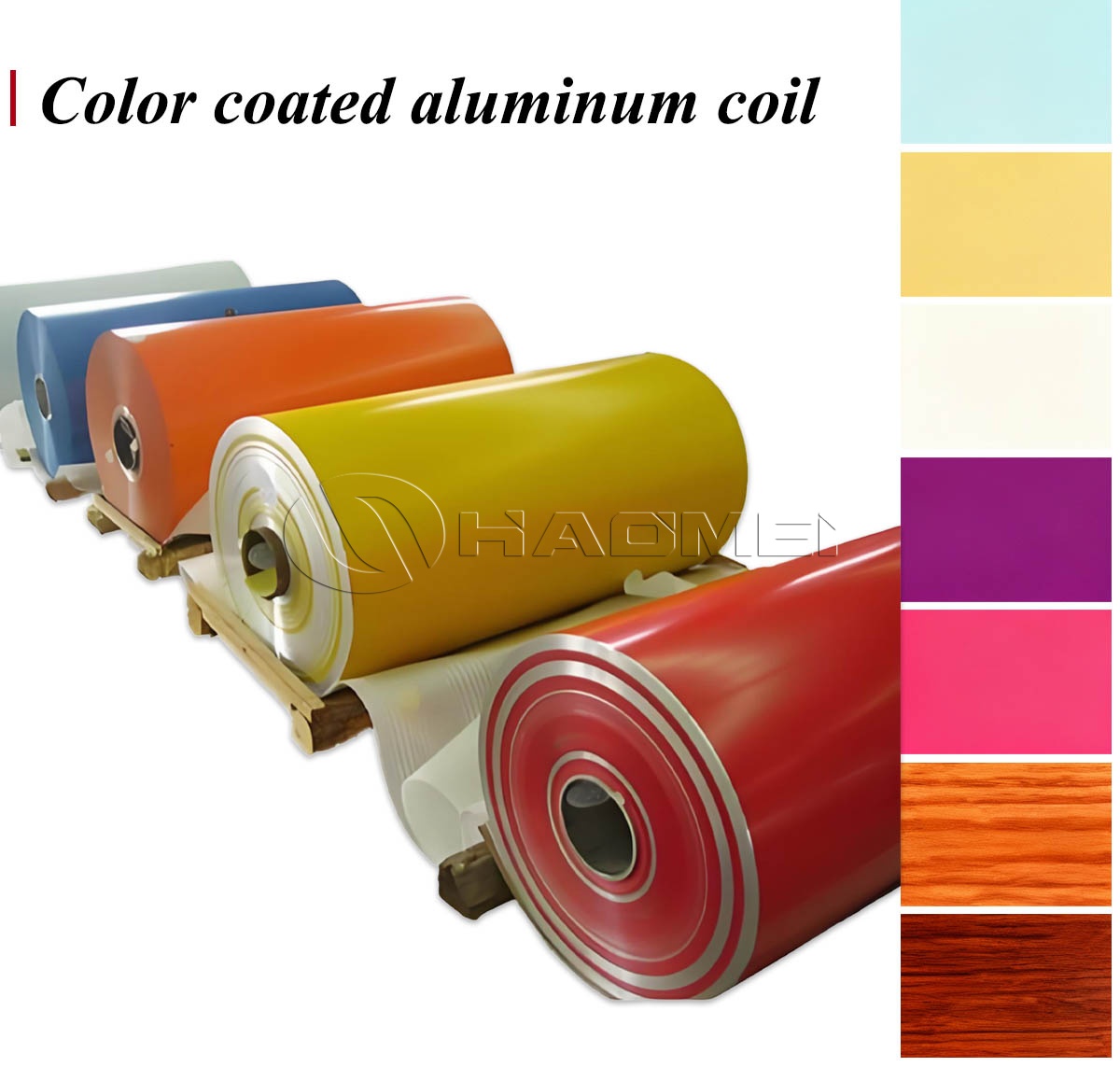
For interior cabinet applications, PE coating offers an economical and visually flexible surface solution. Solid colors, metallic effects, matte finishes, high-gloss finishes, and decorative wood-grain patterns can be applied to meet different furniture design requirements while maintaining stable coil-to-coil appearance.
Performance Advantages of PE-Coated Aluminum Coils for Cabinet Doors
Excellent Corrosion Resistance: The combination of the aluminum substrate and the PE coating provides dual protection, making it suitable for kitchen environments characterized by humidity and cooking fumes.
Stain Resistance and Easy Cleaning: The smooth surface coating resists stain adhesion, facilitating easy daily cleaning.
Rich Color Variety: Available in a wide range of colors, textures, and surface finishes to suit diverse cabinet design styles.
Good Workability: Lightweight and ductile, the aluminum coils are well-suited for cutting, bending, stamping, and forming processes.
Superior Aesthetic Appeal: The PE coating offers excellent color quality and surface uniformity, enhancing the overall visual appeal of the cabinet doors.
Lightweight: Compared to traditional metal door materials, aluminum helps reduce the weight of the cabinet doors, thereby lessening the load on hinges.
Cost-Effectiveness: PE-coated aluminum coils offer a favorable cost-performance ratio while meeting requirements for daily aesthetics and corrosion resistance.
Suitable for Mass Production: The coil format facilitates continuous processing, helping to boost production efficiency for cabinet doors.
Coating Structure for Cabinet Door Panels
A PE color coated aluminum coil is produced through a continuous coil-coating process. The aluminum substrate is cleaned and chemically treated before primer and topcoat application. Controlled oven curing creates a uniform coating film with stable adhesion and appearance.
A typical cabinet-door coating structure includes:
Aluminum alloy substrate
Chemical conversion layer for improved coating adhesion
Primer coat for corrosion resistance and interface stability
PE topcoat for color, gloss, and surface protection
Optional protective film for transport, slitting, bending, and panel fabrication
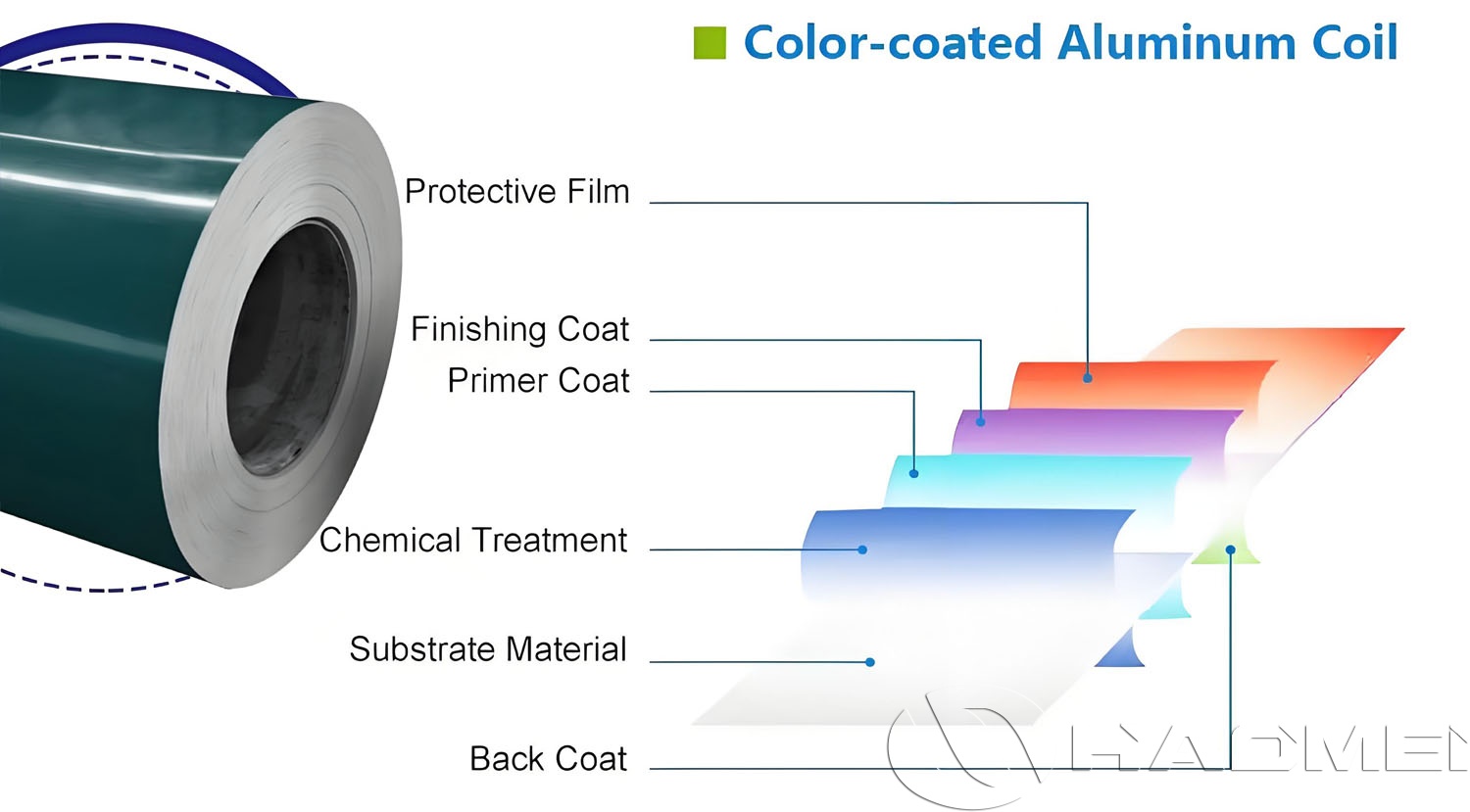
The PE topcoat is particularly suited to indoor cabinetry because it provides good color consistency, flexibility, and resistance to common household contaminants. Surface performance can be adjusted through coating thickness, gloss level, texture, hardness, and protective-film selection.
Core Specifications of PE Coated Aluminum Coil for Cabinet Doors
| Specification Item | Typical Range or Option |
|---|---|
| Base metal | 1100, 3003, 3105, 5052 aluminum alloy |
| Temper | H14, H16, H18, H24, H26, or as required |
| Thickness | 0.20-1.20 mm |
| Width | 20-1,600 mm |
| Coil inner diameter | 150 mm, 300 mm, 405 mm, or 505 mm |
| PE topcoat thickness | Typically 15-25 μm |
| Back coat thickness | Typically 5-10 μm |
| Surface finish | Glossy, matte, semi-matte, textured, metallic, wood grain |
| Available colors | RAL colors, custom colors, printed decorative patterns |
| Protective film | Optional, commonly 30-80 μm |
| Main fabrication methods | Bending, roll forming, stamping, laminating, adhesive bonding |
| Main applications | Cabinet doors, wardrobe doors, drawer fronts, furniture panels |
Common Aluminum Alloys
1100 Aluminum Alloy
1100 is a commercially pure aluminum alloy with excellent ductility, corrosion resistance, and surface quality. It is suitable for cabinet-door skins and decorative panels that require relatively simple bending or laminating. Its lower strength makes it more appropriate for flat or lightly formed furniture components supported by a substrate or frame.
3003 Aluminum Alloy
3003 is one of the most widely used alloys for color coated aluminum coil. Manganese addition provides higher strength than 1100 while retaining good formability and corrosion resistance. For cabinet doors requiring bends, edge wrapping, shallow embossing, or profile forming, 3003 Color Coated Aluminum Coil provides a balanced combination of processing performance and panel rigidity.
3105 Aluminum Alloy
3105 aluminum alloy is frequently used in pre-painted aluminum products for interior decorative panels. Compared with 1100, it provides improved strength and is well suited for roll-formed cabinet components, drawer fronts, and door panels with formed edges. Its stable processing properties support consistent appearance after bending and shaping.
5052 Aluminum Alloy
5052 offers higher strength and better dent resistance than 3003 and 3105. It is applicable to cabinet doors exposed to more frequent handling, larger panel sizes, or designs requiring greater structural stiffness. Because of its higher strength, forming conditions should be matched to the panel profile and bend radius.
Surface Options for Furniture Design
PE coated aluminum coil can be supplied with surface finishes that support different cabinet styles:
High-gloss finishes create a bright, reflective appearance for contemporary kitchen and wardrobe doors.
Matte finishes reduce glare and provide a softer visual texture for minimalist cabinetry.
Metallic finishes reproduce the appearance of brushed metal, champagne, silver, graphite, or other premium decorative tones.
Textured finishes add tactile character and can reduce the visibility of minor handling marks.
Wood-grain finishes provide a wood-inspired appearance with the moisture resistance and dimensional stability of aluminum.
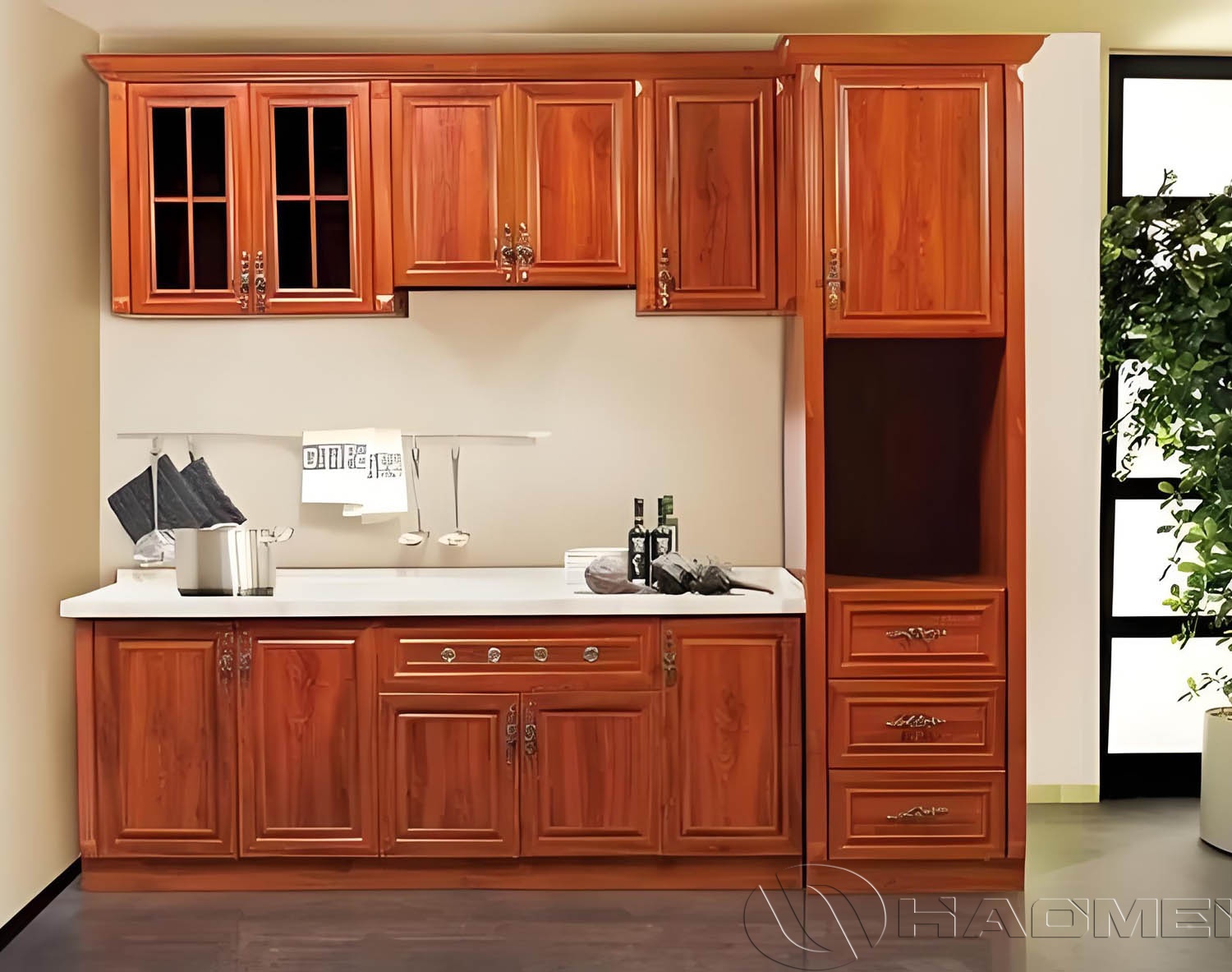
For wood-look furniture panels, Wooden Grain Color Coated Aluminum Coil can incorporate printed grain patterns with clear protective coatings to create decorative cabinet surfaces suitable for interior applications.
Processing Performance in Cabinet Door Manufacturing
Color coated aluminum coil is commonly converted into cabinet-door components through cutting, slitting, bending, roll forming, stamping, bonding, and lamination. The balance between alloy, temper, coating flexibility, and panel geometry is important for maintaining a clean surface after fabrication.
For formed cabinet profiles, the coating must remain intact at bends and edges. Appropriate forming radii help minimize stress on the coating film, especially with thicker coatings, textured finishes, and dark high-gloss colors. Protective film can reduce surface scratching during coil handling, profiling, stacking, and assembly.
Aluminum coil may be used as a decorative facing laminated to MDF, plywood, honeycomb panels, or composite cores. It may also be processed into folded-edge doors, framed panels, shutter-style profiles, and lightweight aluminum-faced furniture components.
Performance Characteristics for Indoor Cabinet Applications
PE coated aluminum coil provides several practical characteristics for cabinet doors:
Lightweight construction that supports easy handling and reduces panel weight.
Good resistance to indoor humidity and routine household exposure.
Smooth, non-porous surfaces that are easy to maintain.
Stable decorative color and gloss under normal indoor lighting conditions.
Good coating adhesion and flexibility for controlled fabrication processes.
Compatibility with solid-color, metallic, patterned, and wood-grain cabinet designs.
PE coatings are mainly intended for interior and sheltered applications. Their performance profile is well matched to furniture, cabinetry, ceilings, partitions, appliance panels, and other decorative indoor products where appearance, processability, and cost efficiency are primary material considerations.
Quality Control Considerations
Key quality controls for PE coated aluminum coil include substrate thickness tolerance, coating thickness, color consistency, gloss level, coating adhesion, pencil hardness, impact resistance, bend performance, and protective-film release behavior. For cabinet doors assembled from multiple panels or batches, color control under consistent lighting conditions is important to maintain a uniform finished appearance.
Coil edges should remain clean after slitting, and the surface should be protected from abrasion during transport and fabrication. Proper control of coating cure, primer adhesion, and substrate pretreatment supports reliable performance in bending, profiling, adhesive bonding, and long-term indoor use.
-
Understanding the Coating Types of Color Coated Aluminum Coil
What Is Color Coated Aluminum Coil?Color coated aluminum coil is produced by applying one or multiple layers of organic coating onto an aluminum alloy substrate through continuous roll-coating followed by high-temperature curing.The coating is the core of
2025-12-01
-
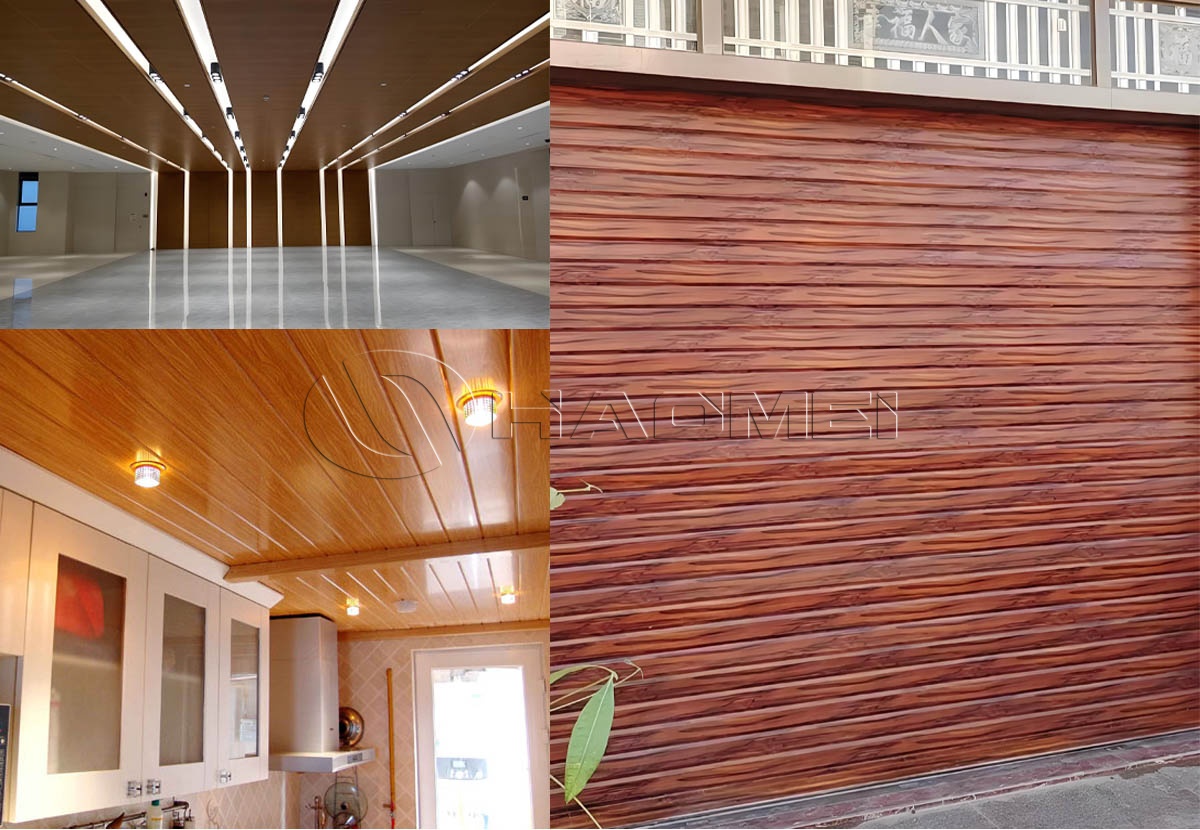
Durable Wood Grain Finish Aluminum Coil for Ceilings
Durable wood grain finish aluminum coil for ceilings combines PE or PVDF coatings, stable grain transfer, and formable alloys for interior ceiling systems in service.
2026-07-14
-
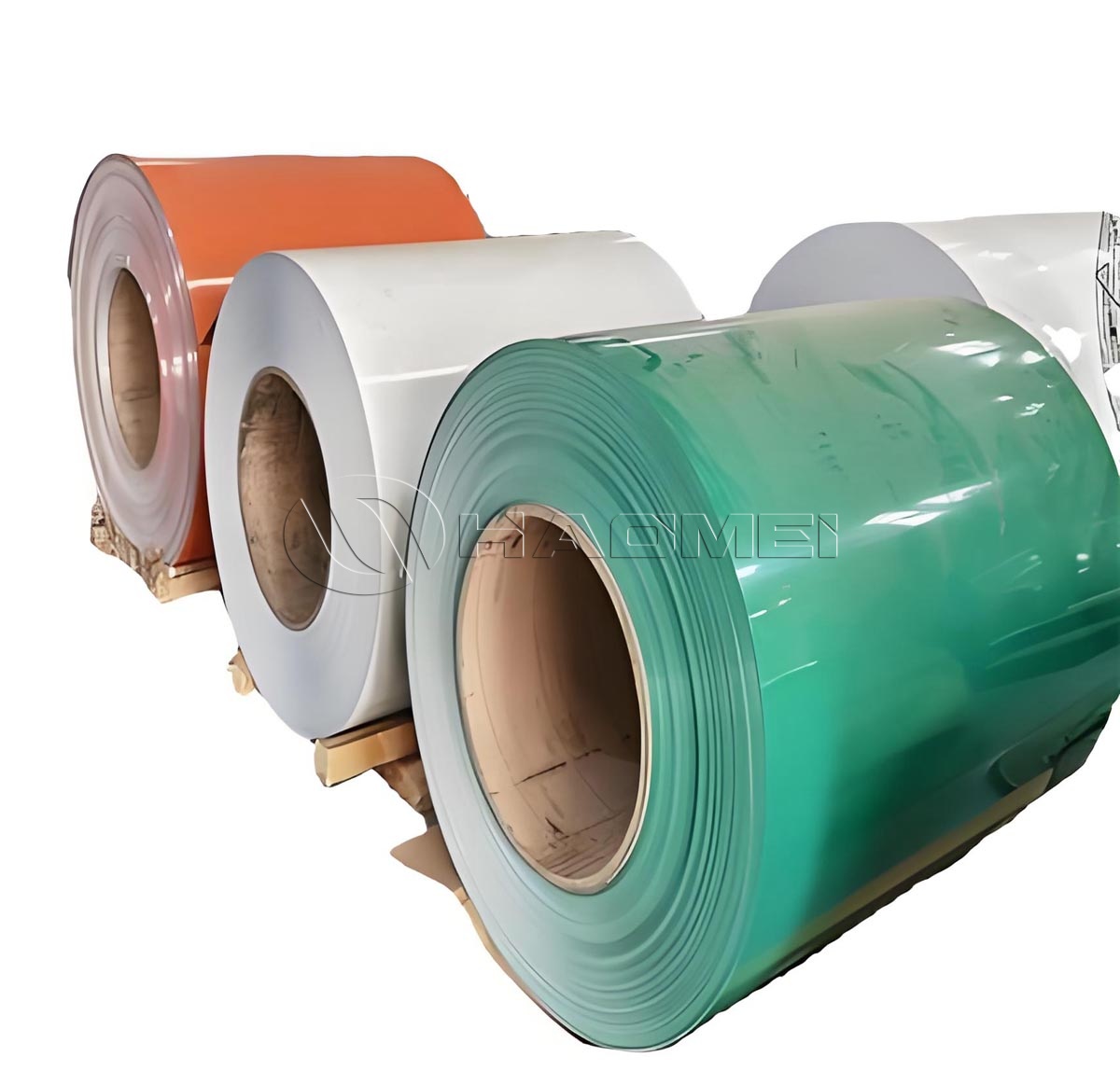
PVDF Coated Aluminum Coil For Wall Panels
PVDF coated aluminum coil for wall panels provides durable fluoropolymer protection, color stability, and formability for exterior façades.
2026-07-30
Contact Directly
-

ADD: No.14 Waihuan Road, CBD, Zhengzhou, China
-

WhatsApp: +86-18703635966
-

E-MAIL: sales@alummc.com
