

News
 By Hermione
Durable Wood Grain Finish Aluminum Coil for Ceilings
Durable wood grain color coated aluminum coil is a pre-painted decorative material developed for suspended ceilings, metal ceiling panels, soffits, wall-and-ceiling transitions, and interior architectural trim. It combines the visual warmth of natural timber with aluminum's low weight, corrosion resistance, dimensional stability, and compatibility with roll forming, pressing, and panel fabrication processes. The material is widely used in commercial interiors, transportation hubs, hospitality spaces, residential ceiling systems, retail environments, and covered outdoor areas.
Wood Grain Surface Structure and Performance
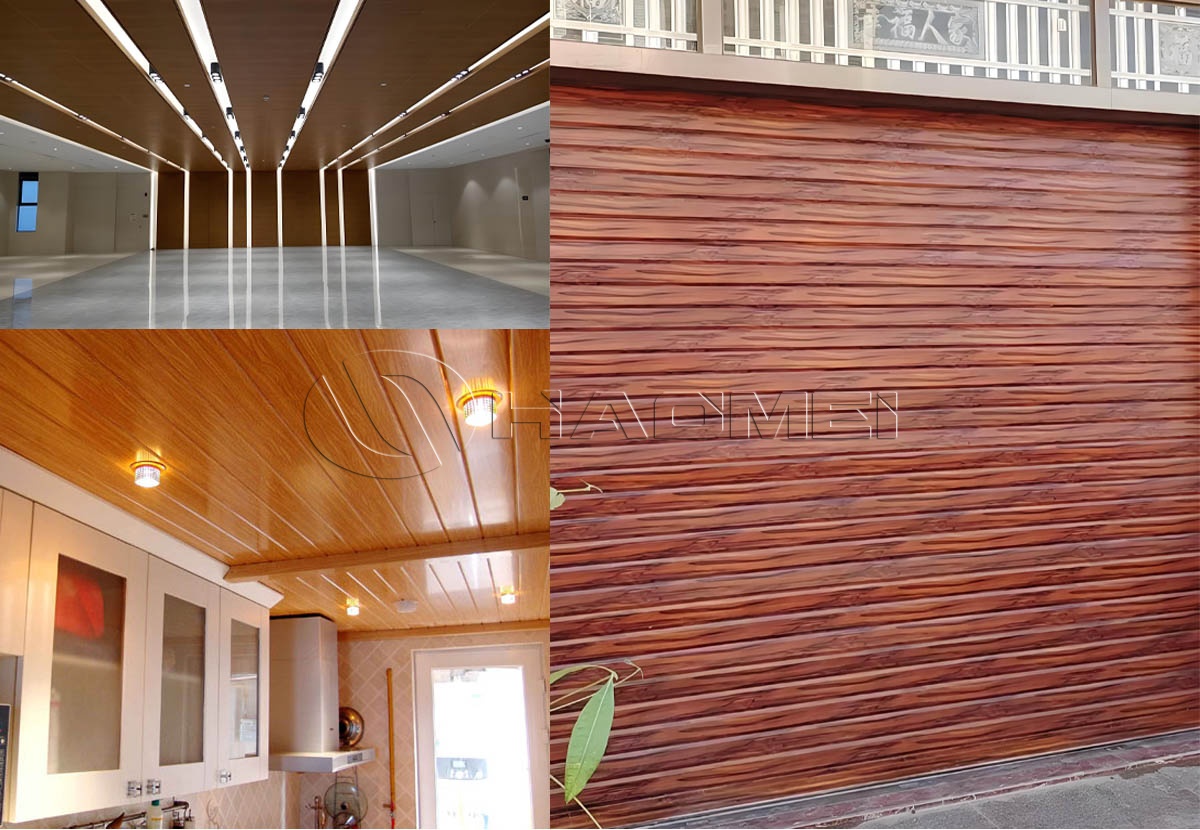
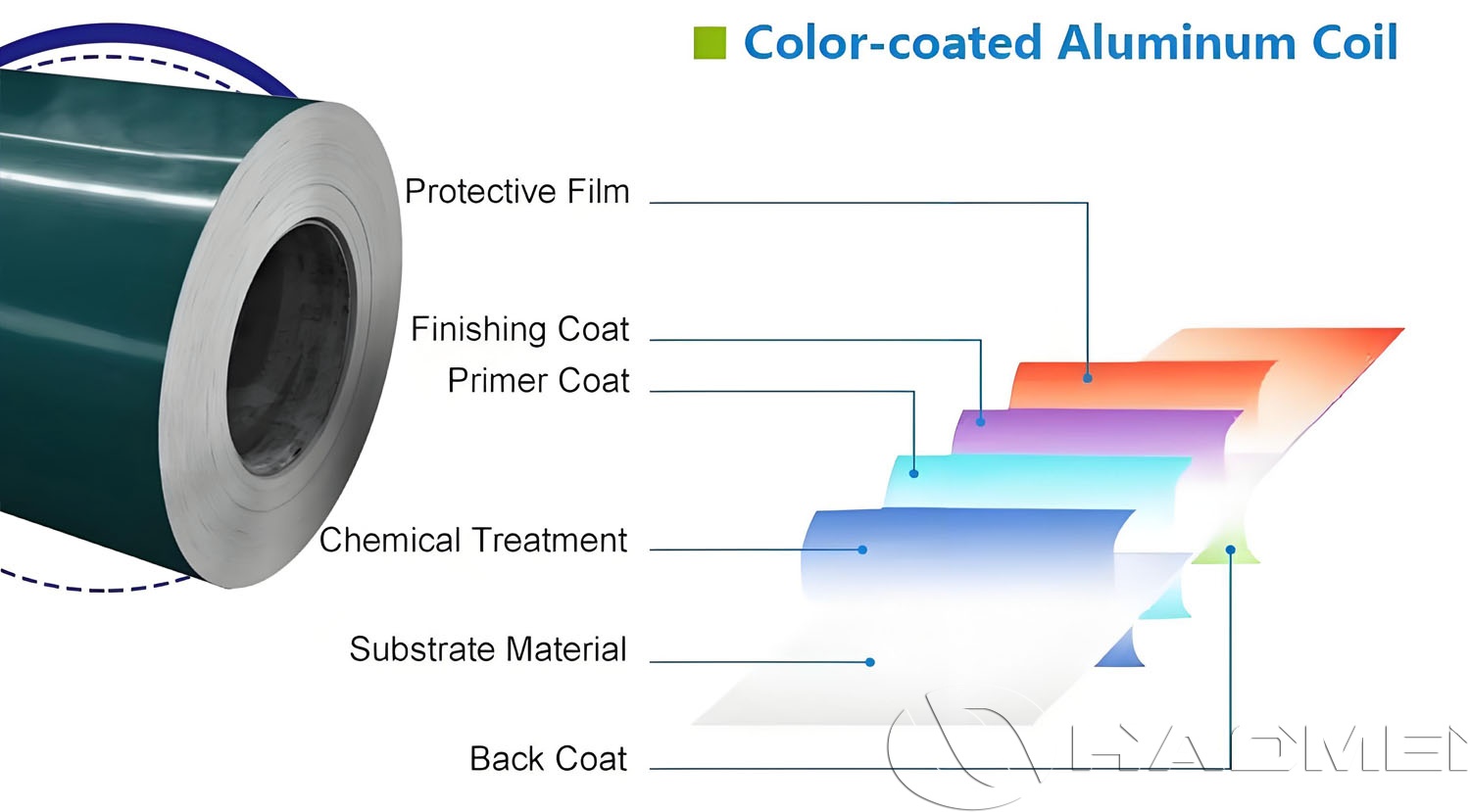
A wood grain color coated aluminum coil is produced on a cleaned and chemically treated aluminum substrate. The coil is coated with a primer and base coat, followed by a wood-grain transfer or printing process and a protective topcoat. The resulting finish can reproduce oak, walnut, teak, maple, cherry, ash, and other decorative grain effects with controlled color consistency across production batches.
The coating structure is designed to protect the aluminum surface while retaining the flexibility needed for subsequent fabrication. For ceiling applications, the finish must remain stable through slitting, bending, roll forming, punching, and installation without excessive cracking, delamination, or grain distortion.
Typical coating layers include:
Aluminum substrate
Chemical conversion layer
Primer coat for adhesion and corrosion resistance
Base color coat
Wood grain transfer or printed decorative layer
Clear protective topcoat
Core Specifications of Wood Grain Ceiling Aluminum Coil
Wood Grain Aluminum Coil Specifications
| Item | Typical Range or Option |
|---|---|
| Aluminum alloy | 1100, 1050, 1060, 3003, 3105, 5052 |
| Temper | O, H12, H14, H16, H18, H24 |
| Coil thickness | 0.20-1.20 mm |
| Common ceiling thickness | 0.30-0.80 mm |
| Coil width | 100-1,600 mm |
| Coil inner diameter | 508 mm or 610 mm |
| Surface finish | Wood grain transfer, printed wood grain, matte or semi-gloss clear coat |
| Coating system | PE, SMP, HDP, PVDF, or customized multilayer system |
| Coating thickness | Commonly 18-25 μm for PE systems; higher-build systems available |
| Back coating | Protective polyester back coat or customized backing layer |
| Fabrication methods | Slitting, roll forming, bending, stamping, perforating, profiling |
| Typical applications | Ceiling tiles, strip ceilings, baffle ceilings, clip-in panels, soffits, wall cladding |
Common Aluminum Alloys for Ceiling Coil
The alloy selection affects flatness, formability, panel rigidity, and the final appearance after profiling. Ceiling systems usually prioritize stable coating adhesion, easy processing, and sufficient stiffness at relatively low material thickness.
1100, 1050, and 1060 Series
The 1000 series consists of commercially pure aluminum grades with high ductility and good corrosion resistance. These alloys are suitable for lightweight ceiling panels, decorative trims, and profiles requiring relatively easy bending or forming. Their lower strength makes them more appropriate for applications where the panel geometry, suspension structure, or folded edges provide the required rigidity.
1100 Color Coated Aluminum Coil is commonly used where surface quality, formability, and economical processing are important for decorative ceiling production.
3003 and 3105 Series
3003 and 3105 aluminum alloys provide higher strength than 1000 series aluminum while preserving good formability. They are widely applied to ceiling panels, long strip ceilings, perforated panels, and profiled systems where improved resistance to handling deformation is needed.
3003 contains manganese, which improves strength and supports stable processing performance. 3105 also offers a balanced combination of strength, formability, and coating compatibility, making it suitable for architectural coil coating and decorative metal panel production.
5052 Series
5052 aluminum alloy contains magnesium and offers stronger mechanical performance and good corrosion resistance. It is used for ceiling components in humid environments, covered exterior areas, and applications with greater demands on impact resistance or panel stiffness. Because 5052 has higher strength, forming parameters and temper selection should be aligned with the panel profile and bend radius.
Key advantages of wood-grain aluminum coils for ceilings
1. Aesthetic, realistic, and diverse: Techniques such as thermal transfer printing faithfully reproduce the grain and color of various natural woods. A wide range of wood patterns and colors is available, eliminating the cold feel often associated with metal.
2. Highly durable with stable performance: Unlike solid wood, it does not crack, warp, or suffer from insect damage. The surface coating offers excellent weather resistance—including UV and corrosion resistance—ensuring color stability for 10 to 30 years.
3. Class A fire rating for safety and reliability: Aluminum alloy is a non-combustible material that meets national Class A fire safety standards. It effectively inhibits the spread of fire, offering far superior safety compared to traditional wood.
4. Waterproof, moisture-proof, mold-resistant, and anti-corrosive: The combination of the base material and coating provides dual protection; the material does not absorb water or swell, effectively preventing mold growth even in humid environments like kitchens and bathrooms.
5. Lightweight yet strong, with easy installation: It is significantly lighter than wood, effectively reducing structural loads. It offers high strength and rigidity, is easy to cut and bend, and allows for rapid installation.
6. Low maintenance and eco-friendly: The surface resists dirt accumulation, making daily cleaning as simple as wiping it down. Additionally, aluminum is 100% recyclable, making it an environmentally friendly choice.
PE and PVDF Coating Systems
The coating system determines the color retention, surface hardness, flexibility, and environmental durability of a wood grain finish. The wood pattern may be applied over a polyester base coat and protected with a transparent topcoat, or integrated into a multilayer high-performance coating design.
PE Coated Wood Grain Color Coated Aluminum Coil
Polyester coating is commonly used for interior suspended ceilings and decorative panels in controlled environments. A PE system provides a smooth appearance, broad color flexibility, reliable forming performance, and efficient processing for standard interior ceiling applications.
PE Coated Aluminum Coil is frequently used as the base material for wood grain ceiling products where indoor decorative performance and production efficiency are primary requirements.
PVDF Coated Wood Grain Aluminum Coil
PVDF coating is designed for higher weather resistance, ultraviolet stability, and long-term color retention. It is suitable for soffits, covered exterior ceilings, semi-outdoor spaces, façades with wood-grain accents, and locations exposed to stronger sunlight, humidity, or temperature variation. PVDF systems generally provide higher durability than conventional polyester systems, while the final performance also depends on pretreatment quality, coating thickness, topcoat design, and installation conditions.
Processing Compatibility for Ceiling Panel Manufacturing
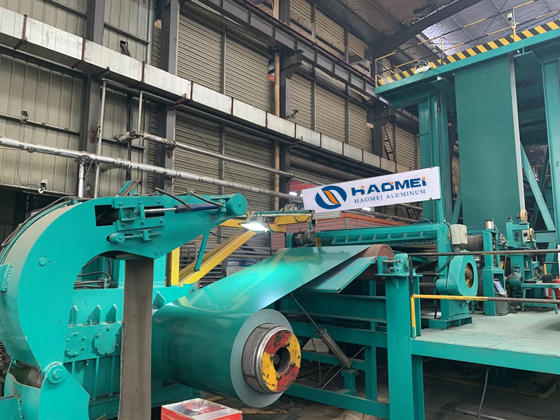
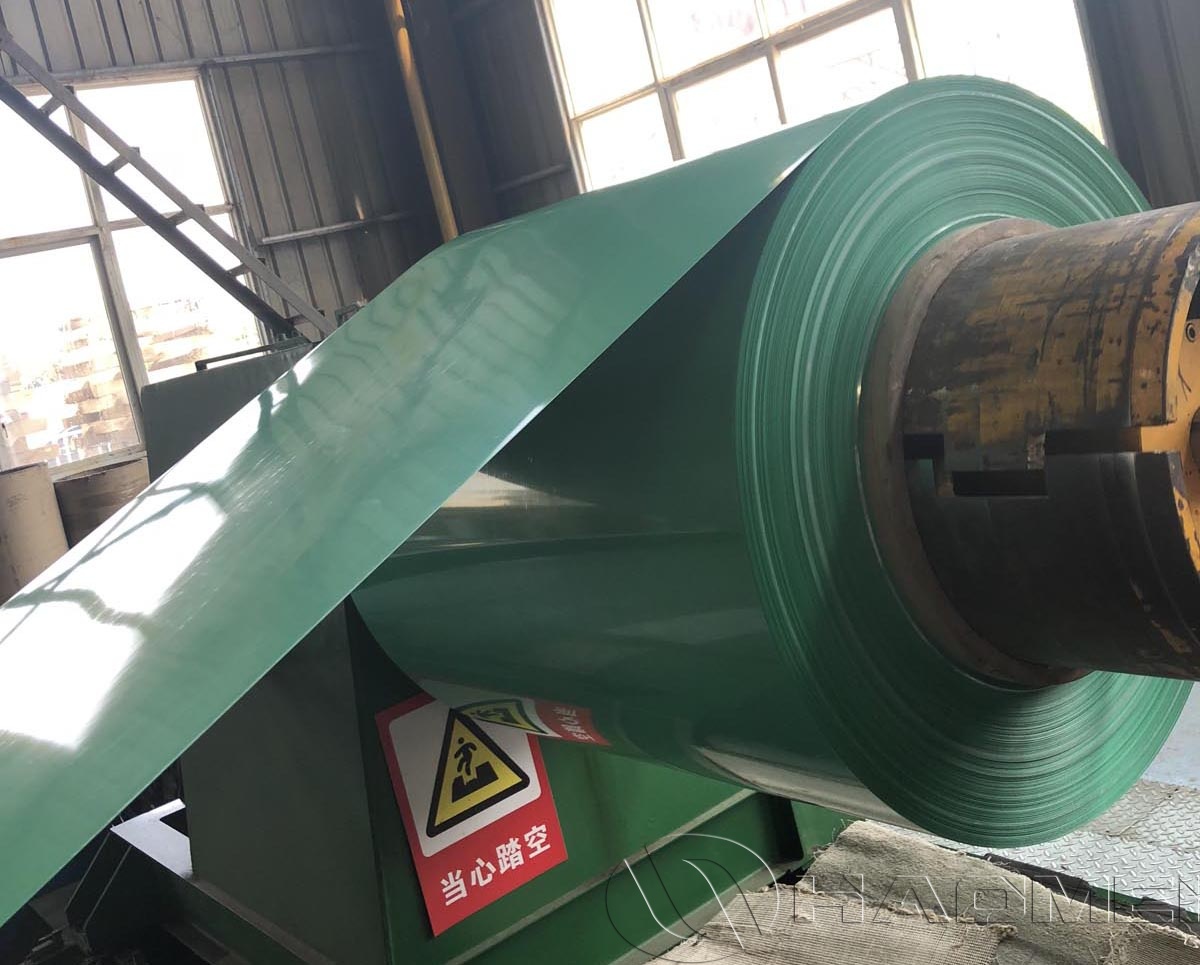
Wood grain pre-painted aluminum coil is designed to be processed into a variety of ceiling formats, including clip-in ceilings, lay-in tiles, linear strip ceilings, open-cell systems, baffle ceilings, corrugated panels, and perforated acoustic panels. Coil coating before fabrication provides a uniform decorative surface across continuous production runs and avoids many of the inconsistencies associated with post-fabrication painting.
During panel production, several factors influence finished appearance:
Bend radius and temper: Tight bends require a coating system with sufficient flexibility to reduce the risk of edge cracking.
Grain direction: Wood grain direction can be aligned with the panel length to create a continuous visual effect on strip and baffle ceiling systems.
Perforation quality: Clean punching and controlled die clearance help minimize coating damage around perforated openings.
Protective film: Temporary film may be applied to protect the decorative face during roll forming, stamping, packaging, and installation.
Color consistency: Batch-controlled coating and transfer printing help maintain consistent grain tone across adjacent ceiling panels.
Durability Factors in Ceiling Environments
The service life of a wood grain color coated aluminum coil depends on the substrate, pretreatment, coating chemistry, topcoat thickness, fabrication quality, and exposure environment. Interior ceilings are generally subject to lower ultraviolet exposure and less moisture than exterior cladding, but kitchens, swimming pools, transit stations, coastal buildings, and semi-outdoor soffits can present more demanding conditions.
For durable performance, the coating system must maintain adhesion to the aluminum substrate and resist common service stresses such as humidity, condensation, household cleaning agents, airborne contaminants, and repeated thermal movement. The clear topcoat also helps preserve the wood grain image by providing stain resistance and limiting surface abrasion during normal handling and maintenance.
Decorative Options for Wood Grain Ceiling Design
Wood grain color coated aluminum coil supports a wide range of visual effects without the maintenance concerns associated with natural wood in humid or high-traffic ceiling environments. Decorative options include light oak, dark walnut, teak, rosewood, maple, brushed wood textures, linear grain patterns, and customized tones matched to interior design schemes.
Matte and low-gloss finishes are commonly used for ceiling panels because they reduce glare under artificial lighting and create a more natural wood-like appearance. For large ceiling areas, repeat length, grain clarity, color variation, and panel orientation are controlled to maintain a balanced decorative effect across the installed surface.
-
0.10-0.5mm Color-Coated Aluminum Coil for Signboards and Advertising Signs
Explore 0.10-0.5mm color-coated aluminum coil for signboards and advertising signs, including alloys, PE/PVDF coatings, finishes, and specifications.
2026-08-21
-
Service Life of Camouflage-Coated Aluminum Coils
Explore camouflage-coated aluminum coil service life, PVDF and PE coating systems, common alloys, core specifications, and outdoor durability factors.
2026-06-29
-
PE Coated Aluminum Coil for Interior Wall Panels
PE coated aluminum coil for interior wall panels, covering alloys, coating structure, specifications, color options, and fabrication performance for projects.
2026-05-09
Contact Directly
-

ADD: No.14 Waihuan Road, CBD, Zhengzhou, China
-

WhatsApp: +86-18703635966
-

E-MAIL: sales@alummc.com