

News
 By Hermione
5052 Color Coated Aluminum Coil for Fuel Tanks
5052 color coated aluminum coil is positioned as a functional light-gauge material for components related to fuel tank outer shells, protective covers, identification panels, trim parts, and other formed structures that require a combination of corrosion resistance, workability, and coated surface performance. In fuel tank application environments, the material is valued for its low density, good forming behavior, stable mechanical properties, and compatibility with industrial coating systems used to improve appearance, surface protection, and environmental durability.
Why 5052 Alloy Is Used for Fuel Tank-Related Components
5052 belongs to the Al-Mg series and is one of the most widely used non-heat-treatable aluminum alloys in industrial fabrication. Compared with pure aluminum grades, it offers higher strength. Compared with some higher-magnesium alloys, it maintains a practical balance between strength, bendability, and surface quality.
For fuel tank manufacturing and surrounding assemblies, 5052 is commonly selected because it provides:
Good resistance to atmospheric corrosion and industrial moisture exposure
Reliable performance in bending, roll forming, stamping, and shallow drawing
Lower weight than steel-based solutions
Good weldability for suitable joining processes
Better dent resistance than many 1xxx series alloys
Stable substrate quality for organic coating systems
When supplied as 5052 Color Coated Aluminum Coil, the alloy can also support product identification, color coding, enhanced exterior protection, and cleaner finished appearance in visible or semi-visible tank system parts.
Typical Use Scenarios in Fuel Tank Systems
Although the actual inner tank structure may depend on design standards, media compatibility, pressure conditions, and fabrication route, color coated 5052 aluminum coil is often used in the following scenarios:
Fuel tank outer cladding
Protective shell panels
Tank cover sheets
Equipment enclosure panels near fuel systems
Formed brackets and guards
Label background panels and functional decorative strips
Lightweight transport tank accessories
In these applications, the coating is not only decorative. It can also help reduce surface contamination, improve weathering resistance on exposed parts, and support easier cleaning during service.
Material Structure of Color Coated 5052 Aluminum Coil
A typical product structure includes the aluminum substrate, pretreatment layer, primer, topcoat, and when required, a backside protective coating. The overall performance depends not only on the 5052 alloy itself, but also on the quality of degreasing, chemical pretreatment, curing control, and coating adhesion.
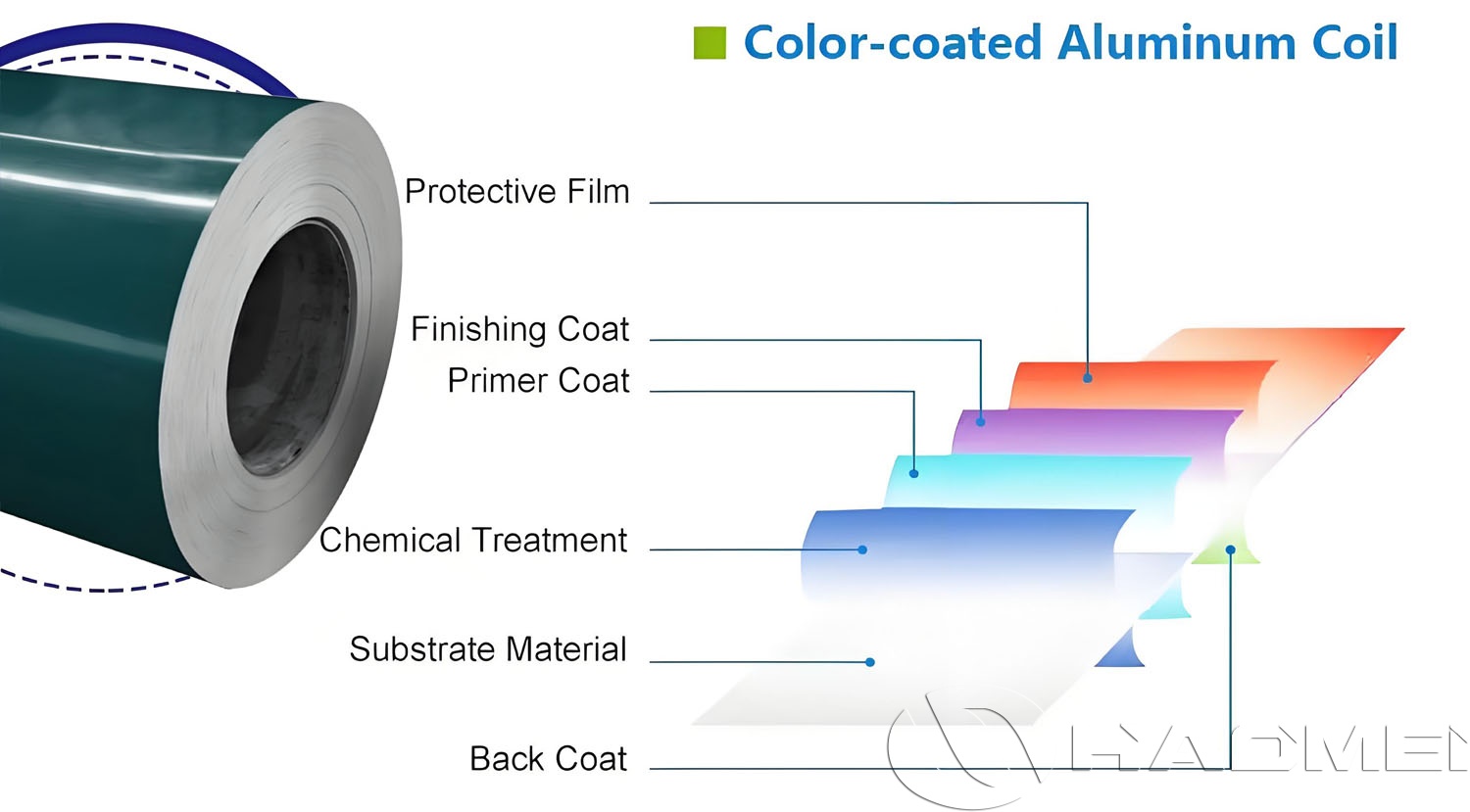
Common layer configuration:
5052 aluminum alloy substrate
Chemical conversion or pretreatment layer
Primer coating
Top coating such as PE or PVDF
Back coat or service coating on the reverse side
For fuel tank-related parts, coating flexibility is important. A coating that cracks during bending or profiling can compromise corrosion resistance and surface consistency. Therefore, the matching of alloy temper, paint system, coating thickness, and forming radius should be considered together.
Core Specifications of 5052 Color Coated Aluminum Coil
Core Specifications Table
| Item | Typical Range / Option |
|---|---|
| Product Name | 5052 Color Coated Aluminum Coil |
| Alloy | 5052 |
| Temper | H24, H26, H32, H34 |
| Thickness | 0.20 mm - 2.00 mm |
| Width | 30 mm - 1600 mm |
| Coil Inner Diameter | 405 mm, 505 mm, custom |
| Coating Type | PE, PVDF |
| Top Coating Thickness | 12-25 μm typical |
| Back Coating Thickness | 5-10 μm typical |
| Surface Finish | Glossy, matte, customized |
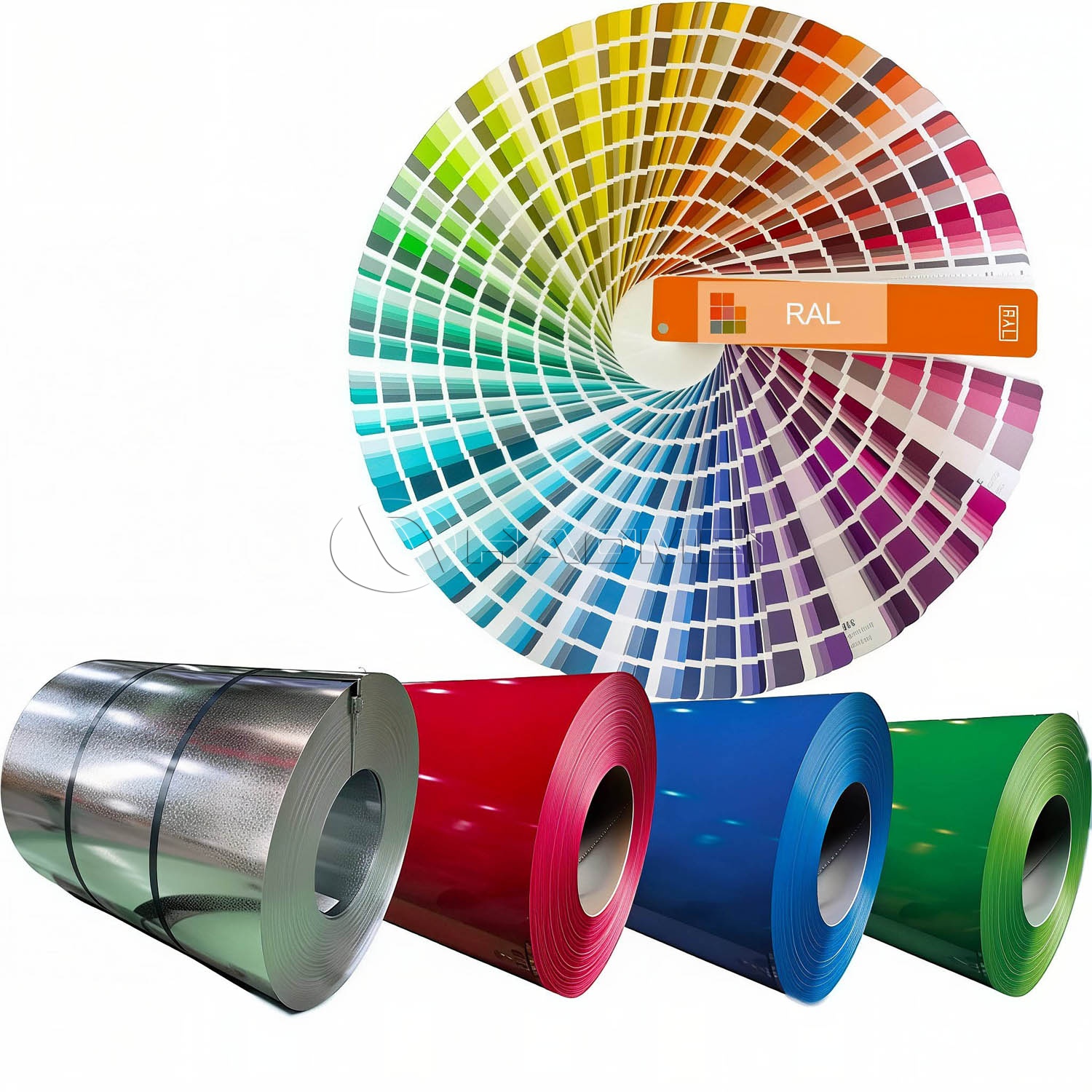
| Color System | RAL color, custom matched colors |
| Forming Process | Bending, stamping, roll forming |
| Key Features | Corrosion resistance, formability, light weight, coated surface durability |
| Typical Applications | Fuel tank covers, shells, guards, formed panels, enclosure parts |
Actual specification combinations vary according to part geometry, coating performance target, and downstream processing conditions.
Coating Systems Commonly Used
The coating system should match the service environment and fabrication route of the fuel tank part.
PE coating
PE coated aluminum coil is often used where good flexibility, cost efficiency, and indoor or moderate outdoor performance are required. It performs well in common fabrication processes and is suitable for many formed components with limited long-term UV exposure. For applications where surface flexibility during profiling is important, PE Coated Aluminum Coil remains a widely used option.
PVDF coating
PVDF coated aluminum coil is selected when stronger weather resistance, color retention, and chalking resistance are required, especially for exposed outdoor parts. In fuel tank systems installed on vehicles, mobile equipment, or outdoor storage assemblies, PVDF can provide better long-term coating stability.
From a process perspective, PE is generally easier to optimize for high-formability applications, while PVDF is usually preferred where outdoor durability is more demanding. The final selection depends on bend radius, appearance requirement, and service environment.
Performance Characteristics Important for Fuel Tank Use
Corrosion resistance
Fuel tank environments may include moisture, road salt, oils, cleaning media, and intermittent chemical exposure. 5052 has good inherent corrosion resistance, and when combined with a stable pretreatment and coating system, it offers enhanced surface durability for external parts.
Formability
Fuel tank covers and guards often include bends, corner transitions, beads, and shaped surfaces. 5052 in appropriate tempers such as H24 or H32 provides a useful balance between stiffness and forming capability.
Coating adhesion
A high-quality color coated product depends on pretreatment uniformity and oven curing control. Good adhesion helps prevent peeling, edge cracking, and coating loss after forming.
Surface consistency
For visible components, color uniformity, gloss stability, and freedom from roller marks or paint defects are important. Coil coating technology helps maintain more consistent appearance across batches.
Weight reduction
Compared with traditional steel sheet, aluminum supports lightweight design, which is relevant in transport equipment and mobile tank systems.
Processing Considerations
For fuel tank-related fabrication, the processing route should be matched to both substrate temper and coating type. Important considerations include:
Minimum bend radius in relation to coating flexibility
Control of slitting edge quality to reduce burrs
Avoidance of excessive stamping speed that may damage paint film
Selection of lubricants compatible with coated surfaces
Protection during recoiling, transport, and panel stacking
Attention to curing adequacy for paint hardness and adhesion
If the part involves severe deformation, paint formulation and coating thickness often need adjustment to avoid micro-cracking at corners and edges.
Quality Control Focus Points
In industrial production, the consistency of fuel tank aluminum coil depends on integrated control of substrate, pretreatment, coating, and packaging. Common inspection items include:
Alloy and temper verification
Thickness and width tolerance
Coating thickness measurement
Color difference control
Gloss measurement
T-bend performance
Impact resistance
Pencil hardness
Solvent resistance
Adhesion test
Salt spray performance when specified
For fuel tank outer applications, edge protection, reverse-side coating, and anti-scratch packaging can also affect final usability.
Application Value of 5052 Color Coated Aluminum Coil
In the fuel tank field, pre-painted aluminum coil based on 5052 alloy offers a practical combination of lightweight structure, corrosion resistance, and production efficiency. Coil-coated supply improves surface consistency over post-painted discrete parts, while the 5052 substrate provides the mechanical reliability needed for formed covers, shells, and auxiliary tank components. This is why 5052 remains one of the most relevant alloy choices within the broader range of color coated aluminum Products for transportation and industrial equipment.
-
3105 Matte Color-Coated Aluminum Coil for Modern Interior Decoration
3105 matte color-coated aluminum coil provides low-glare, durable surfaces for ceilings, wall panels, partitions, and modern interior decoration.
2026-09-28
-
Color Coated 1100 Aluminum Coil for Rain Gutters
Color coated 1100 aluminum coil for rain gutters offers good formability, stable coating performance, and clean appearance in PE and PVDF systems.
2026-03-20
-
1000 Series Aluminum Coil With PVDF Coating
1000 series PVDF coated aluminum coil delivers corrosion resistance, UV stability and smooth formability for cladding, roofing and signage using 1050/1060/1100 alloys.
2026-01-12
Contact Directly
-

ADD: No.14 Waihuan Road, CBD, Zhengzhou, China
-

WhatsApp: +86-18703635966
-

E-MAIL: sales@alummc.com