


News
 By Hermione
Matte Finish PVDF Coated Aluminum Coil
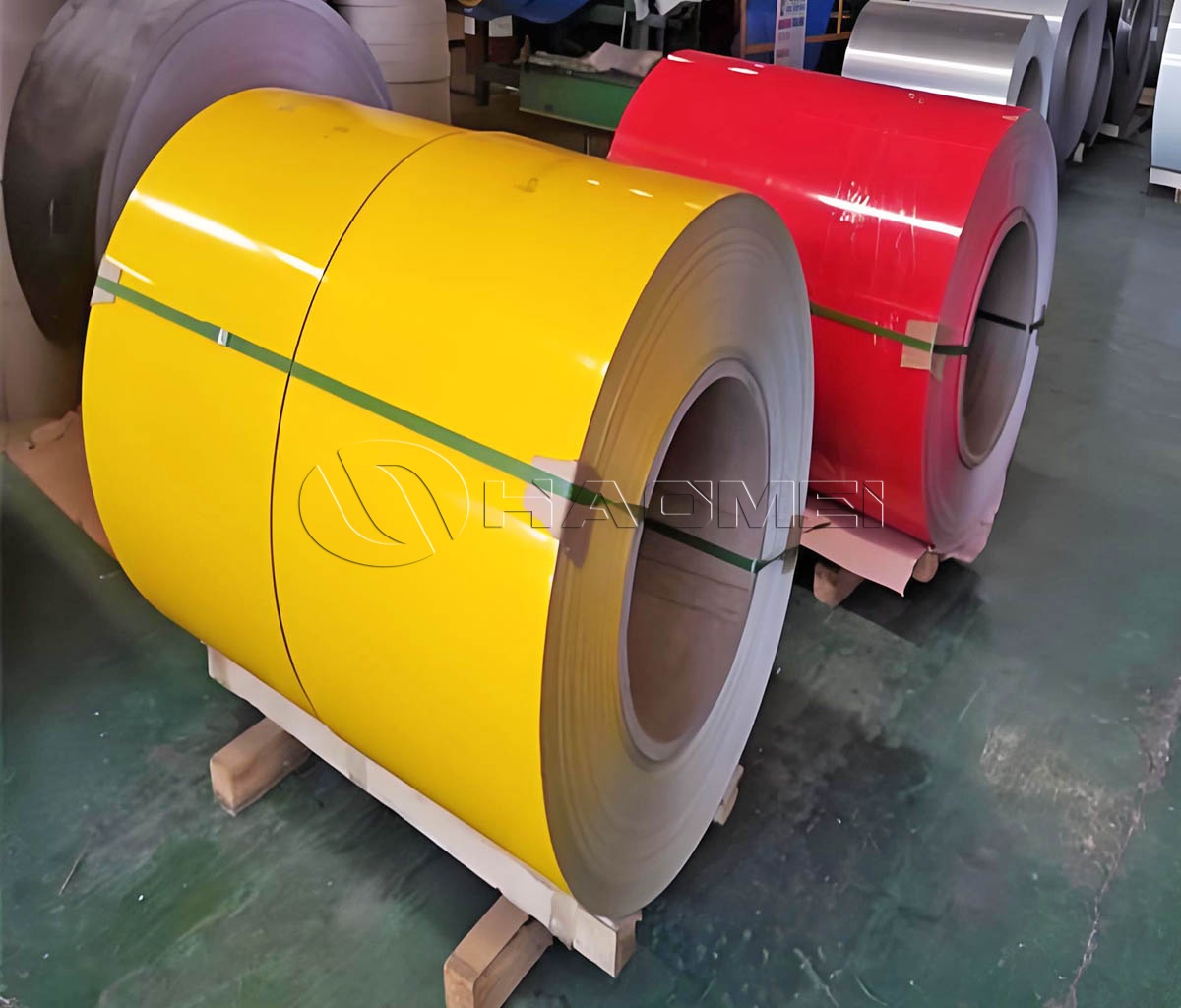
Matte finish PVDF coated aluminum coil is a prepainted architectural material designed for projects that require a refined low-gloss appearance together with long-term outdoor durability. Its non-reflective surface helps create calm, contemporary building exteriors while reducing glare and minimizing the visual impact of minor handling marks. Typical applications include wall cladding, curtain-wall panels, standing-seam roofing, soffits, fascias, aluminum composite panels, ceilings, and exterior decorative profiles.
What Defines a Matte PVDF Finish
A matte surface is characterized by a low gloss level, commonly measured at 60-degree geometry. Depending on the selected color and coating formulation, matte finishes are generally available from approximately 5 to 30 gloss units. The final visual effect is controlled by the resin system, pigment package, matting agent, coating thickness, curing conditions, and aluminum substrate smoothness.
PVDF, or polyvinylidene fluoride, is widely used for exterior coil coatings because of its strong resistance to ultraviolet radiation, moisture, airborne contaminants, and temperature cycling. In a matte system, the coating is formulated to retain these protective properties while delivering a soft, uniform surface rather than a high-reflective appearance.
Compared with standard gloss-painted aluminum, matte PVDF aluminum coil offers several practical surface benefits:
Reduced glare on facades, roofs, and exterior trim.
A modern, textured visual impression without requiring deep embossing.
Lower visibility of light scratches, fingerprints, and surface waviness under diffuse daylight.
Stable color and finish for demanding outdoor exposure conditions.
Compatibility with roll forming, bending, profiling, and panel fabrication when the correct temper and coating system are selected.
Coating Construction and Performance Basis
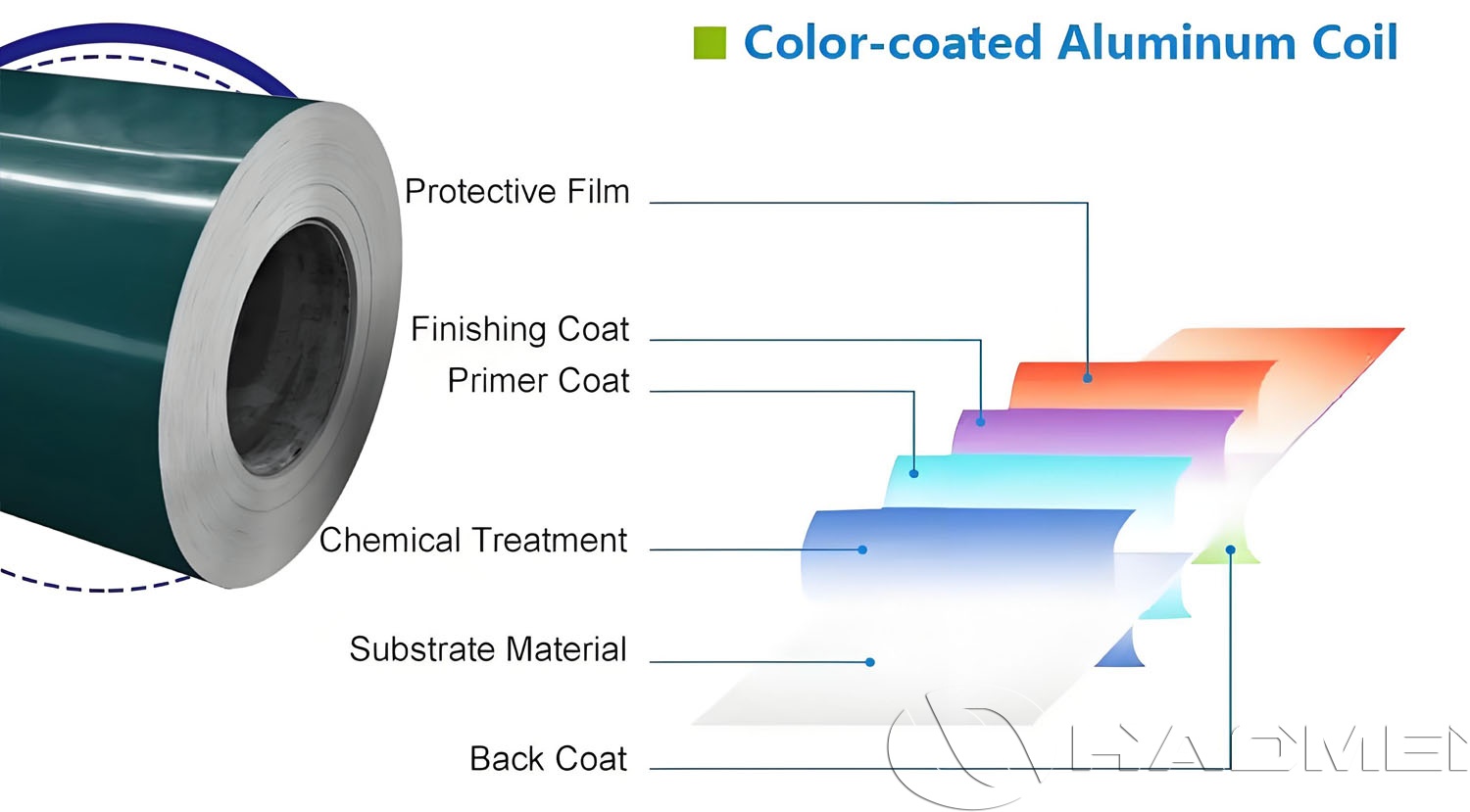
A typical matte PVDF coating system is applied by continuous coil coating. The aluminum strip is cleaned, chemically pretreated, primed, top-coated, oven cured, and recoiled under controlled conditions. This process promotes consistent coating thickness, adhesion, and color appearance across long coil lengths.
The construction generally includes:
Aluminum substrate: Provides low weight, corrosion resistance, and formability.
Chemical pretreatment: Improves corrosion protection and coating adhesion.
Primer coat: Supports intercoat adhesion and enhances barrier protection.
Matte PVDF topcoat: Delivers the required color, gloss level, weatherability, and surface appearance.
Back coat: Protects the reverse side during fabrication and service.
For severe exterior exposure, the PVDF topcoat is commonly specified as a high-performance fluoropolymer system. Coating selection should also consider project location, including UV intensity, humidity, marine salt exposure, industrial pollutants, and the expected cleaning interval.
Matte PVDF-coated aluminum coils offer the following performance advantages
1. Excellent weather resistance: The PVDF coating provides superior UV and weather resistance, making it suitable for long-term outdoor use.
2. Premium surface finish: The matte effect is soft and refined, reducing glare and enhancing the aesthetic appeal of the building's exterior.
3. Strong corrosion resistance: The coating effectively protects the aluminum substrate, enhancing resistance to humid environments and corrosive elements.
4. Good color retention: The coating maintains its color well, helping to minimize fading caused by prolonged sun exposure.
5. Good chemical resistance: It offers resistance to various environmental pollutants, facilitating easy maintenance.
6. Excellent workability: Suitable for roll forming, bending, and other shaping processes to meet diverse architectural requirements.
7. Wide range of applications: Extensively used in architectural curtain walls, roofing systems, aluminum composite panels, and interior/exterior decoration projects.
Core Specifications of Matte Finish PVDF Coated Aluminum Coil
| Specification | Typical Range or Option |
|---|---|
| Product | Matte finish PVDF coated aluminum coil |
| Base metal alloys | 1050, 1060, 1100, 3003, 3004, 3105, 5005, 5052, 5754 |
| Aluminum thickness | 0.20-3.00 mm, subject to alloy and application |
| Coil width | Up to 1,600 mm, subject to production capability |
| Coil inner diameter | 405 mm or 505 mm |
| Coil outer diameter | Typically up to 1,800 mm |
| Surface finish | Matte, low gloss, commonly 5-30 GU at 60-degree angle |
| Top coating | PVDF fluoropolymer coating |
| Front coating thickness | Commonly 20-35 μm; higher-build systems available for specific environments |
| Back coating thickness | Commonly 5-10 μm |
| Color options | RAL, Pantone, custom colors, metallic and solid matte colors |
| Temper | O, H14, H16, H18, H24, or as required |
| Main uses | Facades, roofing, soffits, ceilings, trims, ACP, shutters, and decorative panels |
Common Aluminum Alloys and Their Uses
The alloy should be selected according to the forming method, panel geometry, mechanical load, and service environment. Matte PVDF coating enhances surface durability, but the base aluminum alloy remains important for fabrication performance and corrosion resistance.
1xxx Series: 1050, 1060, and 1100
The 1xxx series contains high-purity aluminum and offers excellent formability, corrosion resistance, and thermal conductivity. These alloys are often used for lightweight decorative panels, interior ceilings, insulation jacketing, and moderately formed architectural components.
1050 is suitable for general-purpose painted sheet where high formability is needed.
1060 provides similar processing characteristics and is commonly used in decorative and building applications.
1100 is valued for good ductility and is appropriate for deep drawing or more complex forming requirements at lower strength levels.
For applications requiring a high-purity substrate, 1100 Color Coated Aluminum Coil can provide a practical combination of formability and coated surface quality.
3xxx Series: 3003, 3004, and 3105
The 3xxx series contains manganese, which improves strength while retaining good forming characteristics. It is one of the most frequently selected alloy families for architectural color coated aluminum coil.
3003 offers balanced strength, formability, and corrosion resistance. It is widely used for roofing sheets, wall panels, gutters, and general cladding.
3004 provides higher strength than 3003 and is suitable for profiles or panels requiring improved dent resistance.
3105 is commonly used for siding, roofing, fascia, and roll-formed building products because of its reliable processing performance.
For many facade and roof applications, 3003 Color Coated Aluminum Coil is a standard choice when a balance of workability and structural rigidity is required.
5xxx Series: 5005, 5052, and 5754
The 5xxx series uses magnesium as the principal alloying element, delivering higher strength and strong corrosion resistance. These alloys are suitable for more demanding architectural uses, especially where moisture exposure, mechanical loading, or complex fabricated parts are involved.
5005 is widely used for architectural sheet and panel systems due to its attractive anodizing and coating response, moderate strength, and good corrosion resistance.
5052 offers higher strength and excellent resistance to marine and humid environments, making it suitable for coastal projects, equipment panels, and formed exterior components.
5754 provides good strength and corrosion resistance for transportation, building, and industrial applications.
Appearance Control for Matte Architectural Colors
Matte finishes require close control because low-gloss surfaces can reveal color variation when coils from different batches are installed side by side. Color matching should consider not only standard color values but also gloss, surface texture, metallic orientation, and lighting conditions.
For a consistent facade appearance, key production control items include:
Paint viscosity and pigment dispersion.
Coating roll settings and wet-film application control.
Peak metal temperature during oven curing.
Gloss measurement at defined inspection angles.
Color difference assessment under agreed illuminants.
Batch identification and directional coil installation for metallic or special-effect colors.
Dark matte colors, including charcoal, black, deep bronze, and dark gray, may absorb more solar energy than light colors. Their coating system and substrate thickness should therefore be aligned with expected thermal movement, panel design, and forming requirements.
Processing Characteristics
Matte PVDF coated aluminum coil can be slit, cut to length, roll formed, bent, stamped, and laminated into composite constructions. Processing parameters should be matched to the alloy temper, coating thickness, bend radius, and profile complexity.
The coating should remain intact through fabrication. Tight bends, sharp tool edges, excessive forming speed, abrasive handling surfaces, and accumulated debris in roll-forming equipment can cause coating damage or edge cracking. For demanding profiles, a softer temper and validated bend performance are commonly specified.
Protective film may be applied to the painted surface when required for fabrication and installation handling. Film adhesion must be balanced carefully: insufficient adhesion can lead to lifting during processing, while excessive adhesion or extended exposure to heat and sunlight can make removal more difficult.
Typical Application Areas
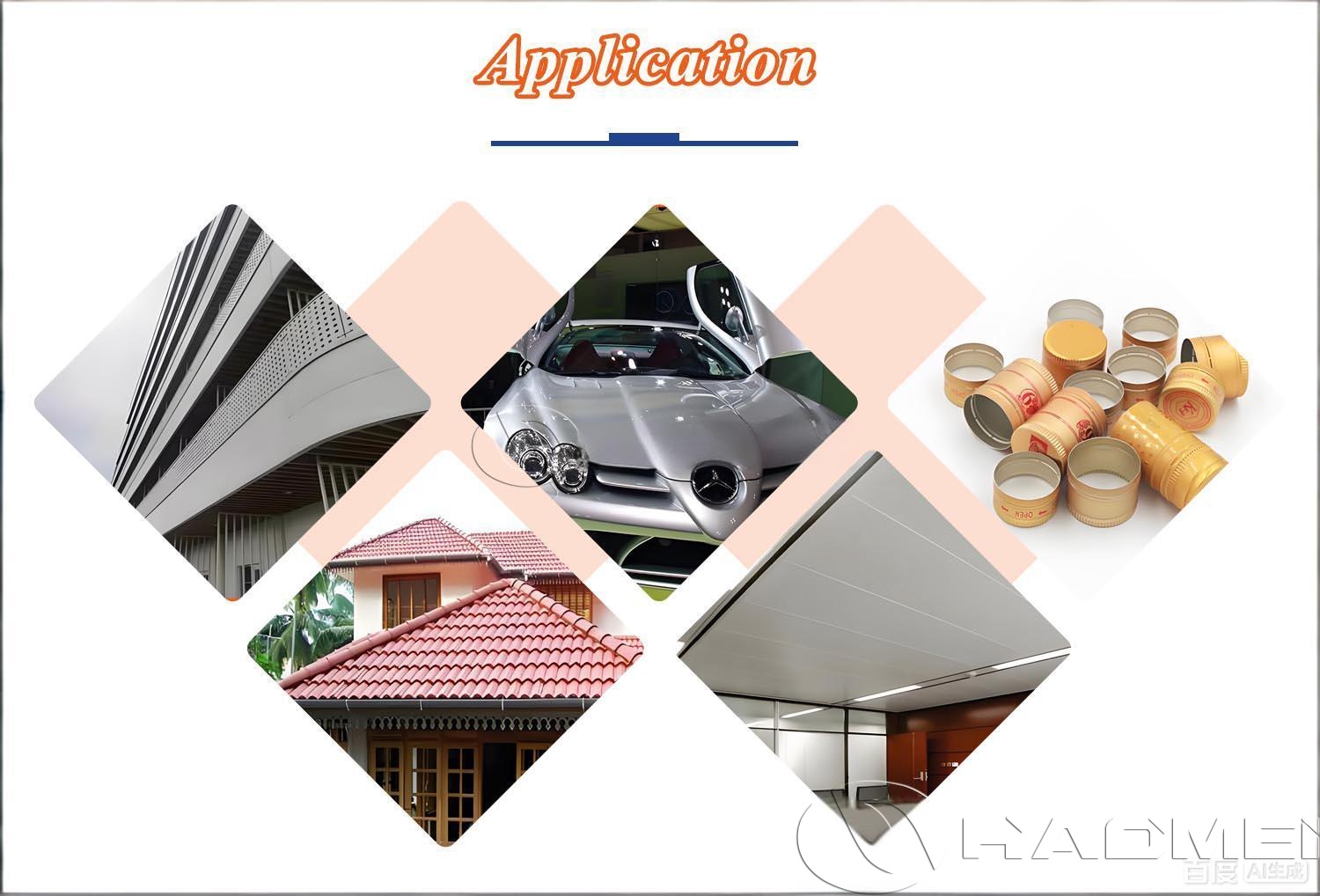
PVDF coated aluminum coil is used where durable color, restrained reflectivity, and lightweight metal construction are required. Common application areas include:
Exterior wall cladding and rainscreen panels.
Standing-seam and corrugated roofing systems.
Curtain-wall spandrels and aluminum composite panels.
Canopies, parapet caps, fascias, and soffits.
Roll-formed siding, shutters, and garage door panels.
Ceiling systems and exterior louvers.
Transportation body panels and industrial enclosures.
Quality Evaluation Items
A matte finish should be evaluated as a complete coated-metal system rather than by color alone. Typical quality checks include coating thickness, gloss, color consistency, adhesion, bend resistance, impact resistance, solvent resistance, pencil hardness, corrosion resistance, and accelerated weathering performance.
For exterior architectural use, evaluation should also account for edge protection, cut-edge exposure, drainage design, contact with dissimilar metals, and the local atmosphere. The combination of a suitable aluminum alloy, properly cured PVDF coating, and well-designed panel construction supports stable long-term appearance in demanding environments.
-
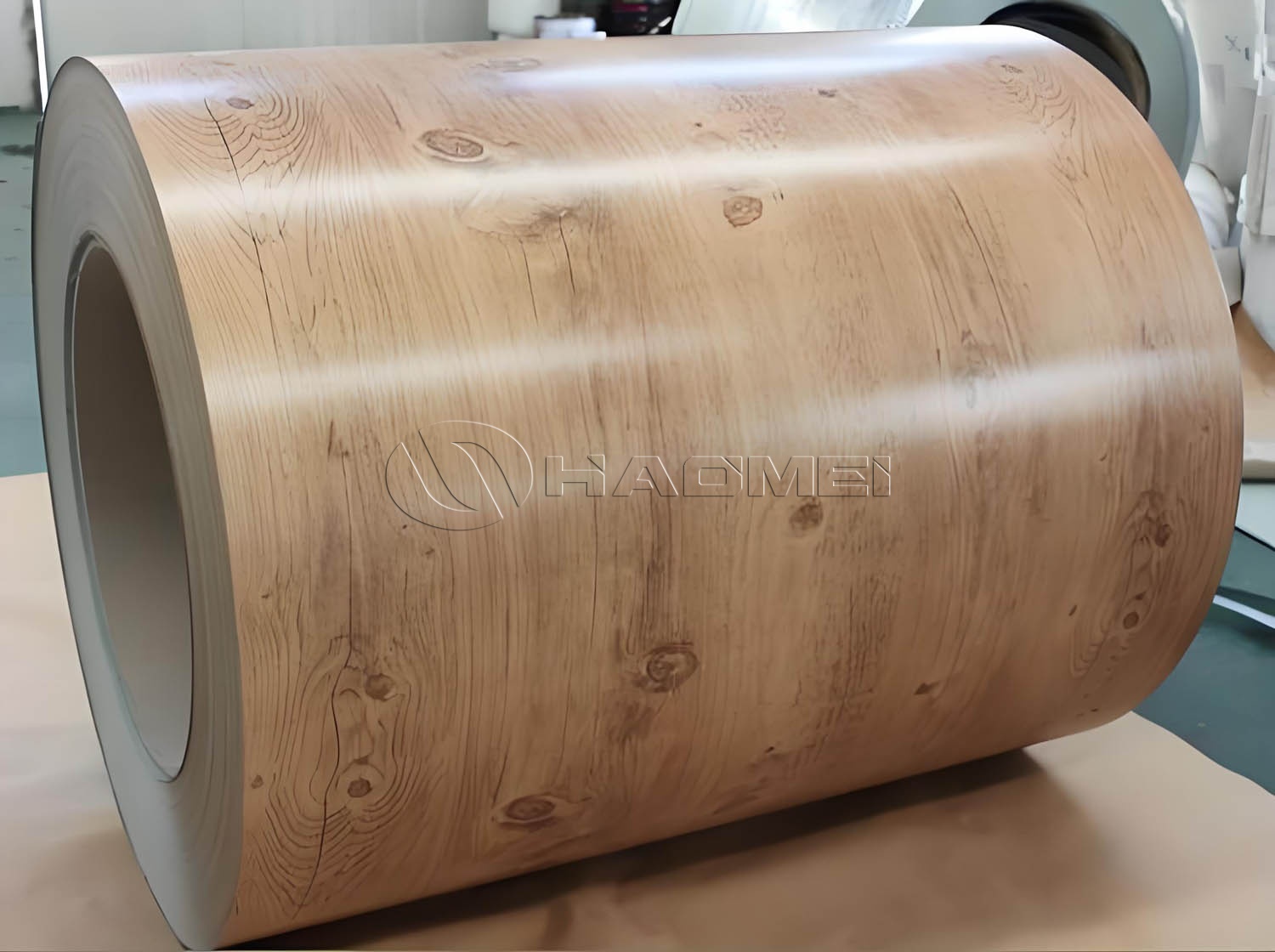
Best Wood Grain Aluminum Coil for Roofing
Explore the best wood grain aluminum coil for roofing with PVDF or PE coating, coil-coated durability, corrosion resistance, and stable wood-tone aesthetics.
2026-03-05
-
PE Coated Wood Grain Aluminum Coil Price
Explore PE coated wood grain aluminum coil price drivers, coating system design, aluminum alloy choices, coil coating process, and typical architectural decoration uses.
2026-03-03
-
1000 Series Aluminum Coil With PVDF Coating
1000 series PVDF coated aluminum coil delivers corrosion resistance, UV stability and smooth formability for cladding, roofing and signage using 1050/1060/1100 alloys.
2026-01-12
Contact Directly
-

ADD: No.14 Waihuan Road, CBD, Zhengzhou, China
-

WhatsApp: +86-18703635966
-

E-MAIL: sales@alummc.com
