

News
 By Hermione
Best Wood Grain Aluminum Coil for Roofing
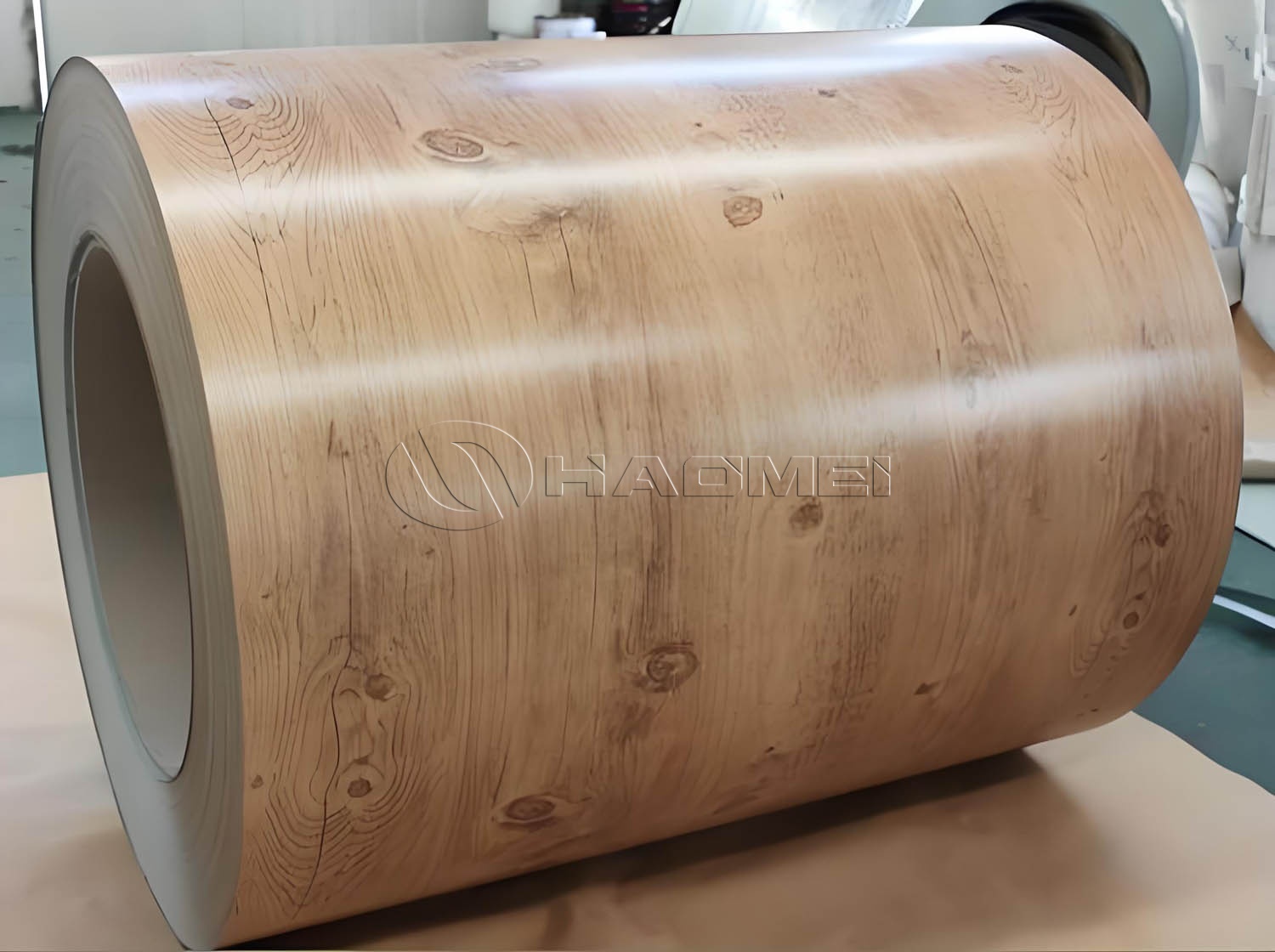
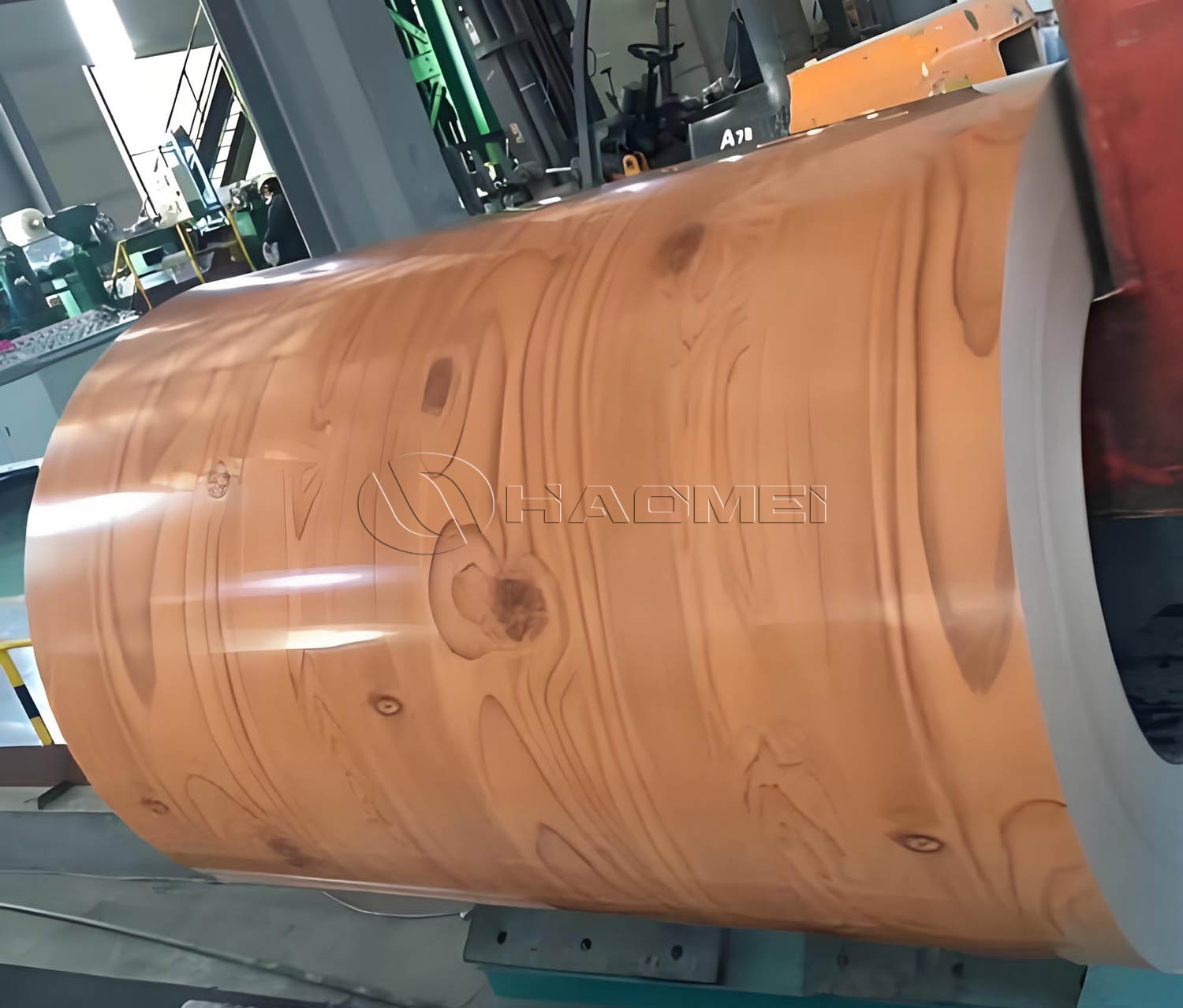
Wood aesthetics and metal-roof reliability do not have to be a trade-off. A wooden grain color-coated aluminum coil is positioned for projects that need the warm look of timber with the long service life, low mass, and dimensional stability of aluminum. Typical scenarios include residential and villa roofing, canopies and porch roofs, tourism and resort buildings, municipal pavilions, and any roof or soffit system where a wood-tone visual is desired but real wood would over-weather, warp, or demand frequent maintenance.
Why aluminum is the right substrate for wood-grain roofing finishes
A roof skin is exposed to UV, thermal cycling, wind-borne dust, and long-term moisture. The substrate must resist corrosion while remaining formable enough for roll-forming, pressing, or bending into roof panels and edge trims. Aluminum meets these requirements through a combination of native oxide protection, low density, and predictable forming behavior.
For roofing coils, the most practical balance is typically achieved with 3xxx series alloys (for example, 3003/3004/3105) when higher strength and good formability are needed for long panels, and 1xxx series when maximum ductility is prioritized for complex flashings and deep bends. In both cases, corrosion resistance is strongly influenced by coating design and surface preparation; the metal and the coating system must be engineered together.
Key material behaviors that matter on the roof:
Low weight reduces structural load and eases handling for long-length standing seam and concealed-fastener profiles.
Thermal conductivity helps the roof shed heat, while coating color and gloss control solar absorption.
Formability supports tight hems, seams, and lock profiles without micro-cracking that could become a corrosion initiation site.
Common alloy grades for wood-grain color-coated aluminum coils
1. 3003 series aluminum alloy
3003 is currently the most widely used grade in roofing systems (such as Al-Mg-Mn roofing panels).
Performance features: The addition of manganese greatly improves corrosion resistance. Its strength is about 20% higher than pure aluminum, and it also has excellent ductility, making it ideal for forming standing seam or corrugated profiles.
Typical applications: Standard residential houses, traditional/heritage-style building roofs, gazebo canopies.
Common tempers: H14 / H24.
2. 3004 / 3105 aluminum alloy
Compared with 3003, these alloys contain a small additional amount of magnesium (Mg) and are often referred to as Al-Mg-Mn roofing materials.
Performance features: Higher structural strength; tensile strength and yield strength are significantly better than 3003. This means the roofing panels are less likely to dent or deform under strong winds or heavy snow loads.
Typical applications: Industrial plant roofs, large-span public buildings (e.g., stadiums, airports), buildings in rainy and windy regions.
Advantage: A standard choice for today’s high-end metal roofing systems.
3. 5052 aluminum alloy
If your project is within 5 km of the coastline or in areas with severe acid rain, 5052 is an irreplaceable option.
Performance features: Higher magnesium content (2.2%-2.8%), offering outstanding salt-spray corrosion resistance. It has higher hardness and excellent fatigue strength.
Typical applications: Seaside villas, port buildings, chemical plant roofing.
Drawbacks: More expensive than the 3000 series, and it requires a larger bending radius (R) during forming.
Coating systems that make wood grain last outdoors
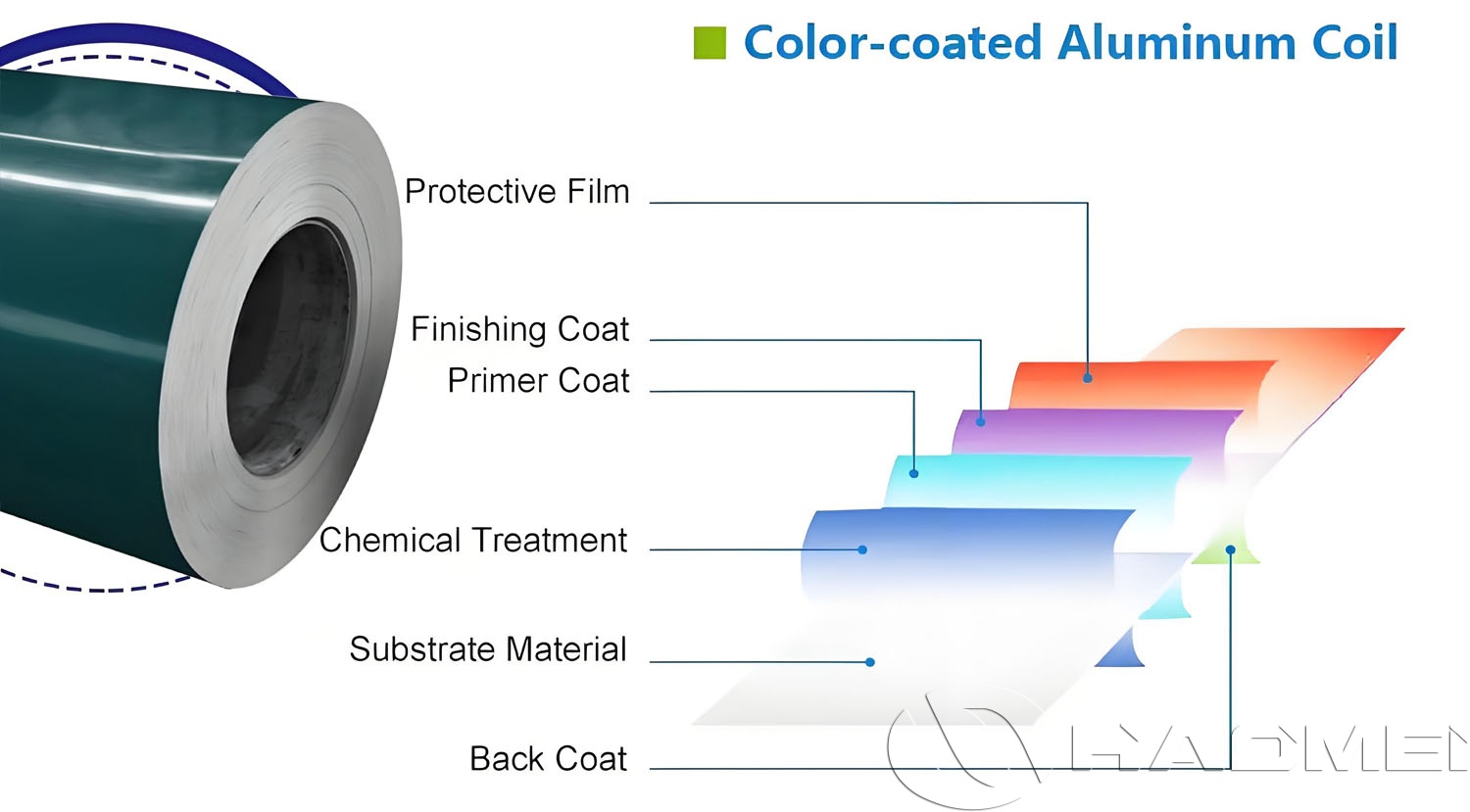
Wood grain is not only a printed pattern; it is a multi-layer coating system designed to protect the coil through decades of exposure. In coil-coated roofing products, durability depends on a coherent stack: pretreatment for adhesion, primer for barrier performance, and a topcoat that resists UV and chalking.
A robust architecture for exterior roofing typically includes:
Pretreatment (conversion layer) to improve adhesion and underfilm corrosion resistance.
Primer to provide a dense barrier and to anchor the printed layer.
Wood grain pattern layer (usually via gravure/roller transfer) to create realistic pores, tonal transitions, and grain direction.
Clear protective topcoat (or integrated high-durability topcoat) to guard the pattern from UV, abrasion, and staining.
In climate-exposed roofing, the preferred topcoat is generally PVDF coating because fluoropolymer chemistry provides superior UV stability, gloss retention, and color durability. For projects with milder exposure or cost-sensitive applications, PE coating is often used, but it should be specified carefully for roof pitch, orientation, and expected sunlight intensity.
Where appropriate within a broader material selection, PVDF-based systems are commonly supplied as PVDF Coated Aluminum Coil, while economical interior or low-exposure solutions align with PE Coated Aluminum Coil options.
Manufacturing process control: how "best" is built into the coil
The best performance is not achieved by pattern printing alone. Roofing coils need tightly controlled coil coating and curing to ensure the film is continuous, well-crosslinked, and consistently thick across the width and along the length.
In a well-managed coil coating process, the critical technical controls include:
Incoming coil quality: consistent gauge, flatness, and surface cleanliness to prevent coating skips and print distortion.
Degreasing and chemical pretreatment: stable bath chemistry and contact time to avoid adhesion loss or filiform corrosion.
Primer and topcoat application: controlled viscosity, roll pressure, and line speed to maintain uniform film build.
Oven curing: verified peak metal temperature (PMT) and dwell time to ensure complete crosslinking without overbake embrittlement.
Wood grain registration and direction: pattern alignment and repeat length control to avoid visual banding on long roof panels.
For roofing, two details are often overlooked but decisive:
Forming tolerance of the coating film: seams and hems concentrate strain. The coating must pass T-bend/impact benchmarks without cracking that could expose aluminum.
Edge protection strategy: slit edges are a natural vulnerability. Proper primer barrier, topcoat flexibility, and compatible sealants at installation reduce edge-driven underfilm attack.
Core specifications for wood grain roofing coil (typical range)
Table: Core Specifications for Wood Grain Aluminum Coil for Roofing
| Item | Typical Options / Range | Notes for Roofing Use |
|---|---|---|
| Alloy | 1000 series, 3000 series, 5000 series | 3xxx often chosen for strength/formability balance; 5xxx for higher strength and marine tolerance |
| Temper | O, H14, H16, H24 | Select to match roll-forming and panel profile requirements |
| Thickness | 0.30–1.20 mm | Common roofing/trim range: 0.50–0.90 mm depending on profile span |
| Width | 600–1250 mm (custom possible) | Must match slitting plan and forming line capability |
| Coating system | PVDF / PE / SMP (optional) | PVDF recommended for long-term UV exposure |
| Topcoat thickness | 18–28 μm (typical) | Higher film build improves barrier and pattern depth |
| Primer thickness | 5–10 μm (typical) | Supports adhesion, corrosion resistance, and print anchoring |
| Back coat | 5–10 μm (service/backer) | Improves handling and underside protection |
| Surface finish | Wood grain (matte/satin) | Matte/satin reduces glare and hides minor handling marks |
| Gloss (60°) | ~10–35 GU (by design) | Lower gloss often looks more "natural wood" |
| Adhesion / forming | 0T–2T (system-dependent) | Must be validated against the target roof profile |
| Corrosion resistance | Salt spray and humidity validated per spec | Targets depend on region, distance to coast, and roof design |
Practical roofing applications and performance outcomes
A wood grain prepainted aluminum coil is typically converted into roof panels and accessories such as ridge caps, gable trims, drip edges, fascia, soffit panels, and rainwater systems. The coil format supports continuous production: slitting, roll-forming into standing seam roofing or corrugated profiles, and press-braking for architectural flashings.
Because the appearance layer is protected under a clear or high-durability topcoat, the roof maintains a stable wood tone without the recurring sealing and staining cycles required by natural timber. At the same time, aluminum's corrosion behavior, combined with a properly designed pretreatment and primer, reduces the risk of blistering and underfilm corrosion in damp or polluted atmospheres.
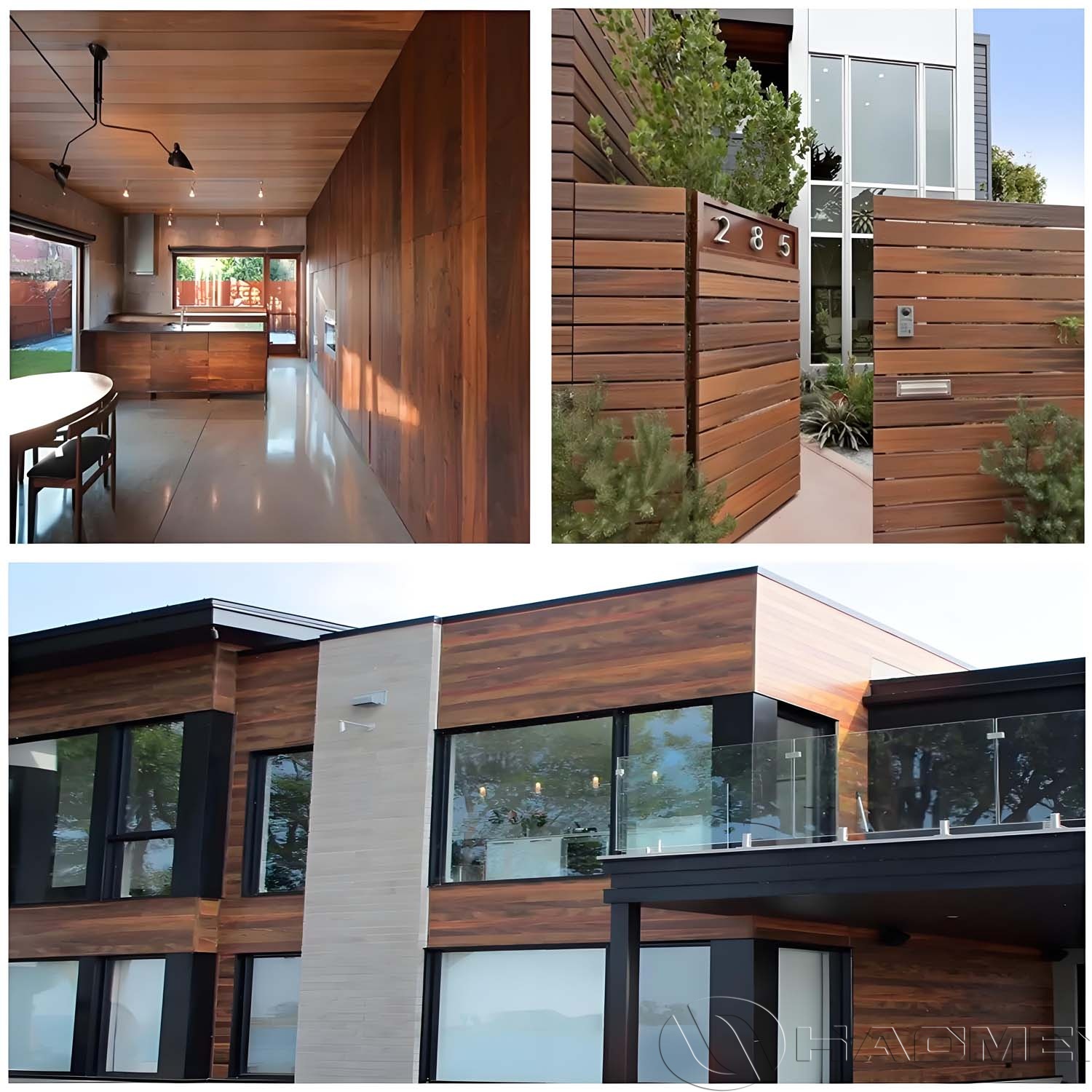
In real installations, performance is most consistent when the coil, profile design, and environment are matched:
For high UV, desert, or tropical exposures, PVDF systems provide the best resistance to chalking and color shift.
For coastal roofs, alloy selection and coating integrity (including slit-edge management and detailing) become as important as film type.
For complex profiles and tight seams, film flexibility and controlled curing prevent micro-cracks at formed radii.
When these factors are engineered as one system, wood grain aluminum roofing can deliver a convincing timber aesthetic with long-term weatherability, stable geometry, and manufacturing efficiency from coil to finished roof components.
-
5000 Series Color Coated Aluminum Coil for Signage
Explore 5000 series color coated aluminum coil for signage, including 5005 and 5052 alloys, coating options, dimensions, fabrication, and durability.
2026-09-14
-
Service Life of Camouflage-Coated Aluminum Coils
Explore camouflage-coated aluminum coil service life, PVDF and PE coating systems, common alloys, core specifications, and outdoor durability factors.
2026-06-29
-
Wood Grain Color-Coated Aluminum Coil for Wall Cladding
Wood grain color-coated aluminum coil for wall cladding combines PVDF or PE coatings, realistic patterns, and durable aluminum alloys for facade panels.
2026-07-07
Contact Directly
-

ADD: No.14 Waihuan Road, CBD, Zhengzhou, China
-

WhatsApp: +86-18703635966
-

E-MAIL: sales@alummc.com