

News
 By Hermione
Eco-Friendly Wood Grain Color-Coated Aluminum
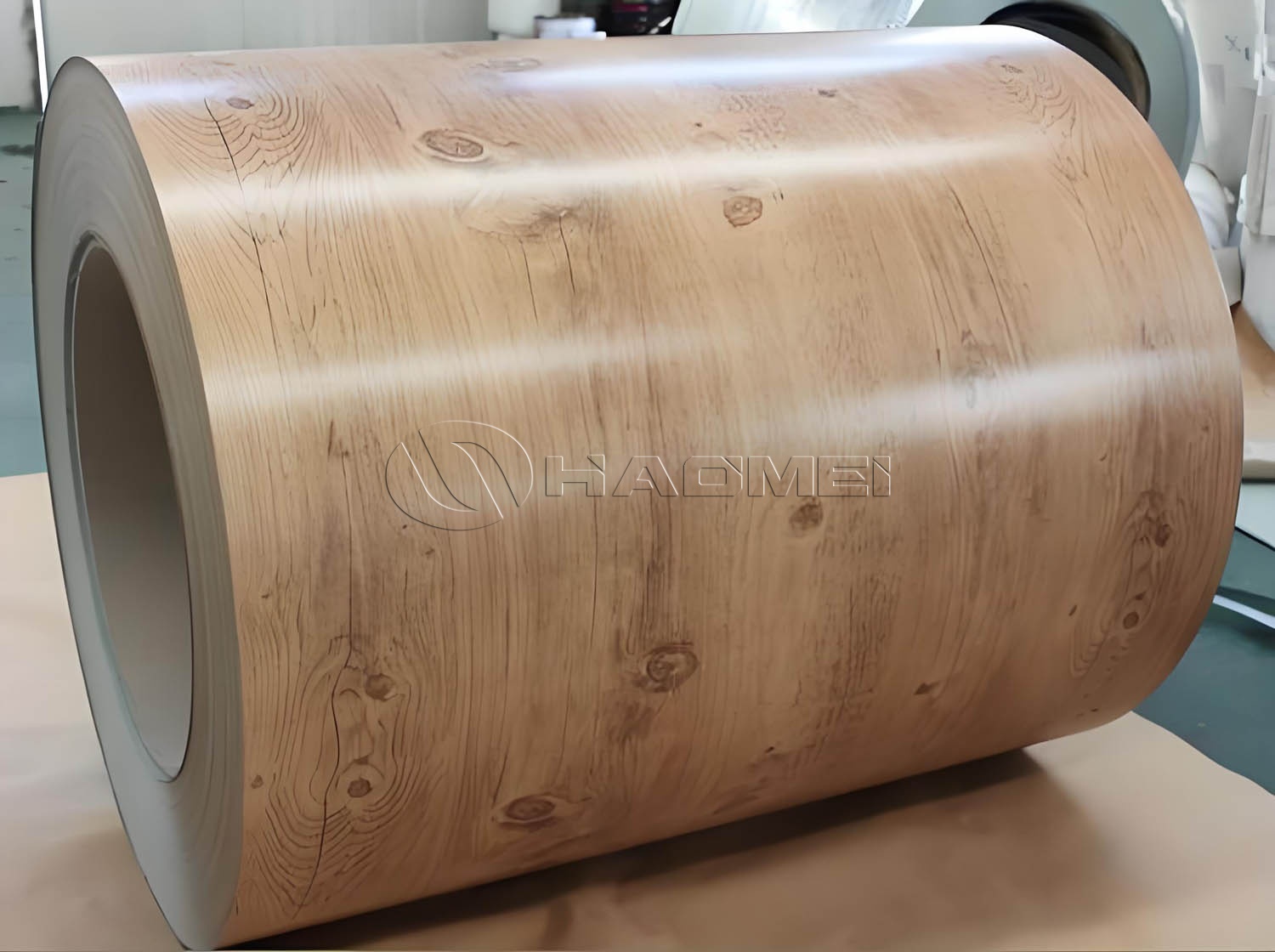
Eco-friendly wood grain color-coated aluminum coil is positioned as a decorative and functional metal material for projects that require the visual warmth of timber with the durability, formability, and recyclability of aluminum. It is widely used in architectural facades, ceilings, soffits, interior wall systems, roller shutters, furniture panels, door systems, and other decorative components where natural wood appearance, stable performance, and lower maintenance are required.
Material Concept and Environmental Value
Wood grain color-coated aluminum uses aluminum coil as the substrate and forms a multi-layer coating system through pretreatment, primer coating, base color coating, wood grain printing or transfer, and protective top coating. Compared with solid wood in exterior or semi-exterior applications, aluminum does not absorb moisture, crack, warp, or require frequent repainting. Its long service life helps reduce replacement frequency, while the aluminum base metal remains highly recyclable at the end of use.
From a materials engineering perspective, the eco-friendly value mainly comes from four aspects:
Recyclable aluminum substrate: Aluminum can be recycled repeatedly with significantly lower energy consumption than primary aluminum production.
Wood-saving decorative effect: Realistic wood grain patterns provide a timber-like appearance without relying on large quantities of natural hardwood.
Durable coating system: PE, HDP, FEVE, or PVDF coating systems reduce premature fading, chalking, and corrosion-related replacement.
Controlled surface treatment: Modern coating lines commonly use chrome-free pretreatment and low-VOC coating processes to support cleaner production requirements.
Typical Product Structure
The performance of wood grain coated aluminum depends on the compatibility of substrate alloy, pretreatment chemistry, primer adhesion, color layer, printed grain layer, and clear protective layer. For indoor decorative panels, a polyester-based system is commonly used. For exterior facades or high-UV environments, a fluorocarbon system such as PVDF Coated Aluminum Coil provides stronger weather resistance and color retention.
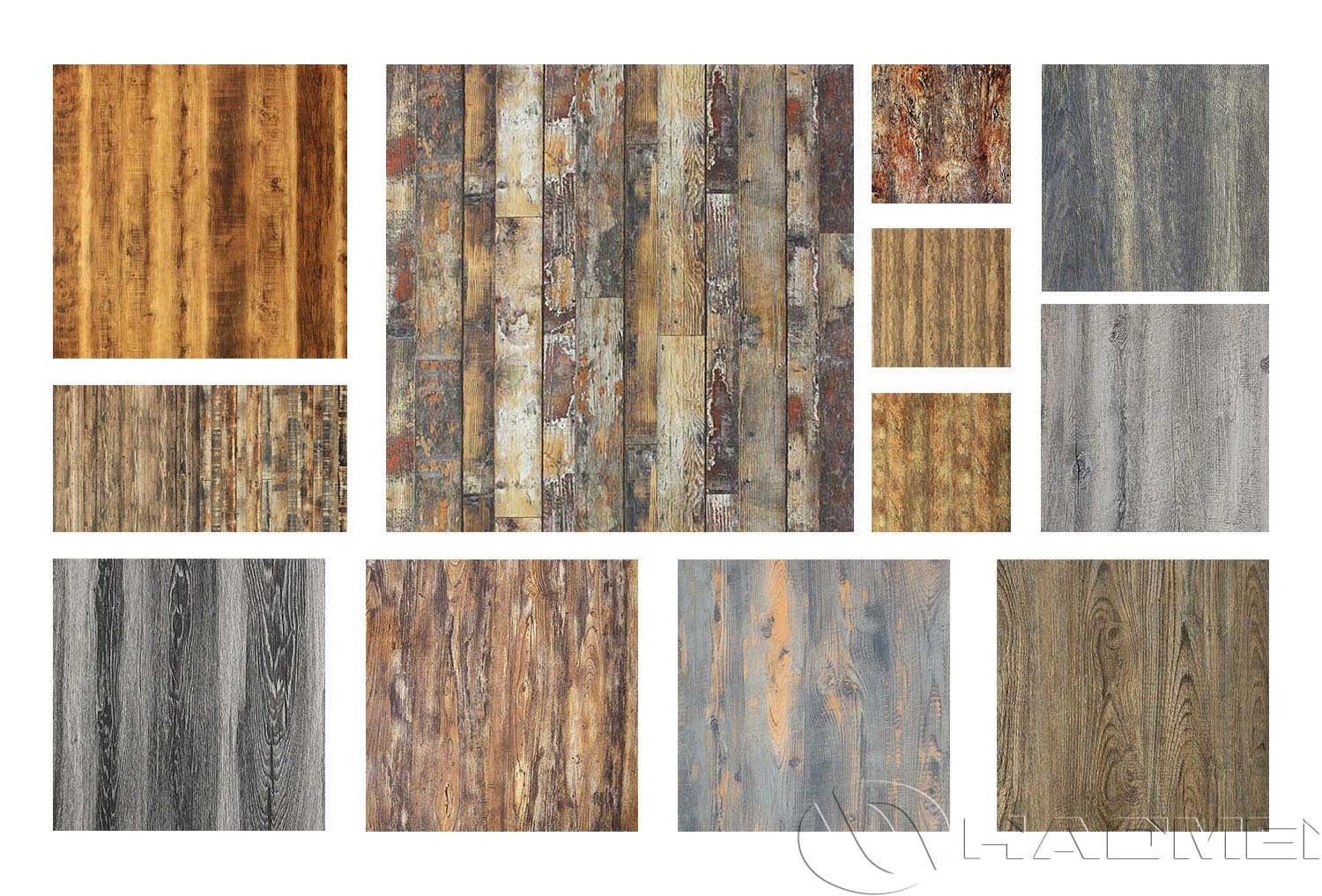
A typical coating structure includes:
Aluminum substrate, selected according to strength, bending, and corrosion requirements.
Chemical pretreatment layer to improve corrosion resistance and coating adhesion.
Primer layer to enhance bonding between metal and top coating.
Base color layer, usually matched to the final wood tone.
Wood grain decorative layer, formed by roller printing or transfer technology.
Protective clear coat to improve abrasion resistance, UV stability, and stain resistance.
Core Specifications of Eco-Friendly Wood Grain Color-Coated Aluminum
| Item | Common Specification Range |
|---|---|
| Product form | Coil, sheet, strip, or cut-to-length panel |
| Common alloys | 1060, 1100, 3003, 3004, 3105, 5005, 5052 |
| Temper | O, H14, H24, H26, H32, H34, subject to alloy and forming process |
| Thickness | 0.20 mm-2.00 mm, commonly 0.35 mm-1.20 mm for decoration |
| Width | 600 mm-1600 mm, depending on coating line capability |
| Coating system | PE, HDP, FEVE, PVDF, with primer and protective clear coat |
| Top coating thickness | Typically 18-35 μm, higher systems available for exterior use |
| Back coating thickness | Typically 5-15 μm, adjusted for bonding or corrosion requirements |
| Surface effect | Walnut, oak, teak, cherry, ash, pine, dark wood, light wood, custom grain |
| Gloss range | Low gloss, matte, semi-gloss, or customized gloss level |
| Processing | Slitting, leveling, embossing, roll forming, bending, punching, lamination |
| Main applications | Facades, ceilings, soffits, shutters, furniture, doors, partitions, decoration |
Commonly Used Alloys and Selection Logic
Alloy selection directly affects forming behavior, stiffness, dent resistance, corrosion performance, and final product stability. In wood grain color-coated aluminum, the following alloys are commonly used:
1060 and 1100 Aluminum
1060 and 1100 are commercially pure aluminum grades with excellent formability, high corrosion resistance, and stable coating compatibility. They are suitable for interior ceilings, decorative strips, furniture trim, sign panels, and lightly formed profiles. The lower strength of these alloys makes them easy to bend and process, but they are not usually selected for components requiring high structural rigidity.
The 1100 Color Coated Aluminum Coil grade is often used when deep forming, flatness, and a smooth decorative surface are more important than high mechanical strength.
3003, 3004, and 3105 Aluminum
3000 series aluminum contains manganese as the main strengthening element. These alloys provide better strength than 1000 series while maintaining good corrosion resistance and processability. 3003 is widely used for wall panels, ceiling systems, decorative panels, and general architectural components. 3004 and 3105 offer improved strength and are often selected for roll-formed profiles, roofing-related decorative parts, shutters, and exterior cladding elements.
For wood grain applications, 3003 and 3105 are frequently chosen because they balance coating adhesion, bending performance, dimensional stability, and cost efficiency.
5005 and 5052 Aluminum
5000 series aluminum contains magnesium and provides higher strength and better corrosion resistance, especially in more demanding atmospheric environments. 5005 is suitable for architectural panels where flatness and surface quality are important. 5052 has higher strength and is used for components that require improved dent resistance, fatigue resistance, or more robust forming performance.
For coastal buildings, exterior curtain wall systems, and long-life decorative panels, 5005 or 5052 combined with a weather-resistant coating system can improve overall durability.
Coating Systems for Indoor and Outdoor Use
PE coating is commonly used for interior decoration, furniture, ceilings, and applications with moderate weather exposure. It provides good flexibility, color richness, and economical processing performance. PVDF, FEVE, or high-durability polyester systems are more suitable for exterior environments where UV exposure, rain, temperature cycling, and pollution resistance are important.
For wood grain aluminum used outdoors, the coating design should focus on:
UV resistance of both the base color and printed grain layer.
Adhesion stability after bending, forming, and thermal cycling.
Resistance to chalking, fading, cracking, and peeling.
Corrosion protection at cut edges and punched areas.
Compatibility with sealants, adhesives, and installation accessories.
Manufacturing Process Control
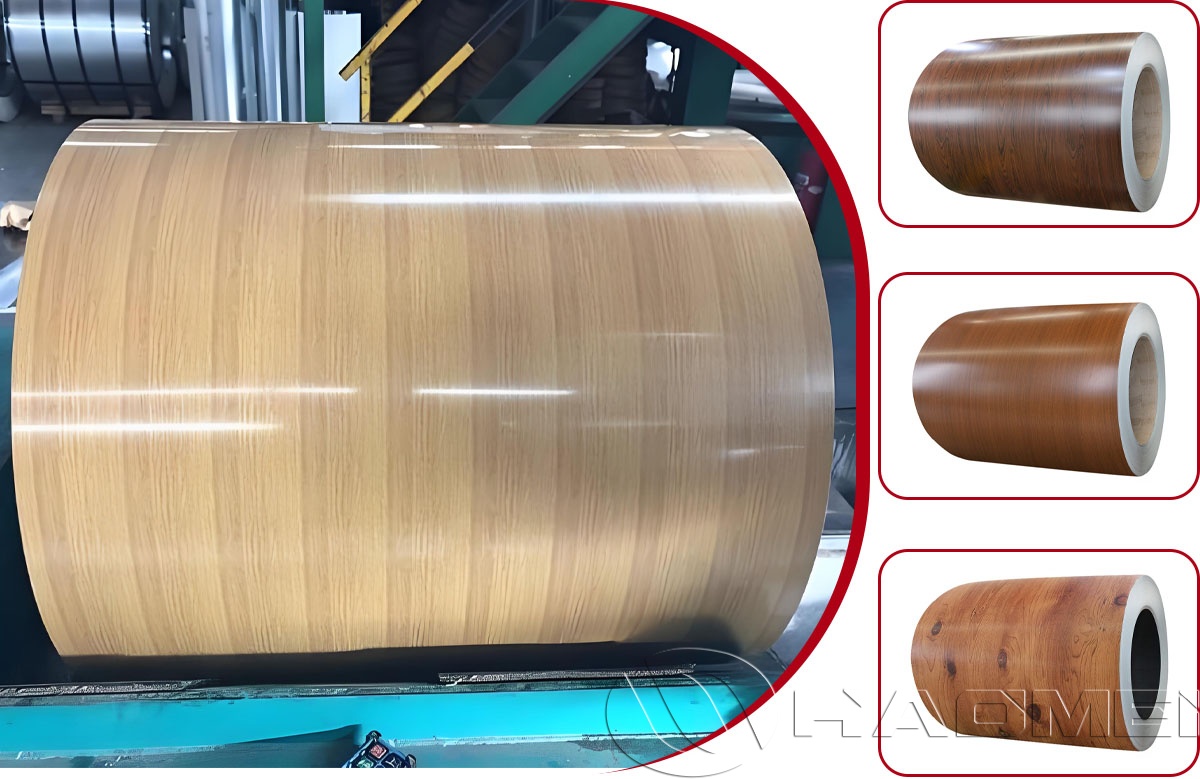
The visual consistency of wood grain aluminum depends heavily on continuous coil coating process control. Key production parameters include substrate cleaning quality, pretreatment coating weight, primer curing temperature, paint viscosity, roll pressure, grain registration accuracy, oven temperature curve, line speed, and final winding tension.
Important quality checkpoints normally include:
Surface cleanliness and absence of oil stains, scratches, and oxide defects.
Coating thickness uniformity across width and length.
Color difference control using ΔE measurement.
Pencil hardness, T-bend, impact resistance, and cross-hatch adhesion testing.
Solvent resistance, boiling water resistance, and salt spray testing when required.
Pattern continuity and repeatability between production batches.
Application Scenarios
In building envelopes, wood grain color-coated aluminum can be processed into aluminum composite panels, solid aluminum panels, honeycomb panels, profiles, louvers, soffits, and decorative ceiling systems. The material offers a stable wood-like appearance while retaining the non-combustible, lightweight, and corrosion-resistant characteristics of aluminum.
In interior and furniture applications, it is used for cabinet panels, partitions, door skins, wall cladding, table edges, and decorative trim. In shutter and door systems, the combination of roll formability and surface durability supports repeated operation while maintaining consistent appearance.
The material is especially suitable for designs requiring natural texture, lower maintenance, dimensional stability, and long-term surface uniformity under controlled specification conditions.
-
5052 Color Coated Aluminum Coil for Shipbuilding
Compared to steel, 5052 color-coated aluminum coils reduce the weight of ships by up to 50%, while also providing long-lasting corrosion resistance and an aesthetically pleasing finish.
2025-12-15
-
1100-H12 Color Coated Aluminum Coil Roofing Sheet
Overview of 1100-H12 color coated aluminum coil roofing sheet for roll forming, with PVDF/PE coating options, core specs, alloy comparisons, and performance notes.
2026-03-17
-
PE Coated Aluminum Coil for Ceiling Tiles
PE coated aluminum coil for ceiling tiles offers lightweight forming, stable color, corrosion resistance, and clean finishes for modern interior ceilings.
2026-05-07
Contact Directly
-

ADD: No.14 Waihuan Road, CBD, Zhengzhou, China
-

WhatsApp: +86-18703635966
-

E-MAIL: sales@alummc.com