

News
 By Hermione
Anti-Corrosion 3003 Color Coated Aluminum Coil
3003 color coated aluminum coil is a widely used prepainted aluminum material positioned for applications that require a balanced combination of corrosion resistance, formability, surface decoration, and cost control. It is commonly used in roofing, wall cladding, ceilings, rainwater systems, rolling shutter components, insulation jacketing, and general architectural decoration, especially in environments where long-term appearance retention and substrate stability are important.
Why 3003 is widely used for anti-corrosion color coated coil
Alloy 3003 belongs to the Al-Mn series. Compared with commercially pure aluminum, it offers improved strength while still maintaining good ductility and processing performance. After coil coating, the product gains an additional protective barrier through the paint system, creating a dual defense structure: the aluminum substrate contributes inherent corrosion resistance, and the organic coating reduces direct exposure to moisture, salts, pollutants, and UV radiation.
This combination makes 3003 color coated aluminum coil suitable for exterior and interior building uses where sheet forming, bending, profiling, and roll forming are required without sacrificing coating adhesion.
Material characteristics of 3003 alloy
The anti-corrosion performance of 3003 coated coil is based on both alloy composition and surface treatment. Manganese is the main alloying element in 3003, typically improving mechanical strength over 1xxx series alloys while preserving good workability.
Key characteristics include:
Good atmospheric corrosion resistance
Better strength than 1050, 1060, and 1100 series substrates
Stable performance in roll forming, bending, and stamping
Good compatibility with PE and PVDF coating systems
Suitable for flat sheets, profiled panels, and fabricated decorative components
In practical use, 3003 is often selected when the application requires more structural reliability than pure aluminum grades, but does not need the higher cost associated with some magnesium-containing alloys.
Coating structure and anti-corrosion mechanism
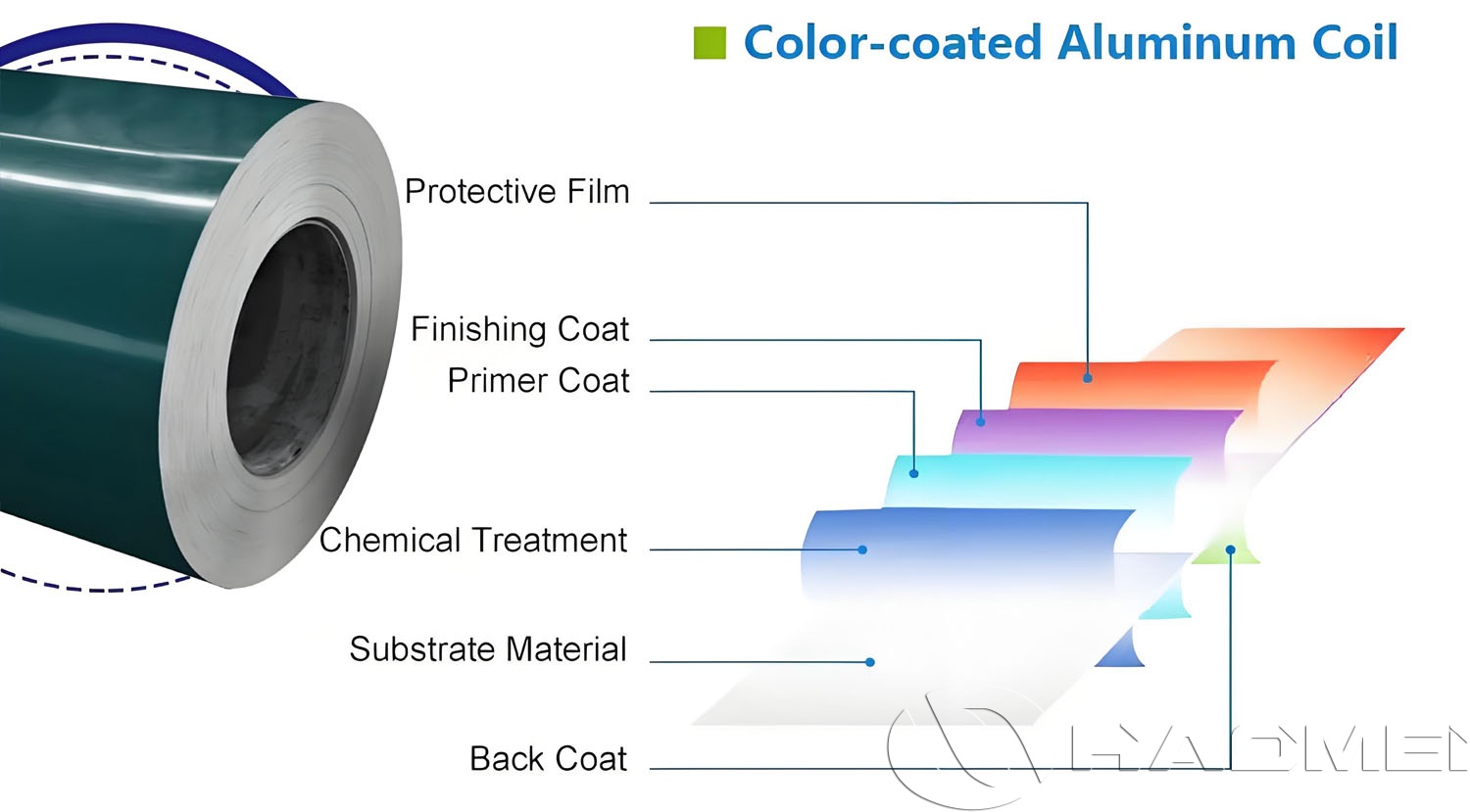
The corrosion resistance of prepainted aluminum coil is not determined by the alloy alone. A complete coil coating system usually includes chemical pretreatment, primer, topcoat, and when needed, a protective back coat. The pretreatment layer improves adhesion and enhances resistance against underfilm corrosion. The primer strengthens intercoat bonding and adds barrier protection. The topcoat provides weather resistance, color stability, gloss retention, and chemical resistance.
For anti-corrosion applications, coating system selection is critical:
PE coating: suitable for interior decoration and moderate outdoor conditions, with good flexibility and broad color availability. Related product category: PE Coated Aluminum Coil.
PVDF coating: preferred for demanding exterior environments due to stronger UV resistance, color retention, chalk resistance, and long-term weatherability. Related product category: PVDF Coated Aluminum Coil.
In coastal, industrial, high-humidity, or high-UV areas, PVDF systems are generally the more stable choice for preserving appearance and extending service life.
Core Specifications of Anti-Corrosion 3003 Color Coated Aluminum Coil
| Item | Typical Range / Option |
|---|---|
| Product name | 3003 color coated aluminum coil |
| Alloy | 3003 |
| Temper | H14, H16, H18, H24, O |
| Thickness | 0.20 mm - 2.00 mm |
| Width | 30 mm - 1600 mm |
| Coating type | PE, PVDF |
| Top coating thickness | PE: 14-25 μm, PVDF: 25-35 μm |
| Back coating thickness | 5-10 μm or customized |
| Color | RAL colors, customized solid colors, metallic colors |
| Surface finish | Glossy, matte, embossed, smooth |
| Coil ID | 405 mm, 505 mm, customized |
| Main applications | Roofing, facade panels, ceilings, gutters, wall cladding, insulation jacketing |
| MOQ | 1-3 tons |
Application scenarios of anti-corrosion 3003 coated coil
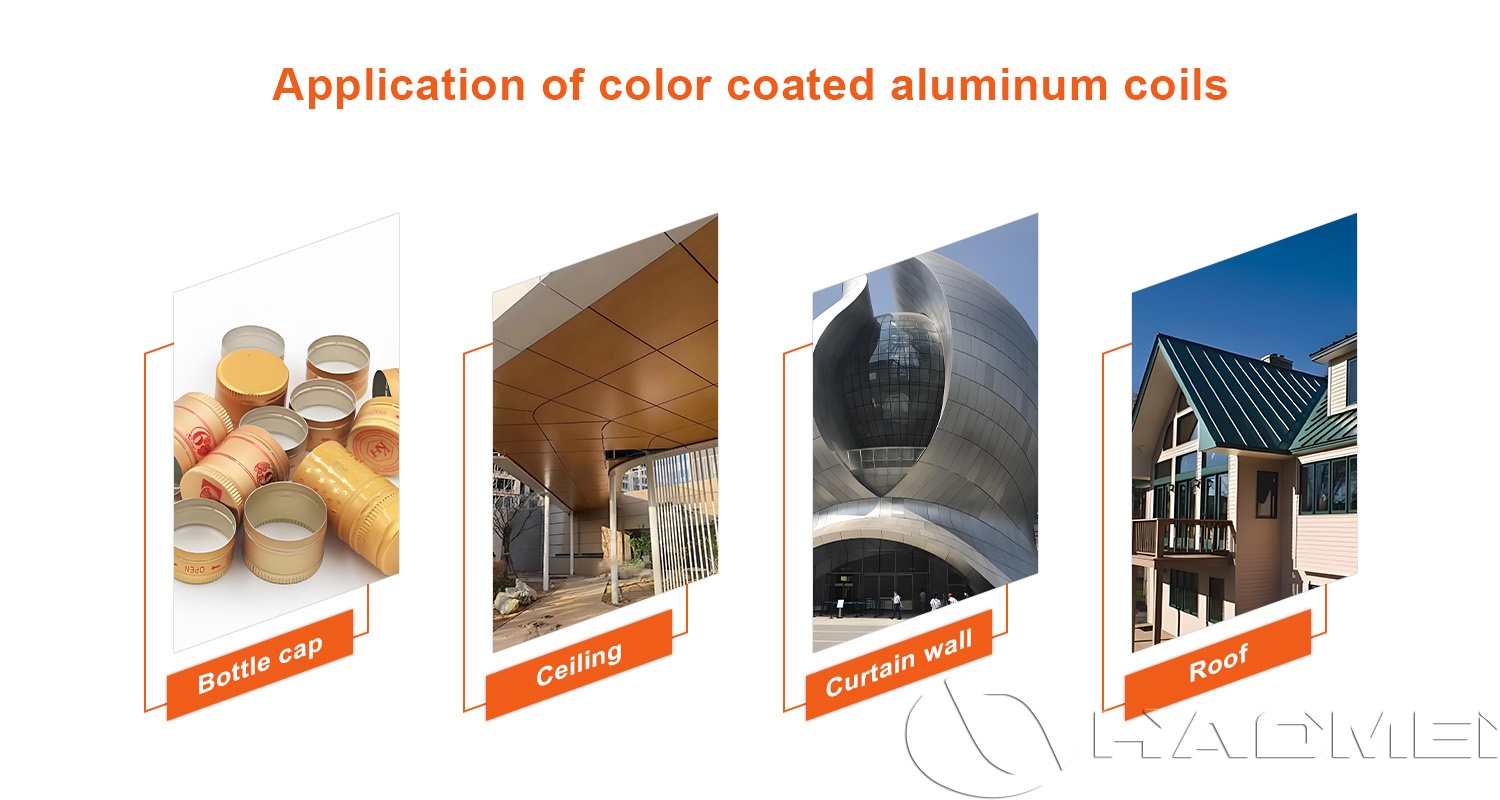
In practical fabrication, 3003 coated coil is suitable for continuous processing such as slitting, cut-to-length, roll forming, pressing, and folding. This makes it useful across a broad range of architectural and industrial applications.
Typical applications include:
Roof panels and roof edge systems
Curtain wall backing panels and facade decoration
Suspended ceilings and interior decorative panels
Downpipes, gutters, and drainage accessories
Thermal insulation outer jacketing
Equipment housings and light industrial covers
Roller shutter and trim components
When used outdoors, the final service performance depends on the matching of alloy, temper, coating type, coating thickness, forming radius, and local environmental corrosivity.
Processing performance and fabrication considerations
One of the advantages of 3003 substrate is its good fabrication adaptability. In coil-coated form, it can be processed into flat sheets, corrugated panels, ribbed roofing sheets, cassettes, channels, and custom profiles.
Important technical considerations include:
Selecting the appropriate temper to balance hardness and bending performance
Controlling minimum bend radius to avoid paint cracking on sharp edges
Matching coating flexibility to the forming process
Ensuring clean cut edges and proper storage to reduce edge corrosion risk in aggressive environments
Choosing suitable film protection when appearance-critical surfaces are involved
For projects exposed to long-term sunlight, rainwater retention, industrial fallout, or marine atmosphere, the paint system usually has greater influence on appearance retention than color alone.
PE vs PVDF for anti-corrosion applications
Both PE and PVDF coatings can be applied to 3003 aluminum coil, but their performance focus differs.
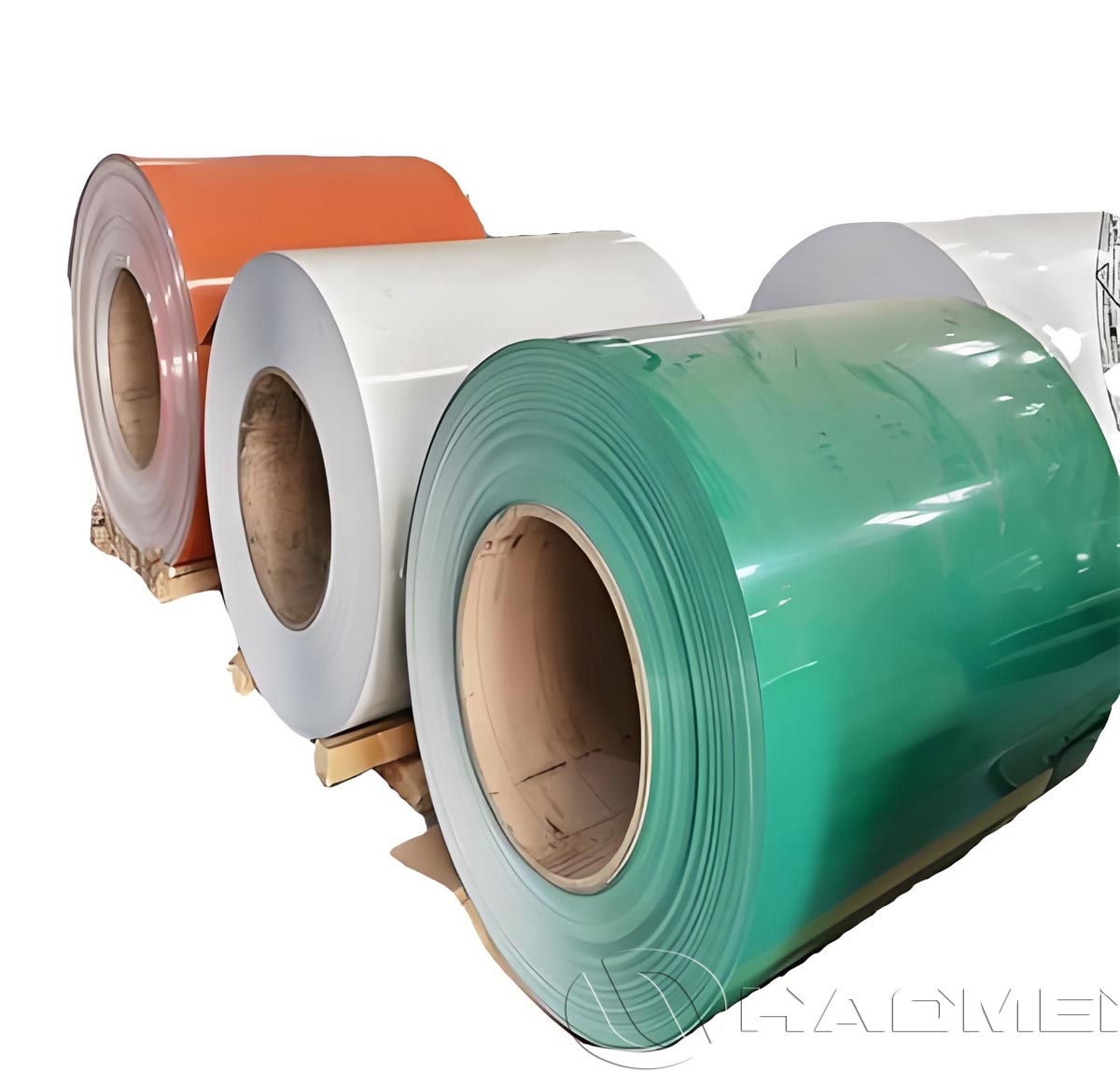
PE coated 3003 coil is commonly used where decorative appearance, processability, and cost efficiency are priorities. It performs well in many indoor and ordinary outdoor applications.
PVDF coated 3003 coil is generally used for exterior architectural projects that require stronger resistance to UV degradation, chalking, fading, and weather-driven corrosion. It is particularly suitable for curtain walls, roofing systems, and facade panels exposed to long service cycles.
Why 3003 is often preferred in building environments
Compared with pure aluminum color coated coil, 3003 offers a more robust mechanical base for fabrication and installation. Compared with higher-strength 5xxx alloys, it is often more economical and easier to process for general architectural sheet applications. This makes it a practical material for projects where anti-corrosion aluminum coil must also deliver stable coating adhesion, good appearance, and efficient forming.
From a materials engineering perspective, 3003 is not simply a decorative substrate. It is a functional alloy choice that supports long-term coating performance when the pretreatment, primer, topcoat, and fabrication conditions are properly controlled.
-
PVDF Coated Aluminum Coil For Wall Panels
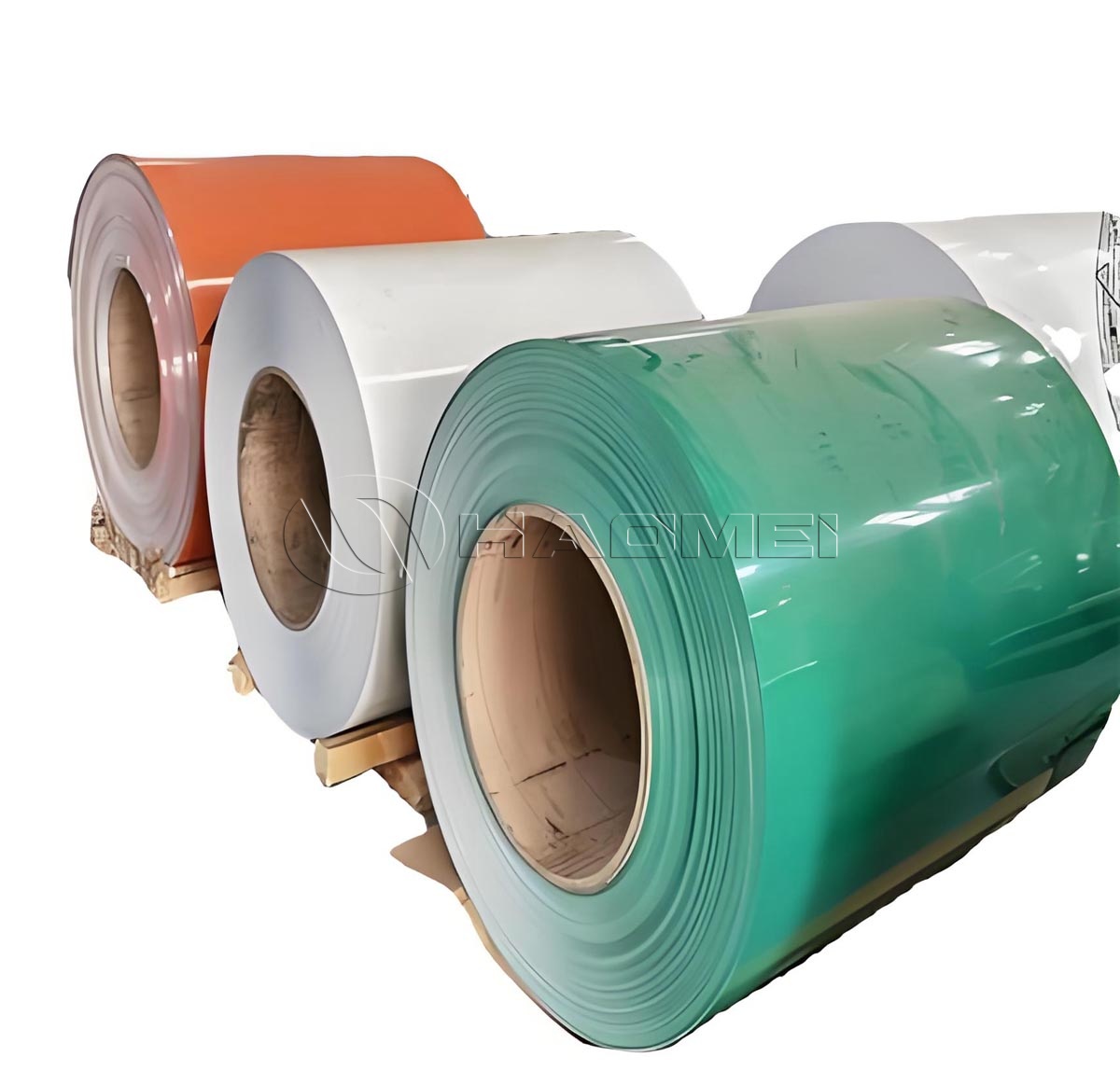
PVDF coated aluminum coil for wall panels provides durable fluoropolymer protection, color stability, and formability for exterior façades.
2026-07-30
-
3003 Prepainted Aluminum Coil Vs 5052
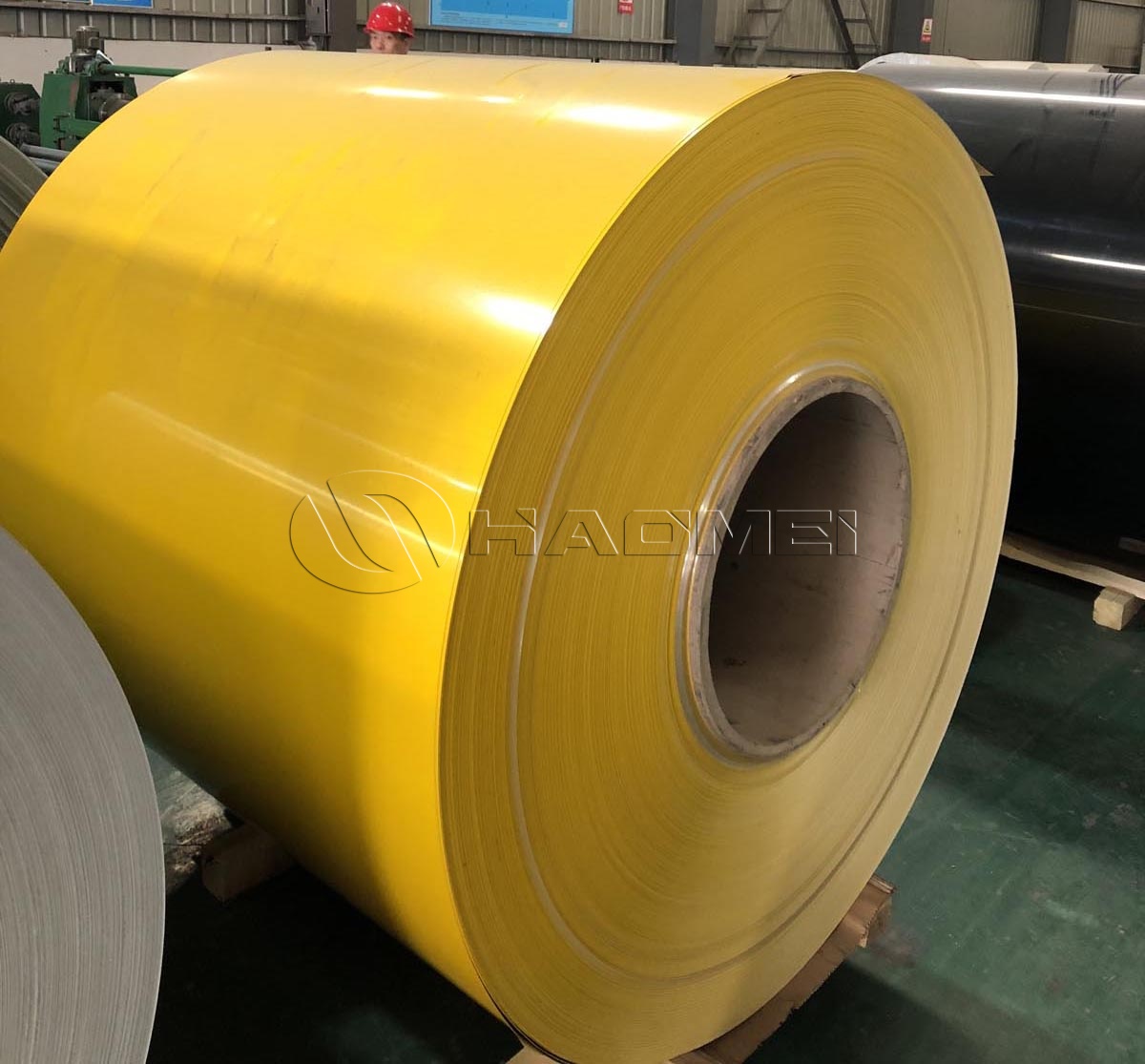
Compare 3003 prepainted aluminum coil vs 5052 in strength, formability, corrosion resistance, coating systems, and common uses.
2026-04-10
-
PE Coated Aluminum Coil for Cold Storage Panels
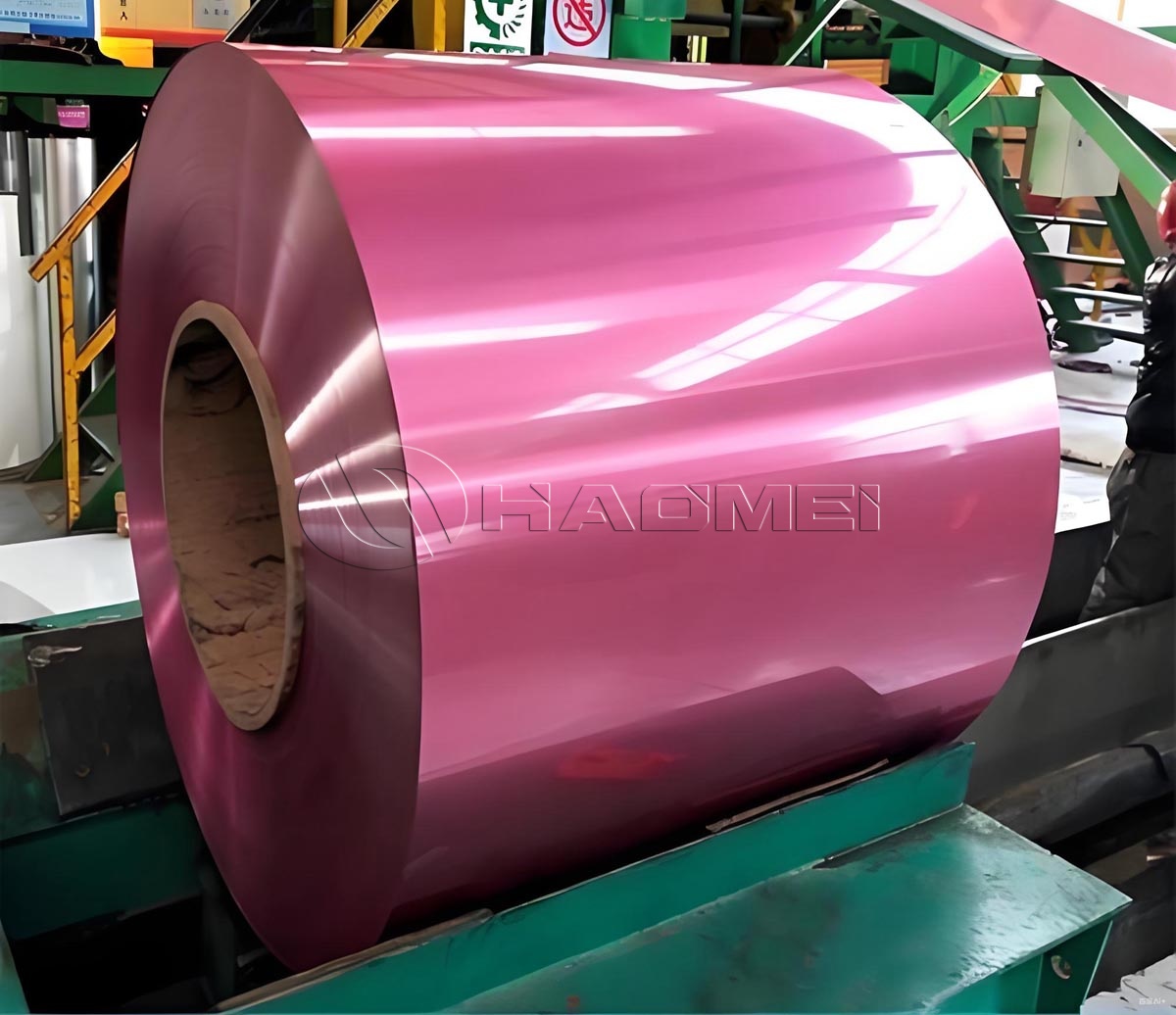
PE coated aluminum coil for cold storage panels combines a smooth, hygienic finish, corrosion resistance, formability, and stable panel-facing performance.
2026-09-08
Contact Directly
-

ADD: No.14 Waihuan Road, CBD, Zhengzhou, China
-

WhatsApp: +86-18703635966
-

E-MAIL: sales@alummc.com