

News
 By Hermione
Custom Wood Grain Patterns for Aluminum Coils
Custom wood grain patterns for aluminum coils are positioned as a premium decorative solution for projects that want the warmth of timber without the maintenance and variability of natural wood. They are widely used in architectural façade cladding, soffits, ceilings, roller shutter doors, composite panels, and furniture or shopfitting components where consistent appearance, weatherability, and efficient fabrication are required.
Why aluminum coil is a strong base for wood-grain finishes
A wood-grain appearance is only as stable as the substrate beneath it. Aluminum coil provides a low-density, corrosion-resistant base that forms cleanly into common profiles (cassette panels, slats, trims, baffles) while keeping installation loads low. In practice, alloy selection is aligned with forming severity and end-use environment:
1xxx series (e.g., 1060/1100): excellent formability and surface uniformity for interior ceilings, trims, and decorative sheet where deep drawing or tight bends are needed.
3xxx series (e.g., 3003/3105): balanced strength and formability for general architectural panels and roll-formed profiles.
5xxx series (e.g., 5005/5052): higher strength and improved corrosion performance for demanding exterior environments, coastal exposure, or heavier-duty shutters.
Equally important is surface preparation: controlled degreasing, chemical conversion, and primer selection determine adhesion and long-term resistance to filiform corrosion, especially on cut edges and formed areas.
Coating system design: building the "wood" on an engineered stack
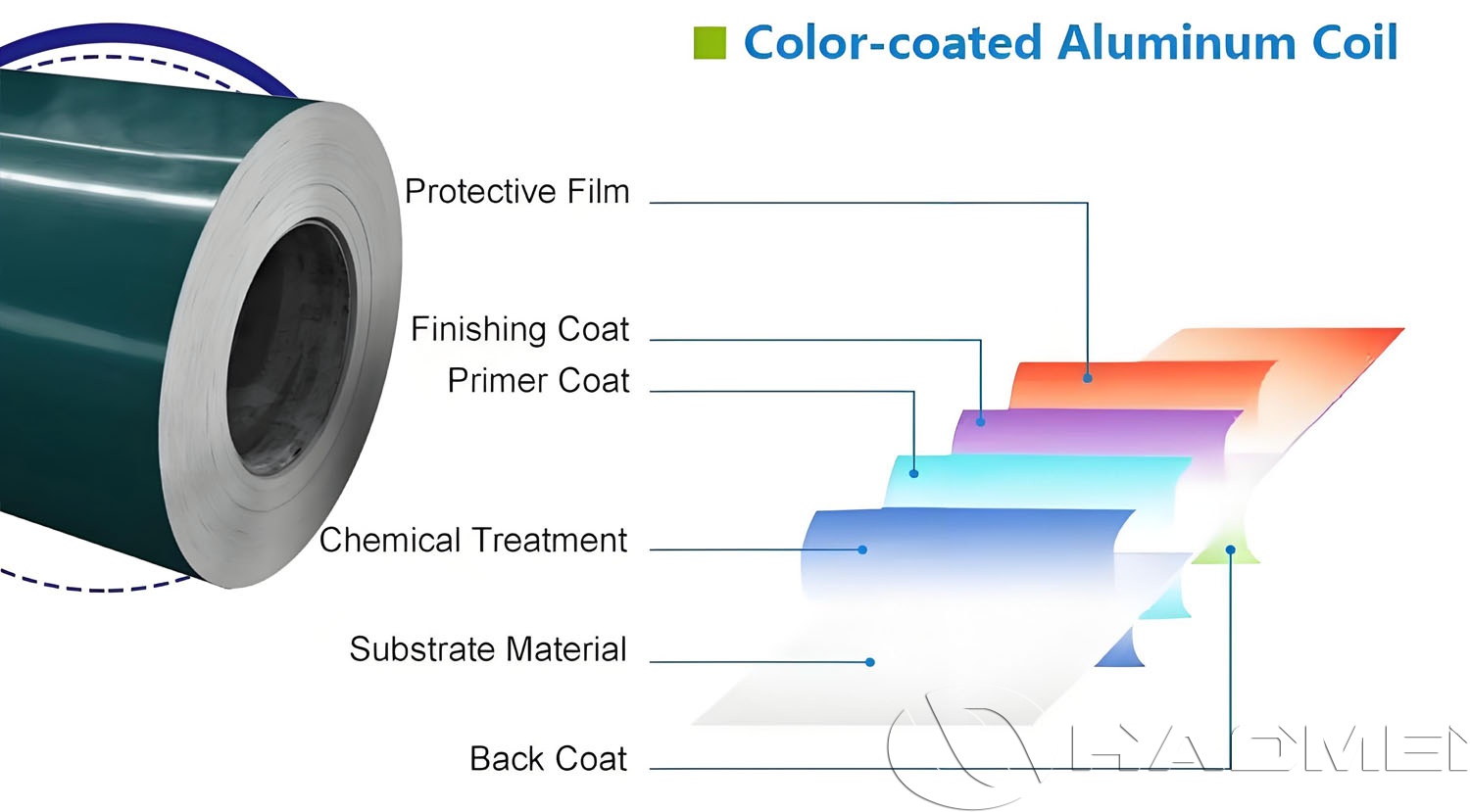
A high-quality prepainted aluminum coil uses a layered coating structure to ensure both appearance and durability. Typical coil-coating stacks include a conversion layer, primer, basecoat, and a clear protective topcoat. The wood-grain effect is created on top of a uniform basecoat so that color shade and grain definition remain consistent across coil length.
Choosing PE vs PVDF for wood-grain durability
The coating resin system defines weathering resistance and stain/chemical tolerance:
PE coating systems are commonly specified for interior and semi-exterior applications where good appearance, flexibility, and cost efficiency are needed. They are also preferred when tight roll-forming requires extra coating ductility.
PVDF coating systems (fluoropolymer) are used when long-term exterior color stability, chalk resistance, and UV durability are critical. For façades, soffits, and sun-exposed shutter slats, PVDF clear topcoats help preserve the wood-grain contrast and reduce gloss change over time.
In wood-grain designs, the clear coat is not merely cosmetic. It acts as the main barrier against UV, moisture, and abrasion, and it influences the final gloss (matte, satin, or low-gloss "oiled wood" looks).
Manufacturing process: how custom wood grain patterns are controlled at scale
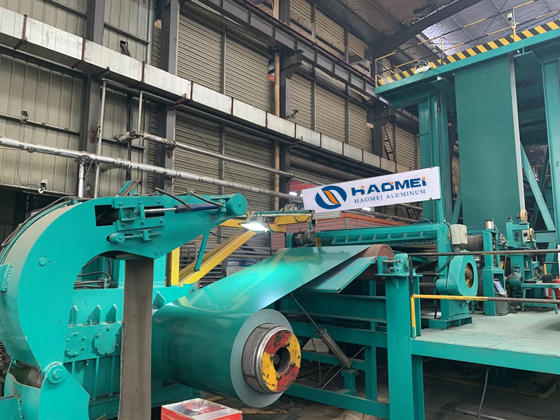
Custom patterns require repeatability across thousands of meters of coil. In coil coating, process stability is achieved through consistent line speed, oven temperature profiling (PMT control), coating viscosity management, and online inspection.
A typical engineered route for custom wood-grain aluminum coil includes:
Substrate and pretreatment control: coil crown/flatness, surface cleanliness, conversion coating weight, and rinse quality are controlled to avoid adhesion loss and pattern distortion after forming.
Base color application: a uniform basecoat establishes the background tone (e.g., oak, walnut, teak). Color measurement (ΔE control) is performed coil-to-coil and within the same coil.
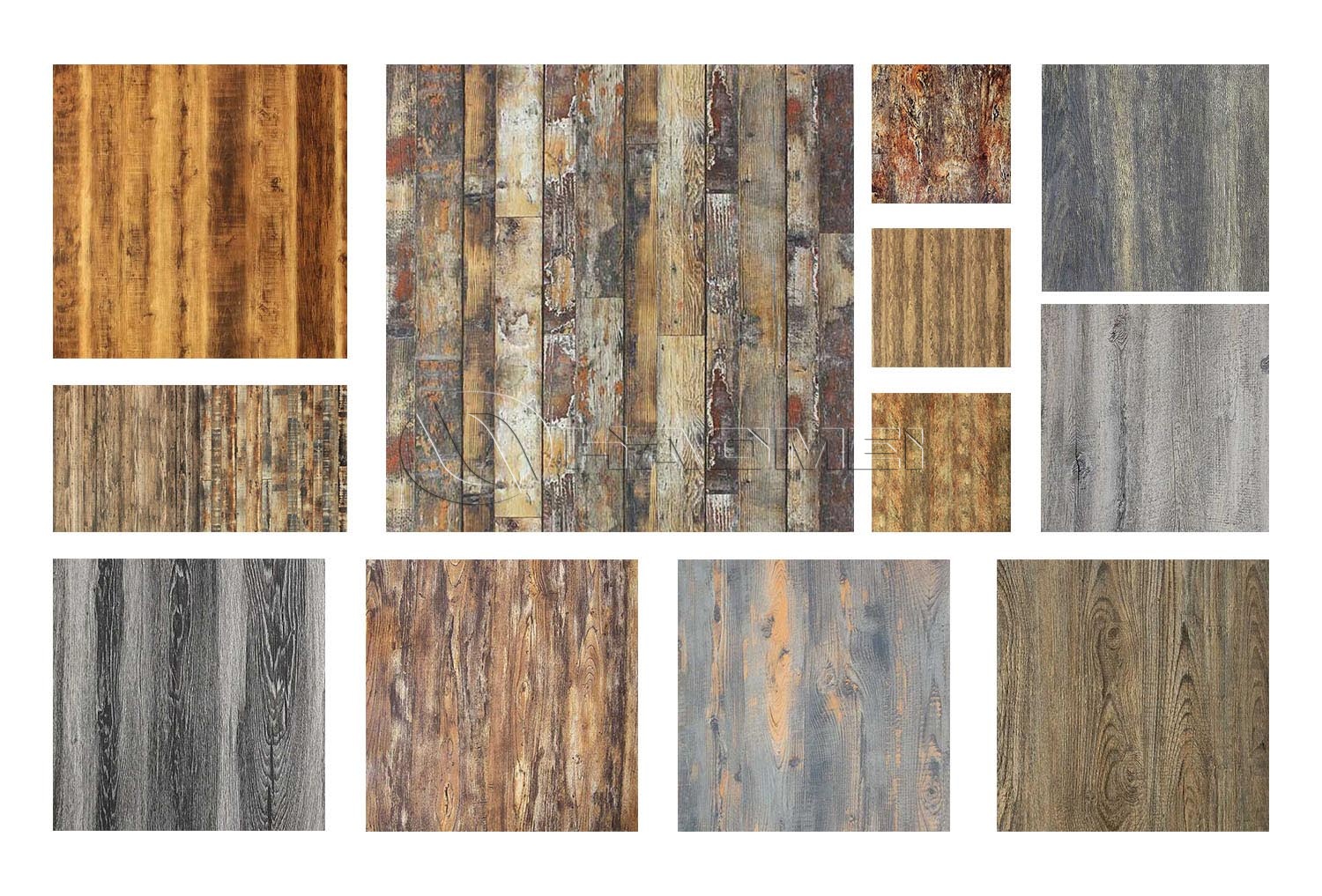
Wood-grain pattern creation: for high-resolution, repeatable patterns, sublimation transfer printing (thermal transfer) is commonly used. The printed film transfers the grain image to the coated surface under controlled temperature and pressure, enabling consistent grain direction and repeat length.
Clear topcoat protection: a transparent PE or PVDF clear coat is applied (or specified as part of the system) to lock in the pattern, tune gloss, and enhance stain resistance.
Curing and performance verification: curing is validated using solvent rubs/MEK resistance and hardness tests, while flexibility (T-bend), impact resistance, and adhesion are checked to ensure the wood-grain layer remains intact after roll forming.
Key quality checkpoints for custom patterns include pattern repeat alignment, grain "flow" direction marking, gloss tolerance, and batch-to-batch color consistency under multiple illuminants (D65/TL84) to reduce metamerism in architectural façades.
Core specifications (typical range)
| Specification Item | Typical Options / Range |
|---|---|
| Substrate alloy | 1060/1100, 3003/3105, 5005/5052 |
| Temper | O, H14, H24 (as required by forming) |
| Thickness | 0.20 to 1.50 mm (common: 0.30 to 1.00 mm) |
| Width | 20 to 1600 mm (subject to line capability) |
| Coating system | PE, HDPE, PVDF (as specified) |
| Coating structure | Primer + basecoat + wood-grain transfer + clear topcoat (typical) |
| Coating thickness (dry film) | Top side: ~18 to 35 μm (system dependent); Back side: ~5 to 12 μm |
| Gloss | Matte to satin (typical 10 to 40 GU @60°) |
| Pattern options | Oak, walnut, teak, cedar; custom artwork with defined repeat length |
| Protective film | Optional peelable film for fabrication and transport |
| MOQ | 1-3 tons |
Practical applications: where wood-grain coils deliver measurable advantages
Because the pattern is engineered and repeatable, wood-grain color coate aluminum coils reduce the visual variability often seen with veneer or printed boards, while providing better dimensional stability outdoors.
Architectural cladding and soffit systems
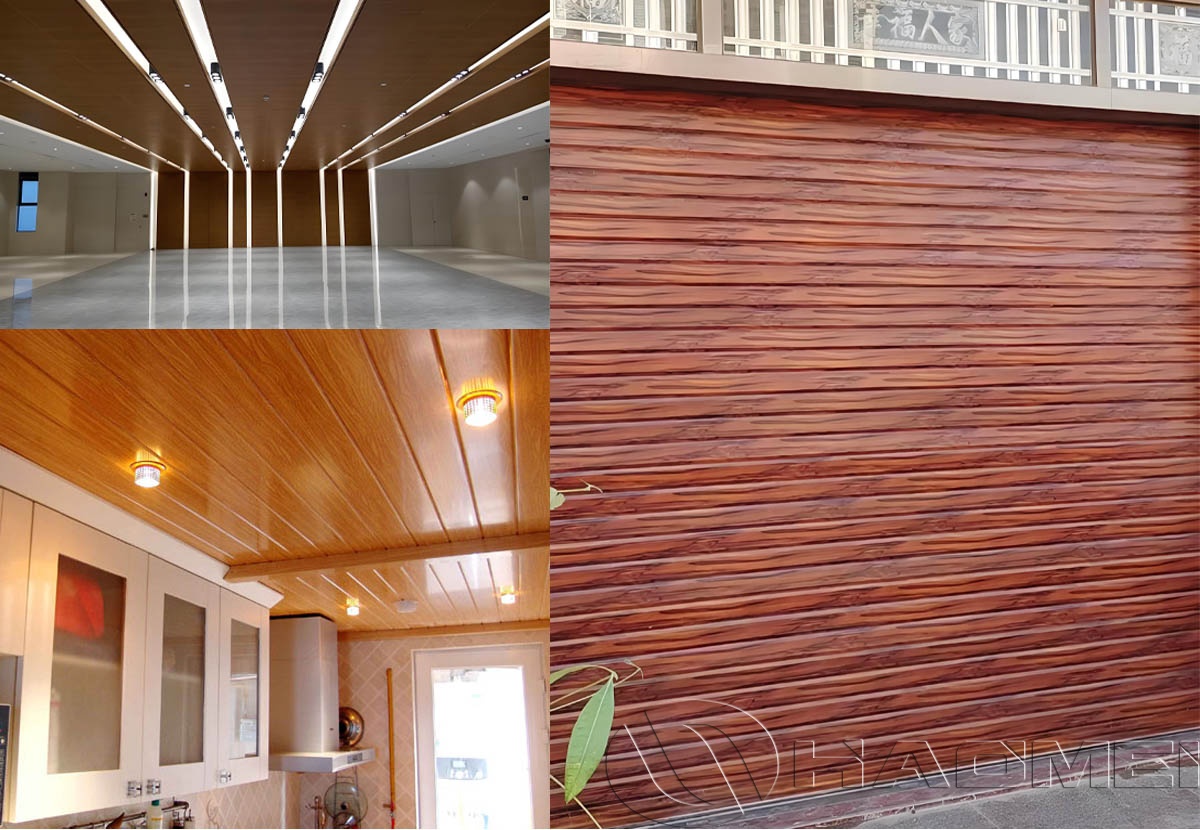
For exterior cladding, wood-grain coils are slit and fabricated into cassette panels, trims, and soffit liners. PVDF-based systems are typically selected for projects with strong sun exposure or long service-life requirements, while thicker substrates and stronger alloys help control oil-canning and improve panel stiffness.
Ceilings, baffles, and interior wall features
For ceiling panels and interior feature walls, PE-based systems often provide the best balance of flexibility and appearance. Coil-coated wood grain supports clean bends and punched patterns without edge cracking when the coating system is tuned for T-bend performance.
Roller shutter doors and slats
In roller shutter applications, the coating must tolerate repeated forming and cyclic contact. Ductile primers and clear coats reduce micro-cracking at tight radii, while abrasion-resistant clear coats help maintain the grain definition on high-touch surfaces.
Furniture and retail fixtures
Wood-grain aluminum brings a durable "timber" aesthetic to modular furniture parts, display frames, and shopfitting trims where cleaning agents, fingerprints, and frequent handling are expected. Consistent color lots also simplify multi-site rollout for branded retail environments.
Across these applications, the value of custom wood-grain aluminum coil is the combination of controlled pattern fidelity, scalable coil processing, and coating systems engineered for the real forming and exposure conditions of the final component.
-
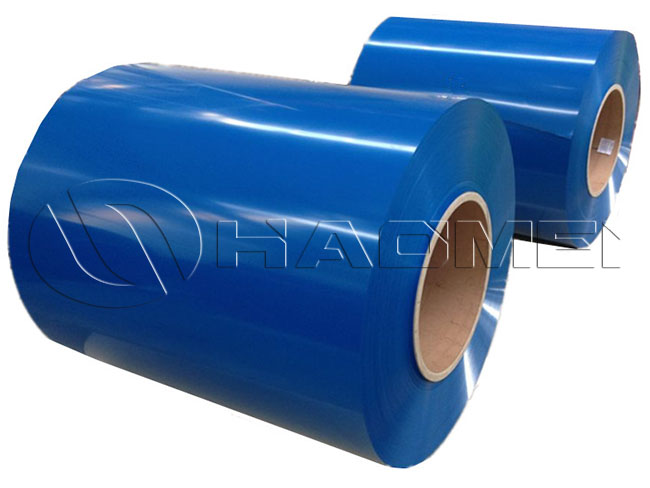
1100 / 3003 Color Coated Aluminum Coil for Signboards and Advertising Boards
1100 / 3003 color-coated aluminum coils are lightweight, weather-resistant, and have good processability, making them suitable for billboards and traffic signs.
2025-12-23
-
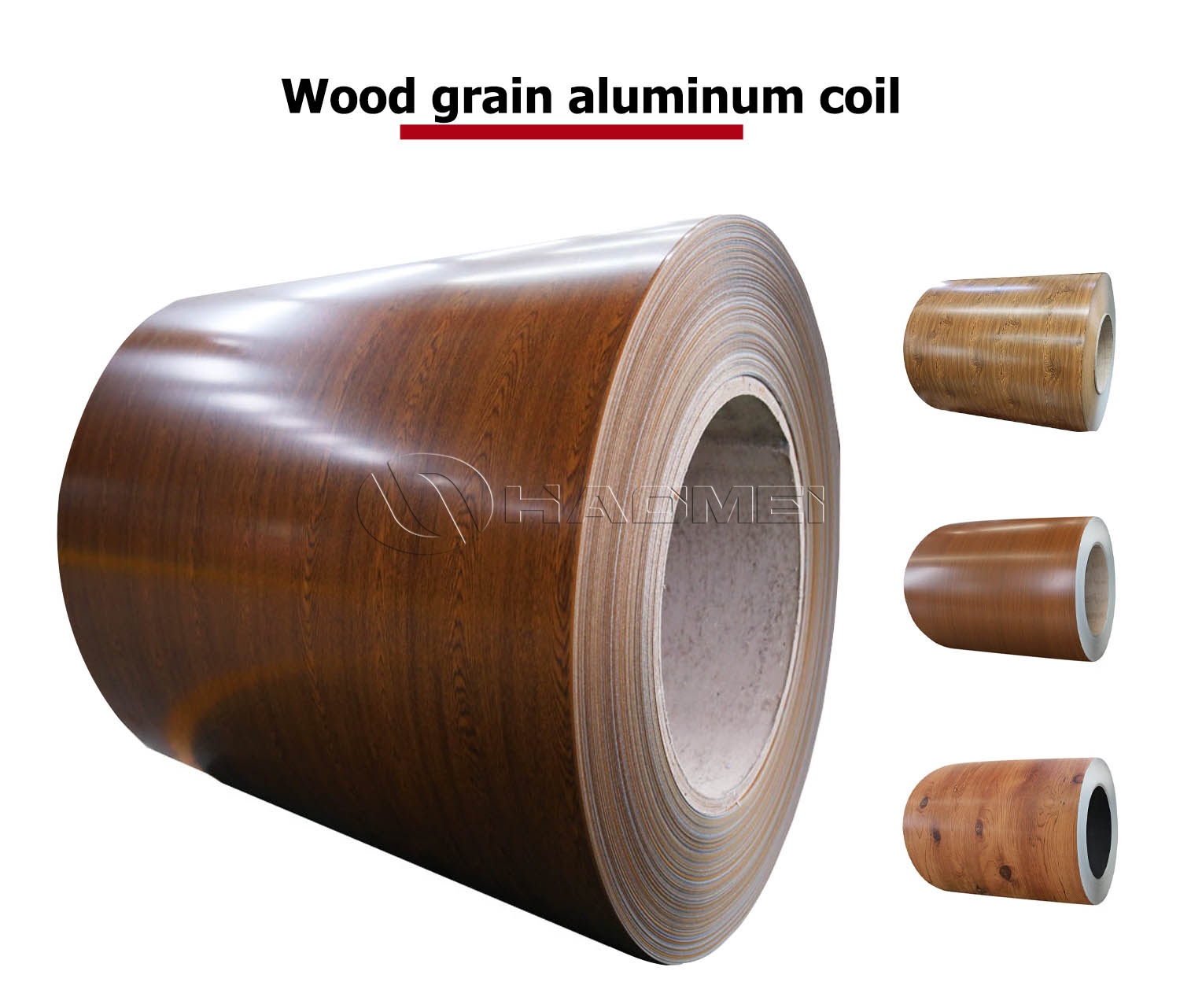
Wood Pattern Pvdf Coated Aluminum Coil
Explore wood pattern PVDF coated aluminum coil: wood grain aluminum coil aesthetics with a PVDF coating system for durable, weatherable pre-painted aluminum coil cladding.
2026-02-25
-
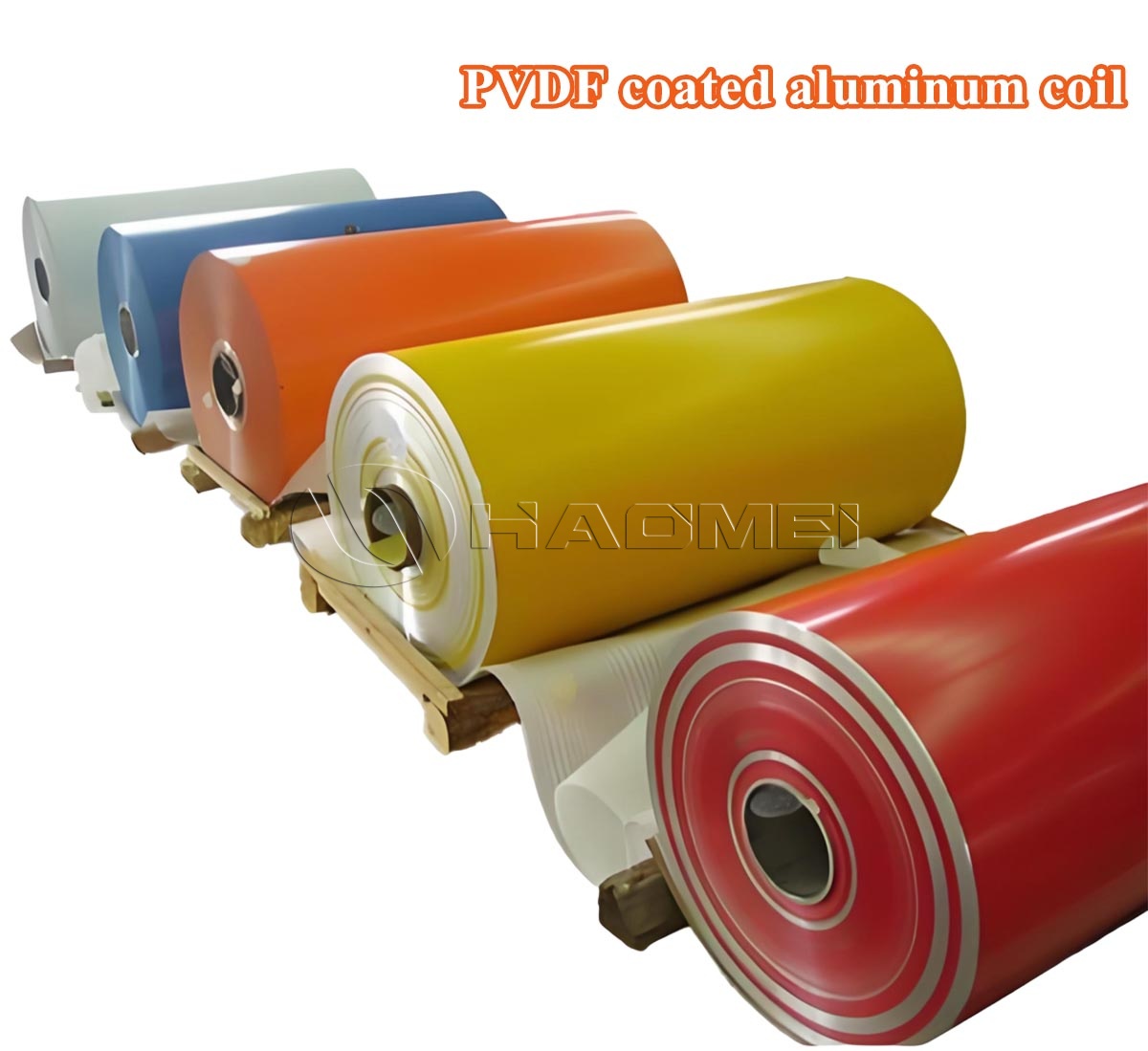
Pvdf Aluminum Coil For Curtain Wall Systems
PVDF aluminum coil for curtain wall systems, covering coating structure, alloys, specifications, durability, and facade performance for architectural cladding.
2026-05-29
Contact Directly
-

ADD: No.14 Waihuan Road, CBD, Zhengzhou, China
-

WhatsApp: +86-18703635966
-

E-MAIL: sales@alummc.com