


News
 By Hermione
3105 Matte Color-Coated Aluminum Coil for Modern Interior Decoration
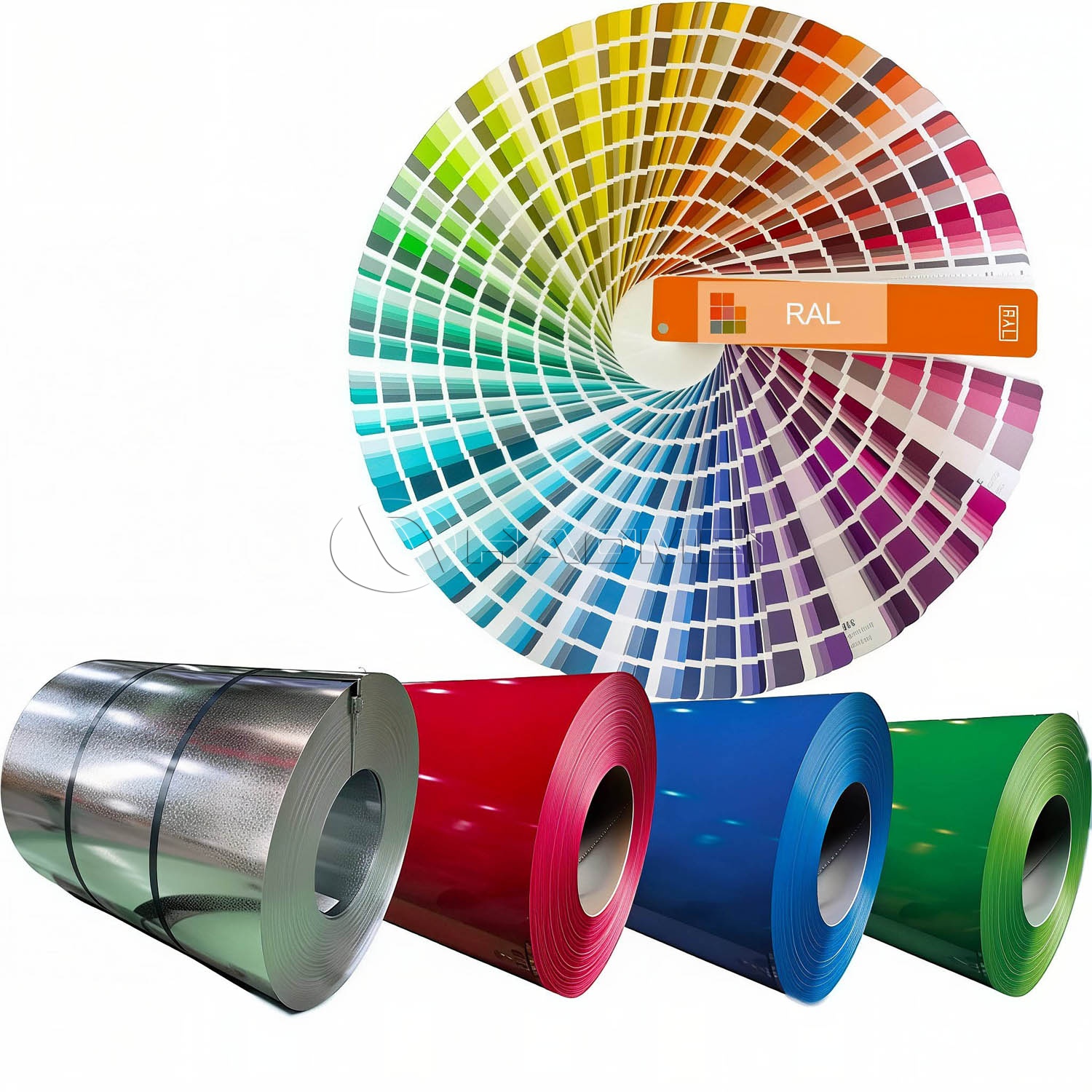
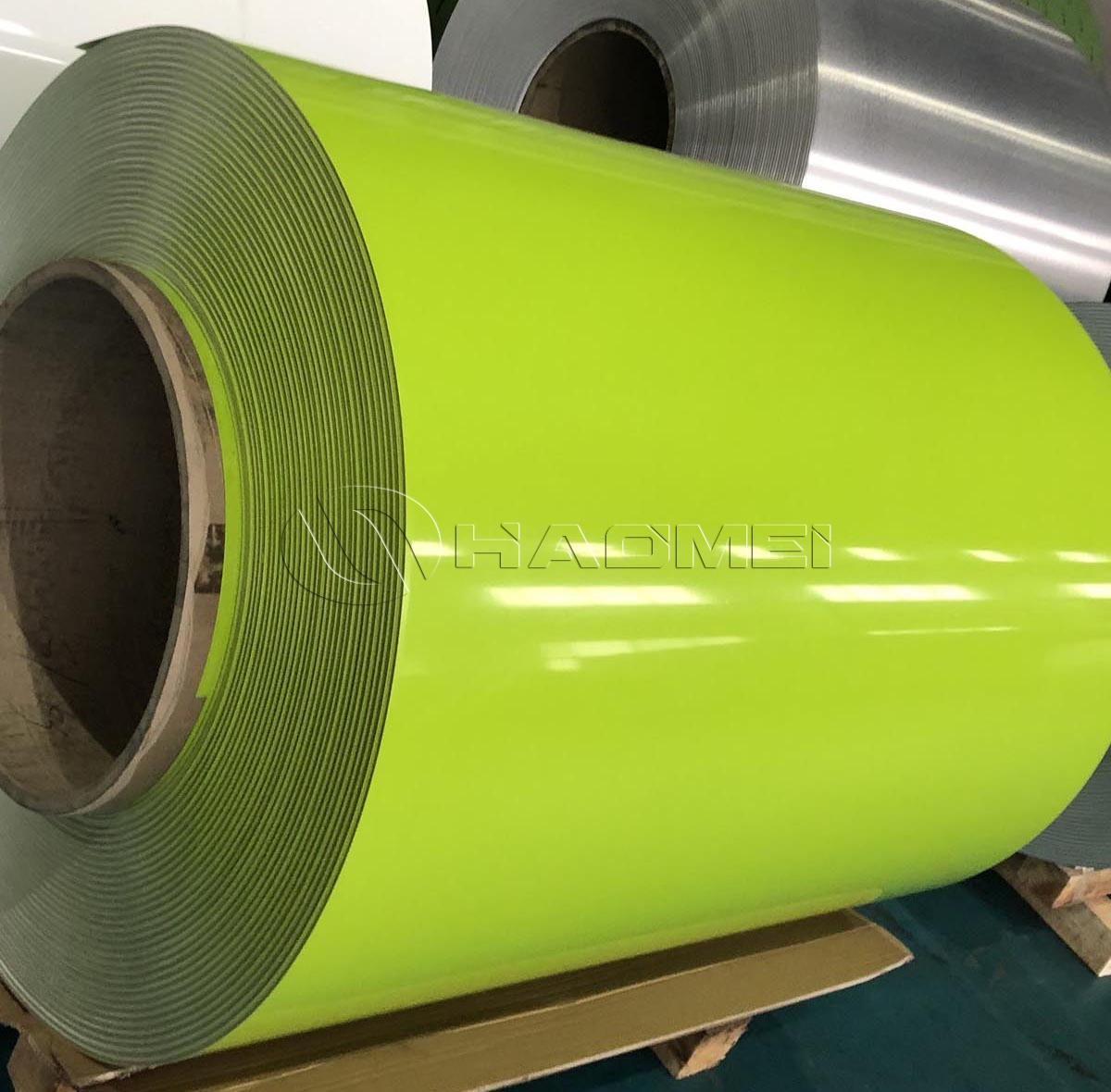
3105 matte color-coated aluminum coil is positioned as a pre-painted aluminum material for modern interior decoration requiring refined color, low reflectivity, stable forming performance, and durable surface protection. It is widely processed into suspended ceilings, metal wall panels, partitions, cabinet facings, elevator interior panels, decorative trims, and other architectural elements where a soft visual finish is preferred over a high-gloss metallic appearance.
A Matte Surface Designed for Contemporary Spaces
Matte finishes reduce glare from direct lighting and help create a calm, uniform appearance across broad decorative surfaces. Compared with conventional glossy coatings, a matte coating diffuses reflected light, making it suitable for commercial interiors, hospitality spaces, retail environments, offices, public facilities, and residential decorative systems.
The finish is produced through controlled coil-coating processes that combine surface pretreatment, primer application, a pigmented topcoat, and curing. Matte appearance is determined not only by color but also by coating formulation, pigment dispersion, resin selection, and curing consistency. Typical matte gloss levels are commonly controlled within approximately 5-15 gloss units at 60 degrees, depending on the specified color and coating system.
Why 3105 Aluminum Alloy Is Used
3105 is an aluminum-manganese alloy with small additions of magnesium. Its composition provides a practical balance of strength, formability, corrosion resistance, and coil-processing stability. In interior decorative fabrication, the alloy can be roll formed, bent, stamped, leveled, and laminated into a range of panel profiles without the weight associated with steel substrates.
Compared with pure aluminum grades, 3105 offers improved mechanical strength for formed ceiling panels, wall cladding profiles, and decorative sheets. It also maintains good surface quality after coating, which is important for matte colors because low-gloss surfaces can reveal scratches, dents, and coating irregularities more easily than textured or high-gloss finishes.
The material is commonly supplied in O, H14, H16, H18, H24, or H26 tempers, depending on thickness, profile complexity, and required panel rigidity. Lower-strength tempers support deeper forming, while harder tempers provide greater stiffness for flat or lightly profiled decorative components.
Core Specifications of 3105 Matte Color-Coated Aluminum Coil
| Specification Item | Typical Range or Option |
|---|---|
| Base alloy | AA 3105 aluminum alloy |
| Temper | O, H14, H16, H18, H24, H26 |
| Coil thickness | 0.20-1.20 mm |
| Coil width | 500-1,600 mm |
| Inner diameter | 405 mm or 505 mm |
| Surface finish | Matte, low-gloss, textured matte, fine sand matte |
| Topcoat system | PE polyester, SMP polyester, PVDF, or modified coating systems |
| Topcoat thickness | Typically 15-30 μm, subject to coating type and application |
| Back coating | Typically 5-10 μm or specified service coating |
| Gloss level | Commonly 5-15 GU at 60 degrees |
| Color options | Solid colors, metallic matte colors, custom color matching |
| Typical applications | Ceilings, wall panels, partitions, trims, furniture panels, interior cladding |
Coating Structure and Surface Protection
A typical matte color-coated aluminum coil consists of several functional layers. The aluminum substrate is cleaned and chemically pretreated to improve adhesion and corrosion resistance. A primer is then applied to support bonding between the substrate and finish coat. The matte topcoat provides color, low-gloss appearance, stain resistance, and protection against normal interior wear.
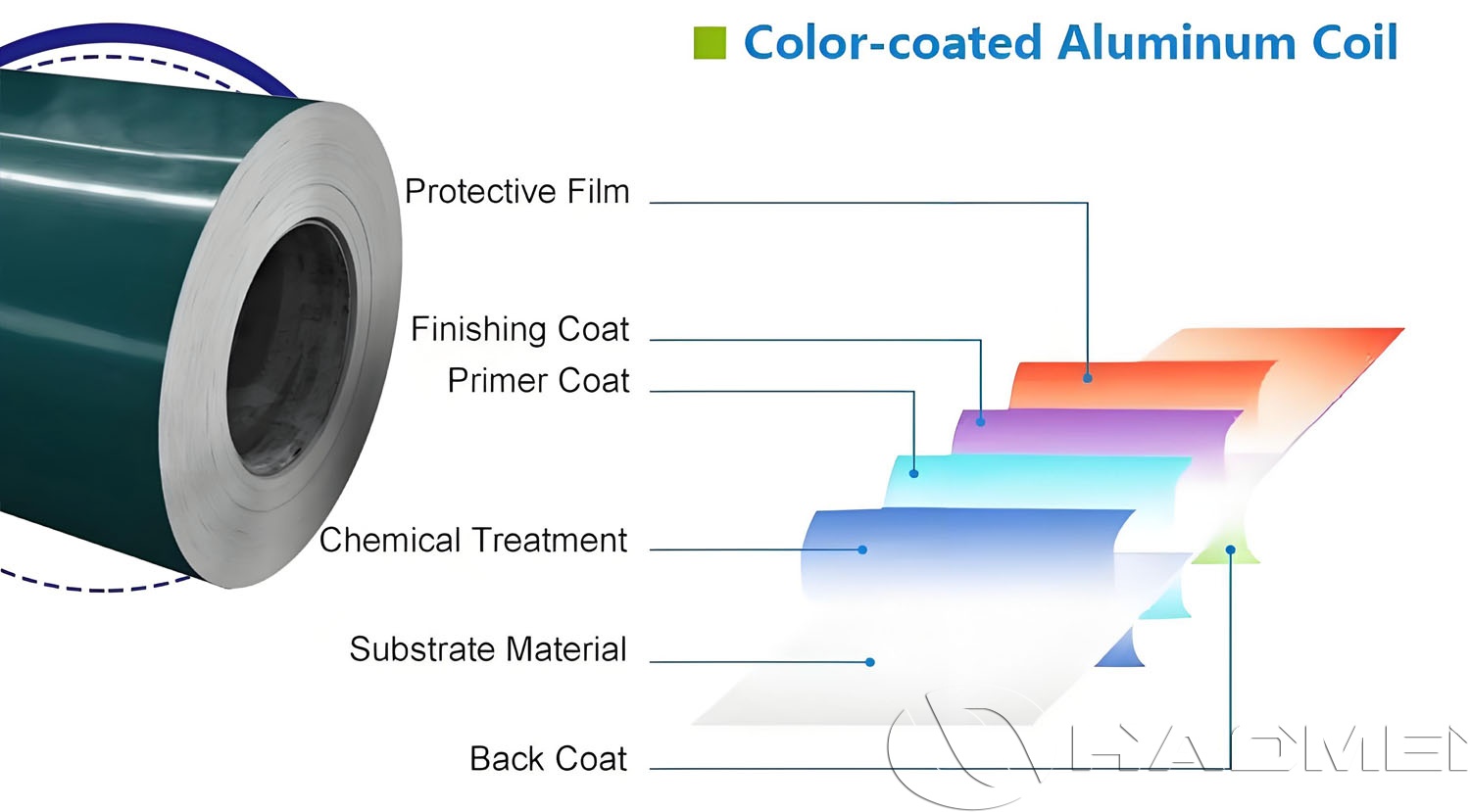
For most interior decoration projects, polyester coatings provide an effective combination of color retention, workability, and economical surface protection. PE Coated Aluminum Coil is widely used for ceiling systems, interior wall panels, and decorative profiles exposed to controlled indoor environments.
PVDF coatings are generally associated with higher weathering resistance and are used where decorative elements may experience stronger ultraviolet exposure, elevated humidity, or semi-exterior conditions. The coating system is matched to the exposure environment, cleaning frequency, forming method, and required visual durability.
Common Aluminum Alloys for Color-Coated Interior Materials
While 3105 is a widely used alloy for coated decorative coil, other aluminum grades serve different processing and performance requirements.
1050 and 1060: These commercially pure aluminum alloys have excellent ductility and corrosion resistance. They are often used for lightweight, simple-profile ceiling products, trims, and components requiring easy bending. Their lower strength makes them less suitable for applications needing higher panel rigidity.
1100: This alloy provides good formability and a clean surface for coating. It is used in decorative sheets, light-duty panels, and interior finishing products. 1100 Color Coated Aluminum Coil is commonly selected for applications emphasizing workability.
3003: With manganese as the principal alloying element, 3003 provides higher strength than 1xxx series aluminum while retaining good formability. It is used in decorative panels, ceiling systems, and general architectural sheet applications.
3105: 3105 offers a balanced combination of strength, coating compatibility, and roll-forming performance. It is particularly suitable for color-coated coil converted into interior ceiling panels, wall cladding profiles, and formed decorative components.
5052: This magnesium-containing alloy has higher strength and stronger corrosion resistance. It is used for more demanding interior environments, including humid rooms, transportation interiors, and components subject to greater mechanical stress.
Forming Performance for Decorative Fabrication
Matte 3105 color-coated aluminum coil is processed into finished products through slitting, roll forming, press forming, bending, embossing, laminating, and panel assembly. Coating flexibility is important during these operations because excessive coating hardness can lead to cracking along bend lines, while insufficient hardness may reduce scratch resistance.
The balance between coating flexibility and hardness is controlled through resin chemistry, pigment volume concentration, curing conditions, and film thickness. For formed interior components, the coating system is evaluated for bend performance, adhesion, impact resistance, pencil hardness, and resistance to staining or household cleaning agents.
Careful handling during fabrication also preserves the matte effect. Surface contact with abrasive rollers, metal chips, or unprotected stacking materials can create visible marks, especially on dark matte colors such as black, charcoal gray, deep blue, and dark bronze.
Color and Design Options
Matte color-coated aluminum coil supports a broad palette for coordinated interior design. Common colors include white, warm gray, graphite, black, beige, champagne, bronze, coffee brown, and muted metallic shades. Low-gloss finishes are also compatible with subtle textures, brushed effects, sand-like surfaces, and printed decorative patterns.
Matte finishes can visually complement stone, wood, fabric, concrete, and glass materials without producing excessive reflection. In ceiling and wall systems, the uniform coil-coated surface helps maintain color consistency between panels produced from the same batch, provided that coating color, gloss level, and processing direction are controlled.
Quality Control Factors for Matte Coated Coil
Quality evaluation for 3105 matte color-coated aluminum coil includes both substrate and coating inspection. Aluminum thickness, width tolerance, flatness, edge condition, and coil shape influence downstream processing efficiency. Coating inspections focus on dry film thickness, color difference, gloss consistency, adhesion, flexibility, hardness, solvent resistance, and visual surface uniformity.
For matte products, gloss consistency is a critical control item. Variations in coating thickness, oven temperature, line speed, or pigment orientation can create visible shade or reflectivity differences between coils. Controlled coil-coating parameters and batch-to-batch inspection help maintain a consistent low-gloss appearance across ceiling panels, wall cladding sections, and decorative fabricated parts.
-
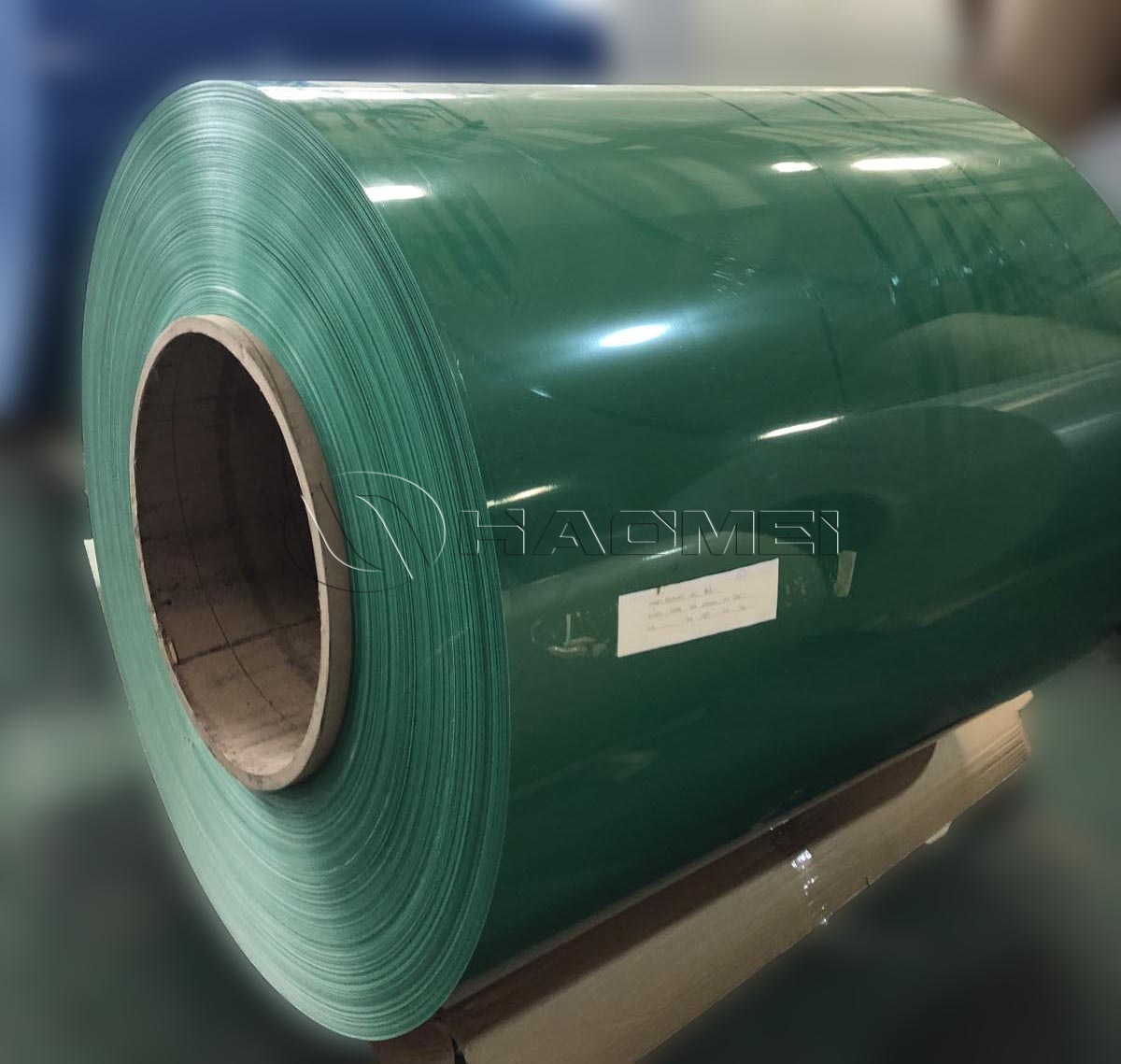
Wholesale Polyester Coated Aluminum Coil Price
Explore wholesale polyester coated aluminum coil price factors, PE coating systems, alloy options, specifications, processing, and building applications.
2026-09-04
-
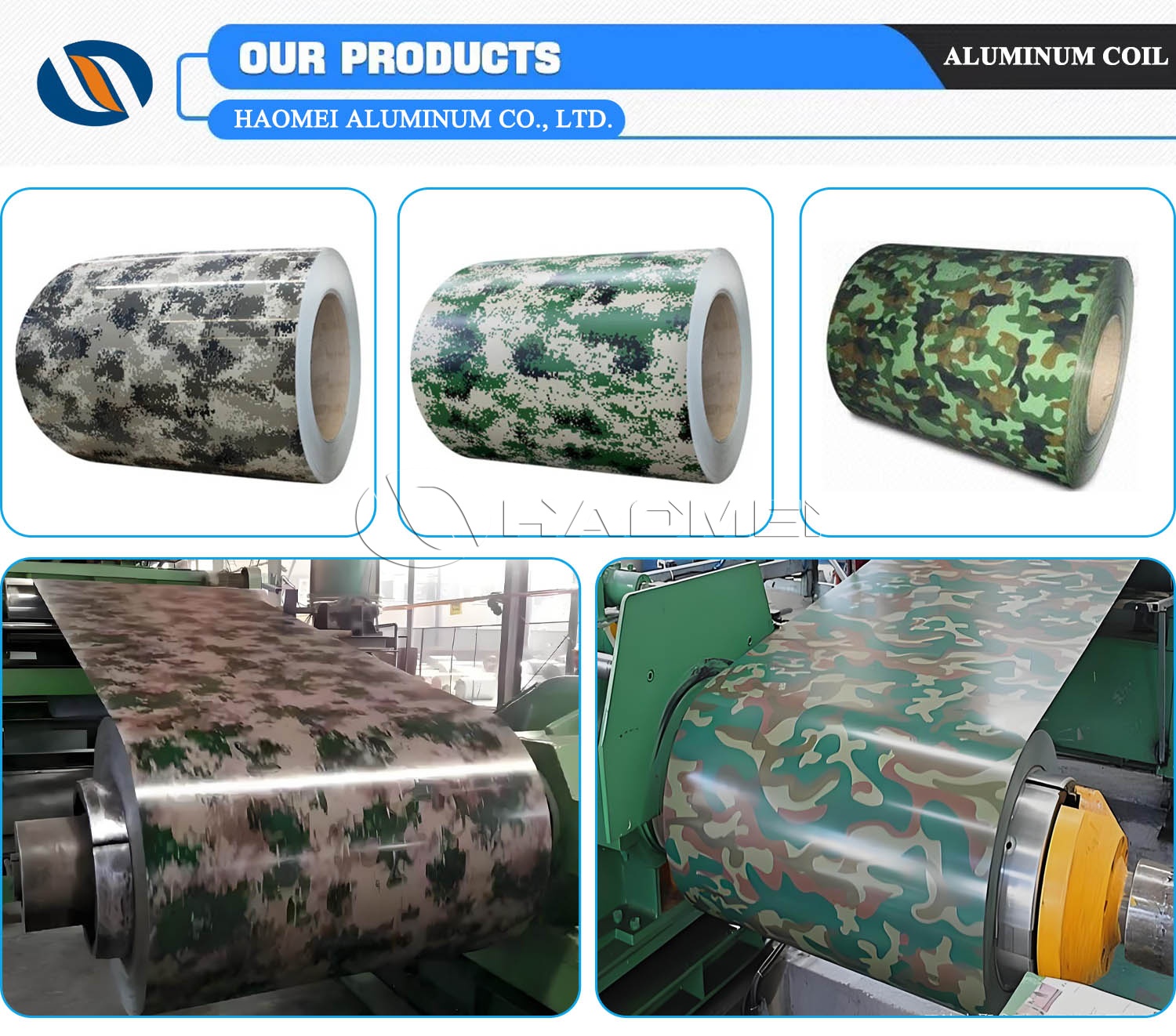
Camouflage-Patterned Aluminum Coils for Metal Roofing
Camouflage-patterned aluminum coils for metal roofing combine PVDF coatings, roofing alloys, and printed finishes for durable architectural roof systems.
2026-06-22
-
Heavy Duty PVDF Coated Aluminum Coil for Warehouses
Heavy-duty PVDF coated aluminum coil for warehouses combines alloy substrates, UV-stable finishes, and consistent forming performance for roofs and walls.
2026-07-16
Contact Directly
-

ADD: No.14 Waihuan Road, CBD, Zhengzhou, China
-

WhatsApp: +86-18703635966
-

E-MAIL: sales@alummc.com
