

News
 By Hermione
Wood Pattern Pvdf Coated Aluminum Coil
Wood pattern PVDF coated aluminum coil is positioned as a premium pre-painted aluminum coil solution that delivers the warmth of timber with the durability and consistency of metal. It is widely specified for architectural envelopes and decorative building components where long-term color stability, weather resistance, and repeatable pattern matching matter, including exterior facades, soffits, aluminum ceilings, column wraps, and shutter or roller door systems.
Why the substrate matters for wood-grain performance
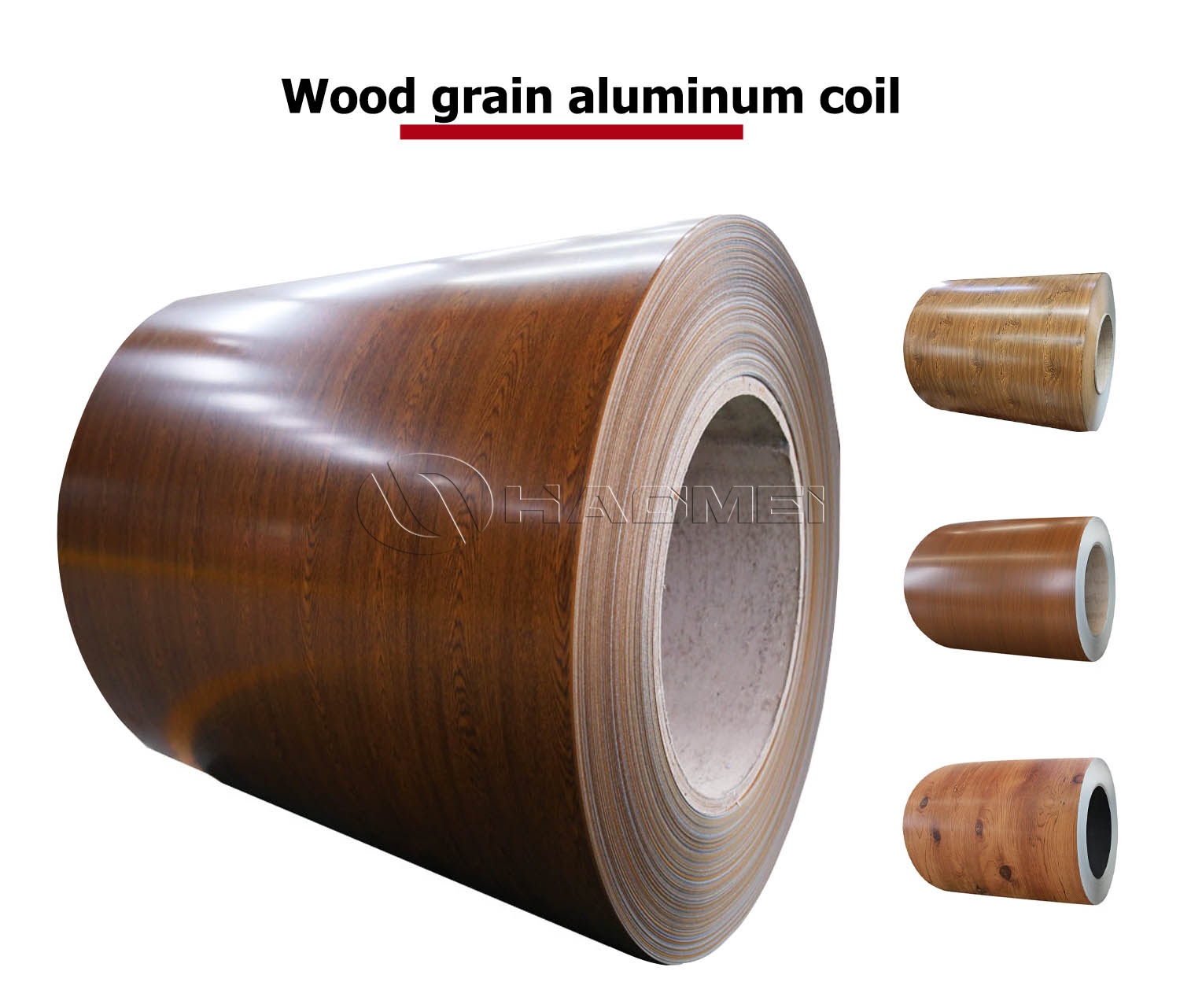
A convincing wood effect is not only about printing quality; it also depends on how the aluminum base behaves during forming, installation, and service. For wood grain aluminum coil, common alloy selections include:
1xxx series (e.g., 1050/1060/1100): high formability for trims, ceilings, and light-gauge profiles.
3xxx series (e.g., 3003/3105): balanced strength and formability for cladding panels and general roll forming.
5xxx series (e.g., 5005/5052): higher strength and improved corrosion resistance for more demanding exterior details.
Temper is chosen based on forming requirements (typically O/H24/H26 variants), while surface quality (cleanliness, roughness, and waviness control) is kept consistent to avoid pattern distortion and gloss variation after coating.
PVDF coating system: the core of exterior durability
For outdoor architectural use, the value of a PVDF coating system lies in its chemical backbone, which resists UV degradation and maintains color stability better than conventional polyester systems. In a wood pattern PVDF coil, the coating build is engineered so the printed pattern remains crisp and protected during service.
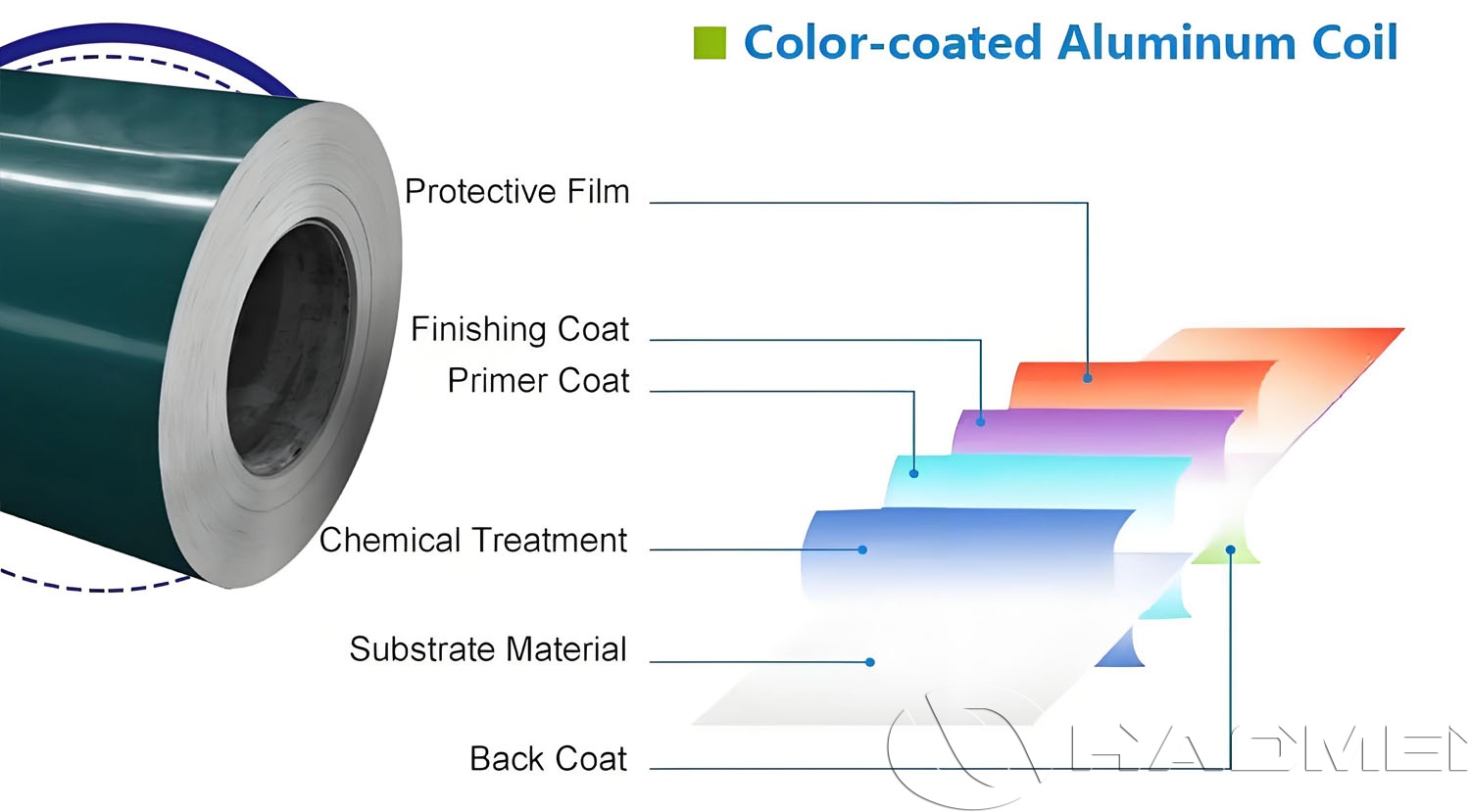
A typical construction integrates these functional layers:
Pretreatment conversion layer: improves adhesion and corrosion resistance.
Primer: provides barrier protection and supports ink anchoring.
Color/print layer: creates the wood grain pattern with controlled tone, contrast, and repeat length.
PVDF topcoat (clear or tinted): protects the pattern, manages gloss, and improves stain resistance.
This layered approach is why wood patterns can be used in exterior facade zones with sun exposure, rain run-off, and temperature cycling, while still maintaining a natural appearance.
For projects comparing coating options, wood grain PVDF products are closely related to general PVDF Coated Aluminum Coil specifications, with additional controls on pattern repeat, color tolerance, and topcoat transparency.
How wood pattern PVDF coils are manufactured (and controlled)
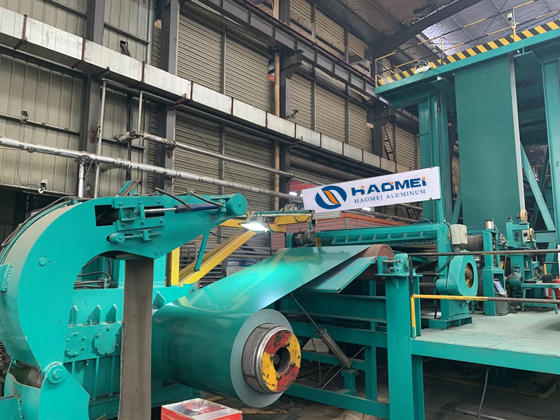
Wood pattern PVDF coated aluminum coil is produced on a continuous coil coating line to ensure uniform film build, stable curing, and consistent appearance coil-to-coil.
In practice, performance depends on disciplined process control across four linked stages:
Surface preparation: degreasing and chemical pretreatment are tuned to the alloy family and incoming surface condition to minimize adhesion loss and underfilm corrosion risk.
Coating application: primer and base layers are applied with controlled viscosity and roll-coater settings to maintain even thickness, especially important for large flat cladding panels where appearance is unforgiving.
Pattern creation: wood grain effects are typically achieved through offset/gravure-style printing or transfer techniques. Key controls include pattern repeat length, registration, and color standardization under defined lighting conditions.
Thermal curing: peak metal temperature and dwell time are set to fully cure the PVDF system without over-baking (which can shift gloss or tone). Consistent curing is essential for scratch resistance and chemical durability.
Because wood patterns are appearance-driven, quality evaluation commonly includes delta E color tolerance, gloss tolerance, pattern alignment, film thickness verification, cross-hatch adhesion, impact flexibility, and accelerated weathering correlation to outdoor performance.
Core specifications (typical range)
| Specification Item | Typical Options / Range |
|---|---|
| Product | Wood pattern PVDF coated aluminum coil (wood grain finish) |
| Alloy | 1050, 1060, 1100, 3003, 3105, 5005, 5052 (project-dependent) |
| Temper | O, H14, H24, H26 (depending on forming method) |
| Thickness | 0.20-1.50 mm (common architectural range; other gauges available) |
| Width | 600-1600 mm |
| Coating Type | PVDF topcoat over primer and printed wood pattern |
| Coating Thickness (Top) | ~25-35 μm typical for PVDF architectural systems |
| Coating Thickness (Back) | ~5-15 μm service coat (or as specified) |
| Gloss | Matte to mid-gloss (commonly 10-40 GU at 60°) |
| Pattern | Oak, walnut, teak and custom wood tones; controlled repeat length |
| Protection | PE protective film optional (forming/handling dependent) |
| Standards (reference) | ASTM/EN/JIS-based verification per project requirements |
Practical applications: where wood aesthetics meet aluminum performance
Wood pattern PVDF coated aluminum coil is often selected where designers want a timber-like visual while engineering teams need predictable performance and easier maintenance.
Common applications include:
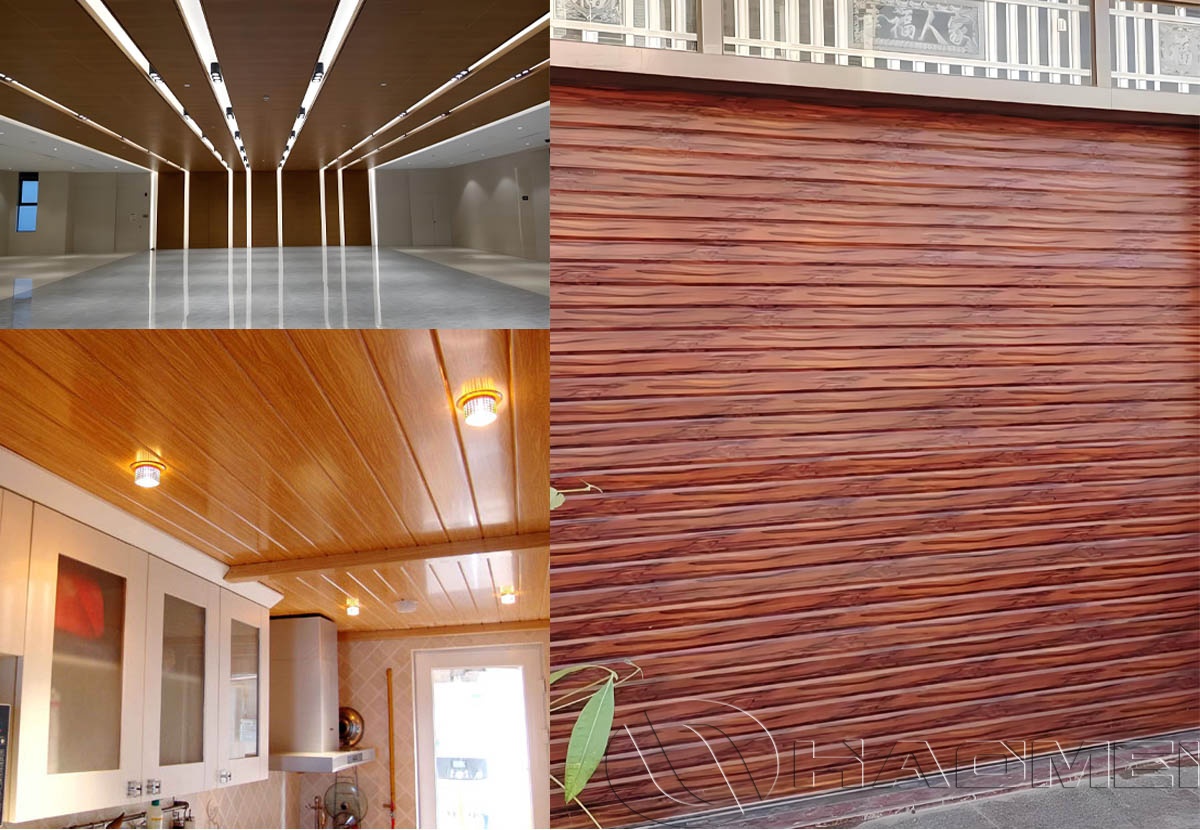
Exterior facade cassettes and rainscreen cladding: PVDF weatherability helps maintain tone and reduces chalking risk.
Soffits, canopies, and perimeter bands: lightweight aluminum reduces load, while the wood grain finish adds warmth to the streetscape.
Aluminum ceilings and linear baffle systems: consistent coil coating supports batch-to-batch appearance and repeatable roll forming.
Shutters, roller doors, and sunshade profiles: the combination of formability and surface durability supports daily handling and environmental exposure.
Decorative trims, column wraps, and interior feature walls: wood grain offers a natural look with improved dimensional stability versus real wood.
For design systems that standardize pattern finishes across multiple building components, the Wooden Grain Color Coated Aluminum Coil category is often used to coordinate coil-fed parts across exterior and interior elements.
Engineering considerations for specification
To ensure the wood pattern remains visually consistent from coil to installed façade, specifications typically account for:
Pattern direction: defining coil painting direction and installation orientation to avoid visual mismatch.
Lot control and coil sequencing: using the same production batch for elevation-critical zones.
Forming radius and tooling: ensuring bends do not distort the printed grain; tighter radii may require alloy/temper adjustments.
Sealants and cleaners: confirming chemical compatibility with PVDF clear topcoat to prevent staining or gloss changes.
Edge protection strategy: for cut edges in exterior use, detailing and assembly methods can reduce long-term corrosion initiation at edges.
-
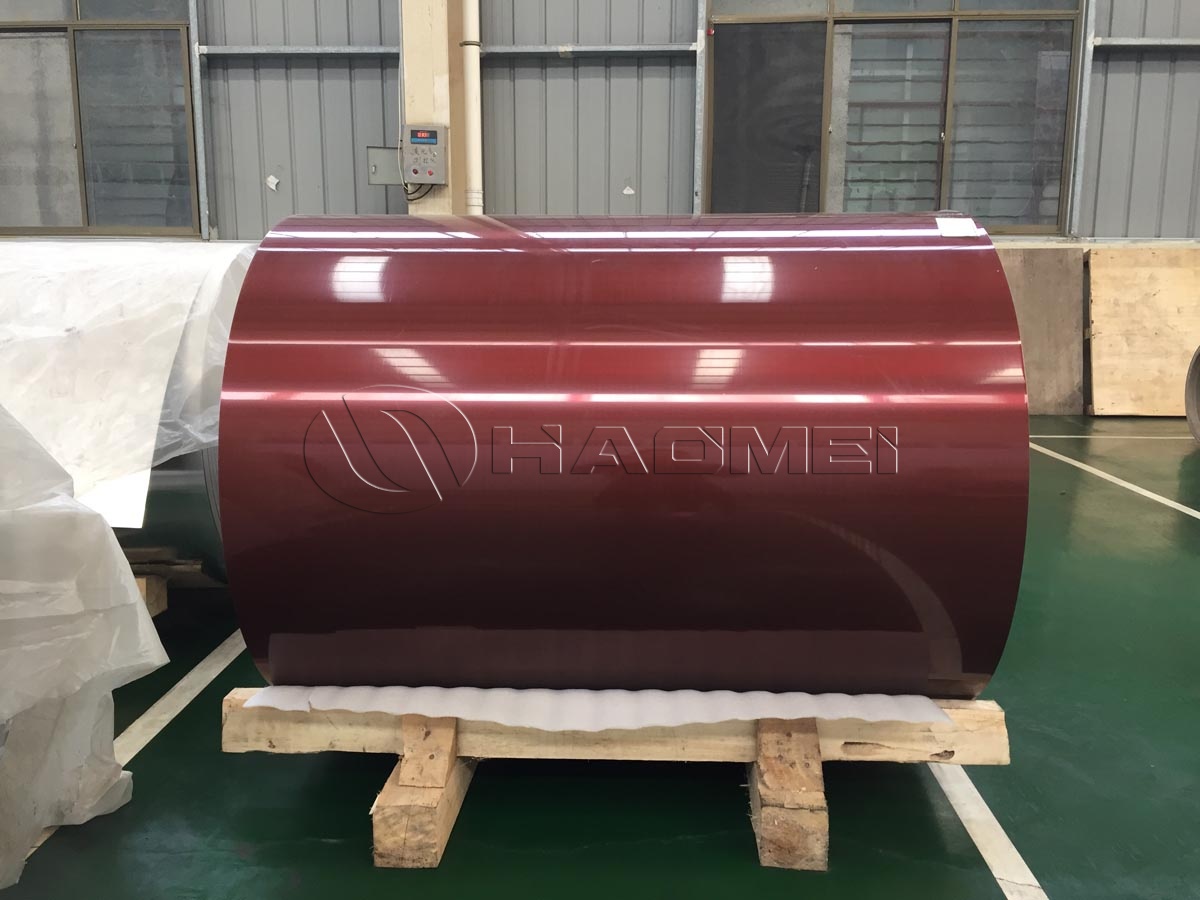
Matte Finish 3105 Color Coated Aluminum Coil
Matte finish 3105 color coated aluminum coil combines low-gloss visual appeal, formability, and PE or PVDF protection for roofs, facades, ceilings, and trim.
2026-07-21
-
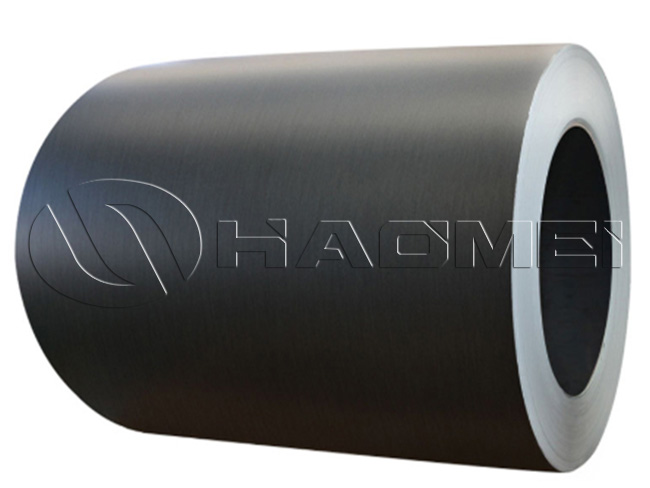
Double-Sided Color Coated Aluminum Coil
Double-sided color coated aluminum coil uses PE or PVDF coating systems, offering consistent color on both sides, excellent corrosion resistance, and strong weather resistance. It is widely used in architectural decoration and curtain wall systems.
2026-01-06
-
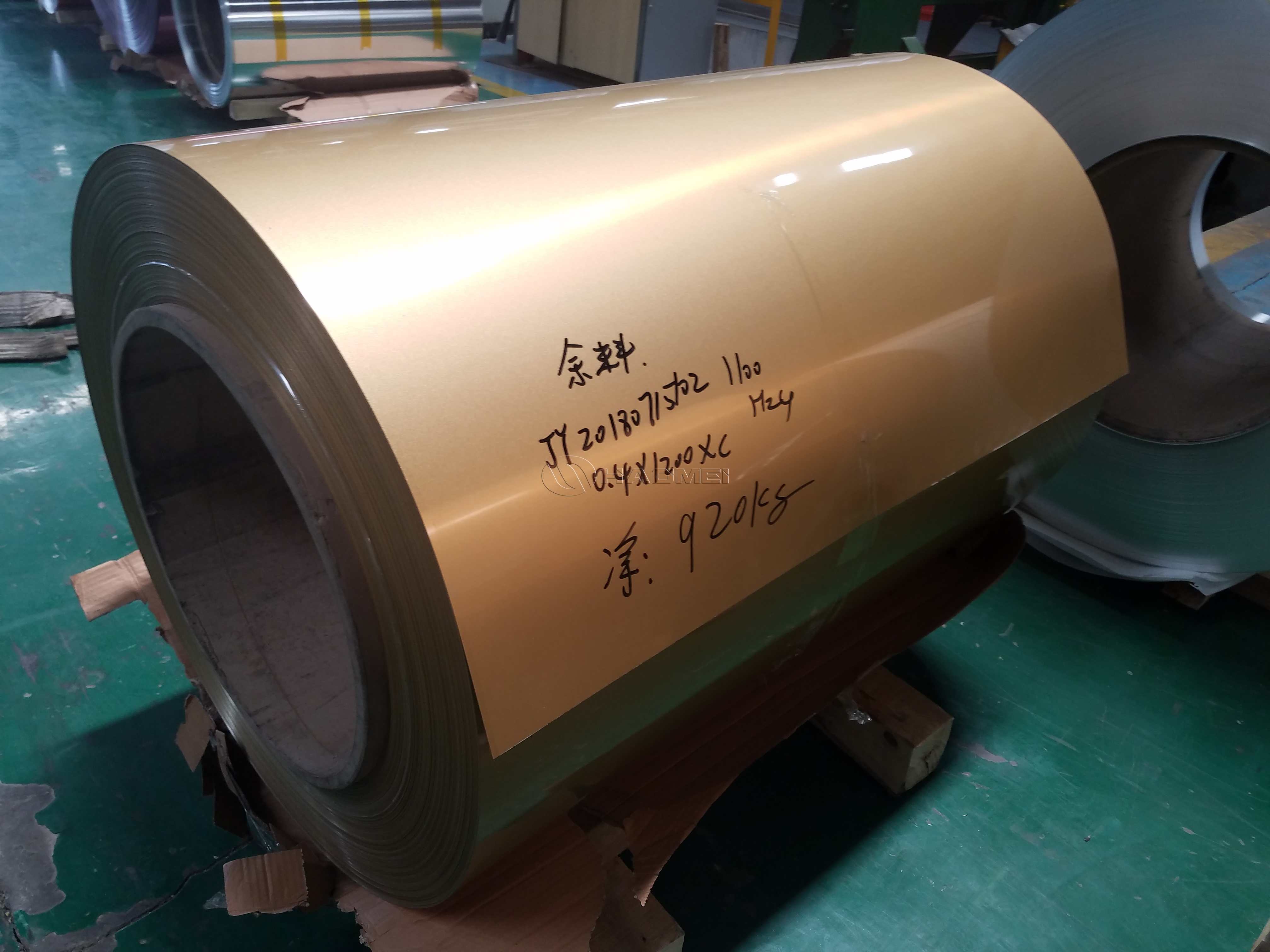
5005 Color Coated Aluminum for Architecture
5005 color coated aluminum delivers smooth forming, durable PE or PVDF finishes, and stable performance for architectural façades, roofs, ceilings, and trim.
2026-08-06
Contact Directly
-

ADD: No.14 Waihuan Road, CBD, Zhengzhou, China
-

WhatsApp: +86-18703635966
-

E-MAIL: sales@alummc.com