

News
 By Hermione
Wood Grain Color-Coated Aluminum Coil vs Solid Color
Wood grain color-coated aluminum coil and solid color aluminum coil are pre-painted materials used where aluminum must provide both lightweight structural performance and a finished decorative surface. They are widely applied in architectural cladding, roofing, ceilings, soffits, shutters, wall panels, doors, furniture components, appliance panels, and decorative trim. While both products use coil-coating technology, their visual effects, printing processes, coating structures, and appearance-control requirements differ significantly.
Visual Positioning and Surface Appearance
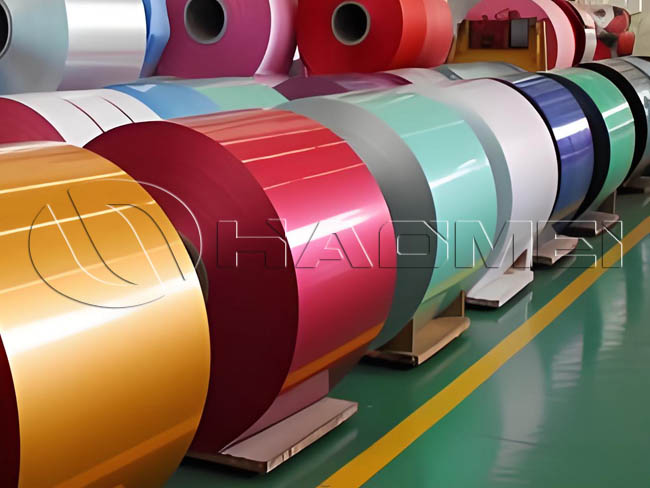
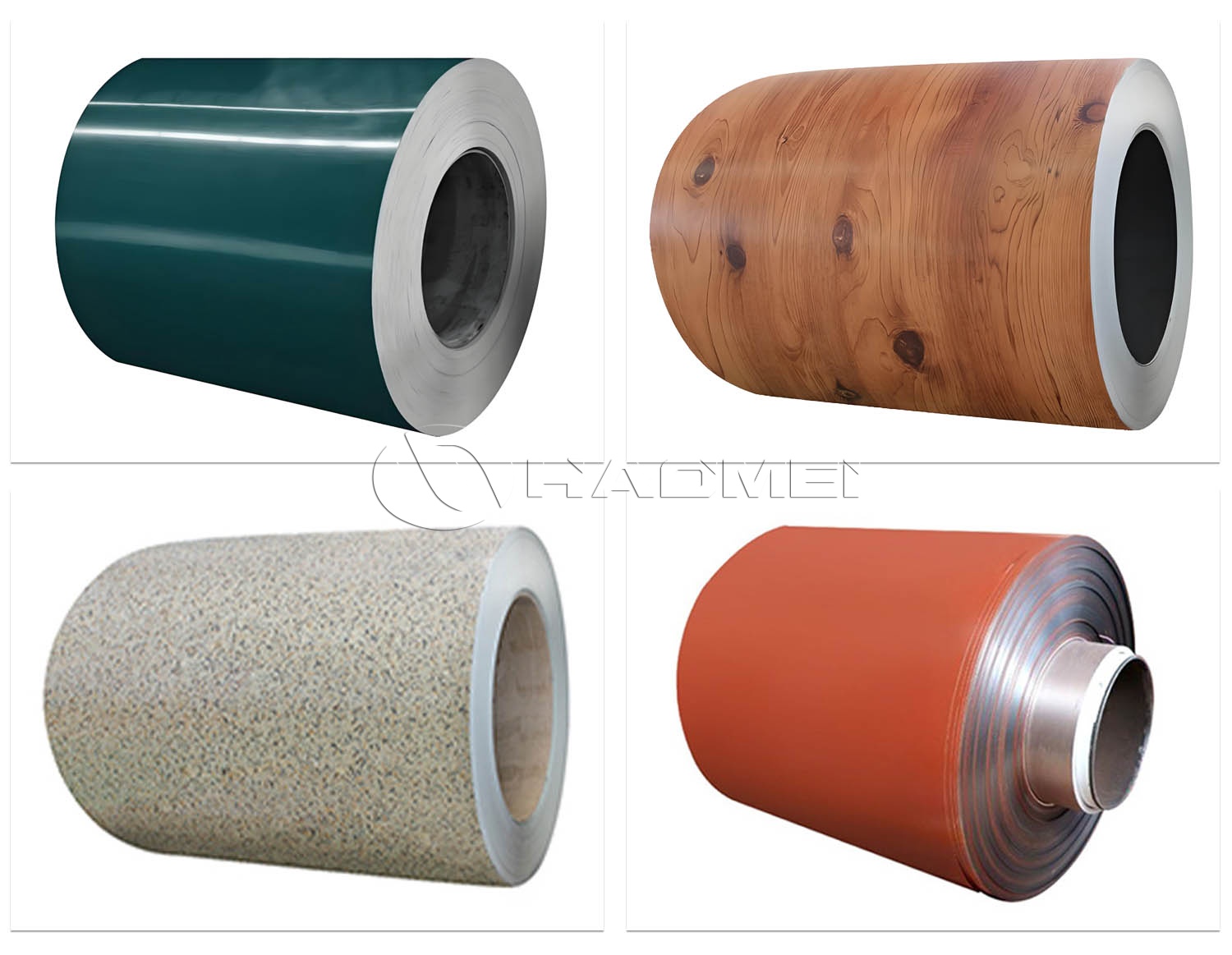
A solid color aluminum coil has a uniform painted surface, such as white, black, gray, red, blue, green, metallic silver, or custom RAL and Pantone-based shades. Its appearance depends primarily on paint color, gloss level, surface texture, and coating consistency. Solid finishes are commonly used where a clean, modern, continuous visual effect is required across broad facade, roof, ceiling, and panel areas.
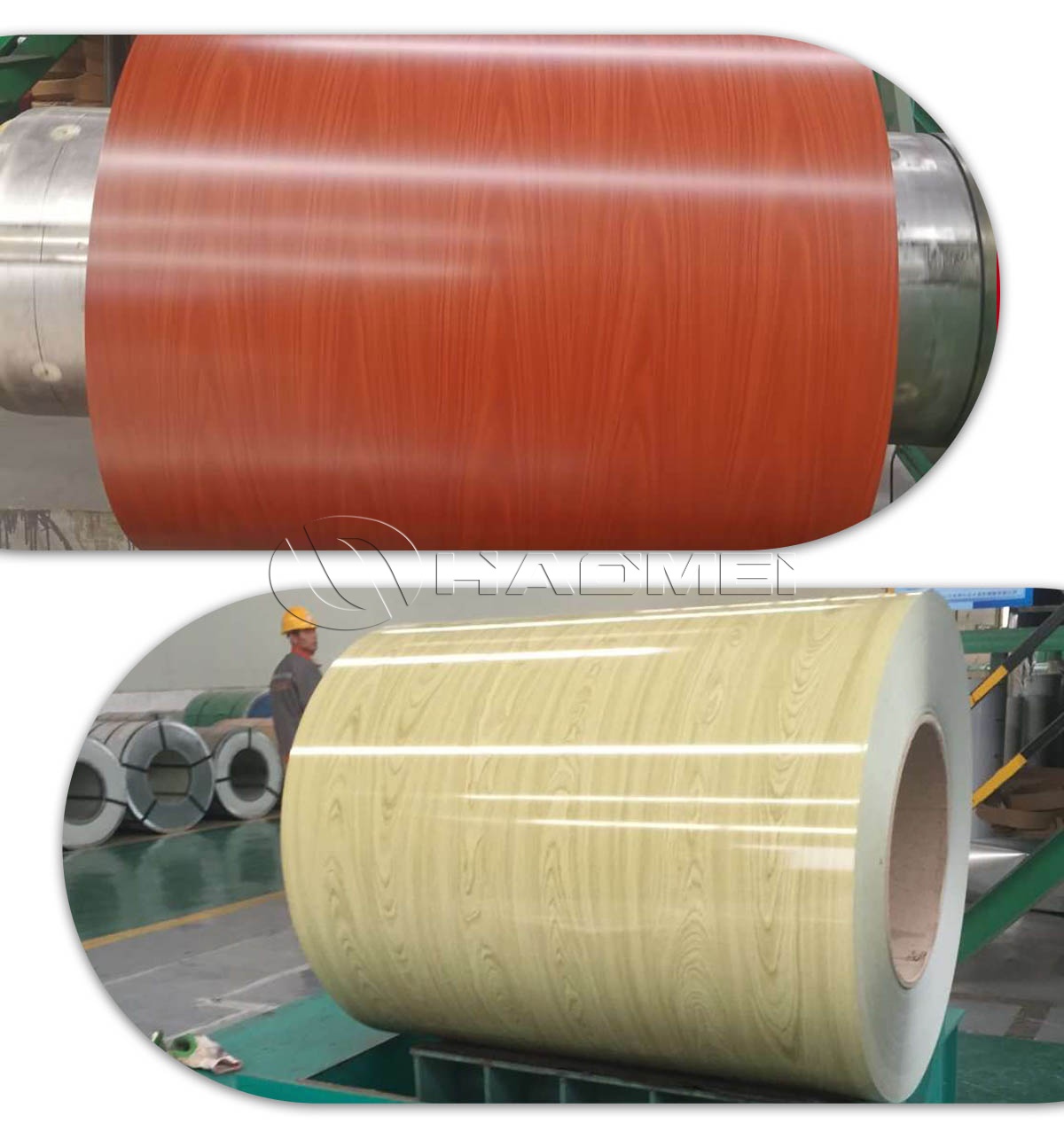
A wood grain color-coated aluminum coil reproduces the appearance of natural timber through a controlled printing or transfer process. Typical patterns include oak, walnut, teak, maple, cherry, pine, and other decorative grain designs. The material provides a wood-like visual effect while retaining aluminum's low weight, corrosion resistance, dimensional stability, and non-combustible metal substrate.
The pattern repeat and grain direction are important visual factors for wood grain coil. When processed into panels, shutters, slats, or profiles, consistent orientation helps maintain a natural decorative appearance. Solid color products do not require pattern matching, so color uniformity, gloss control, and batch consistency are the primary visual controls.
Coating Structure and Manufacturing Differences
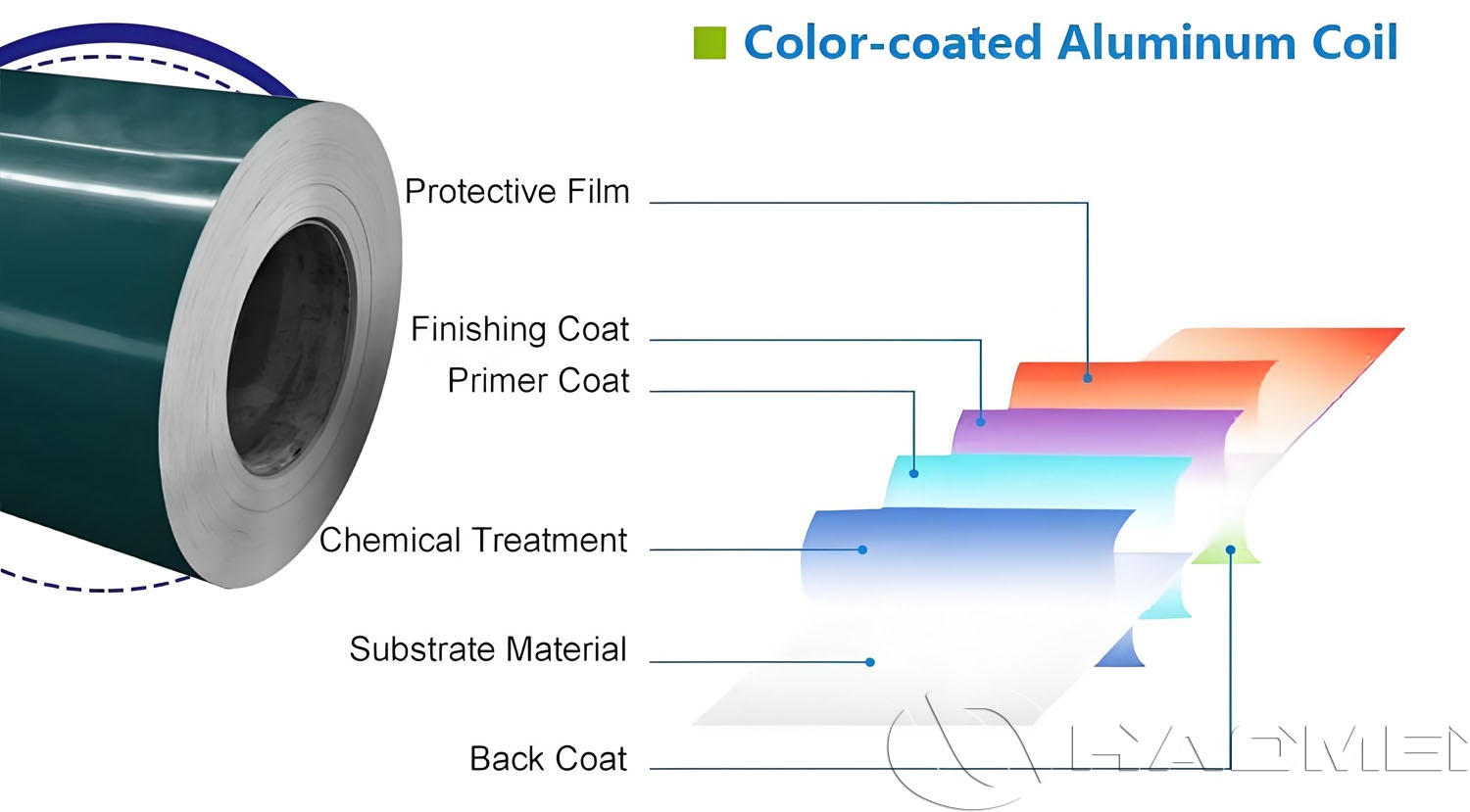
Both wood grain and solid color products begin with an aluminum coil that is cleaned, chemically pretreated, primed, and coated in a continuous coil-coating line. The pretreatment layer improves adhesion and supports corrosion resistance, while the primer promotes bonding between the aluminum substrate and the finish coat.
For solid color aluminum coil, the finish is generally formed by applying a pigmented topcoat over the primer. Depending on the required finish, the topcoat may be glossy, matte, textured, metallic, pearlescent, or wrinkle-effect.
Wood grain aluminum coil normally includes an additional decorative printing stage. A base color is applied first, followed by transfer printing or roller printing that creates the grain pattern. A clear protective topcoat may be added to improve gloss retention, surface protection, pattern definition, and weathering performance.
Core Specifications of Wood Grain and Solid Color Aluminum Coil
Table: Core Specifications for Color-Coated Aluminum Coil
| Specification Item | Wood Grain Color-Coated Aluminum Coil | Solid Color Aluminum Coil |
|---|---|---|
| Base metal | Aluminum alloy coil | Aluminum alloy coil |
| Common alloys | 1100, 1050, 1060, 3003, 3004, 3105, 5005, 5052 | 1100, 1050, 1060, 3003, 3004, 3105, 5005, 5052 |
| Typical thickness | 0.20-1.50 mm, depending on application | 0.20-1.50 mm, depending on application |
| Typical width | 300-1,600 mm | 300-1,600 mm |
| Coating systems | PE, SMP, HDP, PVDF, decorative transfer coating | PE, SMP, HDP, PVDF |
| Surface design | Oak, walnut, teak, maple, custom wood patterns | RAL colors, custom shades, metallic, matte, textured finishes |
| Coating process | Base coat plus grain printing or transfer process | Pigmented topcoat process |
| Gloss range | Matte, semi-gloss, or gloss with clear topcoat | Matte, semi-gloss, gloss, high gloss, textured |
| Main applications | Shutters, decorative cladding, ceilings, wall panels, furniture, doors | Roofing, facade panels, ceilings, appliances, signage, trim |
| Back coating | Wash coat, service coat, or customized backing paint | Wash coat, service coat, or customized backing paint |
Actual thickness, temper, coating weight, color tolerance, and coil dimensions vary by product design and processing requirements.
Common Aluminum Alloys
The alloy selection determines the balance of formability, strength, corrosion resistance, flatness, and processing behavior. Coating type and surface design are applied to the alloy substrate rather than replacing the mechanical characteristics of the base metal.
1000 Series: 1050, 1060, and 1100
1000 series aluminum is commercially pure aluminum with high formability, good corrosion resistance, and reliable coating compatibility. It is commonly used for ceiling panels, decorative sheets, signage, insulation jacketing, trim, and lightly formed architectural components.
1050 provides good ductility and is suitable for general-purpose painted aluminum applications.
1060 has high aluminum content and is often used for decorative and formed products where moderate mechanical strength is sufficient.
1100 is widely used for color-coated coil because of its stable processing performance and excellent workability. Product details for 1100 Color Coated Aluminum Coil commonly cover decorative sheet, ceiling, and general architectural applications.
3000 Series: 3003, 3004, and 3105
3000 series alloys contain manganese, which improves strength compared with 1000 series aluminum while maintaining good corrosion resistance and forming performance. These alloys are widely used for roofing, wall cladding, rainwater systems, shutter profiles, and roll-formed building components.
3003 is a common alloy for building sheet and decorative panel systems.
3004 provides higher strength and is used where improved dent resistance or structural rigidity is needed.
3105 is frequently used in pre-painted aluminum coil for roofing and wall applications because it combines formability, strength, and coating performance. 3105 Color Coated Aluminum Coil is commonly associated with roll-formed and exterior building products.
5000 Series: 5005 and 5052
5000 series aluminum contains magnesium and offers stronger mechanical performance and good corrosion resistance. It is often used for higher-demand decorative panels, marine-influenced environments, transportation components, and formed facade elements.
5005 is often used for architectural panels because its anodizing and coating appearance can be highly consistent.
5052 provides higher strength and stronger fatigue resistance, supporting applications requiring more demanding fabrication performance.
Durability and Environmental Resistance
The weathering capability of both finishes depends mainly on the coating system, film thickness, pretreatment quality, curing control, and installation environment rather than on whether the surface is wood grain or solid color.
PE coating is widely used for interior products, ceiling systems, signage, decorative panels, and applications with moderate environmental exposure. It offers good color selection, flexibility, and processing performance. PVDF coating is commonly used for exterior architectural applications because of its resistance to ultraviolet exposure, chalking, fading, and weathering. A high-performance PVDF system can be used with either a solid finish or a wood grain decorative layer, provided that the complete coating structure is designed for exterior service.
Wood grain surfaces require additional pattern-definition control during production. Ink transfer accuracy, printing pressure, clear-coat uniformity, and curing conditions affect grain sharpness and visual consistency. Solid color surfaces place greater emphasis on color difference control, gloss uniformity, coating thickness, and freedom from streaks or roller marks.
Forming, Fabrication, and Processing Behavior
Both finishes can be slit, cut, bent, roll formed, stamped, and profiled when the alloy, temper, coating system, and forming radius are matched to the intended fabrication method. The aluminum substrate provides the main forming capability, while the coating must maintain adhesion and flexibility during processing.
For solid color coils, scratches, bends, and surface defects are usually easier to identify because the finish is uniform. For wood grain coils, the pattern can visually reduce the visibility of minor surface variations, but scratches that break the clear coat or printed layer remain visible and may interrupt the grain effect.
During roll forming or deep bending, coating elongation and bend performance are important. Excessively hard topcoats may crack at tight bend radii, while insufficient curing can reduce surface hardness and scratch resistance. Wood grain systems additionally require control of grain direction so the decorative pattern aligns with the final panel or shutter geometry.
Application Differences
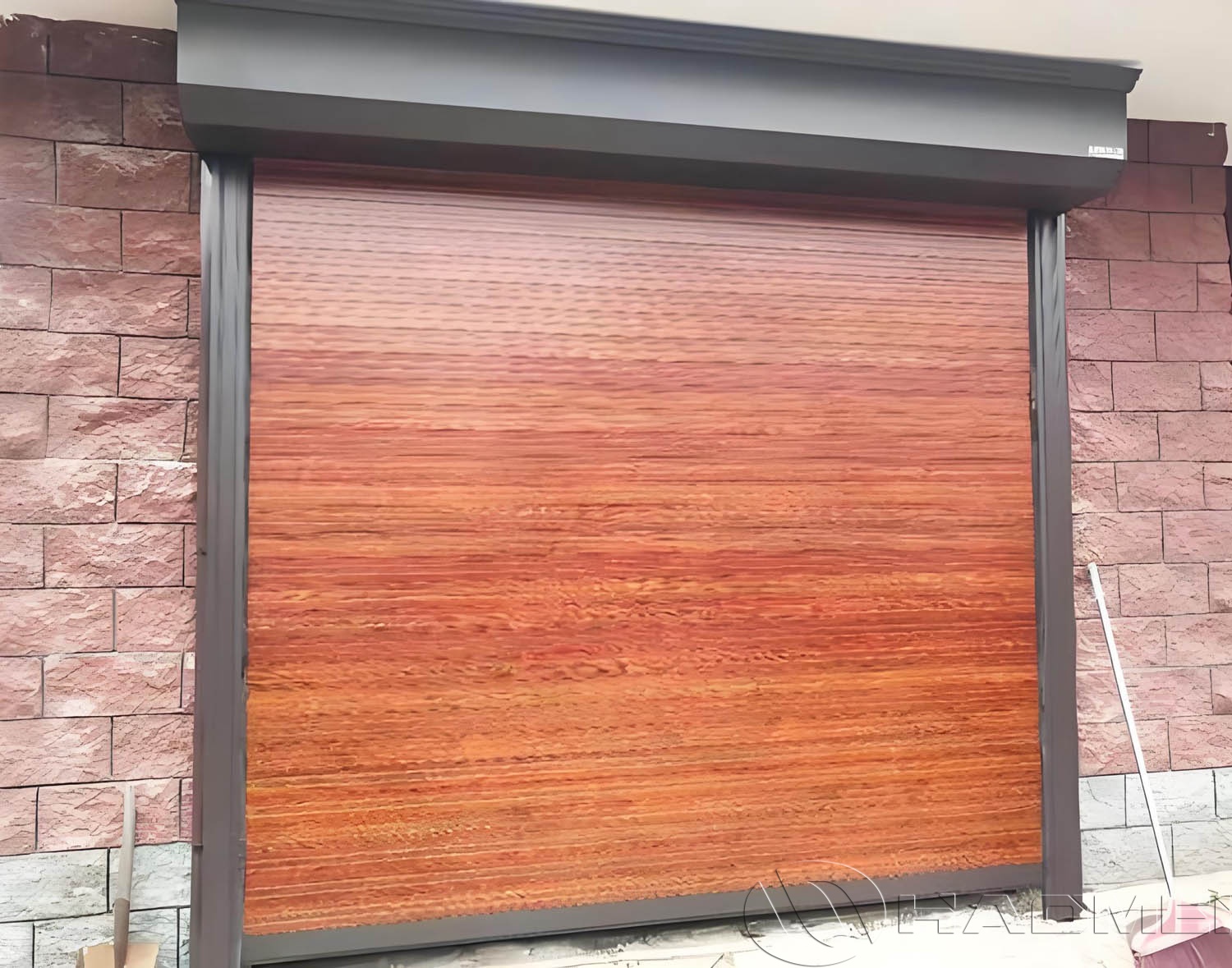
Wood grain color-coated aluminum coil is used where the appearance of timber is desired without the maintenance characteristics associated with natural wood. Typical applications include:
Rolling shutter doors and garage door slats
Exterior and interior wall cladding
Ceiling panels and soffit systems
Window and door trim
Aluminum furniture components
Decorative louvers, screens, and profile systems
Retail, residential, hospitality, and commercial decoration
Solid color aluminum coil is used in applications requiring uniform color presentation, broad color selection, and clean visual continuity. Common uses include:
Roof sheets and standing seam roofing
Exterior facade panels
Rainwater goods and gutter systems
Ceiling tiles and suspended ceilings
Appliance panels and equipment housings
Signage, advertising panels, and traffic-related products
Interior partitions, trim, and composite panel skins
Quality Control Considerations
For both wood grain and solid color aluminum coil, quality evaluation includes coating adhesion, film thickness, hardness, impact resistance, flexibility, gloss, color difference, solvent resistance, and corrosion resistance. Exterior products may also be assessed through accelerated weathering, salt spray exposure, humidity testing, and boiling-water adhesion testing.
Wood grain coil adds pattern-specific inspection items, including grain repeat consistency, print registration, tonal balance, pattern clarity, and direction control. Solid color coil focuses more directly on shade consistency between coils and batches, gloss uniformity, metallic pigment orientation where applicable, and visual uniformity over large installed areas.
-
Is the Coating of 5052 Color-Coated Aluminum Coil PVDF or PE?
5052 color-coated aluminum coils typically have coatings including polyester (PE) or fluorocarbon (PVDF), and are commonly used in building curtain walls, ceilings, and home appliance manufacturing.
2025-12-08
-
1100 Color Coated Aluminum Coil In Stock
1100 color coated aluminum coil in stock for trim, panels, and signage, with PE and PVDF coating options, stable formability, and clean surface quality.
2026-03-23
-
PE Coated Aluminum Coil For Decoration Boards
PE coated aluminum coil for decoration boards combines light weight, stable color, formability, and a durable finish for interior panels.
2026-09-02
Contact Directly
-

ADD: No.14 Waihuan Road, CBD, Zhengzhou, China
-

WhatsApp: +86-18703635966
-

E-MAIL: sales@alummc.com