

News
 By Hermione
1100 Color Coated Aluminum Coil In Stock
1100 Color Coated Aluminum Coil In Stock
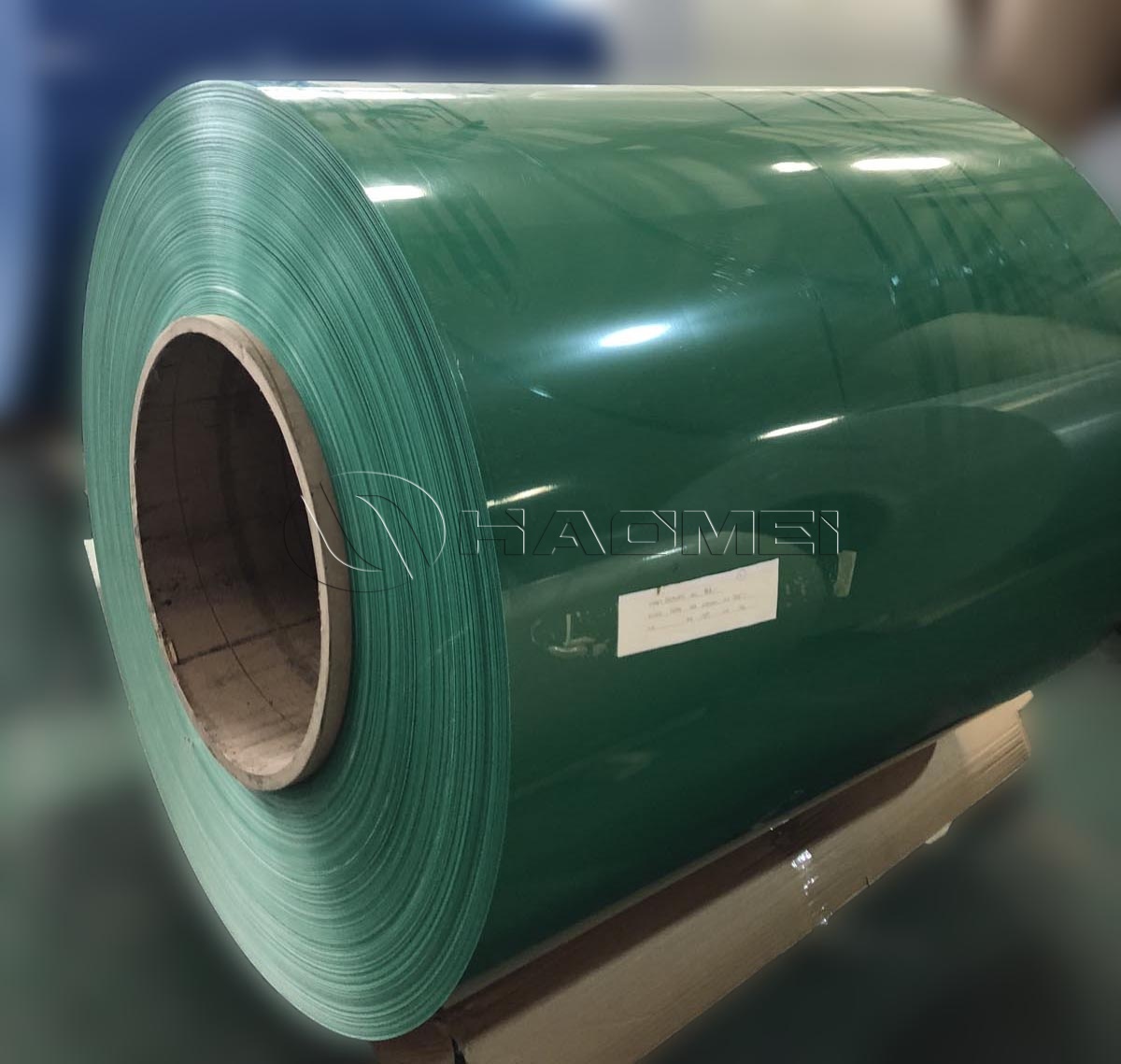
1100 color coated aluminum coil in stock is a practical choice for projects that need a clean appearance, stable forming performance, and fast material availability. As a commercially pure aluminum grade, 1100 is widely used in architectural trim, ceiling systems, roll forming parts, signage panels, insulation jacketing, appliance decorative components, and light-gauge fabricated products where corrosion resistance and surface quality matter more than high structural strength.
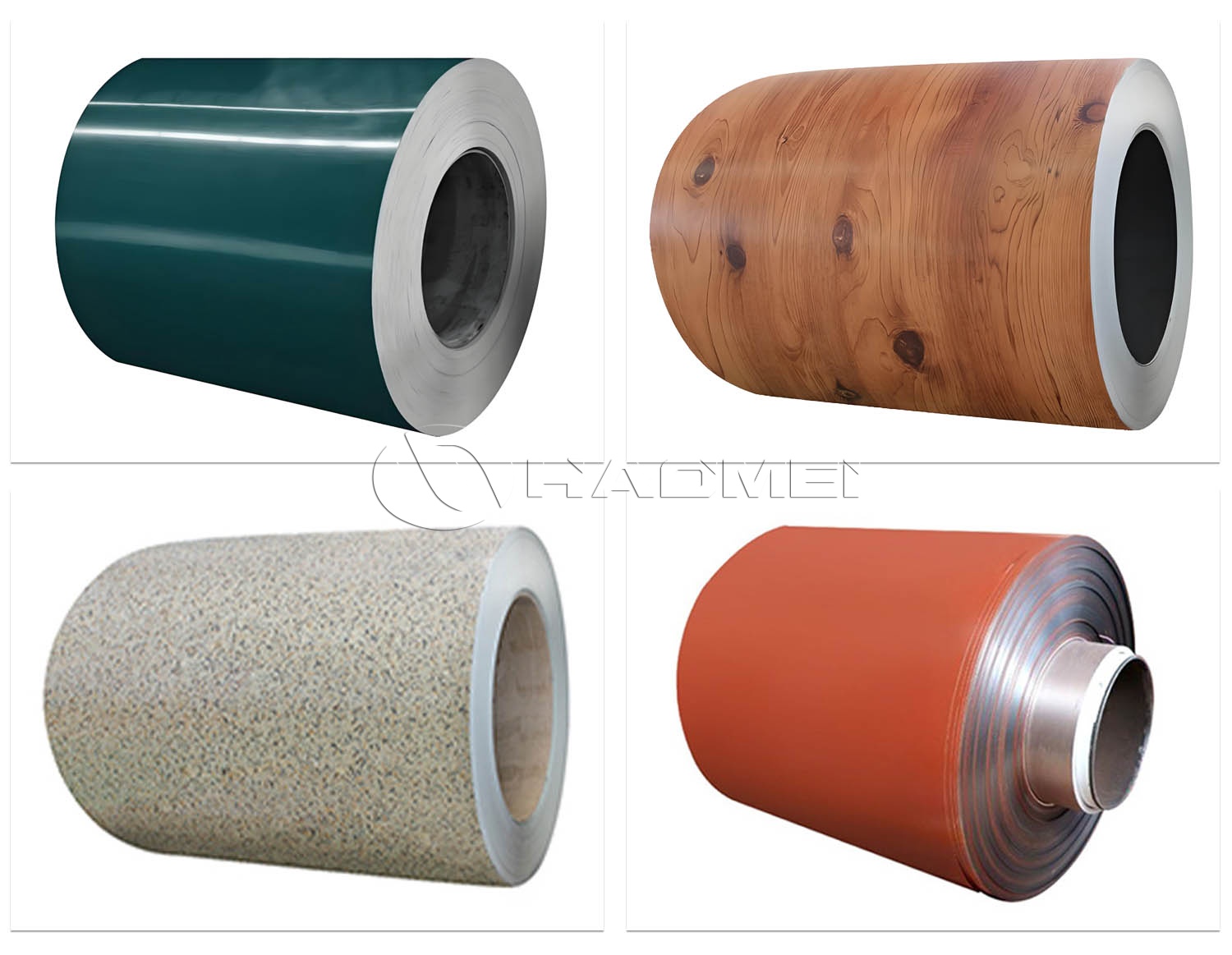
Compared with higher-strength manganese or magnesium-containing alloys, 1100 aluminum offers very good ductility and a smooth substrate surface, which makes it especially suitable for color coating lines and decorative applications. In stocked coil form, it is often selected for indoor and semi-outdoor use, as well as for exterior applications when the correct coating system and film thickness are specified.
Why 1100 alloy is widely used for color coating
1100 belongs to the 1xxx series aluminum family and typically contains at least 99.00% aluminum. Its alloy design gives it several useful processing advantages:
Good surface flatness for uniform paint appearance
Excellent formability for bending, profiling, beading, and shallow drawing
Good corrosion resistance in common atmospheric environments
Stable performance in low-thickness coil processing
High thermal conductivity, useful in certain insulation and equipment-related applications
For pre-painted products, the substrate quality is critical. Because 1100 has a relatively clean and workable base metal condition, it can support consistent primer and topcoat adhesion when pretreatment and curing are properly controlled. This is one reason why 1100 Color Coated Aluminum Coil remains common in decorative and general industrial coil programs.
Typical application scenarios
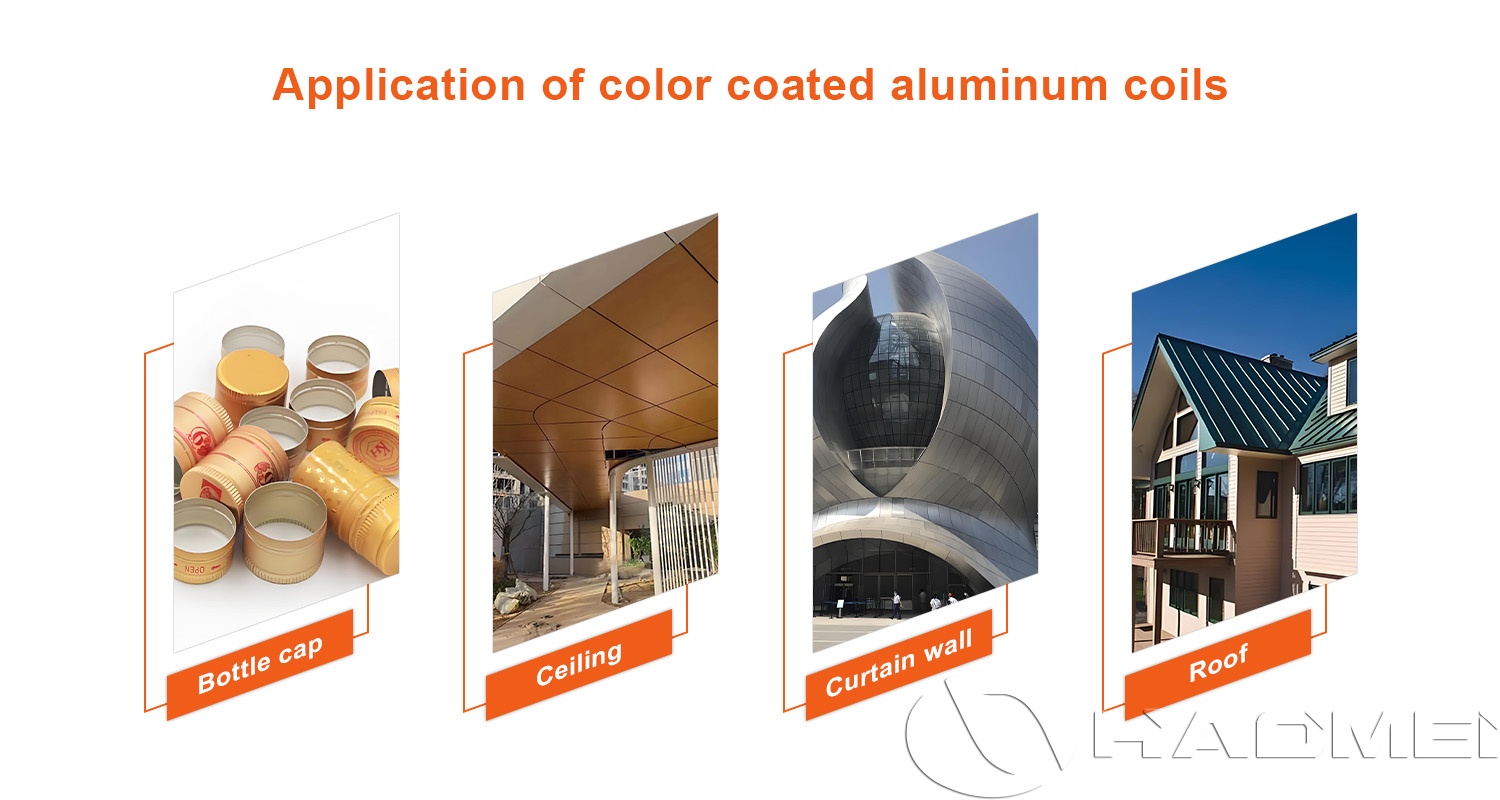
1100 color coated aluminum coil is commonly processed into:
Roof edge trim and fascia covers
Ceiling strips and suspended ceiling accessories
Rainwater goods and light roll-formed profiles
Sign boards and advertising panels
ACP facing stock and interior decorative sheets
Thermal insulation cladding and pipe jacketing covers
Lighting, appliance, and electronic exterior parts
Bottle cap and closure-related decorative stock in selected specifications
Its main value lies in appearance, corrosion resistance, and processing efficiency rather than load-bearing use. Where deeper forming or simple profiling is required without cracking the paint system, 1100 is often easier to handle than harder alloys.
Core Specifications of 1100 Color Coated Aluminum Coil In Stock
| Item | Specification Range |
|---|---|
| Alloy | 1100 |
| Temper | H14, H16, H18, H24, O |
| Thickness | 0.20-2.00 mm |
| Width | 30-1600 mm |
| Length | 100-16000 mm |
| Coil ID | 405 mm, 505 mm, 508 mm, 610 mm |
| Coating Type | PE, SMP, HDP, PVDF |
| Top Coating Thickness | 10-35 μm |
| Back Coating Thickness | 5-15 μm |
| Surface Finish | Solid color, matte, gloss, embossed, custom pattern |
| Color Standard | RAL color card or custom sample matching |
| Gloss | 10-90 GU |
| Protective Film | Available |
| Standard Applications | Trim, ceilings, signage, panels, jacketing |
| MOQ | 1-3 tons |
Coating systems and performance differences
The performance of a color coated aluminum coil depends not only on the 1100 alloy substrate, but also on the coating architecture. A typical production structure includes degreasing, chemical pretreatment, primer coating, top coating, curing, and controlled rewind.
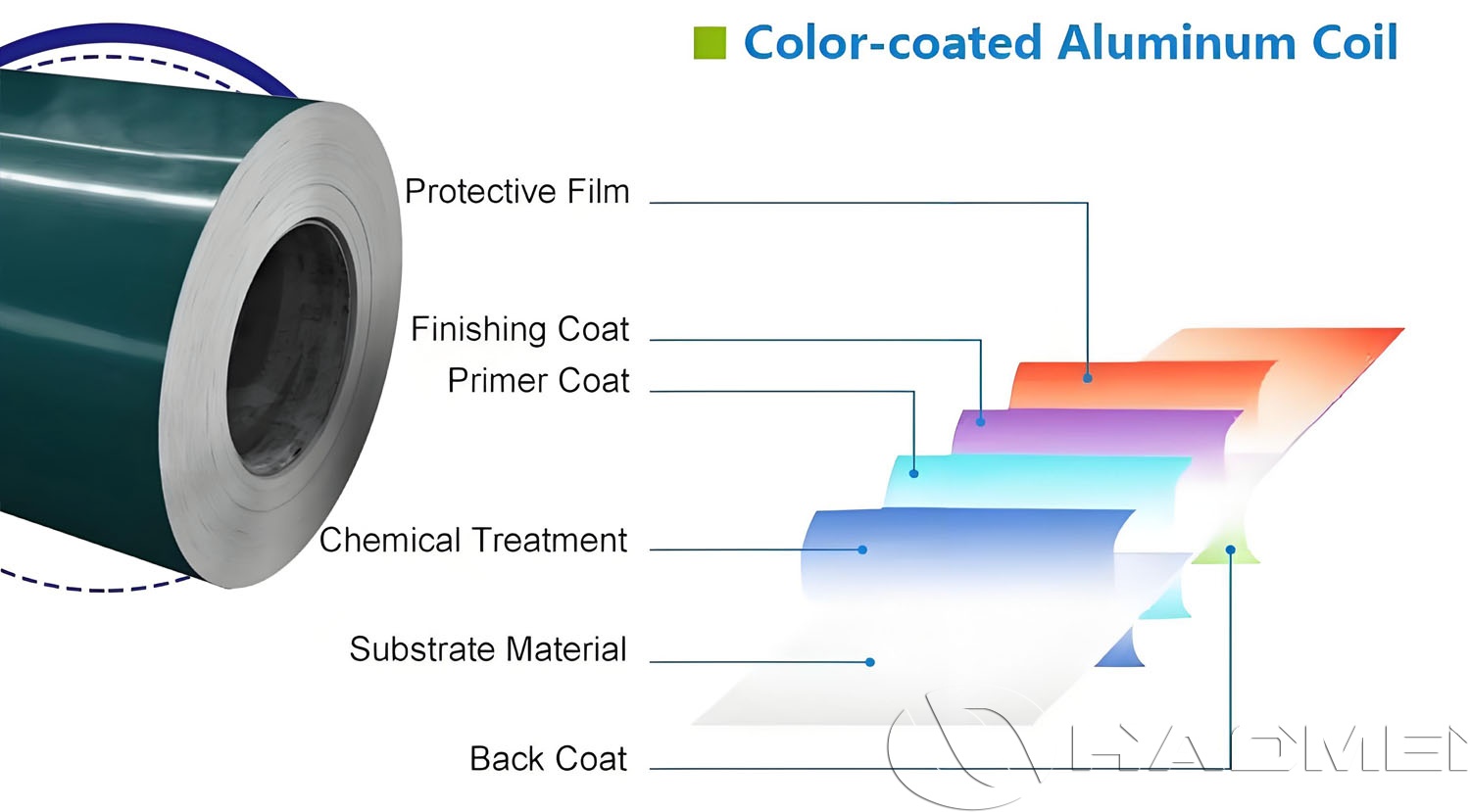
The most common coating choices are:
PE coating: suitable for interior decoration, signage, ceiling systems, and general-purpose trim. It offers good flexibility, broad color availability, and cost efficiency. For projects emphasizing formability and decorative appearance, PE Coated Aluminum Coil is frequently used.
PVDF coating: preferred for exterior architectural use where weather resistance, UV stability, and color retention are more demanding. It performs better in long-term façade, cladding, and exposed trim environments.
SMP and HDP systems: used in certain applications requiring intermediate weatherability or hardness characteristics.
In technical terms, 1100 substrate pairs well with both PE and PVDF systems because of its smooth surface and good coating receptivity. However, coating selection should still match end-use exposure conditions, forming radius, and required service life.
Commonly used alloys in color coated aluminum coil
Although 1100 is a widely stocked option, it is not the only alloy used in pre-painted aluminum products. Different alloys serve different processing and service requirements:
1050: very high aluminum purity, soft temper availability, good corrosion resistance, often used in decorative and general sheet applications.
1060: similar to 1050 and 1100, with excellent ductility and conductivity, suitable for common coating applications and light fabrication.
1100: stronger than ultra-soft 1050 in many practical supply conditions, with very good workability and broad use in trim, signage, and general decorative components.
3003: contains manganese, offering higher strength than 1xxx series alloys. Common in roofing, cladding, and more demanding formed parts.
3004: higher strength than 3003, often selected for panels and shaped building products.
3105: widely used in building trims, shutters, and roofing accessories due to balanced formability and strength.
5005: known for good anodizing quality and architectural decorative applications.
5052: provides higher strength and better marine or industrial corrosion resistance, suitable for more demanding service environments.
8011: often used for closures, caps, packaging-related stock, and some thin-gauge coated products.
From an engineering perspective, 1100 is generally chosen when surface appearance, softness, and ease of fabrication are the priorities. If the application needs stronger dent resistance or better span performance, alloys such as 3003, 3105, or 5052 may be more suitable.
Surface quality and stock availability considerations
For official stock programs, 1100 color coated aluminum coil is usually maintained in common colors such as white, gray, black, blue, red, and custom RAL shades. Stocked material often focuses on high-turnover thicknesses and widths used in trim coil, ceiling strip, channel forming, and sign panel production.
Important quality points include:
Uniform coating color and gloss across the coil length
Controlled T-bend and impact performance after curing
Stable coating adhesion after cross-hatch testing
Minimal edge waviness and good slit edge condition
Limited roller marks, paint streaks, inclusions, and orange peel defects
Consistent recoiling tension to reduce handling deformation
In practice, in-stock material is valued because it shortens fabrication cycles and reduces waiting time for color-coated feedstock, especially for standard building accessory colors and regular gauge combinations.
Processing characteristics of 1100 pre-painted coil
1100 painted aluminum performs well in:
Roll forming with moderate profile depth
Bending and folding with controlled inner radius
Shearing and slitting for narrow strip production
Punching for ceiling and signage parts
Laminating and composite panel facing applications
Because the alloy is relatively soft, attention should be paid to handling pressure, rewinding tension, and stacking protection. Excessive compression can lead to pressure marks, while poor interleaf or film protection may affect decorative surfaces. For this reason, packaging, film lamination, and coil separation control are important parts of finished product quality.
Typical stocked tempers and how they affect use
The temper of 1100 color coated aluminum coil influences both forming and rigidity:
O temper: softest condition, suitable for deeper forming and applications needing maximum ductility
H14: common semi-hard temper with a good balance of formability and stiffness
H16/H18: harder tempers for flatter panel use or applications requiring more rigidity and better shape retention
H24: useful when moderate strength and forming are both needed
For decorative trim and general roll forming, H14 is one of the most practical options. For flatter sheet applications, harder tempers may improve handling stability.
What distinguishes 1100 from higher-strength coated coils
The main tradeoff with 1100 is strength. It is not intended for high-load structural components. Its advantages are instead concentrated in:
Smooth decorative finish
Easy fabrication
Good atmospheric corrosion resistance
Reliable coating compatibility
Availability in light-gauge stock
This makes it a dependable substrate for appearance-driven products where the coating system contributes most of the visual and environmental performance, while the aluminum base provides workability and corrosion resistance.
Manufacturing notes for stable coating performance
For 1100 substrate, consistent painted coil quality typically depends on several process controls:
Proper degreasing to remove rolling oil residue
Stable chemical pretreatment weight for adhesion
Correct primer selection based on end-use coating system
Oven curing matched to paint chemistry and coil speed
Color control across batches, especially for gloss-sensitive shades
Cooling and tension management after curing to protect film integrity
When these variables are well controlled, 1100 color coated aluminum coil can provide an even visual finish and dependable processing behavior across a wide range of decorative and industrial applications.
-
3003 Color Coated Aluminum Coil Coating Thickness
Learn 3003 color coated aluminum coil coating thickness, PE and PVDF systems, alloy features, and key specs for roofing, facade, ceiling applications.
2026-04-23
-
5052 vs. 3003 Color-Coated Aluminum Coil: Which Material Is Right for You?
3003 and 5052 are the two most commonly used substrates, and they are often made into color-coated aluminum coils for use in building curtain walls, industrial plants and shipbuilding.
2025-12-12
-
PVDF Coated Aluminum Coil Maintenance And Cleaning
Learn PVDF coated aluminum coil maintenance and cleaning with practical methods, coating system insights, and process factors affecting durability in architectural cladding.
2026-01-27
Contact Directly
-

ADD: No.14 Waihuan Road, CBD, Zhengzhou, China
-

WhatsApp: +86-18703635966
-

E-MAIL: sales@alummc.com