

News
 By Hermione
PVDF-Coated Aluminum Coil for Building Facades: Will It Fade Under Long-Term Sun Exposure?
PVDF-coated aluminum coil is a pre-painted architectural material developed for exterior building envelopes where lasting appearance, weather resistance, and low maintenance are essential. It is widely processed into curtain wall panels, aluminum composite panels, cladding sheets, soffits, column covers, roofing systems, fascia, and decorative facade profiles. Under long-term sun exposure, a properly specified PVDF coating system provides substantially better color and gloss retention than conventional polyester coatings, although no exterior finish is completely immune to gradual weathering.
Key advantages of PVDF-coated aluminum coils for building facades
1. Superior weather resistance: The PVDF coating offers excellent resistance to UV radiation, acids, alkalis, and corrosion, ensuring long-lasting color and gloss retention for facades.
2. Long service life: The coating is highly stable, making it suitable for long-term outdoor applications such as high-rise buildings and curtain walls.
4.Excellent decorative appeal: Available in a wide range of colors with a uniform finish, enabling diverse architectural design effects.
5.Stain resistance and easy cleaning: The dense surface resists dust accumulation, thereby reducing maintenance costs.
6.Lightweight yet strong: Aluminum is lightweight and high-strength, facilitating installation and reducing the structural load on the building.
7.Eco-friendly and recyclable: Aluminum is recyclable, aligning with green building standards.
Why Sunlight Causes Exterior Coatings to Fade
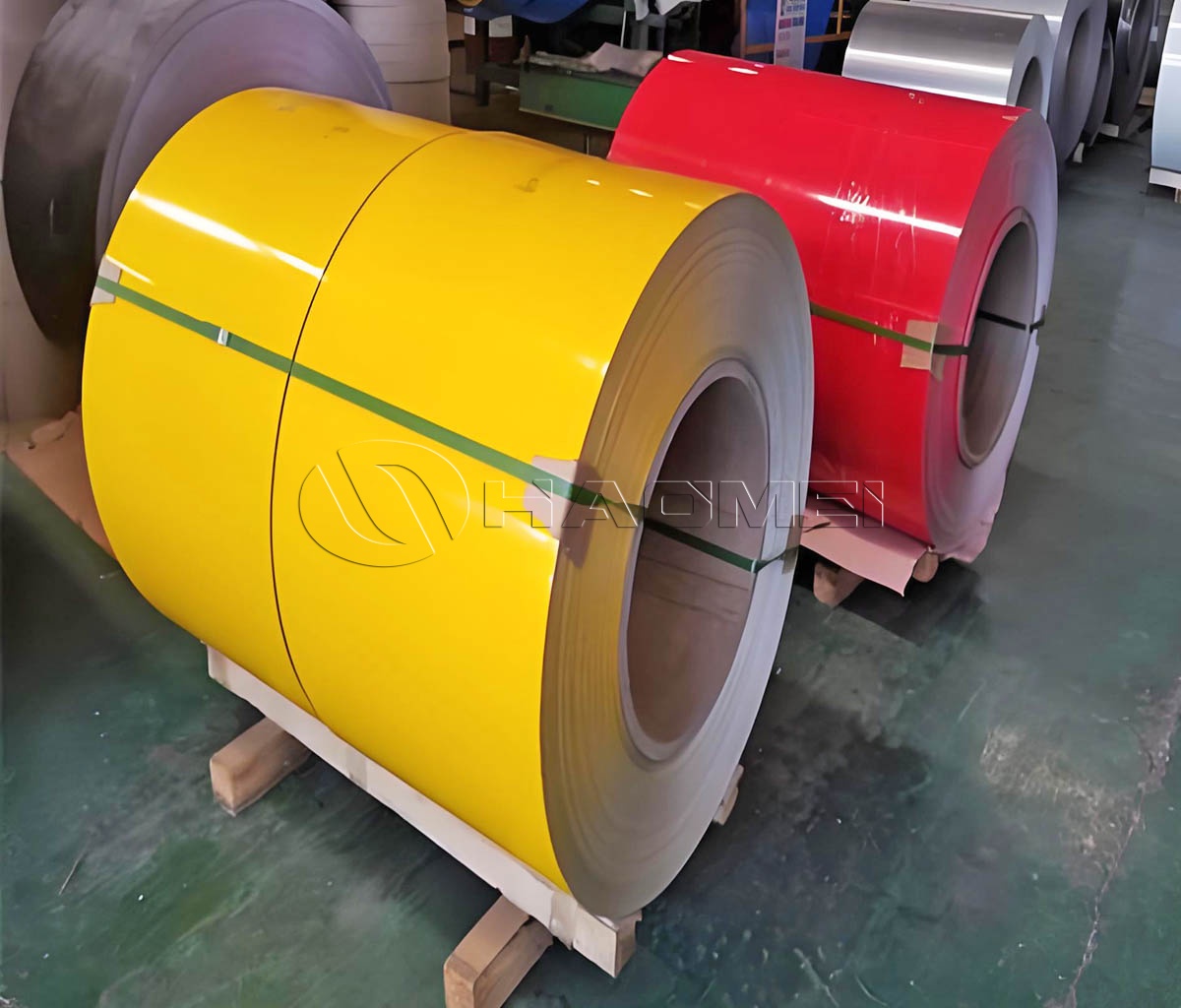
Solar radiation contains ultraviolet energy that can gradually break down polymer bonds and affect pigments in an exterior coating. Heat, moisture, oxygen, airborne pollutants, salt spray, and repeated thermal expansion further accelerate this process. Visible fading may appear as a color shift, reduced gloss, chalking, or uneven surface appearance.
The extent of change depends on several factors:
Coating chemistry: Fluoropolymer-based PVDF resins have very high resistance to UV degradation.
Pigment selection: Inorganic pigments generally offer better lightfastness than many organic bright reds, yellows, and blues.
Color depth: Dark, saturated, and highly chromatic colors absorb more solar energy and usually show change more readily than light neutral tones.
Facade orientation: South- and west-facing elevations typically receive the strongest cumulative solar load in many regions.
Local environment: High altitude, desert climates, tropical heat, coastal salt, industrial emissions, and acid rain can intensify exterior weathering.
Coating thickness and cure: Film build, curing quality, primer performance, and coating adhesion all influence long-term protection.
Will PVDF-Coated Aluminum Coil Fade?
PVDF-coated aluminum coil does not remain visually unchanged forever, but it is engineered to fade slowly and uniformly under normal architectural exposure. High-quality PVDF systems use a fluoropolymer resin containing approximately 70% PVDF, combined with weather-resistant pigments and a suitable primer. The strong carbon-fluorine bond gives the coating excellent resistance to ultraviolet radiation, heat, chemicals, and moisture.
For building facades, this means the coating can retain its original color and gloss for extended service periods when compared with standard PE-coated aluminum coil. The actual level of retention depends on the selected color, exposure severity, coating formulation, and panel design. Light gray, white, silver, beige, and other neutral shades typically provide the most stable long-term appearance. Intense colors can also perform well when formulated with high-performance pigments, but they are more likely to show measurable color variation after years of outdoor exposure.
PVDF Coated Aluminum Coil is therefore commonly specified for prominent exterior elevations, high-rise curtain walls, airport terminals, commercial complexes, public buildings, and coastal architectural projects where visual durability is a primary material requirement.
PVDF Coating Structure and Its Role in Facade Durability
A building-grade pre-painted aluminum coil is not simply aluminum with a topcoat applied to it. Its performance is created by a coordinated multi-layer system. The aluminum substrate provides formability and corrosion resistance, while pretreatment, primer, topcoat, and reverse-side coating work together to protect the finished panel.
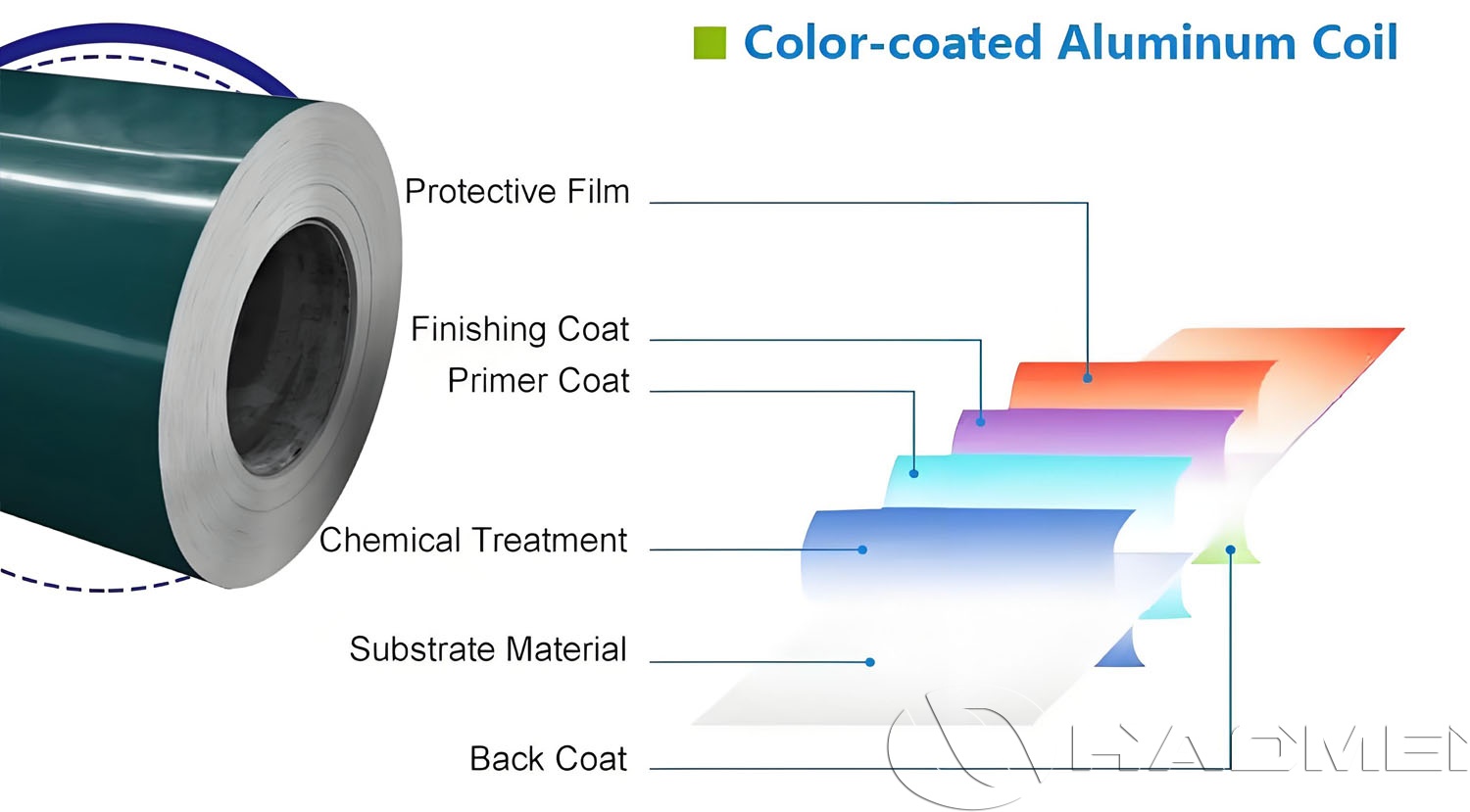
A typical PVDF coating system includes:
Aluminum substrate: Provides low weight, corrosion resistance, and fabrication capability.
Chemical pretreatment: Improves coating adhesion and helps reduce under-film corrosion risk.
Primer coat: Enhances adhesion, flexibility, and corrosion protection.
PVDF topcoat: Delivers UV resistance, color retention, gloss retention, and surface weatherability.
Back coat: Protects the reverse side during processing and service, particularly in concealed or semi-exposed assemblies.
For demanding facades, a two-coat PVDF system is commonly used. Three-coat or clear-coated systems may be applied where deeper color, metallic effects, higher gloss stability, or enhanced surface protection is needed. Coating performance should be evaluated as a system rather than by topcoat resin alone.
Core Specifications of PVDF-Coated Aluminum Coil for Building Facades
PVDF-Coated Aluminum Coil Core Specifications
| Item | Typical Range or Option | Notes for Facade Applications |
|---|---|---|
| Aluminum alloy | 1100, 3003, 3004, 3105, 5005, 5052 | Selected according to strength, formability, flatness, and corrosion requirements |
| Temper | O, H14, H16, H18, H24, H26 | Softer tempers suit deep forming; harder tempers support panel rigidity |
| Coil thickness | 0.20-3.00 mm | Common facade panel gauges are often 1.0-3.0 mm, depending on system design |
| Coil width | Up to 1,600 mm or customized | Determined by panel layout and processing equipment |
| Top coating | PVDF fluoropolymer coating | Usually based on high-weatherability fluoropolymer resin systems |
| Topcoat thickness | Typically 20-35 μm | Can vary by color, coating construction, and project requirement |
| Back coating | Epoxy, polyester, or service-specific back coat | Supports handling, fabrication, and reverse-side protection |
| Surface finish | Matte, low gloss, satin, high gloss, metallic, textured | Gloss level affects visual perception of weathering and surface irregularity |
| Color options | Solid colors, metallic colors, custom colors | Pigment durability is important for exterior color retention |
| Main standards | ASTM, EN, AAMA, project specifications | Testing criteria vary by destination market and facade system |
Common Aluminum Alloys Used for PVDF Facade Coil
The aluminum alloy affects panel stiffness, forming behavior, surface quality, and corrosion performance. Although the PVDF topcoat controls weatherability, substrate selection remains important because facade panels are cut, bent, folded, riveted, bonded, and exposed to thermal movement throughout their service life.
1100 Alloy
1100 is commercially pure aluminum with excellent corrosion resistance, ductility, and surface quality. It is suitable for decorative sheets, interior-exterior trim, less demanding cladding, and applications requiring extensive forming. Its strength is lower than 3xxx and 5xxx series alloys, so it is less commonly used for large self-supporting facade panels where greater rigidity is required.
3003 Alloy
3003 aluminum contains manganese and offers a useful balance of strength, formability, and corrosion resistance. It is one of the most common choices for architectural cladding, roofing, ceiling systems, and aluminum composite panel skins. 3003 Color Coated Aluminum Coil is well suited to fabricated facade panels because it can be bent and shaped while maintaining dependable mechanical performance.
3004 and 3105 Alloys
3004 provides higher strength than 3003 and is used where added rigidity is beneficial. 3105 is also widely used in pre-painted aluminum applications, particularly for roofing, siding, trim, and lightweight building components. Both alloys offer good workability and can support durable PVDF coating systems for exterior use.
5005 Alloy
5005 is a magnesium-containing aluminum alloy valued in architectural applications for its moderate strength, good corrosion resistance, and anodizing quality. For painted facade systems, it is often selected when a more robust substrate than 3xxx series material is required while retaining good forming characteristics. It is commonly used for curtain wall panels, cassette panels, and decorative architectural sheets.
5052 Alloy
5052 provides higher strength and better marine atmospheric corrosion resistance than many 3xxx series alloys. It is relevant for coastal facades, transportation-related structures, and panels subject to more demanding service conditions. Its higher strength can be advantageous, though forming parameters should be matched to temper and panel geometry.
Color Retention Depends on More Than PVDF Resin
PVDF is a key reason for strong facade weatherability, but coating resin alone cannot determine final fade resistance. Pigments, metallic flakes, gloss level, coating thickness, and production control directly affect the long-term appearance of color-coated aluminum coil.
Pigment Stability
High-performance inorganic pigments are especially important for exterior whites, grays, browns, earth tones, and many muted architectural colors. Certain vivid shades may require specialized pigment packages to withstand strong sunlight. The selected color should be assessed for lightfastness and weathering behavior within the intended coating system.
Metallic and Pearlescent Finishes
Metallic surfaces often contain aluminum flakes or other effect pigments. Their appearance depends on pigment orientation, topcoat clarity, and coating consistency. A clear protective finish may be included to preserve the visual depth and reduce environmental effects on metallic coatings.
Gloss Level
Higher-gloss finishes can make minor changes in gloss or surface texture more noticeable. Low-gloss and matte finishes can offer a more uniform visual effect over large facade areas, although they require careful coating control to maintain color consistency from coil to coil.
Batch and Panel Consistency
Even durable exterior coatings can appear different when coils are produced in separate batches or installed on elevations with different exposure conditions. Coil coating controls color using standardized measurement systems, commonly including CIELAB values and Delta E color difference. Uniformity in raw material, paint batch, gloss target, and production parameters helps reduce visible variation across a facade.
PVDF Versus PE Coating for Exterior Facades
PE-coated aluminum coil uses polyester resin and is widely used for interior ceilings, signage, appliances, light-duty building components, and applications with moderate outdoor exposure. It can provide attractive colors and economical processing, but its UV resistance and long-term gloss retention are generally lower than PVDF.
PVDF-coated aluminum coil is designed for more demanding exterior environments. Its fluoropolymer chemistry supports superior resistance to sunlight, humidity, temperature cycling, and atmospheric pollutants. For facade use, the difference is particularly significant on high-exposure elevations, where premature chalking or color shift can affect the overall visual consistency of the building.
| Performance Aspect | PVDF Coating | PE Coating |
|---|---|---|
| UV resistance | Excellent | Moderate to good, depending on formulation |
| Color retention | Strong over long-term exterior exposure | More susceptible to fading outdoors |
| Gloss retention | Excellent | Moderate |
| Chemical and pollution resistance | High | Moderate |
| Typical use | Facades, curtain walls, roofing, exterior cladding | Interior panels, ceilings, light-duty exterior uses |
Manufacturing Controls That Influence Long-Term Fade Resistance
PVDF coil coating is applied by a continuous coil coating process. Stable product quality depends on controlled preparation, coating application, oven curing, inspection, and rewinding. Important process controls include substrate cleanliness, pretreatment coating weight, primer and topcoat film thickness, oven peak metal temperature, curing time, color measurement, gloss measurement, adhesion testing, flexibility testing, and solvent resistance checks.
Insufficient curing may reduce crosslinking and weaken weathering performance. Excessive curing can affect coating flexibility and appearance. Inconsistent film thickness can lead to color or gloss variation, while poor pretreatment can reduce adhesion and increase the risk of corrosion at cut edges or formed areas.
For facade-grade material, quality verification commonly includes dry film thickness measurement, pencil hardness, T-bend flexibility, impact resistance, crosshatch adhesion, MEK rub resistance, gloss testing, and color difference evaluation. Accelerated weathering tests can provide comparative coating data, while real outdoor exposure remains the most representative indicator of long-term environmental behavior.
How Facade Design Affects the Appearance of PVDF-Coated Aluminum
The panel system influences how the coating performs in service. Water drainage, ventilation, joint design, edge sealing, fastener selection, and contact with dissimilar materials all affect the long-term appearance of coated aluminum cladding.
Poor drainage can leave dirt deposits and moisture stains that may be mistaken for fading. In coastal or industrial locations, accumulated salt and pollutants can create localized discoloration if surfaces are not naturally washed by rain. Thermal movement should also be accommodated because aluminum expands and contracts more than many structural materials. Panel distortion can alter reflected light and make otherwise uniform colors appear visually inconsistent.
Cut edges are not normally coated with the same film build as the face surface. Appropriate panel detailing limits prolonged water retention at edges, folds, and joints, supporting the corrosion resistance of the aluminum substrate and the integrity of the coating system.
Understanding Chalking, Gloss Loss, and Color Change
These three weathering effects are related but not identical:
Color change is a measurable shift in hue, lightness, or saturation.
Gloss loss is a reduction in surface reflectivity, often caused by gradual surface erosion or micro-texturing.
Chalking occurs when weathered resin and pigment particles form a loose, powder-like layer on the coating surface.
A high-quality PVDF finish is formulated to resist all three effects more effectively than conventional exterior coatings. However, severe solar exposure can still produce gradual, measurable changes over time. The important distinction is that PVDF systems are intended to preserve a stable, uniform facade appearance for much longer periods under outdoor conditions.
Typical Applications for PVDF-Coated Aluminum Facade Coil
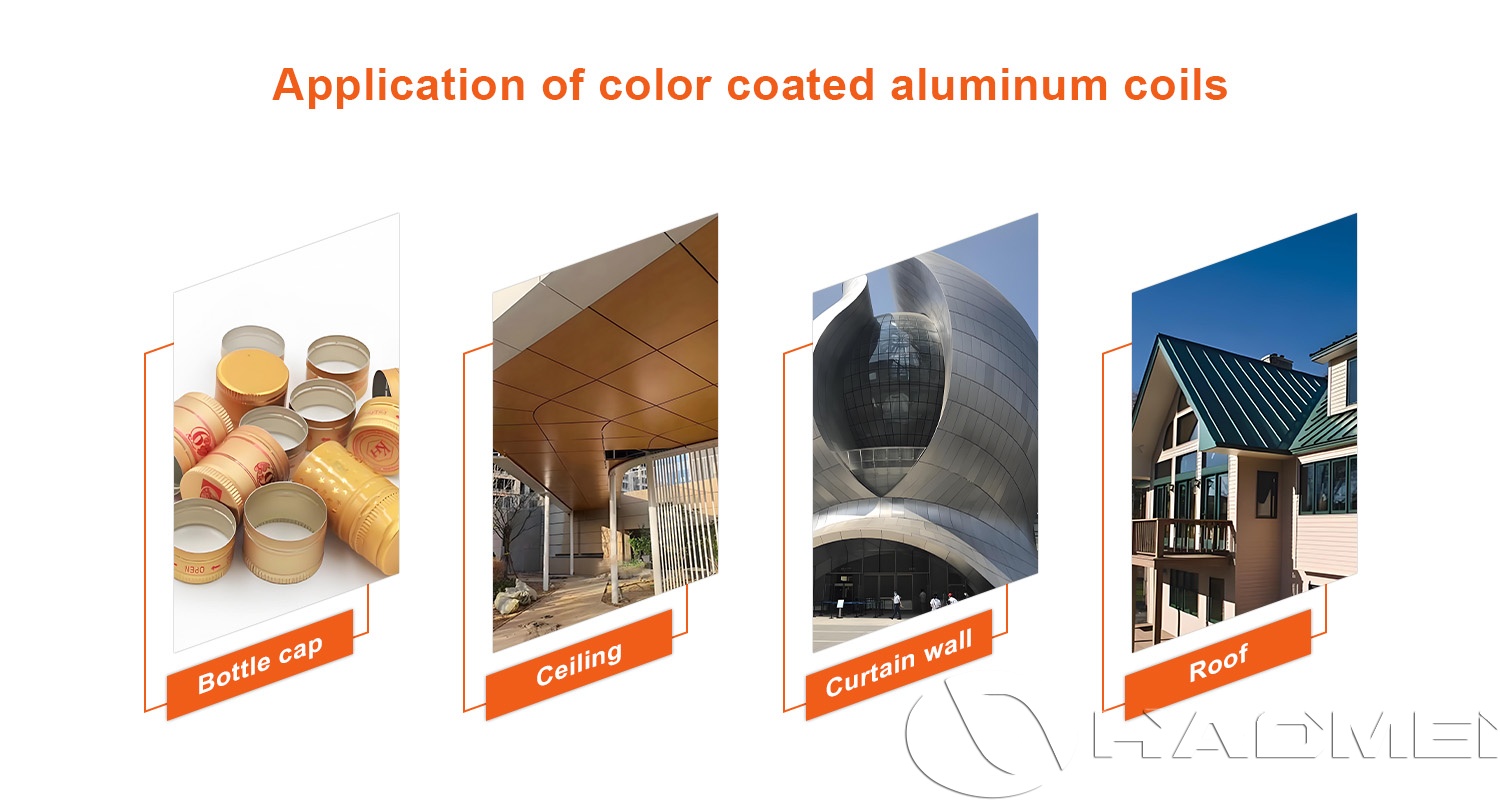
PVDF-coated aluminum coil is processed into a wide range of architectural products, including:
Aluminum curtain wall panels
Solid aluminum cladding sheets
Aluminum composite panel skins
Honeycomb panel face sheets
Cassette panels and folded facade systems
Canopies, fascia, parapet caps, and soffits
Roof edging and architectural trim
Column cladding and entrance features
Sunshade louvers and perforated decorative panels
The material combines the low weight and formability of aluminum with a high-weatherability finish suitable for large, exposed architectural surfaces. Its long-term performance depends on alignment between alloy, temper, coating system, color, fabrication method, and the environmental conditions of the installed building.
-
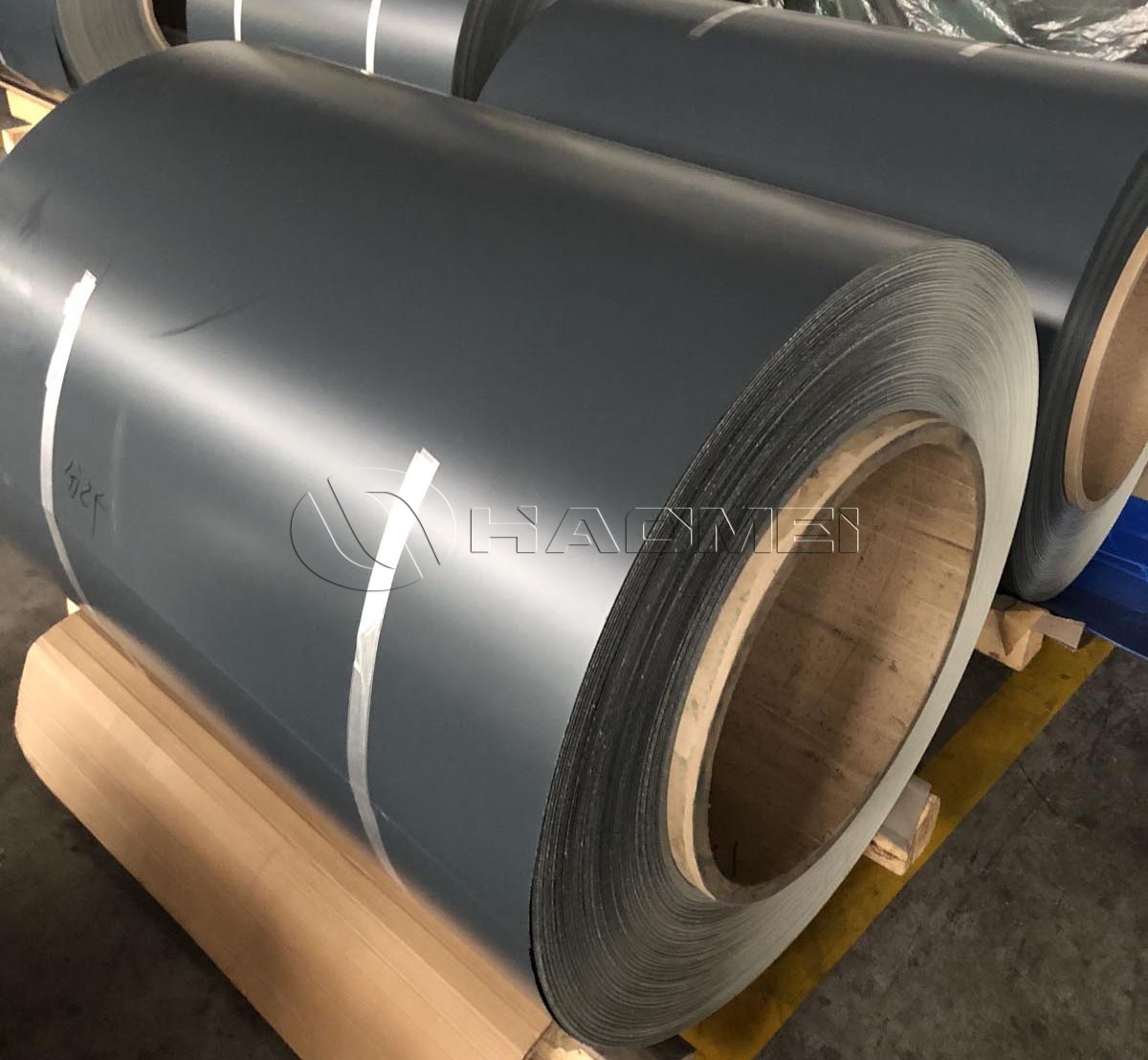
5052 H34 Color Coated Aluminum Coil Inventory
5052 H34 color coated aluminum coil with PVDF or PE finishes, marine-grade corrosion resistance, stable formability, and specs for facade, roofing and trim.
2026-01-21
-
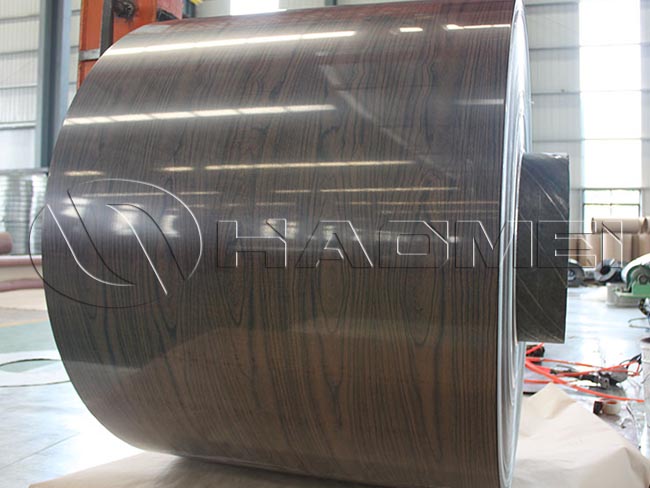
Color coated Aluminum Coils for Roofing, Ceiling, and Wall Systems
Color-coated aluminum coil is widely used in roofing, ceiling, and wall systems, offering advantages such as lightweight construction, excellent weather resistance, strong decorative appeal, and easy processing.
2026-01-04
-
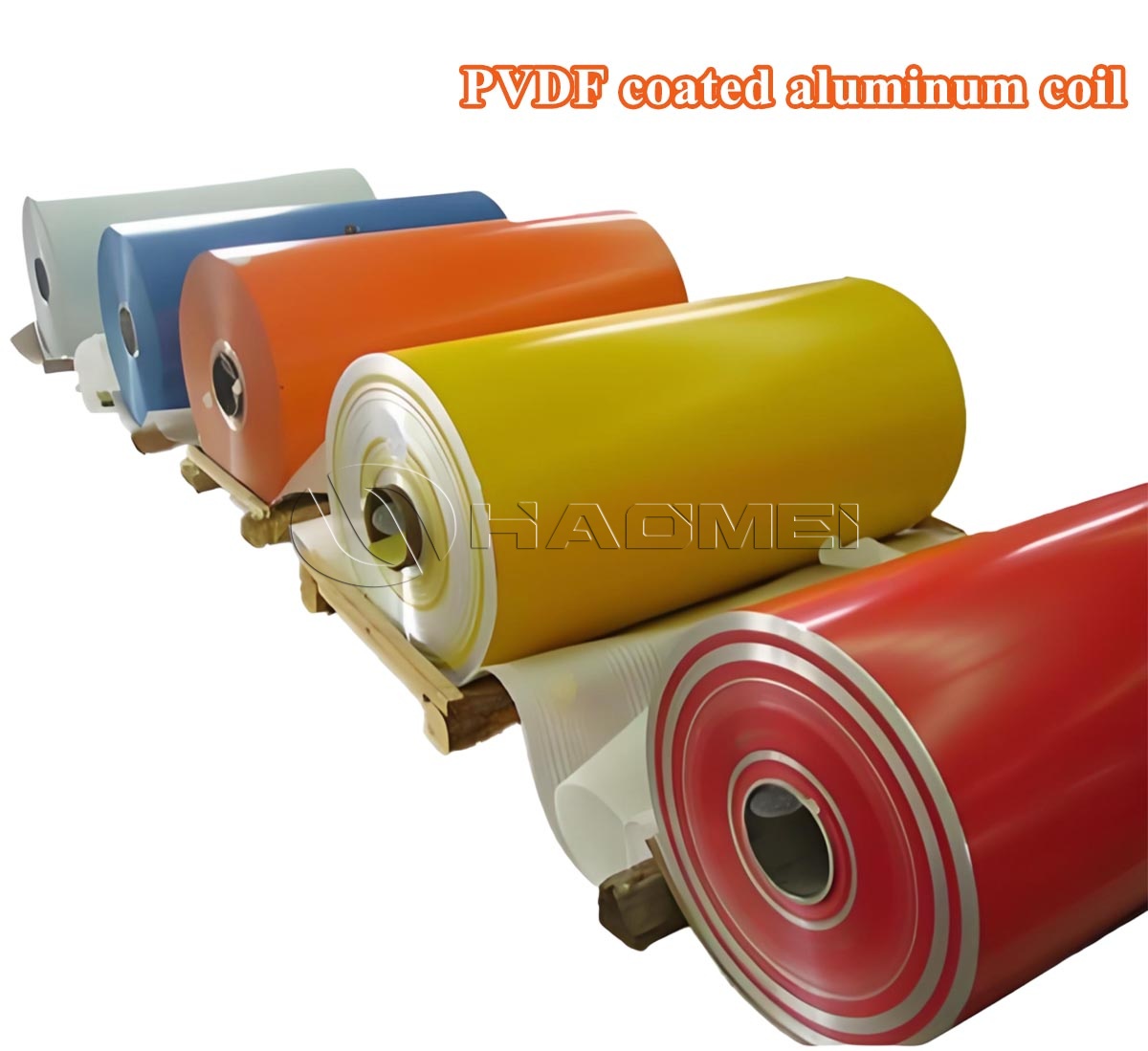
Pvdf Coated Aluminum Coil Coating Lifespan
Learn PVDF coated aluminum coil coating lifespan, fluorocarbon coating systems, coil coating process, and weather resistance performance for façades and roofing.
2026-01-28
Contact Directly
-

ADD: No.14 Waihuan Road, CBD, Zhengzhou, China
-

WhatsApp: +86-18703635966
-

E-MAIL: sales@alummc.com