

News
 By Hermione
PE Coated Aluminum Coil for Ceiling Tiles
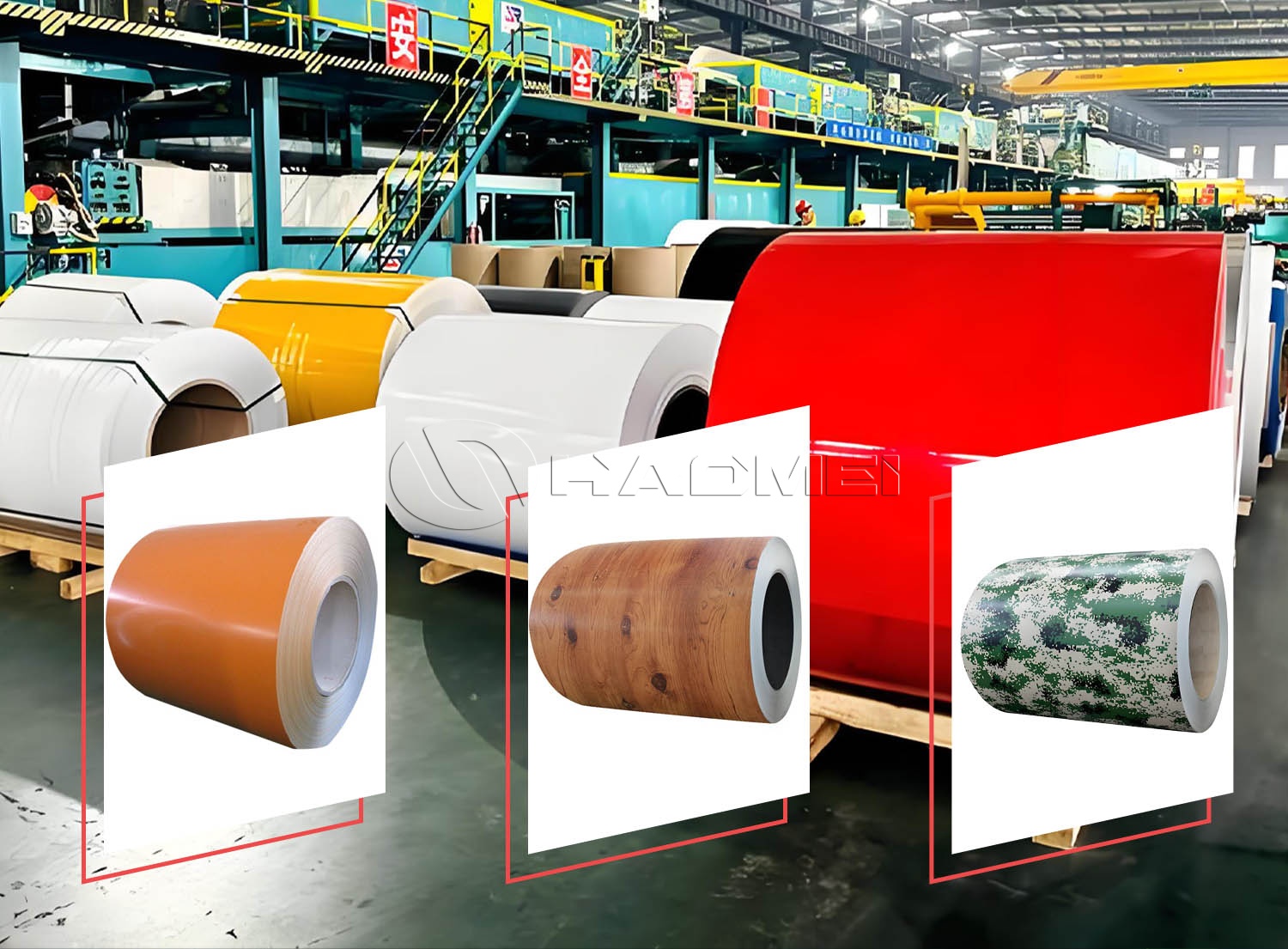
PE coated aluminum coil for ceiling tiles is positioned as a pre-painted aluminum material for indoor suspended ceiling systems, including lay-in tiles, clip-in panels, strip ceilings, baffle ceilings, and decorative ceiling modules. It combines the light weight and formability of aluminum with a polyester coating surface that provides consistent color, controlled gloss, and practical resistance to indoor moisture, staining, and handling marks.
Material Characteristics for Ceiling Tile Production
Ceiling tiles require a material that can be cut, punched, notched, embossed, roll formed, and bent without coating cracking or surface defects. Compared with post-painted sheet, pre-painted aluminum coil provides better production efficiency because the surface is already coated before panel forming.
The main advantages of PE Coated Aluminum Coil in ceiling tile manufacturing include:
Low density, reducing the overall load of suspended ceiling systems
Good flatness and dimensional stability after slitting and leveling
Smooth painted surface suitable for visible architectural interiors
Good coating flexibility for bending, perforating, and edge forming
Wide color options, including white, metallic, matte, and custom RAL colors
Practical indoor corrosion resistance with proper pretreatment and coating thickness
Coating System Structure
A typical PE coated aluminum coil for ceiling tiles is produced by continuous coil coating. The aluminum substrate is cleaned, chemically pretreated, coated with primer and topcoat, then cured under controlled temperature and line speed. The back side can be coated with service back paint to improve protection and handling stability.
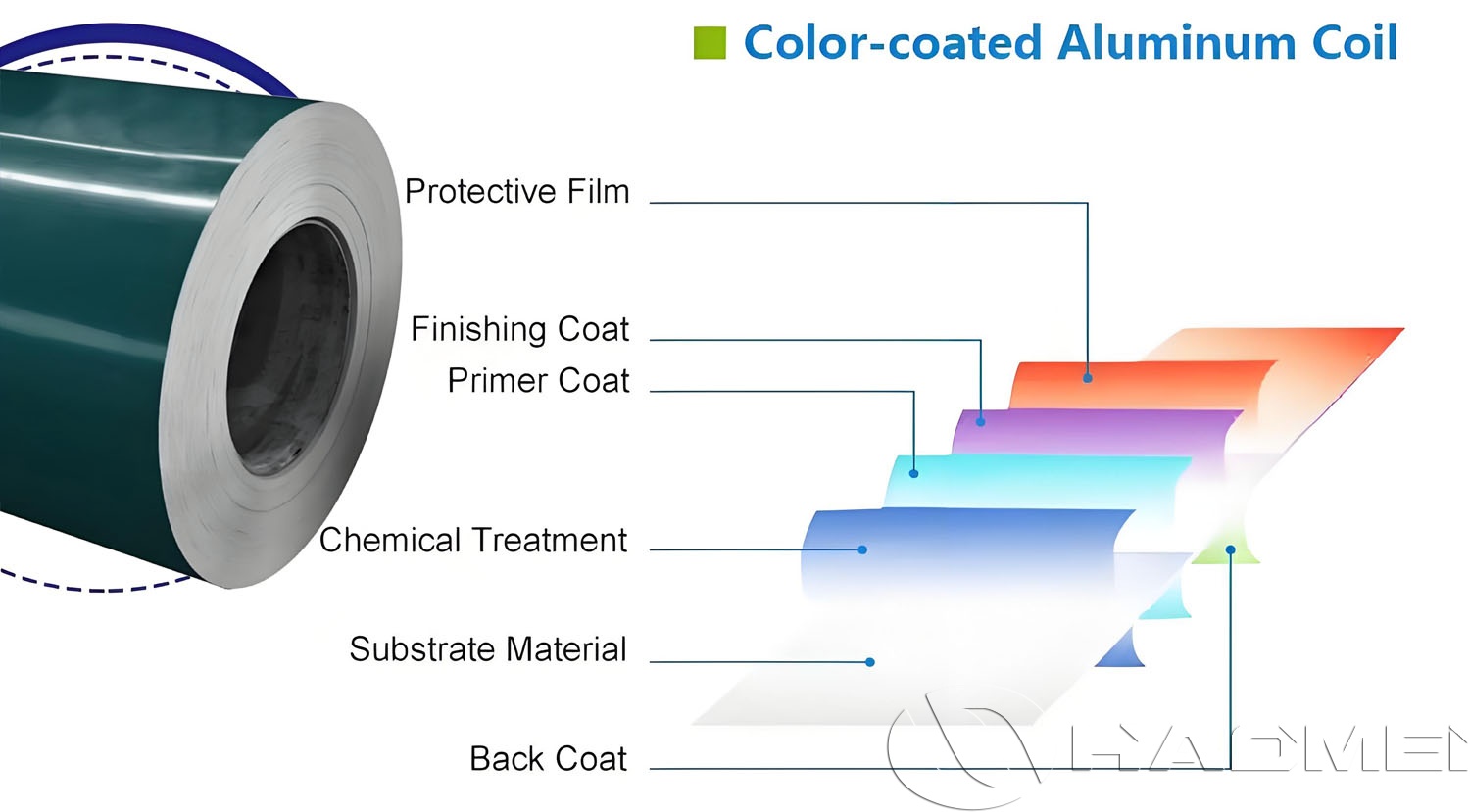
For ceiling applications, the polyester topcoat is generally selected for indoor decorative performance rather than extreme outdoor weathering. The coating should balance hardness, adhesion, flexibility, stain resistance, and color uniformity. A common structure includes:
Aluminum substrate
Chemical conversion or chrome-free pretreatment layer
Primer layer for adhesion and corrosion resistance
PE topcoat for color, gloss, and surface protection
Back coating for rear-side protection and process stability
Core Specifications of PE Coated Aluminum Coil for Ceiling Tiles
| Item | Common Specification |
|---|---|
| Product | PE coated aluminum coil for ceiling tiles |
| Common alloys | 1060, 1100, 3003, 3004, 3105, 5005 |
| Temper | O, H14, H24, H26, H46, depending on forming requirement |
| Thickness | 0.20-1.20 mm, commonly 0.40-0.80 mm for ceiling panels |
| Width | 30-1600 mm, supplied as coil or slit coil |
| Top coating | Polyester, typically 15-25 microns |
| Back coating | PE or service back coat, typically 5-10 microns |
| Surface finish | Smooth, matte, high gloss, embossed, perforation-ready surface |
| Color | White, black, silver, metallic, RAL colors, custom colors |
| Gloss range | Approximately 10-80 GU, based on project design |
| Coil ID | 405 mm or 508 mm |
| Typical tests | T-bend, pencil hardness, impact, adhesion, MEK rub, color difference |
| Application | Ceiling tiles, strip ceilings, baffle ceilings, suspended ceiling panels |
| MOQ | 1-3 tons |
Commonly Used Alloys
The alloy selection affects strength, formability, flatness, cost, and panel behavior during forming. For ceiling tiles, 1000 series and 3000 series aluminum are the most widely used.
1100 Aluminum Coil
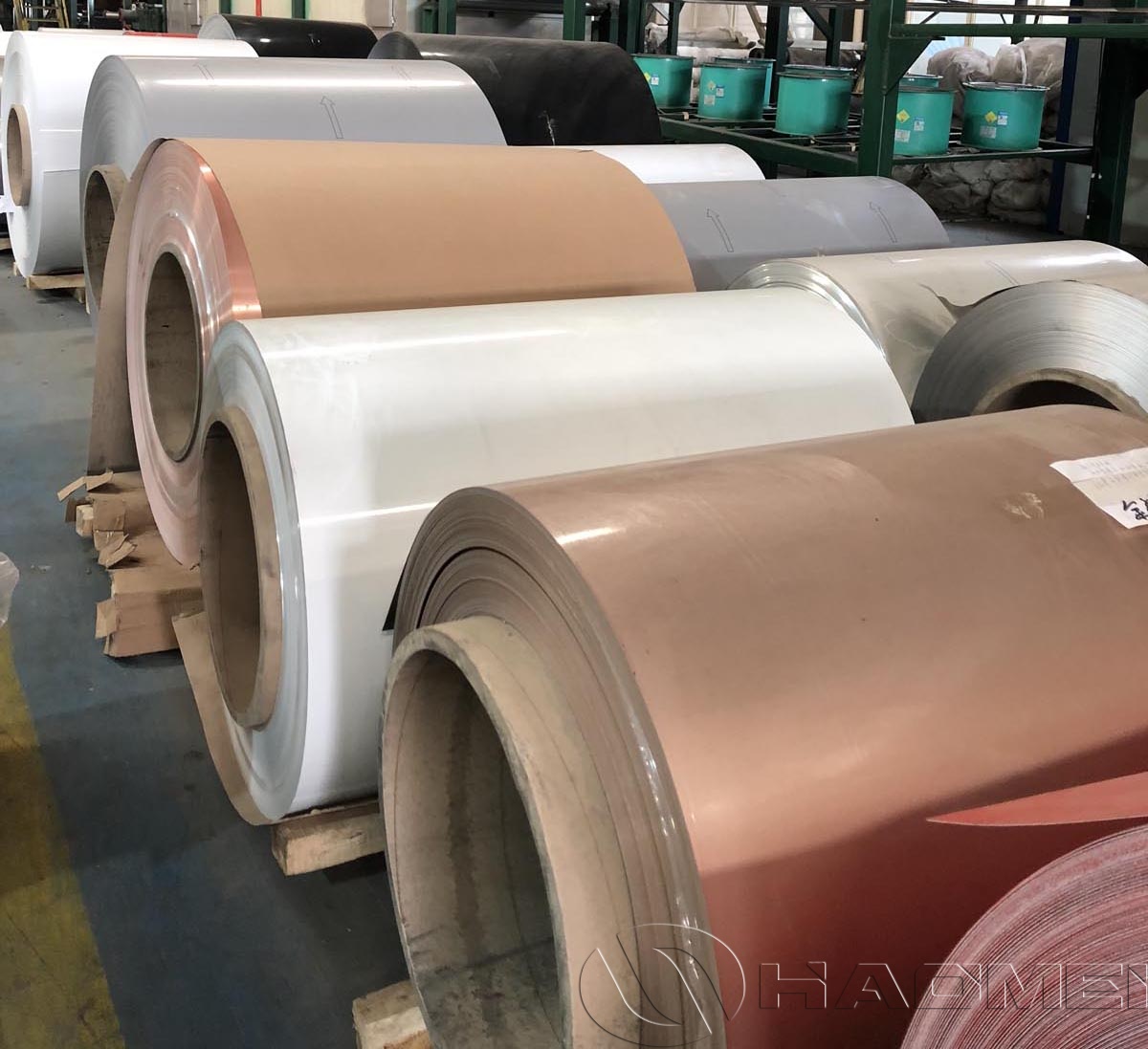
1100 aluminum has high aluminum purity, excellent corrosion resistance, and very good formability. It is suitable for decorative ceiling tiles, flat panels, strip ceilings, and products requiring easy stamping or shallow forming. 1100 Color Coated Aluminum Coil is often selected when surface appearance and processing flexibility are more important than high mechanical strength.
1060 Aluminum Coil
1060 aluminum is also a high-purity aluminum alloy with excellent ductility and good thermal conductivity. It is used for simple ceiling profiles, decorative panels, and lightweight interior ceiling components. Its soft forming behavior makes it suitable for bending and roll forming, especially in thinner gauges.
3003 Aluminum Coil
3003 aluminum contains manganese, giving it higher strength than 1000 series aluminum while maintaining good workability. It is widely used for clip-in ceiling tiles, perforated ceiling panels, and larger panels where improved rigidity is required. In many ceiling systems, 3003-H24 or 3003-H26 provides a good balance between strength and formability.
3004 and 3105 Aluminum Coil
3004 and 3105 aluminum coils provide higher strength and stable forming performance. They are suitable for ceiling panels that require better stiffness, larger spans, or more complex profiles. These alloys are often used when the finished tile must resist deformation during installation, handling, and long-term service.
5005 Aluminum Coil
5005 aluminum offers good corrosion resistance and a fine surface condition. It can be used for higher-grade architectural ceiling products where appearance consistency and substrate quality are important. For PE coated ceiling tiles, 5005 is generally selected for premium interior decoration rather than standard mass-market ceiling panels.
Manufacturing and Process Control Points
For ceiling tile production, coating quality is closely related to substrate preparation and line control. In continuous coating, degreasing and chemical pretreatment must be stable to ensure adhesion. Primer and PE topcoat viscosity, coating weight, curing temperature, and oven residence time must be controlled to prevent under-curing, over-curing, orange peel, color deviation, or poor bending performance.
Slitting and leveling are also important. Burrs, wave defects, telescoping coils, and surface scratches can affect ceiling panel forming and visible appearance. For perforated ceiling tiles, the coating must withstand punching without flaking around the hole edge. For clip-in ceiling panels, the coating must tolerate edge bending and corner notching.
Surface Appearance and Functional Performance
Ceiling tiles are highly visible interior products, so the surface must meet both decorative and processing requirements. White and off-white PE coated aluminum coils are common for commercial ceilings because they provide a clean appearance and good light reflection. Matte and low-gloss finishes are used to reduce glare, while metallic or textured finishes support decorative design.
Key performance requirements normally include:
Stable color difference control between coils and batches
Good coating adhesion after bending and forming
Adequate pencil hardness for handling and installation resistance
Good stain resistance for indoor cleaning conditions
Proper gloss consistency across the coil width and length
Clean surface without scratches, pinholes, coating streaks, or particles
Typical Performance Validation
| Test Item | Purpose in Ceiling Tile Use |
|---|---|
| Coating thickness test | Confirms topcoat and backcoat protection level |
| T-bend test | Evaluates coating flexibility during edge forming |
| Cross-hatch adhesion | Checks bonding between coating and substrate |
| Pencil hardness | Assesses resistance to handling scratches |
| Impact test | Evaluates coating integrity under forming stress |
| MEK rub test | Verifies curing degree of the polyester coating |
| Color difference test | Controls visible consistency between panels |
| Salt spray or humidity test | Supports corrosion assessment for indoor environments |
-
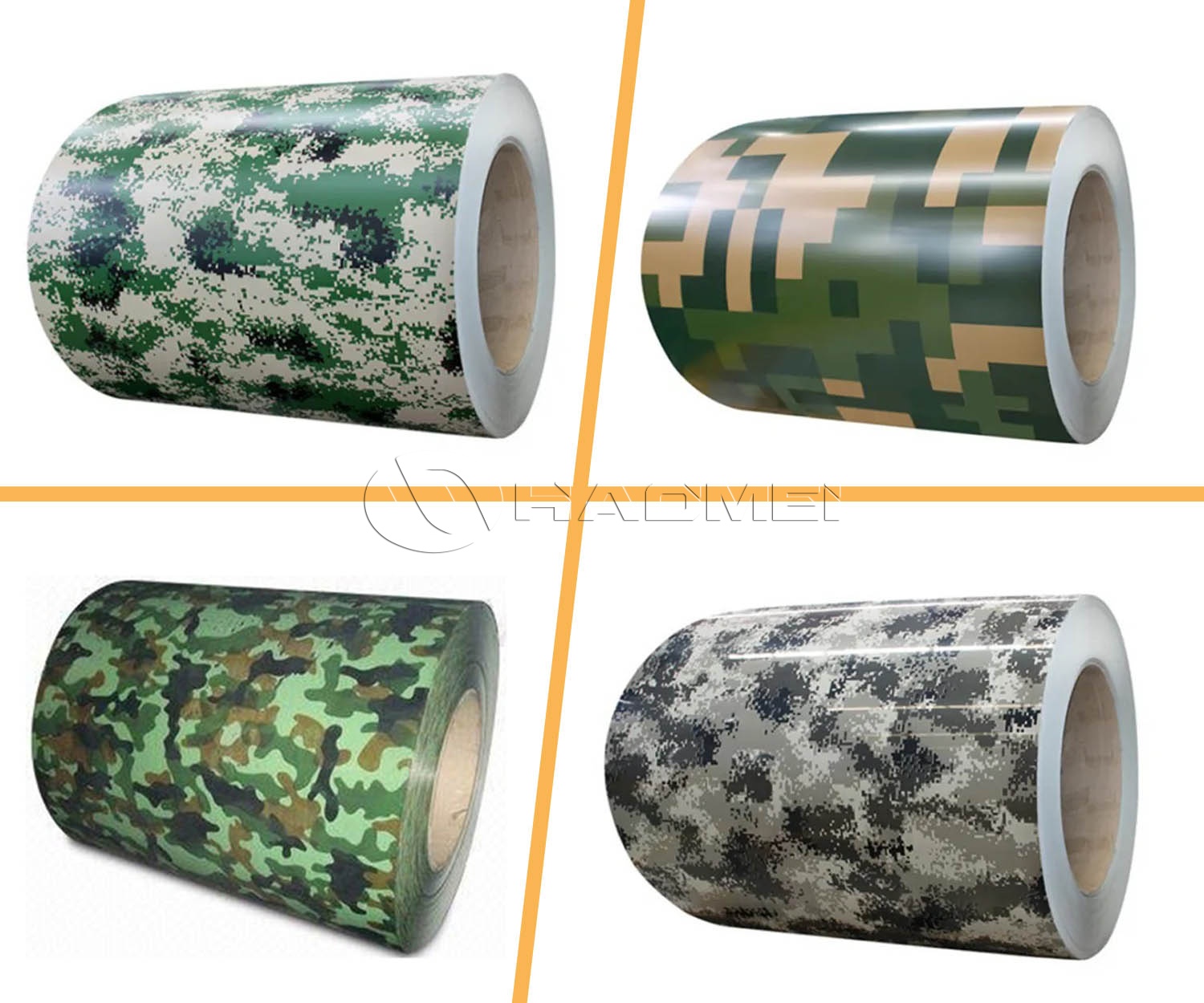
Decorative Camouflage-Pattern Aluminum Coils
Decorative camouflage-pattern aluminum coils combine PE or PVDF coating, workable alloys, and printed finishes for facades, ceilings, panels, and equipment.
2026-06-25
-
ASTM B209 3105-H14 PVDF Color-Coated Aluminum Coil for Building Roofing and Curtain Walls
ASTM B209 3105-H14 PVDF color-coated aluminum coil provides durable, weather-resistant finishes for architectural roofing and curtain wall systems.
2026-09-16
-
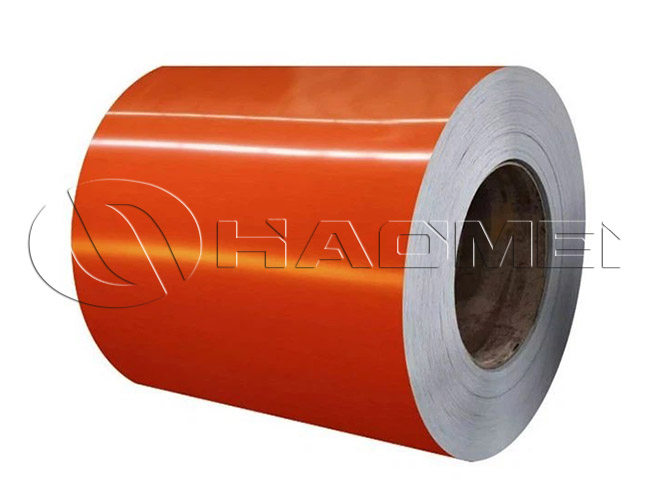
Cold Rolled 1050 1060 1070 1100 1200 Color-Coated Decorative Aluminum Coils
In architectural decoration, home appliance housings, advertising signage, and industrial decoration, cold rolled color-coated aluminum coils are gradually replacing traditional steel materials due to their attractive appearance, excellent processability,
2025-12-30
Contact Directly
-

ADD: No.14 Waihuan Road, CBD, Zhengzhou, China
-

WhatsApp: +86-18703635966
-

E-MAIL: sales@alummc.com