

News
 By Hermione
Fire-Resistant 3003 PVDF Color-Coated Aluminum Coil
Fire-resistant 3003 PVDF color-coated aluminum coil is positioned as a durable pre-painted metal material for architectural envelopes and interior systems where corrosion resistance, color stability, formability, and controlled fire performance are required. It is commonly used in aluminum composite panel skins, curtain wall cladding, roofing systems, ceilings, soffits, partition panels, transportation interiors, and other building decoration applications.
Product Overview
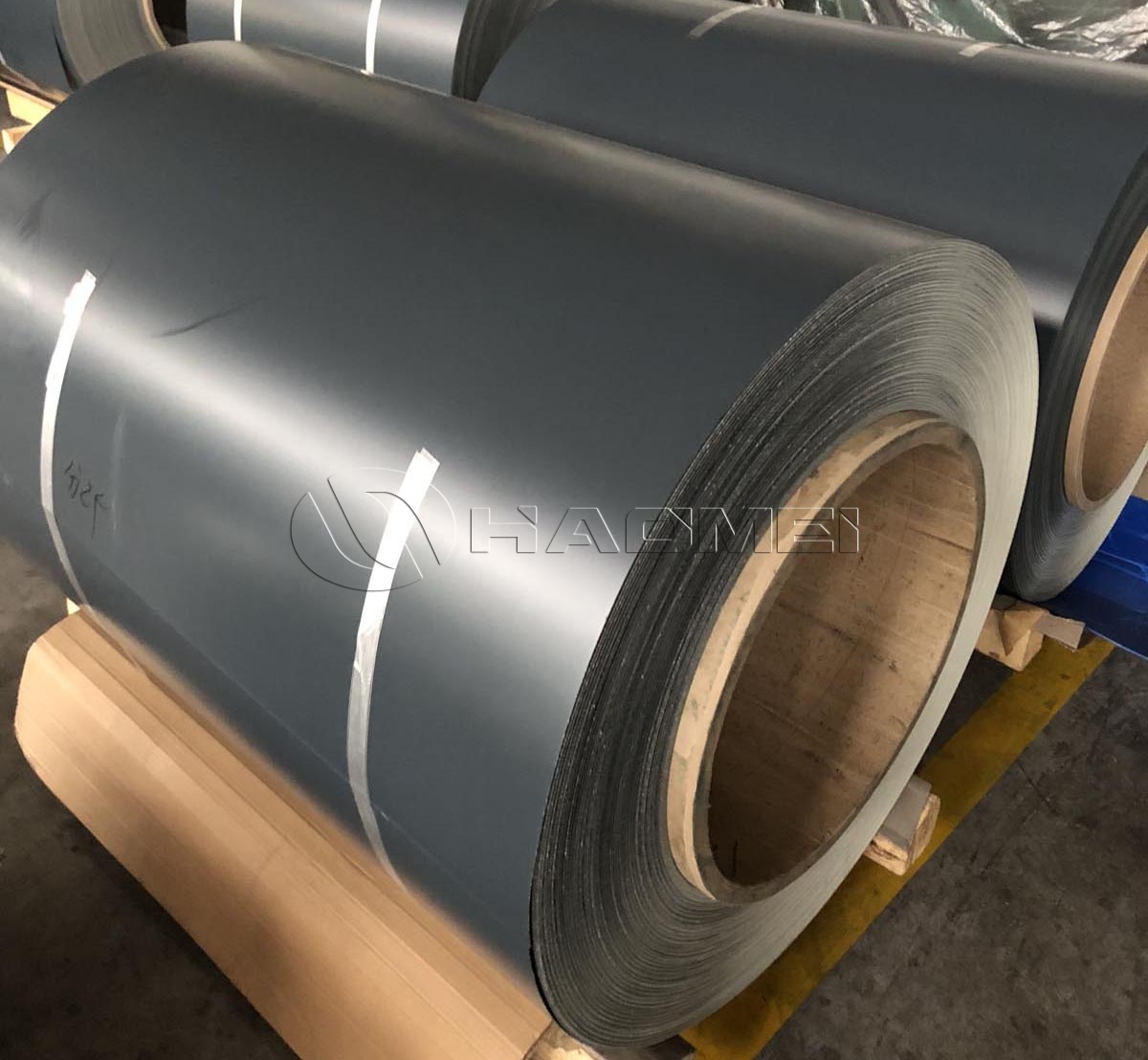
3003 aluminum alloy is an Al-Mn series material with higher strength than 1000 series pure aluminum while maintaining good ductility and roll-forming performance. When combined with a fluorocarbon PVDF coating system, it provides a balanced solution for exterior and semi-exterior environments where long-term weather resistance and reliable processing behavior are important.
The fire-resistant design of this material is based on three factors: a non-combustible aluminum substrate, controlled coating film thickness, and a fire-retardant coating formulation or system design verified according to applicable project standards. Aluminum itself does not burn, but PVDF and primer layers are organic coatings, so fire performance should be evaluated as part of the coated sheet, panel, or final assembly.
In product families, this material is closely related to 3003 Color Coated Aluminum Coil, with enhanced emphasis on PVDF weatherability and fire-resistant coating design.
Why 3003 Alloy Is Used
3003 is one of the most widely used alloys for architectural color-coated aluminum coil because it offers a practical combination of strength, corrosion resistance, and formability. The manganese addition improves mechanical performance compared with 1050, 1060, and 1100 aluminum while preserving excellent workability for slitting, bending, roll forming, stamping, and continuous panel production.
Common tempers for 3003 coated coil include H14, H24, and H26. H14 and H24 are frequently selected for facade panels and roofing profiles where moderate hardness and good bending performance are required. H26 may be used when higher stiffness is desired, provided that the forming radius and coating flexibility are properly matched.
Common Alloys for Color-Coated Aluminum Coil
Although 3003 is a core alloy for fire-resistant PVDF coated coil, other alloys are also used according to product structure and application demand:
1050 and 1060: high aluminum purity, excellent corrosion resistance, soft forming behavior, suitable for ceilings, signage, and decorative panels.
1100: good ductility and surface quality, often used for general architectural and indoor decoration materials.
3003: balanced strength and formability, widely used in curtain wall panels, roofing, cladding, and composite panel skins.
3004 and 3105: higher strength than 3003, suitable for roofing, gutters, siding, and building envelope products.
5005: good anodizing and coating compatibility, often used for facade and decorative applications requiring improved surface appearance.
5052: higher strength and better marine corrosion resistance, suitable for more demanding industrial or transportation applications.
Core Specifications of Fire-Resistant 3003 PVDF Color-Coated Aluminum Coil
| Specification Item | Typical Range or Description |
|---|---|
| Base alloy | 3003 aluminum alloy, Al-Mn series |
| Common tempers | H14, H24, H26, custom temper according to forming demand |
| Thickness | 0.20 mm to 1.50 mm, project-specific options available |
| Width | 600 mm to 1600 mm, depending on coating line capability |
| Coating type | PVDF fluorocarbon coating, usually 2-coat or 3-coat system |
| Topcoat thickness | Typically 18-25 microns for exterior use |
| Back coating | Epoxy, polyester, or service coating, typically 5-12 microns |
| Color system | RAL colors, solid colors, metallic colors, custom color matching |
| Surface finish | Smooth, matte, high gloss, textured, or metallic finish |
| Fire performance | Evaluated by applicable standards such as ASTM E84, EN 13501-1, or project-specific assembly testing |
| Weather resistance | Excellent UV resistance and outdoor color retention with PVDF system |
| Processing suitability | Slitting, leveling, laminating, bending, roll forming, and panel fabrication |
| Main applications | Facades, roofing, ceilings, ACP skins, soffits, interior wall panels |
| MOQ | 1-3 tons |
PVDF Coating Architecture
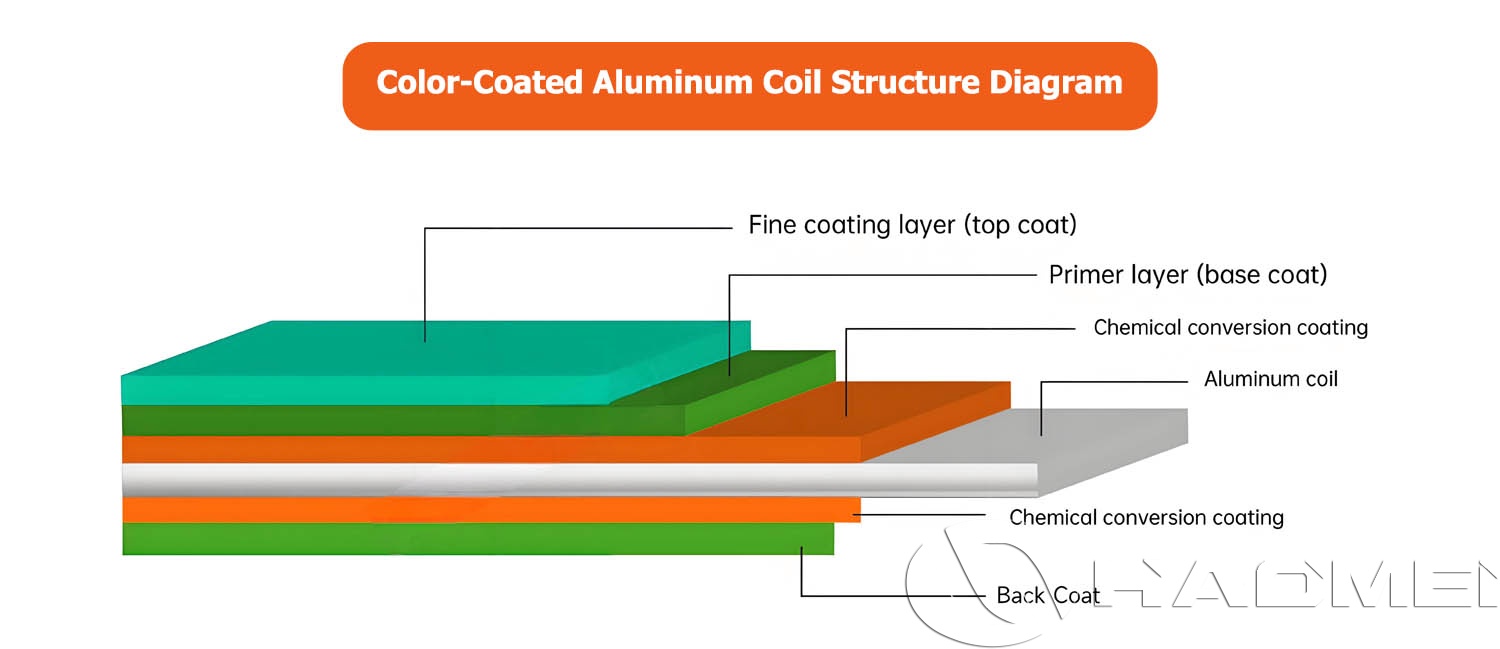
A typical fire-resistant PVDF coated aluminum coil uses a multi-layer structure. The aluminum substrate is cleaned and chemically pretreated to improve adhesion and corrosion resistance. A primer layer is then applied to support bonding and barrier performance, followed by a PVDF topcoat that provides color, UV stability, and surface durability. In some exterior systems, a clear coat or functional top layer may be added for metallic colors or enhanced weathering performance.
PVDF resin is valued for its strong carbon-fluorine bond, which contributes to excellent resistance against ultraviolet degradation, chalking, and chemical attack. Compared with standard PE coating, PVDF Coated Aluminum Coil is more suitable for long-term exterior exposure, especially in curtain wall, roofing, and high-rise building applications.
Fire-Resistant Performance Considerations
Fire-resistant 3003 PVDF color-coated aluminum coil is not simply defined by the alloy or coating name. Fire behavior depends on the complete material system, including coating chemistry, film thickness, substrate thickness, backing layer, adhesive if laminated, core material if used in composite panels, and installation method.
For architectural use, fire performance may be assessed through flame spread, smoke generation, burning droplets, heat release, and assembly behavior. The aluminum substrate contributes non-combustibility, while the coating system is engineered to limit flame propagation and reduce smoke output within the constraints of organic coating technology.
Key engineering controls include:
Stable pretreatment to prevent coating delamination during heat exposure.
Controlled primer and topcoat thickness to balance durability and organic load.
Fire-retardant additives selected without compromising PVDF weather resistance.
Proper curing temperature and dwell time to ensure complete film formation.
Batch testing for coating adhesion, flexibility, solvent resistance, and color consistency.
Manufacturing and Process Control
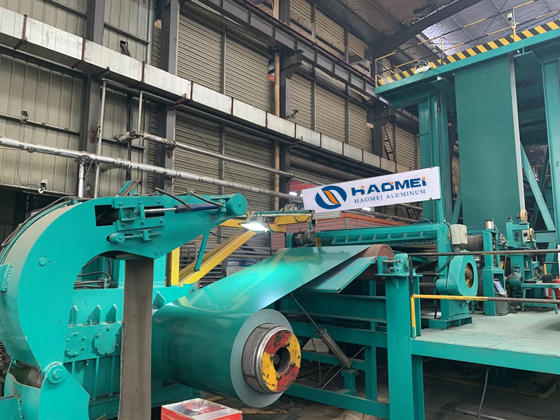
The production of fire-resistant 3003 PVDF color-coated aluminum coil typically follows continuous coil coating technology. The process includes decoiling, alkaline cleaning, water rinsing, chemical conversion treatment, drying, primer coating, curing, top coating, final curing, cooling, protective film lamination if required, and recoiling.
Process stability is critical. Pretreatment weight, oven temperature, line speed, wet film thickness, dry film thickness, and coating viscosity must be controlled within defined limits. If the oven temperature is too low, coating crosslinking may be incomplete, reducing adhesion and solvent resistance. If the temperature is too high, coating brittleness, color shift, or gloss loss may occur.
For 3003 alloy, coil flatness and mechanical consistency are also important. Poor flatness can cause coating unevenness, printing defects, panel distortion, and installation problems after fabrication.
Application Scenarios
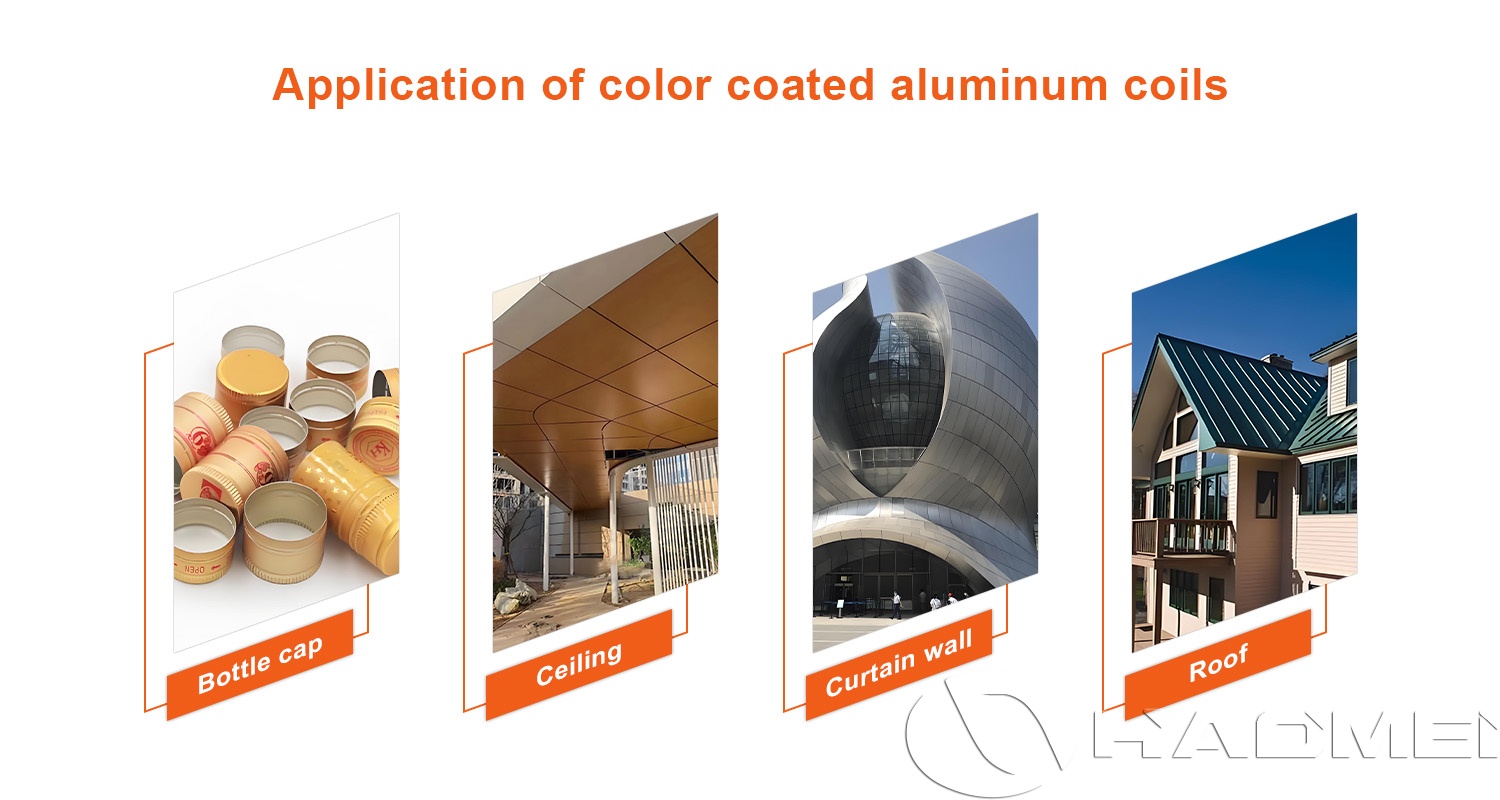
In exterior building envelopes, fire-resistant 3003 PVDF color-coated aluminum coil is commonly processed into flat panels, profiled sheets, honeycomb panel skins, and aluminum composite panel skins. Its PVDF surface provides long-term resistance to sunlight, rain, temperature cycling, and urban pollutants.
In roofing and ceiling systems, 3003 alloy offers sufficient formability for roll-formed profiles, standing seam panels, perforated ceilings, and decorative suspended panels. For public buildings, transportation hubs, commercial complexes, and high-density residential projects, the combination of stable coating performance and controlled fire behavior supports safer material specification.
For interior wall and soffit systems, the material provides low weight, clean appearance, and consistent color. When used in fire-sensitive spaces, the final panel structure should be evaluated according to the relevant building code and installation environment.
Performance Validation
A complete quality validation program for fire-resistant 3003 PVDF color-coated aluminum coil generally includes substrate inspection, coating thickness measurement, gloss and color difference testing, T-bend flexibility, cross-hatch adhesion, impact resistance, pencil hardness, MEK solvent rub, boiling water resistance, salt spray testing, artificial weathering, and fire performance testing where required.
The most reliable specification combines alloy grade, temper, coating type, film thickness, color tolerance, mechanical requirements, corrosion resistance criteria, and applicable fire-test method in one controlled technical document.
-
3105 Color Coated Aluminum Coil for Shutter Doors
3105 color coated aluminum coil delivers balanced strength, formability, and durable finishes for residential, commercial, and industrial shutter doors.
2026-09-20
-
1100 Color-Coated Aluminum Coils for Automotive Interior Decoration
1100 PE / PVDF coated aluminum coils not only retain the physical properties of aluminum but also provide a wide range of color options, making them widely used in various automotive interior components.
2025-12-19
-
PVDF Coated Aluminum Coil for Coastal Environments
Explore PVDF coated aluminum coil for coastal buildings, covering alloys, fluorocarbon coating structure, corrosion resistance, and core specifications.
2026-05-21
Contact Directly
-

ADD: No.14 Waihuan Road, CBD, Zhengzhou, China
-

WhatsApp: +86-18703635966
-

E-MAIL: sales@alummc.com