

News
 By Hermione
Durable Color Coated Aluminum Coil for Coastal Areas
Durable color coated aluminum coil for coastal areas is positioned for exterior building envelopes and metal products exposed to salt-laden air, strong UV radiation, high humidity, and frequent temperature changes. It is commonly used for roofing systems, curtain wall panels, facade cladding, soffits, ceilings, gutters, rolling shutters, and other architectural components in seaside cities, ports, islands, and humid marine environments.
Why Coastal Environments Require Higher Coating Durability
Coastal air contains chloride ions carried by sea mist and wind. When these ions settle on metal surfaces, they can accelerate coating degradation, under-film corrosion, edge corrosion, and fastener-area staining. In addition, intense sunlight and thermal cycling can cause loss of gloss, color fading, chalking, and micro-cracking if the coating system is not designed for outdoor exposure.
A coastal-grade color coated aluminum coil relies on three coordinated elements: a corrosion-resistant aluminum substrate, stable chemical pretreatment, and a weatherable paint system. For long-term exterior performance, PVDF Coated Aluminum Coil is widely used because PVDF resin offers excellent resistance to UV radiation, chalking, chemical pollution, and salt spray exposure.
Coating System Structure
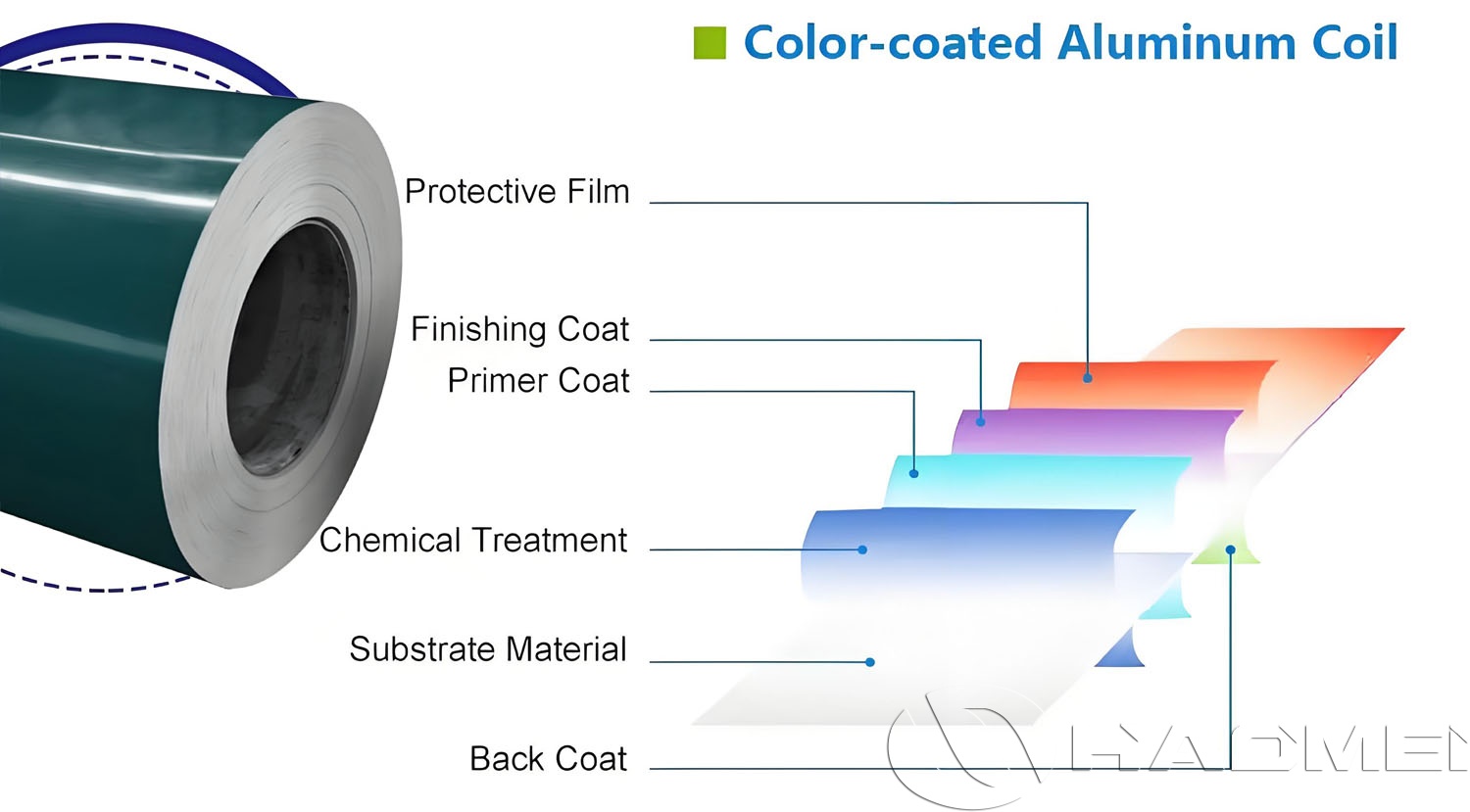
A typical pre-painted aluminum coil for coastal applications includes the aluminum base metal, conversion layer, primer, topcoat, and back coat. Each layer has a defined function. The pretreatment layer improves adhesion and corrosion resistance. The primer blocks corrosive media and enhances intercoat bonding. The topcoat provides color, gloss, UV resistance, and surface durability. The back coat protects the reverse side during forming, installation, and service.
For demanding coastal use, the coating system often adopts a PVDF topcoat with a high-performance primer. Film thickness is usually controlled more strictly than standard indoor or general exterior products. Edge protection, coil cleanliness, oven curing temperature, and coating uniformity are also important process factors because thin spots and poor curing can become early failure points in chloride-rich environments.
Core Specifications for Coastal Color Coated Aluminum Coil
| Specification Item | Common Range or Description |
|---|---|
| Product type | Color coated aluminum coil for coastal and marine-adjacent environments |
| Common alloys | 1060, 1100, 3003, 3004, 3105, 5005, 5052, 5754 |
| Temper | O, H14, H16, H24, H26, H32, H34, subject to application requirements |
| Thickness | 0.20 mm-3.00 mm, commonly 0.50 mm-1.20 mm for roofing and facade panels |
| Width | 600 mm-1600 mm, customized according to forming line and panel design |
| Coating system | PVDF, high-durability polyester, or coastal-grade modified coating systems |
| Topcoat thickness | Typically 20-30 μm for PVDF exterior systems |
| Back coat thickness | Typically 5-15 μm, depending on end use and forming process |
| Surface finish | Smooth, matte, glossy, metallic, embossed, or pattern finish |
| Color standard | RAL, Pantone, custom architectural colors, metallic colors |
| Key tests | Salt spray, humidity resistance, QUV aging, T-bend, impact, adhesion, MEK rub |
| Typical applications | Roofing, wall cladding, curtain wall panels, ceilings, gutters, shutters, decorative panels |
Commonly Used Aluminum Alloys
3003 Aluminum Alloy
3003 is one of the most widely used alloys for architectural color coated aluminum coil. It contains manganese as the main alloying element and provides good corrosion resistance, moderate strength, and excellent formability. For roofing panels, wall panels, ceilings, and general exterior decoration, 3003 Color Coated Aluminum Coil offers a balanced combination of processing performance and service durability.
3004 and 3105 Aluminum Alloys
3004 and 3105 alloys are often used where slightly higher strength than 3003 is required. They are suitable for roll forming, bending, and panel fabrication. These alloys are commonly selected for roof sheets, facade panels, soffit systems, and pre-painted building components that must maintain dimensional stability under outdoor exposure.
5005 Aluminum Alloy
5005 has good corrosion resistance and a clean surface appearance, making it suitable for facade panels, decorative cladding, and architectural products where both appearance and durability are important. It is frequently used when the surface finish needs to meet higher visual standards after coating.
5052 and 5754 Aluminum Alloys
5052 and 5754 belong to the 5xxx series aluminum-magnesium alloys. They provide higher strength and strong resistance to marine atmospheric corrosion. These alloys are suitable for coastal architectural elements, transportation components, protective panels, and applications where improved mechanical performance is required.
1060 and 1100 Aluminum Alloys
1060 and 1100 are commercially pure aluminum grades with excellent formability and good corrosion resistance. They are used for decorative panels, ceilings, signage, and lightly formed products. Their strength is lower than 3xxx and 5xxx alloys, so structural loading and panel stiffness are normally considered during product design.
Performance Factors in Coastal Applications
Salt Spray and Humidity Resistance
Salt spray resistance is a key reference for coastal color coated aluminum coil, but it is not the only indicator of outdoor performance. Real coastal exposure combines salt deposition, moisture retention, UV radiation, wind abrasion, and temperature cycling. A well-designed product maintains coating adhesion, limits blistering, and reduces corrosion creep from cut edges and scratches.
UV and Color Stability
Exterior surfaces in coastal areas are exposed to high solar radiation. PVDF coatings are valued for color retention and chalking resistance, especially on roofs and facades with long sun exposure. Metallic colors and dark colors require stable pigment systems and precise curing control to reduce gloss variation and premature fading.
Formability and Coating Adhesion
Color coated aluminum coil is often processed by slitting, roll forming, bending, stamping, or panel profiling. Good T-bend performance and impact resistance help prevent coating cracks during fabrication. For roofing and cladding panels, coating adhesion after forming is essential because micro-cracks can allow moisture and chloride penetration.
Manufacturing Control for Durable Coastal Performance
Durable performance starts from substrate preparation. The aluminum strip must have stable thickness, flatness, surface cleanliness, and mechanical properties. Before coating, degreasing and chemical pretreatment remove rolling oil and create a uniform conversion layer. In continuous coil coating, primer and topcoat are applied by precision rollers, then cured in controlled ovens.
Important production control points include coating viscosity, wet film thickness, oven temperature, peak metal temperature, line speed, solvent evaporation, and cooling conditions. For coastal-grade products, the uniformity of the primer and topcoat is especially important at the strip edges and across the full width. Consistent curing improves solvent resistance, coating hardness, adhesion, and long-term weatherability.
Application Scenarios
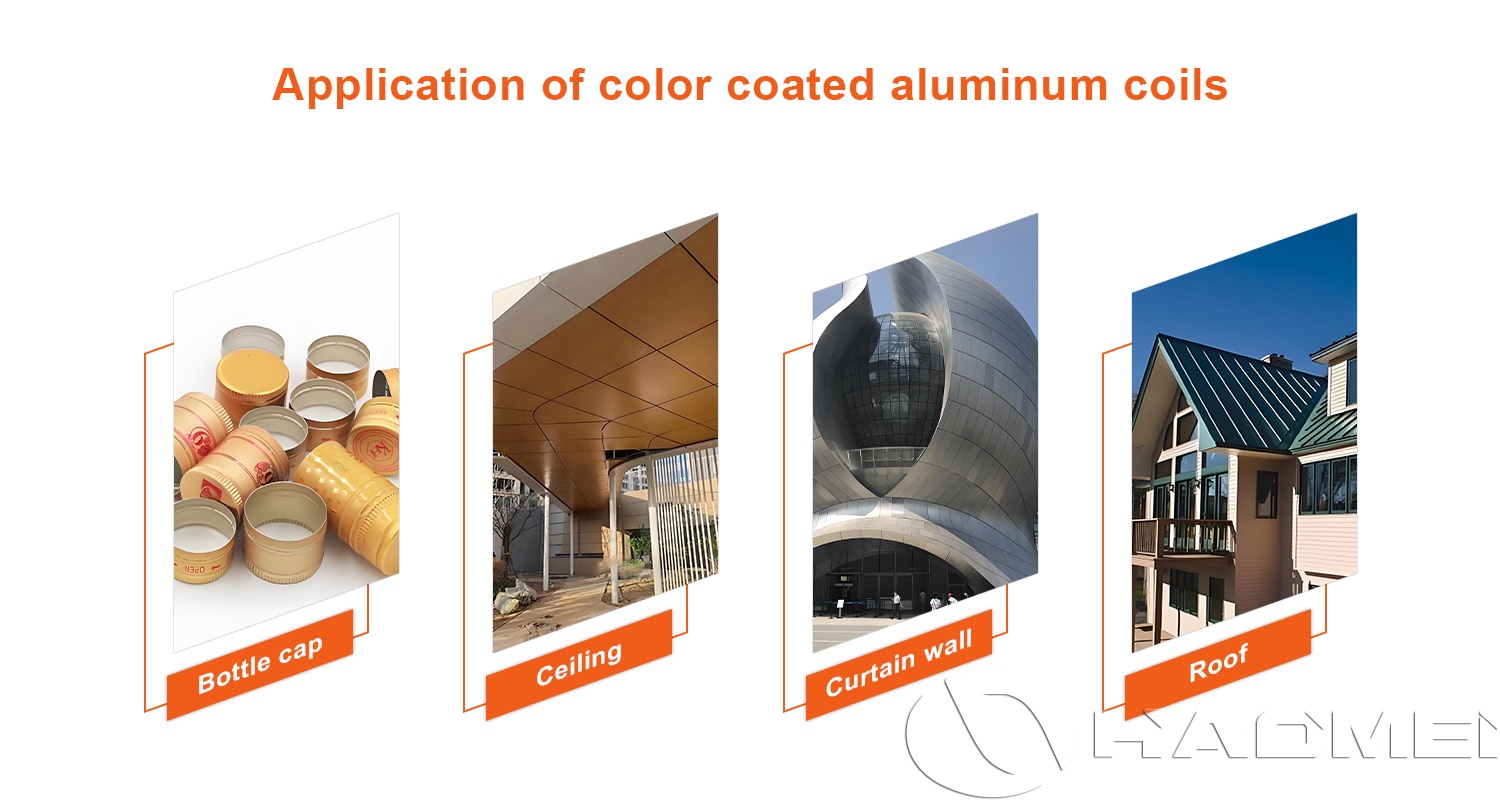
Color coated aluminum coil for coastal areas is used in a wide range of outdoor and semi-outdoor systems:
Standing seam roofing and profiled roof sheets
Aluminum curtain wall panels and facade cladding
Coastal residential and commercial building envelopes
Port buildings, marine service facilities, and island architecture
Ceiling panels, soffits, eaves, and canopy systems
Gutters, downspouts, shutters, and exterior decorative trims
In these applications, the coil must combine corrosion resistance, stable appearance, coating flexibility, and sufficient mechanical strength. The alloy, temper, coating type, film thickness, and panel design are typically matched to the exposure level, forming process, and required service performance.
-
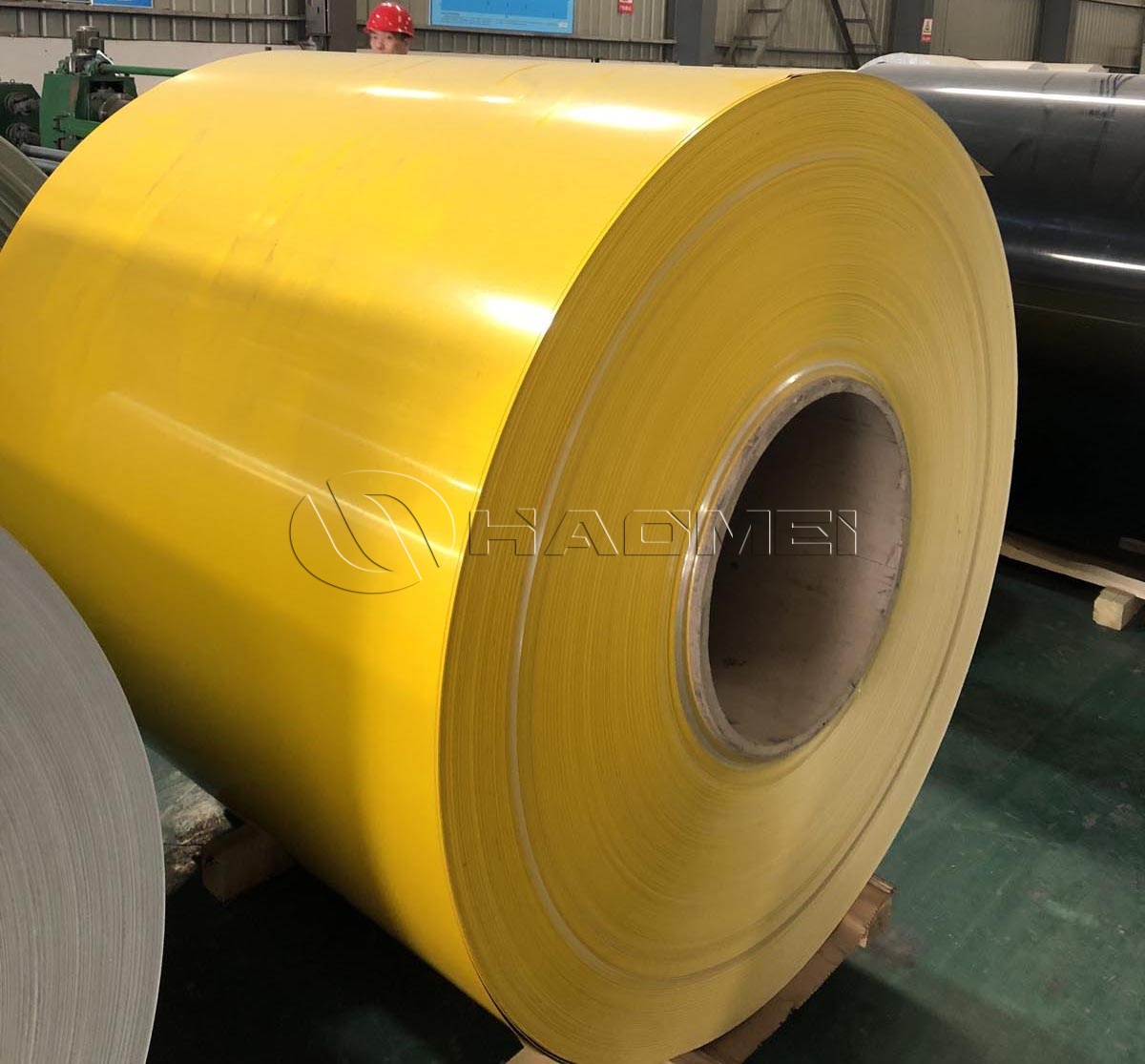
0.10-0.5mm Color-Coated Aluminum Coil for Signboards and Advertising Signs
Explore 0.10-0.5mm color-coated aluminum coil for signboards and advertising signs, including alloys, PE/PVDF coatings, finishes, and specifications.
2026-08-21
-
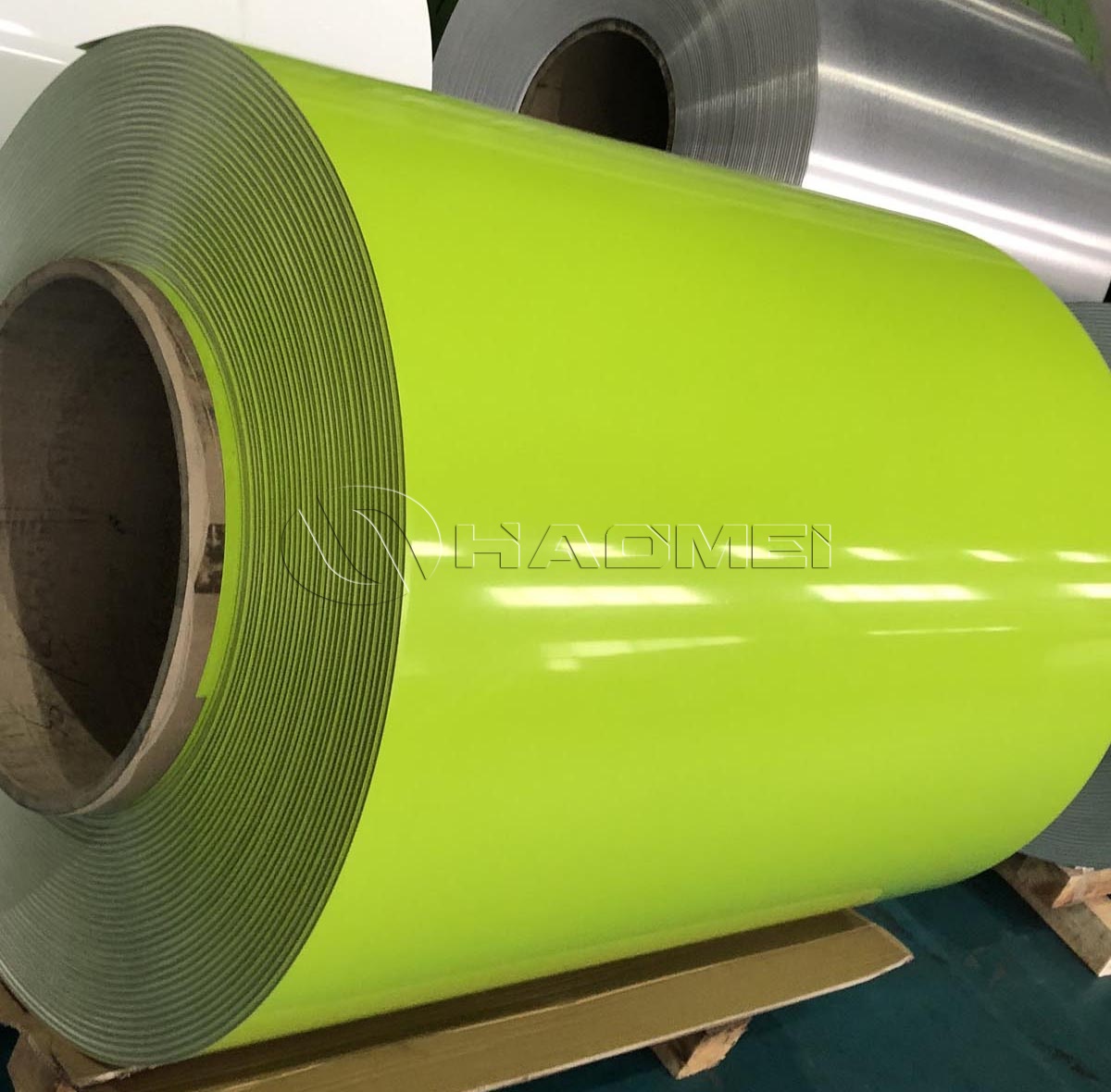
3004 3105 Color Coated Aluminum Coil - Bending, Welding, and Cutting Services Available
3004 and 3105 color coated aluminum coil for roofing, cladding, and panels, with bending, welding, cutting, and coating options.
2026-09-21
-
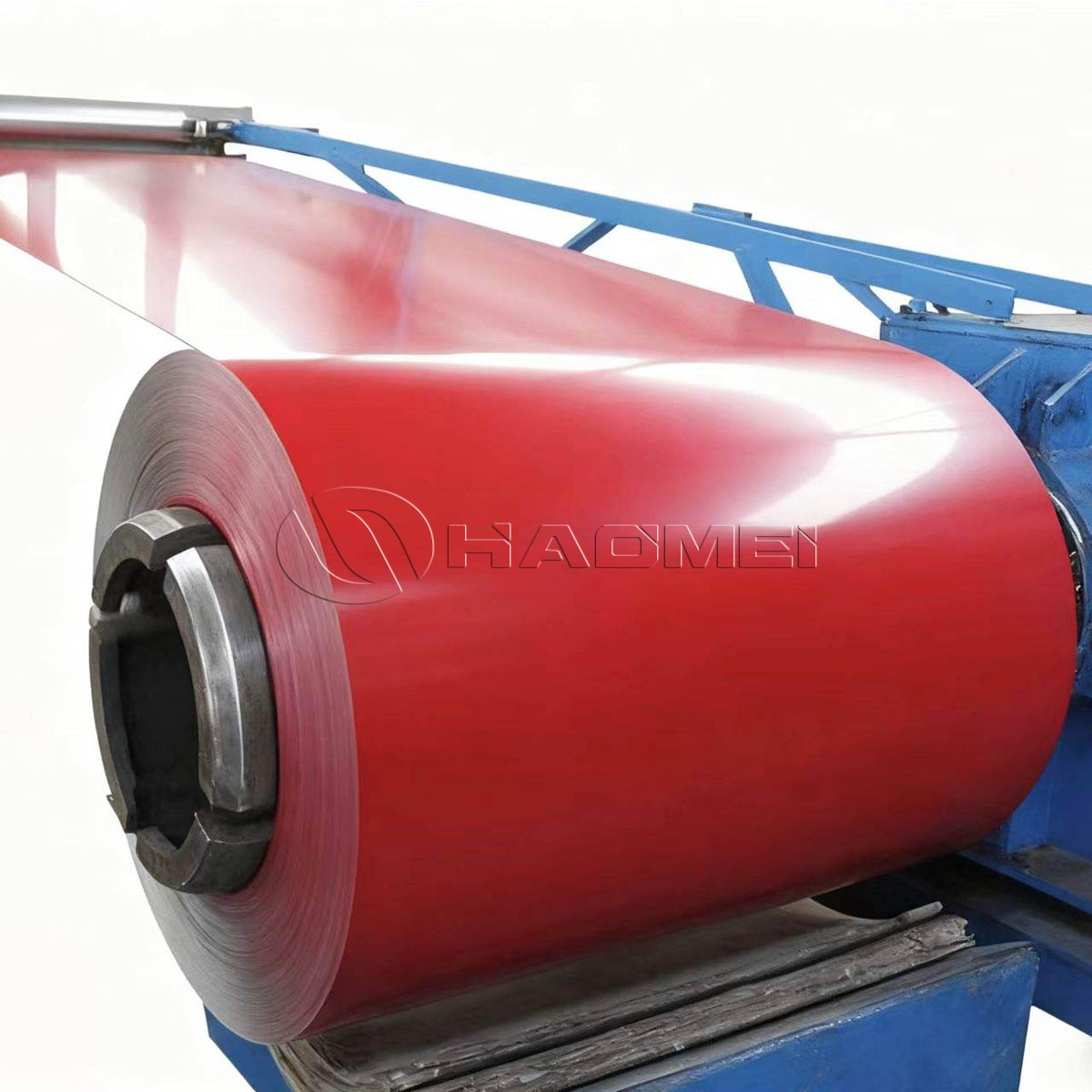
Color-Coated Aluminum Coils Are Used for Metal Roofing and Ceilings
Color-coated aluminum coils for metal roofing and ceilings combine durable PE or PVDF finishes, suitable alloys, forming reliability, and corrosion resistance outdoors.
2026-08-10
Contact Directly
-

ADD: No.14 Waihuan Road, CBD, Zhengzhou, China
-

WhatsApp: +86-18703635966
-

E-MAIL: sales@alummc.com