

News
 By Hermione
Color Coated 1100 Aluminum Coil for Rain Gutters
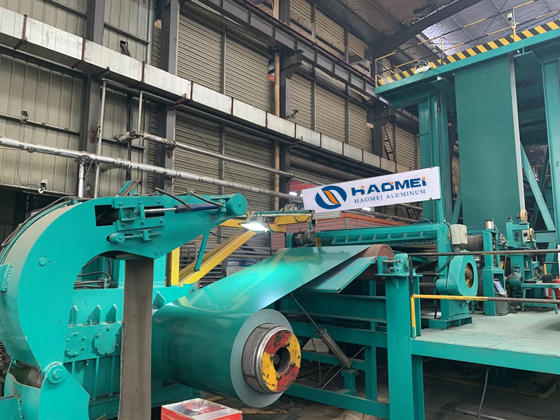
Color coated 1100 aluminum coil for rain gutters is positioned as a lightweight, corrosion-resistant, and easy-to-form material for residential and light commercial drainage systems. It is widely used for K-style gutters, half-round gutters, downspout accessories, fascia trim, drip edge, and related roll-formed rainwater management components where appearance consistency and outdoor durability are both important.
Why 1100 aluminum is widely used for gutter systems
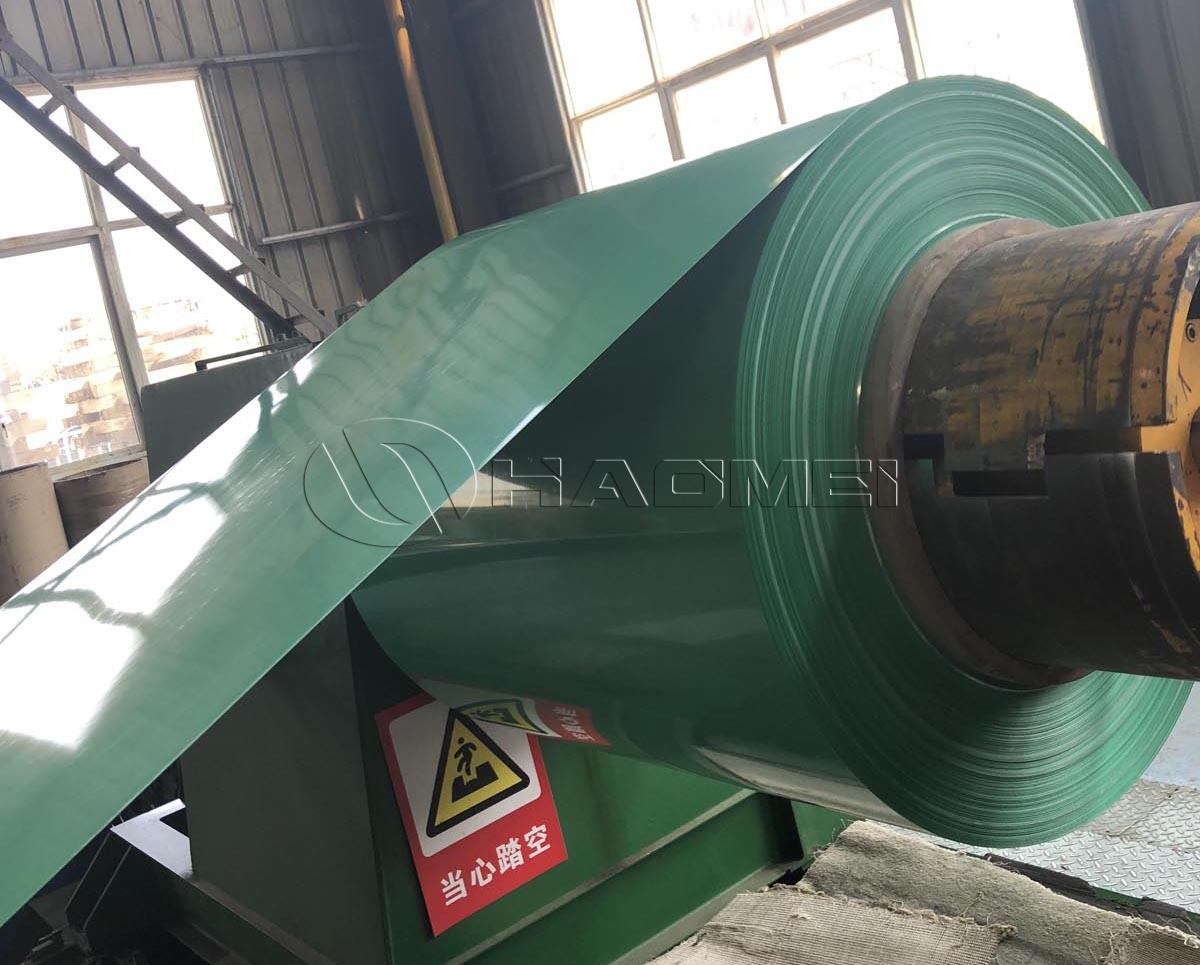
1100 aluminum belongs to the commercially pure aluminum series, with aluminum content typically above 99.0%. For gutter manufacturing, its main value lies in the balance between formability, surface quality, and corrosion resistance. During continuous roll forming, bending, edging, and profiling, 1100 alloy can maintain smooth deformation behavior with low risk of cracking when the temper and coating system are properly matched.
For rain gutter applications, the material is expected to perform in several ways at the same time:
maintain a clean and uniform decorative surface
resist long-term exposure to rainwater, humidity, and atmospheric contaminants
support continuous forming without excessive springback
provide good adhesion between substrate, pretreatment layer, primer, and topcoat
keep stable flatness and coating appearance through fabrication and installation
Compared with heavier metallic gutter materials, color coated aluminum offers a lower dead load and easier handling during fabrication. Compared with uncoated metal, prepainted aluminum provides a finished decorative surface directly from coil, reducing downstream painting steps and improving color consistency between batches.
In many gutter production lines, 1100 Color Coated Aluminum Coil is selected for standard profile forming because it combines economical processing characteristics with reliable outdoor service performance.
Material structure of color coated gutter coil
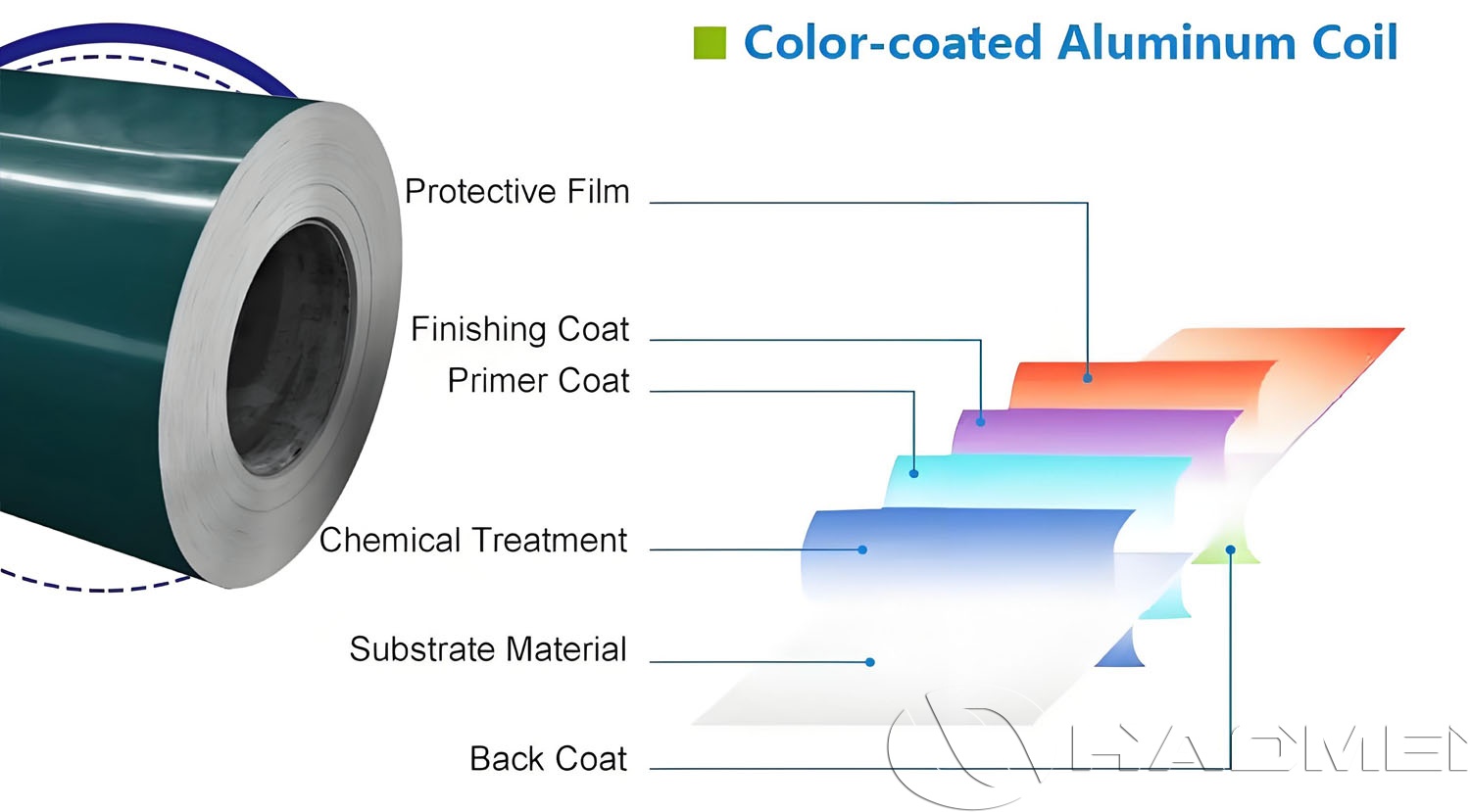
A typical prepainted gutter aluminum coil is not only an aluminum strip with color on the surface. It is a layered material system designed for both forming and weathering performance. The structure generally includes:
aluminum substrate
chemical pretreatment layer
primer coating
top coating
back coating or service coating on the reverse side
The pretreatment stage is especially important because it directly affects coating adhesion and long-term resistance to blistering or underfilm corrosion. For rain gutters, where edges, hems, and formed corners are common, coating flexibility and edge coverage must be considered together.
Core specifications of color coated 1100 aluminum coil for rain gutters
Core Specifications Table
| Item | Typical Range / Option |
|---|---|
| Product name | Color coated 1100 aluminum coil for rain gutters |
| Alloy | 1100 |
| Temper | H14, H16, H24, or customized according to forming process |
| Thickness | 0.40 mm - 1.20 mm |
| Width | 200 mm - 1500 mm |
| Coating system | PE, SMP, PVDF |
| Top coating thickness | Typically 15-25 μm for PE, 25 μm or customized for PVDF |
| Back coating thickness | 5-10 μm or customized |
| Surface finish | Solid color, matte, gloss, embossed or customized |
| Common colors | White, black, brown, gray, beige, bronze, custom RAL colors |
| Coil ID | 405 mm, 505 mm, custom |
| Coil OD | Customized according to weight and production line requirements |
| Coil weight | Customized |
| Protective film | Optional |
| Application | Rain gutters, downspouts, fascia, trim, roof drainage accessories |
Actual specification matching depends on gutter profile depth, bending radius, roll former design, local climate, and expected service life.
Common coating systems for gutter use
The coating system strongly influences outdoor durability, chalk resistance, gloss retention, and overall service appearance.
PE coating
PE coated aluminum coil is commonly used in standard residential gutter systems where moderate outdoor durability and cost efficiency are important. PE coatings provide:
good color richness
smooth appearance
good processing adaptability
economical solution for general climates
For many routine drainage applications, PE Coated Aluminum Coil is suitable when the environment is not heavily industrial, highly UV-intensive, or strongly coastal.
PVDF coating
PVDF coated aluminum coil is preferred when higher weather resistance is required. In areas with stronger ultraviolet exposure, coastal salt atmosphere, or long design life expectations, PVDF offers advantages in:
color retention
chalk resistance
gloss stability
long-term surface cleanliness
For high-end gutter and trim systems, especially where the gutter color must remain visually matched with roofing, fascia, or facade components over time, PVDF coating is often the more durable option.
Why 1100 alloy fits gutter roll forming
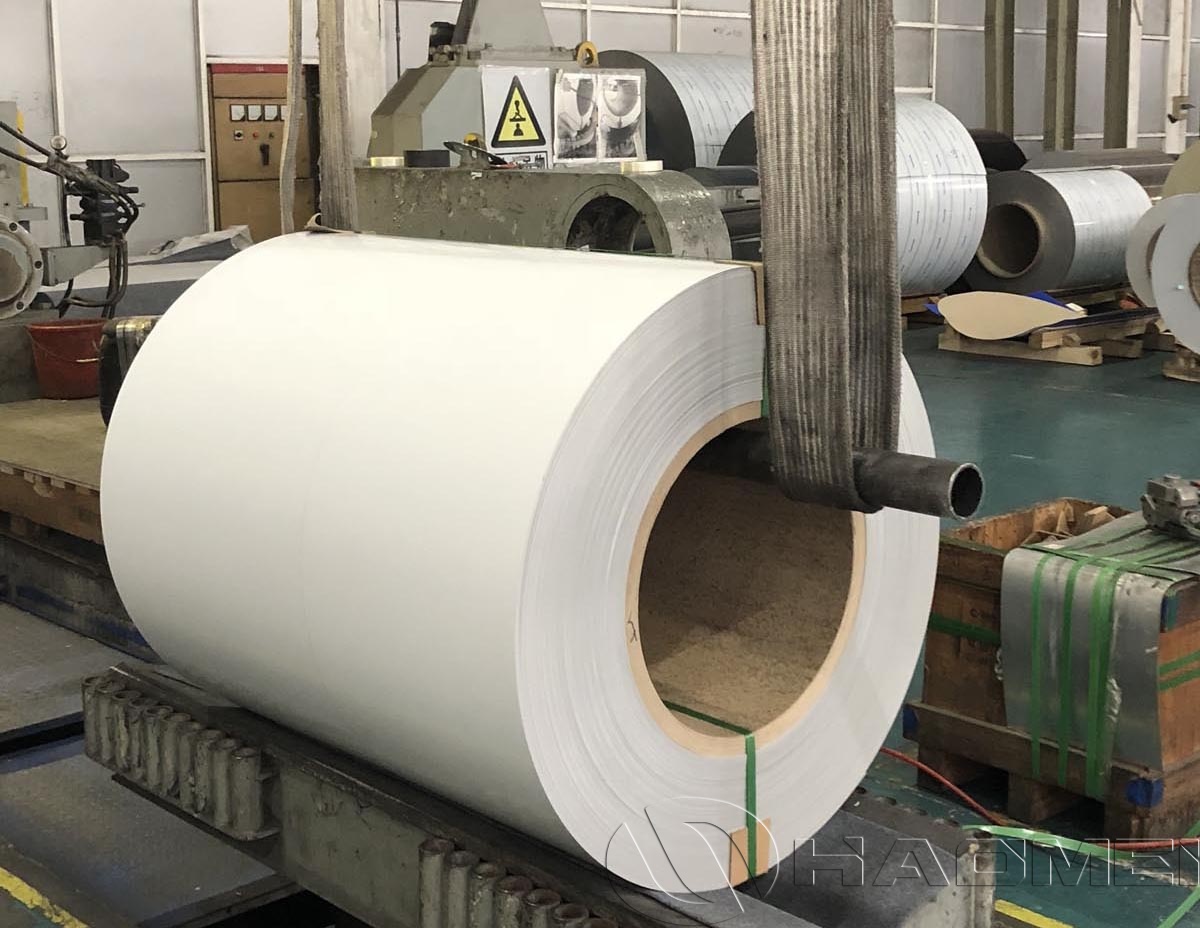
From a manufacturing perspective, gutter coil must pass through decoiling, leveling, feeding, roll forming, cutting, and sometimes hemming or accessory fabrication. In this process, 1100 alloy shows several practical advantages.
1. Excellent formability
1100 is softer than many manganese- or magnesium-containing alloys. This makes it easier to form into common gutter sections with reduced forming stress. For profiles requiring clean bends and stable edge shaping, this is beneficial.
2. Good surface uniformity
Commercially pure aluminum generally provides a clean substrate base for coating application. This helps achieve better visual consistency in painted finishes, especially in light colors such as white, ivory, or beige, which are common in gutter systems.
3. Good atmospheric corrosion resistance
Aluminum naturally forms a protective oxide layer. Combined with a qualified coating system, this gives the product reliable resistance in normal outdoor drainage applications.
4. Lower weight for easier installation
Finished gutters made from aluminum are easier to transport, handle, and install than many heavier alternatives. This is useful for long continuous gutter runs on residential buildings.
Common alloys used in color coated gutter coils
Although 1100 is a mainstream option for rain gutters, it is not the only alloy used in this field. Different projects may choose different alloys according to forming complexity, strength demand, and environmental conditions.
1100
The most common choice for many standard gutter systems. It is known for:
very good formability
stable painted surface quality
good corrosion resistance in ordinary outdoor environments
suitability for continuous roll forming
1050 and 1060
These are also high-purity aluminum alloys with very similar characteristics to 1100. They are often considered when a project prioritizes softness, ease of forming, and bright surface appearance. In practical use, alloy selection among 1050, 1060, and 1100 may depend on local supply habits, processing preference, and detailed property requirements.
3003
3003 contains manganese and generally offers somewhat higher strength than 1100, while still keeping good formability. It can be used where slightly improved structural rigidity is desired in the formed section.
3105
3105 is widely used in building trim, roofing accessories, and some drainage products. It provides higher strength than 1100 and can be a suitable option for applications needing a stronger formed profile with decorative coating.
In general, if the main focus is smooth roll forming and decorative gutter appearance, 1100 remains a very practical choice. If the application requires higher section stiffness, alloys such as 3003 or 3105 may be evaluated.
Key performance factors for rain gutter applications
When evaluating color coated aluminum coil for gutters, the substrate alloy should not be considered alone. Product performance is the result of alloy, temper, coating, and processing compatibility.
Thickness selection
Thicker material generally improves rigidity and dent resistance, but it also affects forming load and finished weight. Common gutter thickness selection should match local product standards and the design of the gutter profile.
Temper selection
Temper affects hardness and bendability. If the temper is too soft, profile stability may decrease. If it is too hard, cracking risk during tight bending may increase. H14, H16, or H24 are common reference tempers, but the final choice depends on the forming line and profile geometry.
Coating flexibility
Gutter production involves repeated roll contact and edge forming. The coating must maintain adhesion and avoid visible cracking, especially at bent edges and hems.
Color and gloss consistency
For exterior drainage systems, gutters often need to match roofing sheets, fascia boards, soffit panels, or wall trims. Coil coating production should therefore maintain tight color control and batch stability.
Edge protection and cut-edge behavior
After slitting and profiling, cut edges become part of the service condition. Proper pretreatment and coating design help reduce the risk of edge-related degradation in outdoor exposure.
Typical application scenarios
Color coated 1100 aluminum coil is commonly processed into:
residential roof gutters
villa and townhouse gutter systems
half-round and K-style gutters
fascia cover and eaves trim
drainage edge trims
matching downspout components and accessories
In these scenarios, the material must combine decorative quality with functional drainage performance. The coil is not only a visible exterior material, but also a shaped component that must maintain dimensional stability after forming.
Manufacturing considerations that affect finished gutter quality
Even with the correct alloy, poor process control can reduce final product performance. Important production variables include:
substrate cleaning quality before coating
pretreatment uniformity
primer and topcoat curing control
coating thickness consistency across width and along length
slit edge quality
coil flatness and residual stress control
packaging protection during transport and storage
For gutter manufacturers, a stable coil source helps reduce defects such as roller marks, color variation, waviness, edge cracking, and coating adhesion problems during forming.
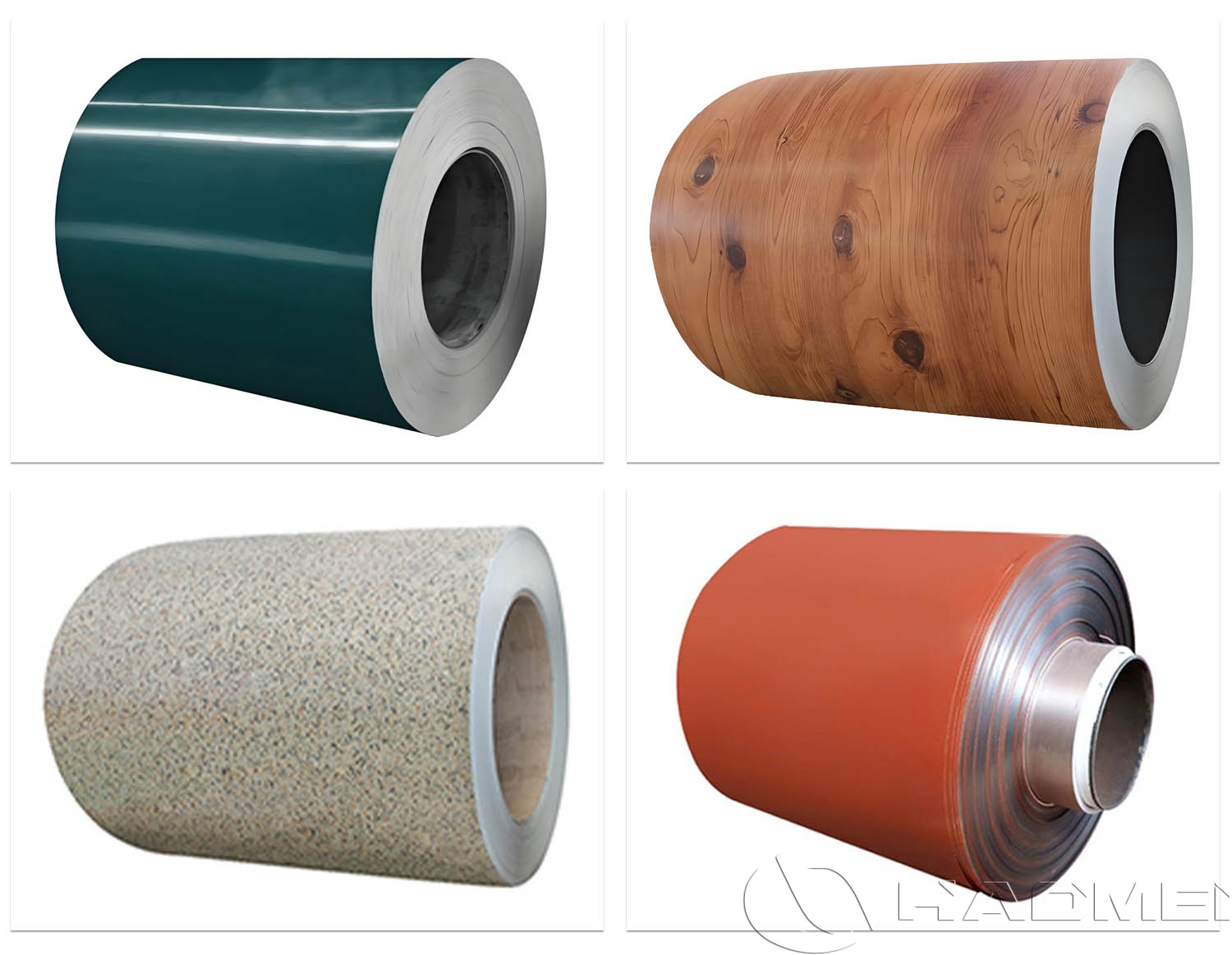
Surface appearance options
Although white remains one of the most common gutter colors, the market often requires broader design flexibility. Color coated 1100 aluminum coil can be supplied in:
high-gloss finishes
low-gloss or matte finishes
standard architectural solid colors
custom RAL or project-matched colors
lightly embossed surfaces in selected designs
The final appearance selection depends on whether the gutter is intended to visually blend with roofing and trim or serve as a contrasting decorative line on the building envelope.
Selection logic for gutter manufacturers
For standard rain gutter production, the selection sequence usually follows this logic:
determine profile type and forming complexity
confirm required thickness and width
match alloy and temper to roll forming behavior
select PE or PVDF according to service environment
confirm color, gloss, and coating thickness
verify adhesion, bend performance, and weathering expectations
In this framework, 1100 color coated aluminum coil is often chosen when the priority is a combination of decorative finish, easy processing, and dependable outdoor use in conventional rainwater drainage systems.
-
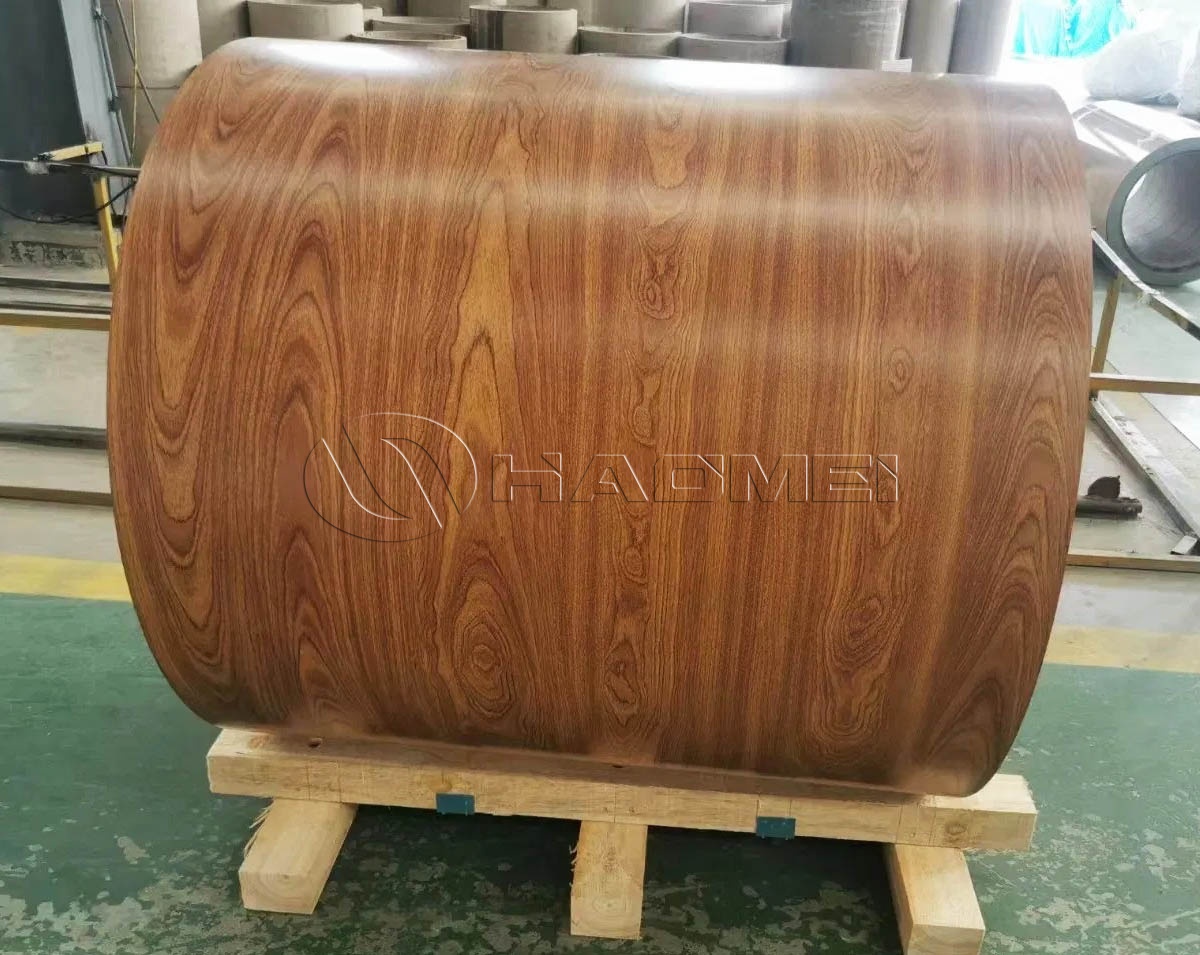
Wood Grain Aluminum Coil For Interior Decoration
Wood grain aluminum coil for interior decoration combines PE/PVDF coatings with stable alloys like 3003/3105/5052 to deliver consistent color, formability, and durability.
2026-03-11
-
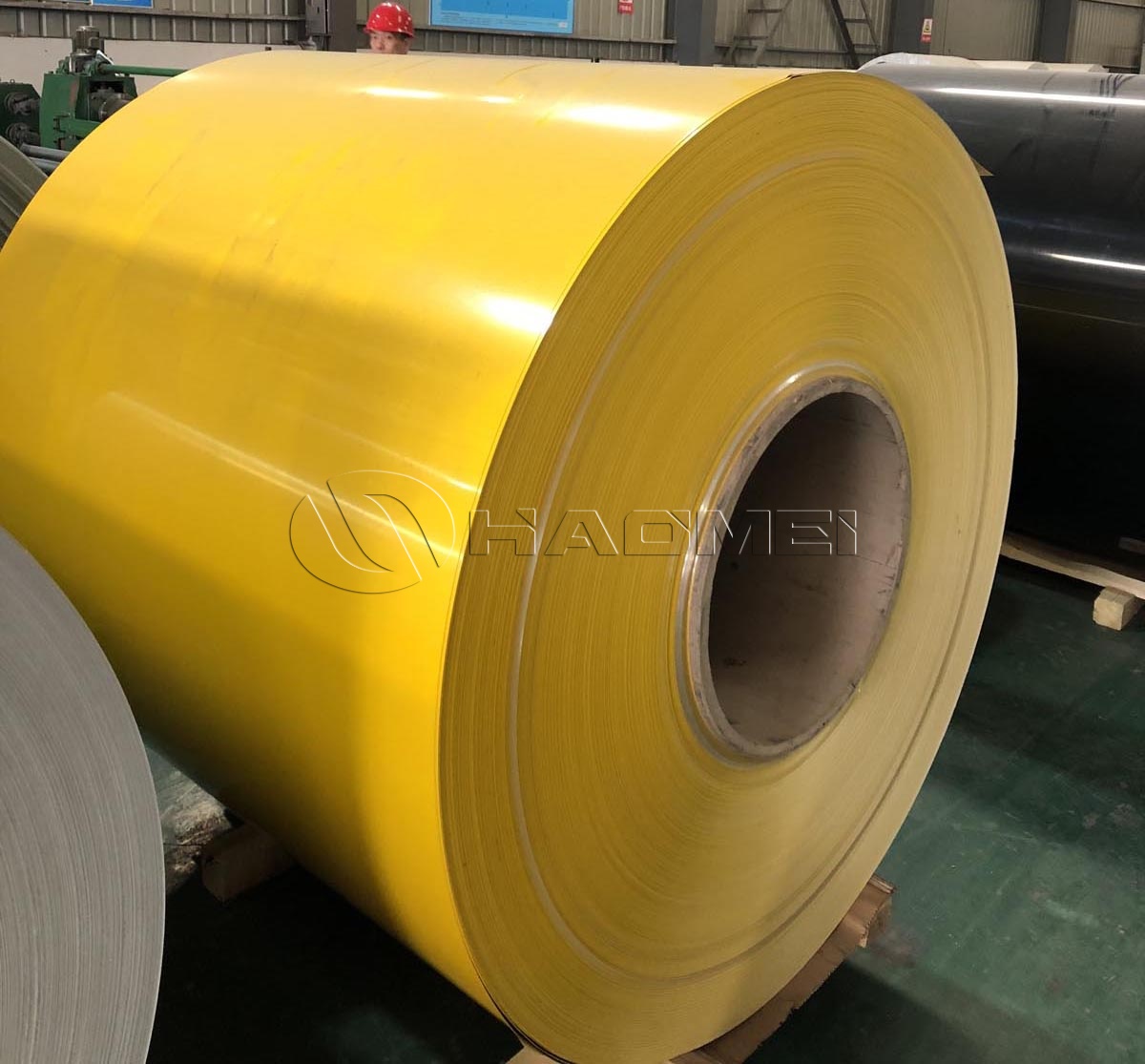
3003 Prepainted Aluminum Coil Vs 5052
Compare 3003 prepainted aluminum coil vs 5052 in strength, formability, corrosion resistance, coating systems, and common uses.
2026-04-10
-
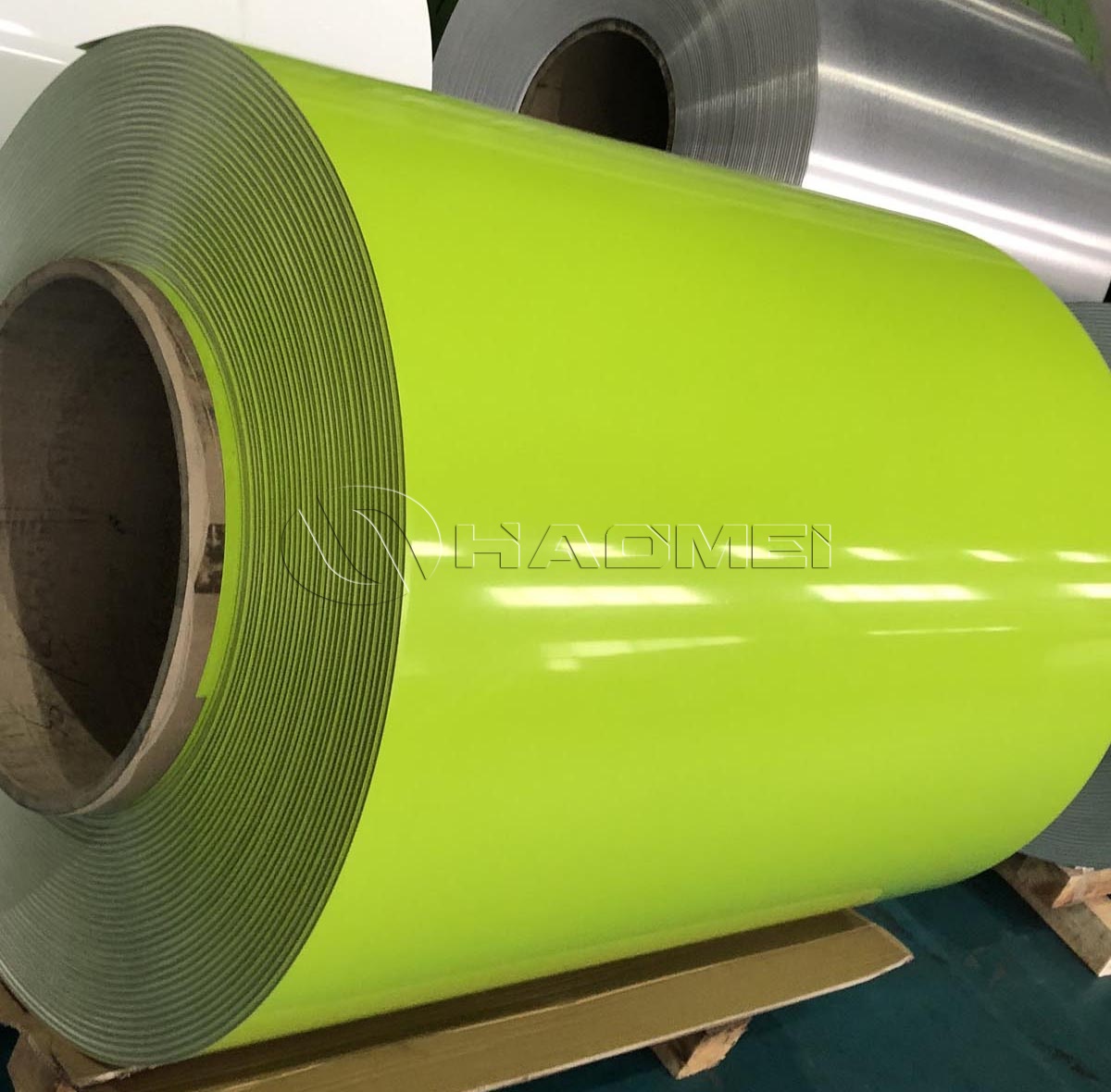
3004 3105 Color Coated Aluminum Coil - Bending, Welding, and Cutting Services Available
3004 and 3105 color coated aluminum coil for roofing, cladding, and panels, with bending, welding, cutting, and coating options.
2026-09-21
Contact Directly
-

ADD: No.14 Waihuan Road, CBD, Zhengzhou, China
-

WhatsApp: +86-18703635966
-

E-MAIL: sales@alummc.com