

News
 By Hermione
High Quality Wood Grain PVDF Coated Aluminum Coil
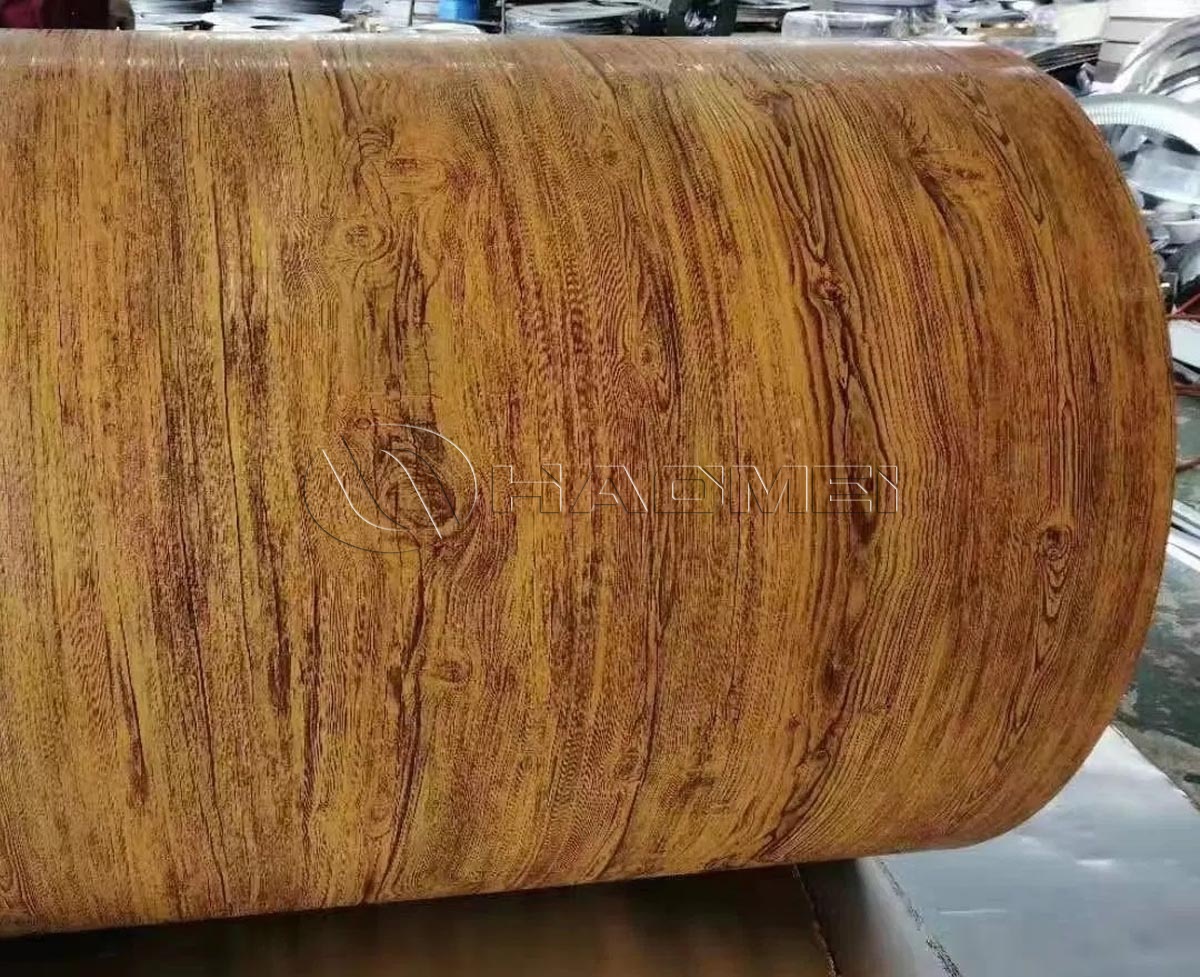
High quality wood grain PVDF coated aluminum coil is positioned as a premium architectural finishing material that reproduces the warmth of timber while delivering long-term outdoor durability. It is widely used in exterior facade cladding, aluminum composite panels (ACP/ACM), soffits and fascias, ceilings, column covers, sunshades, and other building envelope components where UV exposure, humidity, and maintenance constraints make natural wood difficult to sustain.
Why PVDF wood grain is chosen for demanding environments
The value of a wood pattern aluminum surface is not only visual. In real projects, the coating must keep its appearance under sunlight, acid rain, coastal salt, and temperature cycling, while the substrate must remain formable for roll-forming, bending, stamping, and panel fabrication.
A PVDF-based fluoropolymer topcoat is typically specified when long-term color stability and chalk resistance are required for exterior use. Compared with polyester systems, PVDF coating provides stronger C-F bond energy, which translates into slower degradation under UV radiation and better retention of gloss and color. This is especially important for wood grain patterns because any fading or chalking quickly reduces the realism of the grain.
At the metal level, aluminum offers a high strength-to-weight ratio, easy fabrication, and excellent recyclability. Commonly selected alloys for prepainted architectural coils balance formability and strength (for example, 3xxx and 5xxx series), enabling tight radii bends without cracking when the coating system and curing window are properly controlled.
Common alloy grades for wood grain aluminum coils
| Alloy series | Alloy | Temper | PVDF coating thickness | Core advantages |
| 1000 series | 1100 / 1060 | H14 | ≥ 20μm | Low cost, excellent processability, suitable for indoor use |
| 3000 series | 3003 / 3105 | H24 | ≥ 25μm | Best overall value for money, with reliable rust prevention performance |
| 5000 series | 5052 / 5754 | H32 | ≥ 30μm | Excellent salt spray performance, high strength, and strong wind pressure resistance. |
Key Advantages of PVDF Coated Wood Grain Aluminum Coils
1. Superior Weather Resistance (20 Years of Colorfastness): Unlike traditional polyester (PE) coatings or films, PVDF coatings effectively resist UV rays, acid rain, and industrial emissions. Even under direct sunlight or in humid coastal areas, its color and gloss can be maintained for over 20 years.
2. Excellent Fire Resistance: Aluminum itself is a non-combustible material (Class A fire resistance), allowing wood grain aluminum coils to meet the most stringent fire safety standards for high-rise buildings globally while satisfying aesthetic requirements—a feat unmatched by wood and wood-plastic composites.
3. Lightweight and High Strength: Compared to stone or solid wood, aluminum coils are extremely lightweight and easy to process (e.g., bending, punching, rolling), significantly reducing the load on building structures and shortening construction cycles.
4. Low Maintenance Costs: Natural wood surfaces require regular painting, sealing, and maintenance. Wood grain PVDF aluminum coils, on the other hand, require virtually no maintenance. Occasional cleaning is usually sufficient to maintain a good surface condition.
5. Environmentally Friendly:Wood-grain aluminum products contribute to environmental sustainability by reducing the demand for natural wood. Furthermore, aluminum is 100% recyclable, making it a sustainable material choice for modern building projects.
Coating system architecture: from adhesion to wood grain realism
A high quality prepainted aluminum coil for wood grain applications is built as a system rather than a single paint layer. The performance you see on a facade begins with controlled surface preparation and continues through a multi-layer coating design:
Pretreatment and conversion layer: Improves corrosion resistance and provides a chemically active surface for primer anchoring. Consistency here is critical because wood grain finishes often go into exterior assemblies where edge exposure and cut surfaces are unavoidable.
Primer (typically epoxy or polyurethane-modified): Provides adhesion, barrier protection, and flexibility. For forming-intensive parts such as soffit panels or roll-formed profiles, primer flexibility and intercoat adhesion are key to avoiding micro-cracks.
PVDF topcoat: The weathering shield. In higher durability specifications (often aligned with AAMA 2605 intent), a 70% PVDF resin system is used to maximize UV and chemical resistance.
Wood grain pattern layer (printing/transfer): The grain effect can be achieved by gravure printing or heat transfer methods, followed by protective clear coating.
Clearcoat (optional but common): Enhances depth, protects the pattern inks, and improves stain resistance and cleanability.
A properly engineered PVDF wood grain system aims to balance three factors simultaneously: film hardness for mar resistance, elasticity for forming, and long-term outdoor stability. This balance is controlled through resin selection, pigment/ink compatibility, solvent package, and curing conditions.
For projects that require non-wood solid colors in the same durability class, the same base technology is commonly supplied as PVDF Coated Aluminum Coil, while the patterned version is typically specified as Wooden Grain Color Coated Aluminum Coil.
Coil coating manufacturing process: where durability is built in
Wooden grain color-coated aluminum coils are produced on continuous coil coating lines, where repeatability is achieved through closed-loop process control rather than batch variability. A technically robust manufacturing route typically includes:
Incoming coil control: Mechanical properties, surface cleanliness, and roughness are verified to ensure stable wetting and uniform film build.
Degreasing and chemical pretreatment: Removes rolling oils and creates a uniform conversion layer, directly influencing corrosion performance and adhesion after forming.
Roll coating and curing (primer): Wet film thickness is metered by precision roll coater settings. Oven temperature profile and dwell time are tuned to cure without embrittlement.
Roll coating and curing (PVDF topcoat): The curing window is critical. Under-cure reduces chemical resistance and stain performance; over-cure can reduce flexibility and accelerate gloss change.
Wood grain printing/transfer and clearcoat: Pattern registration, ink compatibility, and clearcoat leveling are controlled to prevent issues such as ghosting, pinholes, or uneven sheen.
Protective film lamination (as needed): For transport and fabrication protection, especially for high-visibility facade panels.
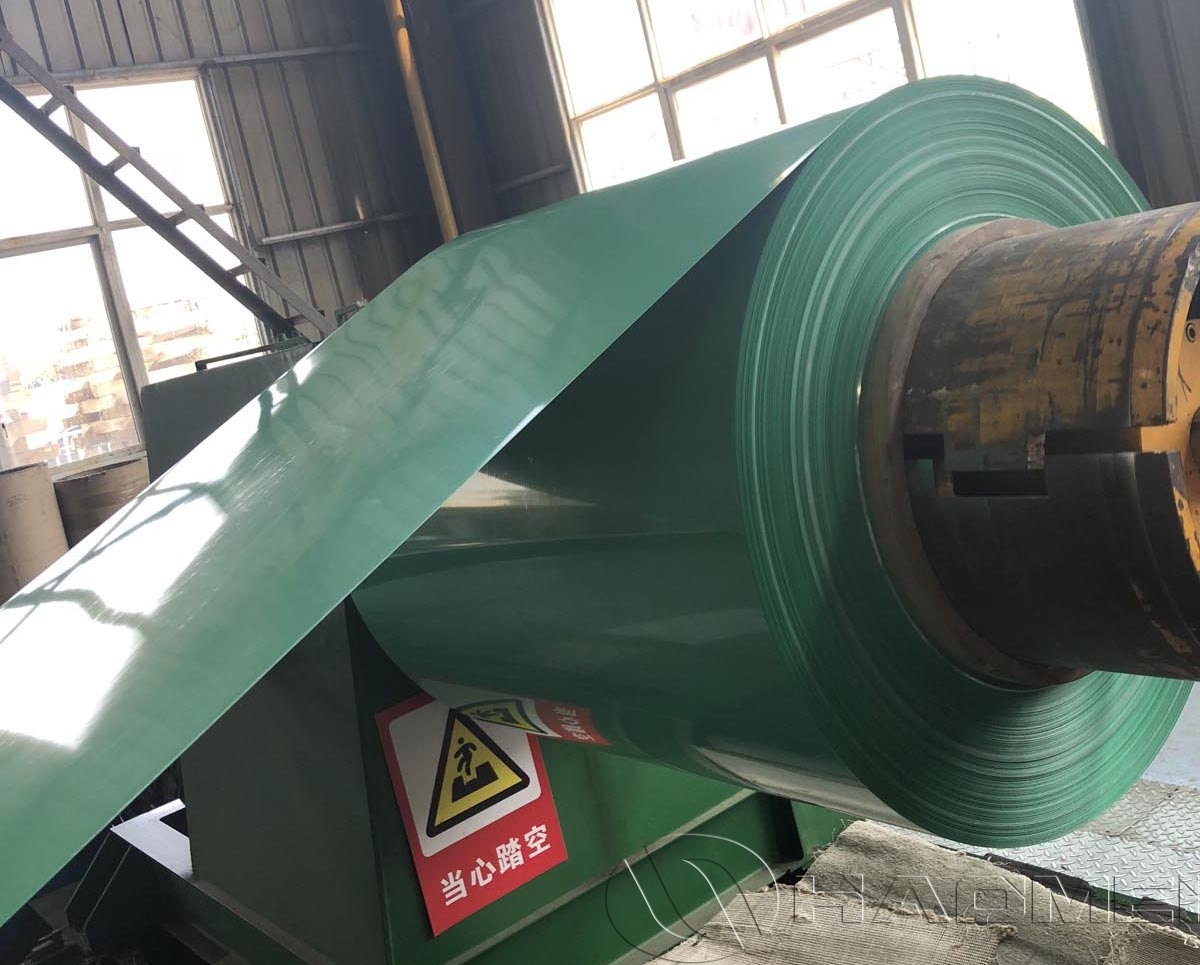
Because wood grain finishes are appearance-driven, quality control typically goes beyond standard thickness checks. Practical production validation often includes color difference (Delta E) tracking per batch, gloss mapping, MEK rubs for cure verification, T-bend testing for formability, cross-hatch adhesion after boiling water or humidity exposure, and accelerated corrosion testing (such as salt spray) to confirm pretreatment and primer integrity.
Core specifications (typical supply range)
Table: Core Specifications for High Quality Wood Grain PVDF Coated Aluminum Coil
| Item | Typical Range / Options |
|---|---|
| Substrate alloy | 3003, 3105, 5005, 5052 (others upon request) |
| Temper | H14, H16, H18, H24 (application-dependent) |
| Thickness | 0.20 to 2.00 mm |
| Width | 600 to 1600 mm |
| Coating type | 70% PVDF topcoat + primer; optional clearcoat |
| Wood grain method | Gravure printing or transfer + clear protection |
| Topcoat dry film thickness | 20 to 30 μm (typical exterior grade) |
| Primer dry film thickness | 5 to 8 μm |
| Back coat | Service coat 5 to 10 μm or as specified |
| Gloss | Matte to medium gloss (pattern-matched) |
| Surface protection | Optional removable protective film |
| Standards reference | AAMA 2605 intent (project dependent), ASTM test methods as agreed |
| MOQ | 1-3 tons |
Practical application performance in real building components
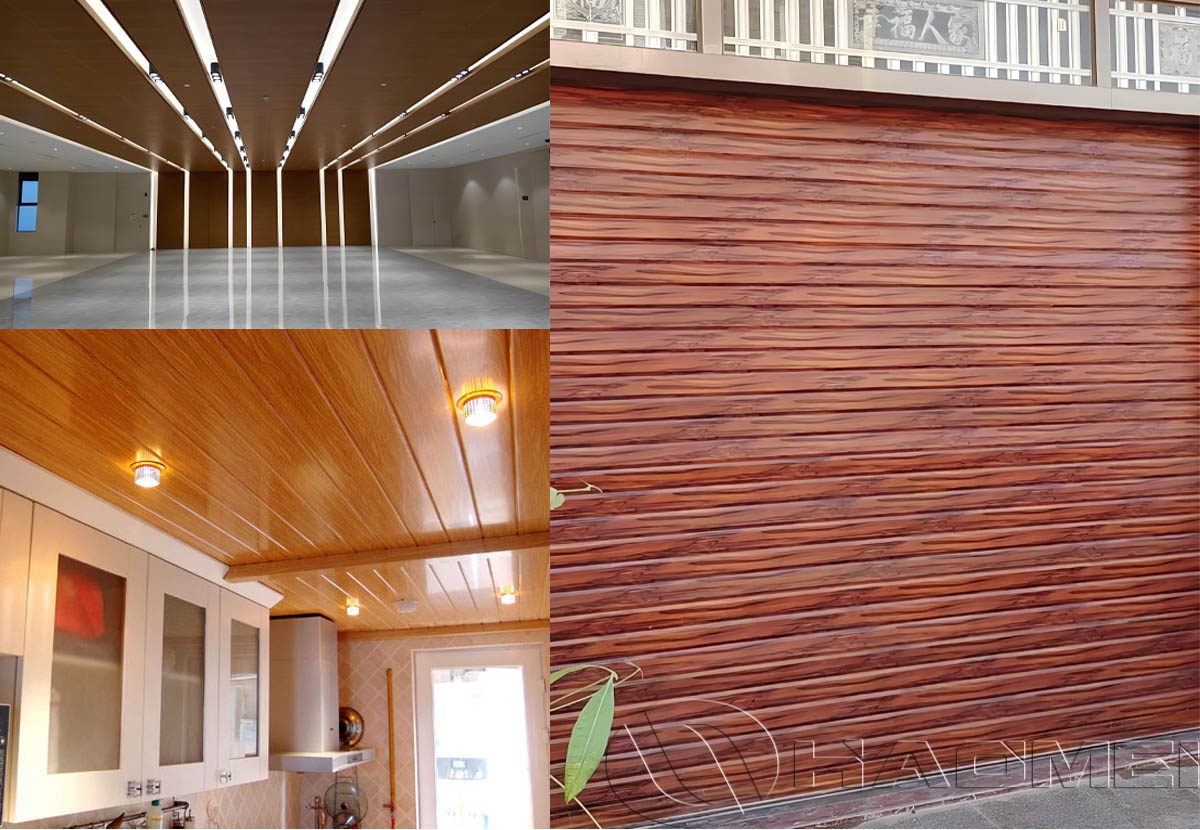
In exterior facade cladding and cassette panels, the combination of aluminum's dimensional stability and PVDF weatherability helps maintain panel flatness and consistent appearance across elevations. The wood grain effect is particularly effective for feature walls, podium levels, soffits, and entrance volumes where designers want a natural texture but owners want lower maintenance than timber.
For soffits, fascias, and ceiling systems, the coil's formability and coating flexibility are decisive. The product is commonly slit and roll-formed into long profiles; good intercoat adhesion and controlled cure prevent edge cracking, while the PVDF surface improves resistance to urban grime and periodic cleaning.
In ACP/ACM applications, the prepainted coil serves as the face sheet laminated to the core. Here, uniform coating thickness and stable gloss are essential to avoid panel-to-panel appearance variation. The PVDF system also helps tolerate thermal movement and exposure at panel joints.
For coastal, industrial, or high-UV regions, specifying a PVDF wood grain system reduces the risk of early chalking and rapid color shift that can occur with lower-durability coatings. When combined with correct detailing (edge protection, drainage, compatible sealants), the coil delivers a stable architectural finish suitable for long service life.
-
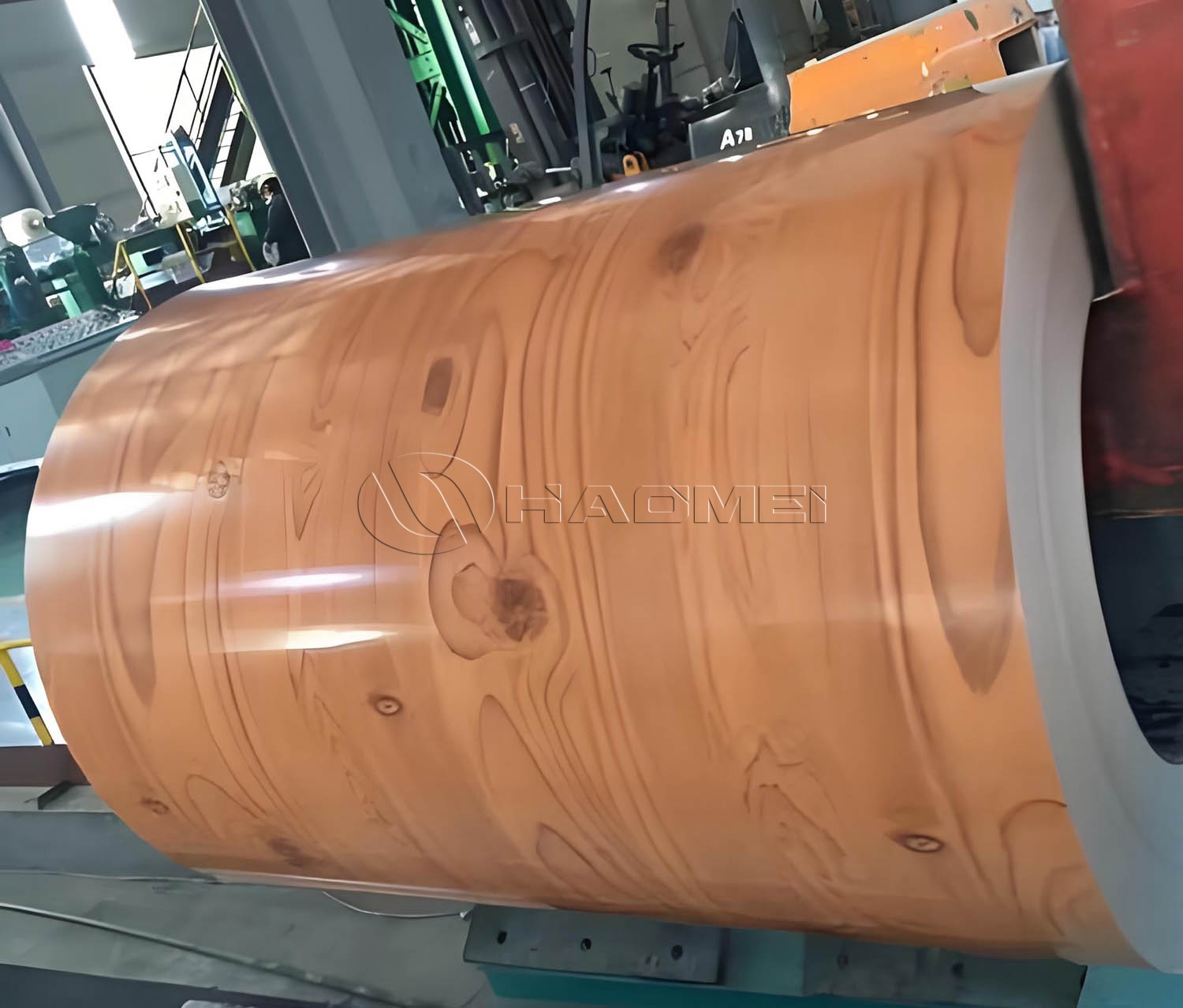
Wood Grain Color Coated Aluminum Coil For Furniture
Wood grain color coated aluminum coil for furniture offers durable prepainted aluminum coil with PE or PVDF coating, realistic wood grain, and stable forming for panels and profiles.
2026-02-24
-
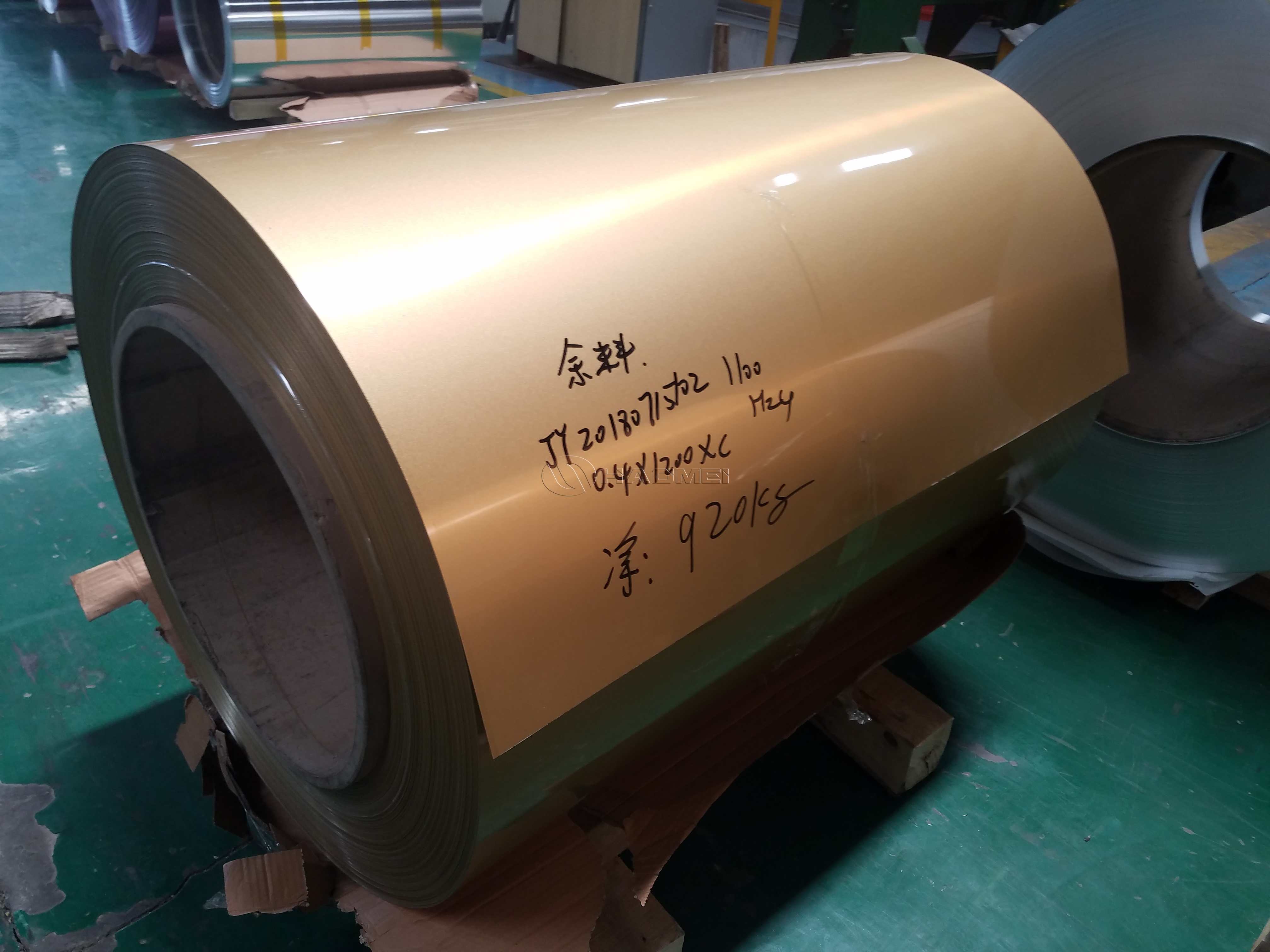
5005 Color Coated Aluminum for Architecture
5005 color coated aluminum delivers smooth forming, durable PE or PVDF finishes, and stable performance for architectural façades, roofs, ceilings, and trim.
2026-08-06
-
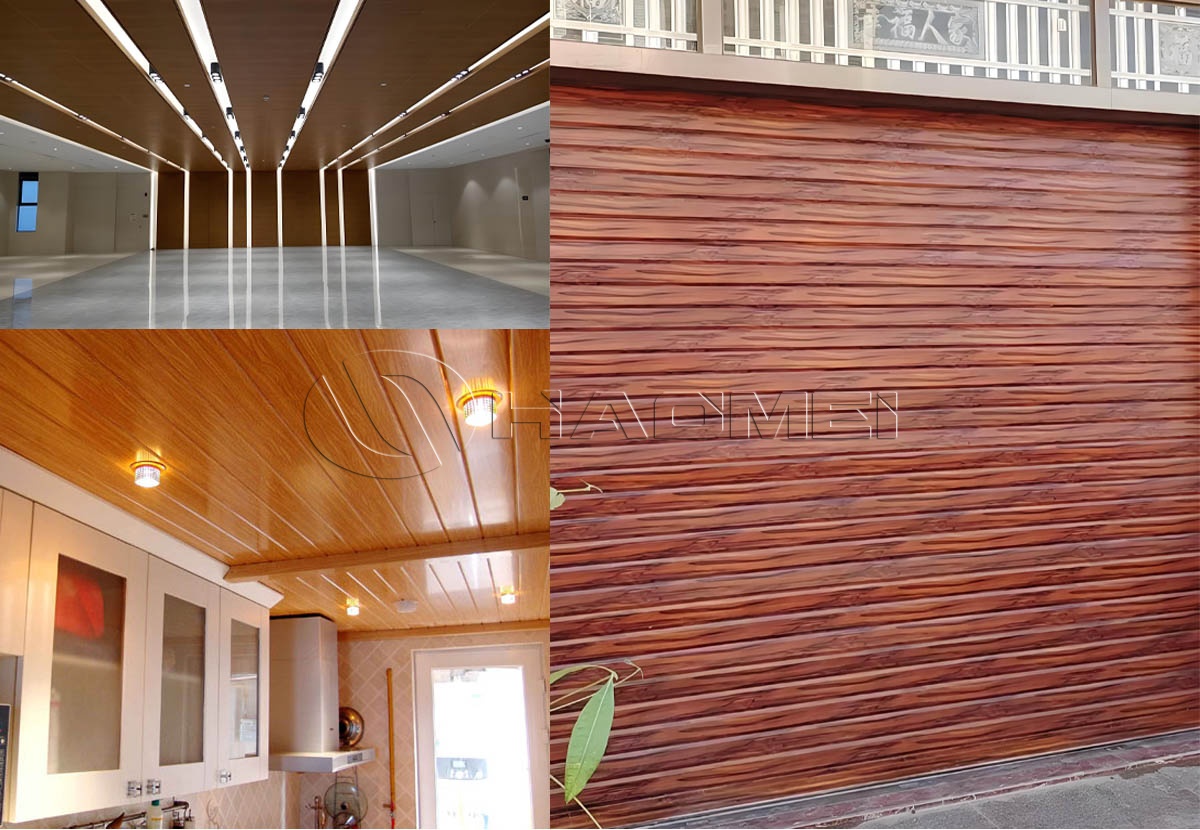
Durable Wood Grain Finish Aluminum Coil for Ceilings
Durable wood grain finish aluminum coil for ceilings combines PE or PVDF coatings, stable grain transfer, and formable alloys for interior ceiling systems in service.
2026-07-14
Contact Directly
-

ADD: No.14 Waihuan Road, CBD, Zhengzhou, China
-

WhatsApp: +86-18703635966
-

E-MAIL: sales@alummc.com