


News
 By Hermione
Best 5083 Prepainted Aluminum Coil for Shipbuilding
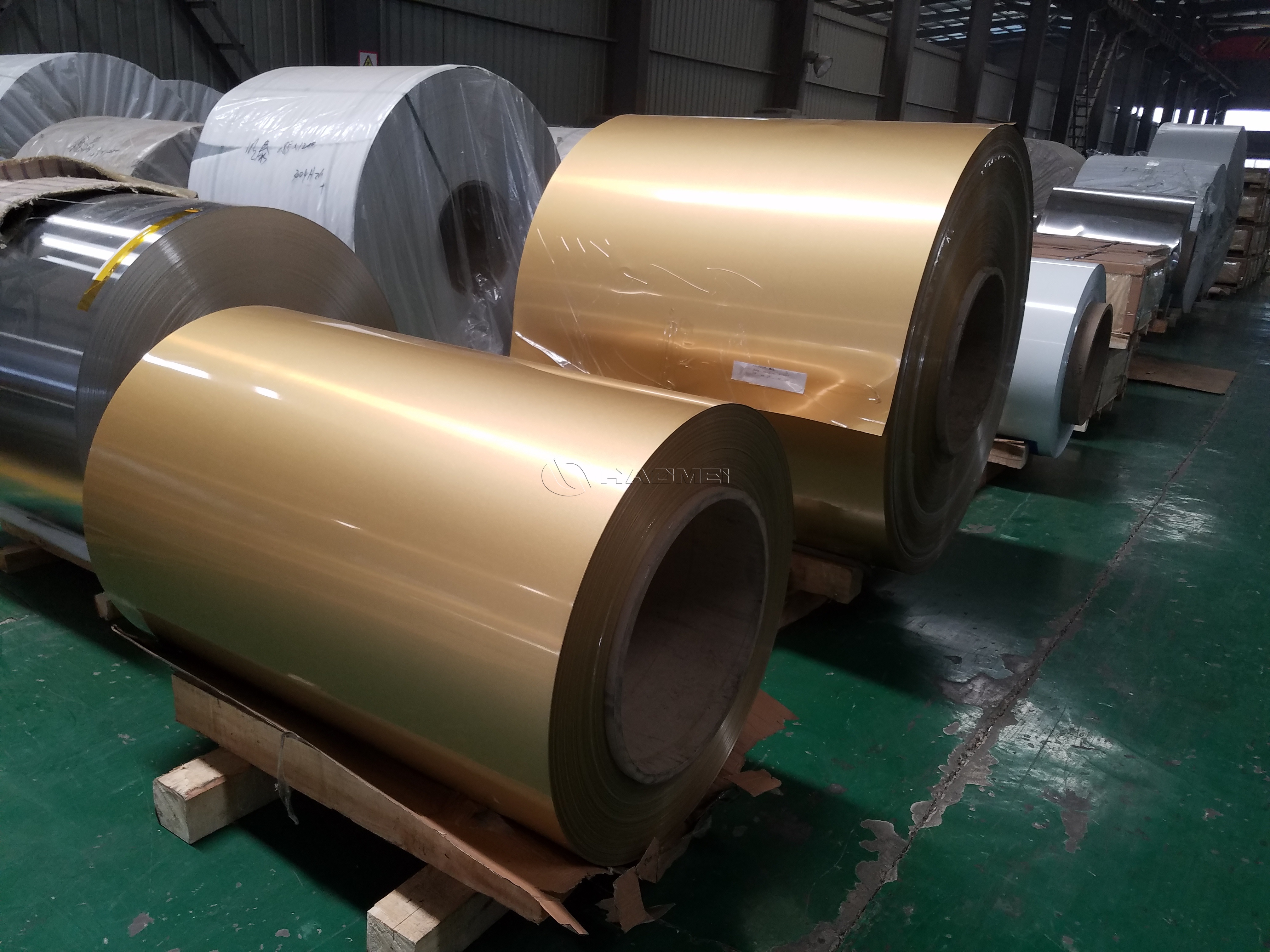
5083 prepainted aluminum coil is a marine-grade coated material developed for lightweight, corrosion-resistant ship components that also require a durable decorative surface. It is widely used for vessel superstructure panels, cabin partitions, ceiling systems, interior wall cladding, equipment enclosures, insulation jackets, hatch-area trim, and non-load-bearing exterior panels. Combining the seawater-corrosion resistance of 5083 aluminum with factory-applied coating, the material provides a consistent finish and reduces secondary painting steps during panel fabrication.
Why 5083 Aluminum Is Used in Marine Environments
Alloy 5083 belongs to the 5xxx aluminum-magnesium series. Its relatively high magnesium content gives it excellent corrosion resistance in marine and industrial atmospheres, along with higher strength than commonly used 1xxx and 3xxx series aluminum alloys. It is also non-heat-treatable and gains strength primarily through strain hardening.
For shipbuilding applications, 5083 is frequently supplied in tempers such as H111, H116, and H321. H116 and H321 are particularly associated with marine plate and sheet because of their resistance to exfoliation corrosion in saltwater exposure. When supplied as prepainted coil, the alloy and temper are selected according to the required forming radius, panel geometry, thickness, and end-use environment.
The coating system adds an additional barrier between the aluminum substrate and marine contaminants. This is especially valuable on exposed superstructure surfaces, accommodation areas, and fabricated components where visual uniformity and long-term surface protection are required.
Core Specifications of 5083 Prepainted Aluminum Coil
| Specification Item | Typical Range or Option |
|---|---|
| Base alloy | AA 5083 / EN AW-5083 |
| Common tempers | O, H111, H116, H321, H32, H34 |
| Thickness | 0.50-3.00 mm, subject to coil capability and temper |
| Coil width | 600-1,600 mm |
| Coil inner diameter | 405 mm, 505 mm, or customized format |
| Coating type | PE, SMP, PVDF, FEVE, epoxy primer systems |
| Top-coat thickness | Typically 18-35 μm, depending on coating system |
| Back-coat thickness | Typically 5-15 μm |
| Surface finish | Gloss, matte, textured, metallic, smooth, or custom color |
| Color options | RAL, Pantone, custom marine project colors |
| Applicable standards | EN 485, EN 573, ASTM B209, project-specific marine requirements |
Prepainted Coil Structure and Coating System
A 5083 color coated aluminum coil uses a continuous coil-coating process rather than post-fabrication spray painting. The substrate is cleaned, chemically pretreated, primed, top-coated, and oven-cured in a controlled production line. This process supports more consistent coating thickness, color appearance, adhesion, and curing quality across the coil length.
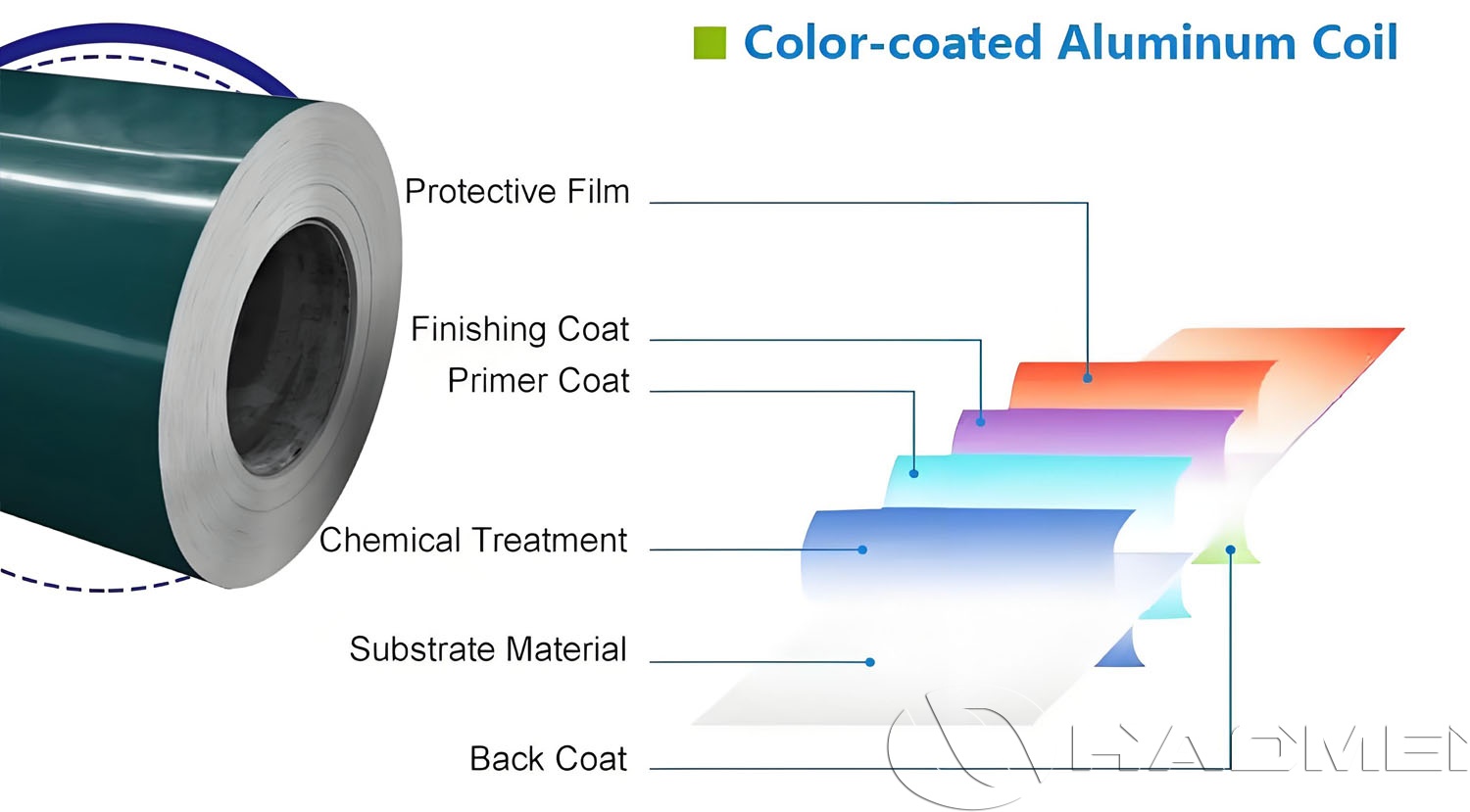
A typical marine-oriented coating structure includes:
Aluminum alloy 5083 substrate
Chemical conversion layer for coating adhesion and corrosion resistance
Corrosion-resistant primer coat
Durable finish coat, such as PVDF or high-performance polyester
Back coating for reverse-side protection and processing stability
For exterior vessel panels and areas subject to sunlight, salt spray, humidity, and wash-down exposure, PVDF Coated Aluminum Coil provides high resistance to UV aging, chalking, color fading, and weathering. PE systems are commonly used for interior cabin panels, protected enclosures, and applications with lower environmental exposure.
Benefits for Vessel Panels and Marine Fabrication
Marine corrosion resistance
The 5083 substrate performs well in chloride-containing environments and supports long-term service in coastal and marine atmospheres. The prepainted surface further limits direct contact between the base metal and external moisture, airborne salts, and contaminants.
Reduced fabrication steps
Factory-applied coatings eliminate many on-site or secondary finishing operations. Coil-fed fabrication processes, including roll forming, profiling, slitting, bending, and panel lamination, can be integrated efficiently with prepainted material.
Lightweight construction
Aluminum has a significantly lower density than steel. The use of 5083 prepainted aluminum coil helps reduce the weight of non-structural marine panels, accommodation components, and superstructure fittings while maintaining useful mechanical strength.
Uniform appearance
Continuous coating provides stable color, gloss, and film thickness across large panel areas. This is important for visible vessel interiors, passenger spaces, deckhouse cladding, and coordinated marine equipment housings.
Formability for fabricated panels
Suitable tempers and coating flexibility allow the coil to be processed into folded panels, corrugated profiles, cassette panels, trims, liners, and curved decorative components. Forming performance depends on temper, thickness, coating type, bend radius, and processing conditions.
Common Aluminum Alloys Used for Prepainted Marine Components
Although 5083 is a leading marine alloy, other alloys are also used in color-coated aluminum coil applications. The appropriate alloy depends on corrosion exposure, strength requirements, fabrication method, and component location.
| Alloy | Main Characteristics | Typical Marine or Vessel Uses |
|---|---|---|
| 1100 / 1060 | High purity aluminum, excellent formability, lower strength | Interior decorative panels, lightweight trims, insulation cladding |
| 3003 | Aluminum-manganese alloy with improved strength over 1xxx series | Cabin ceilings, interior wall panels, general-purpose cladding |
| 3004 / 3105 | Good formability and moderate strength | Roll-formed panels, roofing details, ceiling and partition systems |
| 5052 | Good corrosion resistance and medium strength | Marine interior panels, equipment covers, fabricated enclosures |
| 5083 | High strength and excellent marine corrosion resistance | Superstructure cladding, exposed marine panels, technical enclosures |
| 5454 / 5754 | Good corrosion resistance and forming balance | Marine transport panels, vessel linings, formed sheet components |
Compared with 5052 and 5754, 5083 generally offers higher strength and stronger suitability for demanding marine exposure. The 5083 Color Coated Aluminum Coil format is particularly relevant where surface durability and alloy performance are required in one coil product.
Processing Considerations for 5083 Prepainted Coil
Prepainted 5083 aluminum coil is commonly slit, leveled, cut to length, roll formed, press bent, or laminated into composite panel structures. Processing conditions influence the final surface quality and coating integrity.
Coating flexibility is evaluated through bend testing, impact resistance testing, adhesion testing, and forming trials. Tighter bends generally require suitable temper selection, controlled bending tools, and coating systems with adequate flexibility. Protective films may be applied to the painted surface to reduce handling marks during fabrication.
Where welding is necessary, the coating is normally removed locally from the weld zone before joining. Post-weld areas require appropriate surface restoration because welding can affect coating continuity and the corrosion-protection condition around the heat-affected zone.
Quality Control for Marine Color-Coated Aluminum Coil
Quality control covers both the 5083 base metal and the coating system. Typical inspection items include alloy chemistry verification, mechanical properties, thickness tolerance, coil flatness, coating thickness, gloss, color difference, coating adhesion, pencil hardness, impact resistance, bend performance, solvent resistance, and visual surface inspection.
For projects involving marine classification or vessel-specific requirements, base material documentation, corrosion-related temper requirements, and applicable approval documents are evaluated separately from the painted-coil finish. This distinction is important because coating performance certification and structural marine material certification may be governed by different project standards.
PVDF-based 5083 prepainted aluminum coil is commonly selected for high-exposure surfaces, while polyester and modified polyester systems provide practical finishes for protected or interior vessel applications. The finished coil delivers a combination of marine-grade aluminum performance, controlled coating quality, and efficient panel-processing compatibility.
-
5052 H32 / H24 Color-Coated Aluminum Coil for Automotive Trim Panels
5052 H32/H24 color-coated aluminum coil combines formability, corrosion resistance, and durable finishes for lightweight automotive trim panels and components.
2026-08-13
-
Ral Color 1100 Series Prepainted Aluminum Coil
Overview of RAL color prepainted aluminum coil in 1100 series, covering alloy options, PE/PVDF coating systems, key specs, and typical trim and cladding uses.
2026-03-12
-
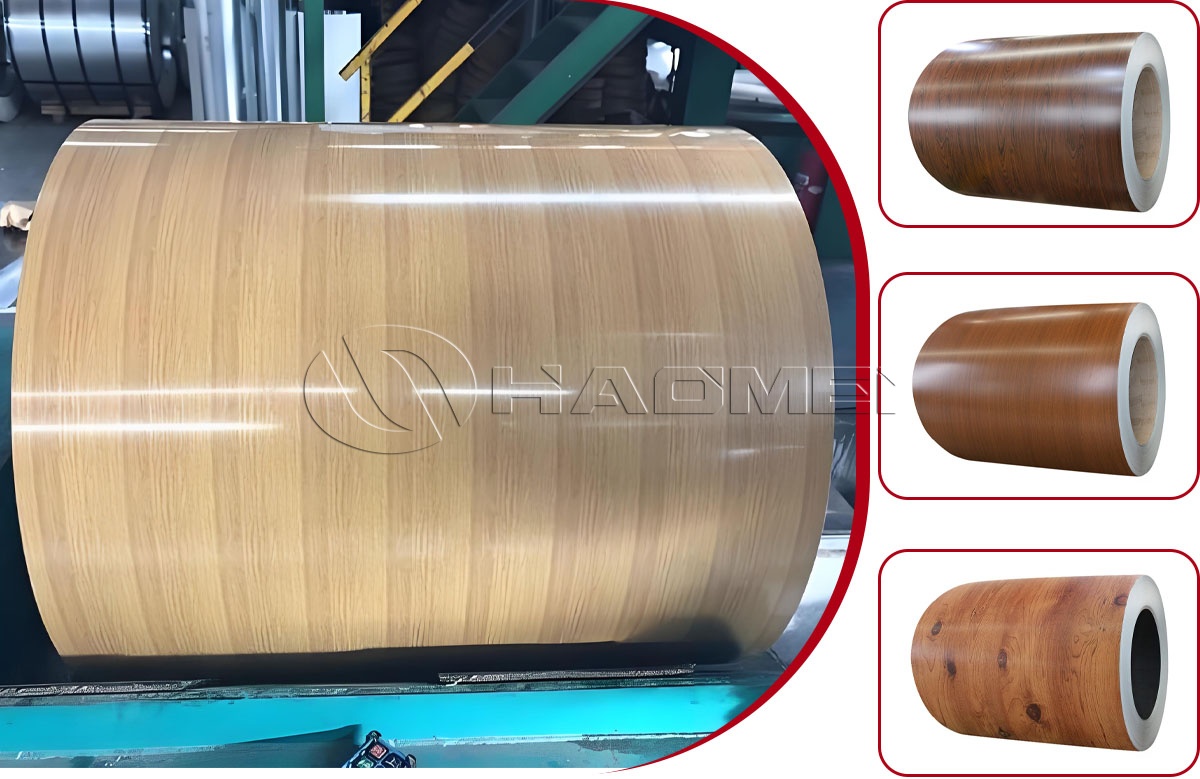
Wood Grain Aluminum Coil Price Per Ton
Learn what sets wood grain aluminum coil price per ton: alloy, thickness, PVDF/PE systems, heat-transfer printing, and performance for façade and ceiling use.
2026-03-09
Contact Directly
-

ADD: No.14 Waihuan Road, CBD, Zhengzhou, China
-

WhatsApp: +86-18703635966
-

E-MAIL: sales@alummc.com
