

News
 By Hermione
Ral Color 1100 Series Prepainted Aluminum Coil
1100 Color coated aluminum coil is positioned as a high-formability, corrosion-resistant, and color-consistent coil stock for lightweight fabricated parts. It is widely used in architectural trims, fascia, ceilings, interior wall panels, signage, appliance panels, and general sheet metal fabrication where reliable RAL color matching and clean bending performance are required.
What "RAL Color" means in prepainted coil production
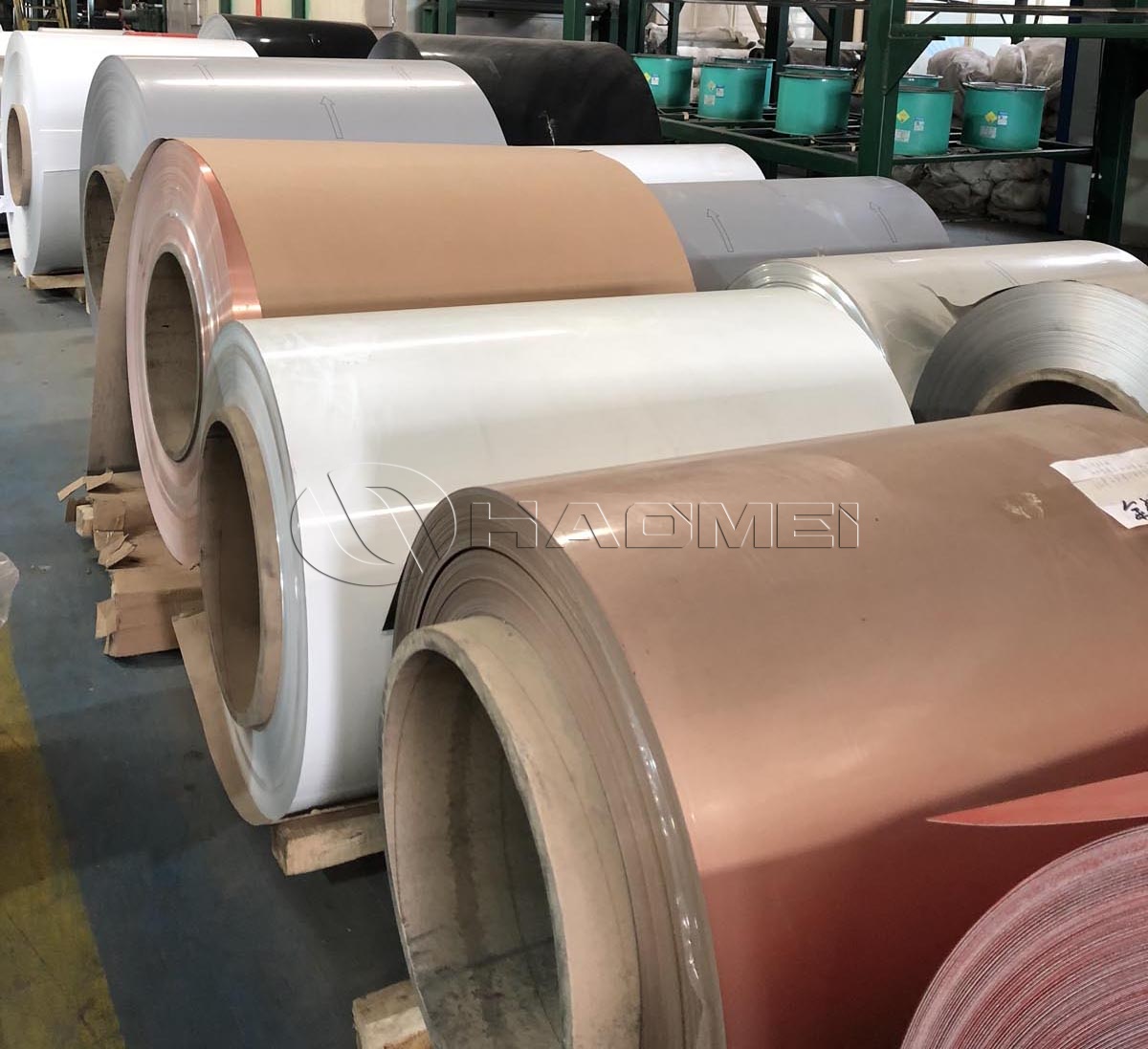
A RAL color coated aluminum coil is produced to match an agreed RAL reference shade (commonly RAL Classic). For prepainted coil, color control is not only about the final visual match but also about batch-to-batch repeatability across gloss, metallic effect (if applicable), and metamerism under different lighting.
In production practice, stable RAL delivery depends on:
Controlled coating film thickness and curing profile (peak metal temperature and dwell time)
Consistent primer/topcoat chemistry and pigment dispersion
Substrate surface condition (cleanliness, roughness, conversion coating quality)
Standardized inspection using ΔE and gloss targets
Why 1100 series is chosen: alloy characteristics and use cases
AA1100 is a commercially pure aluminum (1000 series) known for excellent workability and very good corrosion resistance. Compared with higher-strength alloys, it offers:
Superior bending and hemming behavior, helpful for tight radii and complex roll-formed profiles
High thermal conductivity (useful for certain equipment covers and functional panels)
A smooth surface foundation for uniform coating appearance
Typical forms include O temper for deep forming, and H14/H24 for general fabrication that needs improved stiffness while preserving bendability.
For projects where added strength is required without sacrificing coating quality, 1100 is often benchmarked against other common coated-coil alloys:
AA1050/AA1060: similar family, slightly different purity and mechanical response; often selected for comparable forming needs
AA3003/AA3105: Mn-containing alloys with higher strength; widely used in roofing, cladding, and ceiling systems where panel rigidity is important
AA5052/AA5005: Mg alloys for improved strength and marine/industrial corrosion performance; used when higher mechanical margin or harsher exposure is expected
Performance Advantages of 1100 Prepainted Aluminum Coil
1.Excellent weather and corrosion resistance: As a 1xxx-series pure aluminum, the 1100 aluminum substrate has natural rust resistance. When combined with color coatings (such as polyester or PVDF), it shows strong adaptability in saline-alkali and acid-rain environments, with corrosion resistance significantly better than prepainted steel coil (PPGI).
2.High plasticity and good processability: 1100 aluminum is relatively soft and offers good performance in stamping, bending, and shearing, making it suitable for complex press-brake forming and sheet-metal products.
3.Strong decorative effect and high gloss retention: The baked paint coating provides excellent surface flatness and enables a wide variety of finishes-solid colors, wood grain, stone patterns, and more-offering strong aesthetics with minimal color variation.
4.Lightweight and structural advantages: Aluminum has a much lower density than steel. Its lightweight nature makes installation easier, and it is especially advantageous in applications with strict building load requirements (such as large stadiums and curtain wall systems).
5.High cost performance and long service life: 1100 is a standard industrial pure aluminum, relatively economical (compared with 3003 alloy). With high-quality coatings, it delivers long durability (over 10 years for polyester, over 20 years for PVDF), resulting in a lower total operating cost than prepainted steel.
6.Environmentally friendly and recyclable: Prepainted aluminum coil is eco-friendly, does not emit harmful gases, and offers a very high aluminum recycling rate.
Coating system selection: PE vs PVDF
The coating system largely determines weathering, chalking resistance, and long-term color stability. In 1100 series prepainted coil, two mainstream systems are used:
PE coating (Polyester)
PE coating is cost-effective and versatile for interior and moderate exterior applications.
Balanced color range and gloss options
Good formability for roll forming and trim work
Typically used for interior ceilings, decorative panels, rainwater systems in mild climates, and general fabrication
PVDF coating (Fluorocarbon)
PVDF coating is selected for demanding outdoor exposure where long-term color retention is critical.
Excellent UV resistance and chalking control
Preferred for facade cladding, curtain wall components, and high-sunlight regions
Typical coil structure and performance logic
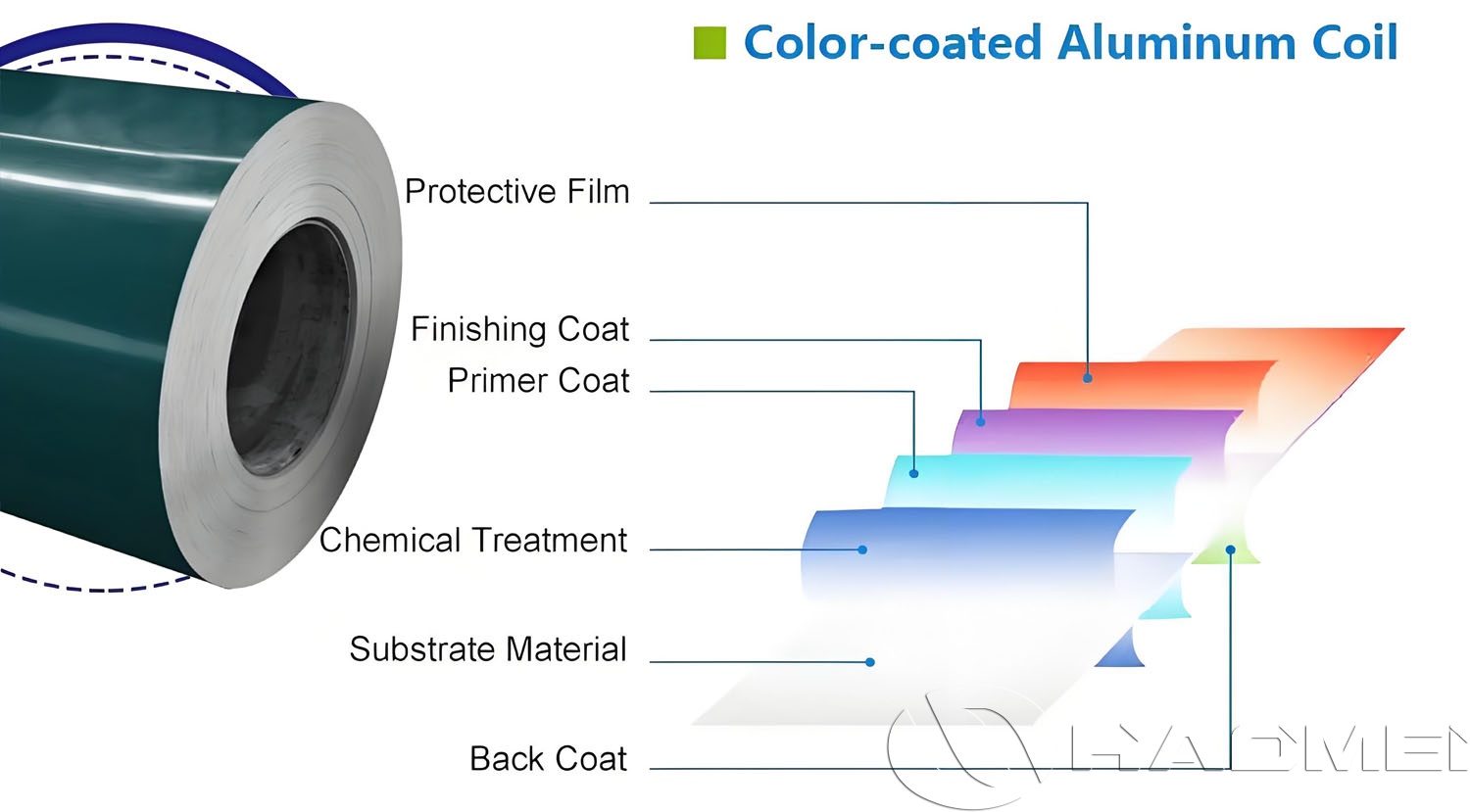
A technically robust prepainted coil is a system, not just a topcoat:
Pretreatment / conversion coating: improves corrosion resistance and coating adhesion
Primer: provides barrier properties, flexibility, and intercoat adhesion
Topcoat: delivers RAL color, gloss, and weathering performance
Optional back coat: balances corrosion protection and processing behavior during forming
Key performance attributes usually validated for RAL color 1100 series prepainted aluminum coil include:
Adhesion (cross-hatch / T-bend related behavior)
Flexibility and forming (T-bend, cupping depending on application)
Impact resistance (especially for transport and installation handling)
Solvent rub and pencil hardness (process stability indicators)
Corrosion resistance (salt spray / humidity as specified)
Color difference ΔE and gloss tolerance for lot control
Core Specifications Table: RAL Color 1100 Series Prepainted Aluminum Coil
| Item | Specification Range / Option |
|---|---|
| Alloy (common) | AA1100 (typical); also available upon request in 1050/1060/1200/3003/3105/5005/5052 families depending on design targets |
| Temper | O, H12, H14, H16, H18 (availability depends on thickness and application) |
| Thickness (base metal) | 0.20–2.00 mm (typical coil coating range; other ranges by agreement) |
| Width | 20–1600 mm (slitting and edge condition per requirement) |
| Coating system | PE or PVDF topcoat with matched primer; single or double coat options |
| Coating thickness (typical) | Topcoat 10–25 μm; primer 5–10 μm; back coat 5–12 μm (customizable by environment and forming needs) |
| Color standard | RAL (e.g., RAL Classic); color tolerance set by ΔE target and master panel agreement |
| Gloss | Matte, satin, semi-gloss, gloss (commonly 10–80 GU at 60° depending on product design) |
| Surface finish | Smooth, lightly textured, or application-specific textures (by coating formulation) |
| Film properties (typical checks) | Adhesion, T-bend, impact, hardness, solvent rub, corrosion tests per agreed standard |
| Coil ID | 150/300/505 mm (common) |
| Coil OD | Up to ~1200–1500 mm (depends on thickness and line handling limits) |
| Packaging | Vertical/horizontal packing options; edge protection and moisture barrier as required |
Application scenarios and processing considerations
Because 1100 series aluminum coil is relatively soft compared with 3000/5000 series, it is especially suitable for:
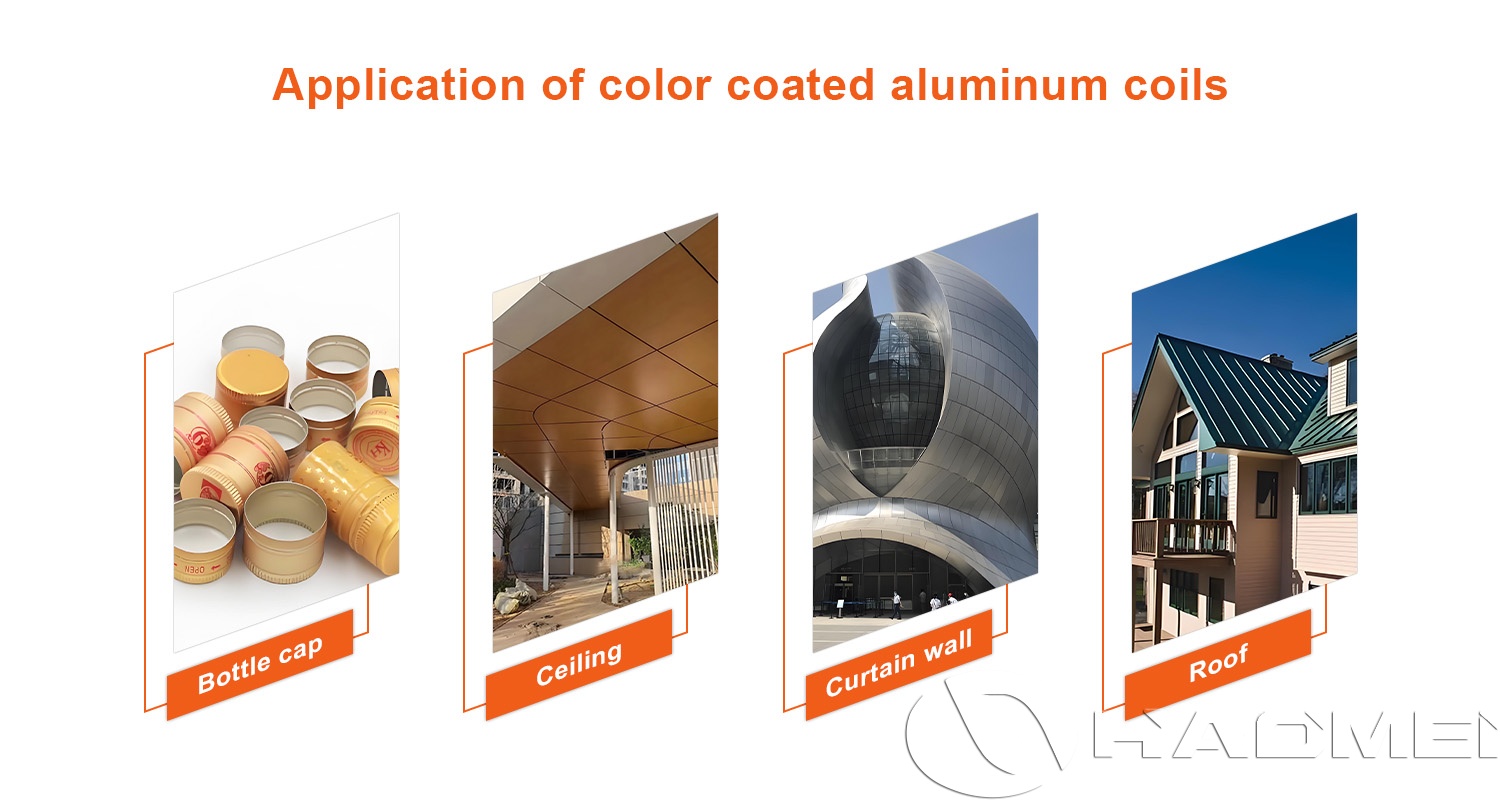
Architectural trim: fascia, soffit, flashing, drip edge, decorative profiles
Interior ceiling and wall systems where deep bending or roll forming is needed
Signage and display panels requiring smooth appearance and stable RAL colors
Appliance and equipment covers where light weight and formability matter
Processing notes that help preserve coating integrity:
Use properly polished tooling and suitable protective film when necessary to prevent scuffing
Control bending radius and orientation relative to rolling direction for repeatability
For PVDF systems, ensure forming is performed within validated T-bend capability and after full cure confirmation
Avoid aggressive solvents or alkaline cleaners that may attack certain PE topcoats
Quality control points specific to RAL color delivery
To maintain consistent RAL performance across lots, typical control points include:
Incoming substrate inspection: thickness tolerance, surface cleanliness, and oil level
Pretreatment bath control: concentration, pH, conductivity, and dry-off
Coating weight and curing: monitoring peak metal temperature and line speed
Color and gloss verification: instrument measurement plus visual check under standardized light source
Lot traceability: coating batch, coil number, and process parameters tied to inspection records
-
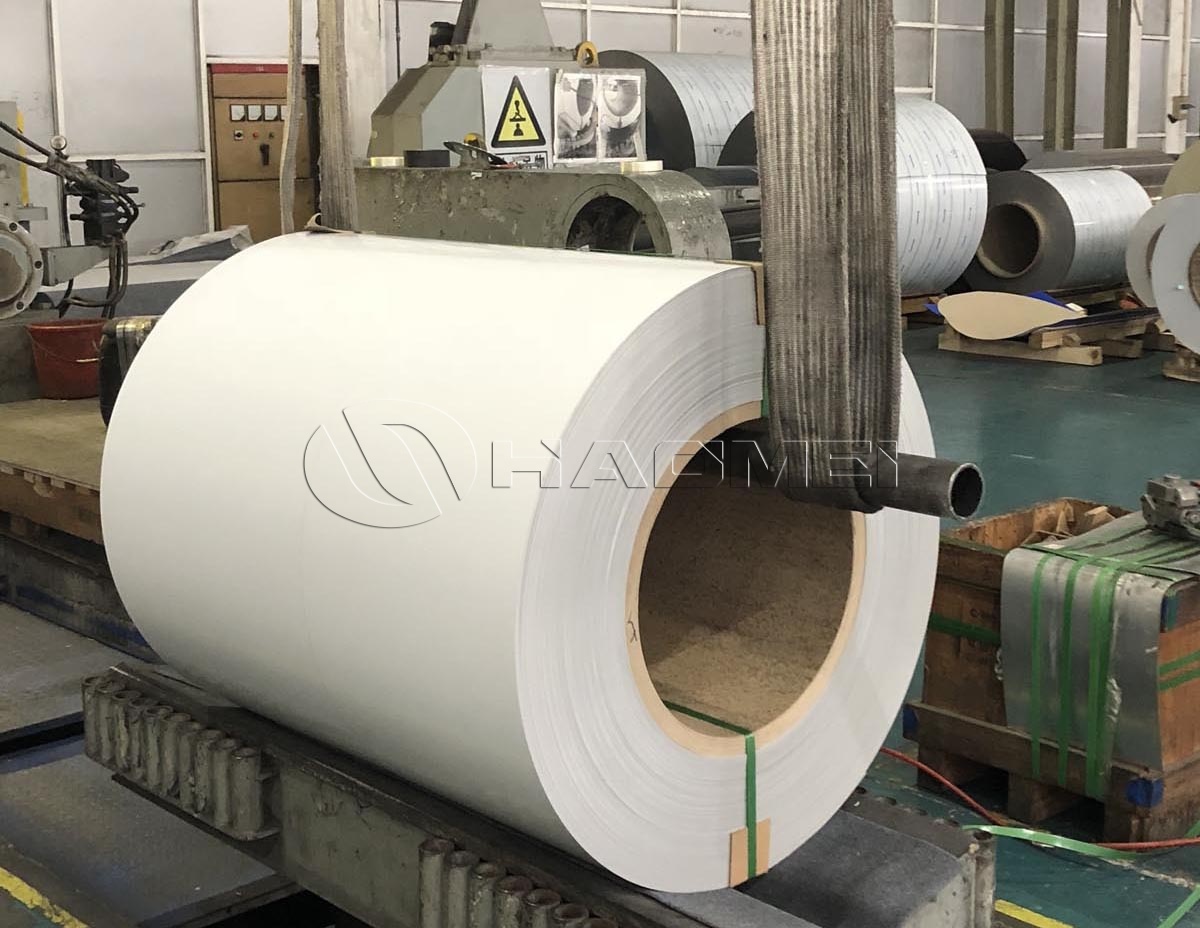
1000 Series Aluminum Coil With PVDF Coating
1000 series PVDF coated aluminum coil delivers corrosion resistance, UV stability and smooth formability for cladding, roofing and signage using 1050/1060/1100 alloys.
2026-01-12
-
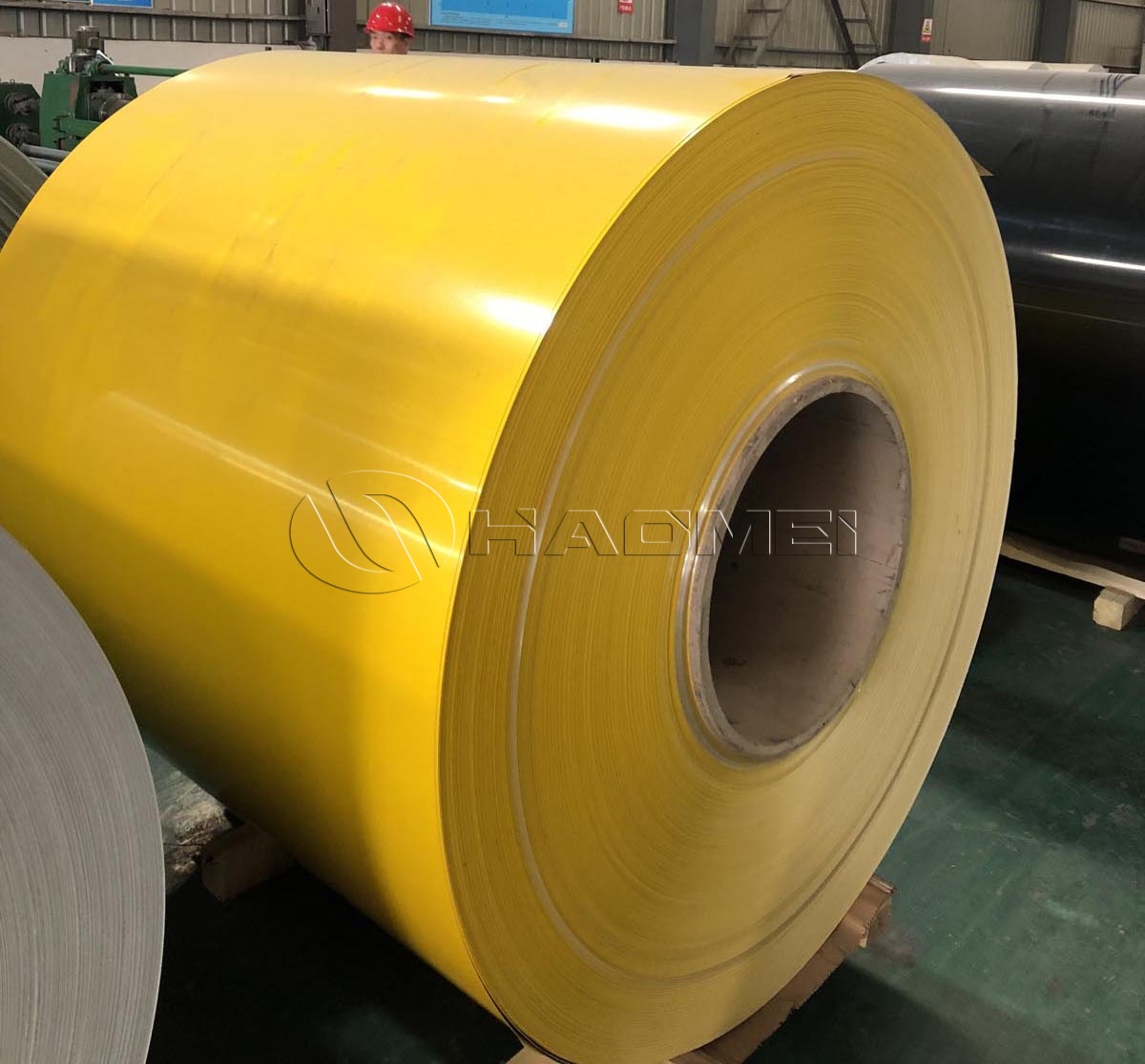
High Gloss PE Coated Aluminum Coil
High gloss PE coated aluminum coil offers vivid color, smooth polyester finish, and formable alloys for ceilings, panels, signage, and interior cladding.
2026-05-12
-
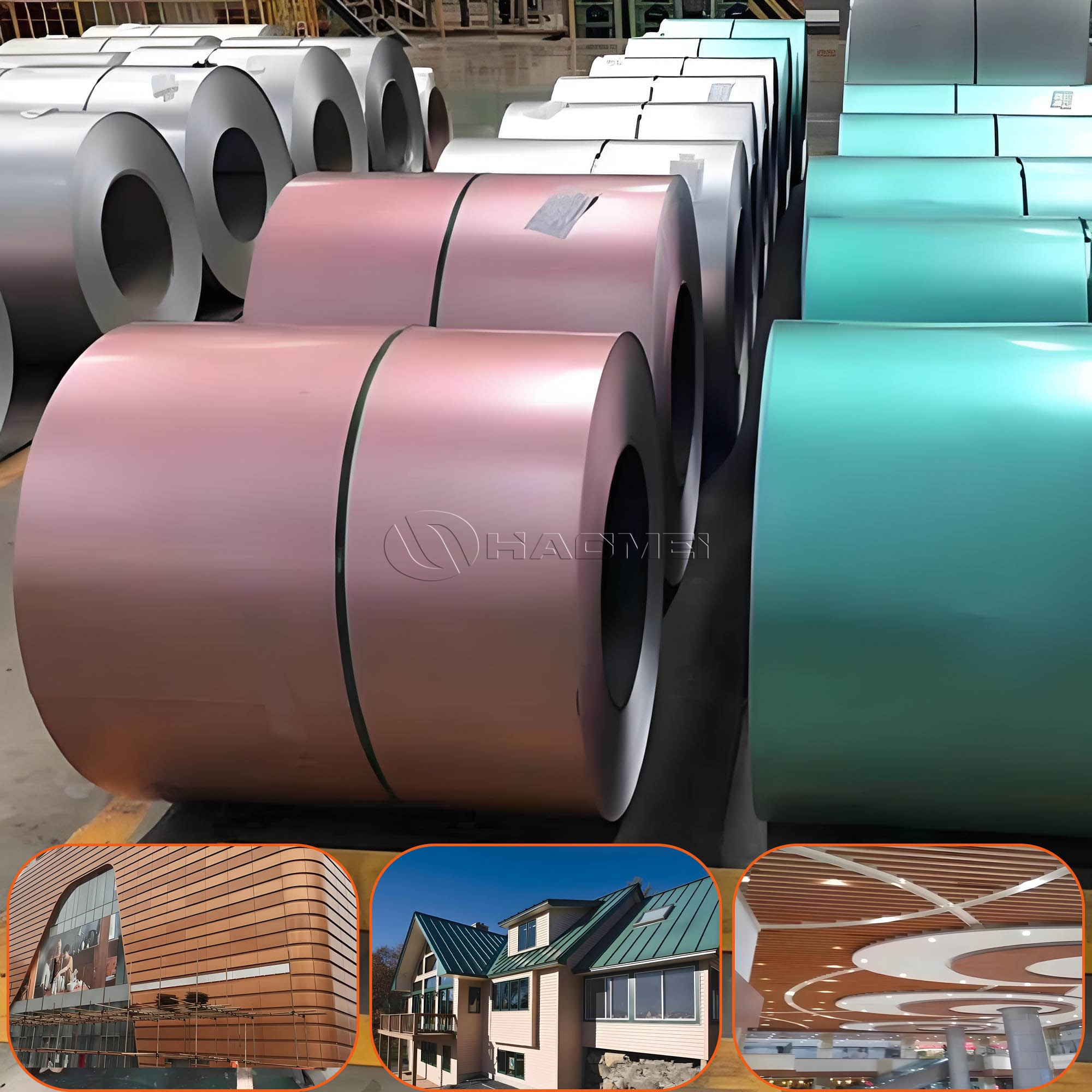
0.4mm, 0.6mm, 0.8mm, 1mm Cold-Rolled Color-Coated Aluminum Coil for Building Facades
Explore 0.4-1mm cold-rolled color-coated aluminum coil for building facades, including alloys, coating systems, dimensions, and facade performance data.
2026-08-28
Contact Directly
-

ADD: No.14 Waihuan Road, CBD, Zhengzhou, China
-

WhatsApp: +86-18703635966
-

E-MAIL: sales@alummc.com