

News
 By Hermione
5052 H32 / H24 Color-Coated Aluminum Coil for Automotive Trim Panels
5052 H32 / H24 color-coated aluminum coil is designed for lightweight automotive trim panels that require a refined decorative surface, stable forming performance, and dependable corrosion resistance. It is widely used in interior garnish panels, door trim inserts, roof-edge trims, pillar covers, luggage-area decorative parts, protective moldings, and selected exterior non-structural panels. Combining a 5052 aluminum substrate with a continuous pre-painted finish, the material supports efficient roll forming, bending, stamping, and panel fabrication while providing consistent color and surface appearance.
Why 5052 Aluminum Is Used for Automotive Trim
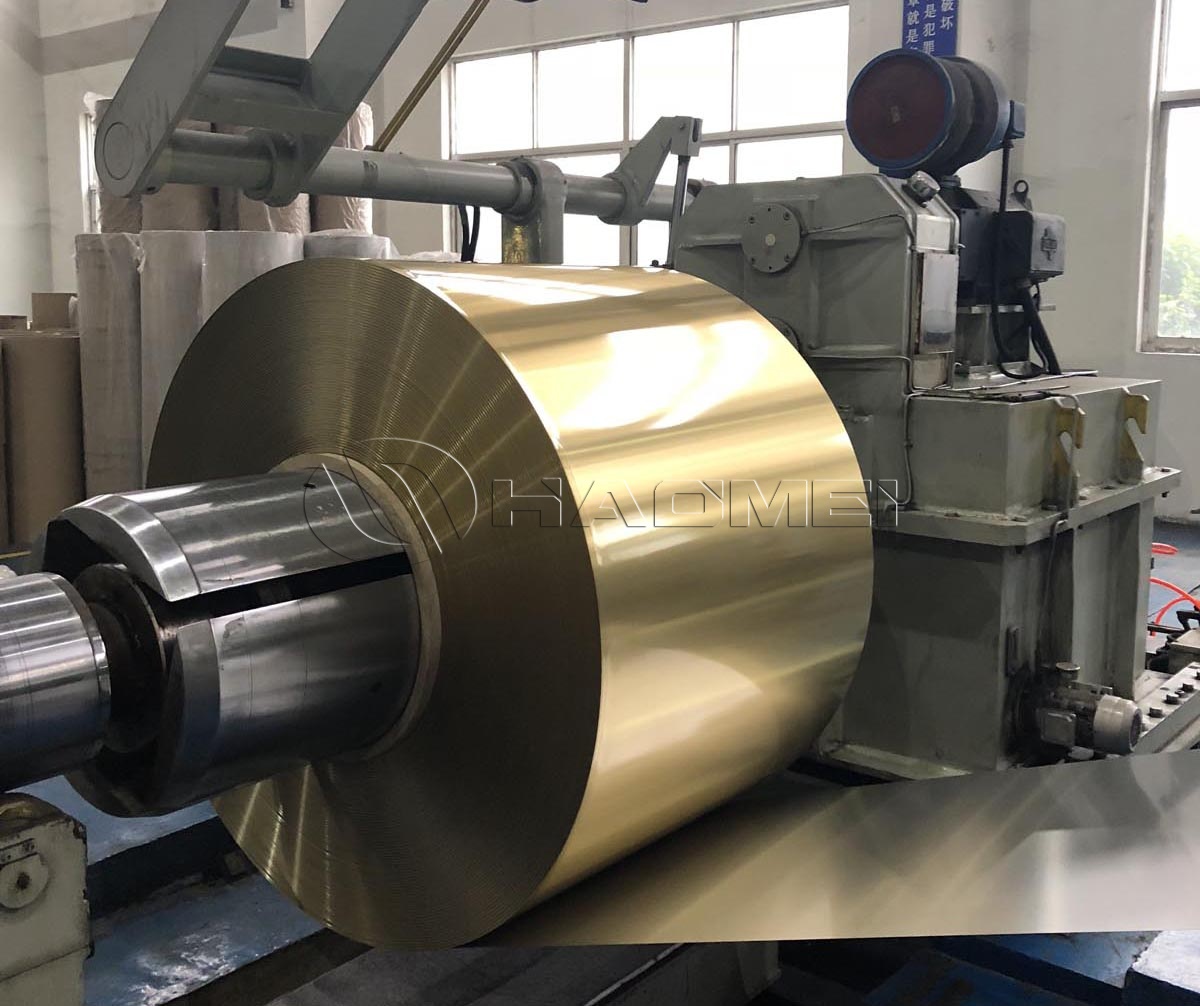
5052 is an aluminum-magnesium alloy in the 5xxx series. Its magnesium content provides higher strength and better corrosion resistance than common 1xxx-series aluminum, while retaining the ductility needed for many trim-panel profiles and stamped shapes. The alloy is non-heat-treatable and is strengthened through strain hardening, making temper selection important for the balance between panel rigidity and formability.
For automotive trim applications, 5052 aluminum offers several material advantages:
Good resistance to moisture, road salt, and atmospheric corrosion
Lower density than steel, supporting lightweight panel construction
Stable bending and roll-forming behavior for long trim profiles
Good compatibility with coil coating, laminating, and protective film processes
A smooth substrate suitable for gloss, matte, metallic, and textured finishes
Suitable stiffness for decorative covers and non-load-bearing panel assemblies
The pre-painted surface reduces the need for secondary liquid painting after fabrication. This can improve visual consistency across batches and minimize paint-process variation in high-volume trim component production.
H32 and H24 Temper Characteristics
The H32 and H24 tempers are both strain-hardened and stabilized conditions, but they provide different levels of hardness and forming latitude.
5052 H32
5052 H32 is strain hardened and stabilized to approximately quarter-hard condition. It is commonly used where automotive trim panels need a practical balance of profile stability, dent resistance, and moderate forming capability. H32 is suitable for roll-formed moldings, shallow-drawn panels, folded edges, and shaped decorative components with controlled bend radii.
5052 H24
5052 H24 is strain hardened and stabilized to approximately half-hard condition. Compared with H32, it provides higher strength and greater panel rigidity, which can be beneficial for flatter covers, narrow trims, reinforcement-style decorative sections, and parts where improved resistance to handling deformation is required. Because it has lower ductility than H32, forming geometry and bend-radius design require closer control.
In general, H32 is selected for parts with more demanding shape development, while H24 is used where surface flatness and stiffness are more important than deep-forming capability.
Core Specifications of 5052 H32 / H24 Color-Coated Aluminum Coil
Table 1. Core Product Specifications
| Item | Typical Specification | Notes |
|---|---|---|
| Alloy | AA 5052 | Aluminum-magnesium alloy, 5xxx series |
| Temper | H32, H24 | H32 for balanced formability; H24 for higher rigidity |
| Thickness | 0.30-1.50 mm | Thickness can be matched to panel geometry and stiffness requirements |
| Width | 300-1,600 mm | Slit coil widths available for trim profile production |
| Coil Inner Diameter | 405 mm, 508 mm, 610 mm | Selected according to processing equipment |
| Coil Weight | Up to approximately 5,000 kg | Depends on coil dimensions and handling requirements |
| Surface Finish | Smooth, matte, gloss, metallic, textured, embossed | Decorative appearance can be tailored to trim-panel design |
| Coating System | PE, high-durability PE, PVDF, polyester-based automotive decorative coating | Coating selection depends on interior or exterior exposure conditions |
| Coating Thickness | Typically 15-35 μm, customized by system | Primer and topcoat structure may vary by end use |
| Back Coating | Wash coat, service coat, or two-side coating | Supports adhesion, protection, and assembly requirements |
| Color | RAL, Pantone reference, custom metallic and solid colors | Batch color consistency is controlled during coil coating |
| Protective Film | Optional | Helps protect finished surfaces during fabrication and transport |
Pre-Painted Surface Structure and Coating Performance
A color-coated aluminum coil is produced through a continuous coil-coating process. The aluminum substrate is cleaned and chemically pretreated before primer and topcoat layers are applied and cured under controlled conditions. This structure improves coating adhesion and helps maintain uniform color, gloss, and film thickness across the coil.
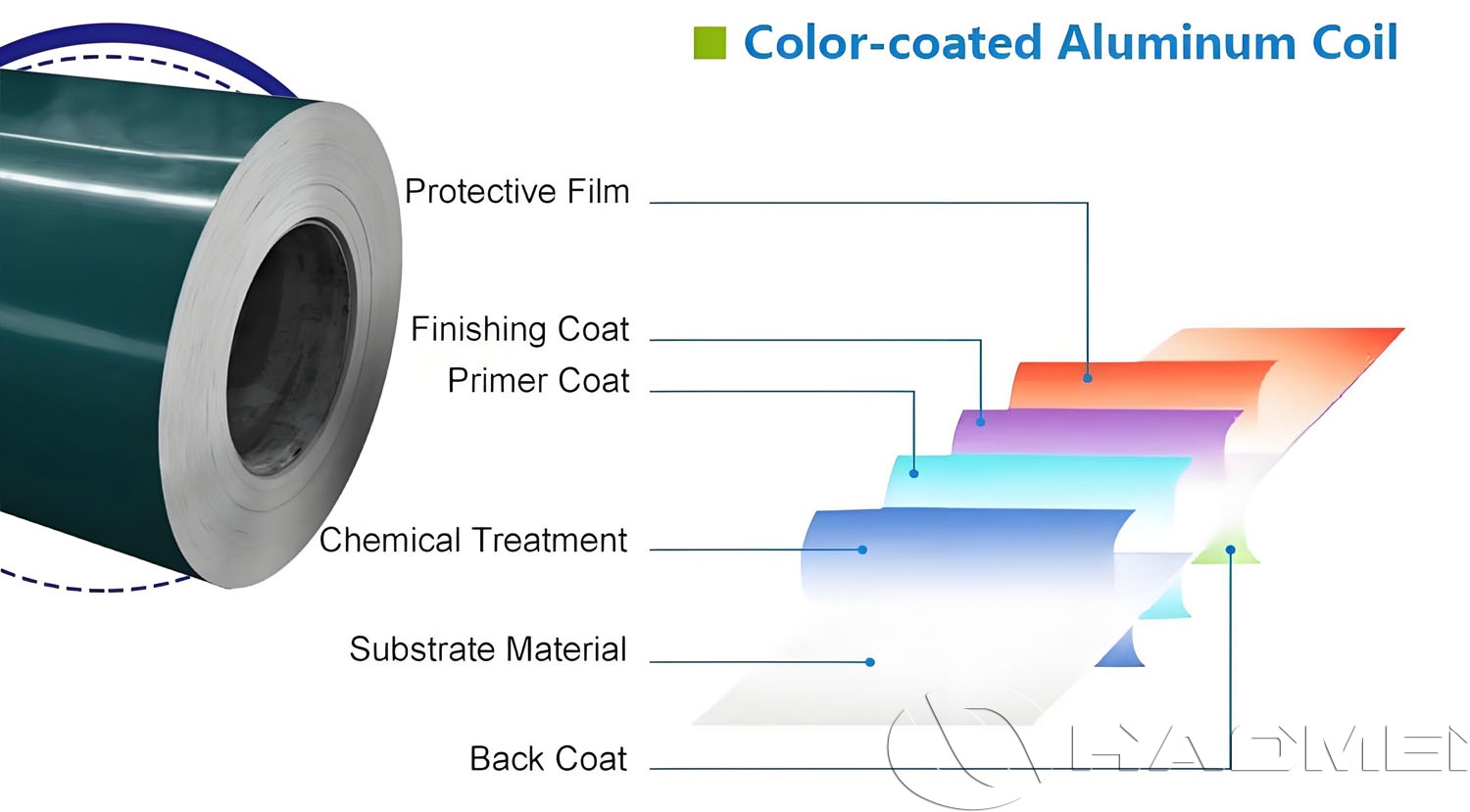
A typical coating structure includes:
5052 aluminum substrate
Chemical conversion treatment
Primer coating
Decorative topcoat
Back coating, where required
Removable protective film, if specified
For interior automotive trim panels, polyester or high-performance PE coatings are commonly used where decorative appearance, abrasion resistance, and fabrication flexibility are required. PE Coated Aluminum Coil systems can provide a broad range of colors and gloss levels for interior accents, instrument-panel decorative elements, and door-trim components.
For trim parts exposed to stronger UV radiation, temperature cycling, moisture, or exterior atmospheric conditions, PVDF-based systems provide enhanced weathering and color-retention performance. PVDF Coated Aluminum Coil finishes are particularly relevant for exterior decorative panels and vehicle components used in demanding environmental conditions.
Forming and Fabrication Considerations
The fabrication performance of 5052 H32 / H24 color-coated coil depends on temper, thickness, coating flexibility, tooling condition, and part geometry. Automotive trim components are commonly processed by slitting, blanking, bending, roll forming, shallow stamping, hemming, adhesive bonding, and mechanical fastening.
During forming, coating integrity is influenced by bend radius and deformation level. A coating system intended for automotive trim should maintain adhesion without cracking, excessive whitening, or delamination at formed edges. Protective film can reduce surface scratches during slitting, press forming, and assembly, especially for high-gloss, metallic, or dark-colored finishes.
Key production controls include:
Coil flatness and stable strip profile for accurate panel forming
Controlled coating thickness for uniform appearance and predictable bend behavior
Consistent gloss and color between coils used on visible vehicle assemblies
Edge quality after slitting to reduce coating damage and burr-related defects
Clean tooling and controlled handling to prevent scratches or pressure marks
Appropriate stacking, interleaving, and packaging for cosmetic surface protection
Common Aluminum Alloys for Color-Coated Automotive Panels
Although 5052 is widely used for automotive trim panels, alloy selection depends on required strength, formability, corrosion exposure, and surface requirements.
| Alloy | Main Characteristics | Typical Color-Coated Panel Uses |
|---|---|---|
| 1100 / 1050 / 1060 | High aluminum purity, very good formability, low strength | Light-duty decorative covers, interior finishing elements, non-rigid panels |
| 3003 | Aluminum-manganese alloy with moderate strength and good workability | General decorative sheets, formed covers, interior panel substrates |
| 5005 | Good anodizing response, smooth surface quality, moderate strength | Decorative panels requiring consistent appearance and coating quality |
| 5052 | Higher strength, good corrosion resistance, good forming performance | Automotive trim panels, moldings, door inserts, pillar trims, protective covers |
| 5754 | Higher strength and excellent corrosion resistance | Larger formed panels, transport components, moisture-exposed trim applications |
| 5083 | High strength and strong marine-atmosphere corrosion resistance | Heavy-duty transport panels and specialized high-strength components |
Compared with 1xxx and 3xxx alloys, 5052 offers greater strength for trim sections that need improved dent resistance and dimensional stability. Compared with higher-strength 5xxx alloys such as 5754 or 5083, 5052 often provides a more balanced combination of formability, surface quality, and cost for decorative automotive panel applications.
Appearance Options for Automotive Trim Panels
Color-coated 5052 aluminum coil can be supplied in solid, metallic, pearlescent, matte, high-gloss, brushed-look, textured, and embossed finishes. These surface options support visual differentiation between cabin trim areas and exterior decorative elements while preserving the lightweight benefits of aluminum.
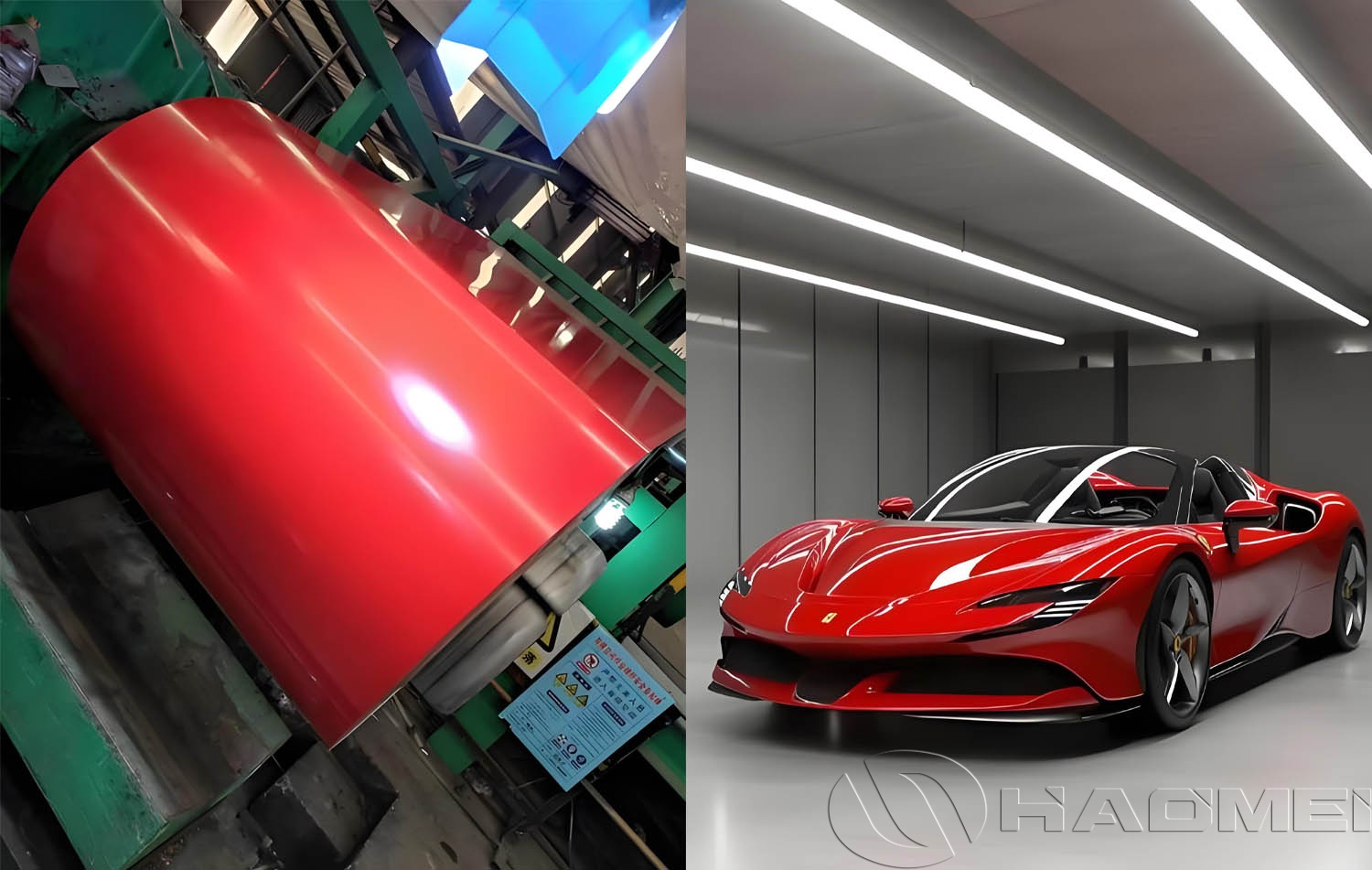
Metallic and matte coatings are frequently used for modern automotive interior trim because they create a premium visual effect while reducing glare. Textured coatings may improve scratch concealment and tactile quality. For exterior non-structural components, coating durability, UV stability, humidity resistance, and resistance to road-contaminant exposure are important surface-performance factors.
Quality Control for Automotive Trim Coil
Quality control for 5052 color-coated aluminum coil covers both substrate properties and coating performance. Incoming and in-process inspections typically evaluate alloy chemistry, temper, thickness, width, flatness, surface cleanliness, coating adhesion, color difference, gloss, coating thickness, impact resistance, bend performance, pencil hardness, and solvent resistance.
For visible automotive trim surfaces, visual inspection is particularly important. The coil surface is assessed for color variation, streaking, pinholes, coating particles, roller marks, scratches, and other cosmetic defects that may become apparent after forming under vehicle interior or exterior lighting conditions. Coil-to-coil consistency is controlled to support uniform appearance across matching trim assemblies.
-
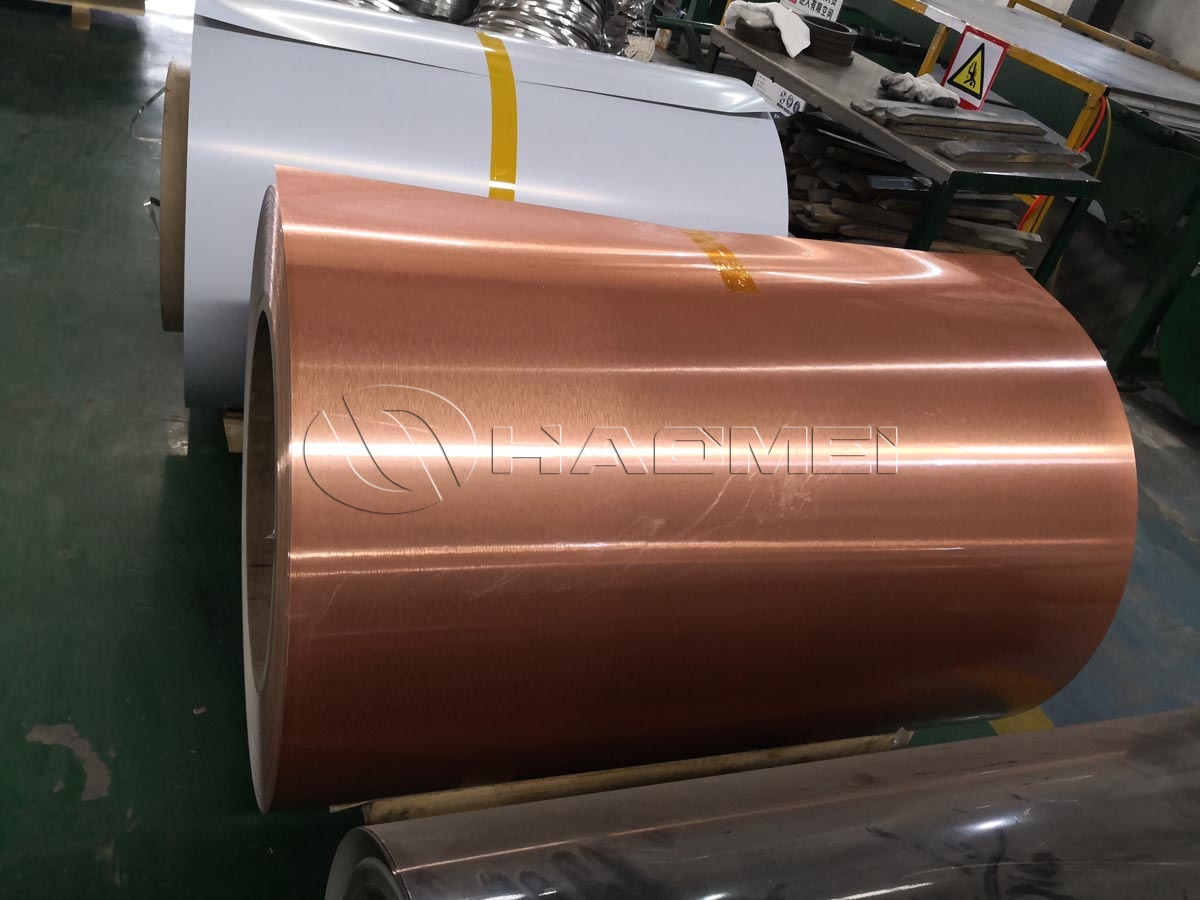
Matte Finish 1000 Series Color Coated Aluminum
Matte finish 1000 series color coated aluminum coil with PE/PVDF options, clean forming, and stable color for trim, ceilings, and lightweight panels.
2026-01-20
-
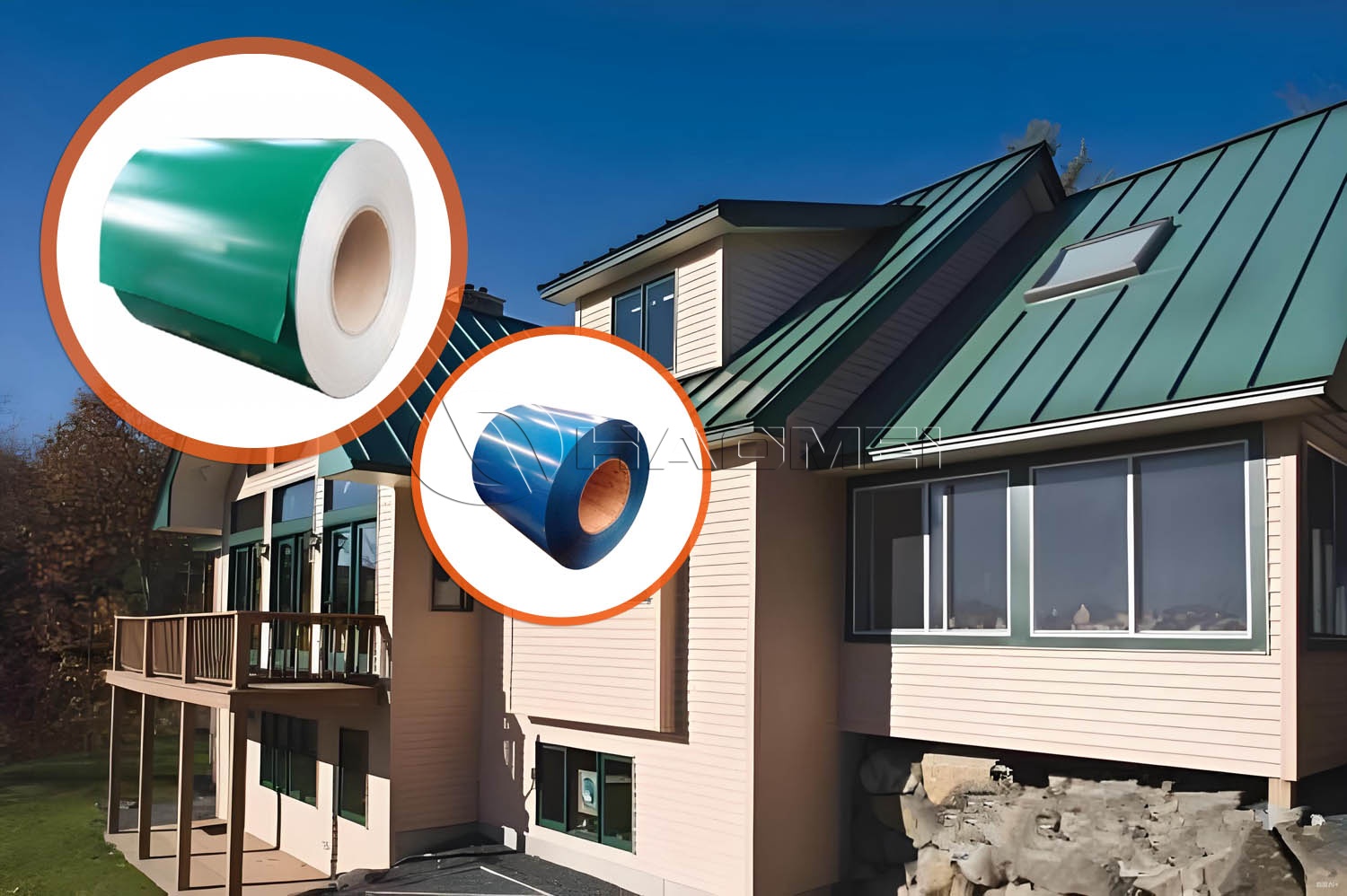
Advantages of 1100 Prepainted Aluminum Coil for Roofing
Explore the advantages of 1100 prepainted aluminum coil for roofing, including corrosion resistance, formability, coating options, and alloy selection.
2026-03-24
-
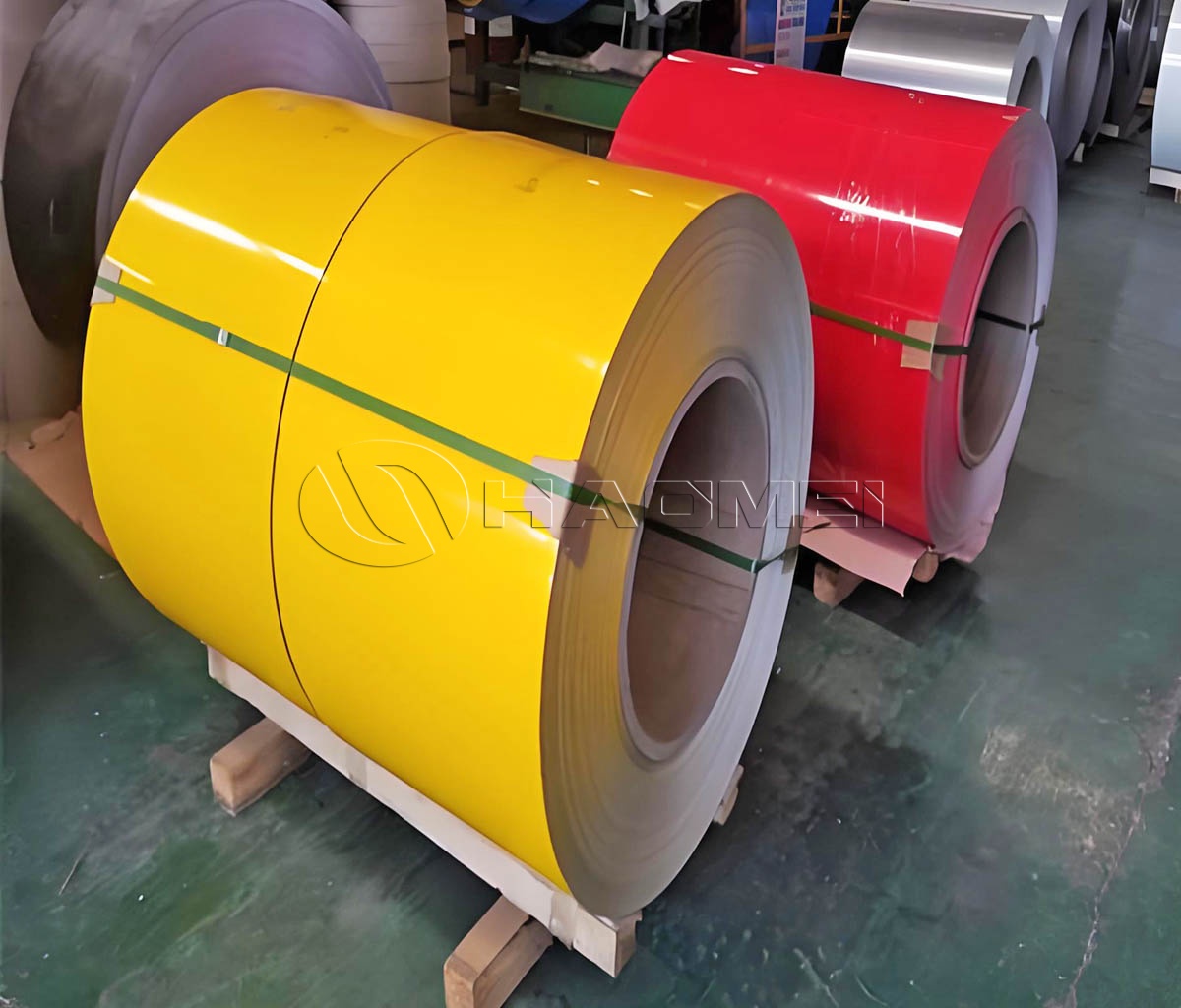
PVDF Coated Aluminum Coil Fire Rating Standards
Learn how PVDF coated aluminum coil supports fire rating standards such as EN 13501-1 and ASTM E84, covering coating systems, processes and test-critical details.
2026-01-30
Contact Directly
-

ADD: No.14 Waihuan Road, CBD, Zhengzhou, China
-

WhatsApp: +86-18703635966
-

E-MAIL: sales@alummc.com