

News
 By Hermione
3105 PE Coated Aluminum Coil For Gutters
3105 PE coated aluminum coil is positioned as a practical pre-painted aluminum material for residential and light commercial gutter systems. It is mainly used for seamless gutters, downspouts, elbows, fascia trim, rainwater collection components, and related exterior drainage accessories where formability, weather resistance, color consistency, and stable coil processing performance are required.
Material Characteristics of 3105 Aluminum for Gutters
3105 aluminum belongs to the Al-Mn series alloy family. Compared with pure aluminum grades, it offers higher mechanical strength while maintaining good ductility and corrosion resistance. For gutter manufacturing, this balance is important because the coil must pass through roll forming, bending, notching, and seaming operations without cracking or excessive springback.
Typical gutter applications often require H24 or H26 tempers. These tempers provide sufficient rigidity for installed gutter profiles while retaining enough elongation for forming continuous K-style, half-round, and custom drainage profiles. The natural corrosion resistance of aluminum also helps reduce long-term degradation in outdoor environments exposed to rainwater, humidity, and temperature changes.
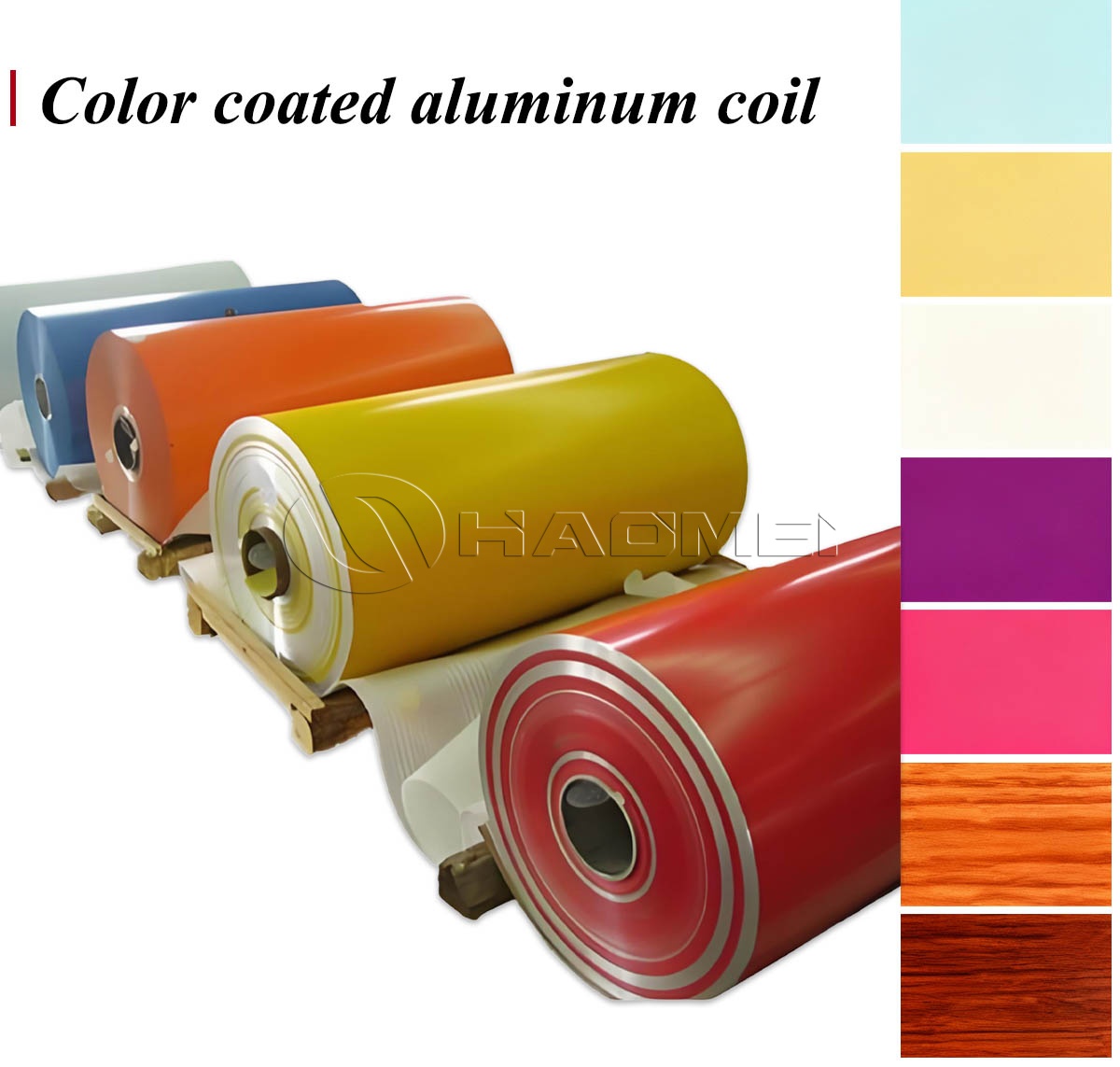
The 3105 Color Coated Aluminum Coil is widely used where moderate strength, stable paint adhesion, and consistent surface appearance are required in architectural exterior products.
PE Coating System and Surface Performance
PE, or polyester coating, is a commonly used coating system for gutter aluminum coil. It provides a smooth decorative surface, good flexibility, and reliable adhesion to the chemically pretreated aluminum substrate. For gutters, PE coating is selected for its balance of cost efficiency, color diversity, processing adaptability, and outdoor durability.
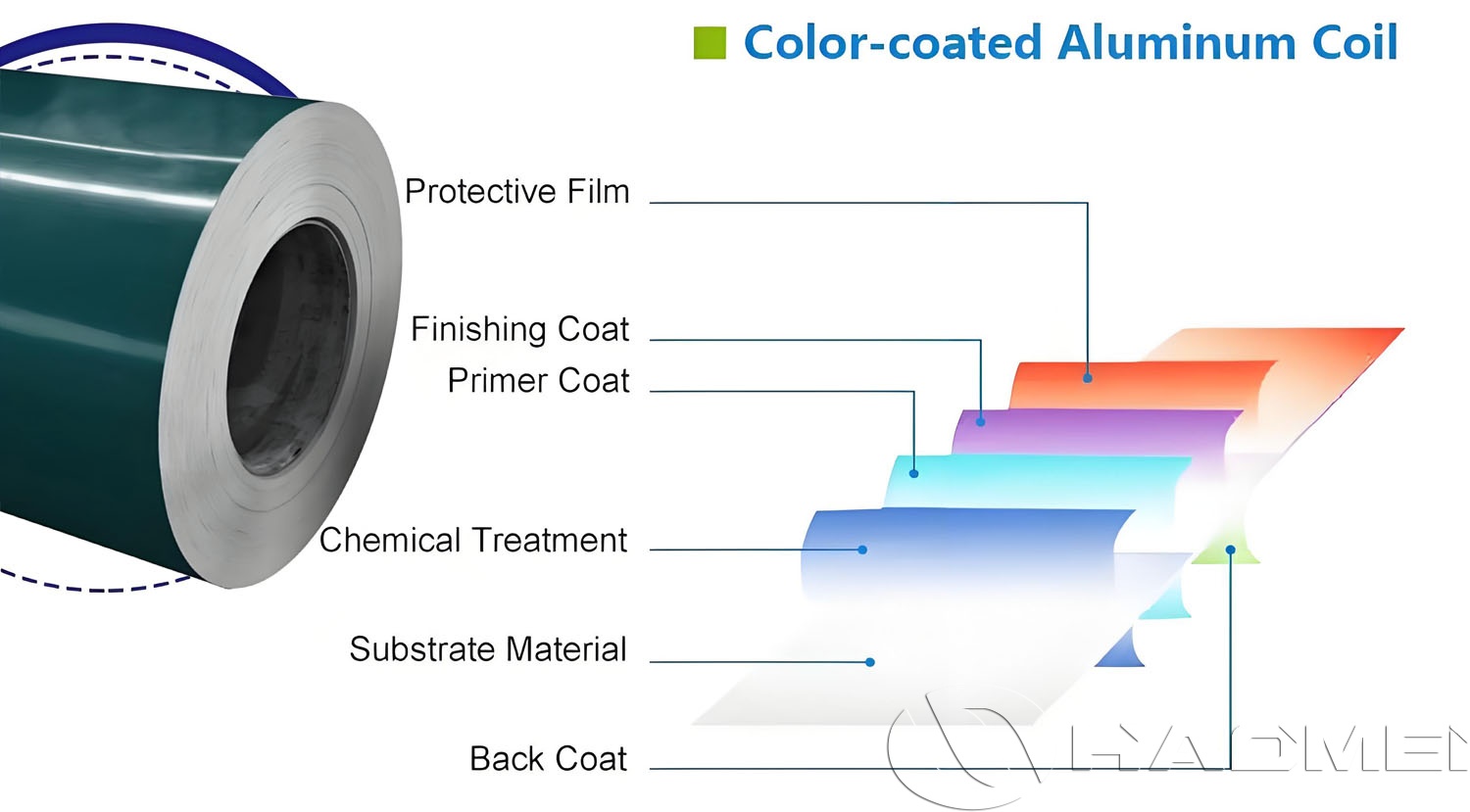
A typical PE coated aluminum coil structure includes the aluminum substrate, chemical conversion layer, primer, topcoat, and optional back coating. The front coating provides color and weather resistance, while the back coating supports processing protection and contact stability during installation.
The coating system should be compatible with roll forming and bending. During gutter forming, the coating must resist micro-cracking at bent edges and maintain adhesion after repeated mechanical deformation. Proper pretreatment, primer matching, curing temperature, and film thickness control are key factors in achieving stable performance.
Core Specifications of 3105 PE Coated Aluminum Coil for Gutters
| Specification Item | Common Range or Description |
|---|---|
| Alloy | 3105, also available in 3003, 3004, 1100, 1060 depending on application |
| Temper | H24, H26, H14, H16, H18 according to forming and strength requirements |
| Thickness | 0.40 mm-1.20 mm, commonly 0.50 mm-0.80 mm for gutters |
| Width | 100 mm-1600 mm, slitting available for gutter forming lines |
| Coating Type | PE polyester coating, primer plus topcoat system |
| Top Coating Thickness | Usually 15-25 microns, adjusted by performance requirement |
| Back Coating Thickness | Usually 5-10 microns or customized back paint system |
| Surface Finish | Smooth, matte, embossed, or customized color finish |
| Color Options | White, brown, black, gray, beige, metallic, and custom colors |
| Inner Diameter | 405 mm, 508 mm, or according to production line requirements |
| Coil Weight | Commonly 1-5 tons per coil, based on width and logistics conditions |
| Main Applications | Seamless gutters, downspouts, fascia, roof drainage accessories |
Common Alloys Used in Gutter Aluminum Coil
Although 3105 is a preferred alloy for many gutter systems, several aluminum grades are also used depending on strength, forming complexity, and project requirements.
3105 aluminum alloy is one of the most suitable materials for painted gutter coil. Its manganese content improves strength compared with 1000 series aluminum, while its ductility remains favorable for continuous roll forming. It is commonly selected for seamless gutters and exterior drainage components.
3003 aluminum alloy is another Al-Mn alloy with good corrosion resistance and formability. It is suitable for general formed building products and can be used in gutter-related components where moderate strength is acceptable.
3004 aluminum alloy provides higher strength than 3003 and 3105 in many conditions. It is suitable for applications requiring enhanced rigidity, though forming parameters should be controlled carefully for complex profiles.
1100 and 1060 aluminum alloys are high-purity aluminum grades with excellent corrosion resistance and ductility. They are easier to form but have lower strength, so they are more often used for light-duty decorative or non-structural components. In comparison, 3105 offers a better strength-to-formability balance for gutter coil.
For projects requiring different coating performance levels, PE Coated Aluminum Coil can be supplied across multiple alloy and temper combinations to match forming and exterior exposure needs.
Processing Performance in Gutter Manufacturing
Gutter production typically uses slitted pre-painted aluminum coil fed into continuous forming equipment. The coil must unwind smoothly, maintain stable strip tension, and pass through forming rollers without coating scratches, edge waves, or camber-related misalignment.
For 3105 PE coated aluminum coil, several processing properties are especially important:
Good flatness for stable feeding and profile accuracy
Controlled mechanical strength for roll forming and bending
Consistent coating adhesion after deformation
Smooth surface appearance without pinholes, blisters, or color variation
Proper edge quality after slitting to reduce forming defects
Coil coating parameters also affect downstream performance. Insufficient curing may reduce solvent resistance and adhesion, while over-curing can reduce coating flexibility. For gutter coil, the coating should be cured to achieve both surface hardness and bend resistance.
Weather Resistance and Corrosion Protection
Gutters are exposed to rainwater, ultraviolet radiation, dust, leaves, temperature cycling, and pollutants. Aluminum naturally forms a protective oxide layer, and the PE coating adds an additional barrier against moisture and environmental attack.
A well-produced 3105 PE coated aluminum coil should demonstrate stable performance in several key areas:
Color retention under normal outdoor exposure
Resistance to peeling and cracking after forming
Protection against moisture penetration
Resistance to mild acidic or alkaline rainwater conditions
Reduced staining and easier surface cleaning compared with uncoated metal
For highly aggressive environments, such as coastal areas, industrial zones, or buildings with strong UV exposure, coating thickness, pretreatment quality, and paint formulation should be evaluated carefully. PE coating is widely used for general exterior gutter systems, while higher-performance coating systems may be considered for more severe exposure conditions.
Quality Control Points for Stable Coil Performance
Reliable gutter coil production depends on strict control from substrate selection to final coil packaging. The substrate should have consistent thickness, mechanical properties, and surface cleanliness before coating. Chemical pretreatment must form a uniform conversion layer to support primer adhesion.
During coating, wet film control, oven temperature, line speed, and curing time influence final coating flexibility and durability. Finished coils are commonly checked for color difference, gloss, coating thickness, pencil hardness, T-bend performance, impact resistance, solvent resistance, and adhesion.
Slitting quality is also important. Burrs, uneven edges, or excessive coil tension can cause forming scratches or profile instability during gutter production. Protective film, moisture-resistant packaging, and proper coil handling help maintain surface quality before fabrication.
-
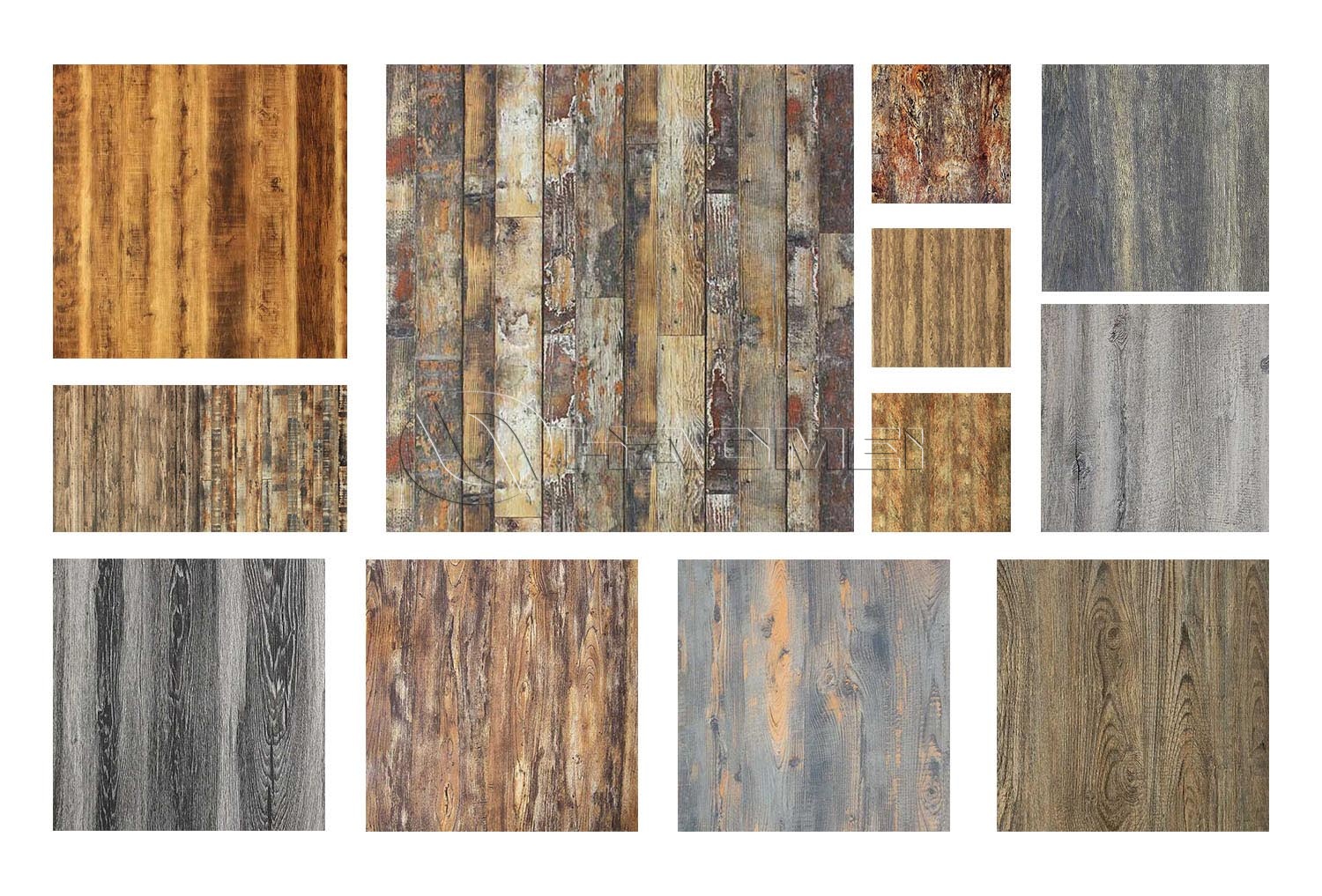
Custom Wood Grain Patterns for Aluminum Coils
Custom wood grain aluminum coil with PE or PVDF coating and transfer printing for stable color, corrosion resistance, and consistent patterns in cladding, ceilings, and shutters.
2026-02-27
-
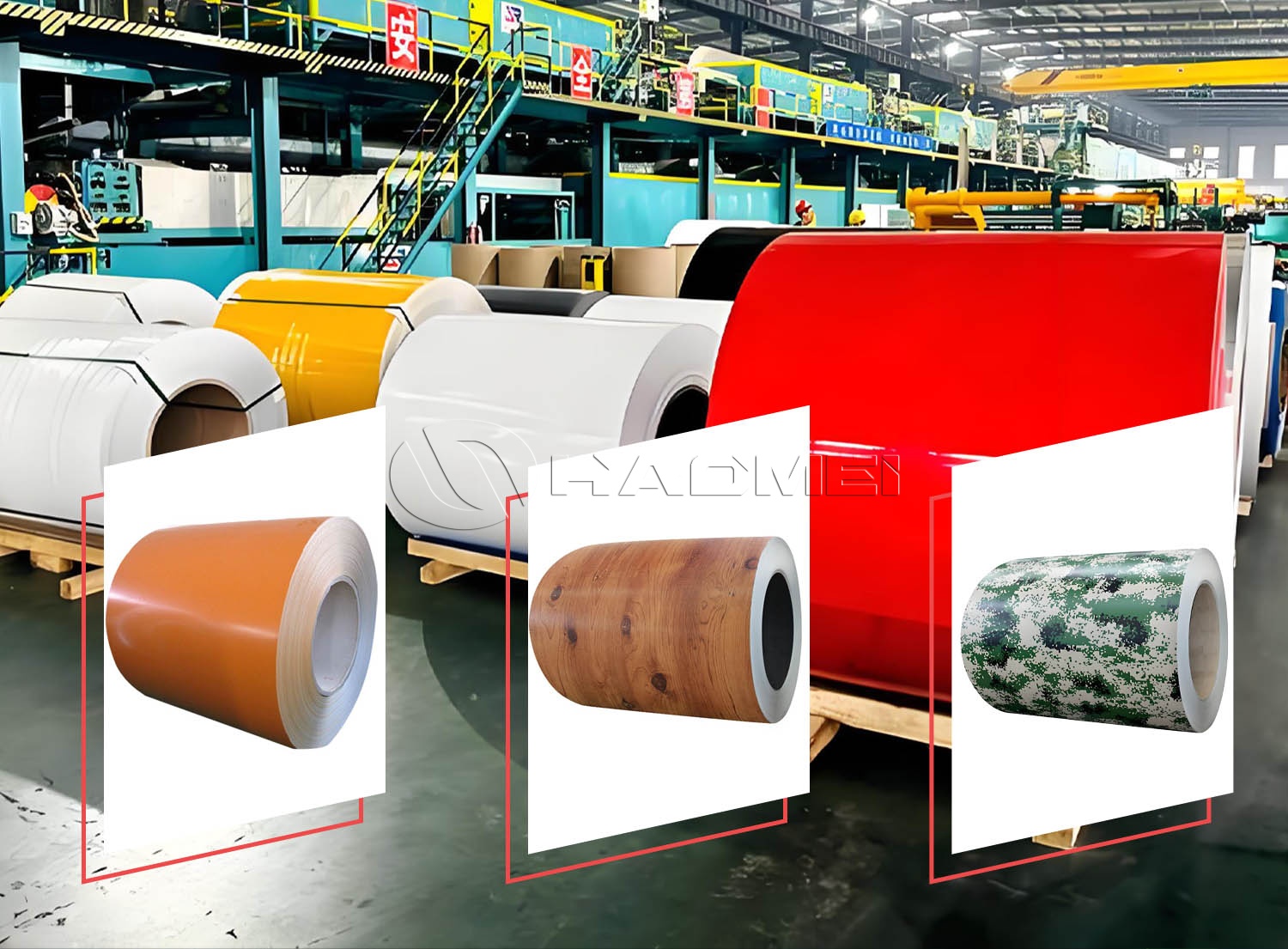
PE Coated Aluminum Coil for Ceiling Tiles
PE coated aluminum coil for ceiling tiles offers lightweight forming, stable color, corrosion resistance, and clean finishes for modern interior ceilings.
2026-05-07
-
3105 PE Coated Aluminum Coil For Gutters
Explore 3105 PE coated aluminum coil for gutters, including alloy features, coating structure, specifications, forming performance and corrosion resistance.
2026-05-11
Contact Directly
-

ADD: No.14 Waihuan Road, CBD, Zhengzhou, China
-

WhatsApp: +86-18703635966
-

E-MAIL: sales@alummc.com