


News
 By Hermione
3105 H26 Colot-Coated Aluminum Coil for Commercial Fire-Rated Partition Walls
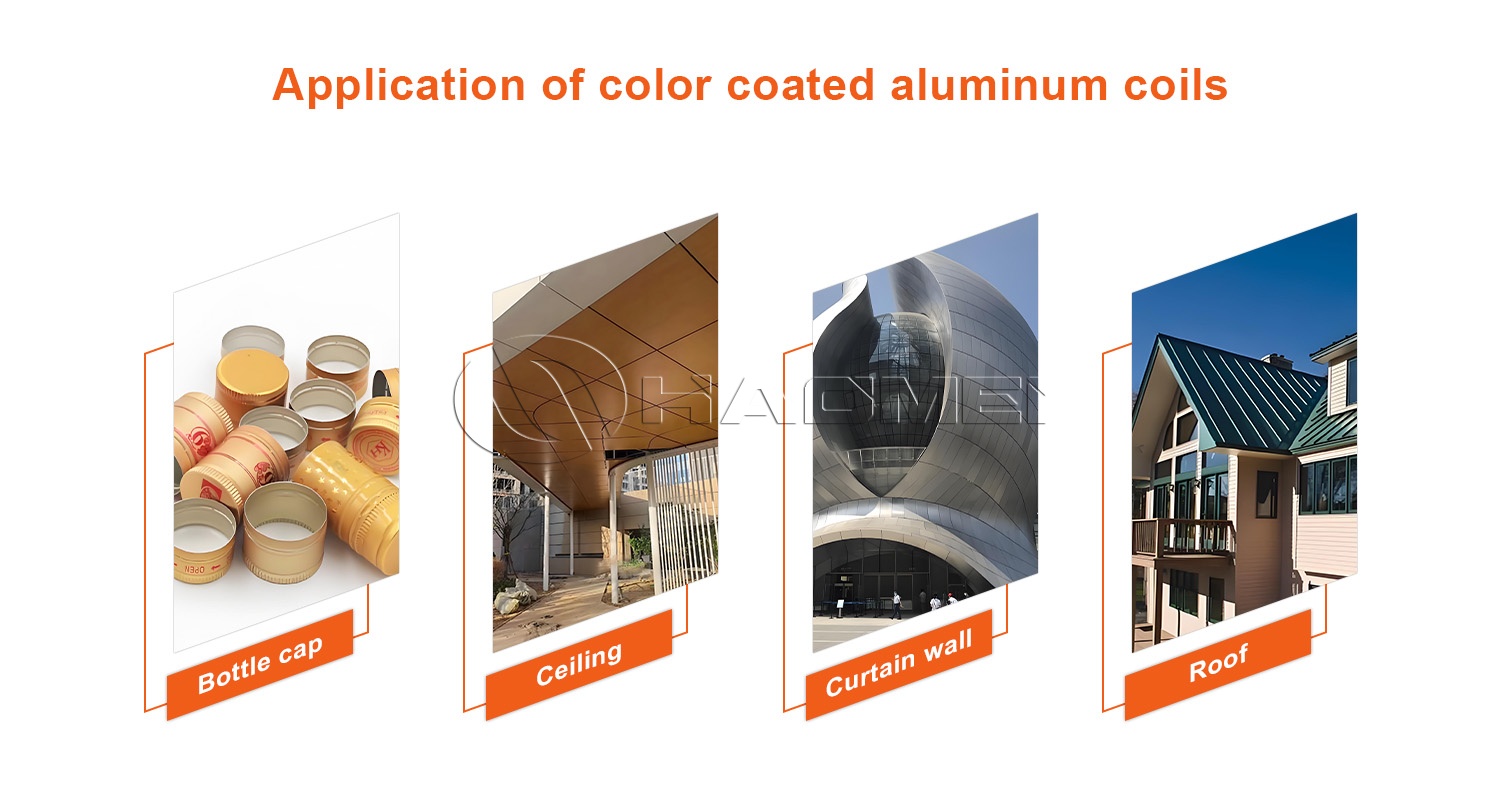
3105 H26 color-coated aluminum coil is a pre-painted aluminum facing material developed for commercial partition wall panels, fire-rated door surrounds, corridor cladding, elevator lobbies, healthcare interiors, offices, retail spaces, and other high-traffic architectural environments. It combines moderate strength, stable flatness, excellent roll-forming performance, and decorative coating durability. Within a fire-rated partition assembly, the aluminum coil functions as the visible metal skin or panel facing; the fire rating of the completed system depends on the tested wall construction, including framing, insulation, core materials, fasteners, joints, and perimeter details.
Why 3105 H26 Is Suitable for Partition Wall Facings
Alloy 3105 belongs to the 3xxx aluminum alloy series, with manganese as the principal alloying element and a controlled magnesium addition. Compared with commercially pure aluminum, 3105 provides higher strength while retaining the ductility needed for bending, profiling, hemming, and roll forming.
The H26 temper provides a practical balance between rigidity and fabrication capability. For commercial fire-rated partition wall skins, this balance helps maintain panel appearance during processing and installation while allowing the coil to be formed into cassette panels, cover trims, edge returns, snap-fit profiles, and modular wall components.
Key material advantages include:
Good forming behavior for roll-formed and brake-formed architectural profiles.
Improved dent resistance compared with softer 1xxx-series aluminum.
Low weight, helping reduce handling loads and supporting easier panel fabrication.
Natural corrosion resistance suitable for conditioned commercial interiors.
Continuous coil coating quality for consistent color, gloss, and surface appearance.
Compatibility with solid colors, metallic finishes, textured finishes, and printed decorative patterns.
Core Specifications of 3105 H26 Color-Coated Aluminum Coil
Table 1. Typical Core Specifications
| Item | Typical Range or Option |
|---|---|
| Alloy | 3105 aluminum alloy |
| Temper | H26 |
| Thickness | 0.40-1.20 mm |
| Common partition-facing thickness | 0.50-0.80 mm |
| Width | 600-1,600 mm |
| Coil inner diameter | 405 mm or 505 mm |
| Coil outer diameter | Subject to coil weight and handling requirements |
| Surface finish | Smooth, matte, high gloss, textured, embossed, printed, or wood grain |
| Top coating | PE, SMP, HDP, or PVDF coating system |
| Back coating | Service coating, wash coat, or protective back coat |
| Color | RAL, Pantone reference, custom color, metallic, or decorative pattern |
| Typical applications | Partition wall facings, interior wall panels, fire-door surrounds, column covers, trims, and modular partitions |
Actual mechanical properties, coating thickness, color tolerance, gloss level, and dimensional tolerances should be defined according to the panel design and applicable project specification.
Coating Structure and Surface Durability
Color-coated aluminum is produced by continuously cleaning, chemically pretreating, priming, and top-coating aluminum strip before recoiling. This coil-coating process provides more uniform film coverage and color consistency than post-fabrication spray coating for high-volume panel production.
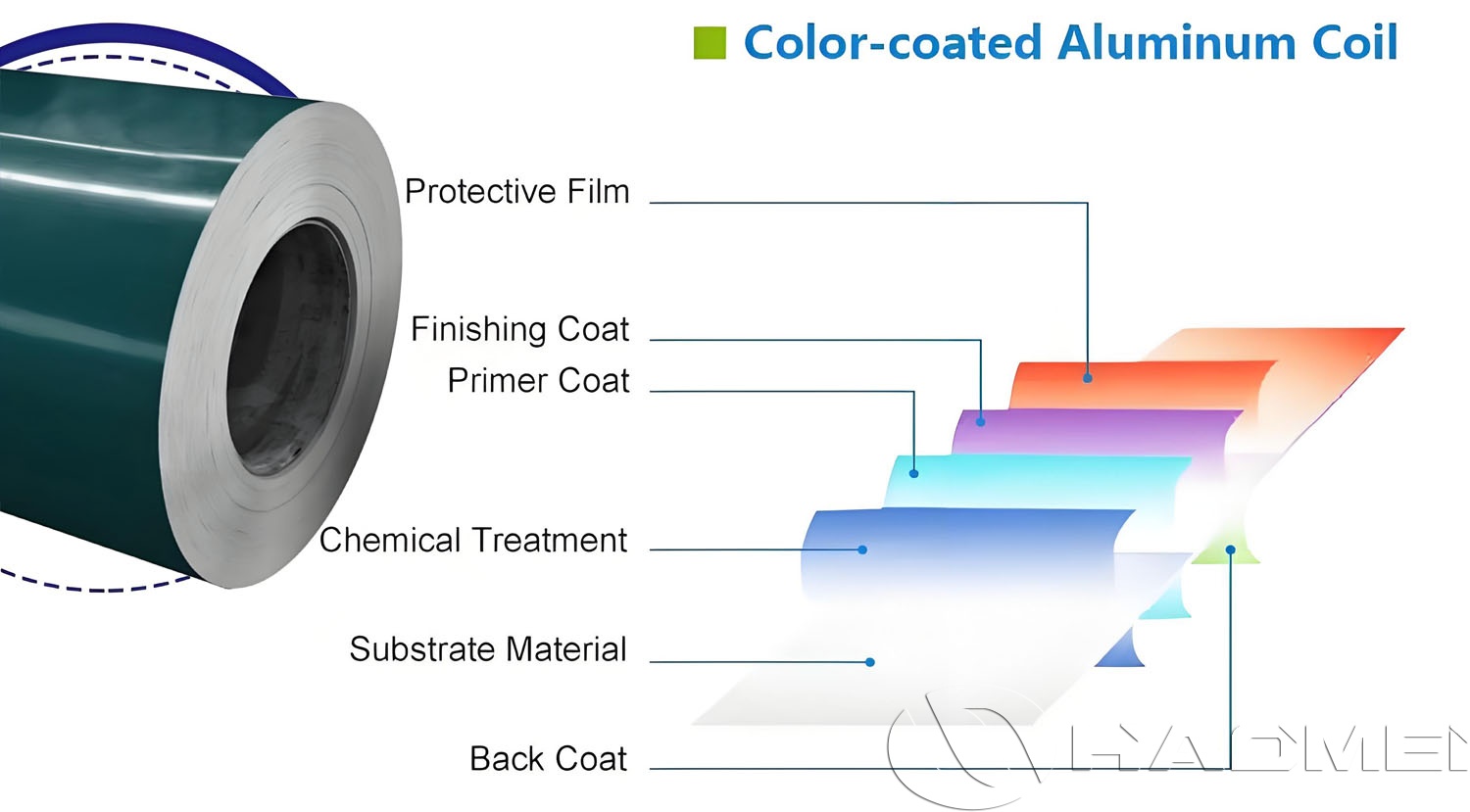
A typical pre-painted coil construction includes:
Aluminum substrate.
Chemical conversion layer for coating adhesion and corrosion resistance.
Primer coat to support adhesion and coating-system durability.
Decorative top coat providing color, gloss, and surface protection.
Back coat for reverse-side protection during fabrication and service.
For interior commercial partition walls, PE Coated Aluminum Coil is commonly used where the environment is dry, UV exposure is limited, and economical decorative performance is required. PE systems can provide smooth finishes, stable color matching, and good forming flexibility for interior wall panels.
For entrances, glazed corridors, atriums, semi-exterior locations, or installations exposed to stronger sunlight, humidity, and temperature variation, PVDF Coated Aluminum Coil offers enhanced weathering and color-retention performance. The coating system should be selected based on exposure conditions rather than fire classification alone.
Fire-Rated Partition Wall System Considerations
Aluminum has a high melting temperature but loses strength as temperature rises. Therefore, 3105 H26 aluminum coil should be specified as an architectural facing material within a tested fire-rated partition assembly, not as the sole determinant of the assembly's fire-resistance rating.
The fire performance of a commercial partition wall is generally governed by the complete system design, including:
Wall framing type and gauge.
Mineral wool, gypsum-based, or other fire-resistant core materials.
Panel attachment method and spacing.
Joint geometry, sealants, and intumescent components where required.
Door frame, glazing, access-panel, and service-penetration details.
Tested assembly configuration and applicable regional building codes.
The aluminum facing can support a clean, durable, and low-maintenance wall surface while the rated core and structural system provide the required resistance to fire exposure. For this reason, panel fabricators should maintain consistency between the coil thickness, formed-profile design, attachment method, and the approved partition assembly details.
Common Aluminum Alloys for Partition Wall Panels
Although 3105 H26 is a widely used choice for architectural wall skins, alloy selection varies according to panel geometry, environmental exposure, required stiffness, and fabrication process.
3105 Aluminum Alloy
3105 is commonly selected for pre-painted architectural coil because it provides a strong balance of formability, strength, surface quality, and cost efficiency. It is particularly suitable for roll-formed partition panels, trims, ceiling accessories, and decorative wall cladding.
3003 Aluminum Alloy
3003 is another manganese-containing alloy with good workability and corrosion resistance. It is often used for general architectural sheet applications, interior panels, and formed components. In some panel designs, 3003 may be chosen when fabrication characteristics or existing material standards favor this alloy.
3004 Aluminum Alloy
3004 generally provides higher strength than 3003 and is appropriate for applications requiring greater panel stiffness or improved resistance to handling deformation. It may be used for deeper profiles, larger cassette panels, or areas subject to more frequent impact.
5005 Aluminum Alloy
5005 contains magnesium and is valued for its surface appearance and good anodizing response, although it is also available as pre-painted coil. It may be selected for premium architectural finishes or panels requiring a specific visual standard.
5052 Aluminum Alloy
5052 offers higher strength and better corrosion resistance than 3xxx-series alloys, particularly in humid or mildly corrosive environments. For standard commercial interior fire-rated partition wall facings, it can be more robust than necessary, but it is useful for demanding service conditions or impact-prone zones.
Fabrication Performance of H26 Temper
The H26 temper is suitable for many common panel-fabrication operations, including roll forming, press bending, shallow drawing, hemming, and edge folding. Because bend performance is affected by thickness, bend radius, coating type, and panel profile, fabrication parameters should be controlled to prevent coating stress marks or micro-cracking at tight radii.
Important processing factors include:
Using an appropriate inside bend radius for the selected thickness and coating system.
Maintaining clean forming rolls and bending tools to protect the painted surface.
Applying removable protective film when panels will undergo multiple handling stages.
Controlling coil slitting quality to reduce edge burrs and improve panel-edge appearance.
Matching coating flexibility to the intended profile depth and forming radius.
Appearance Options for Commercial Interiors
Commercial fire-rated partition walls often serve as both functional barriers and prominent interior design elements. Pre-painted 3105 coil supports a broad range of visual treatments, including neutral solid colors for offices and healthcare facilities, metallic tones for elevators and lobby partitions, textured matte surfaces for glare control, and printed finishes for hospitality or retail interiors.
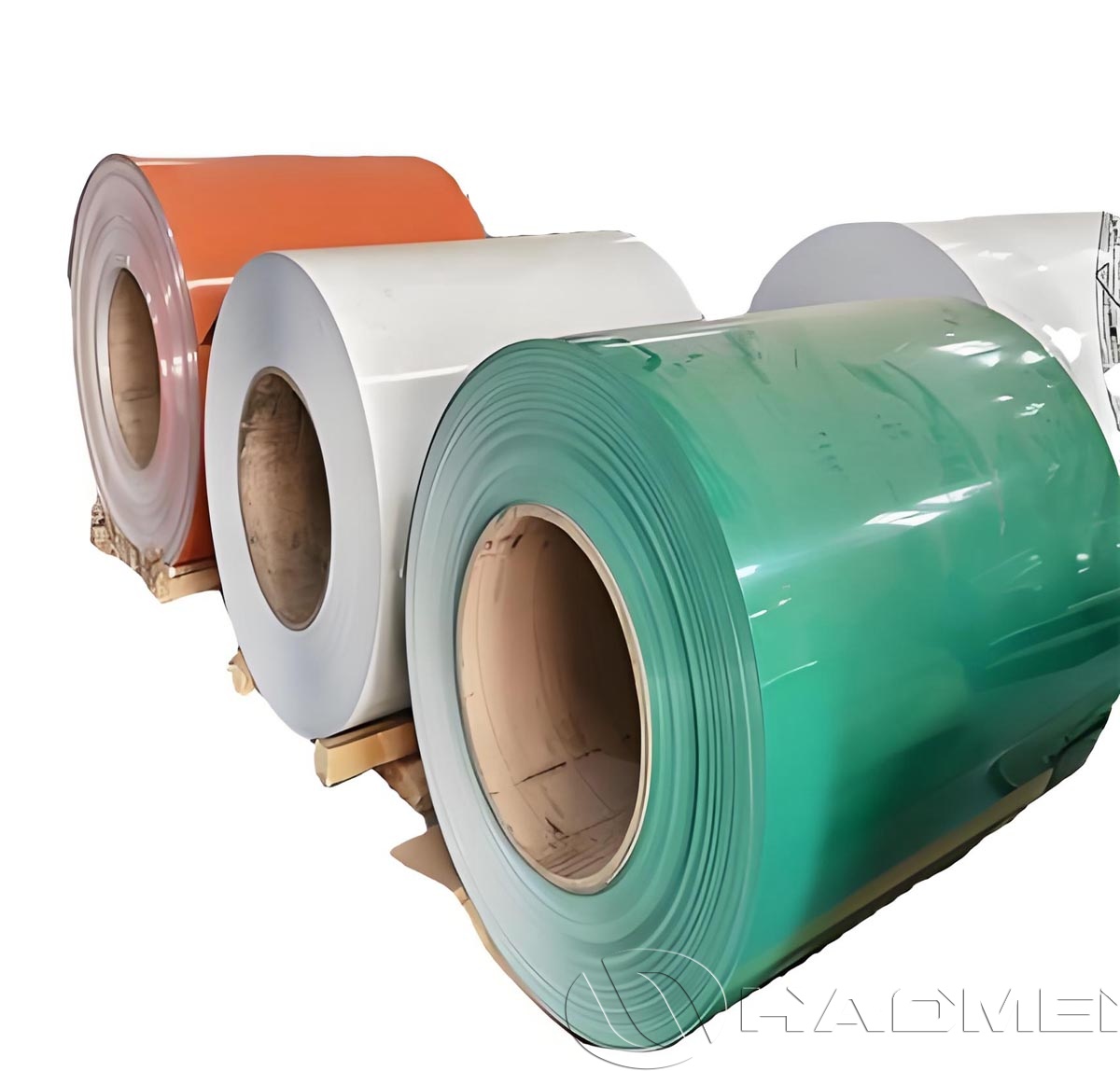
Surface appearance should be evaluated under the actual lighting conditions of the installation area. Gloss level, texture direction, metallic orientation, and color tolerance can influence the visual continuity of adjacent wall panels, trims, and door surrounds.
Quality Controls for Partition Wall Coil
Reliable partition wall production depends on stable substrate and coating characteristics. Typical quality controls for 3105 H26 color-coated aluminum coil include thickness measurement, width tolerance, flatness evaluation, coating-film thickness checks, color consistency, gloss measurement, adhesion testing, bend testing, pencil hardness, solvent resistance, and surface-defect inspection.
For coils intended for visible wall panels, attention should also be given to:
Color consistency between coils and production batches.
Controlled coil set and shape for efficient panel processing.
Protective-film compatibility with the topcoat.
Coating adhesion after profiling and folding.
Surface cleanliness before lamination, bonding, or assembly.
Proper packaging to prevent transit abrasion, edge damage, and moisture staining.
By combining 3105 H26 substrate performance with a properly selected coil-coating system, commercial partition wall manufacturers can produce lightweight, durable, and visually consistent metal facings for tested fire-rated wall assemblies.
-
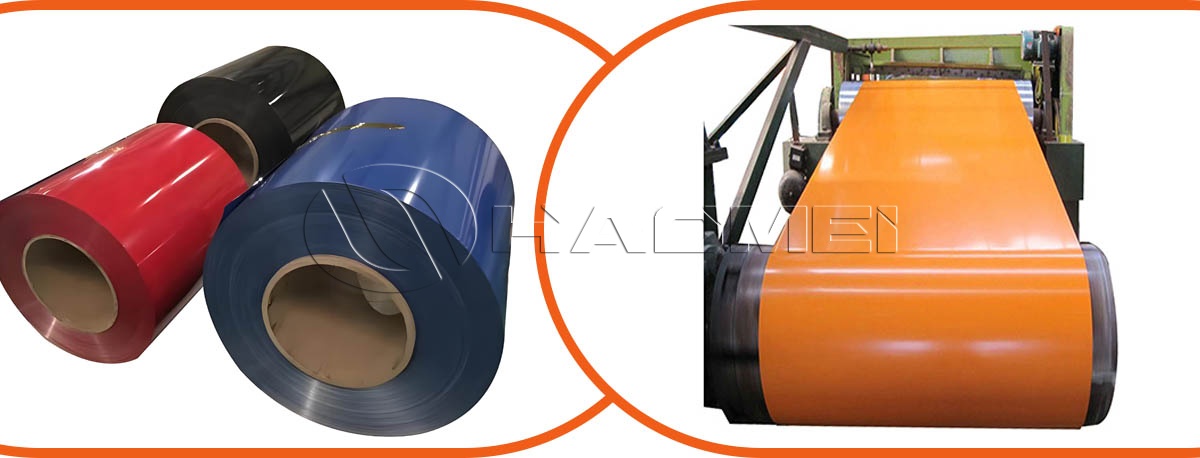
PVDF Coated Aluminum Coil For Cold Climates
PVDF coated aluminum coil for cold climates combines durable fluoropolymer protection, alloy options, and flexible prepainted finishes for roofs and facades.
2026-08-04
-
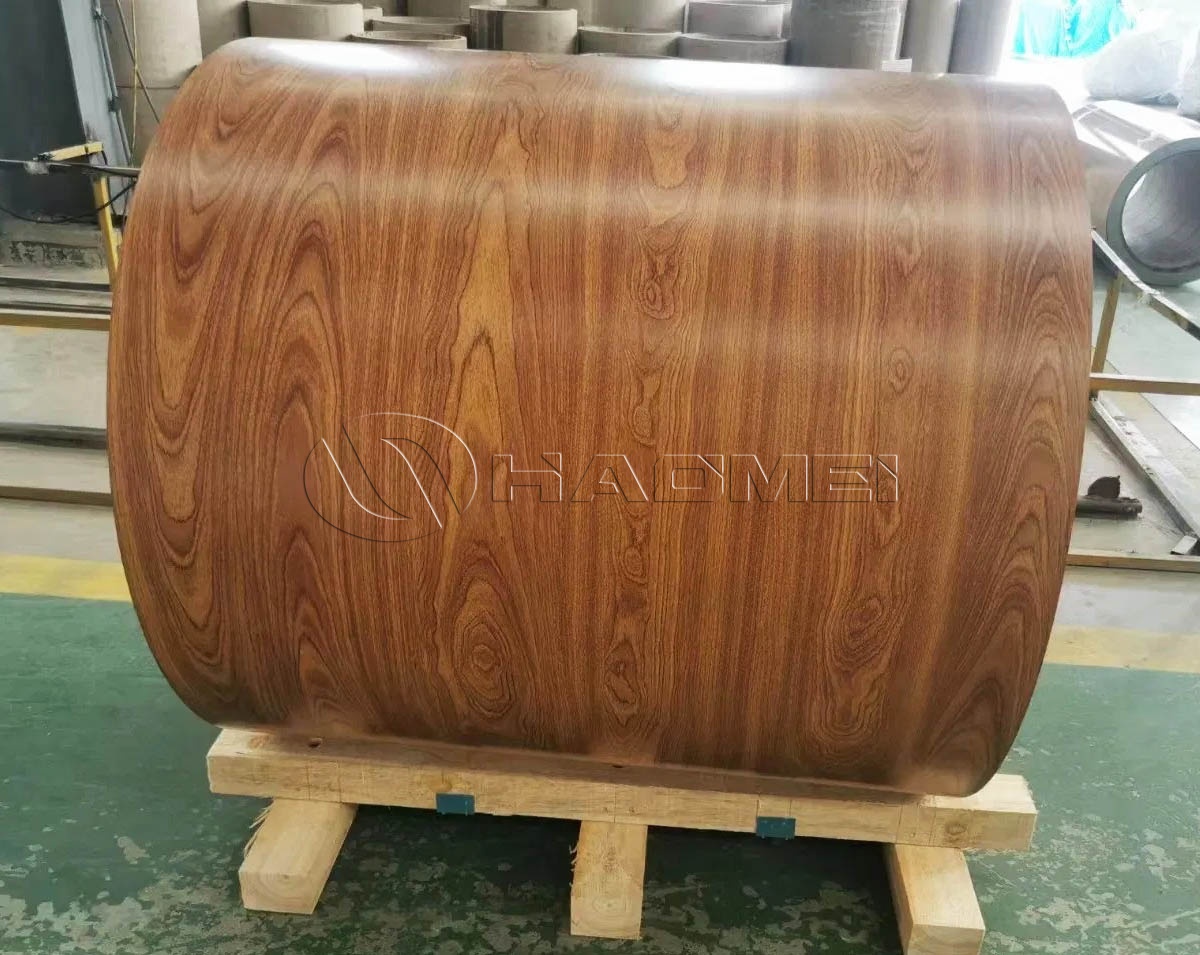
Wood Grain Aluminum Coil For Interior Decoration
Wood grain aluminum coil for interior decoration combines PE/PVDF coatings with stable alloys like 3003/3105/5052 to deliver consistent color, formability, and durability.
2026-03-11
-
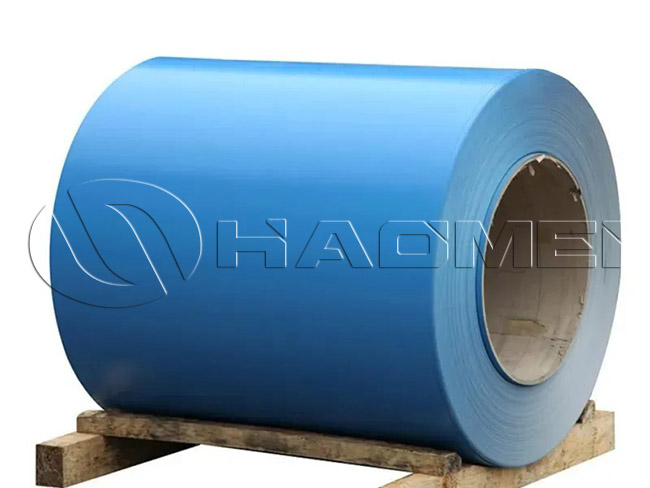
3003 H14 Color Coated Aluminum Coil for Roofing
3003 H14 color-coated aluminum coil uses PE/PVDF coating and features excellent formability, high corrosion resistance, and weldability.
2025-12-17
Contact Directly
-

ADD: No.14 Waihuan Road, CBD, Zhengzhou, China
-

WhatsApp: +86-18703635966
-

E-MAIL: sales@alummc.com
