

News
 By Hermione
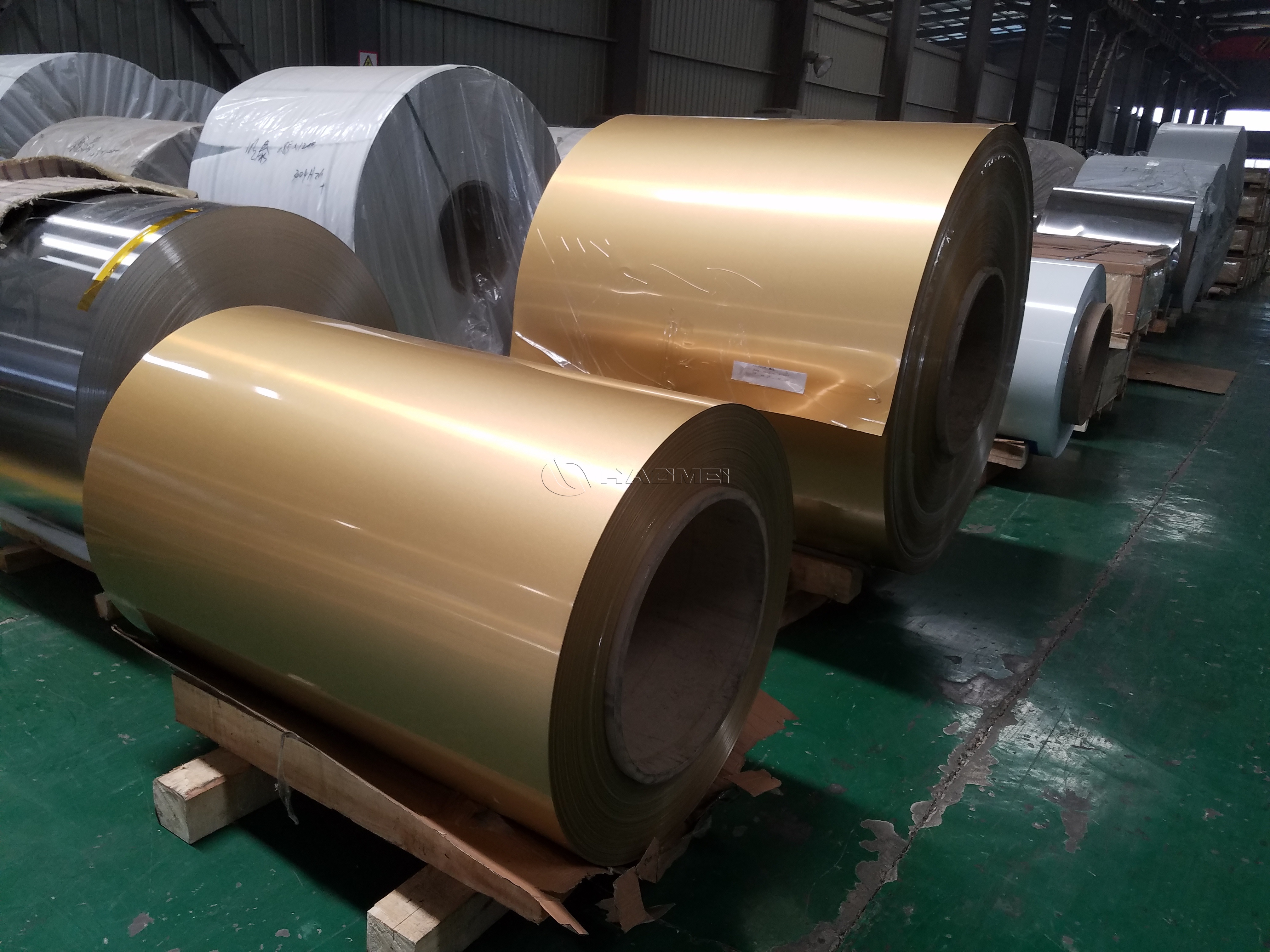
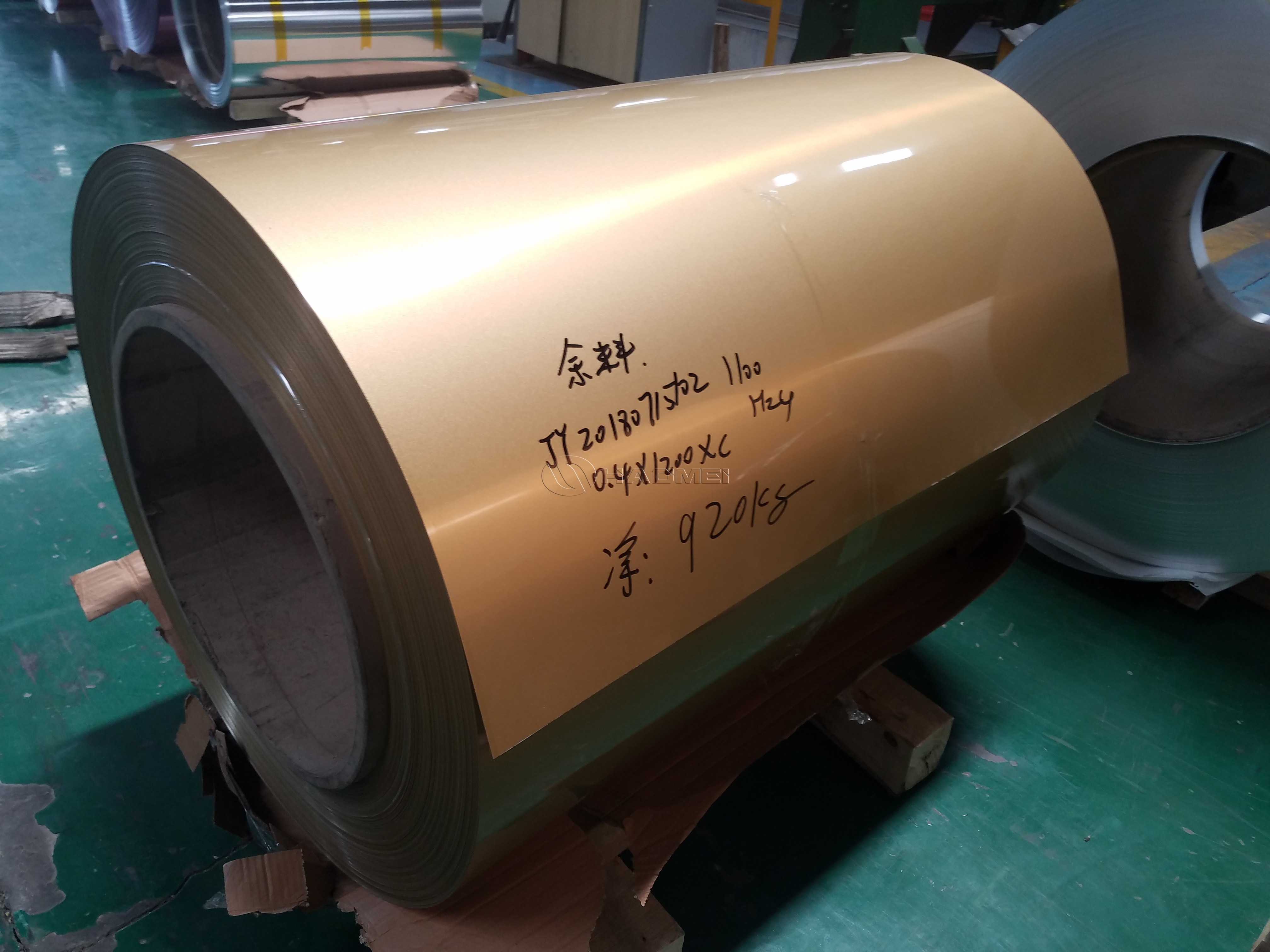
3105 H24 Color Coated Aluminum Coil
3105 H24 color coated aluminum coil is a widely used prepainted aluminum material positioned between decorative versatility and practical structural performance. It is commonly selected for roofing panels, wall cladding, ceilings, rolling shutters, rainwater systems, fascia, insulation jacketing, and interior-exterior trim components where stable flatness, moderate strength, corrosion resistance, and long-lasting color appearance are required.
What Is 3105 H24 Color Coated Aluminum Coil?
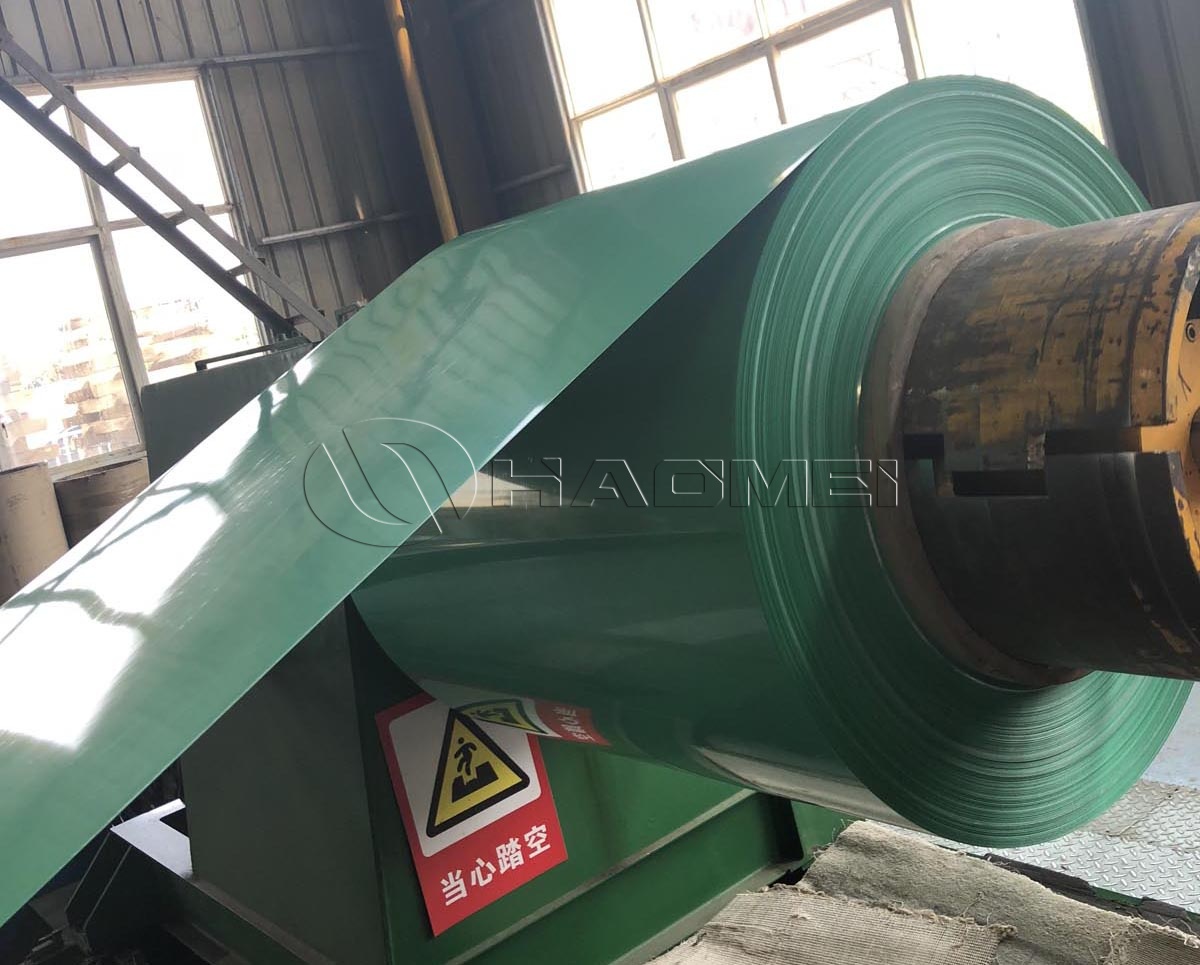
3105 is a 3000 series aluminum alloy primarily alloyed with manganese, with a small addition of magnesium that helps improve strength compared with commercially pure aluminum grades. In the H24 temper, the substrate is strain-hardened and partially annealed, giving a practical balance of rigidity and workability. After surface pretreatment, the coil is continuously coated with paint systems such as PE or PVDF, then cured to form a durable decorative and protective finish.
This combination makes 3105 H24 especially suitable for roll forming, bending, profiling, and panel fabrication processes used in the architectural and light industrial sectors.
Why 3105 H24 Is Commonly Used
Compared with softer 1000 series alloys, 3105 offers better mechanical support for formed building parts. Compared with higher-strength alloys that may be less economical or less suitable for routine forming, 3105 H24 provides a balanced solution for coated coil production.
Its main material advantages include:
Good corrosion resistance in normal atmospheric environments
Better strength than 1050, 1060, and 1100 alloys
Stable performance in roll forming and bending operations
Good paint adhesion after proper degreasing and chemical pretreatment
Smooth surface suitable for solid colors, matte finishes, high-gloss finishes, and printed patterns
Lower density than steel, supporting lightweight panel design
For many architectural coating systems, 3105 Color Coated Aluminum Coil is the standard choice when the application requires both appearance retention and fabrication efficiency.
Core Specifications of 3105 H24 Color Coated Aluminum Coil
Core Specifications Table
| Item | Typical Range / Description |
|---|---|
| Alloy | 3105 |
| Temper | H24 |
| Substrate Type | Aluminum coil for color coating |
| Thickness | 0.20 mm - 1.50 mm |
| Width | 30 mm - 1600 mm |
| Inner Diameter | 405 mm, 505 mm, 508 mm |
| Coating Type | PE, SMP, HDP, PVDF |
| Top Coating Thickness | Typically 10-25 μm for PE, 25 μm or above for PVDF |
| Back Coating Thickness | Typically 5-10 μm |
| Surface Finish | Solid color, matte, gloss, embossed, printed pattern |
| Color System | RAL color card or customized samples |
| Gloss | Customizable |
| Film Adhesion | Good, depending on pretreatment and curing control |
| Typical Applications | Roofing, wall panels, ceilings, gutters, fascia, shutters, trim |
| Processing Methods | Roll forming, bending, stamping, slitting |
Actual specification windows may vary depending on end-use design, coating line capability, and regional project standards.
Coating Structure and Surface System
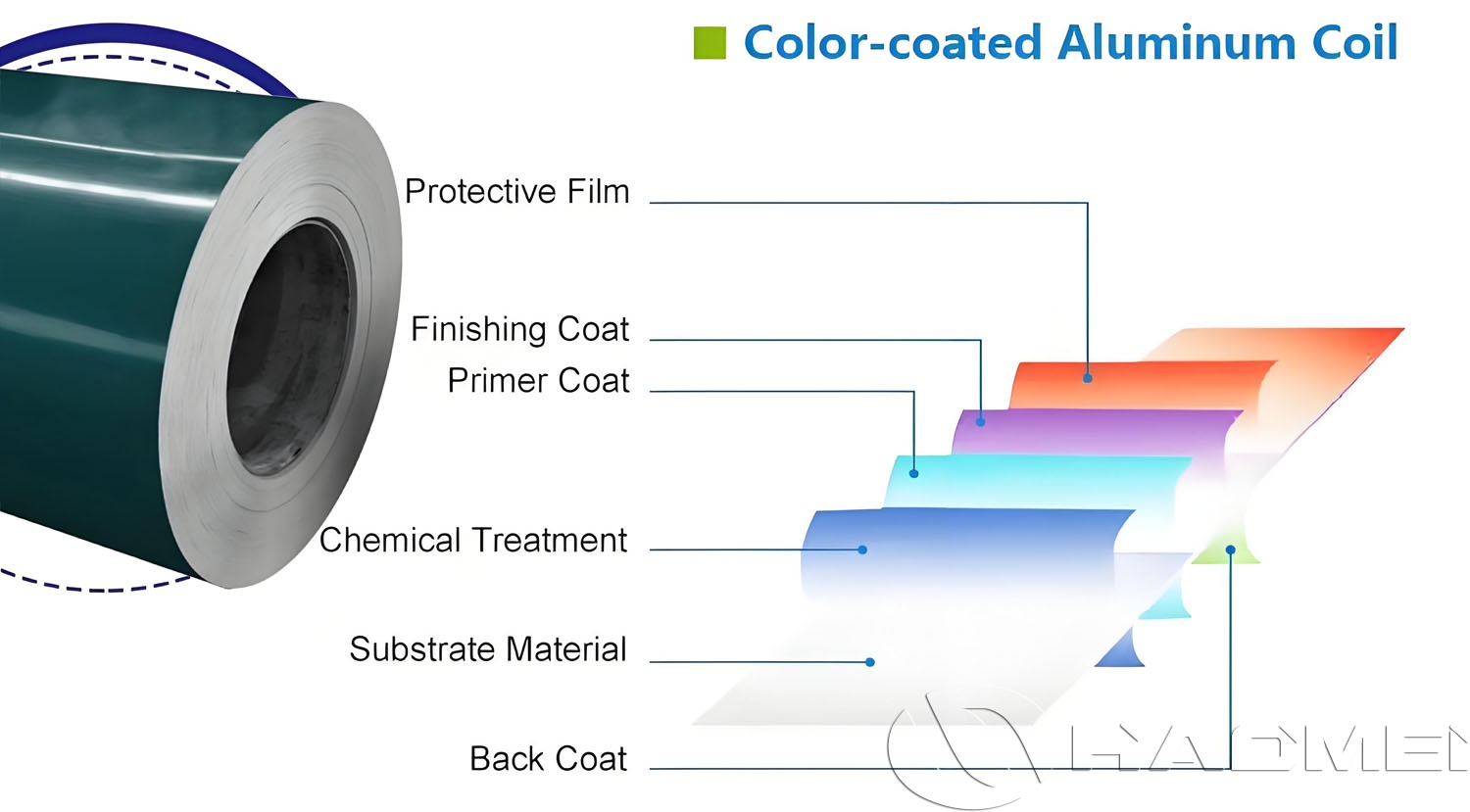
A color coated aluminum coil is not only an aluminum substrate with paint on top. Its long-term performance depends on the full coating structure, which usually includes:
Aluminum substrate
Degreasing and cleaning
Chemical pretreatment or conversion coating
Primer coating
Topcoat
Back coat
Thermal curing
The pretreatment stage is critical because it affects coating adhesion, corrosion resistance, and humidity durability. A well-controlled coating line ensures uniform film build, stable color difference, proper cure, and consistent flexibility.
In practical use, PE coating is often selected for interior decoration and general-purpose exterior applications with moderate environmental demands. PVDF coating is preferred for projects requiring stronger UV resistance, weatherability, chalk resistance, and color retention. In applications exposed to stronger sunlight or long-term outdoor service, PVDF Coated Aluminum Coil is commonly specified.
Mechanical and Processing Characteristics of H24 Temper
The H24 temper is important because it directly influences fabrication behavior. In coated architectural coil, the material must not be too soft, otherwise profile stability may be reduced. It must also not be too hard, otherwise cracking risk during forming can increase.
The H24 temper offers:
Moderate yield strength for improved panel stiffness
Better shape retention after roll forming
Good bendability for common profiles
Suitability for gutters, roof sheets, ceiling carriers, and decorative trims
This temper is often preferred for applications where finished parts need a neat profile, controlled springback, and a lower risk of surface damage during processing.
Main Application Scenarios
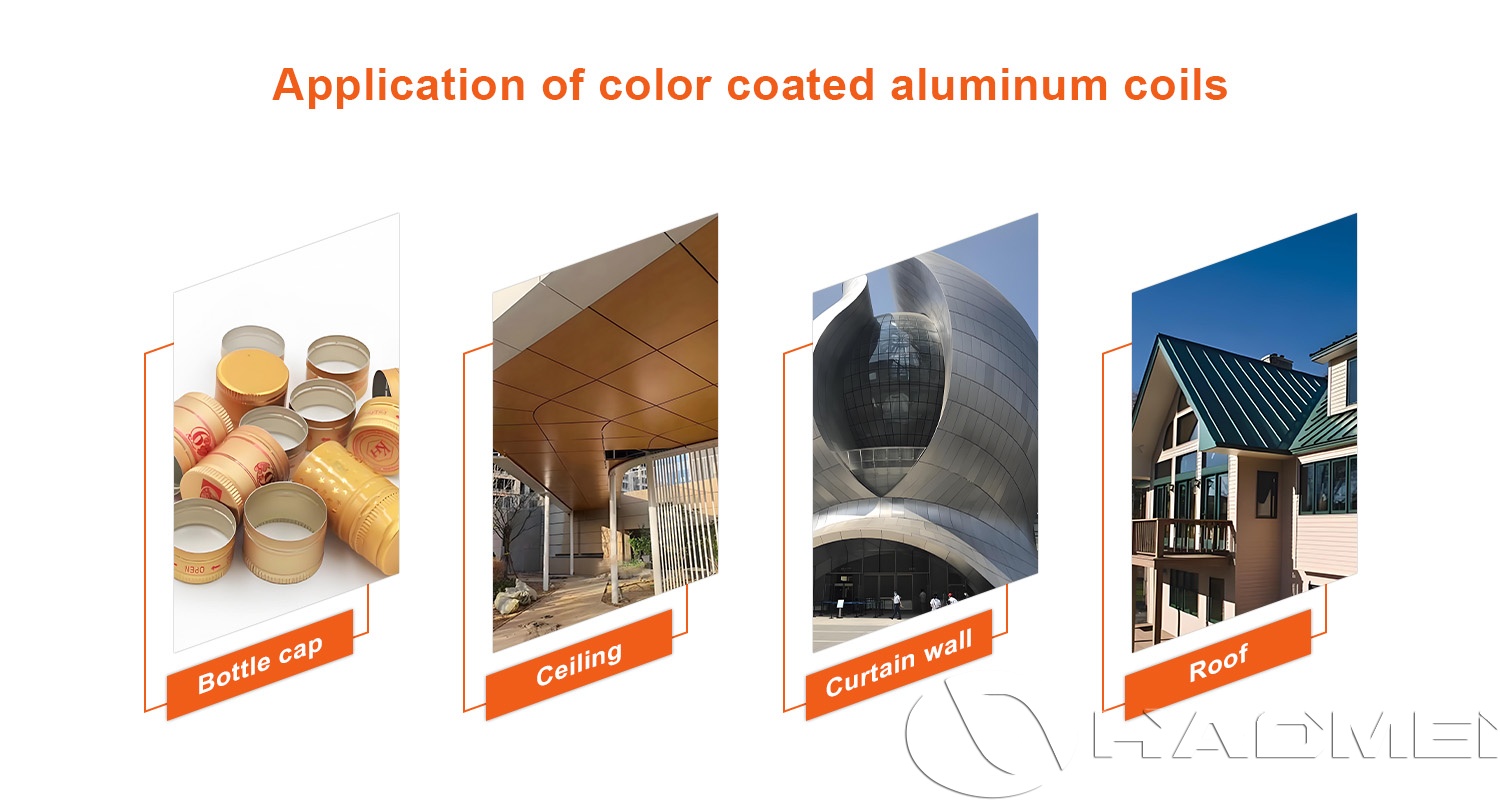
3105 H24 color coated aluminum coil is widely used in building envelope and decorative systems because it combines lightweight properties with dependable coating performance.
Typical applications include:
Roofing and Wall Cladding
The alloy is suitable for corrugated sheets, standing seam panels, profiled roofing, and wall facade panels. Its balanced strength helps maintain panel geometry during forming and installation.
Ceiling Systems
It is commonly used for linear ceilings, strip ceilings, suspended panels, and decorative interior metal ceilings. The coated surface provides a clean and uniform visual effect.
Rolling Shutters and Doors
The material can be formed into shutter slats and lightweight door skins where both appearance and repeated fabrication consistency are important.
Rainwater Systems and Trim
Gutters, downspout components, fascia covers, and edge trims often use 3105 H24 because the alloy supports bending and shaping while maintaining surface finish quality.
Insulation Jacketing and Equipment Covering
In industrial or commercial environments, it can be used as a color-coated outer layer for protective covering and insulation cladding.
PE vs PVDF for 3105 Color Coated Coil
The alloy substrate and the coating system should always be considered together.
PE Coating
PE coatings are widely used because they provide:
Good decorative appearance
Broad color flexibility
Competitive cost
Good processability for indoor and general outdoor use
They are common for ceilings, interior panels, signs, and some standard exterior decorative parts.
PVDF Coating
PVDF systems are preferred when the project requires:
Strong UV resistance
Better color retention
Better chalk resistance
Better weatherability in harsh outdoor conditions
Long service life for building facades and roofing
For premium exterior applications, PVDF-coated 3105 H24 is often the more durable specification.
Key Quality Control Points
The quality of 3105 H24 color coated aluminum coil depends not only on the alloy and temper, but also on process stability throughout production.
Important control points include:
Substrate Surface Quality
The base aluminum coil should have uniform thickness, good flatness, and a clean surface free from rolling defects, oil contamination, edge cracks, or severe inclusions.
Pretreatment Consistency
Proper cleaning and chemical pretreatment are essential for coating adhesion and salt resistance. Inadequate pretreatment can lead to blistering, peeling, or underfilm corrosion.
Coating Thickness Uniformity
Topcoat and back coat thickness must remain within the specified range. Film build that is too low may reduce durability, while excessive thickness can affect flexibility and appearance.
Curing Control
Insufficient curing may reduce hardness, adhesion, and chemical resistance. Over-curing may affect gloss, color, and flexibility.
Color and Gloss Stability
Batch-to-batch consistency matters in architectural projects, especially where multiple coils are used on the same elevation.
Selection Considerations for End Use
When specifying 3105 H24 color coated aluminum coil, the technical match should be based on service environment and fabrication method.
Typical evaluation factors include:
Indoor or outdoor exposure
UV intensity and climate conditions
Required service life
Forming radius and profiling complexity
Required coating type and film thickness
Surface appearance, gloss, and color tolerance
Substrate thickness according to span or profile design
For general decorative and construction applications, 3105 H24 offers one of the most practical combinations of substrate strength, fabrication reliability, and coating compatibility within the broader range of Products used in prepainted aluminum systems.
Summary of Material Positioning
In the color coated aluminum coil market, 3105 H24 is positioned as a mainstream architectural-grade alloy temper combination. It delivers more support and rigidity than pure aluminum grades, while maintaining good processability for roll-formed and decorative components. With PE or PVDF coating systems, it is suitable for a broad range of roofing, facade, ceiling, shutter, gutter, and trim applications where surface appearance and corrosion resistance are both important.
-
Best 5083 Prepainted Aluminum Coil for Shipbuilding
Best 5083 prepainted aluminum coil for shipbuilding combines marine-grade corrosion resistance, durable PVDF coatings, and forming quality for vessel panels.
2026-09-11
-
Durable Color Coated Aluminum Coil for Coastal Areas
Coastal color coated aluminum coil with PVDF coating, corrosion resistant alloys, and salt spray durability for roofing, facades, and ceilings in coastal areas.
2026-06-05
-
1100 / 3003 Color Coated Aluminum Coil for Signboards and Advertising Boards
1100 / 3003 color-coated aluminum coils are lightweight, weather-resistant, and have good processability, making them suitable for billboards and traffic signs.
2025-12-23
Contact Directly
-

ADD: No.14 Waihuan Road, CBD, Zhengzhou, China
-

WhatsApp: +86-18703635966
-

E-MAIL: sales@alummc.com