


News
 By Hermione
3003 3105 H24 Color-Coated Aluminum Coils for Rain Gutters
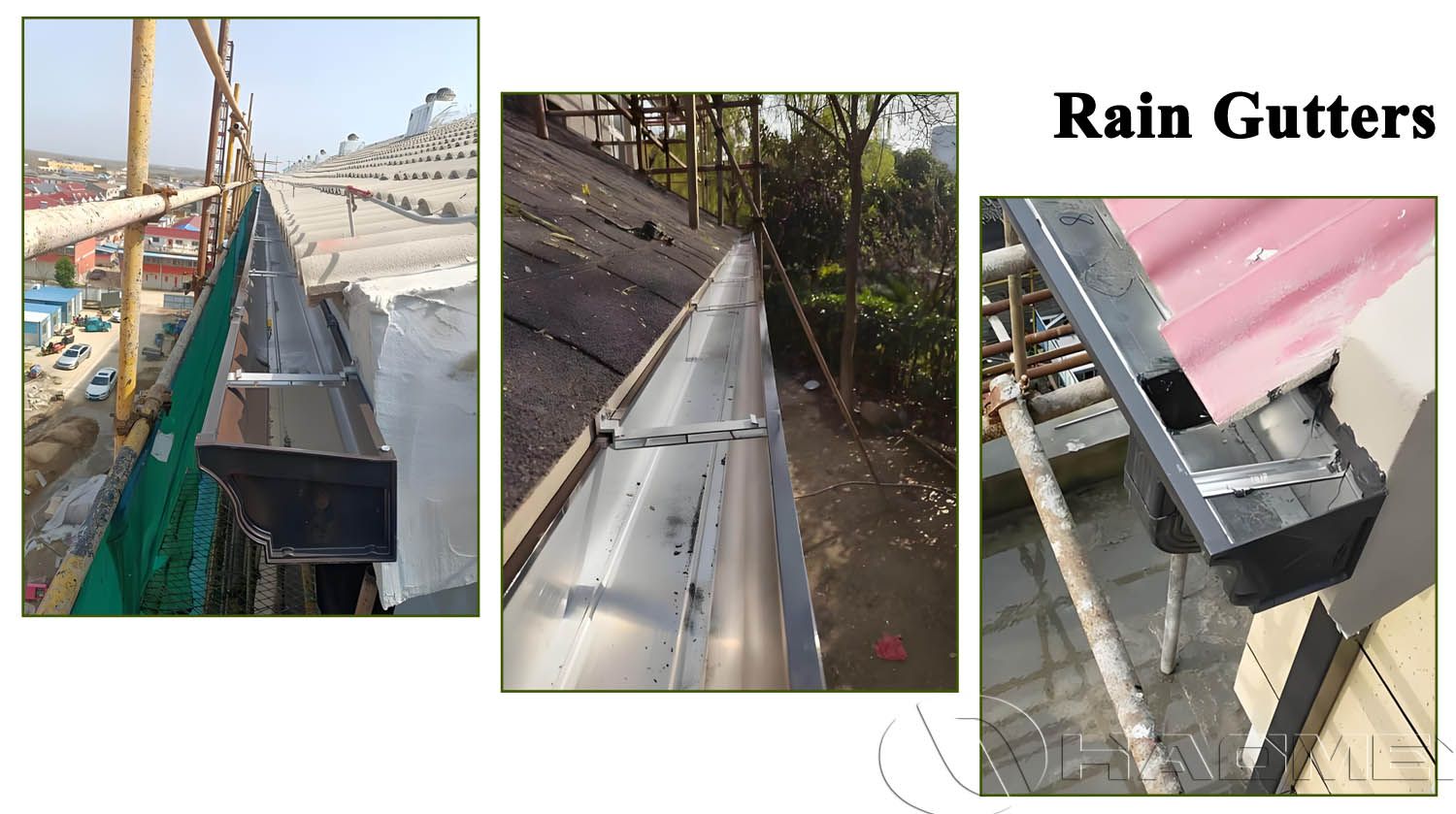
3003 and 3105 H24 color-coated aluminum coils are widely used for residential, commercial, and light-industrial rain gutter systems. These pre-painted coils combine corrosion resistance, controlled forming behavior, and a durable decorative finish, making them suitable for seamless gutters, sectional gutters, downspouts, fascia trim, soffit components, and related drainage accessories. The H24 temper provides a balanced level of strength and workability for roll forming, profiling, bending, and on-site gutter production.
Material Positioning for Gutter Manufacturing
Rain gutter coil must withstand continuous moisture exposure, temperature cycling, ultraviolet radiation, windborne debris, and occasional mechanical loading during installation and maintenance. Compared with uncoated metal, color-coated aluminum coil provides a finished surface directly from the coil, reducing secondary painting steps and improving color consistency across gutter runs, downspouts, and trim components.
The 3003 and 3105 aluminum alloys are both manganese-containing alloys commonly selected for architectural sheet and coil products. Their strength, formability, and corrosion performance make them especially suitable for profiled drainage products.
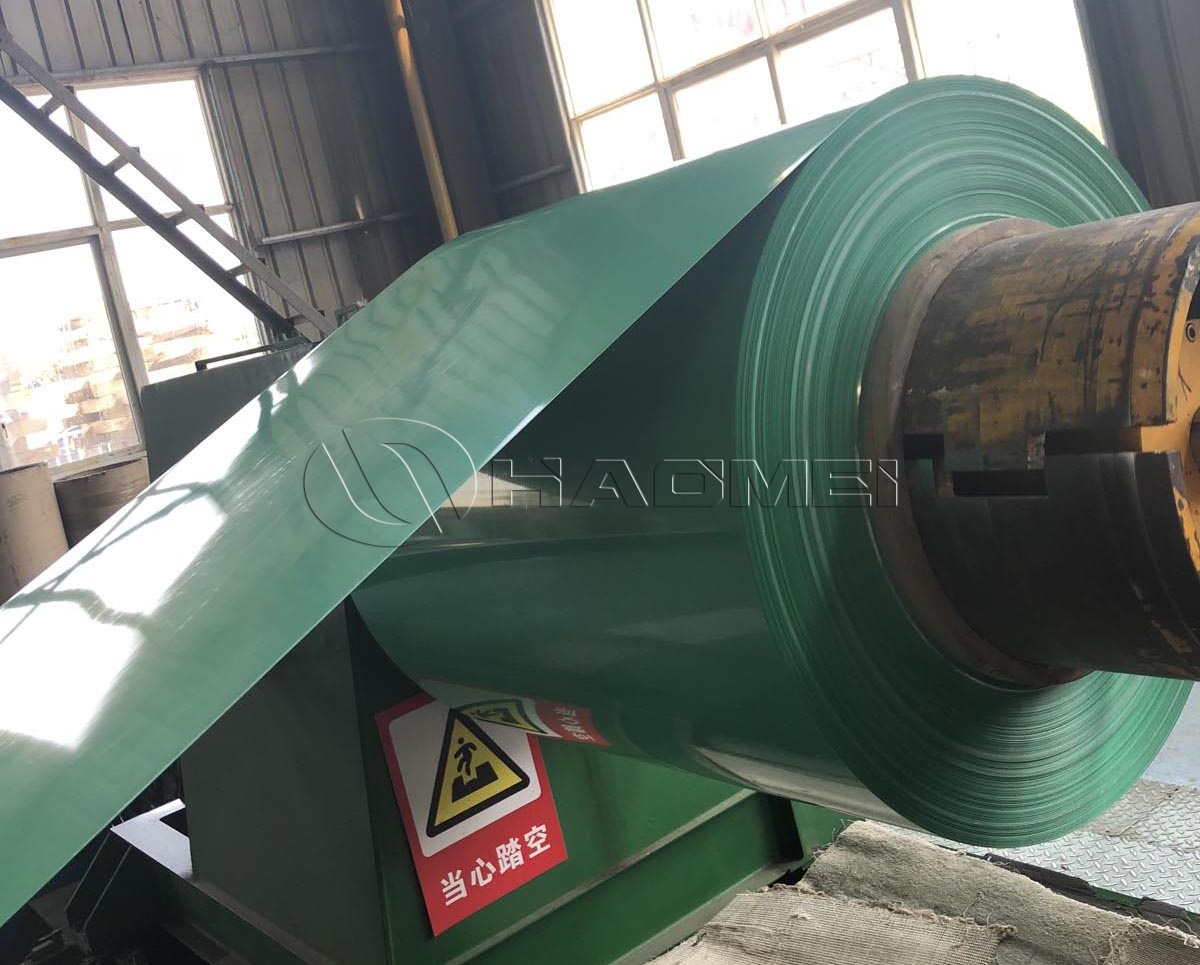
3003 and 3105 Alloy Characteristics
3003 Aluminum Alloy
3003 is an aluminum-manganese alloy with good corrosion resistance and reliable formability. It is commonly used where the gutter profile requires smooth bends, stable roll forming, and a clean painted appearance. The alloy has higher strength than 1xxx-series aluminum while retaining sufficient ductility for forming operations.
For gutter applications, 3003 Color Coated Aluminum Coil is commonly used in standard residential and commercial drainage profiles where balanced mechanical performance and economical material selection are required.
3105 Aluminum Alloy
3105 is another aluminum-manganese alloy that may contain a small amount of magnesium, supporting improved strength compared with more basic aluminum grades. It is frequently used in building envelope and drainage applications requiring better dent resistance, dimensional stability, and coating adhesion after forming.
3105 Color Coated Aluminum Coil is particularly suitable for rain gutters with deeper profiles, exposed fascia systems, and long seamless gutter lengths where consistent profile retention is important.
H24 Temper
H24 indicates a strain-hardened and partially annealed temper. In practical gutter processing, this temper offers a useful balance between rigidity and forming capacity:
Adequate strength to help reduce deformation during handling and installation.
Good roll-forming performance for K-style, half-round, box, and custom gutter profiles.
Controlled bend behavior for downspouts, elbows, end caps, and flashing components.
Improved resistance to minor dents compared with softer tempers.
Core Specifications for Rain Gutter Coils
3003 / 3105 H24 Color-Coated Aluminum Coil Specifications
| Item | Typical Specification |
|---|---|
| Alloy | 3003, 3105 |
| Temper | H24 |
| Product Type | Pre-painted / color-coated aluminum coil |
| Typical Thickness | 0.45-0.80 mm |
| Common Gutter Thickness | 0.55 mm, 0.60 mm, 0.70 mm |
| Width Range | 300-1,600 mm |
| Common Gutter Coil Widths | 300 mm, 400 mm, 500 mm, 600 mm, 914 mm, 1,219 mm |
| Coil Inner Diameter | 405 mm or 508 mm |
| Coil Outer Diameter | According to coil weight and thickness |
| Surface Finish | Smooth, embossed, matte, gloss, textured |
| Top Coating Options | PE, SMP, HDP, PVDF |
| Back Coating | Polyester back coat, typically 5-10 μm |
| Top Coating Thickness | Typically 15-25 μm for PE; higher-build systems available |
| Available Colors | White, brown, black, gray, beige, green, blue, custom colors |
| Typical Applications | Seamless gutters, downspouts, fascia, soffit, flashing, trim |
Coating Systems for Exterior Drainage Components
The coating system is a key factor in the long-term appearance and durability of aluminum rain gutters. A typical pre-painted coil structure includes aluminum substrate pretreatment, primer, topcoat, and reverse-side back coating. Each layer supports corrosion resistance, adhesion, flexibility, and weatherability.
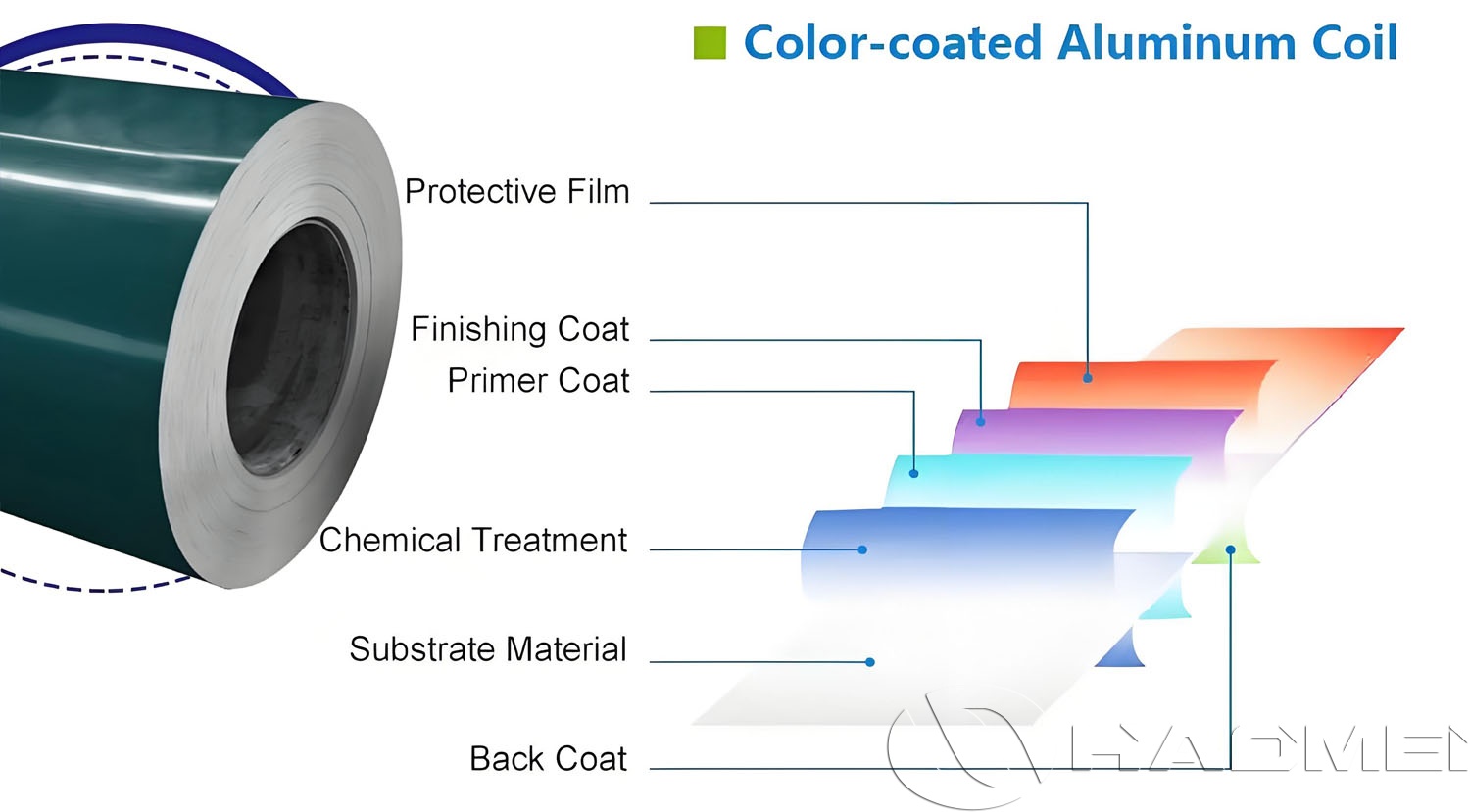
PE Coating
Polyester, or PE coating, is widely used for standard rain gutter applications. It provides good color appearance, forming flexibility, and economical protection for areas with moderate sunlight and normal atmospheric conditions. PE-coated coils are commonly selected for residential gutter systems where the required service environment does not involve severe UV exposure or aggressive industrial contaminants.
SMP and HDP Coatings
Silicone-modified polyester and high-durability polyester systems provide improved weather resistance compared with conventional PE coatings. These coating types can offer better gloss retention, chalking resistance, and color stability for gutters installed in regions with stronger sunlight or larger annual temperature variation.
PVDF Coating
PVDF coatings are used for projects requiring advanced resistance to UV degradation, fading, chalking, and harsh outdoor weathering. They are well suited to high-end architectural drainage components, coastal buildings, and installations exposed to intense solar radiation. PVDF systems are often specified where color retention must remain stable over an extended exterior service period.
Forming Performance and Surface Integrity
During gutter production, the coil passes through a roll-forming line that creates the final channel geometry. The aluminum substrate and coating must work together to prevent cracking, excessive whitening at bends, coating delamination, or visible surface defects.
For 3003 and 3105 H24 coils, critical forming-related properties include:
Stable thickness across the coil width.
Uniform mechanical properties from coil head to tail.
Strong coating adhesion after bending and profiling.
Good T-bend performance appropriate for the intended gutter profile.
Controlled surface friction to support smooth feeding through roll-forming equipment.
Low risk of coating damage at forming rolls, cut edges, and hemmed sections.
The selection of coating flexibility should match the smallest bend radius and the complexity of the gutter profile. Deep-profile gutters, tight hems, and folded edge details generally require a coating system with strong adhesion and adequate flexibility.
Corrosion Resistance in Gutter Service
Aluminum naturally forms a thin oxide film that contributes to corrosion resistance. The color-coated surface adds another protective barrier, helping limit direct exposure of the aluminum substrate to water, pollutants, and atmospheric contaminants.
In rain gutter service, corrosion performance is influenced by several factors:
Local rainfall, humidity, and freeze-thaw conditions.
Salt exposure in coastal environments.
Industrial or urban airborne contaminants.
Standing water caused by improper drainage geometry.
Contact with dissimilar metals, especially copper, untreated steel, or incompatible fasteners.
Damage to the coating surface during forming or installation.
Proper material matching is important at joints, fasteners, hangers, and accessories. Aluminum gutters should be designed to minimize prolonged water retention and direct galvanic contact with more noble metals.
Color and Finish Options
Color-coated aluminum coil allows rain gutter systems to visually integrate with roofing, siding, window frames, fascia boards, and exterior trim. Common gutter colors include low-gloss white, dark bronze, black, charcoal gray, almond, clay, beige, green, and custom architectural shades.
Finish selection can also influence practical performance. Lighter colors generally absorb less solar heat, while darker colors may be selected to match roofing and trim designs. Matte and low-gloss finishes can reduce visible glare, whereas gloss finishes provide a more reflective decorative appearance.
Manufacturing and Quality Control Considerations
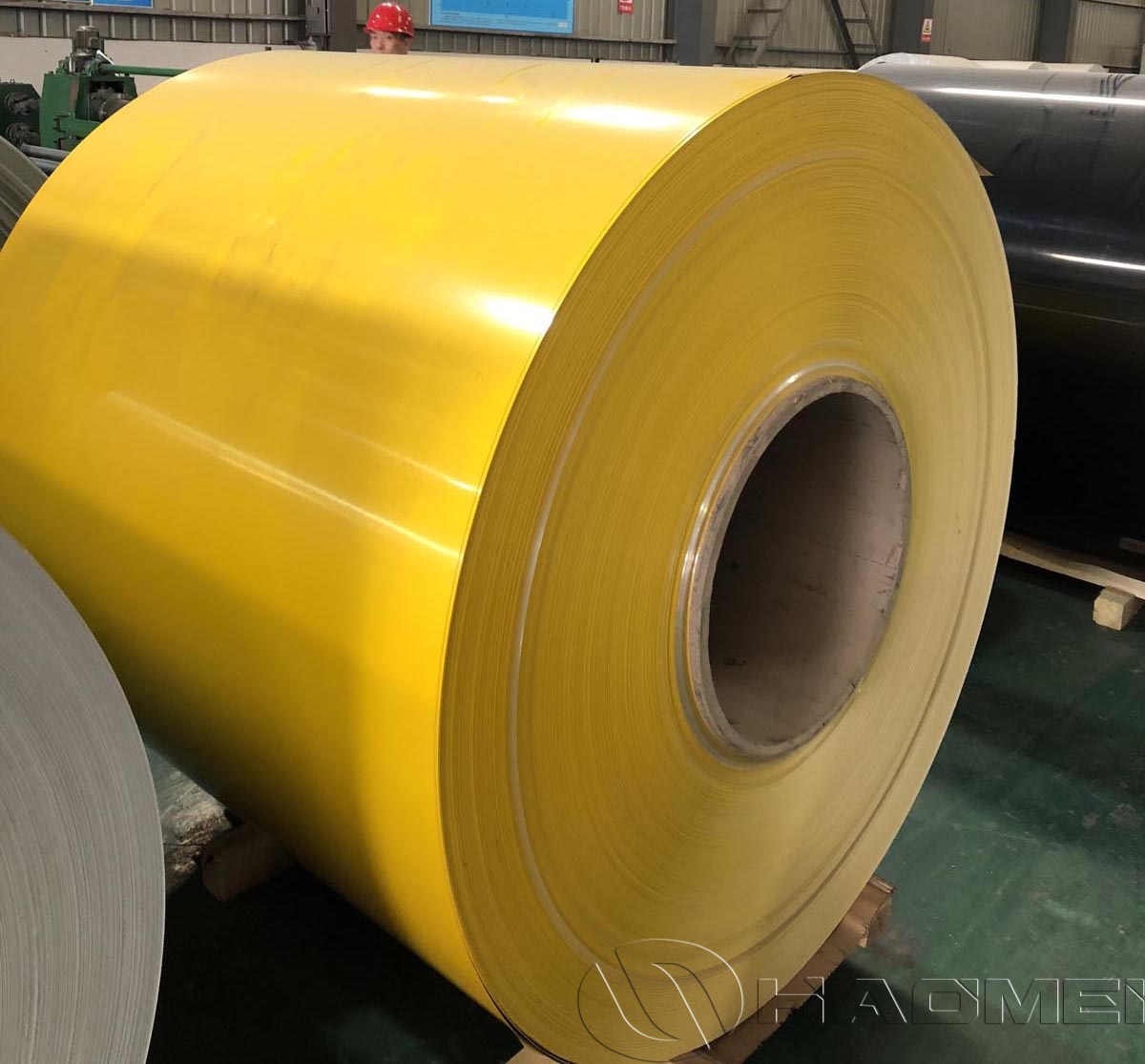
Color-coated aluminum coil for rain gutters is produced through a continuous coil-coating process. The aluminum strip is cleaned, chemically pretreated, primed, top-coated, oven-cured, cooled, and rewound under controlled tension. Process stability is important because gutter coils are visible finished materials with both structural and decorative requirements.
Typical quality control items include:
Alloy chemistry and mechanical-property verification.
Thickness, width, and flatness inspection.
Coating thickness measurement.
Color difference and gloss control.
Pencil hardness and solvent resistance testing.
Coating adhesion and T-bend testing.
Impact resistance evaluation.
Surface inspection for scratches, pinholes, streaks, roll marks, and coating inclusions.
Coil edge quality and slit-width tolerance control.
For seamless rain gutter production, uniform coil thickness, consistent coating color, and stable H24 mechanical properties help maintain predictable roll-forming performance across long production runs.
-
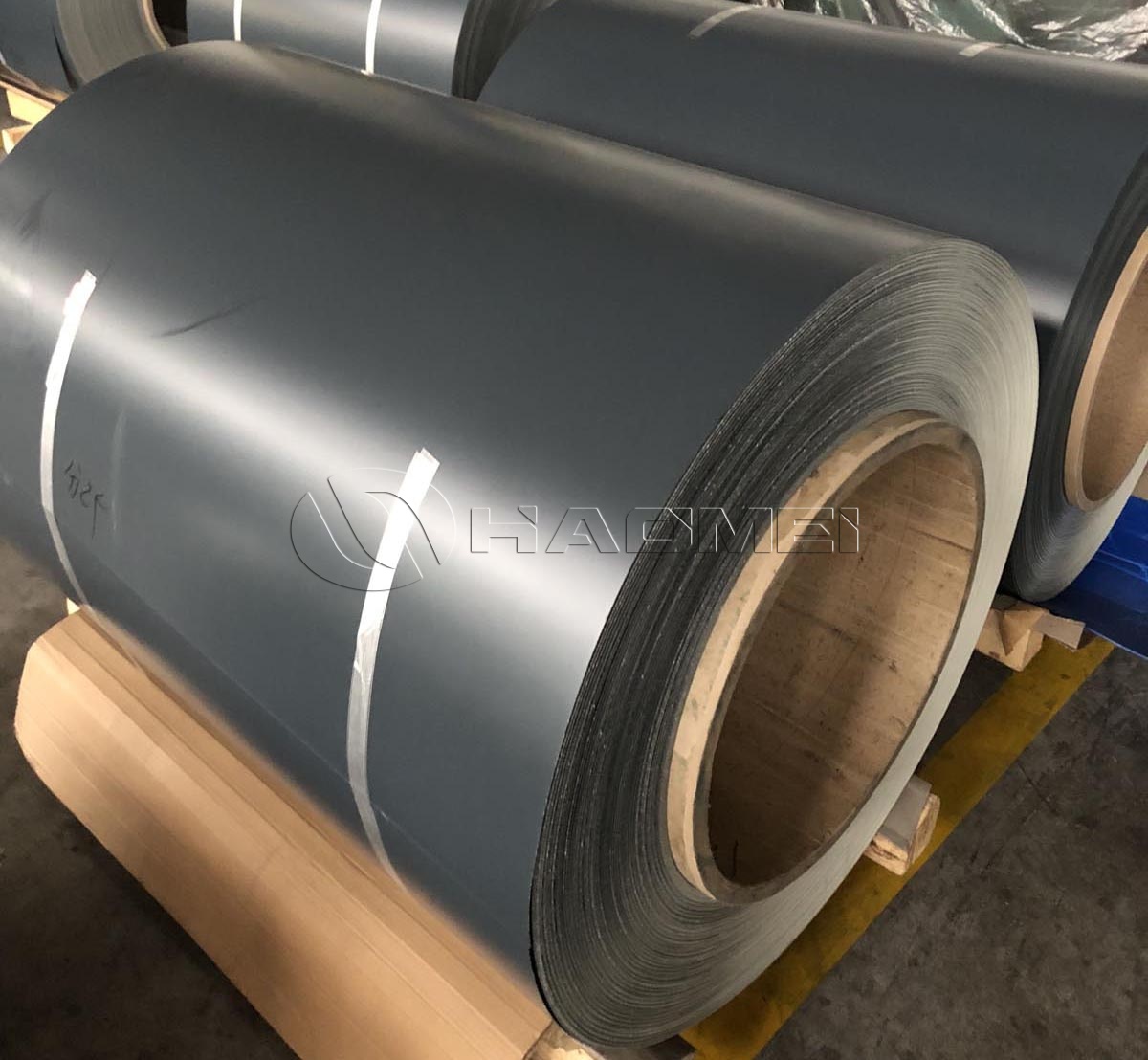
Pvdf Coated Aluminum Coil For Roofing Sheets
PVDF coated aluminum coil for roofing sheets offers weather resistance, color stability, and formability with 3003, 3004, and 5052 alloys.
2026-03-31
-
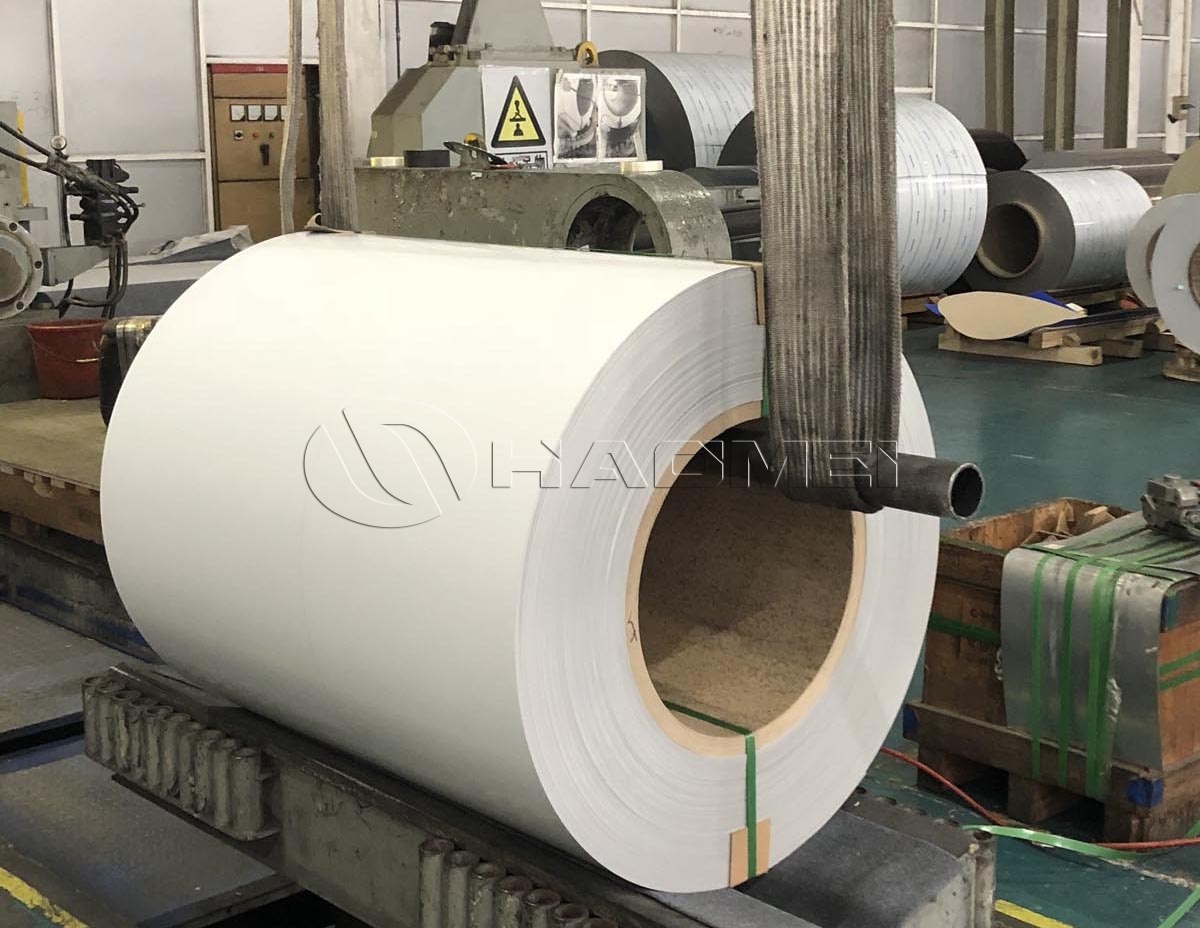
5000 Series Color Coated Aluminum Coil for Roofing
Explore 5000 series color coated aluminum coil for roofing, including 5005, 5052, and 5754 alloys, coating systems, specs, and roofing performance.
2026-04-02
-
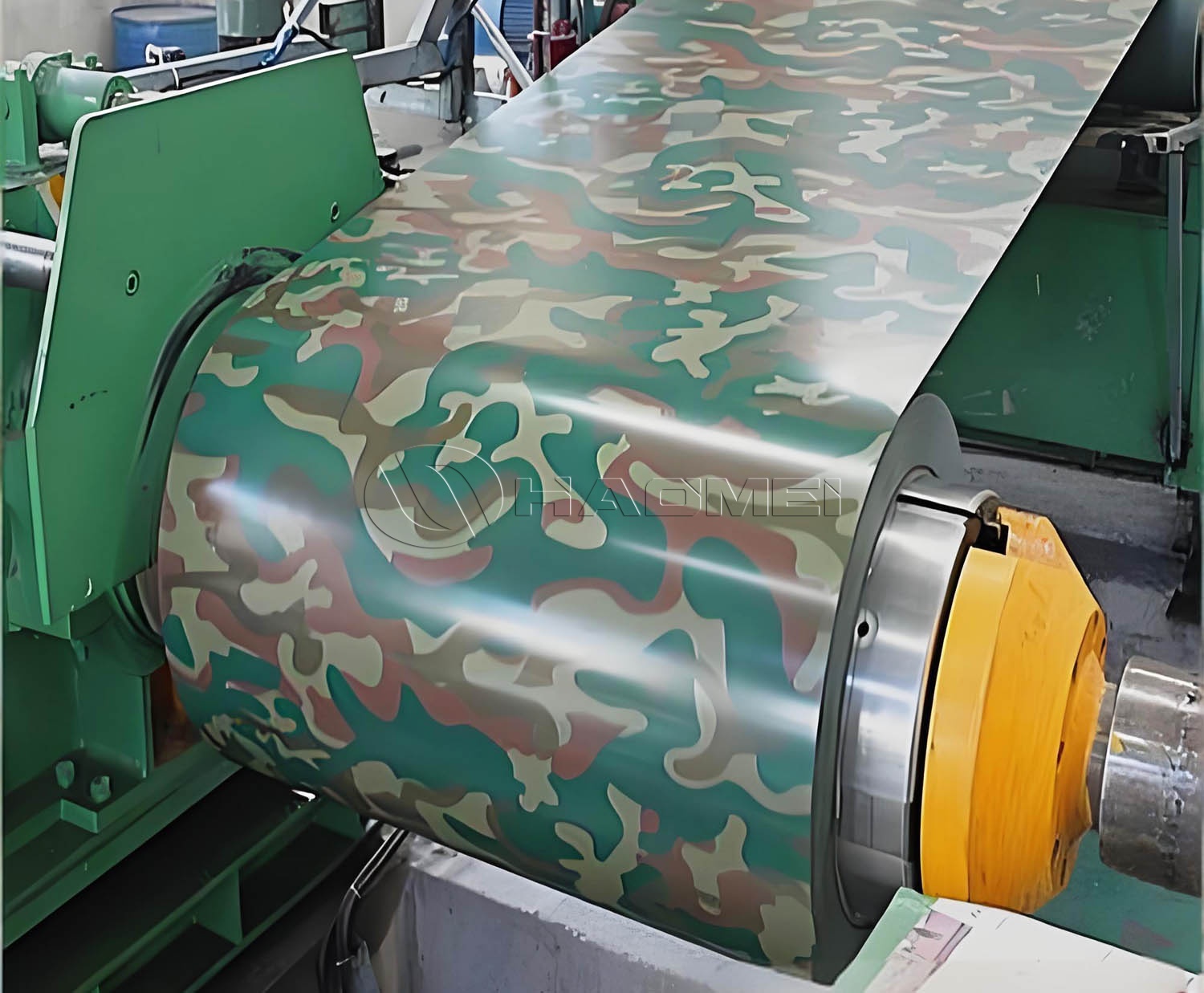
Camouflage Color Coated Aluminum Coils for Off-Road Vehicle Bodies
Camouflage color coated aluminum coils for off-road vehicle bodies, using 3003, 5052 and PVDF coatings for durable, lightweight exterior panels.
2026-06-15
Contact Directly
-

ADD: No.14 Waihuan Road, CBD, Zhengzhou, China
-

WhatsApp: +86-18703635966
-

E-MAIL: sales@alummc.com
