

News
 By Hermione
0.5mm Color-Coated Aluminum Coil for Pipe Insulation
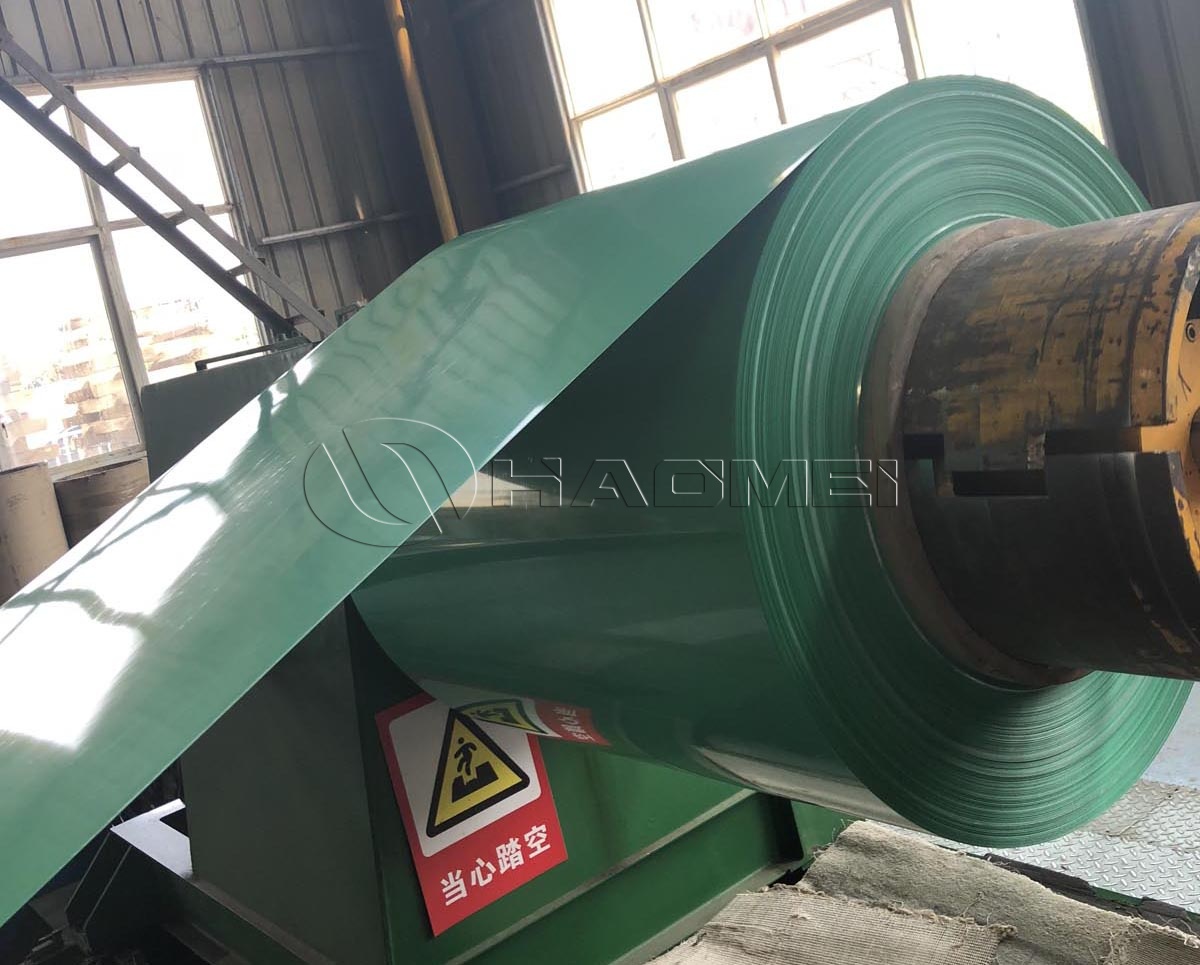
0.5mm color-coated aluminum coil is a lightweight, durable jacketing material used to protect insulated pipes, ducts, tanks, and related equipment. Installed over thermal insulation, it forms a weather-resistant outer layer that helps limit moisture ingress, mechanical damage, and surface deterioration. It is widely used in HVAC systems, petrochemical pipelines, power facilities, food-processing plants, pharmaceutical utilities, and commercial building services.
The 0.5mm thickness provides a practical balance between forming performance, impact resistance, and material weight. It can be slit, rolled, corrugated, and formed into pipe covers, elbows, fittings, and insulation bands while maintaining a clean colored surface for identification or architectural coordination.
Function in Pipe Insulation Systems
Pipe insulation reduces heat loss, limits heat gain, controls condensation, and helps maintain stable process temperatures. The outer aluminum jacketing layer has a different but equally important role: it protects the insulation system from external exposure.
A color-coated aluminum coil used for insulation cladding provides several functional advantages:
Corrosion resistance: Aluminum naturally develops a stable oxide film, while the painted surface adds an additional protective barrier.
Moisture protection: Properly lapped and sealed jacketing helps reduce water penetration into insulation materials.
Low dead load: Aluminum is substantially lighter than many steel-based protective coverings, reducing the load on pipe supports and structures.
Formability: A 0.5mm coil can be shaped around straight pipe sections and fabricated components without excessive cracking or springback.
Color identification: White, gray, blue, green, red, and custom colors can support line identification, facility appearance, or equipment zoning.
Surface durability: Coating systems can be selected according to indoor exposure, outdoor weathering, chemical atmosphere, and UV intensity.
Core Specifications of 0.5mm Color-Coated Aluminum Coil
Table 1. Typical Specifications for Pipe Insulation Jacketing
| Item | Typical Range or Option |
|---|---|
| Product | Color-coated aluminum coil for pipe insulation |
| Nominal thickness | 0.50 mm |
| Common thickness tolerance | Subject to agreed standard, coil width, and alloy temper |
| Common alloys | 1060, 1100, 3003, 3105, 5052 |
| Common tempers | H14, H16, H24, H26, H44, O, subject to alloy and forming requirement |
| Coil width | Commonly 600-1,600 mm; slit widths available for jacketing fabrication |
| Inner diameter | Typically 405 mm or 505 mm, subject to coil weight and processing equipment |
| Surface coating | PE, SMP, HDP, or PVDF coating systems |
| Coating thickness | Commonly 18-25 μm for PE; higher-performance systems may use thicker or multi-layer structures |
| Back coating | Protective wash coat, service coating, or primer-backed finish as required |
| Surface finish | Smooth, embossed, stucco embossed, gloss, matte, or custom color finish |
| Color | White, silver gray, blue, green, red, black, and custom color matching |
| Main applications | Pipe jacketing, duct insulation cladding, tank insulation, equipment covers, HVAC insulation protection |
Common Aluminum Alloys for Insulation Cladding
Alloy selection affects formability, strength, corrosion behavior, and the finished jacketing appearance. For 0.5mm insulated pipe cladding, the most frequently used alloy families are 1xxx and 3xxx series aluminum.
1060 and 1100 Aluminum Coil
1060 and 1100 are commercially pure aluminum grades with high aluminum content, excellent corrosion resistance, and good workability. Their relatively low strength makes them easy to roll, bend, bead, and form around pipe insulation.
These alloys are suitable for straight pipe jacketing, indoor utility lines, HVAC ducts, and applications where easy fabrication is prioritized. The surface can be finished with PE or PVDF paint systems depending on the exposure environment. A 1100 Color Coated Aluminum Coil is commonly used where consistent coating appearance and smooth forming are required.
3003 Aluminum Coil
3003 aluminum contains manganese, giving it higher strength than 1060 or 1100 while retaining good formability and corrosion resistance. This makes it a widely used alloy for pipe insulation jacketing exposed to handling, vibration, or more demanding service conditions.
For outdoor pipelines, industrial plants, and larger insulated equipment, 3003 offers improved resistance to denting and deformation during installation. A 3003 Color Coated Aluminum Coil can be supplied in appropriate tempers to support both fabrication efficiency and finished cladding rigidity.
3105 Aluminum Coil
3105 aluminum is another manganese-containing alloy used for pre-painted aluminum applications. It provides balanced strength, paint adhesion, and roll-forming performance. It is often selected where coated surface quality and moderate mechanical strength are both important, including exterior duct covers and equipment insulation shells.
5052 Aluminum Coil
5052 aluminum offers higher strength and improved resistance to many marine or industrial atmospheres because of its magnesium content. Although it is not always necessary for standard insulation jacketing, it can be used for equipment cladding in demanding environments where greater mechanical durability is required.
Coating Systems for Indoor and Outdoor Service
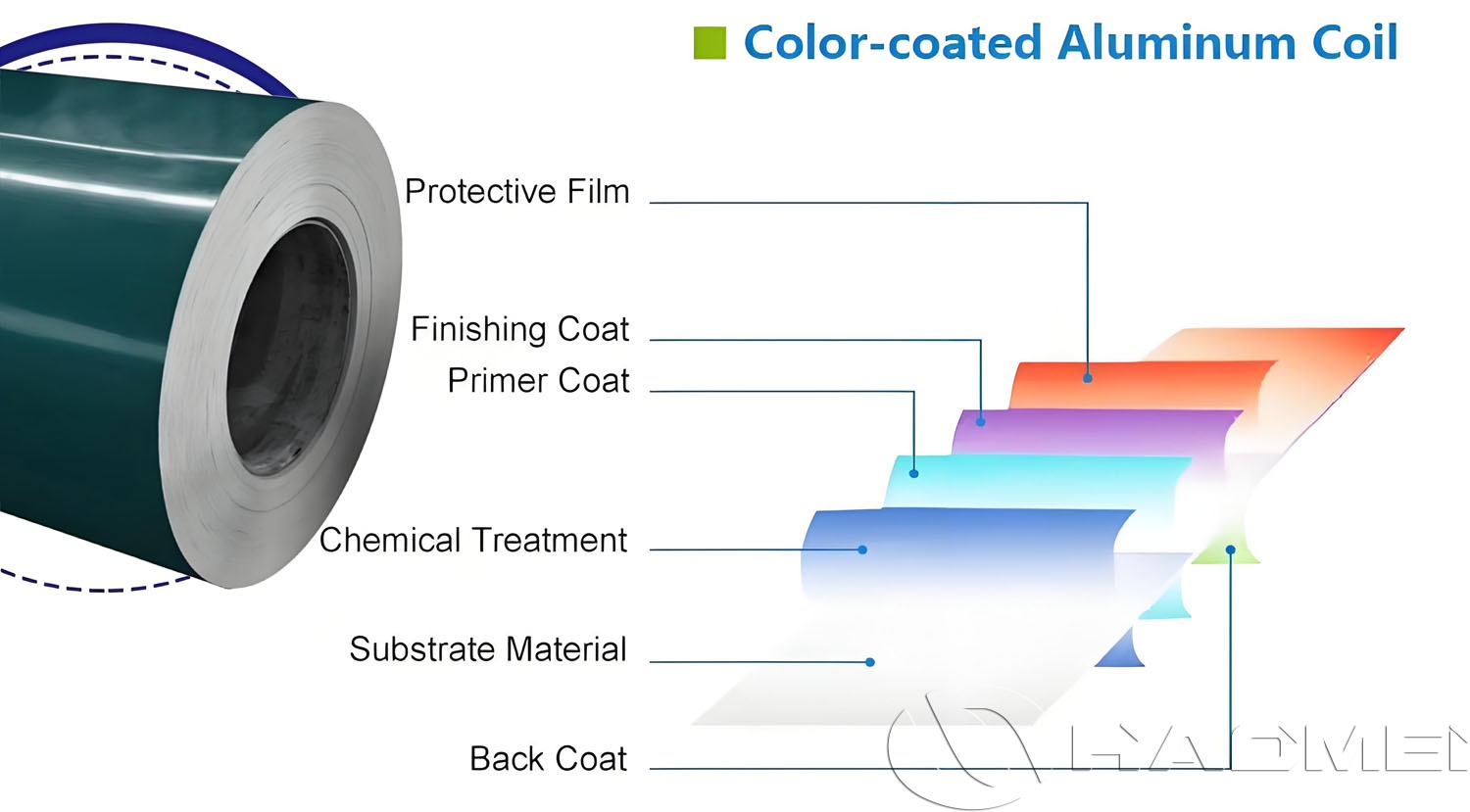
The coating system is a key factor in the long-term appearance and protective performance of color-coated aluminum coil. The coating is applied in a continuous coil-coating process, typically comprising substrate cleaning, chemical pretreatment, primer application, finish coating, and thermal curing.
PE Coating
Polyester, or PE coating, is commonly used for indoor pipe insulation, enclosed mechanical rooms, commercial HVAC systems, and mild outdoor conditions. It provides good color retention, flexibility, and processing performance at an economical coating thickness.
PE-coated material is suitable when the cladding is not continuously exposed to intense UV radiation, salt spray, corrosive industrial gases, or severe temperature cycles.
PVDF Coating
PVDF coating provides enhanced weatherability, UV resistance, chalk resistance, and color retention. It is appropriate for exterior pipe insulation jacketing, rooftop equipment, coastal installations, chemical plants, and high-UV environments.
PVDF systems are particularly beneficial where the aluminum cladding remains visible and is expected to maintain a stable decorative appearance during long-term outdoor exposure. Coating selection should also account for the installation environment, insulation type, operating temperature, and potential chemical contact.
Thickness, Temper, and Forming Performance
At 0.5mm, color-coated aluminum coil is sufficiently robust for many insulation jacketing designs while remaining convenient to cut and form. The final forming behavior depends not only on thickness but also on alloy, temper, coating flexibility, and fabrication method.
A softer temper improves bending and shaping around small-diameter pipes, elbows, and irregular equipment surfaces. A harder temper provides greater panel stiffness and improved resistance to handling damage but may require larger bending radii to avoid coating stress.
During fabrication, the coated surface should retain coating continuity at bends, seams, and overlaps. Suitable pretreatment, primer adhesion, cured topcoat flexibility, and controlled forming conditions help reduce the risk of paint cracking or delamination.
Surface Options for Pipe Jacketing
Color-coated aluminum insulation cladding can be supplied with different surface textures and visual finishes:
Smooth finish: Common for clean architectural appearance, equipment covers, and general pipe jacketing.
Stucco embossed finish: Helps reduce visible handling marks and can increase surface stiffness.
Matte finish: Produces a low-glare surface suitable for visible mechanical systems.
High-gloss finish: Used where a brighter decorative appearance is required.
Custom colors: Support facility identification systems and alignment with building exterior or interior design schemes.
For insulation systems, white and light gray are frequently used because they provide a clean appearance and can help reduce heat absorption on exposed outdoor surfaces. Darker colors may be used for identification, visual contrast, or project-specific design requirements.
Key Manufacturing Controls
Consistent insulation jacketing performance depends on the integration of aluminum substrate quality and coating-process control. Important quality parameters include:
Actual aluminum thickness and width consistency across the coil
Alloy composition and mechanical properties matched to the designated temper
Surface cleanliness before chemical pretreatment
Pretreatment coverage and adhesion performance
Primer and topcoat dry-film thickness control
Oven curing conditions to ensure coating crosslinking
Color consistency between coils and production lots
Coil edge quality for slitting, roll forming, and overlap joints
Resistance to bending, impact, humidity, and salt spray based on project requirements
The back side of the coil can also be specified with a protective coating appropriate for contact with insulation materials, adhesives, bands, or support components. This supports a more stable cladding system where condensation, trapped moisture, or environmental contaminants may be present.
Typical Application Scenarios
A 0.5mm color-coated aluminum coil is commonly processed into protective cladding for:
Chilled-water and hot-water pipe insulation
HVAC ducts and ventilation equipment
Refrigeration and cold-storage piping
Steam and process pipe insulation
Oil and gas pipeline insulation systems
Chemical processing equipment and vessels
Boiler, heat exchanger, and tank insulation covers
Commercial building mechanical rooms and utility corridors
Outdoor rooftop pipework and equipment insulation
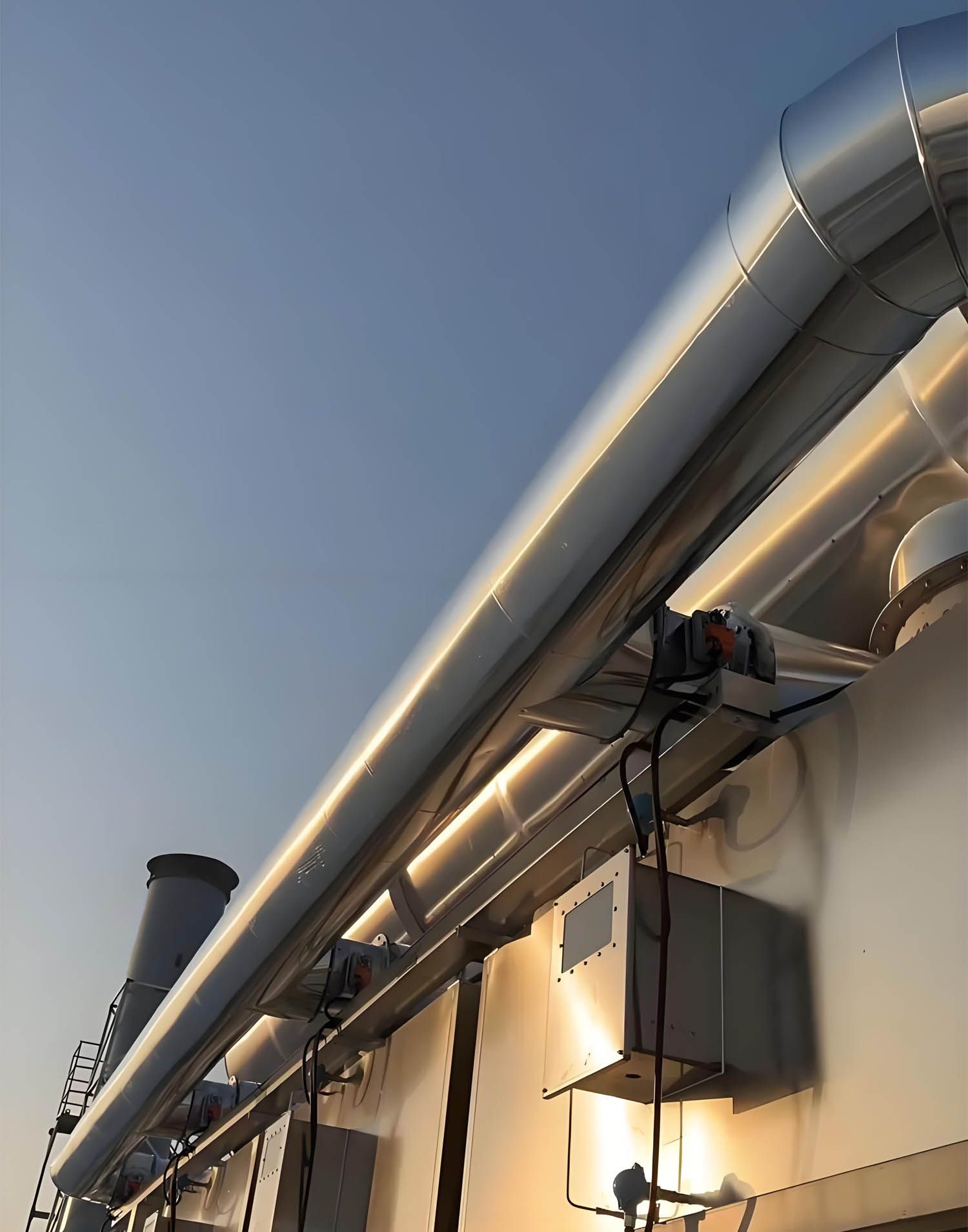
For exposed outdoor installations, the joint layout, overlap direction, sealing method, and compatibility of fasteners with aluminum should be considered alongside the alloy and coating selection. These factors affect the overall ability of the insulation jacketing system to manage rainwater, condensation, thermal movement, and localized corrosion risks.
-
PVDF Coated Aluminum Coil Thickness Range
Explore PVDF coated aluminum coil thickness ranges, alloys, coating structures, and applications for durable architectural panels, roofing, and facades.
2026-07-28
-
Fire-Resistant 3003 PVDF Color-Coated Aluminum Coil
Fire-resistant 3003 PVDF color-coated aluminum coil for facades, roofing, and ceilings, covering alloy selection, coating specs, and performance data.
2026-04-28
-
0.4mm, 0.6mm, 0.8mm, 1mm Cold-Rolled Painted Aluminum Coil (1005, 1060, 1100, 3003)
Technical overview of 0.4mm-1mm cold-rolled painted aluminum coil in 1005, 1060, 1100 and 3003 alloys for roofing, ceilings and facade wall panels.
2026-07-02
Contact Directly
-

ADD: No.14 Waihuan Road, CBD, Zhengzhou, China
-

WhatsApp: +86-18703635966
-

E-MAIL: sales@alummc.com