

News
 By Hermione
0.10-0.5mm Color-Coated Aluminum Coil for Signboards and Advertising Signs
0.10-0.5mm color-coated aluminum coil is a lightweight, pre-finished material developed for signboards, advertising signs, illuminated letter faces, display panels, shopfront fascia, traffic-related signage, and promotional structures. Its combination of low weight, forming performance, color consistency, and corrosion resistance supports efficient processing into flat panels, folded trays, curved sign skins, and laminated composite structures.
Compared with post-painted sheet, pre-painted aluminum coil is coated under controlled coil-coating conditions before slitting, cutting, stamping, bending, or roll forming. This provides a more uniform decorative surface and helps maintain stable appearance across large-format advertising sign projects.
Why Color-Coated Aluminum Is Used for Signage
Signboard materials are exposed to visual, mechanical, and environmental requirements at the same time. The face surface must provide clean color presentation, while the metal substrate must remain workable during fabrication and stable during installation.
Color-coated aluminum coil offers several properties that suit these conditions:
Low density: Aluminum reduces the weight of sign faces and fabricated sign panels compared with many steel-based alternatives.
Good formability: Thin-gauge material can be cut, stamped, bent, folded, embossed, and roll formed for channels, trays, frames, and letter components.
Pre-finished appearance: Solid colors, metallic colors, matte surfaces, high-gloss finishes, and printed decorative patterns can be supplied directly on the coil.
Natural corrosion resistance: The aluminum substrate forms a protective oxide layer, while the coating system provides additional environmental protection.
Color consistency: Coil coating supports controlled color matching across sign panels produced from the same batch.
Process compatibility: The material can be used in screen printing, digital printing, vinyl application, lamination, adhesive bonding, and mechanical fastening processes.
Core Specifications of Color-Coated Aluminum Coil for Signboards
Technical Specification Table
| Item | Typical Specification | Notes for Signboard Use |
|---|---|---|
| Thickness | 0.10-0.50 mm | 0.10-0.20 mm for light sign skins and laminated panels; 0.30-0.50 mm for more rigid folded or formed parts |
| Common alloys | 1050, 1060, 1100, 3003, 3105, 5005 | Alloy selection depends on formability, rigidity, and corrosion-resistance requirements |
| Temper | O, H12, H14, H16, H18, H24 | Softer tempers support deeper forming; harder tempers improve panel stiffness |
| Coil width | Typically 20-1,600 mm | Slit widths can be matched to sign fabrication and roll-forming layouts |
| Coating type | PE, SMP, PVDF, polyester-modified systems | PE is common for general signage; PVDF supports demanding exterior exposure |
| Top-coat thickness | Typically 15-35 μm | Coating thickness varies with durability, color, and finish requirements |
| Back coating | Typically 5-10 μm | Provides handling protection and improved resistance on the reverse side |
| Surface finish | Glossy, matte, semi-matte, metallic, textured, printed | Available for branding, decorative, and architectural sign applications |
| Color | RAL, Pantone reference, custom color matching | Batch control is important for multi-panel sign assemblies |
| Coil inner diameter | 405 mm or 508 mm | Determined by processing equipment and coil weight requirements |
Common Aluminum Alloys
1050, 1060, and 1100 Series
The 1000 series includes commercially pure aluminum grades with high aluminum content. These alloys are widely used where excellent formability, low weight, and a clean coated surface are the primary requirements.
1050 aluminum provides high ductility and is suitable for simple flat panels, reflective sign elements, and lightly formed advertising components.
1060 aluminum has similar forming characteristics and is commonly used for indoor signs, light boxes, decorative fascia, and thin-gauge sign faces. 1060 Color Coated Aluminum Coil is particularly applicable where smooth surface quality and easy processing are required.
1100 aluminum is often used for sign panels, channel letter faces, and general advertising sheet applications because it offers stable workability and good corrosion resistance.
For thicknesses near 0.10-0.20 mm, 1000 series color-coated aluminum coil is commonly processed into flexible or laminated sign-facing materials. The relatively soft substrate accommodates forming operations but requires adequate backing or framing when panel flatness is critical.
3003 and 3105 Series
3003 and 3105 are manganese-containing aluminum alloys that provide higher strength than 1000 series grades while retaining good formability. They are suitable for larger signboards, folded edge panels, outdoor fascia, and fabricated advertising structures that require improved dent resistance and rigidity.
3003 aluminum is commonly used for formed panels and structural sign skins where moderate strength is needed.
3105 aluminum provides a useful balance of formability, strength, and coating adhesion for roll-formed sign components, trims, and architectural advertising panels.
5005 Series
5005 is a magnesium-containing alloy with good corrosion resistance and a smooth anodizing-quality surface. In color-coated form, it is used for premium decorative sign panels, exterior branding elements, and applications requiring enhanced material stability. Its moderate strength also supports formed and folded sign parts.
Coating Systems for Advertising Signs
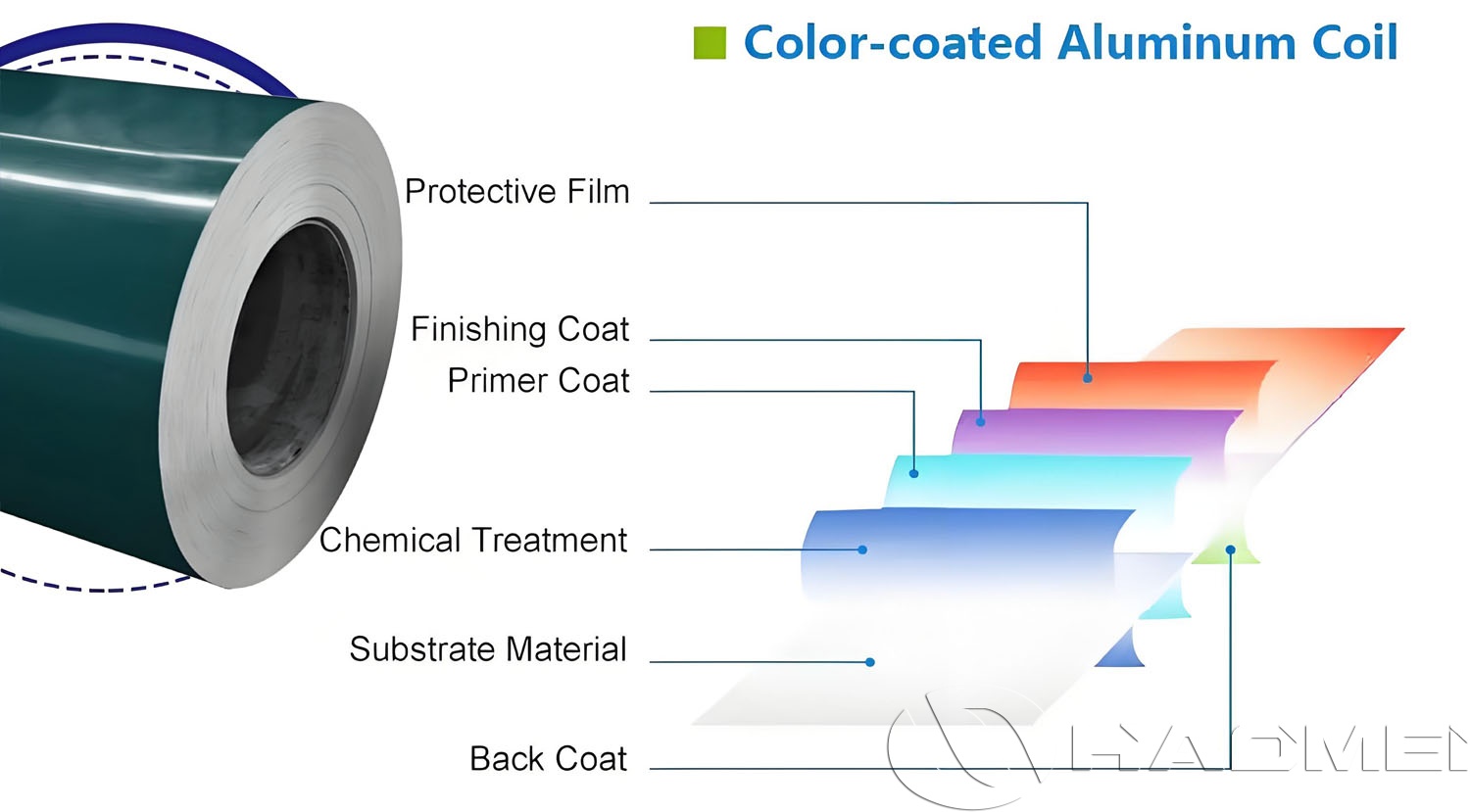
The coating system is central to the appearance and outdoor durability of color-coated aluminum coil. A typical construction includes substrate pretreatment, primer, top coat, and back coat. Chemical conversion treatment improves coating adhesion and helps protect the aluminum surface beneath the paint film.
PE Coating
Polyester, commonly called PE coating, is widely used for indoor signs, short- to medium-term outdoor advertising panels, retail displays, and light-box components. It provides good color range, surface smoothness, flexibility, and economical processing performance.
PE Coated Aluminum Coil is often supplied in gloss, matte, metallic, and custom-color finishes for commercial sign systems. PE-coated surfaces also support common secondary decoration methods, including printing, film lamination, and vinyl graphics application.
PVDF Coating
PVDF coating is designed for higher levels of weather resistance, color retention, and UV stability. It is commonly used on exterior signboards installed in locations with strong sunlight, long service intervals, industrial atmospheres, or humid and coastal exposure.
A PVDF coating system generally offers better resistance to chalking and fading than conventional polyester systems. For large-format outdoor brand signs and architectural sign cladding, it helps preserve color uniformity over extended exposure periods.
Surface Finishes and Decorative Effects
Beyond solid colors, color-coated aluminum coil can be produced with decorative finishes that expand sign design options:
High-gloss finishes for vivid retail displays and light-reflective sign faces
Matte finishes for low-glare directional signs and refined visual presentation
Metallic finishes for premium logos, fascia, and corporate identity elements
Brushed or textured finishes for decorative advertising panels
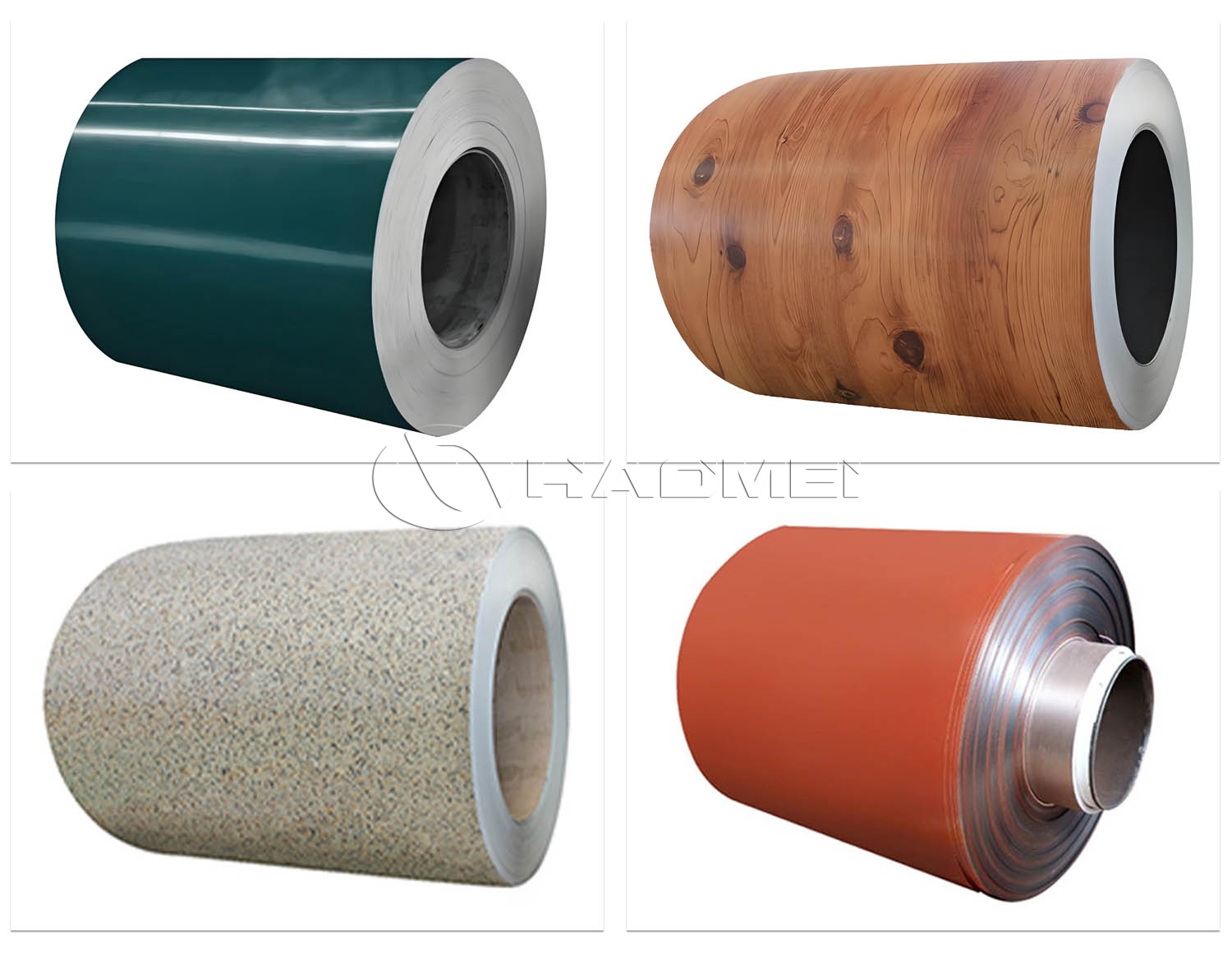
Wood grain, marble, and other printed patterns for themed commercial environments
Thickness Considerations Across the 0.10-0.5mm Range
Thickness influences the balance between weight, stiffness, forming behavior, and support requirements.
0.10-0.20 mm
This ultra-thin range is mainly used for laminated sign faces, flexible skins, interior graphics substrates, and applications in which the aluminum is bonded to a backing material. It provides low weight and easy shaping, but standalone flatness depends strongly on the substrate, adhesive system, and supporting structure.
0.25-0.35 mm
This range is common for general-purpose sign faces, channel letter components, folded trays, illuminated signs, and advertising panels. It offers a practical balance between forming capability and handling stiffness.
0.40-0.50 mm
Thicker coils in this range are used for more robust outdoor signboards, folded-edge panels, box signs, fascia panels, and large fabricated advertising structures. The added metal thickness improves resistance to handling damage and oil-canning while supporting cleaner formed edges.
Processing Performance for Sign Fabrication
Color-coated aluminum coil can be processed by slitting, shearing, blanking, punching, bending, roll forming, embossing, and shallow drawing. Coating flexibility is particularly important when the material is folded into sign trays, channel letters, or edge-return profiles.
During fabrication, bend radius, coating thickness, substrate temper, and forming direction affect the risk of coating stress or cracking. Softer tempers typically provide better performance for tight radii, while harder tempers are more appropriate for flat or gently formed panels requiring additional stiffness.
For printed or graphic-applied signs, surface cleanliness and coating uniformity influence ink adhesion, film bonding, and visual consistency. A smooth, properly cured top coat also supports clear edge definition in lettering and decorative graphics.
Quality Characteristics Relevant to Signboards
Color-coated aluminum coil for advertising signs is typically evaluated through substrate, coating, and finished-coil controls. Relevant quality characteristics include:
Thickness and width tolerance for accurate panel cutting and roll forming
Color difference control between coils and production lots
Gloss consistency across exposed sign faces
Coating adhesion after bending or impact exposure
Pencil hardness and scratch resistance appropriate to handling conditions
Solvent resistance where cleaning agents or graphics processes are involved
Resistance to humidity, salt spray, UV exposure, and temperature cycling according to coating grade
Surface inspection for pinholes, streaks, color variation, dents, and coating inclusions
The final visual performance of an advertising sign depends on the interaction of alloy, temper, coating system, fabrication method, structural support, and installation environment. Within the 0.10-0.5mm range, color-coated aluminum coil provides a versatile pre-finished material platform for both lightweight promotional signage and durable exterior advertising panels.
-
Prepainted PE Aluminum Coil for Rolling Shutters
Technical overview of prepainted PE aluminum coil for rolling shutters, covering alloys, coating structure, specs, colors, and forming performance control.
2026-05-14
-
5052 vs. 3003 Color-Coated Aluminum Coil: Which Material Is Right for You?
3003 and 5052 are the two most commonly used substrates, and they are often made into color-coated aluminum coils for use in building curtain walls, industrial plants and shipbuilding.
2025-12-12
-
3105 Prepainted Aluminum Coil for Gutters
3105 prepainted aluminum coil for gutters provides formability, corrosion resistance, and PE or PVDF coating performance for durable roof rainwater systems.
2026-04-30
Contact Directly
-

ADD: No.14 Waihuan Road, CBD, Zhengzhou, China
-

WhatsApp: +86-18703635966
-

E-MAIL: sales@alummc.com