

News
 By Hermione
Wood Grain Aluminum Coil For Garage Doors
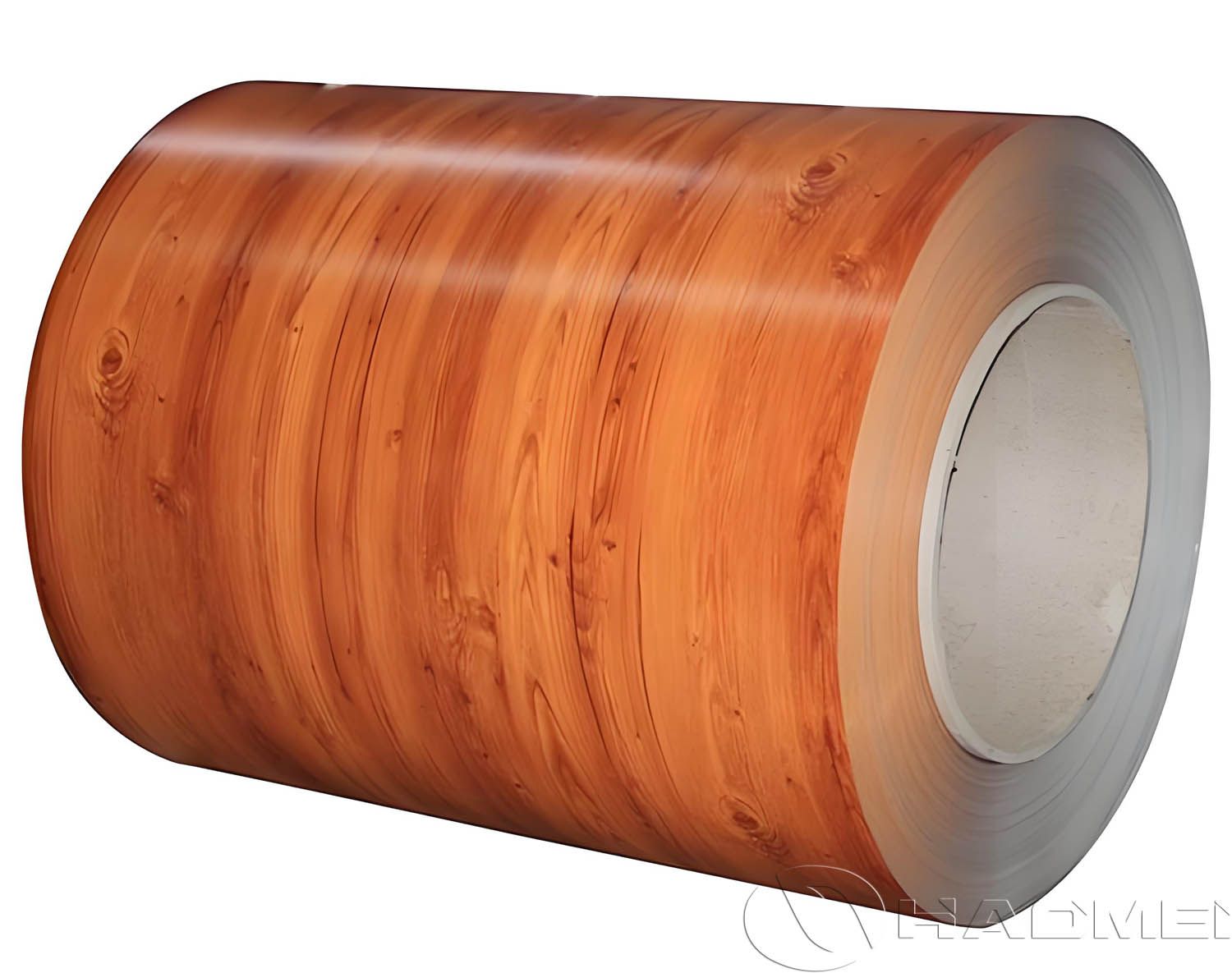
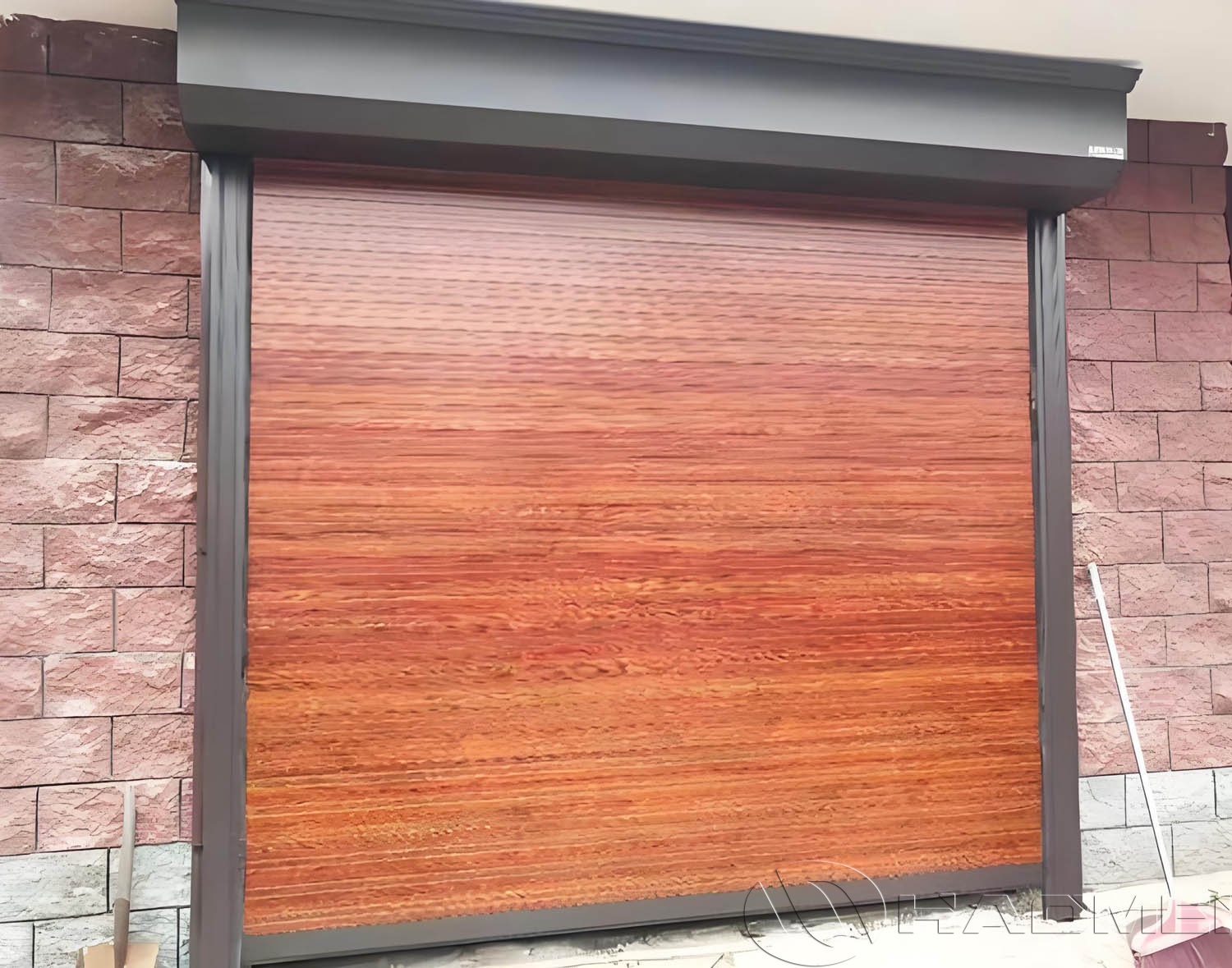
Wood grain aluminum coil for garage doors is positioned as an exterior-grade, prepainted aluminum coil that delivers a natural wood appearance while retaining aluminum's light weight and dimensional stability. It is widely used for sectional garage door panels, roller shutter door slats, trim covers, and matching fascia elements where UV exposure, rain, and daily abrasion demand a durable decorative surface.
Why aluminum coil is a better substrate for wood-look garage doors
Garage doors cycle thousands of times over their service life. This repetitive motion amplifies common problems seen with heavier or moisture-sensitive materials: sagging, swelling, coating cracks at bends, and edge corrosion. Aluminum coil addresses these issues at the material level.
Alloy and temper selection is the first control point. For garage door skins and slats that require consistent forming without micro-cracking, 3xxx/5xxx series alloys (such as 3003/3105/5052 depending on strength and forming needs) are typically selected for a balanced combination of tensile strength and elongation. Temper is chosen to match the forming method: tighter radii and deep profiling favor more formable tempers; flatter panel laminations can accept higher-strength options.
Because the wood pattern is carried by the coating rather than the metal itself, surface quality requirements are stringent: low waviness, controlled roughness, and stable thickness help prevent optical defects (pattern distortion, gloss banding) after roll forming.
Coating architecture: wood-grain aesthetics backed by a functional barrier
A garage door environment combines UV light, temperature swings, moisture, and mechanical contact. The coating system must therefore provide both decorative realism and long-term barrier protection.
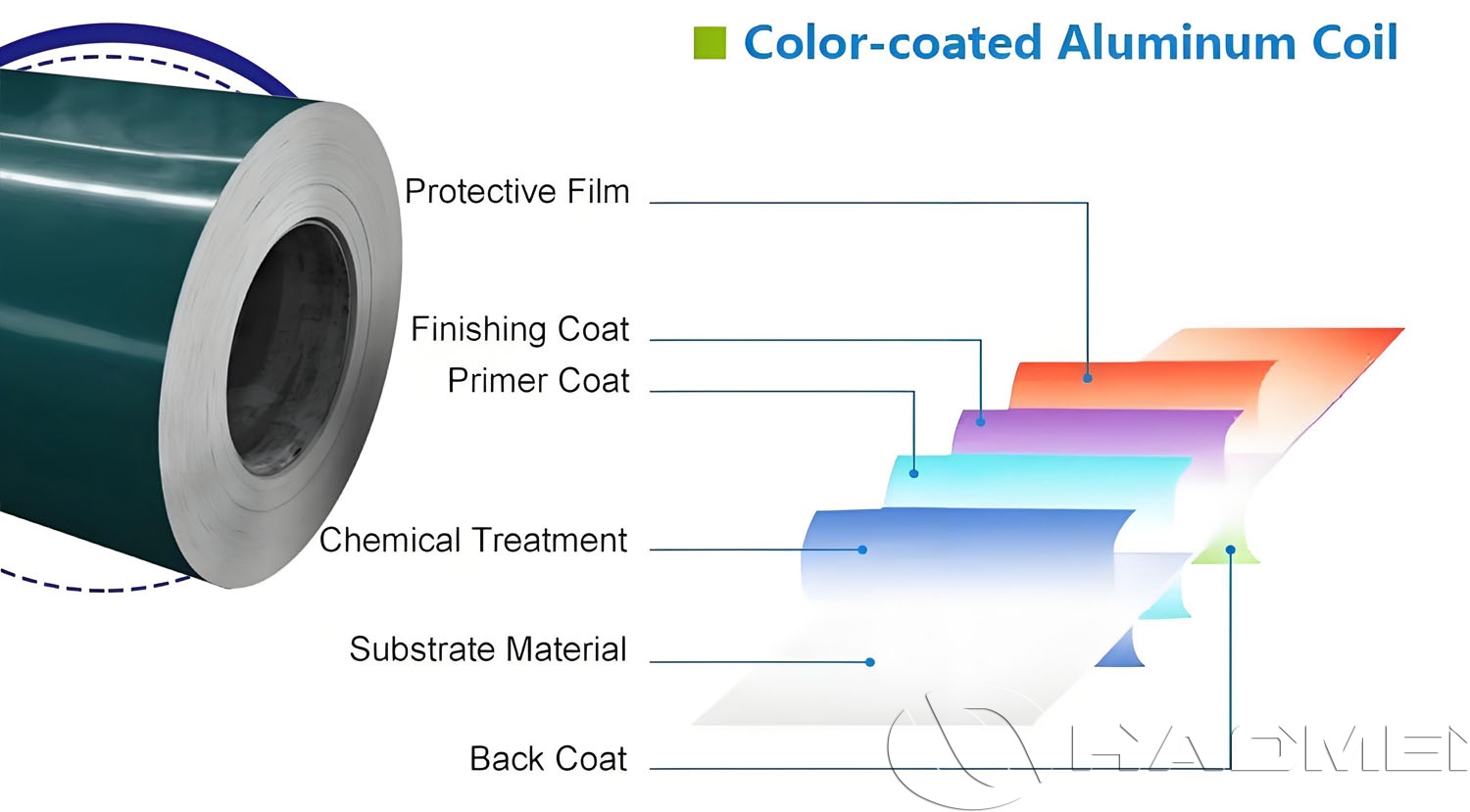
A typical wood-grain color-coated system includes:
Pretreatment / conversion layer to improve corrosion resistance and adhesion. This is critical for cut edges and formed zones that see stress and moisture.
Primer engineered for adhesion and flexibility; it buffers forming strain and supports the print layer.
Basecoat + wood-grain print layer (via gravure/offset-style pattern transfer) for consistent tone and grain definition.
Topcoat that determines weatherability, stain resistance, and gloss retention.
Two mainstream topcoat chemistries are used based on exposure severity:
PE coating: cost-effective with good color and adequate outdoor performance for moderate climates or sheltered installations. In product planning, PE is commonly chosen for residential doors with limited direct sun exposure.
PVDF coating: superior UV and chalk resistance, better gloss retention, and improved chemical resistance, making it appropriate for high-UV regions, coastal environments, and darker wood tones where fading is more visible.
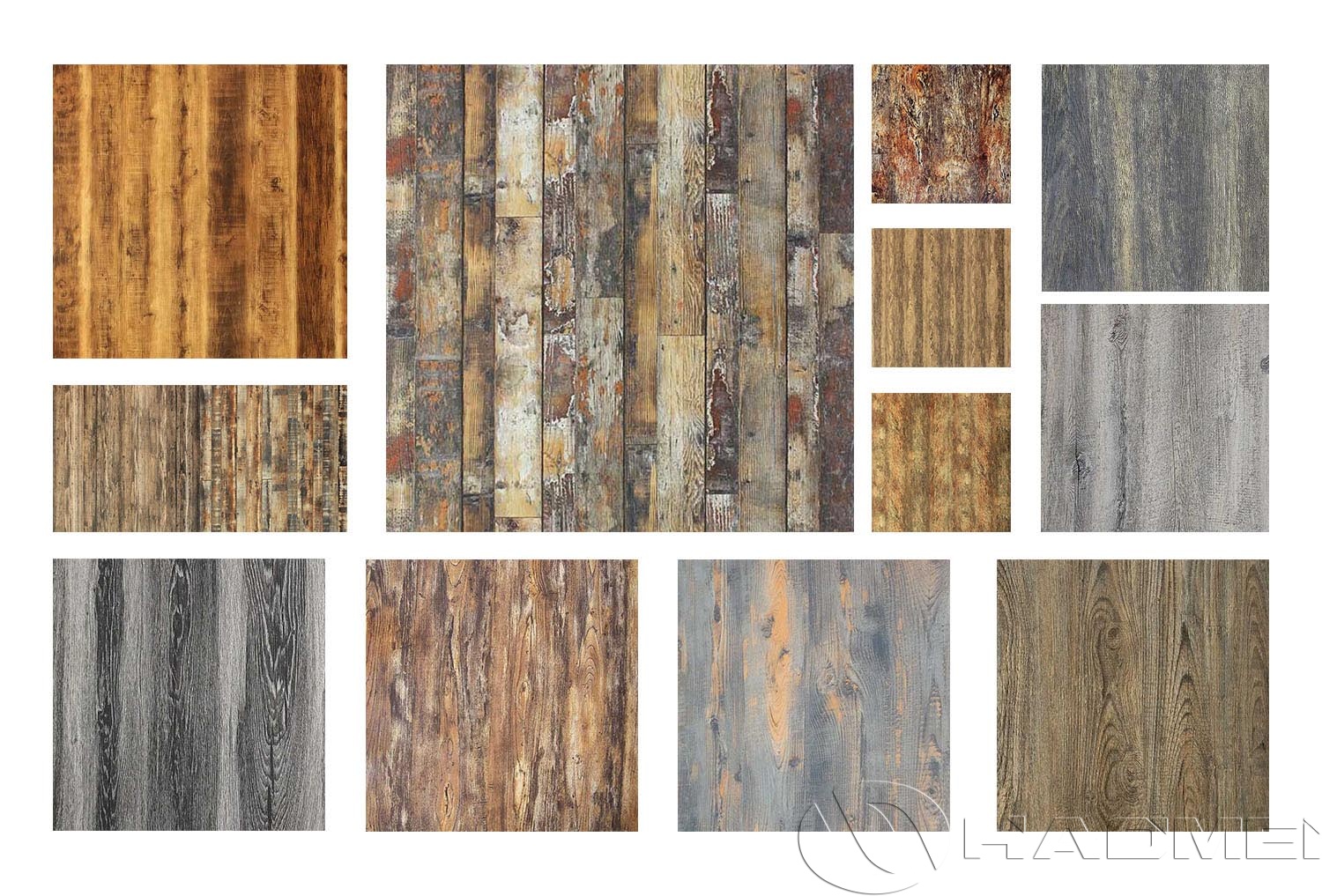
For realistic wood appearance, gloss control matters as much as color. Garage doors generally target low-to-mid gloss to avoid "plastic-like" reflection, while still maintaining cleanability. Embossing options (depending on line capability and product design) can add tactile grain depth; when used, the coating flexibility must be verified to prevent peak cracking.
Manufacturing process: from coil coating to door-profile stability
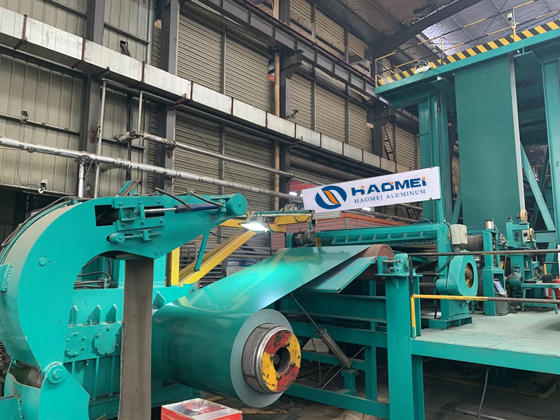
Wood grain color coate aluminum coil for garage doors is commonly produced via continuous coil coating, followed by pattern printing and topcoat curing. The process sequence is designed to minimize variation that would become obvious once adjacent slats/panels are installed.
Key process controls that directly affect door performance include:
Coil cleaning and pretreatment consistency to avoid adhesion loss, especially near edges where roller shutters and sectional doors often see fastener contact.
Coating thickness and cure window: Under-cure can reduce solvent resistance and mar resistance; over-cure can reduce flexibility and increase forming crack risk. Stable peak metal temperature control is essential.
Pattern repeat and color tolerance management: Garage doors present large, continuous surfaces. Tight ΔE control and repeat alignment reduce visible "panel-to-panel" mismatch.
Slitting and edge condition: Burr control reduces edge corrosion initiation and prevents damage to forming rollers.
After coating, the coil is converted into components via roll forming (roller shutters) or panel forming (sectional doors). The coating system must maintain integrity through bend radii and profiling without whitening, cracking, or delamination. For roller shutter slats, the most failure-prone areas are the hook/lock zones where strain concentrates; for sectional doors, it is the emboss/features and hemmed edges.
Core specifications (typical range for garage door applications)
| Substrate alloy (common) | 3003 / 3105 / 5052,etc |
| Temper (common) | H14 / H24 or formable equivalents (per profile/bend radius) |
| Thickness | 0.20-1.20 mm (slats commonly thinner; panels/skins thicker) |
| Width | 20-1250 mm (slit to forming line requirement) |
| Length | 1000-16000 mm |
| Coating system | Primer + wood-grain print + topcoat (PE or PVDF) |
| Topcoat option | PE for standard outdoor use; PVDF for high-UV/coastal/long-life targets |
| Surface finish | Smooth or optional embossed wood texture |
| Gloss (typical) | Low to mid gloss (customizable by design intent) |
| Film thickness (typical) | Customized to durability target and forming severity |
| Adhesion / flexibility focus | Designed for roll forming and profiling without coating cracks |
| MOQ | 1-3 tons |
Practical application considerations for garage doors
In real installations, performance depends on matching coil design to door structure and environment, not only on selecting a "wood color."
Roller shutter doors (slats): prioritize high flexibility and abrasion resistance because slats slide against guides and each other. A lower-friction topcoat and robust primer improve scratch resistance and reduce print wear in contact zones.
Sectional garage doors (panels/skins): prioritize appearance uniformity and dent resistance. Slightly higher substrate thickness or stronger alloy selection can improve panel flatness and reduce oil-canning. Pattern alignment between adjacent panels should be controlled during cutting to keep grain direction consistent.
Edge and fastener zones: garage doors include punched holes, hems, and cut edges. Pretreatment quality and primer adhesion are decisive for corrosion resistance around these discontinuities.
Climate fit: in high-sun regions, PVDF systems better maintain the intended "wood tone," especially for darker walnut/teak styles; in milder climates, PE systems can meet functional needs with a favorable cost profile.
By integrating a formable aluminum substrate with a properly engineered wood-grain coating system and controlled coil-coating/printing processes, wood grain aluminum coil enables garage door products that balance visual warmth with low maintenance, weather resistance, and stable forming quality.
-
Thickness Of Pvdf Coating On Aluminum Coil
Learn how PVDF coating thickness and DFT on aluminum coil affect UV resistance, corrosion protection, formability, and service life in architectural applications.
2026-02-10
-
PVDF Coated Aluminum Coil For Wall Panels
PVDF coated aluminum coil for wall panels provides durable fluoropolymer protection, color stability, and formability for exterior façades.
2026-07-30
-
PVDF Coated Aluminum Coil for Facade Panels
PVDF coated aluminum coil for facade panels, covering alloys, coating structure, specifications, durability, and processing for curtain wall systems use.
2026-05-25
Contact Directly
-

ADD: No.14 Waihuan Road, CBD, Zhengzhou, China
-

WhatsApp: +86-18703635966
-

E-MAIL: sales@alummc.com