

News
 By Hermione
Wood Grain Aluminum Coil for Fence Panels
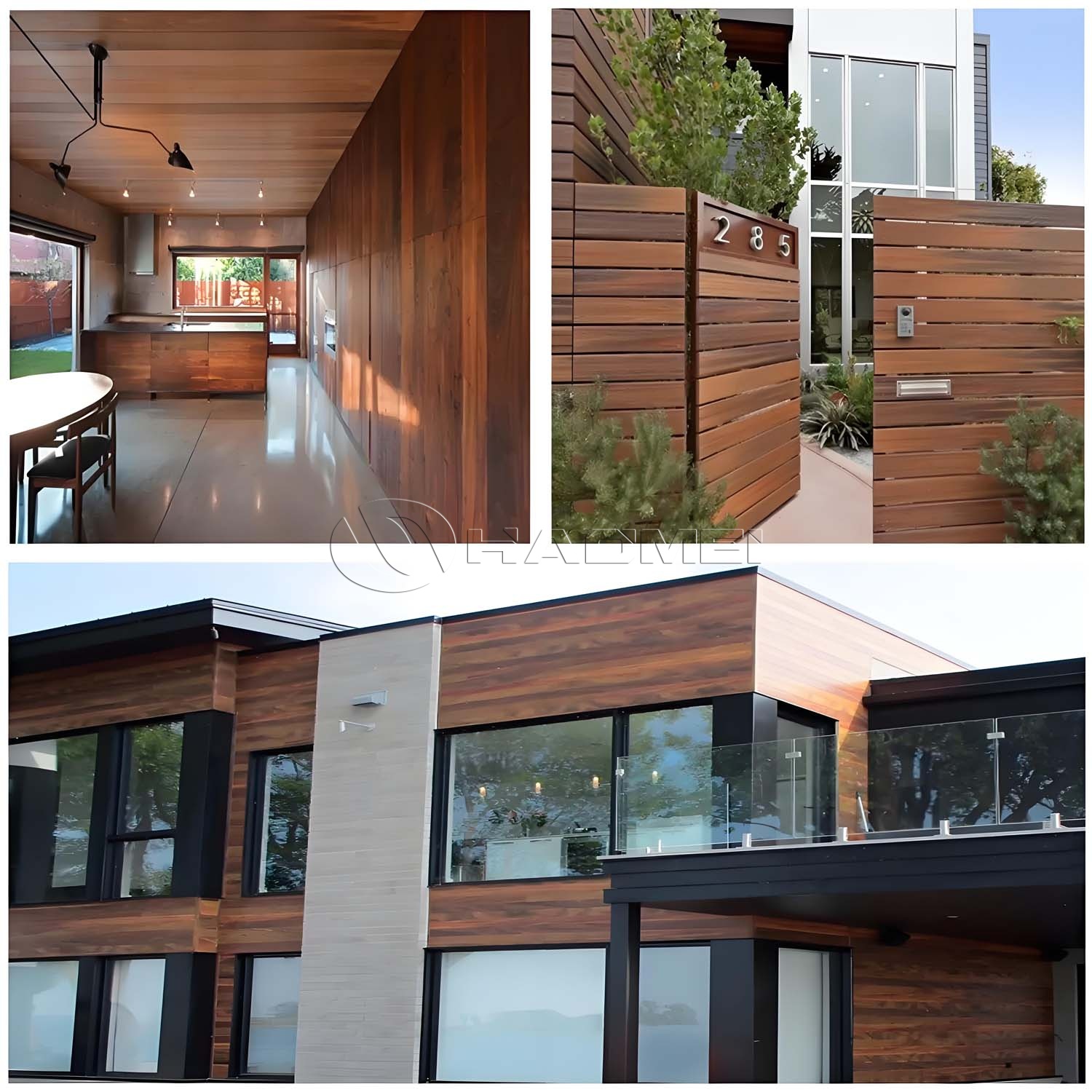
Wood grain aluminum coil for fence panels is a pre-painted aluminum material designed to provide the visual warmth of natural timber with the weather resistance, low weight, and dimensional consistency of aluminum. It is widely used for residential boundary fences, garden screens, villa gates, balcony privacy panels, commercial landscape barriers, and modular outdoor enclosure systems. The coil is commonly processed into slats, corrugated profiles, cassette panels, roll-formed fence boards, and decorative infill sections.
Product Structure and Wood Grain Finish
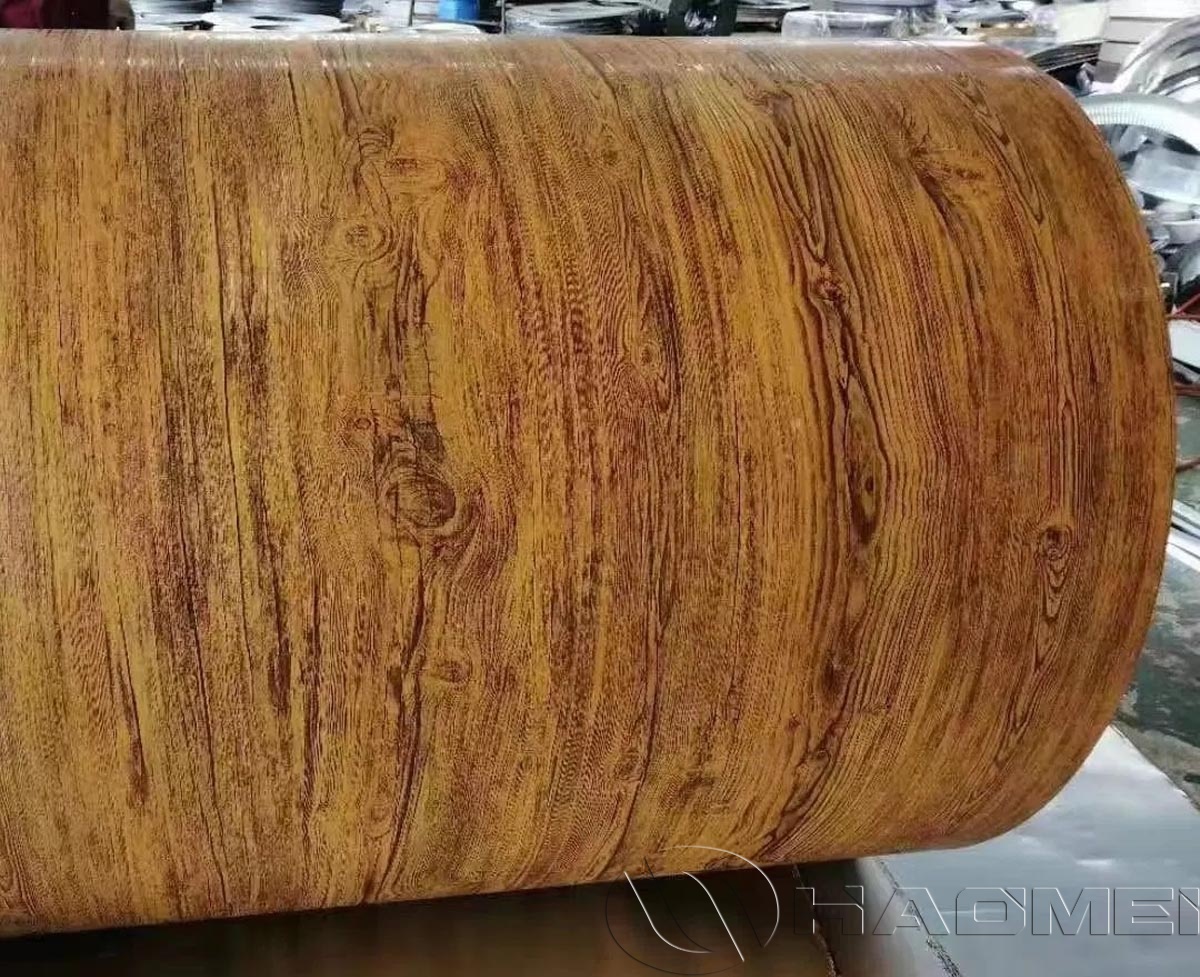
Wood grain aluminum fencing begins with aluminum coil that has been cleaned, chemically pretreated, primed, and coated through a continuous coil-coating process. A wood pattern is then created by transfer printing or multi-color coating technology, forming a consistent decorative surface that can replicate oak, walnut, teak, maple, cedar, and other timber appearances.
A typical coating structure includes:
Aluminum substrate
Chemical conversion layer for coating adhesion and corrosion resistance
Primer coat
Wood grain base color and printed pattern layer
Protective topcoat
Back coating for the reverse side of the coil
The finished surface can be produced in matte, satin, textured, or embossed effects. Matte and lightly textured finishes are frequently used for fence panels because they reduce glare and create a more natural wood-like appearance.
Core Specifications for Wood Grain Aluminum Fence Coil
| Specification Item | Typical Range or Option |
|---|---|
| Aluminum alloy | 1100, 3003, 3105, 5052 |
| Temper | H14, H16, H18, H24, H26, H32 |
| Coil thickness | 0.30-1.50 mm |
| Common fence-panel thickness | 0.60-1.20 mm |
| Coil width | 600-1,600 mm |
| Common panel widths after processing | Based on slat, profile, or cassette design |
| Coating type | PE, SMP, HDP, PVDF |
| Top-coat thickness | Typically 15-35 μm, depending on coating system |
| Back-coat thickness | Typically 5-15 μm |
| Surface finish | Matte, satin, textured, embossed wood grain |
| Pattern options | Oak, walnut, teak, cedar, maple, custom wood patterns |
| Coil inner diameter | 405 mm or 508 mm |
| Coil weight | Customized according to thickness, width, and handling requirements |
Common Aluminum Alloys for Fence Panels
The alloy selection affects profile rigidity, formability, corrosion performance, and finished panel flatness. For exterior fencing, alloy choice is normally matched to panel geometry, forming depth, span, and exposure environment.
1100 Aluminum Alloy
1100 is commercially pure aluminum with excellent corrosion resistance, surface quality, and formability. It is suitable for lightweight decorative fence skins, trim pieces, narrow slats, and shallow-profile panels. Its mechanical strength is lower than 3xxx and 5xxx series alloys, so it is more commonly used where the fence structure is supported by frames, ribs, or internal reinforcing members.
3003 Aluminum Alloy
3003 aluminum contains manganese, providing higher strength than 1100 while retaining good formability and corrosion resistance. It is one of the most widely used substrates for roll-formed fence slats, folded panels, and architectural trim. 3003 Color Coated Aluminum Coil is well suited to wood grain panels that require stable bending performance and a clean painted surface.
3105 Aluminum Alloy
3105 is a common architectural coil alloy with improved strength and practical forming performance for exterior building products. It is frequently used for fence boards, profiled slats, privacy screens, and interlocking aluminum panels. The alloy offers a balanced combination of rigidity, coating compatibility, and production efficiency for continuous roll forming.
5052 Aluminum Alloy
5052 is a magnesium-containing alloy with stronger corrosion resistance and higher mechanical strength than 1100 and 3003. It is used for fence panels in humid, coastal, industrial, or high-corrosion environments, particularly where deeper forming or greater impact resistance is required. Because 5052 has higher strength, its forming parameters are controlled carefully to maintain smooth bends and prevent coating stress at tight radii.
PE and PVDF Coating Systems
The coating system is a key factor in the long-term appearance of wood grain aluminum fencing. The topcoat protects the printed pattern from ultraviolet exposure, moisture, airborne contaminants, and routine outdoor temperature changes.
PE Coating
PE coating provides good color selection, processing flexibility, and decorative performance for standard outdoor fence applications. It is commonly applied to residential gardens, enclosed courtyards, covered balconies, and locations with moderate UV exposure. PE Coated Aluminum Coil is widely used where a cost-effective wood grain finish and reliable forming performance are required.
PVDF Coating
PVDF coating provides enhanced resistance to UV radiation, chalking, fading, and aggressive weathering. It is commonly specified for fence panels exposed to strong sunlight, coastal salt spray, high-temperature regions, or demanding architectural environments. A high-quality PVDF system helps preserve the clarity of wood grain details and the stability of the base color during extended outdoor exposure.
Fence Panel Processing Performance
Wood grain aluminum coil can be processed by slitting, roll forming, press bending, folding, stamping, profiling, and cassette-panel fabrication. The pre-painted surface eliminates the need for post-form painting in many production routes, which supports consistent color and pattern control across multiple fence components.
For fence slats and profiled boards, panel performance is influenced by the relationship between material thickness, alloy temper, rib geometry, return folds, span length, and fixing method. Flat sheet alone has limited stiffness, while formed ribs, folded edges, and closed-profile sections substantially improve resistance to deflection and wind-induced vibration.
Pattern orientation is also controlled during coil preparation. Longitudinal wood grain is generally aligned with the fence slat direction, producing a continuous timber appearance across long panels. Cross-grain or custom-direction patterns can be used for cassette panels and decorative architectural screens.
Exterior Durability Characteristics
Wood grain aluminum coil for fence panels offers several material advantages in outdoor construction:
Aluminum does not rust in the same way as carbon steel and develops a natural oxide layer.
Coil-coated finishes provide uniform film thickness across the panel surface.
Wood grain patterns avoid common timber issues such as rot, termite damage, splintering, and resin bleeding.
Low material weight supports easier handling in slat, screen, and modular fence fabrication.
The surface is compatible with routine cleaning using water and mild neutral detergent.
Color and pattern consistency can be controlled by production batch, coating system, and print-roll parameters.
The cut edges, bends, fastener interfaces, and panel overlaps remain important design areas because these locations experience concentrated moisture, mechanical contact, or thermal movement. Properly designed drainage paths and non-abrasive interfaces help maintain the integrity of the coated surface.
Color, Pattern, and Surface Consistency
A realistic wood grain appearance depends on the coordination of base color, ink-layer definition, gloss level, texture, and pattern repeat length. Walnut and dark oak patterns are often used for modern privacy fences and commercial enclosures, while teak, cedar, and light oak finishes suit garden panels, villa facades, and natural landscape settings.
Wood grain coil is normally supplied with the decorative finish on the exposed side and a protective back coat on the reverse side. For double-sided visible fence slats, both sides can be coated with coordinated colors or wood grain effects, depending on the panel structure and visual requirements.
Manufacturing and Quality Control
Production of wood grain color-coated aluminum coil involves substrate inspection, surface cleaning, chemical pretreatment, primer application, base-coat curing, pattern transfer or printing, topcoat application, and controlled rewinding. Coating adhesion, film thickness, color consistency, gloss, pencil hardness, impact resistance, bend performance, and solvent resistance are commonly checked during quality control.
For exterior fence applications, additional evaluation can include accelerated weathering, salt spray resistance, humidity resistance, boiling-water adhesion, and forming tests after coating cure. These controls help verify that the wood grain layer remains stable through slitting, roll forming, bending, installation, and long-term outdoor service.
-
PE Coated Wood Grain Aluminum Coil Price
Explore PE coated wood grain aluminum coil price drivers, coating system design, aluminum alloy choices, coil coating process, and typical architectural decoration uses.
2026-03-03
-
0.10-0.5mm Color-Coated Aluminum Coil for Signboards and Advertising Signs
Explore 0.10-0.5mm color-coated aluminum coil for signboards and advertising signs, including alloys, PE/PVDF coatings, finishes, and specifications.
2026-08-21
-
Color-Coated Aluminum Coils for Ceiling Applications
In modern architectural decoration, ceilings are no longer merely functional structures for concealing pipelines. They play a critical role in enhancing overall aesthetics, improving durability, and reducing long-term maintenance costs. From large airport
2025-12-26
Contact Directly
-

ADD: No.14 Waihuan Road, CBD, Zhengzhou, China
-

WhatsApp: +86-18703635966
-

E-MAIL: sales@alummc.com