

News
 By Hermione
RAL 9003 White 3003 Coated Aluminum Coil
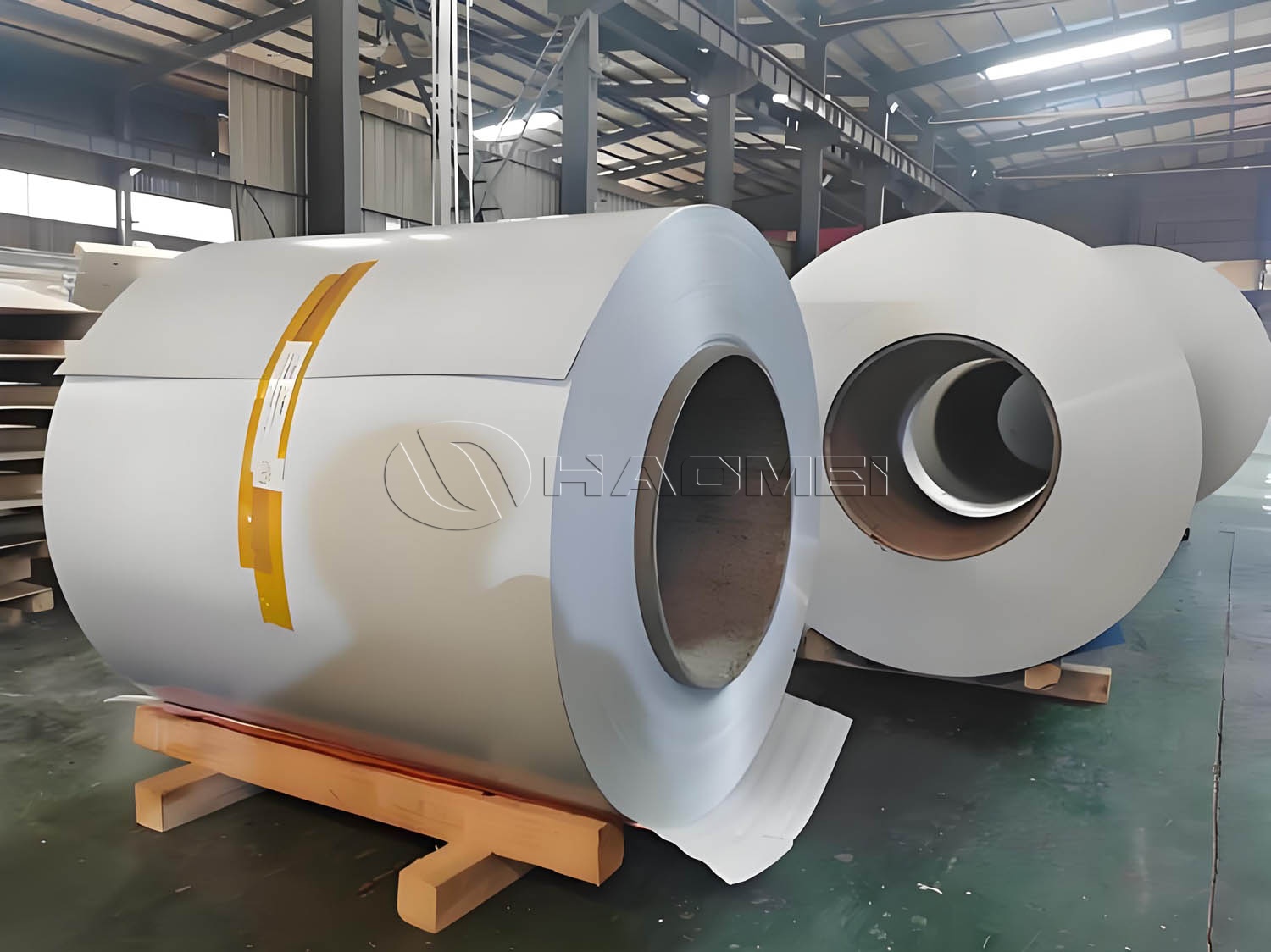
RAL 9003 white 3003 coated aluminum coil is a widely used prepainted aluminum material positioned for clean visual appearance, stable processing performance, and reliable outdoor or indoor durability. It is commonly applied in roofing and wall cladding, ceiling systems, rainwater goods, roller shutters, insulation jacketing, appliance panels, and general architectural trim where a bright white finish and good fabrication performance are required.
What RAL 9003 White Means in Coated Aluminum
RAL 9003 is generally known as a signal white shade within the RAL color system. In coated aluminum coil production, this color is selected when projects require a bright, neutral white surface with high compatibility across modern architectural and industrial designs. Compared with warmer or cream-toned whites, RAL 9003 delivers a cleaner appearance and is often specified for facades, ceilings, sandwich panel skins, equipment housings, and decorative profiles.
For prepainted aluminum, the final visual effect of RAL 9003 is influenced not only by the topcoat color formula, but also by gloss level, coating type, substrate smoothness, and curing consistency. As a result, color stability and batch control are important parts of production.
Why 3003 Alloy Is Common for White Coated Coil
The 3003 aluminum alloy belongs to the Al-Mn series and is one of the most commonly used substrates in color coated aluminum coil manufacturing. It offers a balanced combination of strength, formability, corrosion resistance, and economic efficiency.
In practical processing, 3003 performs well in bending, roll forming, profiling, and light stamping. This makes it suitable for products that need both decorative appearance and moderate structural rigidity. For RAL 9003 white coil, 3003 is frequently chosen because it supports stable coating adhesion and can handle common downstream fabrication without excessive cracking or surface damage when the coating system and temper are properly matched.
Typical advantages of 3003 substrate include:
Good corrosion resistance in normal atmospheric environments
Better strength than 1000 series pure aluminum grades
Good formability for roofing sheets, gutters, ceiling panels, and trims
Stable performance for continuous coil coating lines
Broad availability in different thicknesses and widths
For projects focused on this alloy family, 3003 Color Coated Aluminum Coil is often specified for architectural and industrial sheet conversion.
Core Product Structure
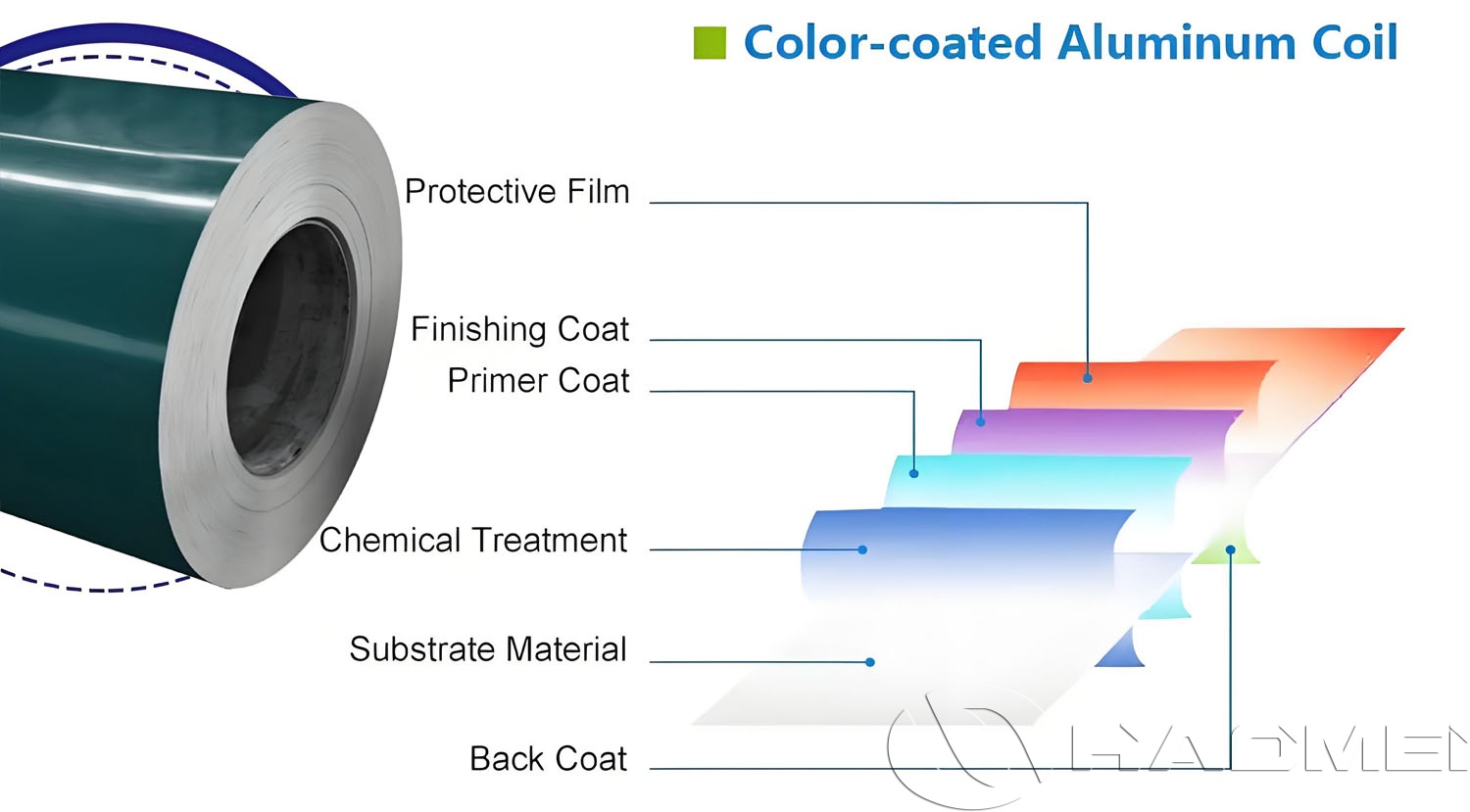
A RAL 9003 white 3003 coated aluminum coil is not only defined by alloy and color. Its actual service performance depends on the full coating build-up and process control. A typical structure includes:
Chemical pretreatment on the aluminum surface
Primer coating for adhesion and corrosion support
White topcoat in PE or PVDF system
Optional back coating on the reverse side
Protective film if required for fabrication or transport
The pretreatment and curing process are especially important. Even when the same color code is used, insufficient cleaning, weak pretreatment, or under-curing can reduce adhesion, weatherability, and bending performance.
Core Specifications of RAL 9003 White 3003 Coated Aluminum Coil
| Item | Typical Specification |
| Product name | RAL 9003 White 3003 Coated Aluminum Coil |
| Base alloy | 3003 |
| Temper | H14, H16, H24, or as required |
| Color | RAL 9003 Signal White |
| Coating type | PE, SMP, HDP, or PVDF |
| Top coating thickness | Typically 12-30 microns |
| Back coating thickness | Typically 5-10 microns |
| Total thickness | Commonly 0.20-1.20 mm |
| Coil width | Commonly 30-1600 mm |
| Coil inner diameter | 405 mm, 505 mm, 508 mm, or customized |
| Surface finish | Glossy, semi-gloss, matte |
| Protective film | Optional |
| Main applications | Roofing, cladding, ceiling, trim, gutter, shutter, panel |
| Processing methods | Slitting, cut-to-length, roll forming, bending, profiling |
| MOQ | 1-3 tons |
Actual parameters may vary depending on application environment, forming radius, coating system, and project specification.
PE and PVDF Coating Systems for White Aluminum Coil
The choice of coating system directly affects outdoor durability, chalk resistance, color retention, and cost positioning.
PE coating
PE coated aluminum coil is commonly used for interior decoration and general outdoor applications with moderate weather exposure. It provides good flexibility, smooth appearance, and economical processing performance. For indoor ceilings, fascia boards, signage panels, and short-to-medium durability exterior components, PE is often sufficient.
Where coating economy and forming performance are priorities, PE Coated Aluminum Coil is a common solution.
PVDF coating
PVDF coated aluminum coil is typically selected for higher-end exterior construction and long-term weather resistance. It offers better resistance to UV exposure, chalking, fading, and environmental aging, especially for facade, roofing, and curtain wall related applications.
RAL 9003 in PVDF is especially suitable where long-term white appearance stability is critical, because white finishes can visibly reveal dirt accumulation, gloss loss, and chalking if the coating system is not robust.
Commonly Used Alloys in Color Coated Aluminum Coil
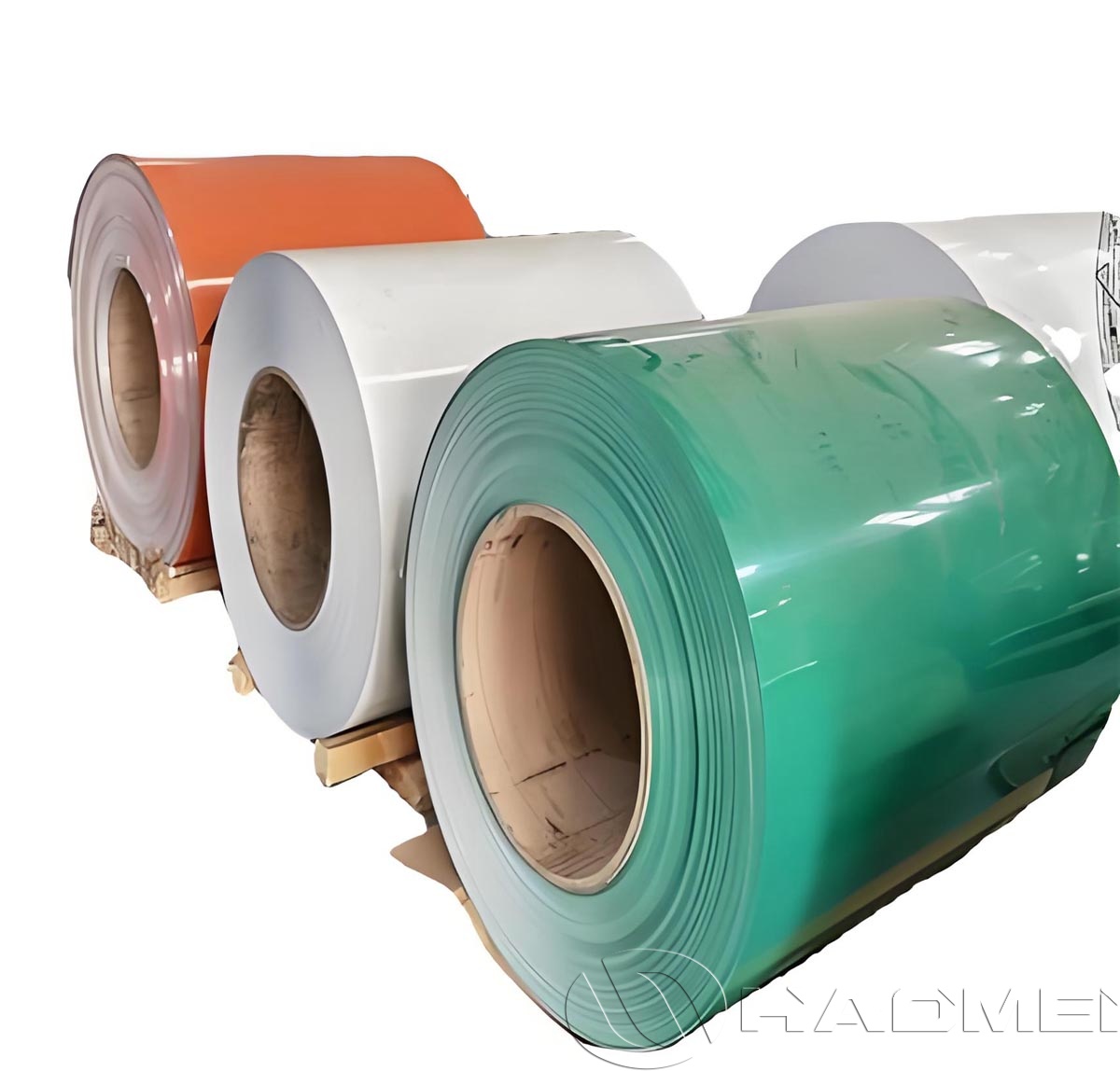
Although 3003 is a very common choice, different applications may require different aluminum alloys.
1000 series: 1050, 1060, 1100, 1200
These alloys are high-purity aluminum grades with very good corrosion resistance and formability. They are often used where deep drawing, high ductility, or cost-sensitive decorative applications are important. However, their mechanical strength is generally lower than 3003 or 5000 series alloys.
Typical uses include ceiling panels, insulation cladding, signage, and decorative sheet products.
3003 and 3004
3003 is a mainstream architectural and industrial substrate with balanced performance. 3004 provides somewhat higher strength and is used where stronger sheet rigidity is needed, such as certain roofing, panel, or formed components.
3105
3105 is another common alloy in building decoration. It offers good corrosion resistance and is widely used for roofing, wall panels, gutters, and trim products. In some markets, 3105 is a standard choice for exterior roll-formed building sheets.
5005, 5052, 5754 and related 5000 series alloys
These magnesium-containing alloys provide higher strength and good corrosion resistance, especially for more demanding outdoor, marine-adjacent, or industrial environments. They are selected when stronger mechanical performance or improved corrosion resistance is needed compared with 1000 or 3000 series materials.
In many routine architectural white coil applications, 3003 remains the practical middle-ground solution due to its processing stability and cost-performance balance.
Processing Performance of 3003 White Coated Coil
RAL 9003 white 3003 coated aluminum coil is commonly processed into:
Corrugated roofing sheets
Flat panels and cassette panels
Ceiling strips and suspended ceiling components
Flashing, trims, and edge covers
Downpipes and gutters
Roller shutter slats
Insulation and jacketing covers
During fabrication, key technical considerations include:
Minimum bending radius relative to temper and coating thickness
Coating flexibility and T-bend performance
Pencil hardness and impact resistance
Reverse-side coating suitability for adhesive or foam lamination
Protective film compatibility with storage and processing temperature
For bright white surfaces such as RAL 9003, special attention is often given to waviness, roller marks, dirt control, and edge damage, because defects are visually more apparent on white finishes than on darker shades.
Performance Factors That Matter in Exterior Use
When RAL 9003 white coil is used outdoors, long-term performance depends on more than the base alloy alone. Important factors include:
Coating weatherability
PVDF systems usually provide superior retention of color and gloss in strong sunlight, coastal environments, and polluted urban settings.
Corrosion protection
The combination of alloy selection, pretreatment quality, primer integrity, and coating coverage determines long-term corrosion behavior, especially at cut edges and formed areas.
Dirt pick-up and cleanability
White surfaces can highlight airborne dust and runoff staining. A well-formulated topcoat with smoother surface properties can improve clean appearance retention.
Forming compatibility
If the product will be sharply bent, roll formed, or embossed, coating flexibility must match the forming process to avoid cracking or whitening at the bend.
Typical Application Fields
RAL 9003 white 3003 coated aluminum coil is frequently used in the following sectors:
Architectural roofing and wall systems
Interior ceiling and partition systems
Door and shutter components
Drainage systems such as gutters and downspouts
Insulated panels and HVAC cladding
Appliance and equipment outer panels
Trailer and light industrial sheet applications
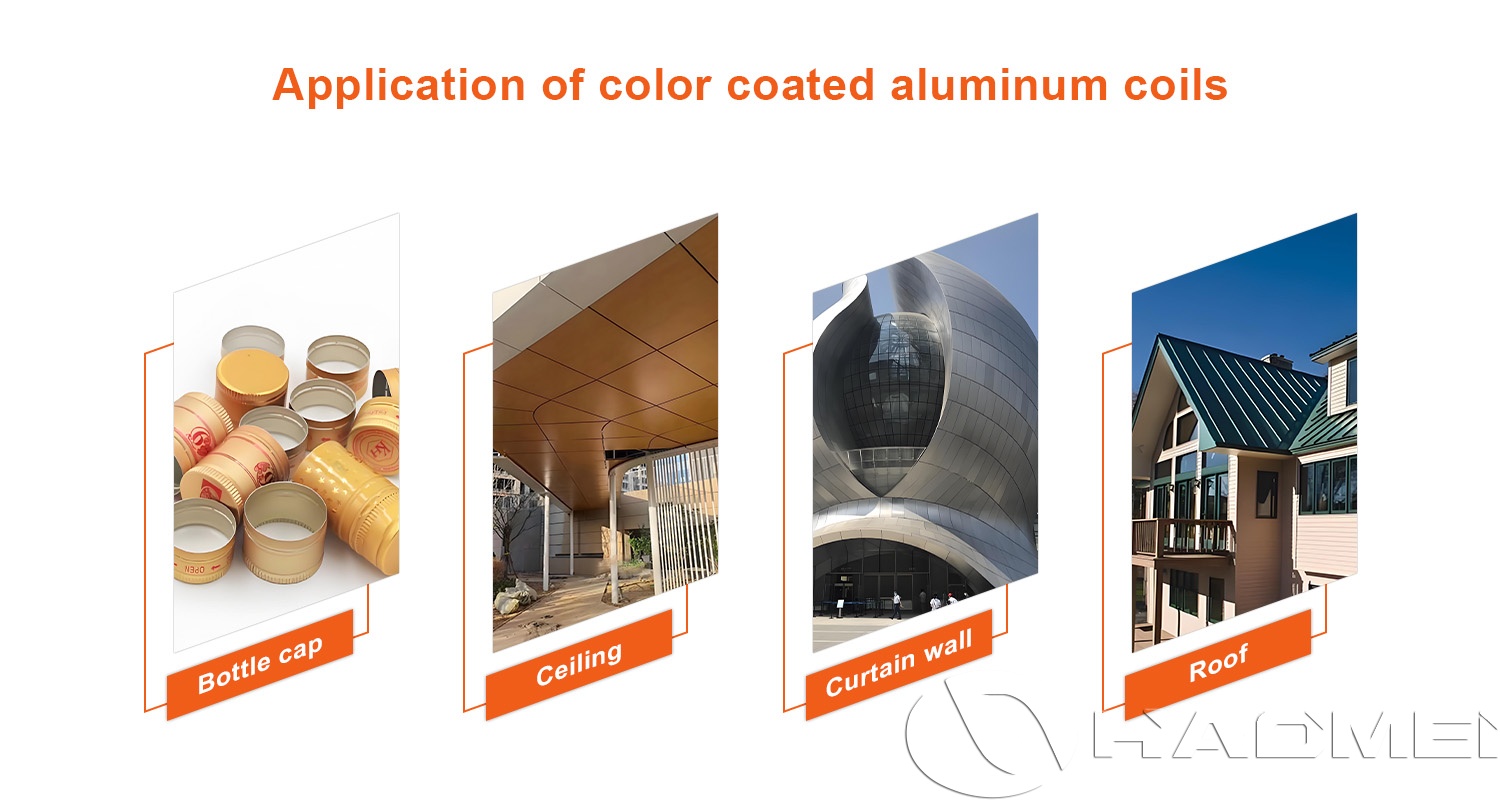
Its popularity comes from the combination of a clean white decorative surface, manageable fabrication behavior, and stable supply in coil form for continuous processing.
Key Technical Selection Points
When specifying a white coated aluminum coil, the most important parameters usually include:
Alloy and temper
Color standard and gloss tolerance
Coating type, such as PE or PVDF
Topcoat and primer thickness
Required outdoor service life
Forming radius and downstream fabrication method
Surface quality standard for visible applications
Coil dimensions and weight limits for production equipment
For many building-related products, RAL 9003 white 3003 coated aluminum coil remains one of the most practical solutions because it combines decorative consistency, adequate mechanical performance, and broad application adaptability.
-
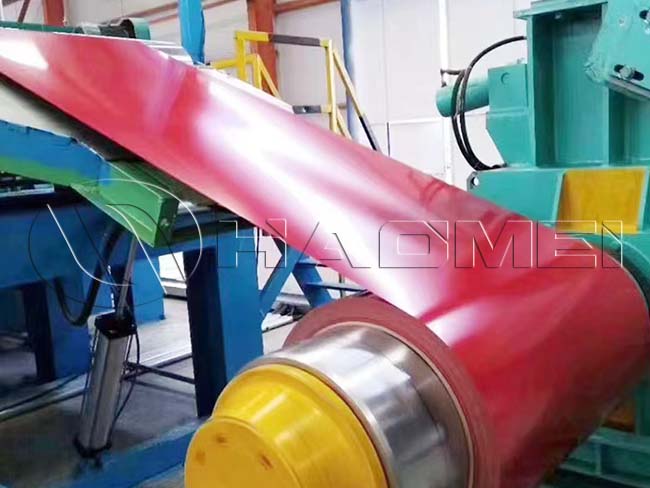
5052 PPAL Pre-Painted Aluminum Coil for Ceilings
5052 pre-coated aluminum coils combine the mechanical properties of the metal substrate with the decorative and protective functions of the coating, making them suitable for applications such as ceiling panels and building curtain walls.
2025-12-11
-
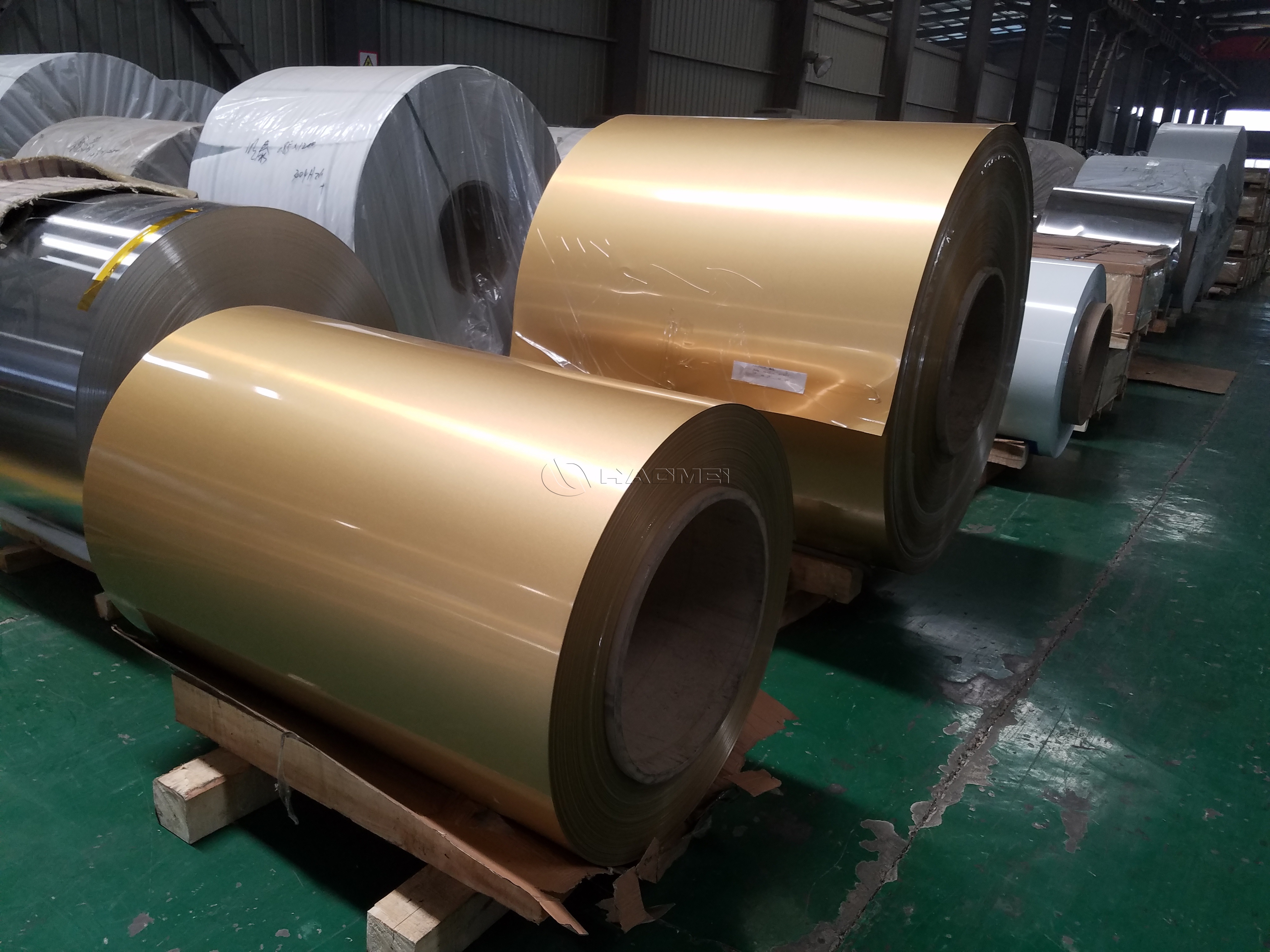
0.4mm, 0.6mm, 0.8mm, 1mm Cold-Rolled Painted Aluminum Coil (1005, 1060, 1100, 3003)
Technical overview of 0.4mm-1mm cold-rolled painted aluminum coil in 1005, 1060, 1100 and 3003 alloys for roofing, ceilings and facade wall panels.
2026-07-02
-
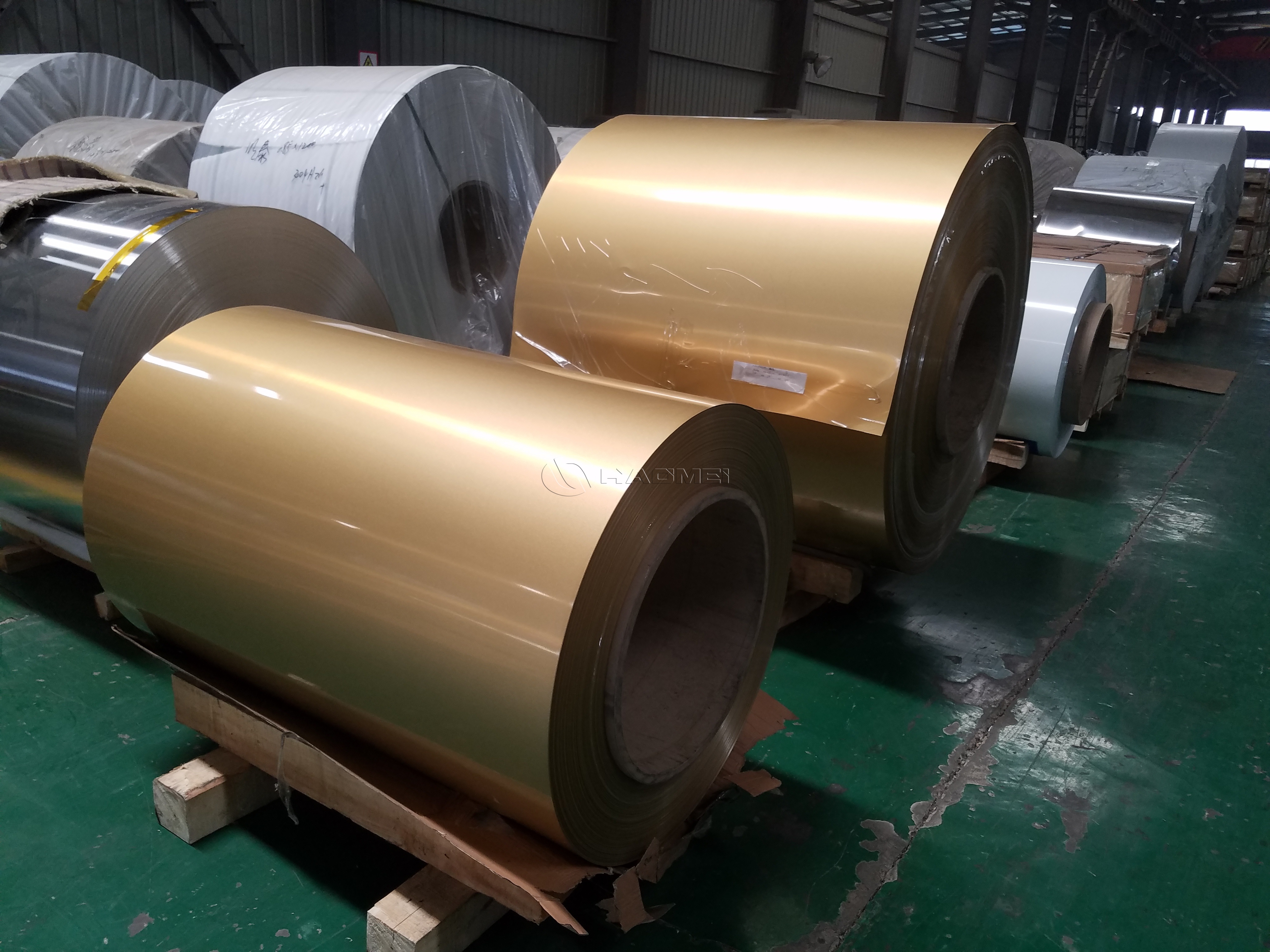
PVDF Coated Aluminum Coil For Industrial Roofing
PVDF coated aluminum coil for industrial roofing delivers long-term color stability, corrosion resistance and reliable coil coating quality for harsh climates.
2026-02-03
Contact Directly
-

ADD: No.14 Waihuan Road, CBD, Zhengzhou, China
-

WhatsApp: +86-18703635966
-

E-MAIL: sales@alummc.com