

News
 By Hermione
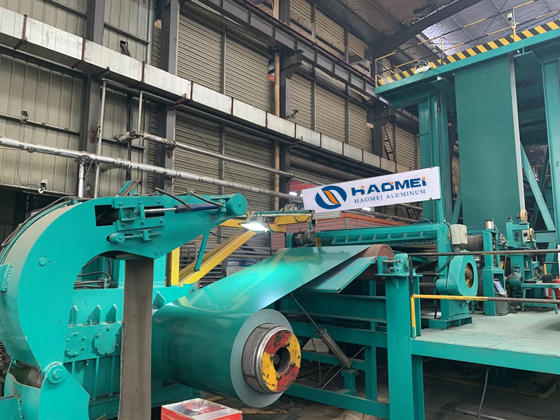
PVDF Camouflage-Coated Aluminum Coils
PVDF camouflage-coated aluminum coils are positioned as durable, decorative, and formable pre-painted aluminum materials for exterior and semi-exterior systems requiring both long-term weather resistance and visual concealment. Typical application scenarios include building facades, roofing accessories, soffits, shelters, equipment housings, transportation panels, garage doors, suspended ceilings, and outdoor enclosure systems where a camouflage pattern provides a low-glare, environment-adaptive appearance.
Product Concept and Material Characteristics
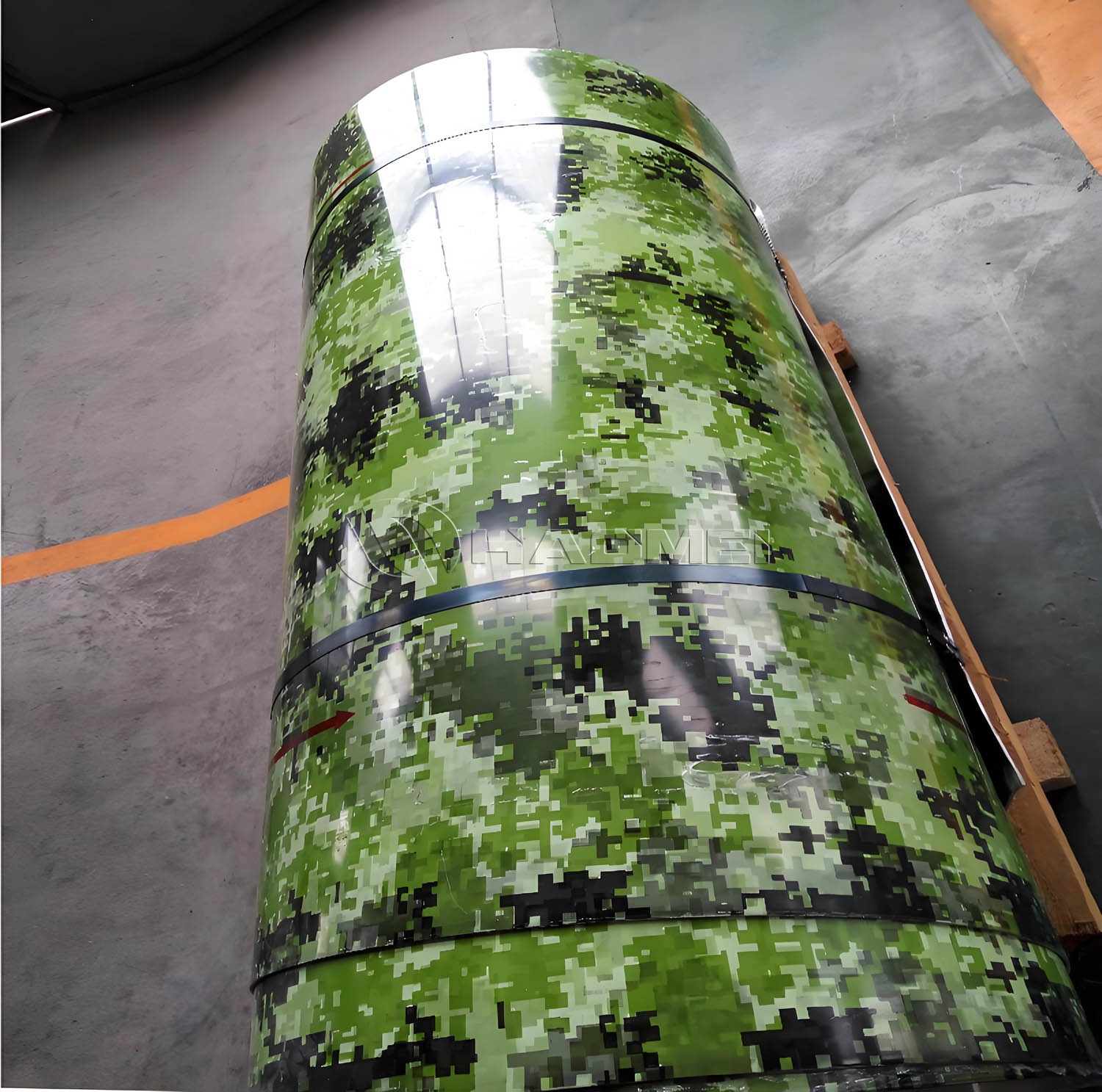
PVDF camouflage-coated aluminum coil combines a roll-coated aluminum substrate with a fluorocarbon resin coating system and a multi-color camouflage pattern. Compared with standard monochrome color-coated aluminum, the camouflage finish requires more precise color layering, pattern registration, and surface gloss control. The coating must also retain the practical advantages of aluminum coil processing, including slitting, leveling, roll forming, bending, punching, and panel fabrication.
The base technology is closely related to PVDF Coated Aluminum Coil, but with an added decorative pattern layer. The camouflage design may be woodland, desert, urban gray, digital, or customized multi-tone patterns. In exterior applications, the PVDF resin provides high resistance to ultraviolet radiation, chalking, color fading, acid rain, humidity, and temperature cycling.
Coating Structure and Surface Design
A typical PVDF camouflage-coated aluminum coil is built as a multi-layer system. Each layer contributes to adhesion, corrosion resistance, color stability, and pattern definition.
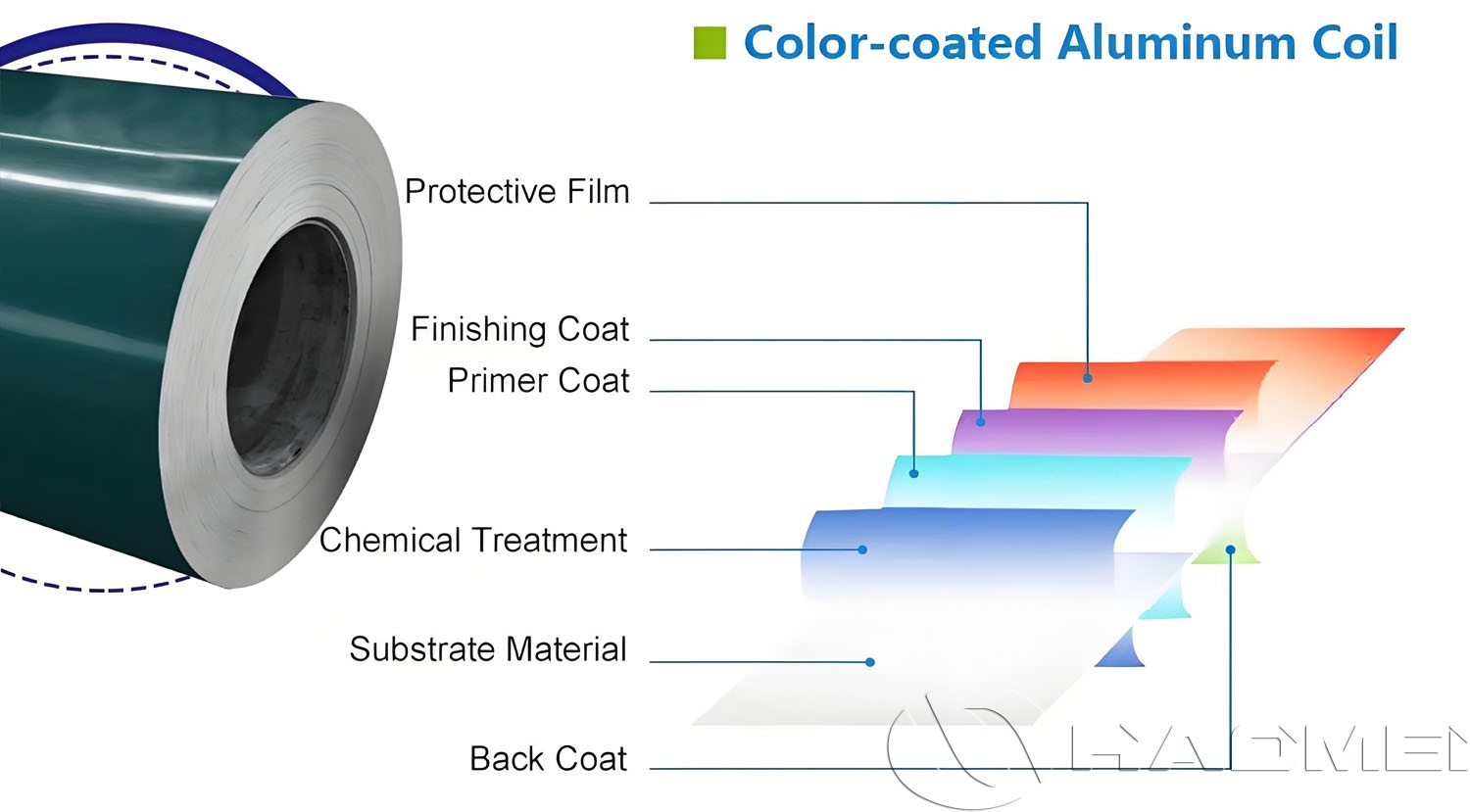
The coating system usually includes:
Aluminum substrate: provides lightweight strength, formability, and corrosion resistance.
Chemical pretreatment layer: improves coating adhesion and corrosion protection.
Primer: enhances bonding between the metal surface and the top coating.
PVDF color coating: offers weatherability, chemical resistance, and long-term color retention.
Camouflage pattern layer: creates the multi-tone decorative effect through precision coating or printing technology.
Optional clear protective coating: improves abrasion resistance, stain resistance, and gloss uniformity.
For outdoor building use, the PVDF top coating is commonly based on 70% PVDF resin technology by resin content. The surface can be produced in matte, low-gloss, semi-gloss, or textured effects depending on design requirements. Low-gloss camouflage finishes are often preferred for architectural and equipment applications because they reduce reflectivity and improve visual integration with the surrounding environment.
Commonly Used Alloys
The alloy selection affects strength, flatness, forming behavior, corrosion resistance, and final application performance. PVDF camouflage-coated aluminum coils are commonly produced with 1xxx, 3xxx, and 5xxx series aluminum alloys.
1100 and 1060 aluminum are commercially pure aluminum grades with excellent ductility and corrosion resistance. They are suitable for decorative panels, ceilings, trim parts, and applications requiring deep forming or simple bending. Their strength is lower than 3xxx and 5xxx alloys, but their workability is very stable.
3003 aluminum is one of the most widely used alloys for color-coated aluminum coil. It contains manganese for improved mechanical strength while maintaining good formability. It is suitable for roofing components, wall cladding, curtain wall panels, soffits, signage substrates, and general architectural sheet applications.
3004 and 3105 aluminum provide higher strength than 3003 and are frequently used in roofing, facade panels, rolling shutters, and exterior cladding. These alloys offer a good balance between rigidity, coating compatibility, and forming performance.
5005 aluminum is commonly used for architectural decorative panels where surface quality and corrosion resistance are important. It has good anodizing and coating compatibility and is suitable for high-grade facade and curtain wall applications.
5052 aluminum provides higher strength and better marine-atmosphere corrosion resistance than 3xxx alloys. It is often selected for outdoor equipment covers, transportation components, coastal projects, and enclosure panels that require improved mechanical performance.
Core Specifications of PVDF Camouflage-Coated Aluminum Coils
| Item | Typical Specification |
|---|---|
| Product Type | PVDF camouflage-coated aluminum coil, pre-painted aluminum coil |
| Common Alloys | 1060, 1100, 3003, 3004, 3105, 5005, 5052 |
| Temper | O, H14, H16, H18, H24, H26, H32, H34 |
| Thickness Range | 0.20-3.00 mm |
| Width Range | 600-1600 mm, subject to coating line capability |
| Coil ID | 405 mm, 508 mm |
| Coating System | Primer plus PVDF topcoat, pattern layer, optional clear coat |
| Top Coating Thickness | Commonly 20-30 um, higher thickness available for severe exposure |
| Back Coating Thickness | Commonly 5-12 um, or customized service coating |
| Surface Finish | Matte, low-gloss, semi-gloss, smooth, textured |
| Pattern Options | Woodland, desert, digital, urban gray, grassland, custom multi-tone camouflage |
| Gloss Range | Typically 10-80 GU, low-gloss designs common for camouflage surfaces |
| Coating Performance | Weather resistance, UV resistance, corrosion resistance, good formability |
| Processing Methods | Slitting, cutting, roll forming, bending, punching, panel fabrication |
| Typical Applications | Facades, roofs, shelters, equipment housings, ceilings, doors, enclosure panels |
Manufacturing Process Control
The production of camouflage color-coated aluminum coil requires stable substrate preparation and accurate coating control. Before coating, the aluminum coil is cleaned and chemically pretreated to remove rolling oil, oxide residues, and surface contaminants. Proper pretreatment is essential because insufficient cleaning may lead to poor adhesion, blistering, or premature corrosion under humid exposure.
The primer is applied through a continuous coil coating line and cured at a controlled peak metal temperature. After primer curing, the PVDF color coating and camouflage pattern are applied. For multi-color camouflage designs, pattern consistency depends on coating viscosity, roller pressure, line speed, temperature, and curing profile. The final surface must maintain color boundaries without excessive bleeding, while still retaining coating flexibility for downstream fabrication.
Compared with a single-color product, a Camouflage Color-Coated Aluminum Coil places higher requirements on color matching and batch consistency. Each tone in the pattern must be controlled for hue, gloss, and film thickness so that adjacent coils can be assembled into panels without obvious visual deviation.
Application Performance
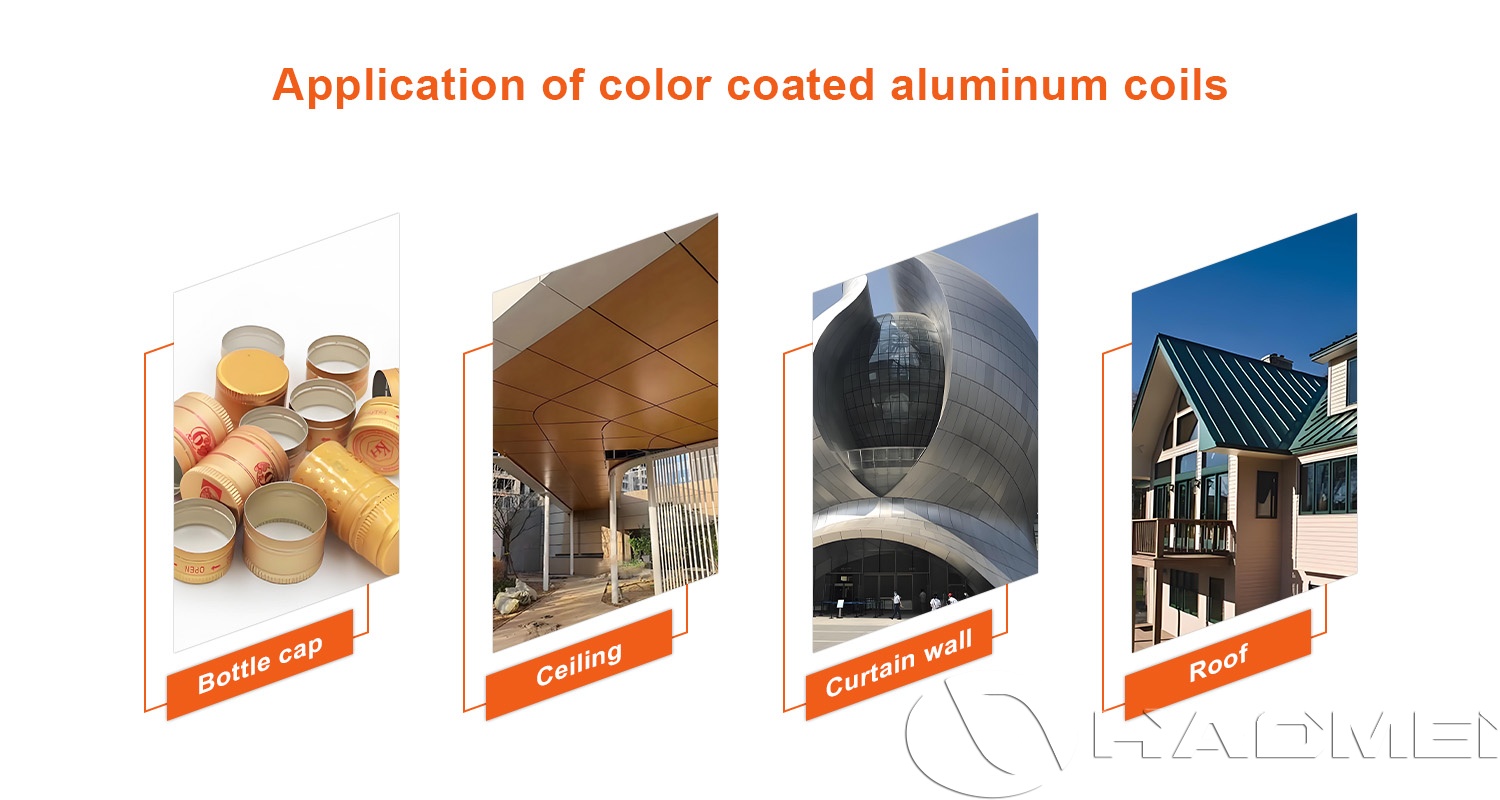
In architectural applications, PVDF camouflage-coated aluminum coil is used for metal wall panels, ceiling panels, roof edge parts, decorative screens, and exterior trim. Aluminum offers low density and good corrosion resistance, while the PVDF coating improves outdoor durability. This makes the material suitable for projects exposed to sunlight, rain, wind, and seasonal temperature variation.
For equipment and enclosure applications, the camouflage surface provides a functional visual effect in addition to weather protection. Typical uses include generator housings, communication equipment cabinets, mobile cabins, outdoor storage units, and transportation-related covers. The coil-coated finish provides uniform film quality before fabrication, which helps maintain appearance consistency across formed components.
For roofing and cladding systems, alloy and temper selection are closely connected with panel profile depth, bending radius, fastener design, and wind load requirements. Softer tempers improve bendability, while harder tempers improve stiffness. In practical production, the coating must pass forming tests after curing to ensure that the film does not crack or peel at bends, ribs, and cut edges.
Quality and Performance Validation
PVDF camouflage-coated aluminum coils are typically evaluated through appearance inspection, color difference measurement, coating thickness testing, adhesion testing, pencil hardness, T-bend testing, impact resistance, solvent resistance, salt spray testing, humidity resistance, and accelerated weathering. For architectural use, color retention and chalking resistance are key performance indicators because camouflage patterns contain multiple color tones that must age uniformly.
Common control points include:
Film thickness uniformity across coil width and length.
Color difference control between production batches.
Adhesion after bending, impact, and cross-cut testing.
Gloss consistency for matte and low-reflective camouflage surfaces.
Resistance to chalking, fading, salt spray, and humid heat exposure.
Pattern registration stability during continuous coil coating production.
-
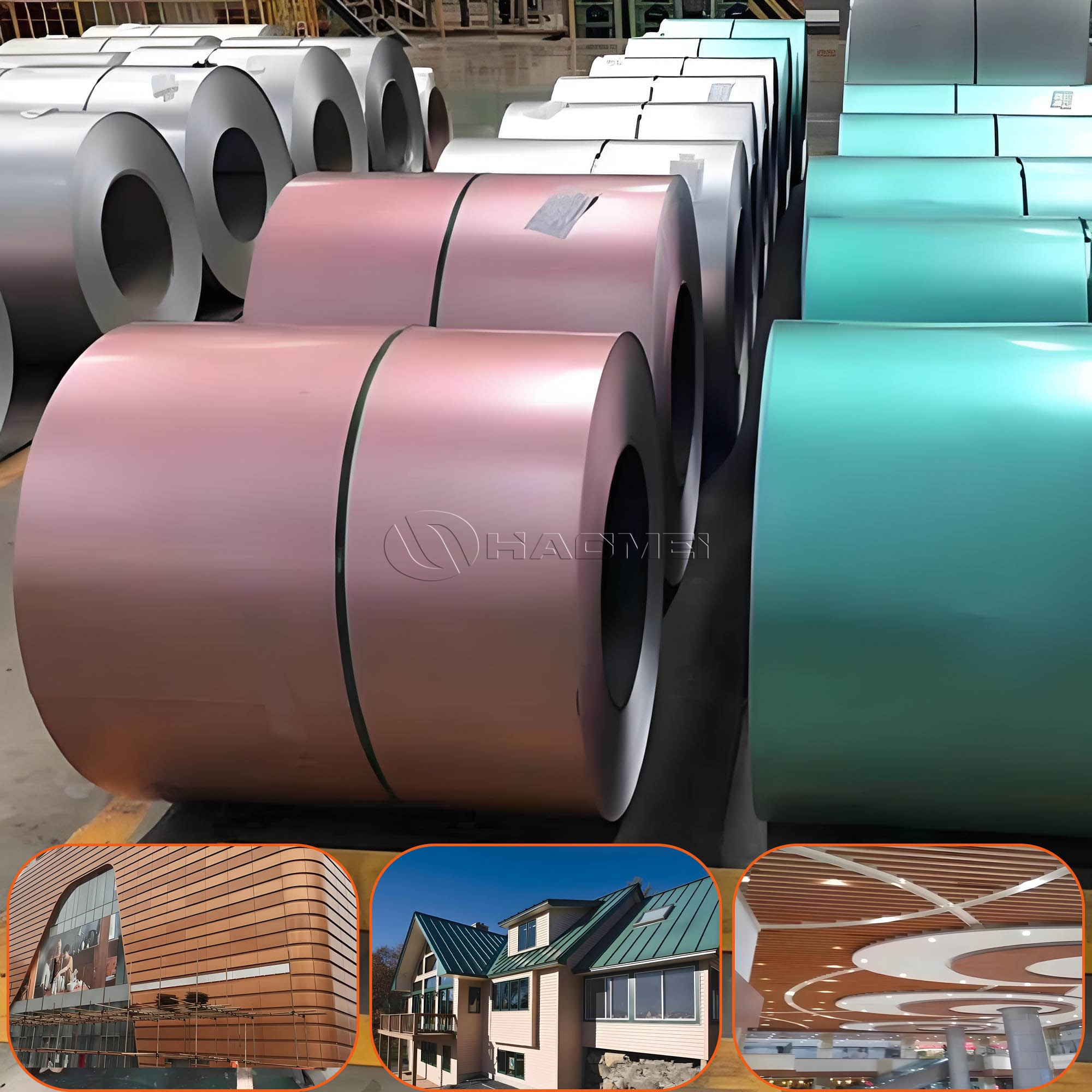
0.4mm, 0.6mm, 0.8mm, 1mm Cold-Rolled Color-Coated Aluminum Coil for Building Facades
Explore 0.4-1mm cold-rolled color-coated aluminum coil for building facades, including alloys, coating systems, dimensions, and facade performance data.
2026-08-28
-
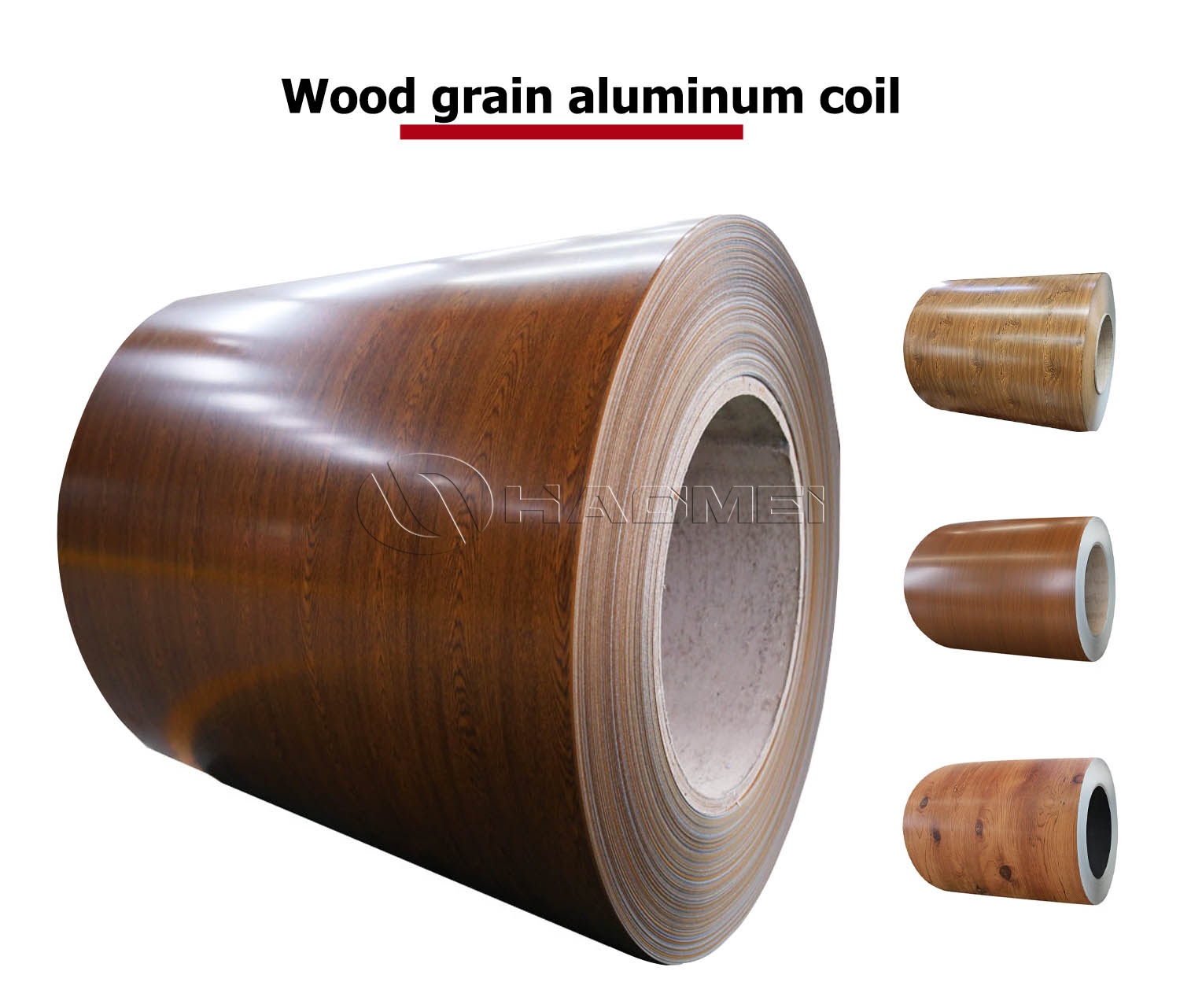
Wood Pattern Pvdf Coated Aluminum Coil
Explore wood pattern PVDF coated aluminum coil: wood grain aluminum coil aesthetics with a PVDF coating system for durable, weatherable pre-painted aluminum coil cladding.
2026-02-25
-
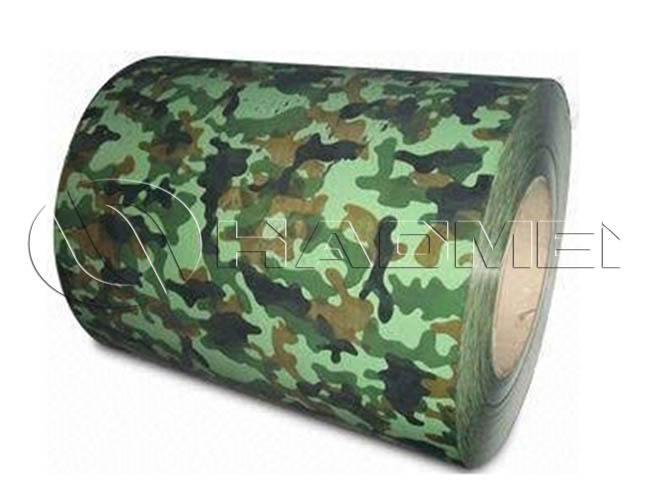
5052 Camouflage Coated Aluminum Coil for Automotive Body Panels
Camouflage coatings not only have a decorative effect, but also enhance the weather resistance and corrosion resistance of aluminum, and are widely used in military vehicles, SUVs, off-road vehicles and customized vehicles.
2025-12-02
Contact Directly
-

ADD: No.14 Waihuan Road, CBD, Zhengzhou, China
-

WhatsApp: +86-18703635966
-

E-MAIL: sales@alummc.com