


News
 By Hermione
Custom Color-Coated Aluminum Coils for Commercial Ceiling Installations
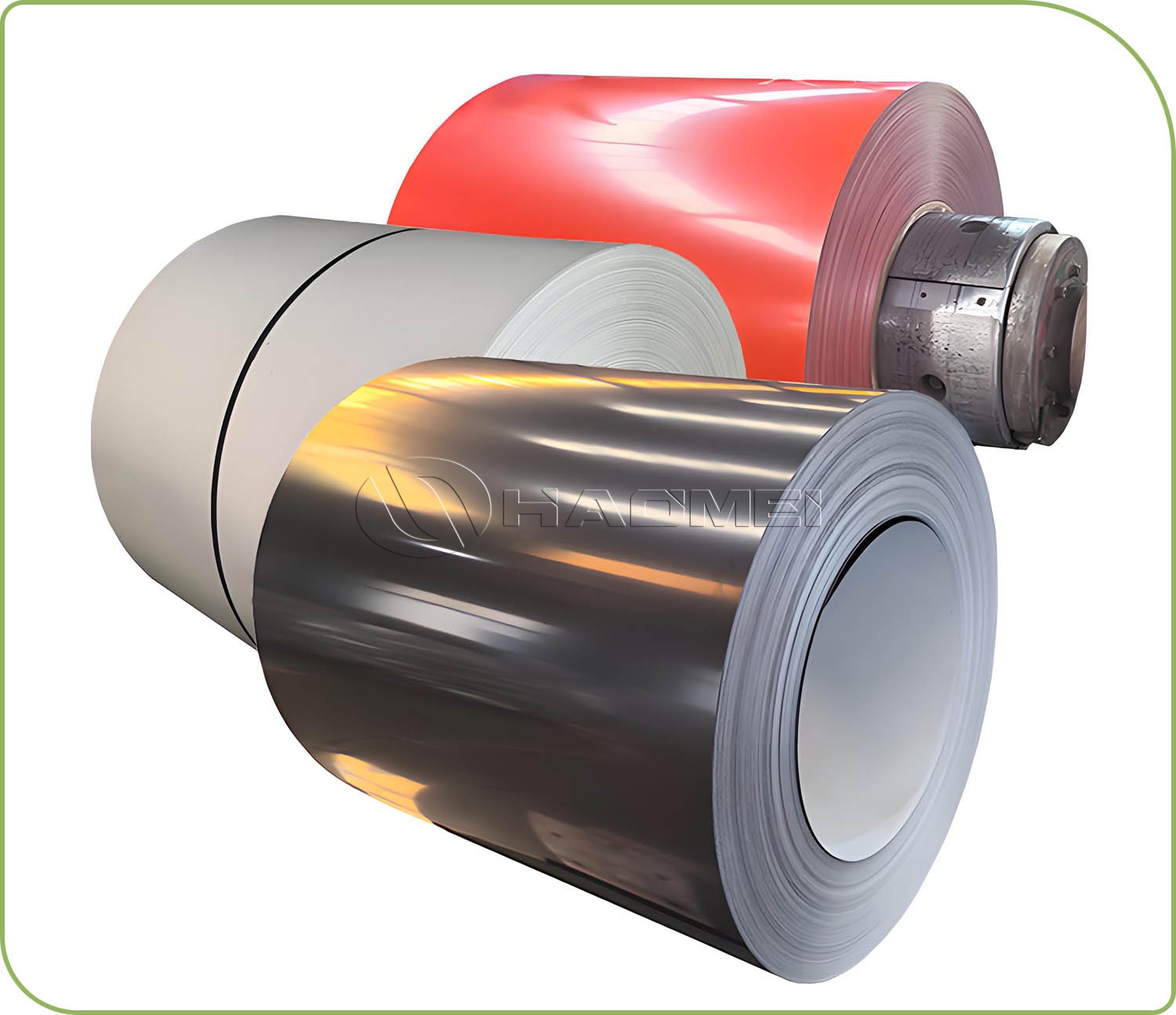
Custom color-coated aluminum coils are pre-finished metal materials engineered for roll forming, stamping, perforating, and panel fabrication in commercial ceiling systems. They are widely used for suspended ceilings, clip-in ceilings, lay-in tiles, baffle ceilings, linear ceilings, metal soffits, and decorative wall-ceiling transitions in offices, retail centers, airports, hotels, hospitals, education facilities, and public transportation spaces. The coil coating process combines aluminum substrate performance with a controlled decorative finish, allowing ceiling manufacturers to produce panels with uniform color, gloss, and surface quality.
Pre-Painted Coil Structure for Ceiling Panels
A color-coated aluminum coil is produced through a continuous coil-coating line rather than by coating individual finished panels. The aluminum strip is cleaned, chemically pretreated, coated with primer and finish layers, oven cured, and recoiled under controlled tension. This process provides more consistent film thickness and appearance across large production runs than many post-painting methods.
The typical construction includes:
Aluminum alloy substrate
Chemical conversion coating for adhesion and corrosion resistance
Primer coat
Topcoat in the specified color, gloss, or printed pattern
Optional back coat for handling protection and reverse-side appearance
Optional removable protective film for forming and installation operations
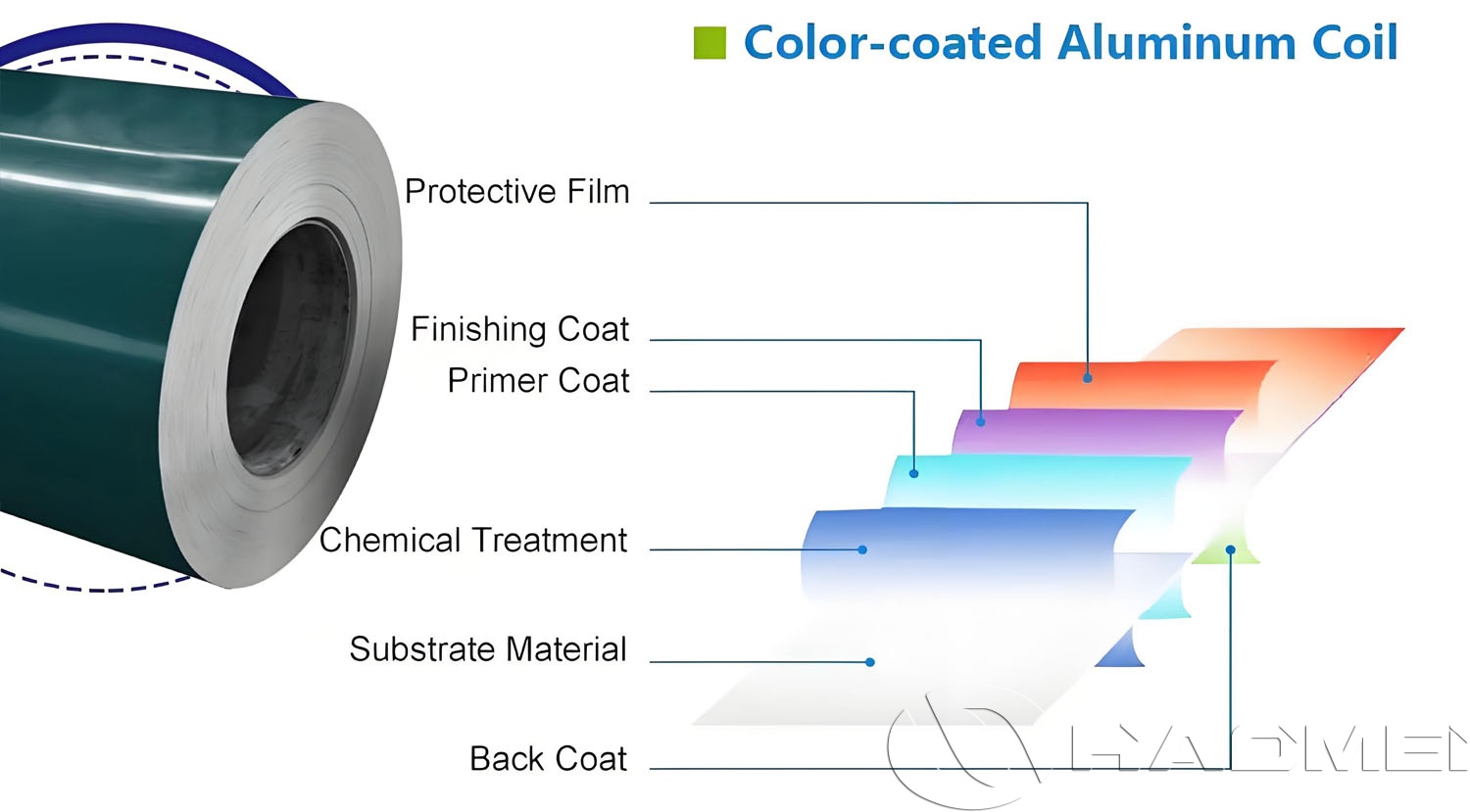
For commercial ceilings, the coating must retain adhesion during bending, roll forming, punching, and edge trimming. Coating flexibility is therefore evaluated alongside visual factors such as color consistency, gloss retention, stain resistance, and resistance to surface scratching during fabrication.
Core Specifications for Commercial Ceiling Coil
Typical Technical Specification Range
| Specification Item | Typical Range or Option | Ceiling Application Relevance |
|---|---|---|
| Aluminum alloys | 1100, 3003, 3105, 5052 | Balances formability, strength, and corrosion resistance |
| Temper | O, H14, H16, H18, H24 | Selected to match stamping, roll forming, or flat-panel processing |
| Coil thickness | 0.30-1.20 mm | Common ceiling panel range is often 0.45-0.80 mm |
| Coil width | 600-1,600 mm | Supports slitting for ceiling tiles, strips, and baffle profiles |
| Coil inner diameter | 405 mm, 505 mm, 508 mm | Compatible with common decoiling and roll-forming equipment |
| Coil weight | Up to approximately 5,000 kg | Adjusted for processing line capacity and handling requirements |
| Topcoat systems | PE, SMP, PVDF, polyester variants | Chosen according to indoor exposure and service environment |
| Topcoat thickness | Approximately 15-35 μm | Determines finish durability, coverage, and coating performance |
| Surface finish | Matte, low gloss, satin, high gloss, textured, wood grain | Supports architectural design and glare-control requirements |
| Color control | RAL, Pantone reference, customer-approved sample | Supports project-specific color coordination |
| Protective film | Optional, commonly 30-70 μm | Helps reduce handling marks during fabrication and installation |
Aluminum Alloy Options
The alloy establishes the mechanical base of the ceiling coil. Alloy selection affects panel flatness, bending behavior, dent resistance, perforation quality, and the stability of formed ceiling profiles.
1100 Aluminum Coil
1100 is commercially pure aluminum with excellent formability, corrosion resistance, and surface appearance. It is commonly used for lightweight interior ceiling panels, flat tiles, and decorative components where deep forming or high structural strength is not the primary requirement. Its soft temper condition supports smooth stamping and bending, while harder tempers provide improved handling rigidity. 1100 Color Coated Aluminum Coil is widely applied where clean visual finish and economical processing are important.
3003 Aluminum Coil
3003 aluminum contains manganese, providing higher strength than 1100 while maintaining good workability. It is a common substrate for commercial ceiling tiles, perforated panels, linear strips, and pressed ceiling components. The alloy offers a practical combination of forming performance and dent resistance, particularly for panels that require repeated handling during fabrication, packaging, and installation.
3105 Aluminum Coil
3105 is another manganese-containing alloy frequently used for painted architectural products. Compared with 1100, it provides improved strength and rigidity while remaining suitable for roll forming and moderate bending. For long linear ceiling profiles, baffles, and narrow strips, 3105 can support improved profile stability and reduced risk of deformation during processing.
5052 Aluminum Coil
5052 is a magnesium-containing alloy with strong corrosion resistance and higher mechanical strength. It is used for ceiling components exposed to humid interior conditions, coastal air influence, or demanding cleaning cycles. Although it has lower formability than 1100 or 3003 in certain tempers, it performs well in applications requiring stronger panels, soffit systems, or moisture-resistant ceiling elements.
Coating Systems and Surface Finishes
The finish of a commercial ceiling has both decorative and functional roles. It influences reflected light, perceived cleanliness, maintenance visibility, and compatibility with the surrounding interior palette. Standard solid colors include white, black, gray, silver, bronze, beige, and project-specific shades. Metallic, brushed, textured, marble, and wood-grain finishes are also available for architectural ceiling designs.
PE Coatings
Polyester coatings are commonly used on interior ceiling coils because they provide good color selection, processability, and cost efficiency. A PE Coated Aluminum Coil is suited to controlled indoor environments such as offices, retail areas, meeting rooms, schools, and residential common spaces. PE systems can be formulated in different gloss levels, from matte finishes that reduce glare to higher-gloss finishes with stronger visual reflectivity.
PVDF Coatings
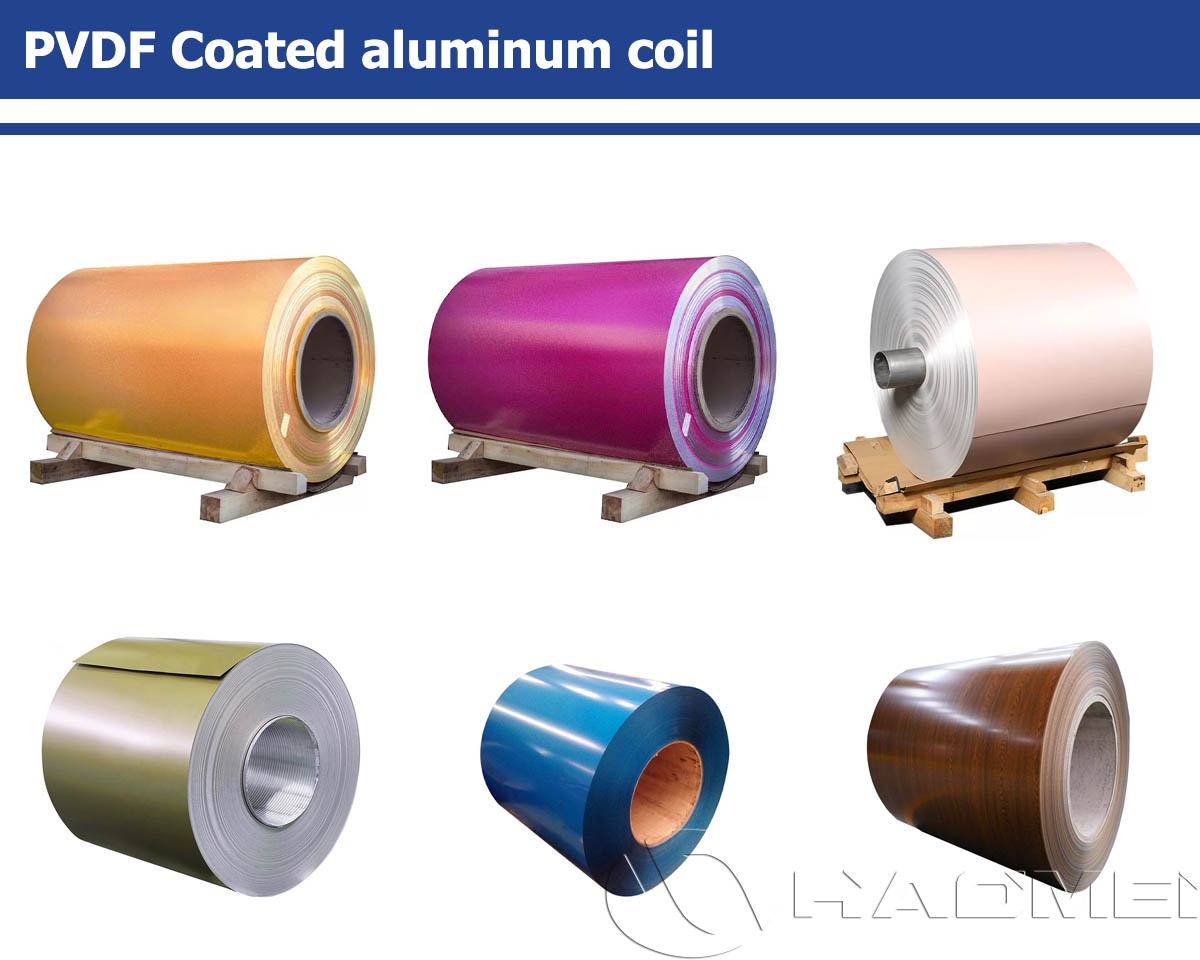
PVDF coatings provide enhanced resistance to UV exposure, weathering, and color fading. While often associated with exterior architectural cladding, PVDF-coated aluminum is also used for ceiling or soffit applications near large glazed façades, semi-open commercial areas, transportation terminals, covered entrances, and exterior-adjacent installations. The fluoropolymer finish helps preserve color and gloss where environmental exposure is more demanding.
Customization for Ceiling Manufacturing
Custom color-coated aluminum coils can be aligned with the specific processing route and finished ceiling geometry. Key variables include substrate thickness, alloy, temper, coil width, coating type, color, gloss, coating thickness, reverse-side finish, and protective film specification.
For perforated ceiling panels, the coating system must maintain adhesion around punched holes and cut edges. For linear and baffle ceilings, controlled strip width, stable temper, and uniform coating flexibility help maintain consistent profile geometry through roll forming. For clip-in and lay-in ceiling tiles, flatness and surface uniformity are important to achieve a visually continuous installed ceiling plane.
Color matching is generally controlled using approved samples and instrumental measurement under defined lighting conditions. In large commercial installations, coil batches are managed for consistency in color, gloss, and finish direction, especially where adjacent panels are viewed across broad ceiling areas.
Fabrication and Performance Considerations
Pre-painted aluminum coil is typically processed through slitting, blanking, stamping, perforating, folding, roll forming, and assembly. Material behavior during these operations depends on the combined effect of alloy, temper, thickness, coating flexibility, and tooling geometry.
Important performance characteristics for commercial ceiling installations include:
Coating adhesion after forming and bending
Pencil hardness and surface scratch resistance
Resistance to staining from common indoor contaminants
Color and gloss consistency between coil batches
Flatness after blanking or panel forming
Resistance to humidity and condensation in service environments
Film integrity around perforations, folds, and cut edges
Compatibility with ceiling grid systems, clips, carriers, and suspension hardware
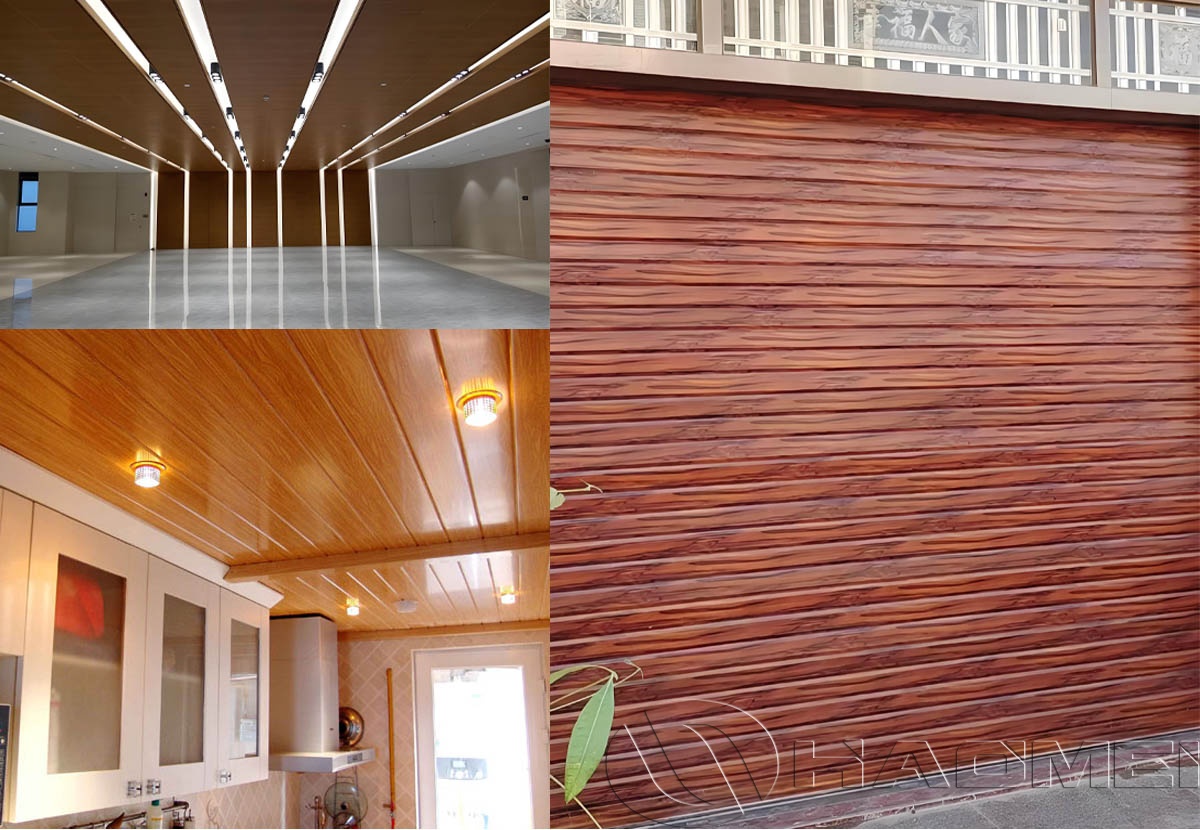
For projects using wood-look interiors, printed finishes can reproduce grain direction and tonal variation while retaining the light weight, fire performance characteristics, and dimensional consistency of aluminum. These finishes are commonly used in hospitality ceilings, retail interiors, lobbies, corridors, and decorative baffle systems.
Quality Control for Color-Coated Ceiling Coil
Quality control begins with incoming aluminum substrate inspection and continues through coating, curing, slitting, and packing. Standard checks include thickness measurement, coating film thickness, gloss level, color difference, adhesion, impact resistance, bend performance, solvent resistance, and visual inspection for surface defects.
During slitting and recoiling, edge quality and coil tension are controlled to support stable downstream feeding. Protective packaging helps limit transit damage, including pressure marks, abrasion, moisture exposure, and coil-edge deformation. For ceiling panel production, consistent coil properties contribute directly to repeatable forming conditions and uniform finished-panel appearance.
-
Custom Color-Coated Aluminum Coils for Commercial Ceiling Installations
Custom color-coated aluminum coils deliver durable finishes, precise forming, and consistent color for commercial ceiling systems and interior spaces.
2026-09-29
-
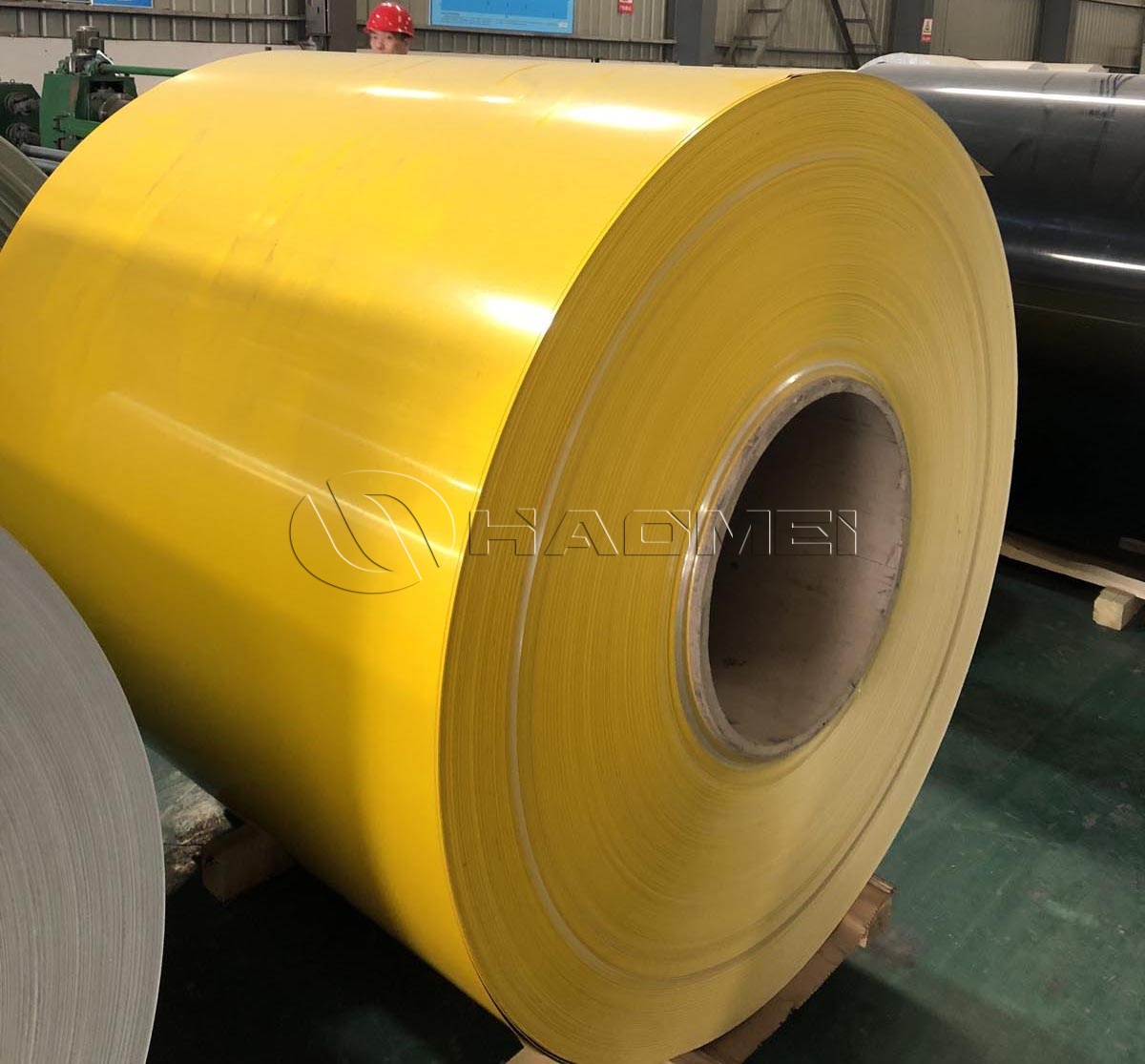
0.10-0.5mm Color-Coated Aluminum Coil for Signboards and Advertising Signs
Explore 0.10-0.5mm color-coated aluminum coil for signboards and advertising signs, including alloys, PE/PVDF coatings, finishes, and specifications.
2026-08-21
-
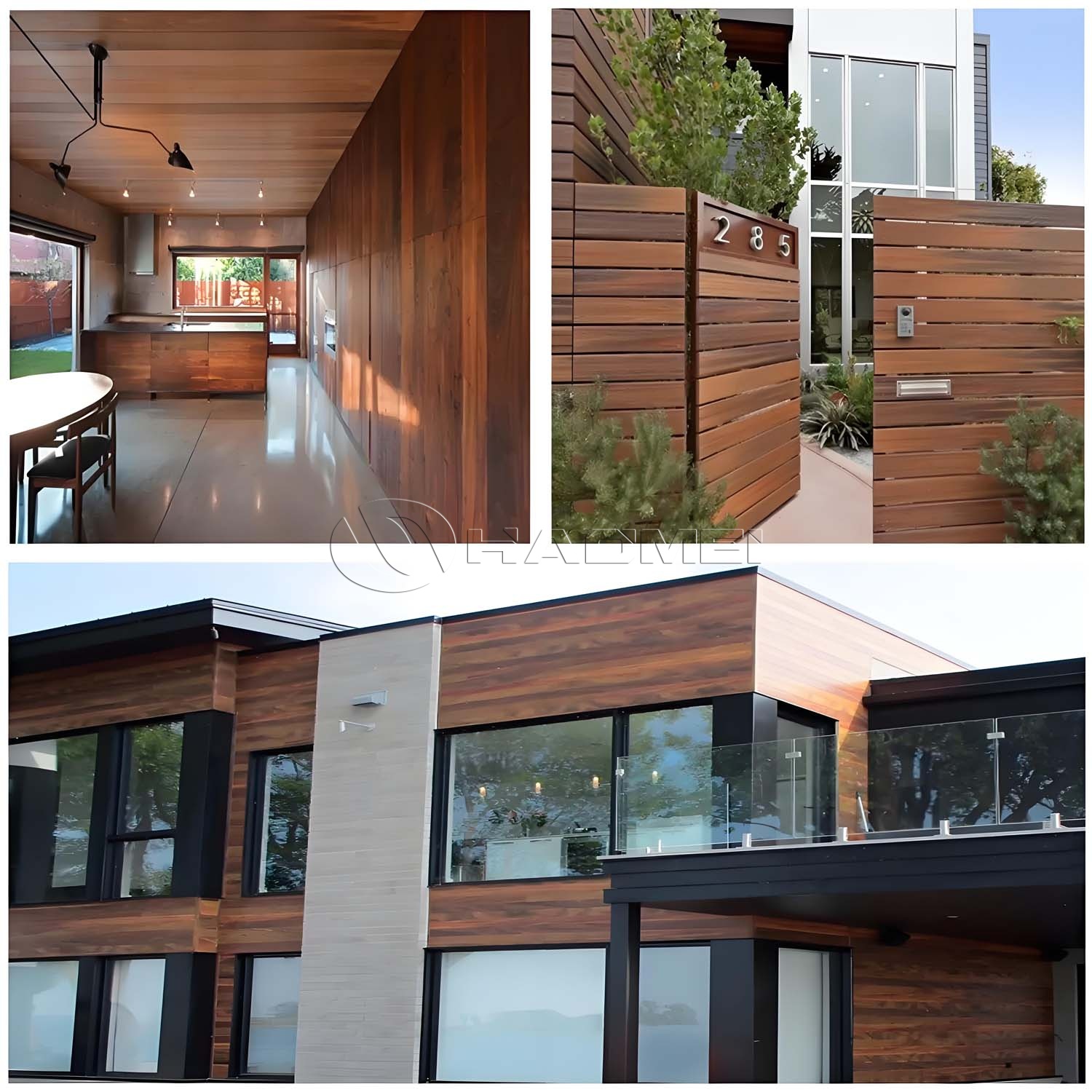
Wood Grain Aluminum Coil for Fence Panels
Wood grain aluminum coil for fence panels combines durable PE or PVDF coatings, realistic timber patterns, and corrosion resistance for exterior fencing systems
2026-07-20
Contact Directly
-

ADD: No.14 Waihuan Road, CBD, Zhengzhou, China
-

WhatsApp: +86-18703635966
-

E-MAIL: sales@alummc.com
