

News
 By Hermione
Benefits Of Using Wood Grain Aluminum Coil
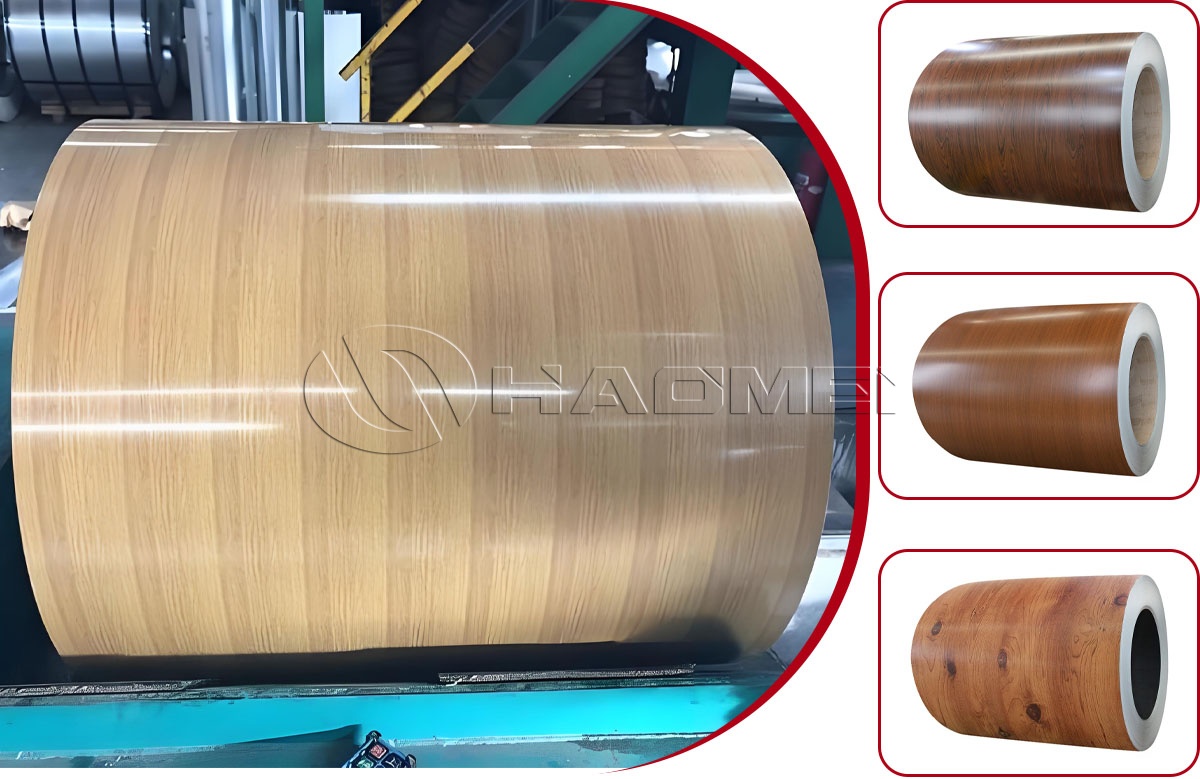
Wood grain aluminum coil is a decorative pre-painted aluminum coil engineered to replicate natural timber while delivering the durability and process stability of aluminum. It is positioned for high-visibility building and interior surfaces where designers want a warm wood appearance without the maintenance concerns of real wood. Typical application scenarios include aluminum facade cladding, soffits, ceilings, wall panels, roller shutter doors, and furniture or trim components in commercial and residential projects.
Why wood grain on aluminum performs better than wood in daily service
The core advantage starts with the substrate. Aluminum coil (commonly from 1xxx, 3xxx, and 5xxx series alloys) combines low density with good corrosion resistance and easy formability, which helps when parts are roll-formed, bent, or stamped into profiles and panels. Compared with wood, aluminum is dimensionally more stable under humidity and temperature cycling, reducing risks such as warping, swelling, cracking, and biological degradation.
In outdoor building envelopes, long-term appearance depends on how well the surface resists UV exposure, chalking, pollution staining, and moisture ingress. A properly designed wood grain coating system provides a continuous barrier over the metal, limiting corrosion initiation at the surface and maintaining color integrity over years of service.
Advantages of Wood Grain Coated Aluminum Coils:
1.Realistic Texture: Through processes such as heat transfer printing and 3D roller coating, natural wood grain is accurately replicated, resulting in clear textures, rich layers, and a visual effect close to solid wood.
2.Lightweight and High-Strength: Aluminum coils have a low density, weighing only one-third of steel, yet possess high strength. A 3.0mm thick wood grain aluminum coil weighs only about 8kg per square meter, facilitating transportation and installation, while also exhibiting good tensile strength (100–280 N/mm²).
3.Weather and Corrosion Resistance: The surface is typically coated with fluorocarbon (PVDF) or polyester (PE). PVDF coatings can maintain their color for 10–50 years, effectively resisting the corrosive effects of ultraviolet radiation, acid rain, and salt spray, far exceeding that of traditional wood.
4.Fire and Moisture Resistance: Aluminum itself is non-combustible, and the wood grain coating undergoes special processing, achieving an excellent fire resistance rating (e.g., Class A non-combustible). It is also completely non-absorbent and mold-resistant, making it suitable for humid environments (such as bathrooms and coastal areas). 5.100% Recyclable: Aluminum coils can be recycled and regenerated an unlimited number of times. Remelting consumes only 5% of the energy required to produce primary aluminum, making it an ideal material for green buildings and contributing to carbon neutrality goals.
6.Self-Cleaning: The dense, smooth fluorocarbon coating is resistant to dust and fingerprints, simplifying cleaning and maintenance and reducing long-term operating costs.
Coating systems that deliver the wood grain look and the weathering life
A wood grain finish is not a single layer of paint. It is a controlled system that balances adhesion, flexibility, and weathering resistance while keeping the printed pattern sharp after forming.
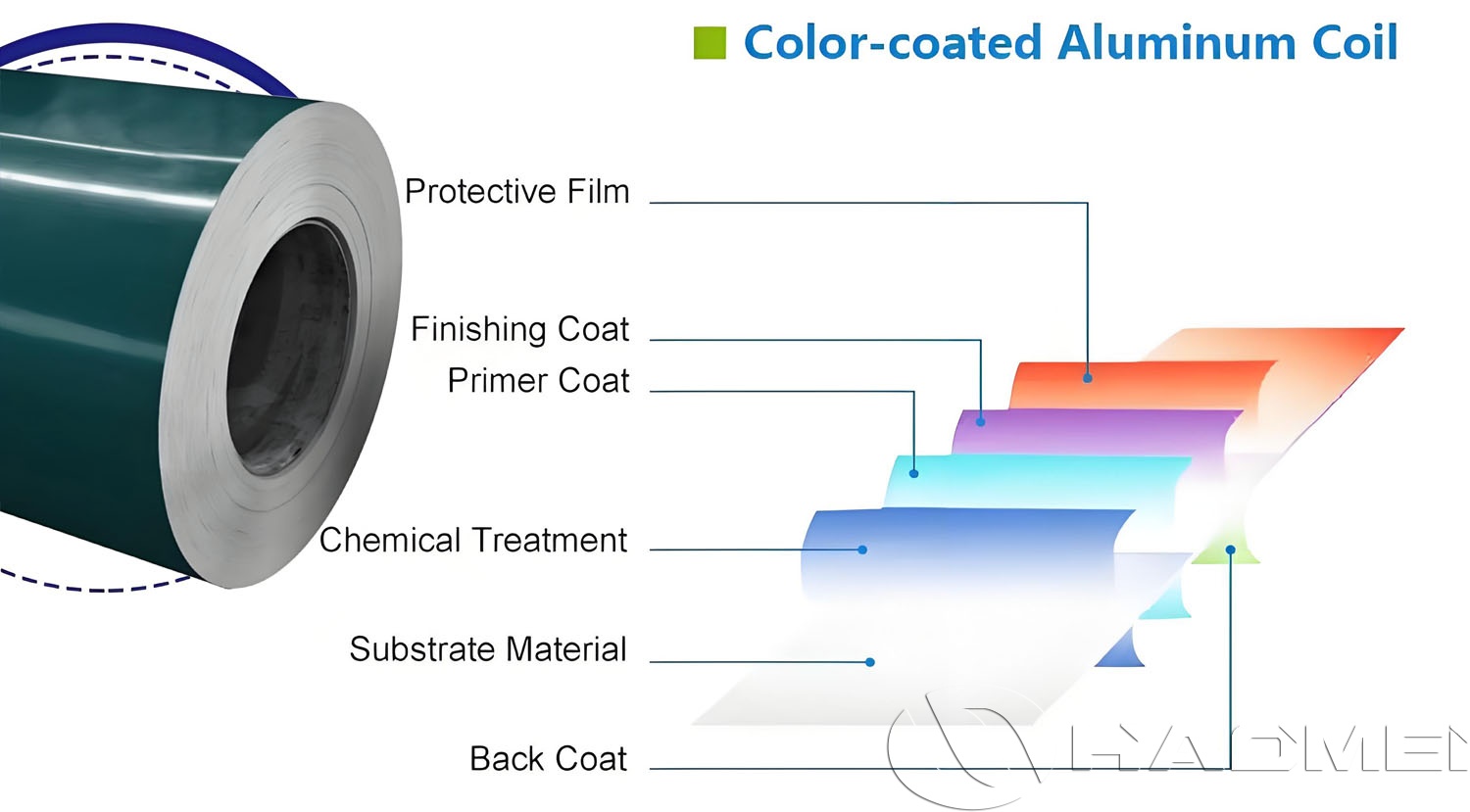
Most systems start with a pretreatment layer to enhance corrosion resistance and adhesion, followed by primer and topcoat. The wood pattern is commonly created through heat transfer printing (or, in some designs, multi-color printing/roller coating) and then protected by a clear coat for gloss control and abrasion resistance.
PE coating systems are widely used for interior ceilings, wall panels, and decorative trims where cost efficiency and good formability are key. PE topcoats are also used outdoors in mild environments when service-life requirements are moderate.
PVDF coating systems are preferred for exterior facades and high-UV regions because PVDF chemistry offers superior resistance to chalking and fading, helping preserve the wood tone and contrast of the grain pattern.
A practical detail for specification: wood grain designs often need a controlled gloss range to look like natural timber. Clear coats (matte, satin, or semi-gloss) also protect the printed pattern and improve cleanability.
How manufacturing controls determine consistency from coil to installed panels
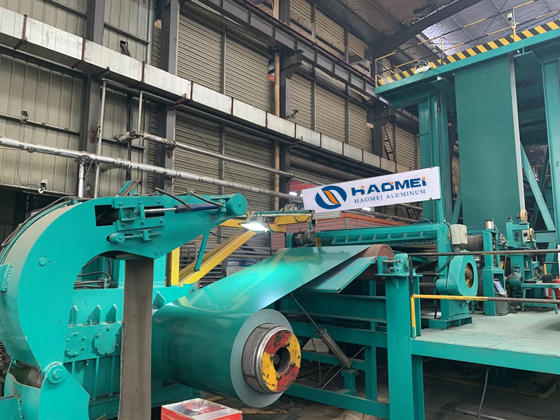
Wooden grain color coated aluminum coil is typically produced on a continuous coil coating line, where process repeatability is critical for color and pattern consistency.
Key manufacturing elements that directly impact finished performance include:
Pretreatment chemistry and rinsing quality, which affect adhesion and corrosion resistance at cut edges and formed areas.
Primer/topcoat curing control (metal temperature and dwell time), which influences solvent release, crosslink density, and long-term durability.
Registration and tension control during heat transfer printing, which affects pattern sharpness and repeatability across coil length.
Protective film selection (when applied) to prevent handling scratches during slitting, roll forming, and installation.
Because the product is delivered as coil, it must tolerate downstream fabrication. Properly matched primer/topcoat flexibility helps the wood grain finish withstand bending radii and roll-forming without microcracking that could later become a pathway for staining or corrosion.
Core specifications for wood grain aluminum coil (typical ranges)
Table: Typical Specifications of Wood Grain Aluminum Coil
| Item | Typical Range / Options | Notes |
|---|---|---|
| Alloy | 1050, 1060, 1100, 3003, 3004, 3105, 5052 | Selected based on formability, strength, and corrosion environment |
| Temper | O, H14, H16, H18, H24 | Temper impacts bending/roll-forming behavior |
| Coil thickness | 0.20–1.50 mm | Common for ceilings, cladding panels, shutters, trims |
| Coil width | 20–1600 mm | Slitting to profile or panel width is common |
| Coating type | PE coating, PVDF coating | PVDF typically chosen for exterior weathering |
| Coating structure | 2-coat (primer + topcoat) or 3-coat (primer + color/print + clear) | Clear coat protects grain and controls gloss |
| Dry film thickness (top side) | 18–35 μm (PE), 25–40 μm (PVDF) | Final target depends on durability and forming needs |
| Back coating | Service coat or wash coat | Chosen for adhesion, anti-scratch, or bonding needs |
| Finish | Matte / satin / semi-gloss | Wood realism often improved with lower gloss |
| Pattern | Oak, walnut, teak, customized | Pattern repeat and tone can be managed by transfer film |
Practical application benefits across building and product categories
In real projects, the benefits of using wood grain aluminum coil come from combining aesthetics with predictable performance and fabrication efficiency.
Facades, soffits, and rainscreen elements
For exterior cladding, wood grain aluminum provides the visual warmth of timber while reducing lifecycle risks such as rot, insect damage, and frequent refinishing. When specified with PVDF coating, the finish better resists UV-driven fading and chalking, which is critical to keep wood tones from looking washed out over time. Coil-based supply also supports consistent batch appearance across large elevations when color management is controlled.
Ceilings, baffles, and interior wall panels
Interior architectural systems benefit from the coil's stable color and pattern consistency, plus cleanability in public spaces. With PE coating, designers typically obtain a cost-effective finish with good flexibility for forming linear ceilings, baffles, and edge-return panels, while still achieving a natural wood look.
Roller shutters, doors, and formed profiles
Shutter slats and roll-formed profiles demand coating flexibility and abrasion resistance. Wood grain systems that include an appropriate clear coat help resist handling marks and light abrasion during operation, while the aluminum substrate provides straightness and dimensional stability.
Furniture, trims, and decorative components
For furniture frames, cabinet elements, and decorative trims, wood grain aluminum offers a consistent appearance across production batches and reduces variability seen in natural veneer. It also enables thin-gauge parts with high surface quality, useful for modern lightweight designs.
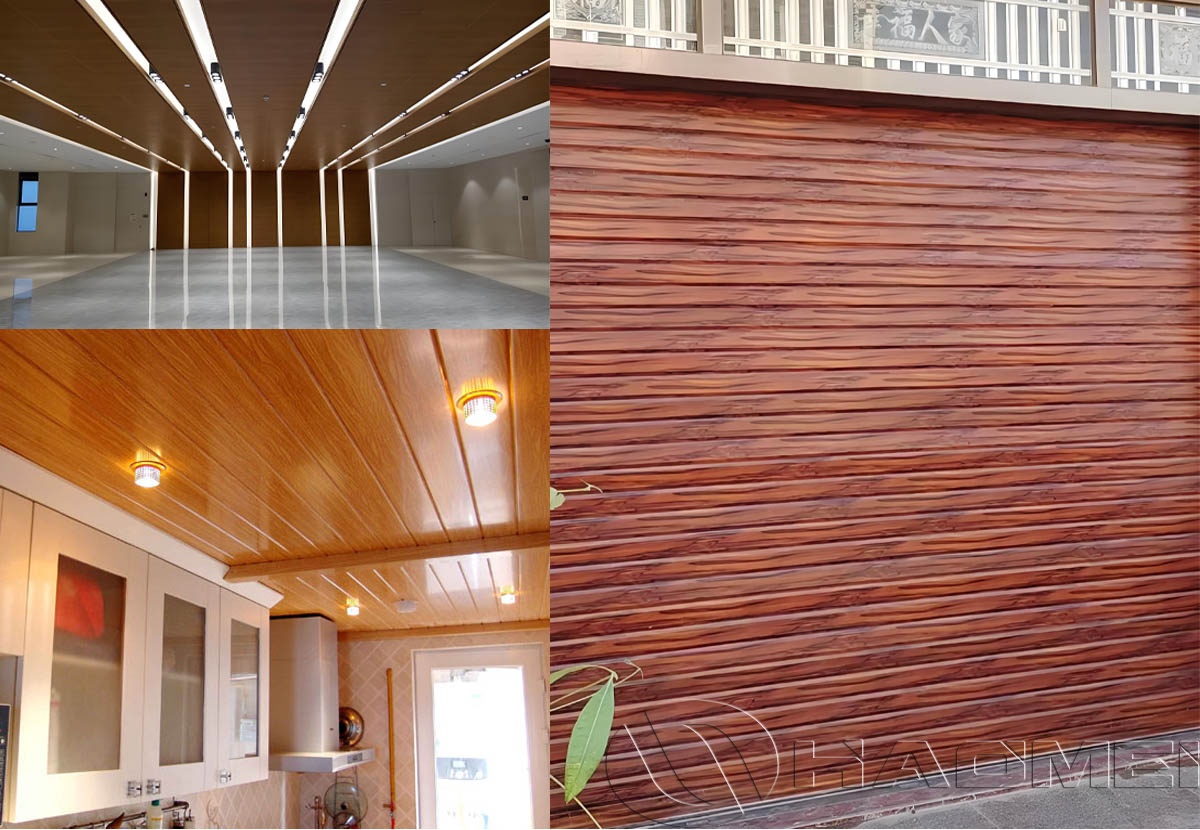
In these applications, specifying the right combination of alloy/temper, coating chemistry (PE vs PVDF), and a printing-plus-clear-coat structure is what turns a wood-look surface into a reliable engineered material system rather than only a decorative finish.
-
3105 Matte Color-Coated Aluminum Coil for Modern Interior Decoration
3105 matte color-coated aluminum coil provides low-glare, durable surfaces for ceilings, wall panels, partitions, and modern interior decoration.
2026-09-28
-
Color Coated Aluminum Coil For Roofing Sheets
This article introduces color coated aluminum coil engineered for roofing sheets, positioning it as a lightweight, corrosion-resistant, and formable substrate for roll-formed roof panels in industrial, commercial, and residential buildings.
2026-01-07
-
Pvdf Coated Aluminum Coil Coating Lifespan
Learn PVDF coated aluminum coil coating lifespan, fluorocarbon coating systems, coil coating process, and weather resistance performance for façades and roofing.
2026-01-28
Contact Directly
-

ADD: No.14 Waihuan Road, CBD, Zhengzhou, China
-

WhatsApp: +86-18703635966
-

E-MAIL: sales@alummc.com